Kosetsuuen Hokkaido’s Only Nationally Designated Cultural Asset Garden | Complete Guide to the Charm of Miharashi Park and Seasonal Highlights
Kosetsuuen, located within Miharashi Park adjacent to the Yunokawa hot spring district in Hakodate, Hokkaido, is Hokkaido’s only nationally designated cultural asset garden, created during the Meiji era. The landscape garden spread across approximately 40,000 tsubo features the four seasons’ beauty—spring cherry blossoms, summer fresh greenery, autumn foliage, and winter snow landscapes—captivating visitors throughout the year. This article provides detailed information you should know before visiting, from Kosetsuuen’s history to highlights, access methods, and event information.
Kosetsuuen | A Renowned Garden Created by a Wealthy Merchant in the Meiji Era
Kosetsuuen (formally known as “Former Iwafune Clan Garden”) is a full-scale landscape garden created from around Meiji 31 (1898) by Iwafune Mineshiro, a wealthy man in Hakodate. Iwafune, who rose from a peddler to become one of Hokkaido’s most successful kimono merchants, built this as a villa in the Yugawa district, originally used as a private garden for the Iwafune family.
The name “Kosetsuuen” is said to have been given by the chief priest of Chionin Temple, a Jodo sect temple in Kyoto who visited Hakodate during the Taisho era, meaning “A garden where plum fragrance drifts among snow.” This elegant name evokes the image of plum blossoms blooming steadfastly even during Hokkaido’s harsh winters, symbolizing the garden’s refinement.
In Showa 2 (1927), the garden was opened free to the public through the Iwafune family’s kindness. In Showa 30 (1955), Hakodate City concluded a free lease contract, and in Showa 34 (1959), the city purchased the land. Finally, in Heisei 13 (2001), it received designation as a “scenic beauty” under the Cultural Properties Protection Law, becoming Hokkaido’s only nationally designated cultural asset garden.
Overview of Miharashi Park | A Vast Urban Park of 139,000 Tsubo
Miharashi Park, where Kosetsuuen is located, is a vast urban park with a total area of approximately 139,000 tsubo (approximately 46 hectares). The entire park is managed by the Hakodate City Housing and Urban Facilities Association and is beloved as a place of relaxation for residents.
In addition to Kosetsuuen, the park contains streams, a brick greenhouse, and gardens (buildings used for tea ceremonies and other events), with walking paths throughout. Visitors can enjoy bird watching and forest bathing in the rich natural environment, making it popular with both Hakodate residents and tourists.
The Green Center within the park provides computers and books where visitors can search for birds, wildflowers, and trees in the park and view them freely. It serves as a space for nature education where both children and adults can enjoy learning.
History of Miharashi Park and Kosetsuuen | From a Wealthy Merchant’s Villa to a Public Asset
Kosetsuuen’s history is closely linked to Hakodate’s economic development in the Meiji era. The founder, Iwafune Mineshiro, rose from a peddler to achieve success as a kimono merchant. Around Meiji 31, as the Yugawa district became known as a hot spring resort area where wealthy merchants built villas, Iwafune began construction of a full-scale landscape garden.
The garden’s design utilized the latest landscaping techniques of the time, incorporating streams, ponds, and artificial hills while making use of the natural terrain. During the Meiji and Taisho periods, structures such as garden pavilions and greenhouses were built, and uniquely styled historic buildings added depth to the garden’s landscape.
During the Taisho era, the chief priest of Kyoto’s Chionin gave it the name “Kosetsuuen,” and its fame spread throughout and beyond Hakodate. In the early Showa period, the Iwafune family’s generosity led to its opening to the public, allowing many residents to enjoy the beautiful seasonal scenery.
After World War II, following its acquisition by Hakodate City, it became public property and was developed as Miharashi Park. Its designation as a nationally designated scenic beauty in Heisei 13 marked official recognition of Kosetsuuen’s historical and cultural value, ensuring its protection as a precious cultural heritage of Hokkaido.
Four Seasons of Kosetsuuen | Natural Beauty Enjoyed Year-Round
Spring | Cherry Blossoms and Fresh Greenery at the Flower Viewing Festival
In spring, cherry blossoms including Somei Yoshino bloom profusely at Kosetsuuen, making it an ideal spot for flower viewing. From late April to early May, the cherry trees in the garden bloom all at once, their pale pink petals coloring the garden. During the cherry blossom season, many flower viewers visit to celebrate spring’s arrival.
After the cherry blossoms fall, the fresh green season begins. Approximately 150 types of trees burst into leaf simultaneously, and the garden is enveloped in vivid green. The fresh verdant leaves and the murmuring stream create a landscape worthy of the name “garden where plum fragrance drifts among snow,” brimming with freshness.
Summer | Deep Green and Cool Streams
From June to August, summer is when Kosetsuuen, covered in deep green, creates its most serene atmosphere. Walking along the garden’s stream, the cool shade and sound of water make you forget the heat.
During this season, wildflowers and tree blossoms can also be enjoyed, making it ideal for nature observation. Gathering information at the Green Center before walking will deepen your understanding of Kosetsuuen’s nature. In the early morning, bird songs can be heard, and bird-watching enthusiasts are often spotted.
Autumn | Hakodate’s Premier Autumn Foliage Spot
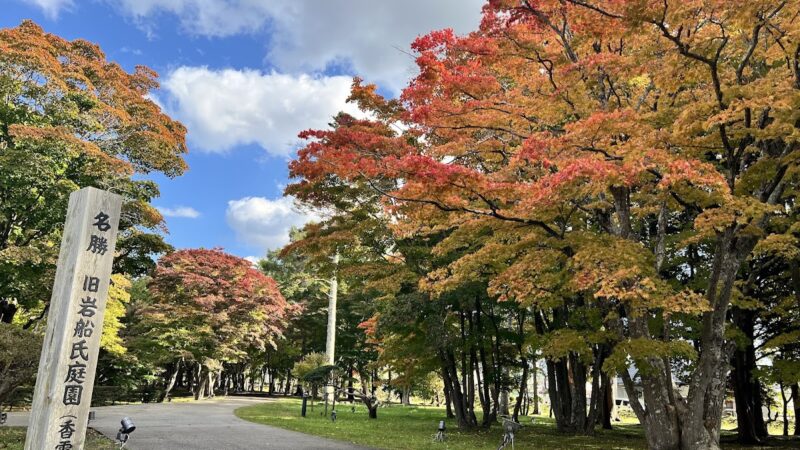
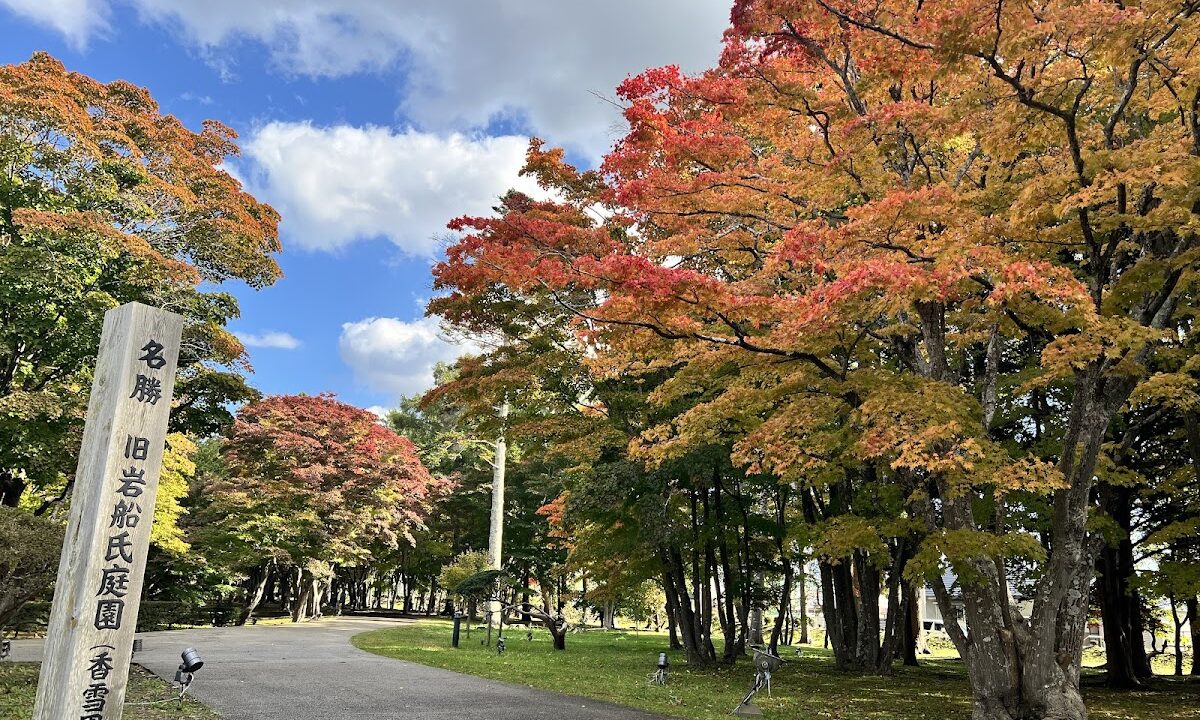
Kosetsuuen is most crowded with tourists during autumn’s foliage season. From mid-October to early November, approximately 150 types of trees in the garden turn red and yellow, creating spectacular autumn foliage scenery.
Particularly famous is a maple tree lined avenue spanning approximately 100 meters, during which the “Hakodate MOMI-G Festival” is held. During this event period, the maple avenue is illuminated at night, creating a fantastical atmosphere entirely different from daytime. The sight of illuminated autumn leaves floating in the darkness captivates visitors.
The foliage season varies with weather, but the peak is typically late October. Weekends and holidays draw many tourists, so visiting on weekdays is recommended.
Winter | Snow Scenery and the Beauty of Silence
Winter in Kosetsuuen perfectly embodies the meaning of its name, “garden where plum fragrance drifts among snow.” The snow-covered garden is enveloped in silence and displays ink-wash painting-like beauty. During snowy periods, some walking paths may be closed, but you can still enjoy winter’s unique scenery.
Hakodate MOMI-G Festival | An Autumn Tradition
The Hakodate MOMI-G Festival is a foliage illumination event held at Kosetsuuen from mid- to late October each year. This event, held in the precious space of Hokkaido’s only nationally designated cultural asset garden, has become an established autumn tradition in Hakodate.
During the festival period, after sunset, the approximately 100-meter maple tree avenue is illuminated, creating a fantastical atmosphere different from daytime. Warm lighting illuminates the autumn leaves, creating the sensation of entering another world.
During the festival period, concerts and workshops may be held in the garden, offering enjoyment beyond foliage viewing. Vendor stalls selling local specialties line the park, allowing visitors to simultaneously enjoy Hakodate’s food culture.
2026 Event Information | Latest Opening Schedule
Details of the Hakodate MOMI-G Festival for 2026 are typically announced around September on the official websites of Hakodate City and the tourism association. Based on past events, an approximately two-week event in mid- to late October is anticipated.
Illumination times are normally from sunset to around 9:00 PM, though they may change by year. Those planning visits are advised to confirm official information beforehand.
Additionally, various events are planned for other seasons, such as spring flower viewing and summer nature observation activities. Check the websites of the Hakodate City Housing and Urban Facilities Association and Hakodate Tourism Association for the latest information.
Highlights of Kosetsuuen | Historic Structures and Natural Beauty
Garden Pavilion | Traditional Architecture Used for Tea Ceremonies
Within the garden stands a pavilion built during the Meiji and Taisho periods, used for tea ceremonies and other cultural activities. The harmony between the beauty of Japanese-style architecture and the garden’s landscape creates a space where you can experience Japan’s traditional aesthetic.
Brick Greenhouse | Historic Structure Evoking History
A brick greenhouse remains in the garden, conveying the architectural techniques of the Meiji era to the present day. Though no longer in use, it is preserved as a historic structure, enhancing the garden’s historical value.
Streams and Ponds | Design Utilizing Natural Terrain
As a landscape garden, Kosetsuuen is designed with streams and ponds that skillfully utilize the natural terrain. The flowing water soothes visitors’ hearts, and combined with seasonal plants, creates beautiful scenery.
Approximately 150 Types of Trees | Plant Diversity
The garden contains approximately 150 types of trees, each showing different characteristics with the seasons. From traditional Japanese garden trees such as maples and flowering apricot to tree species suited to Hokkaido’s climate, you can observe diverse plants.
Green Center | Base for Nature Education
The Green Center within Miharashi Park is a facility where you can learn about the park’s nature. Computers where you can search for information on birds, wildflowers, and trees, as well as related books are available for free browsing.
The center’s staff are knowledgeable about the park’s nature and can offer advice on seasonal highlights and walking routes. First-time visitors will have a more enriching experience by gathering information at the Green Center before beginning their walk.
Access | How to Get There from Hakodate City
Address
〒042-0956 Hokkaido Hakodate City Mihara-cho 56
Public Transportation Access
From Hakodate Street Car
- Get off at “Yunokawa” stop, approximately 30-minute walk
- Transfer from “Yunokawa” stop to Hakodate bus, get off at “Kosetsuuen” bus stop immediately nearby
Hakodate Bus
- Board Hakodate Bus Line 6 or 96 from in front of JR Hakodate Station
- Get off at “Kosetsuuen” bus stop, approximately 1-minute walk
- Travel time: approximately 40 minutes
Access by Car
From Hakodate Airport
- Approximately 15 minutes by car
- Via National Route 278
From JR Hakodate Station
- Approximately 25 minutes by car
- Via National Routes 5 and 278
Parking Information
- General visitor parking available (free)
- Capacity: approximately 100 spaces
- Crowding expected during Hakodate MOMI-G Festival; public transportation recommended
- Temporary parking may be available during event periods
Access from Yunokawa Hot Spring
Kosetsuuen is located on the mountainside of the Yunokawa hot spring district and is within walking distance of major hot spring hotels. Combining accommodation at a hot spring resort with a visit is also recommended.
Contact Information | Inquiries
General Incorporated Association Hakodate City Housing and Urban Facilities Association
- Phone: 0138-40-3605 (Miharashi Park Management Office)
- Reception hours: 8:45–17:30
- Closed: Year-end and New Year (December 29 – January 3)
Hakodate Tourism Information Center
- Phone: 0138-23-5440
- Reception hours: 9:00–19:00 (April–October), 9:00–17:00 (November–March)
It is recommended to call ahead to confirm event information and opening conditions. In particular, during winter or in adverse weather, some walking paths may be closed.
How to Enjoy Miharashi Park and Kosetsuuen | Visiting Tips
Clothing and Belongings
The garden has uneven terrain, and while walking paths are developed, visiting in easily walkable shoes is recommended. Particularly during foliage season or after rain, the ground can be slippery, so care is necessary.
During the autumn MOMI-G Festival period, nighttime temperatures drop; bring warm clothing. Insect repellent and beverages are also helpful for a comfortable walk.
Photography Spots
Kosetsuuen is also popular as a photography location. Recommended photography points include:
- Maple avenue: Particularly beautiful during autumn foliage season
- Stream-side walking paths: Picturesque scenery throughout the seasons
- Pavilion surroundings: Harmony of Japanese architecture and garden
- Area around ponds: Beautiful trees reflected in the water
Regarding tripod use, care should be taken not to obstruct other visitors. During crowded times, refrain from use or check with staff.
Time Required
For a leisurely walk through the garden, allow 1.5 to 2 hours. Including time at the Green Center for learning and photography time, additional time may be needed.
Nearby Attractions | Combined with Hakodate Tourism
Yunokawa Hot Spring
The Yunokawa hot spring, within walking distance of Kosetsuuen, is one of Hakodate’s representative hot springs. Soaking in hot springs after your walk is particularly recommended. Many facilities offer day-trip bathing.
Hakodate Municipal Tropical Botanical Garden
Located approximately 5 minutes by car, the tropical botanical garden allows viewing of monkeys bathing in hot springs in winter. Visiting both Kosetsuuen and the botanical garden makes for a richer tourism experience.
Trappistine Convent
Located approximately 10 minutes by car, Japan’s first female convent. Its serene atmosphere and beautiful gardens are appealing.
Hakodate Mountain
The highlight of Hakodate sightseeing, Hakodate Mountain’s night view. Located approximately 30 minutes by car from Kosetsuuen, it’s possible to visit the same day.
Conclusion | Experience Hokkaido’s History and Nature at Kosetsuuen
Kosetsuuen is a precious cultural heritage where a landscape garden created by a wealthy merchant in the Meiji era has been passed down to the present. As Hokkaido’s only nationally designated scenic beauty garden, its historical and cultural value is highly appreciated.
Displaying a different appearance with each season—spring cherry blossoms, summer fresh greenery, autumn foliage, and winter snow scenery—Kosetsuuen offers new discoveries with each visit. Particularly, the nighttime illumination during autumn’s Hakodate MOMI-G Festival captivates many tourists with its fantastical atmosphere.
Within the vast natural environment of Miharashi Park, the scenery created by historic structures and approximately 150 types of trees will be a special experience within your Hakodate tourism. Combined with Yunokawa hot spring tourism, take your time to fully appreciate Kosetsuuen’s charm.
When visiting Hakodate, be sure to visit Kosetsuuen and experience the beauty of a Japanese garden continuing since the Meiji era and Hokkaido’s abundant nature.