Sasaryu Dam Hokkaido: A Comprehensive Explanation of Japan’s First Buttress Dam’s History and Charm
The Sasaryu Dam in Hakodate City, Hokkaido, is a civil engineering heritage site of extreme historical and technical importance, built during the Taisho era as Japan’s first buttress dam. While currently operating as the water source for Hakodate residents, it is also loved by many citizens and tourists as a famous cherry blossom spot in spring and a scenic autumn foliage location in fall. This article provides detailed explanations of the Sasaryu Dam from every angle, including its history, structure, and tourism information.
Basic Information and Overview of Sasaryu Dam
Dam Location and River System
The Sasaryu Dam is constructed on the Sasaryu River in the Kameda River water system, a Class 2 river that flows through Hakodate’s downtown area. It is positioned approximately 8 km upstream from the mouth of the Kameda River, near the confluence of the main stream and tributary Sasaryu River. This location was selected as optimal for serving as Hakodate City’s water supply source.
Facility Overview
The Sasaryu Dam is a water supply-dedicated dam managed by the Hakodate City Enterprise Bureau Water and Sewerage Department. With dam number 14, it has the following specifications:
- Completion Year: 1923 (Taisho 12)
- Type: Buttress dam (hollow reinforced concrete buttress dam)
- Purpose: Water supply only
- Dam Height: 2nd highest among buttress dams in Japan
- Dam Crest Length: Highest among buttress dams in Japan
- Dam Volume: Highest among buttress dams in Japan
As a water supply-dedicated dam, it was the second to be constructed in Hokkaido after Hakodate’s Okusawa Dam, and the 15th nationally.
Japan’s First Buttress Dam Explained
Structure and Characteristics of Buttress Dams
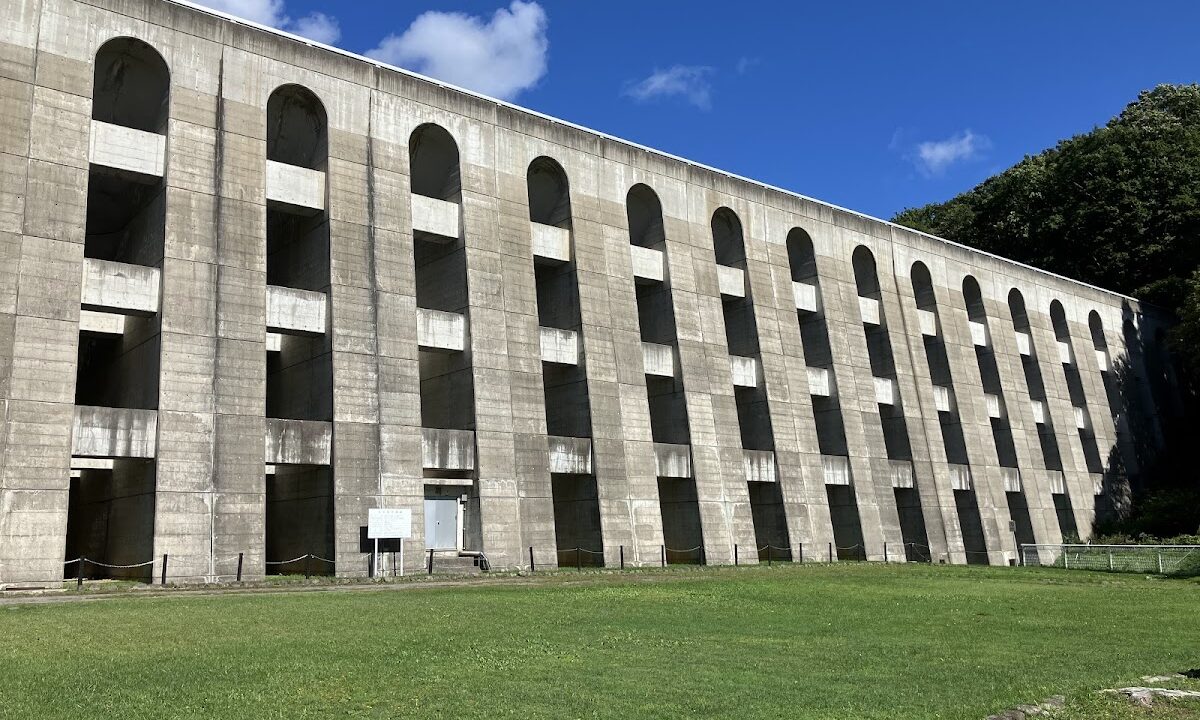
A buttress dam is a lightweight dam that supports the surface receiving water pressure with grid-like auxiliary walls (buttresses). Also called a “buttress-type dam,” its greatest feature is the ability to significantly reduce the amount of concrete used.
While ordinary gravity concrete dams require filling the entire structure with thick concrete, buttress dams consist only of a surface plate receiving water pressure and grid-like supporting walls (buttresses), allowing concrete usage to be reduced by approximately 30-40%.
Technological Challenge in the Taisho Era
When the Sasaryu Dam was built in Taisho 12 (1923), concrete was an extremely expensive construction material. Therefore, the buttress dam method, which could economize on concrete, offered significant economic advantages.
However, there were no buttress dam construction examples in Japan at the time, making the adoption of this type exceptional and generating significant attention. The designer, Motoki Ono, researched foreign technical literature and designed the structure to suit Japan’s climate and geological conditions.
Rarity: Only 6 Exist in Japan
Currently, only 6 buttress dams exist in Japan, including the Sasaryu Dam. This is because subsequent technological development made more easily constructed gravity dams and arch dams the mainstream. Therefore, the Sasaryu Dam is evaluated as an extremely valuable civil engineering heritage site.
Achievements of Designer Motoki Ono
Career of Motoki Ono
The design and construction supervision of the Sasaryu Dam was handled by Motoki Ono, who later became director of the Tokyo City Water Department. Motoki Ono was an important technician in the history of modern Japanese water supply systems, and his experience with the Sasaryu Dam was a crucial step in his career.
Path to Ogouchi Dam
Using his success with the Sasaryu Dam as a foundation, Motoki Ono later designed Tokyo’s Ogouchi Dam (Lake Okutama). The Ogouchi Dam currently operates as an important water source for Tokyo residents and is his representative work as a technician. The dam construction experience and technology cultivated at Sasaryu Dam led to the success of the larger-scale Ogouchi Dam project.
History of Sasaryu Dam
Background of Construction
From the late Meiji era through the Taisho era, Hakodate experienced rapid urbanization, making the securing of a stable water supply source urgent. Existing water sources could no longer meet the demands of the growing population, and new dam construction was planned.
The Sasaryu River was selected as an optimal water supply location due to its abundant water volume and good water quality.
Completion in Taisho 12
In 1923 (Taisho 12), after approximately three years of construction, the Sasaryu Dam was completed. This year also coincidentally saw the Great Kanto Earthquake, marking a major turning point for Japanese civil engineering technology.
Upon completion, the Sasaryu Dam received significant attention as Japan’s first buttress dam, with many technicians from across the country visiting for inspection.
Renovation Works in Fiscal Year 1984
In fiscal year 1984 (Showa 59), approximately 60 years after completion, the Sasaryu Dam underwent major renovation works. Through this renovation, the dam’s safety and functionality were significantly improved, transforming it into a facility meeting modern standards.
The renovation involved concrete reinforcement, leak prevention measures, and updating of measurement equipment, while preserving the historic value by maintaining the appearance and structure of the buttress dam as much as possible.
History as “Akagawa Water Source”
The Sasaryu Dam has long been loved by Hakodate residents as the “Akagawa Water Source.” Akagawa is an alternative name for the Sasaryu River and is also used as a place name in this region.
Since its completion over 100 years ago, it has continued to function as an important water source supporting Hakodate residents’ lives, a role that remains unchanged today.
Value as a Civil Engineering Heritage Site
Recognition as Japan Society of Civil Engineers Selected Civil Engineering Heritage
The Sasaryu Dam has been recognized as a Japan Society of Civil Engineers Selected Civil Engineering Heritage due to its historical and technical value. Specifically, it was selected in 2001 as part of the “Hakodate City Water Supply Facilities Group.”
The Japan Society of Civil Engineers Selected Civil Engineering Heritage is a system aimed at promoting the preservation of historically significant civil structures through the recognition of civil engineering heritage, selecting important structures that demonstrate the development process of Japanese civil engineering technology.
Modern Water Utilities 100 Selections and 100 Famous Dams and Lakes
In addition to being recognized as a selected civil engineering heritage, the Sasaryu Dam has also been selected for the “Modern Water Utilities 100 Selections” and “100 Famous Dams and Lakes.” These recognitions indicate that the Sasaryu Dam has value as a cultural asset symbolizing Japan’s modernization, rather than merely being an industrial facility.
Historic Structure in Active Operation
The greatest characteristic of the Sasaryu Dam is that despite its history spanning over 100 years, it continues to operate as an active water supply facility. While many historic structures are preserved as museums or monuments, the Sasaryu Dam functions as a practical facility still supporting Hakodate residents’ lives.
This aspect as a “living civil engineering heritage” further enhances the dam’s value.
Charm of Sasaryu Dam Plaza
Citizens’ Gathering Place
A vast plaza has been developed in front of the Sasaryu Dam, serving as a gathering place for Hakodate residents for many years. The plaza is covered with trees and green lawns, maintaining a naturally rich environment.
On holidays, families, couples, and photography enthusiasts visit and spend time as they wish.
Spring Cherry Blossom Spot
The Sasaryu Dam plaza is known as one of Hakodate’s finest cherry blossom viewing spots. When spring arrives, cherry trees planted around the plaza bloom all at once, creating beautiful scenery.
The contrast between the dam’s distinctive grid-like structure and the cherry blossoms creates a unique landscape found nowhere else, drawing many flower-viewing crowds.
Autumn Foliage Spot
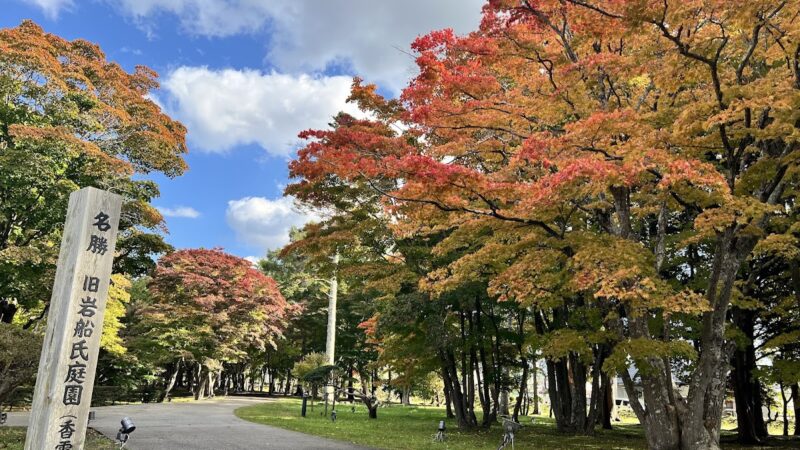
In autumn, surrounding trees change color, making it popular as an autumn foliage viewing spot. The scenery created by red and yellow leaves and the gray concrete of the buttress dam conveys an artistic beauty.
During the foliage season, many photography enthusiasts with cameras visit to capture the collaboration of the dam and autumn leaves.
Plaza Use and Facilities
At the Sasaryu Dam plaza, use of fire is permitted except for open flames, allowing enjoyment of barbecues and similar activities. However, users must follow Hakodate City rules and ensure garbage is taken away, requiring proper etiquette.
The plaza is equipped with the following facilities:
- Parking Lot: Free parking accommodating over 100 vehicles
- Restrooms: Publicly maintained clean restrooms
- Vending Machines: Beverage vending machines
- Benches: Numerous benches for rest
These facilities provide an environment for comfortable enjoyment.
Dam Structure and Technical Features
Details of Buttress Structure
The Sasaryu Dam’s buttress structure consists of the following elements:
- Upstream Face Plate: Reinforced concrete plate directly receiving water pressure
- Buttress: Grid-like walls supporting the upstream face plate
- Foundation: Sturdy foundation structure fixed to bedrock
This structure ensures sufficient strength while significantly reducing concrete usage compared to gravity dams.
Beautiful Grid-Like Appearance
What characterizes the Sasaryu Dam is its distinctive grid-like appearance. The sight of buttresses arranged at equal intervals gives the impression of a gigantic building, conveying a sense of structural beauty.
This grid-like structure is not merely design but a form optimized through structural mechanics, embodying the modern architectural principle that “form follows function.”
Earthquake Resistance and Safety
During the 1984 renovation works, structural reinforcement was performed to comply with modern seismic standards. Despite being designed in the Taisho era, through appropriate maintenance and renovation, it continues to function as a facility meeting modern safety standards.
Access Information and Tourism Guide
Location
Address: Akagawa Town, Hakodate City, Hokkaido (Sasaryu River, Kameda River Water System)
Access by Public Transportation
The Sasaryu Dam can be accessed using Hakodate streetcars or buses:
- From Hakodate Station: Take Hakodate Bus Akagawa line
- Nearest Bus Stop: “Akagawa Elementary School,” approximately 10-minute walk
Bus service is limited, so checking the schedule in advance is recommended.
Access by Automobile
The dam is approximately 20-30 minutes by car from downtown Hakodate. Head toward the Akagawa area from National Route 5, following direction signs.
A free parking lot accommodating over 100 vehicles is complete, making automobile access convenient. For families and groups, car use is especially recommended.
Best Season for Visiting
The Sasaryu Dam can be visited year-round, but particularly recommended times are:
- Spring (late April to early May): Cherry blossom blooming period
- Autumn (mid to late October): Peak autumn foliage season
- Summer (June to August): Lush green scenery and picnic-friendly conditions
Winter visiting is possible, but caution regarding snowy ground conditions is necessary.
Precautions When Visiting
As the Sasaryu Dam is an active water supply facility, please note the following:
- Access to the dam itself may be restricted
- Swimming and fishing in the reservoir are prohibited for water quality protection
- Always take garbage with you
- Open flames are prohibited when using fire
- The surrounding area is naturally rich, so treat plants and animals with care
Attractions for Dam Enthusiasts
Viewing Rare Buttress Dams
The opportunity to actually view a buttress dam, of which only 6 exist nationally in Japan, is a precious opportunity for dam enthusiasts. Moreover, the Sasaryu Dam also has the historical value of being Japan’s first buttress dam.
Photography Spots
The dam’s grid-like structure is an attractive subject for photography from various angles. The following photo spots are especially recommended:
- Full view from the front: Capturing the overall appearance of the buttress structure
- Angled perspective: Emphasizing the three-dimensional quality of the buttresses
- Collaboration with cherry blossoms or autumn foliage: Photography with seasonal feeling
- Silhouette at dusk: Creating a dramatic atmosphere
Dam Card
Hakodate City Enterprise Bureau may distribute Sasaryu Dam cards. Dam cards are popular collectible items among dam enthusiasts. It is recommended to inquire in advance with the Hakodate City Enterprise Bureau Water and Sewerage Department regarding distribution locations and conditions.
Nearby Tourist Attractions
Tourist Attractions in Hakodate City
When visiting the Sasaryu Dam, it is recommended to also visit other tourist attractions in Hakodate City:
- Hakodate Mountain: Hakodate’s representative night view spot
- Goryokaku: Star-shaped Western-style fortress
- Kanemori Red Brick Warehouse: Commercial facilities utilizing historic buildings
- Hakodate Morning Market: Market offering fresh seafood
- Trappistine Convent: Japan’s first women’s monastery
Nature in the Akagawa District
The Akagawa district surrounding Sasaryu Dam is a naturally rich area within Hakodate City. Combined with dam viewing, you can also enjoy nature walks and hiking.
History of Hakodate City’s Water Supply
Development of Modern Water Supply
Hakodate City’s water supply holds an important position in the history of modern Japanese water supply development. The Sasaryu Dam has played a central role in that development.
Relationship with Okusawa Dam
Hokkaido’s first water supply-dedicated dam was Hakodate’s Okusawa Dam. The Sasaryu Dam was constructed as the second dam following it, significantly improving Hakodate’s water supply capacity.
Currently, both the Okusawa Dam and Sasaryu Dam continue to function as important water sources for Hakodate City.
Modern Hakodate City Water Supply System
The Sasaryu Dam continues to play an important role in Hakodate’s modern water supply system. That a facility built over 100 years ago continues to operate through proper maintenance demonstrates both the high level of technology at the time and the importance of continuous maintenance.
Conclusion: Value and Future of Sasaryu Dam
The Sasaryu Dam is an extremely important civil engineering heritage site of historical and technical significance as Japan’s first buttress dam, while also being an active water supply facility supporting Hakodate residents’ lives.
For over 100 years since its completion in Taisho 12, this dam has functioned as Hakodate’s water source and has received numerous recognitions including the Japan Society of Civil Engineers Selected Civil Engineering Heritage, Modern Water Utilities 100 Selections, and 100 Famous Dams and Lakes.
The Sasaryu Dam possesses multifaceted attractions including its rare buttress dam type, the achievements of designer Motoki Ono, its history as the “Akagawa Water Source” beloved by residents, and the plaza where spring cherry blossoms and autumn foliage can be enjoyed.
When visiting Hakodate, be sure to visit this historically valuable Sasaryu Dam in addition to popular tourist spots such as Goryokaku and Hakodate Mountain. The scenery created by the dam’s beautiful grid-like structure and surrounding nature will surely become an unforgettable memory.
As a “living civil engineering heritage” in active operation, the Sasaryu Dam will continue to support Hakodate residents’ lives while transmitting its historical value to future generations.