Kamui Kotan, Hokkaido | Complete Guide to Ainu Sacred Site and Spectacular Gorge [Latest 2025]
Kamui Kotan (カムイコタン), located in Asahikawa City, Hokkaido, is a majestic gorge that spreads across the boundary where the Ishikari River flows from the Kamikawa Basin to the Ishikari Plain. Meaning “Kamui Kotan (a place where gods dwell)” in the Ainu language, this sacred site has been revered by the Ainu people since ancient times, and numerous legends have been passed down through generations.
The landscape of strange rocks and rapid currents stretching for approximately 10 kilometers was selected as one of the “Eight Scenic Views of Asahikawa” in 1997, and attracts many tourists as one of Hokkaido’s representative scenic spots. The greenstone schist layers formed over more than 100 million years can be said to represent the pinnacle of nature’s sculptural beauty.
The Origin of the Name Kamui Kotan and Ainu Culture
The place name Kamui Kotan is a phonetic translation of the Ainu word “Kamui Kotan.” “Kamui” means god and “Kotan” means settlement or dwelling place, so a literal translation is “a place where gods dwell.” As the name suggests, Kamui Kotan held special significance as a sacred site for the Ainu people.
According to Ainu oral traditions, a demon god (Ninnekamui) was said to inhabit this place and attacked those who traveled along the Ishikari River, leaving behind legends. Each of the strange rocks scattered throughout the gorge is connected to Ainu legends, and they continue to spark the imagination of visitors today.
The Geological Value of Kamui Kotan
Greenstone Schist Layers Bearing Over 100 Million Years of History
The greatest feature of Kamui Kotan is the greenstone schist layers formed over 100 million years ago. This rock was originally sediment on the ocean floor that underwent metamorphosis due to tectonic activity under high temperature and pressure, exhibiting dark green or black coloring. Locally called “Kamui Kotan stone,” it is the representative rock of this region’s unique geology.
Through the long erosion by the Ishikari River, the greenstone schist displays a rough yet beautiful form. The striped patterns carved into the rock surface and the bedding planes exposed by erosion are valuable records of Earth’s history.
Kamui Kotan Pothole Group (Natural Monument)
Along the banks of the Ishikari River at Kamui Kotan, a rare landform called the “Kamui Kotan pothole group” can be seen. Potholes are holes formed when small stones rotate in the river current and circularly carve away the bedrock, creating round depressions. The pothole group at Kamui Kotan has been designated a natural monument of Asahikawa City due to its scale and excellent preservation condition.
These potholes are natural artworks created by the violent water flow of the Ishikari River and the passage of long periods of time, and are extremely valuable from a geological perspective. They can be observed from near the suspension bridge and provide a spot where you can truly feel the grandeur of nature’s power.
Highlights of Kamui Kotan
Spectacular Views from the Kamui Oohashi Bridge and Suspension Bridge
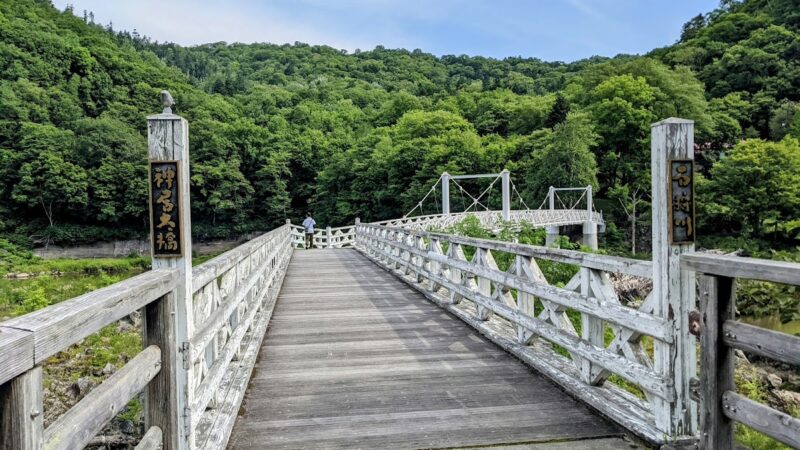
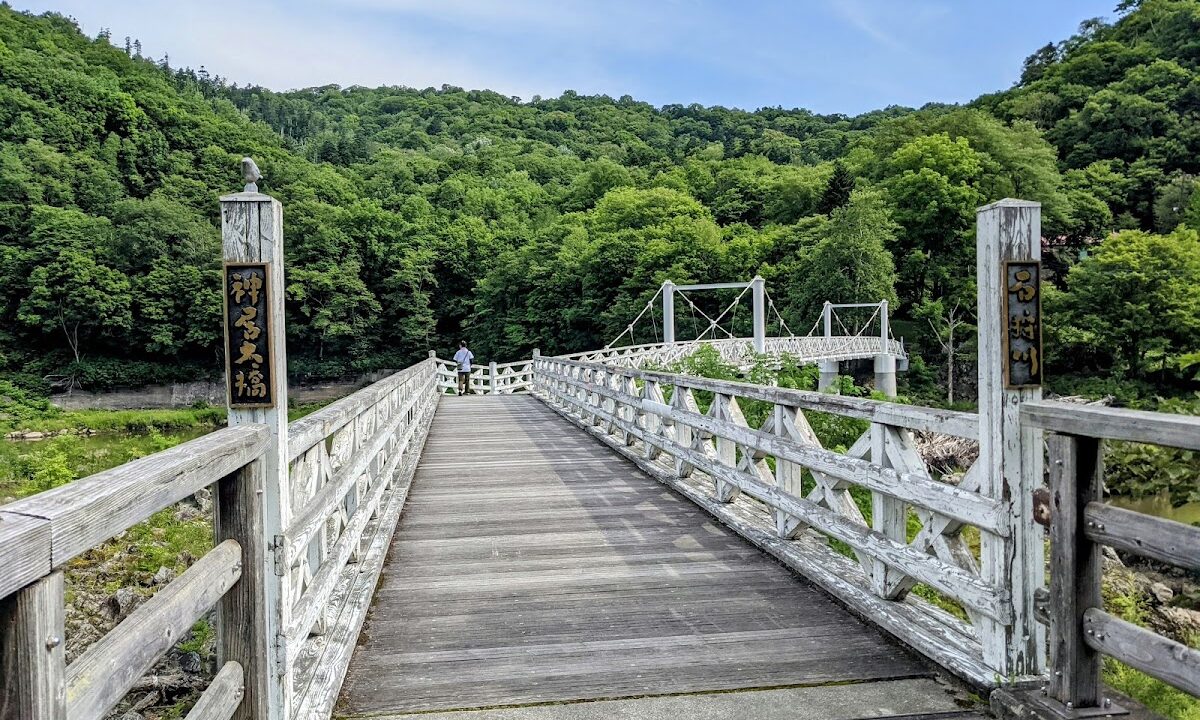
When visiting Kamui Kotan, the first thing you’ll want to cross is the suspension bridge spanning the Ishikari River. This suspension bridge is for pedestrians only and vehicles are not permitted, but the view of the gorge from the bridge is breathtaking. Below flows the rapid current, and on both banks loom steep rocky cliffs, creating an atmosphere befitting a “place where gods dwell.”
Beautiful scenery of the Ishikari River and gorge can also be enjoyed from the Kamui Oohashi Bridge. The view from atop the bridge displays a different character with each season, and there are always new discoveries no matter how many times you visit.
Former Kamui Kotan Station Building
Another highlight of Kamui Kotan is the former Kamui Kotan Station building. This wooden station structure, which retains the atmosphere of the era when the Hakodate Main Line operated, was closed as a station with the line’s double-tracking in 1969, but is now preserved and open to the public as a railroad heritage site.
Inside the station building, photographs and materials from that time are on display, allowing visitors to learn how difficult this section was for trains passing through Kamui Kotan. Due to the steep terrain and rapid current, this section was counted among “Hokkaido’s Three Great Difficult Passages.” The retro station building harmonizes beautifully with the surrounding natural landscape and is popular as a photography spot.
Strange Rock Groups and Legends
Scattered along the gorge are numerous strange rocks that appear in Ainu legends. These rocks, formed over long periods by erosion from the Ishikari River, each have names and stories. There are rocks where demons are said to have dwelled, rocks associated with heroes who confronted demons, and more. Knowing these legends changes how you perceive the landscape.
The shapes of the strange rocks create different impressions depending on the viewing angle and how light falls upon them, stimulating the imagination of visitors. Kamui Kotan’s unique charm lies in the fusion of natural sculptural beauty and the stories woven by people.
Kamui Kotan Through the Four Seasons
Spring: Season of Fresh Greenery
In spring, Kamui Kotan comes alive with fresh green foliage as snow melts, creating a landscape full of vitality. The Ishikari River carries abundant water, and the contrast between the powerful current and young green leaves is beautiful. From late April through May, cherry blossoms also begin to bloom, creating a unique atmosphere with the combination of rocky cliffs and flowers.
Summer: Thickly Verdant Gorge
In summer, Kamui Kotan is enveloped in deep green. The dark green of the greenstone schist and the green of surrounding trees overlap, creating a true “green gorge” appearance. The cool flowing water and tree shade make it a popular spot for escaping summer heat.
Autumn: Famous Autumn Foliage Spot
Kamui Kotan attracts the most tourists during the autumn foliage season. From mid to late October, rowan, water oak, maple, and other trees turn brilliant colors, and the entire gorge is painted in reds and yellows.
The contrast between the black and green of the greenstone schist and the red and yellow foliage is breathtakingly beautiful. The autumn foliage view from the suspension bridge is one of Hokkaido’s representative foliage spots, captivating many photographers and tourists.
Winter: Silent Silver World
In winter, Kamui Kotan becomes a silent world covered in snow. In contrast to summer, fewer people visit, and the sacred atmosphere becomes even more pronounced. The winter landscape created by the flowing Ishikari River, snow-covered scenery, and frost-covered rock faces has its own special beauty.
However, in winter, careful attention is needed for access due to icy roads and snow accumulation. Winter tires are essential, and roads may be closed depending on weather conditions.
Access to Kamui Kotan
Access by Car
Car access to Kamui Kotan is convenient.
- From JR Asahikawa Station: Approximately 40 minutes (approximately 25 km)
- From Asahikawa Airport: Approximately 50 minutes (approximately 35 km)
- From Sapporo: Approximately 2 hours 30 minutes (via expressway)
Head toward Sapporo on National Route 12 and follow the Kamui Kotan directional signs. Free parking is available, though the lot may fill during busy seasons like autumn foliage, so early visits are recommended.
Access by Public Transportation
When using public transportation, buses from JR Asahikawa Station are an option, but services are limited, so it’s recommended to check the timetable in advance. Shuttle buses may operate during tourist seasons.
Taxi fares from Asahikawa Station are approximately 6,000-7,000 yen one way.
Sightseeing Spots Around Kamui Kotan
Asahiyama Zoo
Located approximately 30 minutes by car from Kamui Kotan, Asahiyama Zoo is one of Hokkaido’s representative tourist attractions. It became nationally famous for its “behavioral exhibits” that allow observation of animals in natural behavior. Many tourists visit both Kamui Kotan and the zoo together, making it a popular course combining nature and animals.
Sounkyo Onsen Hot Spring
Located approximately 1 hour 30 minutes by car from Kamui Kotan, Sounkyo Onsen is a hot spring resort within Daisetsuzan National Park. After enjoying the natural scenery of Kamui Kotan, relaxing at a hot spring to ease fatigue is also recommended.
Asahikawa Ramen Village
Ramen Village in Asahikawa City gathers famous Asahikawa ramen restaurants. Before or after visiting Kamui Kotan, you may want to savor Hokkaido cuisine.
Notes for Visiting Kamui Kotan
Safety Precautions
- Suspension Bridge Crossing: The suspension bridge is for pedestrians only. As it may sway, those traveling with small children should exercise caution.
- Approaching the River: The Ishikari River has a swift current and is dangerous. Avoid getting too close to the riverbank.
- Behavior on Rocky Areas: Some areas around the strange rocks have poor footing. Comfortable walking shoes are recommended.
- Winter Visits: Accumulated snow and ice increase hazards. Prepare with winter gear and pay attention to weather conditions.
Facility Information
- Admission: Free
- Operating Hours: Open 24 hours (though nighttime visits are not recommended)
- Parking: Free parking available (approximately 50 spaces)
- Restrooms: Public restrooms available near the parking lot
- Barrier-Free Access: Access to the suspension bridge involves stairs, making wheelchair access difficult.
Photography Spots at Kamui Kotan
Recommended Photography Locations
- From the Suspension Bridge: Breathtaking views of the gorge looking down. Especially recommended during autumn foliage season.
- Former Station Building and Gorge: The combination of the retro station building and natural landscape is appealing.
- From Kamui Oohashi Bridge: The full panorama of the Ishikari River and gorge can be captured from atop the bridge.
- Strange Rocks from the Riverbank: The dramatic impact of the strange rocks up close can be photographed.
Best Times for Photography
- Morning: The early morning sun illuminating the rock surfaces creates a fantastical appearance.
- Evening: The gorge bathed in sunset light is also beautiful, and in autumn especially, the contrast between foliage and setting sun is spectacular.
- Cloudy Days: The texture of rock surfaces is well expressed, and a mysterious atmosphere can be captured.
Accommodations Near Kamui Kotan
Since accommodations are limited around Kamui Kotan, most tourists use hotels and hot spring inns in Asahikawa City.
Hotels in Asahikawa City
Around Asahikawa Station, a wide range of accommodations from business hotels to luxury hotels are available. Kamui Kotan is accessible by car in approximately 40 minutes.
Nearby Hot Spring Inns
- Asahidake Onsen: Approximately 1 hour by car. A hot spring resort at the foot of Daisetsuzan, featuring a natural, quiet environment.
- Sounkyo Onsen: Approximately 1 hour 30 minutes by car. A variety of accommodations from large hotels to small inns are available.
History of Kamui Kotan
The Ainu Era
Kamui Kotan has been an important place for the Ainu people since ancient times. It was not only a key point in transportation utilizing the Ishikari River but also a feared place where a demon god was said to dwell. In Ainu legends, stories have been passed down of heroes who battled with the demon god of this place.
The Railroad Era
In the late Meiji period, with the progression of Hokkaido development, the Hakodate Main Line came to pass through this area. However, construction proved extremely difficult due to the steep terrain and rapid current of the Ishikari River. After opening in 1898 (Meiji 31), this section remained known as one of “Hokkaido’s Three Great Difficult Passages,” and careful attention was paid to train operations.
Modern Times
With the double-tracking in 1969, the route of the Hakodate Main Line was changed, and Kamui Kotan Station was closed. However, it was subsequently developed as a tourist destination and is now enjoyed by many people as one of Asahikawa’s representative scenic spots.
Conclusion
Kamui Kotan is a tourist destination unique to Hokkaido where more than 100 million years of geological history, Ainu legends and culture, railroad heritage, and the natural beauty of four seasons converge. Located at the boundary where the Ishikari River flows from the Kamikawa Basin to the Ishikari Plain, this gorge possesses an atmosphere befitting its name as a “place where gods dwell.”
Particularly during the autumn foliage season, many tourists flock here, but each season offers different attractions: spring’s fresh greenery, summer’s deep green, and winter’s snowy landscape. When visiting Asahikawa, be sure to stop by Kamui Kotan and experience both the sculptural beauty of nature and the depth of Ainu culture.
There are numerous sights to see, including the former Kamui Kotan Station building, the pothole group designated as a natural monument, and the spectacular views from the suspension bridge. The excellent access from Asahikawa Station and Asahikawa Airport, combined with the ease of planning a tour that includes other attractions such as Asahiyama Zoo, makes it attractive.
Fully savor Hokkaido’s grand nature, history, and culture at Kamui Kotan.