Hirosaki Park, Aomori Prefecture Complete Guide | History, Highlights, and Four-Season Event Information
Hirosaki Park, located in the center of Hirosaki City, Aomori Prefecture, is a historic urban park developed around the ruins of Hirosaki Castle, the former residence of the Tsugaru clan daimyo during the Edo period. Known not only as one of Japan’s premier cherry blossom destinations with approximately 2,600 cherry trees in full bloom, but also for its existing castle keep, important cultural property buildings, and year-round seasonal events, it attracts over 2 million visitors annually and is filled with sightseeing attractions.
About Hirosaki Park | Aomori Prefecture’s Representative Historic Park
Hirosaki Park (Hirosaki Koen) is an urban park located in Shimoshiroki-cho, Hirosaki City, Aomori Prefecture. Its formal urban planning park name is “Oyo Park (Oyokouen),” and under Hirosaki City’s urban park ordinance it is called “Oyoen.” Spanning a vast area of approximately 49.2 hectares, the grounds feature historic buildings including Hirosaki Castle Keep, beautiful moats, and diverse plants, serving as both a gathering place for residents and one of Aomori Prefecture’s leading tourist destinations.
The greatest characteristic of Hirosaki Park is the fusion of historical value conveying the appearance of an Edo-period castle complex with natural beauty that presents different expressions throughout the seasons. From spring cherry blossoms, summer fresh greenery, autumn foliage, and winter snow landscapes, it is a place worth visiting in each season, continuously captivating many domestic and international tourists.
The History of Hirosaki Castle and Hirosaki Park
Hirosaki Castle was completed in 1611 (Keicho 16) by Tsugaru Nobuhira, son of Tsugaru Tameshin. Initially, a five-story keep was constructed, but it was destroyed by lightning in 1627 (Kan’ei 4). The current three-story keep was reconstructed in 1810 (Bunka 7) by renovating the Tatsumi Tower in the main enclosure. It is one of only twelve castles nationwide with an existing keep constructed during the Edo period, and as the only existing keep in the Tohoku region, it is a precious historical asset.
After the Meiji Restoration, the castle came under the jurisdiction of the Ministry of the Army, but in 1895 (Meiji 28) it was loaned free of charge to Hirosaki City and opened to the public. This marked the beginning of Hirosaki Park. In 1903 (Meiji 36), former samurai Tateei Kikuchi donated 1,000 Somei Yoshino cherry trees, and with continued planting thereafter, the park has become a leading cherry blossom destination in Japan today, now featuring 52 varieties and approximately 2,600 cherry trees.
Hirosaki Castle Keep and Important Cultural Property Buildings
Within Hirosaki Park, there are nine structures designated as National Important Cultural Properties, and these serve as valuable historical assets of Edo-period castle architecture with high historical significance.
Characteristics of Hirosaki Castle Keep
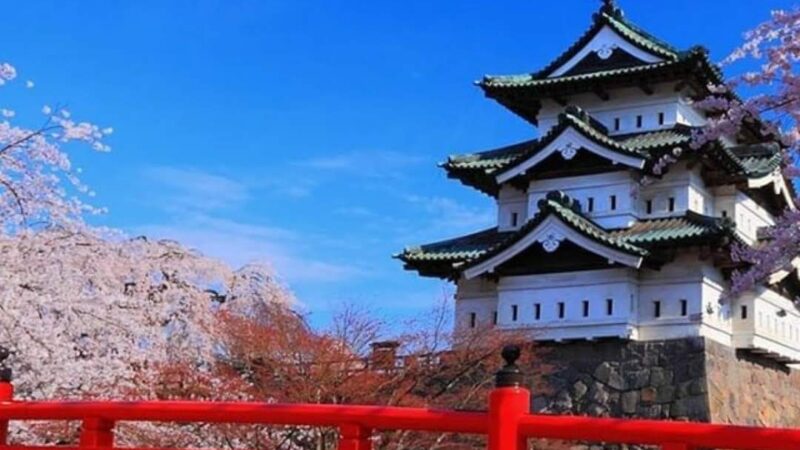
Hirosaki Castle Keep is known as Japan’s northernmost existing castle keep, featuring a distinctive architectural style with a three-story, three-level structure. At approximately 14.4 meters in height, it is relatively modest in scale, but the beautiful contrast between white plaster walls and black tile roofing creates harmony with the surrounding nature, captivating many photographers and tourists.
The castle keep’s interior is open to the public as a museum, displaying valuable materials related to Tsugaru clan history and the castle, weapons, and old documents. From the top floor, one can view the entire Hirosaki Park and the majestic scenery of Mount Iwaki, and particularly during cherry blossom season, one can enjoy spectacular views surrounded by a sea of cherry blossoms.
Stone Wall Repairs and the Castle Keep Relocation Project
From 2015 to 2021, Hirosaki Castle Keep was relocated approximately 70 meters from its original position due to “stone wall repair projects.” When outward bulging, called “harami,” was detected on the stone wall on the east face of the main enclosure, the keep was temporarily moved to conduct dismantling and repair of the stone wall. This large-scale construction was carried out using “hikiya,” a traditional technique, and the sight of the keep being relocated became a major topic of conversation as the “Hirosaki Castle Keep Relocation.”
In 2021, upon completion of the stone wall repairs, the keep was restored to its original location, and this project yielded new discoveries regarding stone wall structure and castle-building techniques, greatly contributing to historical research on Hirosaki Castle. Today, the keep can be visited as usual, and visitors can enjoy its magnificent appearance along with the beautifully repaired stone walls.
Other Important Cultural Property Buildings
In addition to Hirosaki Castle Keep, the following eight structures are designated as National Important Cultural Properties.
Castle Gates
- Oute Gate (Outemont): The main south gate, serving as the face of Hirosaki Park
- South Inner Gate (Minami Uchimont): A substantial gate connecting the second and main enclosures
- East Gate (Higashi Mont): A gate leading from the third enclosure to the second enclosure
- North Gate (Kame no Ko Mont): The northern entrance
- East Inner Gate (Higashi Uchimont): One of the main enclosure entrances
Towers
- Tatsumi Tower (Tatsumi Yagura): A two-story tower positioned at the southeast corner of the main enclosure
- Hitsujisaru Tower (Hitsujisaru Yagura): A tower at the southwest corner of the main enclosure
- Ushitora Tower (Ushitora Yagura): A tower at the northeast corner of the main enclosure
These structures are valuable historical assets conveying Edo-period castle architecture techniques and aesthetic sensibility, and their individual characteristics can be observed while strolling through the park. In particular, the appearance of castle gates and towers reflected in the moat is popular as a photography spot.
Hirosaki Park’s Cherry Blossoms | One of Japan’s Three Premier Cherry Blossom Destinations
Hirosaki Park is counted among “Japan’s Three Premier Cherry Blossom Destinations,” and its cherry blossom beauty is famous nationwide. The park features 52 varieties and approximately 2,600 cherry trees, and centered on Somei Yoshino, various species such as weeping cherry and double-flowered cherry bloom in succession, allowing visitors to enjoy cherry blossoms over an extended period.
Characteristics of Hirosaki Park’s Cherry Blossoms
The reason Hirosaki Park’s cherry blossoms are particularly beautiful lies in Hirosaki City’s unique “Hirosaki Method,” a management technique. By applying pruning techniques cultivated in apple cultivation to cherry trees, they successfully achieved multiple blooms from a single flower bud. While ordinary Somei Yoshino produce 3-4 flowers per bud, cherry trees in Hirosaki Park produce 5-7 flowers each, becoming luxuriously voluminous cherry blossoms.
Within the park stands one of Japan’s oldest Somei Yoshino trees, exceeding 140 years old, protected as Hirosaki Park’s longest-lived cherry tree. Additionally, the “flower raft” that fills the moat is known as a spectacular sight unique to Hirosaki Park—fallen cherry petals covering the water’s surface create a pink carpet-like landscape that captures many tourists’ hearts.
Hirosaki Cherry Blossom Festival
The “Hirosaki Cherry Blossom Festival,” held annually from late April to early May, is one of Japan’s representative cherry blossom festivals. During the festival period, approximately 2 million tourists visit, and the park bustles day and night.
The main highlight during the festival is nighttime illumination. The sight of approximately 2,600 cherry trees lit by lighting is magical and presents a completely different appearance from daytime. In particular, the illumination of the cherry tree row along the west moat is praised as “Japan’s finest cherry blossoms,” and the cherry reflection on the water’s surface is breathtakingly beautiful.
Numerous food stalls line the park, offering local specialties such as “black konnyaku” and “igamench,” as well as flower viewing dumplings and caramel apples. Additionally, from the main enclosure one can view the collaboration of Mount Iwaki and cherry blossoms, allowing visitors to savor a scenic view unique to Aomori Prefecture.
Cherry Blossom Peak Season and Flowering Information
Hirosaki Park’s cherry blossoms typically peak from late April to early May. However, as flowering times vary depending on weather, checking the latest cherry blossom information before visiting is recommended. Hirosaki Park’s official website provides regular updates on flowering forecasts, peak bloom predictions, and current flowering conditions, which help with trip planning.
Even after Somei Yoshino petals fall, weeping cherry and double-flowered cherry continue blooming, allowing visitors to enjoy cherry blossoms until mid-May, another charm of Hirosaki Park.
Hirosaki Park’s Appeal Throughout the Four Seasons
Hirosaki Park is not merely a cherry blossom destination but a fascinating spot presenting different expressions throughout the year. Events tailored to each season are held, making it enjoyable year-round.
Hirosaki Park in Summer | Fresh Greenery and Lotus Flowers
As the cherry blossom season ends, Hirosaki Park becomes enveloped in fresh greenery. The park interior, covered in deep green, feels cool and is ideal for strolling. Particularly noteworthy are the lotus flowers blooming in the moat adjacent to Hirosaki Castle Botanical Garden. From late July through early August, beautiful pink lotus flowers color the water’s surface, and early morning visitors can observe the flowers opening.
Summer at Hirosaki Park sees relatively fewer tourists, making it suitable for leisurely viewing historic buildings and relaxing in the shade.
Hirosaki Park in Autumn | Autumn Foliage Festival and Chrysanthemum Exhibition
From late October through early November, Hirosaki Park becomes popular as an autumn foliage destination. Approximately 1,000 maples and Japanese maples change color, transforming the park into beautiful reds and yellows unique to autumn.
During the “Hirosaki Castle Chrysanthemum and Autumn Foliage Festival,” approximately 1,000 chrysanthemum pots are displayed centered at Hirosaki Castle Botanical Garden, with magnificent chrysanthemum figures and large blooms delighting visitors. Autumn foliage illumination is also provided, enveloping the nighttime park in a magical atmosphere.
Particularly spectacular is the combination of autumn foliage and Hirosaki Castle Keep viewed from the second enclosure, a photography spot attracting many photographers.
Hirosaki Park in Winter | Snow Lantern Festival
The “Hirosaki Castle Snow Lantern Festival” held in early February is a signature winter event in Hirosaki. In a magical atmosphere unique to snowy regions, various large and small snow lanterns and snow sculptures are installed throughout the park and lit by candles at night.
Hirosaki Castle Keep covered in snow and snow-dressed pine trees resemble a black ink painting’s beauty. Though the cold is severe, it is a precious opportunity to experience winter’s tranquility and beauty. The festival also features giant snow sculptures and slides, making it enjoyable for families.
Scenic Spots Within Hirosaki Park
Beyond Hirosaki Castle Keep, there are many scenic spots within Hirosaki Park. Taking time for leisurely strolling allows deeper appreciation of Hirosaki Park’s charm.
Hirosaki Castle Botanical Garden
Located in the third enclosure of Hirosaki Park, Hirosaki Castle Botanical Garden is a vast botanical garden with approximately 1,500 species and 124,000 trees and plants. The grounds are organized by theme, including areas recreating Shirakami Mountain Range nature, Japanese gardens, and wetland plant gardens, allowing observation of seasonal plants year-round.
Particularly noteworthy are plants in peak bloom each season: spring dogtooth violets and skunk cabbages, early summer roses, and autumn foliage. For nature enthusiasts, this is an attractive destination. Admission is 320 yen for adults (combination tickets with Hirosaki Castle Keep available), allowing leisurely nature appreciation.
Hirosaki Castle Information Center
Near the Oute Gate, Hirosaki Castle Information Center provides information about Hirosaki Castle and Hirosaki Park. Admission is free, with exhibits introducing Hirosaki Castle history and the stone wall repair process, plus tourist information. The facility also features a rest area and restrooms, making it convenient as a strolling base.
Moats and Bridges
The moat surrounding Hirosaki Park served defensive functions for the castle but now beautifully enhances the park’s landscape. Particularly famous is the cherry tree row along the west moat, called “Japan’s finest cherry blossoms,” where cherry reflections on water create spectacular views.
The bridges spanning the moat are also scenic highlights, with the Gejou Bridge particularly popular as a photography spot with Hirosaki Castle Keep as a backdrop. This red-painted railing bridge is one of Hirosaki Park’s representative landscapes.
Butoku Hall and Gokoku Shrine
The park contains historic structures and religious facilities including Butoku Hall and Gokoku Shrine. Visiting these allows exploration of Hirosaki’s history and culture.
Access Information | How to Get to Hirosaki Park
Hirosaki Park, located in central Hirosaki City, Aomori Prefecture, is easily accessible by both public transportation and car.
Access by Train
From JR Hirosaki Station
- Walking: Approximately 25 minutes (approximately 2km)
- Bus: Konan Bus to “City Hall” stop, approximately 5 minutes on foot (approximately 10 minutes total)
- Taxi: Approximately 10 minutes
JR Hirosaki Station is approximately 35 minutes from Shin-Aomori Station (Tohoku Shinkansen) via the Ou Main Line. From Shin-Aomori Station, using the Limited Express Tsugaru reaches the destination in approximately 30 minutes.
Access by Car
- From “Owani-Hirosaki IC” on the Tohoku Expressway: Approximately 25 minutes
- From “Kuroishi IC” on the Tohoku Expressway: Approximately 30 minutes
Parking Information
Multiple parking areas surround Hirosaki Park, but they become extremely congested during events such as the cherry blossom festival.
Main Parking Areas
- Hirosaki City Tourist Information Center Parking: 88 spaces
- Hirosaki Culture Center Parking: 110 spaces
- Tsugaru Han Neputa Village Parking: 200 spaces
Temporary parking areas are established during the cherry blossom festival period, but these frequently reach capacity, making public transportation recommended. Additionally, early morning or weekday visits tend to offer easier parking.
Hirosaki Park Admission and Hours
Admission Fees
Admission to Hirosaki Park itself is free, but certain areas require admission.
Fee-Based Areas
- Hirosaki Castle Main Enclosure and North Enclosure: 320 yen for adults, 100 yen for children
- Hirosaki Castle Botanical Garden: 320 yen for adults, 100 yen for children
- Combined Ticket (Main Enclosure and North Enclosure + Botanical Garden): 520 yen for adults, 160 yen for children
Admission fees may differ during the cherry blossom festival period.
Hours of Operation
- Hirosaki Park: Open 24 hours (some areas lack nighttime lighting)
- Hirosaki Castle Main Enclosure and North Enclosure: 9:00 AM–5:00 PM (April 1–November 23)
- Hirosaki Castle Botanical Garden: 9:00 AM–5:00 PM (mid-April–November 23)
Hours may be extended during the cherry blossom festival period.
Tourist Spots Around Hirosaki Park
Visiting nearby tourist attractions alongside Hirosaki Park allows for deeper experience of Hirosaki’s charm.
Fujita Memorial Garden
A Japanese garden adjoining Hirosaki Park’s north side, created during the Taisho era. Composed of elevated and lowland sections, it offers beautiful scenery throughout the seasons. A Western-style building serves tea, making it ideal for a stroll break.
Hirosaki City Museum
A museum within Hirosaki Park featuring exhibits on Tsugaru region history and culture. Displays of Hirosaki clan history and folk materials provide valuable information for deepening understanding of Hirosaki.
Saisho-in Five-Story Pagoda
Located approximately 15 minutes on foot from Hirosaki Park, this five-story pagoda designated as a National Important Cultural Property is known as Tohoku’s only five-story pagoda, constructed in 1667. It is a beautifully crafted building.
Hirosaki Nakacho Historic Building Conservation District
A samurai residence district north of Hirosaki Park preserving Edo-period atmosphere. Strolling through streets lined with black board fences creates a sense of time travel.
Best Seasons to Visit Hirosaki Park and Enjoyment Tips
While Hirosaki Park holds appeal year-round, the best season varies by objective.
For Cherry Blossoms: Late April–Early May
This period is ideal for experiencing one of Japan’s premier cherry blossom destinations. However, it is also the most crowded time, requiring early visits or weekday visits, plus advance accommodation reservations.
For Leisurely Historic Appreciation: June–September
This relatively less-crowded period allows thorough viewing of Hirosaki Castle Keep and important cultural property buildings. Nature also provides fresh greenery and lotus flower enjoyment.
For Autumn Foliage: Late October–Early November
The second-most popular season, featuring beautiful collaboration of autumn foliage and Hirosaki Castle. The chrysanthemum exhibition can also be enjoyed simultaneously.
For Snow Scenery: Early February
The snow lantern festival period is recommended. Though severe cold prevails, visitors experience magical scenery unique to snowy regions.
Summary | Fully Savor Hirosaki Park’s Charm
Hirosaki Park in Hirosaki City, Aomori Prefecture is Aomori Prefecture’s representative tourist destination, offering a fusion of Hirosaki Castle Keep and important cultural property buildings conveying Edo-period history, beauty as one of Japan’s premier cherry blossom destinations, and seasonal events with nature.
From spring’s Hirosaki cherry blossom festival with approximately 2,600 blossoming cherry trees, summer’s fresh greenery and lotus flowers, autumn’s foliage and chrysanthemums, to winter’s magical snow lantern festival, each season reveals different charm. Historic buildings including Hirosaki Castle Keep hold high value as precious Japanese castle architecture assets, making them must-see for history enthusiasts.
When visiting Hirosaki Park, strolling leisurely through the grounds with time to spare and enjoying both seasonal natural beauty and historic structures is recommended. Additionally, experiencing nearby tourist attractions and Hirosaki’s local cuisine enriches the visit.
When visiting Aomori Prefecture, be sure to savor the beautiful landscape where history and nature intertwine at Hirosaki Park.