
.jpg)
Complete Guide to Tamon-in (Saitama Prefecture): Detailed Explanation of Historic Temples in Saitama City and Tokorozawa City
Saitama Prefecture is home to multiple temples bearing the name “Tamon-in,” each possessing its own unique history and cultural properties. This article provides detailed explanations of Tamon-in temples located primarily in Minuma Ward, Saitama City, and in Tokorozawa City, covering their historical backgrounds, cultural properties, transportation access, and year-round events. It aims to serve as a valuable information source for those considering a visit or those interested in temple culture in Saitama Prefecture.
Table of Contents
This article covers the following topics in detail:
- Overview and characteristics of Tamon-in (Minuma Ward, Saitama City)
- Overview and characteristics of Tamon-in (Tokorozawa City)
- Historical backgrounds of each
- Held cultural properties
- Principal images and faith
- Highlights of the temple grounds
- Year-round events and festivals
- Transportation access information
- Nearby tourist spots
Overview of Tamon-in (Minuma Ward, Saitama City)
Basic Information
Tamon-in, located in Marugasaki, Minuma Ward, Saitama City, is a historic temple belonging to the Chisan School of Shingon Buddhism. As a subsidiary temple of Daikaku-ji in Ukyo Ward, Kyoto City, it boasts a long history. It is said to have been founded during the Engen era (1336-1340) and, as a temple with legitimate origins continuing from the Northern and Southern Courts period, has gathered community faith over the centuries.
The temple is located at 1186 Marugasaki, Minuma Ward, Saitama City, and is accessible from Higashi-Omiya Station. Situated within a residential area, the temple grounds maintain a tranquil atmosphere despite being in an urban setting.
Sect and Head Temple
The Chisan School of Shingon Buddhism, centered on Chisan among Shingon sects, has its head temple at Chishaku-in in Kyoto. Tamon-in in Saitama City belongs to a lineage with Daikaku-ji as its head temple, preserving the traditions of Shingon esoteric Buddhism to the present day. Shingon Buddhism is an esoteric Buddhist sect founded by Kobo Daishi Kukai, characterized by an emphasis on rituals such as empowerment prayers and homa offerings.
Overview of Tamon-in (Tokorozawa City)
Basic Information
Tamon-in, located in Nakatomi, Tokorozawa City, is a temple belonging to the Toyosan School of Shingon Buddhism. With the mountain name Hotokuyama and temple name Kichijoji, its principal image is Mahavairocana Buddha. This Tamon-in differs from the Saitama City temple in its sectarian affiliation and differs significantly in its founding circumstances.
Located at 1501 Nakatomi, Tokorozawa City, Saitama Prefecture, it has a history closely connected to the reclamation of Mitomi Shinden. Today, it continues to serve as a center of community faith, attracting many visitors.
Sect and Principal Image
The Toyosan School of Shingon Buddhism is a branch of Shingon Buddhism with Hasedera in Sakurai City, Nara Prefecture, as its head temple. The principal image, Mahavairocana Buddha, is the most important deity in Shingon Buddhism and is regarded as an embodiment of cosmic truth itself. In esoteric Buddhism, there is a doctrine that all Buddhas are manifestations of Mahavairocana Buddha.
History
History of Tamon-in (Minuma Ward, Saitama City)
Tamon-in in Minuma Ward, Saitama City, is said to have been founded by Shunkō during the Engen era (1336-1340). The founding during the turbulent period of the Northern and Southern Courts is believed to reflect the role temples played as spiritual support for warriors and common people of that time.
Later, it is said that Eiban revived the temple in 1557 (Kōji 3). After overcoming the chaos of the Warring States period, the achievements of Eiban in reviving the temple were significant, and it can be said he laid the foundation for the current Tamon-in. Throughout the Edo period, it developed as a center of community faith and, overcoming the anti-Buddhist persecution following the Meiji Restoration, continues to the present day.
History of Tamon-in (Tokorozawa City)
Tamon-in in Tokorozawa City was founded in 1696 (Genroku 9) by Yanagisawa Yoshiyasu, daimyo of Kawagoe Domain. Yanagisawa Yoshiyasu was a person who wielded considerable power as a senior advisor (sobayōnin) to Tokugawa Tsunayoshi, the fifth shogun of the Edo shogunate, and also devoted himself to domain management as daimyo of Kawagoe.
The reclamation of Mitomi Shinden was one of Yanagisawa Yoshiyasu’s representative projects. During the development of three new fields—Kamiitomi, Nakaomi, and Shimoitomi—he founded Bishamon Shrine (later Tamon-in) as a spiritual foundation and prayer site for the colonists. Initially, it appears to have been more shrine-like in character, honoring Bishamonten, but following the Shinto-Buddhist separation edict of the early Meiji period, it became a Buddhist temple as Tamon-in.
The reclamation of Mitomi Shinden achieved success through planned land division and introduction of agricultural techniques, and Tamon-in, as a symbolic presence of this reclamation project, remains rooted in the community today.
Cultural Properties
Cultural Properties of Tamon-in (Minuma Ward, Saitama City)
Tamon-in in Saitama City preserves several valuable cultural properties.
Marugasaki Roku-Jizō Stone Buddha is an important stone structure that speaks to the area’s history. The Roku-Jizō represents Jizō Bodhisattva saving beings in each of the six realms (hell, hungry ghosts, animals, asuras, humans, and heavenly beings), serving as a valuable material transmitting Edo-period popular Buddhist faith to the present day.
Enku-Sculpted Bodhisattva Seated Statue of Marugasaki is a work by Enku, a priest and sculptor of the Edo period. Enku is a legendary figure said to have carved 120,000 Buddhist statues during his lifetime, known for his distinctive rough-carved but warm style. Enku Buddhas remain throughout Japan, and examples in Saitama Prefecture are particularly valuable and highly appreciated as cultural properties.
These cultural properties are invaluable materials for understanding the region’s history and changes in faith, making them important highlights when visiting Tamon-in.
Cultural Properties of Tamon-in (Tokorozawa City)
The most famous cultural property at Tamon-in in Tokorozawa City is the golden Bishamonten said to have been the guardian Buddha of Takeda Shingen. Bishamonten is another name for Tamonten, one of the Four Heavenly Kings, and has been worshipped as a deity of martial fortune and material wealth.
This Bishamonten statue, said to have been actually venerated by Takeda Shingen, is believed to be crafted from pure gold and is an extremely valuable cultural property. Shingen had deep faith in Bishamonten, famously using the character “Bi” on his military standard. While the exact circumstances by which this Bishamonten statue came to be enshrined at Tamon-in involve various theories, it is a historical legacy connecting the Warring States period and the Edo period, drawing the interest of many visitors.
This golden Bishamonten enshrined in the Bishamonten Hall is said to bring benefits of good fortune and prosperity, commercial success, and victory in competition, and is said to be particularly venerated by those born in the Year of the Tiger.
Principal Images and Faith
Principal Image of Tamon-in (Minuma Ward, Saitama City)
Regarding the principal image of Tamon-in in Saitama City, as a temple of the Chisan School of Shingon Buddhism, it is believed that an esoteric Buddhist statue is enshrined, though detailed records on the specific principal image are limited. Shingon temples commonly have Mahavairocana Buddha, Acala Buddha, or Kobo Daishi as principal images, and this Tamon-in likely displays similar forms of faith.
The temple name “Tamon-in” possibly derives from Tamonten (Bishamonten), and may be related to Bishamonten faith.
Principal Image and Faith of Tamon-in (Tokorozawa City)
The principal image of Tamon-in in Tokorozawa City is Mahavairocana Buddha. Mahavairocana Buddha is the highest deity in Shingon Buddhism, symbolizing cosmic truth itself. With the Sanskrit name “Mahāvairocana,” it means “great luminance.”
Meanwhile, based on the temple name Tamon-in and its character as a center of Bishamonten faith, the temple actually centers on devotion to Bishamonten. Bishamonten is one of the Four Heavenly Kings who guards the north and is widely venerated as a deity bringing wealth and good fortune.
Particularly deep connections exist with the Year of the Tiger, as the Bishamonten’s messenger is said to be the tiger, making the temple popular with those born in Tiger years and Tiger-year visitors. A unique form of faith known as “substitute tiger offering” is observed, where small tiger figurines are offered as prayers for wishes and protection from misfortune.
Highlights of the Temple Grounds
Highlights of Tamon-in (Minuma Ward, Saitama City) Grounds
While located within a residential area, the grounds of Tamon-in in Saitama City maintain a tranquil atmosphere. Centered on the main hall, with the previously mentioned Roku-Jizō stone Buddha and Enku Buddha positioned throughout, the space evokes a sense of history.
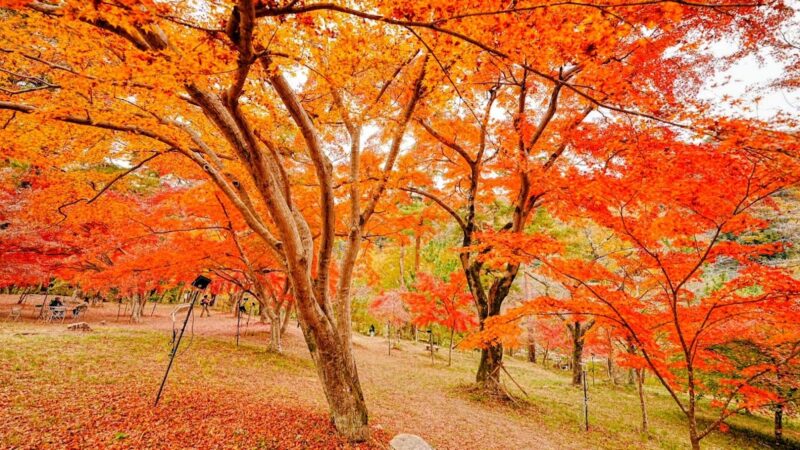
Seasonal flowers are also planted on the grounds, allowing visitors to enjoy nature throughout the year with cherry blossoms in spring, fresh greenery in early summer, and autumn foliage. Serving as valuable green space in an increasingly urbanized area, it plays an important role.
Highlights of Tamon-in (Tokorozawa City) Grounds
The grounds of Tamon-in in Tokorozawa City are more expansive, with a spatial composition reflecting the history of Mitomi Shinden reclamation. Central to the grounds is the Bishamonten Hall, where the golden Bishamonten is enshrined.
The grounds feature a main hall, bell tower, and water basin among other structures welcoming visitors. The flowers on the grounds are also noteworthy, particularly beautiful in spring cherry blossoms, early summer hydrangeas, and autumn spider lilies, attracting photography enthusiasts.
During the New Year daruma fair season, numerous daruma vendors line the grounds, drawing large crowds of visitors. The sight of people seeking auspicious items is a traditional Japanese New Year tradition.
Year-Round Events and Festivals
Events at Tamon-in (Minuma Ward, Saitama City)
As a Shingon Buddhist temple, Tamon-in in Saitama City conducts various religious services and events throughout the year.
Spring and autumn equinox observances, Obon feeding ceremony for hungry spirits, and other traditional Buddhist temple events form the center. Monthly homa offerings are also conducted, with community believers in attendance. Special services may be held on the 21st, the death anniversary of Kobo Daishi.
Events at Tamon-in (Tokorozawa City)
Tamon-in in Tokorozawa City is known for hosting a variety of events throughout the year.
New Year’s Daruma Fair is one of the most famous events. Many visitors come to the temple in the new year seeking good fortune and auspicious daruma figurines. Numerous stalls line the grounds, creating a lively New Year atmosphere.
Substitute Tiger Offering is a unique custom based on Bishamonten faith. Small tiger figurines are offered in prayer for wishes and protection from misfortune, particularly popular among those born in Tiger years and Tiger-year visitors.
Other traditional Buddhist temple events are also conducted, including bean-scattering on Setsubun, spring and autumn equinox observances, and Obon feeding ceremony. Special prayers may be offered on Tora-no-hi (Tiger days), the Bishamonten’s festival day.
Transportation Access
Access to Tamon-in (Minuma Ward, Saitama City)
Address: 1186 Marugasaki, Minuma Ward, Saitama City, Saitama Prefecture
By Train:
- Approximately 20-minute walk from “Higashi-Omiya Station” on the JR Utsunomiya Line, or accessible by bus
- Approximately 25-minute walk from “Owada Station” on the Tobu Noda Line
- Also accessible from “Nanasato Station” on the Tobu Noda Line
By Bus:
- Board a bus from Higashi-Omiya Station and alight at the nearest stop, followed by a short walk
By Car:
- Approximately 15 minutes from the Iwatsuki IC on the Tōhoku Expressway
- Approximately 20 minutes from Shin-Toshin Nishi IC on the Saitama Metropolitan Expressway
- It is recommended to check in advance regarding parking availability
Access to Tamon-in (Tokorozawa City)
Address: 1501 Nakatomi, Tokorozawa City, Saitama Prefecture
By Train:
- Approximately 20 minutes by Seibu bus from “Tokorozawa Station” on the Seibu Ikebukuro Line, alight at “Nakatomi” bus stop, followed by approximately 5-minute walk
- Also accessible by bus from “Shin-Tokorozawa Station” on the Seibu Shinjuku Line
By Bus:
- Board Seibu bus from west exit of Tokorozawa Station heading toward “Mikajima, Waseda-Danchi, Miyatera Nishi, or Kamiitomi”
- Alight at “Nakatomi” bus stop, followed by approximately 5-minute walk
By Car:
- Approximately 15 minutes from Tokorozawa IC on the Kan’etsu Expressway
- Accessible from National Route 463
- Parking for visitors available on the grounds (limited capacity; public transportation recommended during events)
Nearby Tourist Spots
Nearby Tamon-in (Minuma Ward, Saitama City)
Several tourist spots exist in the vicinity of Tamon-in in Minuma Ward, Saitama City.
Minuma Tanbo is a vast green space ideal for walks and cycling. Despite being in an urban area, rich nature is preserved, and bird watching is also possible. Spring cherry blossom alleys are beautiful, drawing many flower-viewing visitors.
Hikawa Nyotai Shrine is an ancient shrine in Minuma Ward, said to be the female deity location of Hikawa Shrine, one of Musashi’s major shrines. A historic shrine where many visitors also pray at Tamon-in.
Ōmiya Bonsai Art Museum is a rare bonsai-specialized art museum worldwide, allowing visitors to appreciate the artistry of bonsai, a traditional Japanese culture. Accessible by traveling toward Ōmiya from Higashi-Omiya Station.
Nearby Tamon-in (Tokorozawa City)
Several attractive tourist spots are scattered around Tamon-in in Tokorozawa City.
Mitomi Shinden’s historic landscape is a cultural heritage closely connected to Tamon-in. The strip-shaped land division today conveys the planned reclamation of the Edo period, highly valued as agricultural landscape.
Tokorozawa Aviation Memorial Park is a vast park known as the birthplace of Japanese aviation. The Tokorozawa Aviation Birthplace Memorial Museum allows visitors to learn about aviation history and science, popular with families.
The Sayama Hills, known as “Totoro’s Forest,” is a rural mountain area preserving rich nature, ideal for hiking and nature observation. Famous as the model setting for the film “My Neighbor Totoro,” it attracts many nature enthusiasts.
Seibu-en Yūenchi is an amusement park drawing attention for its Showa retro-themed renewal. Popular leisure spot for families and couples.
Visiting Etiquette and Notes
When visiting Tamon-in, observing general temple-visiting etiquette is important.
Basic Visiting Procedures:
- Bow before the mountain gate before entering the grounds
- Purify hands and mouth at the water basin
- Clasp hands in prayer before the main hall or Bishamonten Hall
- Quietly place your offering
- Ring the bell before worship (ringing the bell when leaving is called “return bell” and is considered inauspicious)
Attire: No special requirements, but avoid revealing clothing and aim for neat appearance.
Photography: Photography on the grounds is generally permitted, but photographing the main hall interior or Buddhist statues may be prohibited. Confirm before photographing or follow posted notices.
During Events: New Year and daruma fair events are extremely crowded. Visit with ample time and remember to be considerate of other worshippers.
Significance and Value of Tamon-in
The temples named Tamon-in in Saitama Prefecture each possess different historical backgrounds and cultural properties, playing important roles as centers of community faith.
Tamon-in in Minuma Ward, Saitama City, has a long history dating from the Northern and Southern Courts period and preserves valuable cultural properties such as Enku Buddha. Amid advancing urbanization, it remains a precious presence maintaining history and tradition.
Tamon-in in Tokorozawa City is connected to the Edo-period new field reclamation historical project and possesses the unique object of faith—the golden Bishamonten with connections to Takeda Shingen. As a temple of good fortune and prosperity, it continues to attract many visitors.
Both Tamon-in temples are important cultural heritage embodying regional history and culture, worthy of visiting. When planning a temple tour of Saitama Prefecture, why not add these Tamon-in temples to your visit list?
Reference Materials and Related Information
For those wishing to learn more about Tamon-in, the following information sources are recommended:
- Cultural property-related materials published by Saitama City Board of Education
- Tokorozawa City History and Mitomi Shinden-related history books
- Temple directories of the Chisan School of Shingon Buddhism and Toyosan School of Shingon Buddhism
- Research books concerning Enku Buddha
- Historical research on Yanagisawa Yoshiyasu and Kawagoe domain management
Additionally, by confirming official temple information and municipal tourism information before visiting, you can obtain the most current information.
Summary
Tamon-in temples in Saitama Prefecture exist in both Minuma Ward, Saitama City, and Tokorozawa City, with different histories and characteristics. Tamon-in in Saitama City has a history dating from the Northern and Southern Courts period and preserves cultural properties including Enku Buddha as a Chisan School Shingon temple. Meanwhile, Tamon-in in Tokorozawa City, founded in the Edo period by Yanagisawa Yoshiyasu, is known as a Toyosan School Shingon temple enshrining the golden Bishamonten with connections to Takeda Shingen.
Both Tamon-in temples are valuable cultural heritage transmitting the region’s history and faith to the present and offer high visitation and sightseeing value. When visiting Saitama Prefecture, why not visit these historic temples and experience Japanese traditional culture and regional history?
-800x450.jpg)
-800x450.jpg)
-800x450.jpg)