
.jpg)
Torioi Kannon (Saitama Prefecture) Complete Guide | History, Highlights, Access, and Visiting Information
About Torioi Kannon
Torioi Kannon (鳥居観音) is an independent temple located in Kamimaguri, Hanno City, Saitama Prefecture. It boasts vast grounds spanning approximately 100,000 tsubo (about 330,000 square meters) from the base to the summit of Hakuun Mountain in the Konpira Mountain range, and is known as a sacred site of Kannon faith.
Scattered throughout the grounds are numerous Buddhist facilities including the 33-meter-tall Kokusebutsu Kannon statue, the main hall, the Nioh Gate, the Xuanzang Pagoda, and the Onjukudo Hall. Visitors can walk mountain trails and visit each facility. Located in the nature-rich Naguri Gorge, it has become one of Saitama Prefecture’s premier tourist spots, offering seasonal landscapes such as azaleas in spring and autumn foliage.
As a high-altitude sacred site, it is also popular as a light hiking course, and the appeal of enjoying both pilgrimage and nature walks simultaneously is a major attraction.
History of Torioi Kannon
Founding Circumstances and Hiranuma Yataro
Torioi Kannon was founded in 1940 (Showa 15) by Hiranuma Yataro. Yataro served as village headman of Naguri Village in Iruma District, Saitama Prefecture (now Hanno City, Saitama Prefecture), and later held positions as a House of Councillors member and director of Saitama Bank (now Saitama Resona Bank), making him a prominent local figure.
Yataro was deeply devoted to Kannon faith and invested his private fortune to establish this vast sacred site. Even during the turmoil of the prewar and postwar periods, he continued to develop the site with a spirit of faith and community contribution, constructing numerous Buddhist facilities.
Construction Timeline of Major Facilities
The various facilities at Torioi Kannon were built in stages. Basic facilities such as the main hall and Nioh Gate were established from the beginning, and expansion continued thereafter.
Particularly noteworthy is the Kokusebutsu Kannon completed in 1971 (Showa 46). This massive white Kannon statue, standing 33 meters tall, welcomes many pilgrims as the symbol of Torioi Kannon. The height of 33 meters is based on Buddhist philosophy that the Bodhisattva Kannon transforms into 33 forms to save all sentient beings.
The Xuanzang Pagoda was built to enshrine the sacred remains of the Tripitaka Master (Xuanzang), known from “Journey to the West.” This pagoda actually contains bone relics of Xuanzang transferred from China, making it an important center of Xuanzang faith in Japan.
Torioi Kannon in Modern Times
More than 80 years after its founding, Torioi Kannon remains beloved by many as both a sacred site of Kannon faith and a major tourist attraction in western Saitama Prefecture. The vast grounds are also designated as part of Saitama Prefecture’s Natural Hundred Selection, making it an important location from nature conservation perspectives in addition to being a religious facility.
In recent years, it has gained recognition as a noted autumn foliage spot, with many tourists visiting in autumn to enjoy the contrast between the white Kannon statue and brilliant red leaves.
Highlights of the Grounds
Kokusebutsu Kannon
The greatest highlight of Torioi Kannon is the 33-meter-tall Kokusebutsu Kannon statue. The white Kannon statue stands out from afar and serves as a landmark of Naguri Gorge.
The interior of the statue can be accessed, and inside are enshrined ten thousand Kannon statues, Medicine Buddha, the Twelve Divine Generals, thirty-three forms of Kannon, Auspicious Heaven, and the Immovable One. By climbing interior stairs, visitors can reach up to the chest and head area of the statue, from which the Naguri mountains can be viewed in their entirety.
Especially during the autumn foliage season, the contrast between the white Kannon statue and the surrounding trees dyed red and yellow is spectacular, attracting many photography enthusiasts.
Main Hall (Kannon Hall)
The main hall, located relatively close to the grounds entrance, enshrines seven Kannon statues. These are the Seven Kannons: Holy Kannon, Eleven-Faced Kannon, Thousand-Armed Kannon, Horse-Headed Kannon, Wish-Granting Wheel Kannon, Zhunti Kannon, and Unfailing Lasso Kannon, each said to offer different benefits.
The main hall is the starting point for worship, and the typical route is to pay respects here before climbing the mountain trail to visit other facilities.
Nioh Gate
As one climbs the mountain trail from the main hall, the Nioh Gate appears, a magnificent gate with Nioh statues on both sides. From here onward, the site becomes a full-fledged mountain sacred site, and the atmosphere of the approach becomes increasingly solemn.
The Nioh Gate serves as an important boundary of the grounds, dividing the secular world from the sacred realm.
Onjukudo Hall
The Onjukudo Hall is dedicated to repaying the debt of gratitude to one’s parents and embodies Buddhist teachings about filial piety. The interior displays Buddhist statues and paintings expressing parental affection, making it a popular destination for family visitors.
Xuanzang Pagoda (Sacred Remains Memorial Pagoda of the Tripitaka Master)
The Xuanzang Pagoda enshrines the sacred remains of Xuanzang, the eminent monk of Tang Dynasty China. Known as the protagonist of “Journey to the West,” Xuanzang was a historical figure who traveled to India seeking Buddhist scriptures, a great monk.
This pagoda enshrines bone relics of Xuanzang formally transferred from China, making it one of the few places in Japan to enshrine Xuanzang’s sacred remains and holding important significance in Buddhist history.
Other Facilities
The grounds also contain numerous other facilities including a bell tower, observation platform, tea room, and rest areas. From the observation platform, one can see the Naguri mountains and, on clear days, even the distant ridges of the Chichibu mountains.
Stone Buddhist statues and pagodas are scattered along the approach, allowing visitors to encounter various forms of Buddhist art while walking.
Seasonal Attractions
Spring: Azaleas and Fresh Greenery
In spring, azaleas adorn Torioi Kannon’s grounds. From late April through May, colorful azaleas bloom brilliantly, creating beautiful scenery in harmony with the white Kannon statue.
During the fresh greenery season, the entire mountain is wrapped in vibrant green, and visitors can enjoy worship in refreshingly clean air.
Summer: Deep Green and Cool Relief
Summer features beautiful deep green foliage, and the higher elevation means cooler temperatures than urban areas. Visitors can enjoy worship combined with summer retreat in the natural setting of Naguri Gorge.
Autumn: Famous Foliage Spot
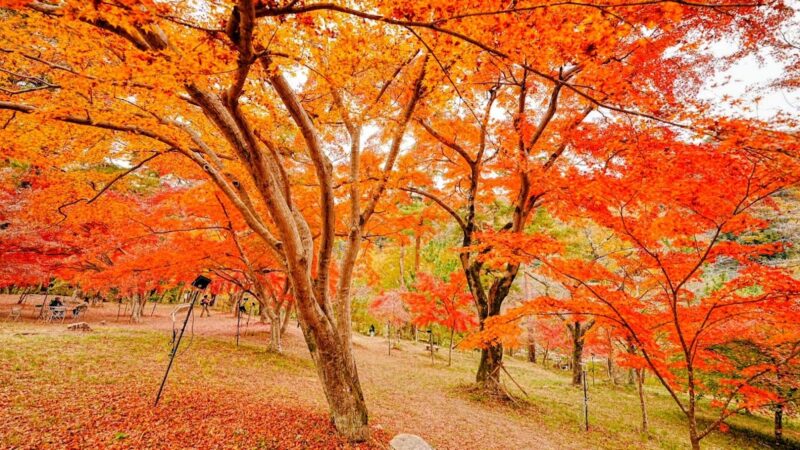
Torioi Kannon is known as one of Saitama Prefecture’s premier autumn foliage destinations. From early to mid-November, Japanese maples and other trees throughout the grounds turn red and yellow, with the contrast between the white Kokusebutsu Kannon and brilliant red foliage being particularly impressive.
During foliage season, many tourists visit, so weekday visits are recommended. Visitors can enjoy the foliage from various angles while walking the trail as a light hiking course.
Winter: Snow Landscapes and Silence
In winter, particularly after snowfall, Torioi Kannon is enveloped in a fantastical atmosphere. The sight of the white Kannon statue and snow landscape merging is mystical, and fewer visitors allow for quiet worship.
However, snow may accumulate in the Naguri area, and the site often closes during winter. It is important to check the official site for opening status before visiting.
Visiting Information
Hours and Closure
- Visiting Hours: 9:00–16:00
- Closed Days: Wednesdays (irregular closures)
- Admission: 200 yen
The site typically closes in winter (especially during snowy periods) and reopens around the spring equinox. Varying years require trail maintenance after snow melts, so opening dates change annually. Always check the official site for opening status before visiting.
Location
〒357-0111 Kamimaguri, Hanno City, Saitama Prefecture
Estimated Visit Duration
The grounds are extensive, requiring a mountain trail climb from the main hall to the Kokusebutsu Kannon. Allow 1.5 to 2 hours for leisurely viewing of all facilities.
For those enjoying it as a light hiking experience, additional time is recommended.
Clothing and Items
The approach trail involves mountain paths with many stairs and slopes, making comfortable walking shoes and flexible clothing essential. Even during peak tourist seasons like autumn foliage, hiking-level equipment is recommended.
- Comfortable sneakers or trekking shoes
- Flexible clothing
- Drinking water
- Towel
- Rain gear (weather changes rapidly in mountainous areas)
- Insect repellent for summer
Photography
Photography within the grounds is generally permitted, though certain areas like temple interiors prohibit cameras. Photograph respectfully while following etiquette.
Transportation Access
Public Transportation
Using Train and Bus
- Exit at Hanno Station on the Seibu Ikebukuro Line
- From the North Exit, board a Kokusai Kôgyô bus (approximately 40–50 minutes)
- To “Naguri Depot”
- To “Nago”
- To “Yunozawa”
- Get off at “Renkeibashi” bus stop and walk approximately 5 minutes
Bus frequency is limited, so checking the timetable in advance is strongly recommended. Particularly important is confirming return bus times.
By Car
From Kan’etsu Expressway
- Approximately 40 minutes from Ome IC
- Approximately 40 minutes from Hanno IC
Travel via National Route 299, then head toward Naguri via Prefectural Route 53 (Ome-Hanno Line).
Parking
Free parking is available on the grounds (approximately 20 spaces). During peak periods like foliage season, the lot may fill; early arrival is recommended.
Access Notes
- The Naguri area is mountainous; road surfaces may freeze in winter
- When using GPS, search for “Torioi Kannon” or use the address
- Public transportation is limited, making timetable confirmation essential
- Mobile phone reception is weak in some areas; confirm maps beforehand
Nearby Tourist Attractions
Naguri Gorge
The Naguri Gorge, where Torioi Kannon is located, is a nature-rich gorge in western Saitama Prefecture. Clear streams flow through it, and campgrounds and hot spring facilities make it popular as an outdoor recreation base.
Sawarabi no Yu (Naguri Hot Spring)
A day-use hot spring facility approximately 15 minutes by car from Torioi Kannon. It is ideal for relaxing after worship, and meals using local ingredients are available.
Tenran Mountain and Takane Master Mountain
Low mountains near Hanno city center popular as hiking destinations. Many mountaineers visit these together with Torioi Kannon.
Hanno Riverbed
Within walking distance from Hanno Station, this riverbed area bustles with families enjoying barbecue and river activities in summer.
Tove Jansson Akebono Children’s Forest Park
A park expressing the world of “Moomin” creator Tove Jansson, with fantastical buildings scattered throughout. It is popular with families.
Precautions and Etiquette During Visits
Confirming Physical Ability and Health
Torioi Kannon is a mountain sacred site with many stairs and slopes. Visiting the Kokusebutsu Kannon especially requires considerable physical stamina. If in poor health or having concerns about knees or back, consider limiting visits to the main hall area.
Protecting the Natural Environment
Always take trash with you and avoid picking or damaging plants.
Worship Etiquette
- Worship quietly
- Be considerate of other visitors
- Remove hats indoors
- Photograph only in permitted areas
Weather Preparation
Mountain areas have changeable weather; bring rain gear even if skies appear clear. In summer, bring hats and sunscreen due to strong sun.
Summary of Torioi Kannon’s Appeal
Torioi Kannon is a special place with over 80 years of history as a Kannon faith sacred site spread across Naguri Gorge in Hanno City, Saitama Prefecture. Born from Hiranuma Yataro’s devotion, this sacred site encompasses numerous Buddhist facilities including the 33-meter-tall Kokusebutsu Kannon across its vast 100,000-tsubo grounds.
The solemn character of the mountain sacred site harmonizes with natural beauty across the seasons, moving pilgrims deeply. Particularly in autumn foliage season, the contrast between the white Kannon statue and brilliant red leaves is magnificent, making it one of Saitama Prefecture’s premier foliage destinations.
While public transportation access is time-consuming, this allows visitors to experience peaceful serenity away from urban bustle for worship. Enjoying light hiking while visiting each facility provides both physical activity and spiritual fulfillment, making it a place to refresh both body and mind.
With its multifaceted appeal—historical value, religious significance, natural beauty, and healthy recreation—Torioi Kannon is a must-visit spot when traveling to Saitama Prefecture.
When visiting, confirm opening status on the official site and plan adequate time, wearing comfortable clothing to enjoy this special sacred site.
-800x450.jpg)
-800x450.jpg)
-800x450.jpg)