
.jpg)
Complete Guide to Arashiyama Gorge (Saitama Prefecture) | Thorough Explanation of Access, Highlights, and Autumn Foliage Information
Arashiyama Gorge, located in Arashiyama Town, Hiki District, Saitama Prefecture, is a scenic natural destination accessible in about an hour from the city center. Also called “Musashi’s Arashiyama,” this gorge was named after its beautiful landscape, which resembles Kyoto’s Arashiyama. Known especially for its stunning autumn foliage, it is a popular spot where visitors can enjoy outdoor activities such as hiking and barbecuing.
This article provides a thorough explanation of the appeal of Arashiyama Gorge, access methods, highlights, recommended visiting times, and surrounding facilities—information you should know before visiting.
What is Arashiyama Gorge? The Origin and History of “Musashi’s Arashiyama”
Arashiyama Gorge was formed as the Tsukigawa River carved through bedrock over many years. The name originated when Dr. Shokuroku Honda, a forestry scholar who visited this area in the Taisho era, admired its landscape similar to Kyoto’s Arashiyama and named it “Musashi Province’s Arashiyama.”
Geographic Features
Arashiyama Gorge, which extends along the Tsukigawa River, is characterized by gorge scenery spanning approximately 2 kilometers. Rocky beds spread along both banks of the river, and the surrounding mountains display different appearances in each season. The vegetation, in particular a mixture of red pine and broad-leaved tree forests, creates a unique landscape.
The elevation difference in the gorge is not particularly large, making it a terrain where even beginners can safely enjoy hiking. The hiking paths along the river are well-maintained, allowing families to stroll comfortably.
Value as a Nationally Designated Scenic Beauty
Arashiyama Gorge is protected as the Saitama Prefecture Arashiyama Gorge Prefectural Natural Park due to its outstanding landscape. While located in the Kanto Plain, it is cherished as a valuable natural environment where one can experience gorge scenery, attracting many nature enthusiasts and photographers.
The Four Seasons’ Appeal of Arashiyama Gorge
Arashiyama Gorge presents different faces throughout the year, with spring and autumn visits being especially recommended.
Spring in Arashiyama Gorge (March–May)
Spring brings fresh greenery to the gorge. From late March to early April, cherry blossoms bloom magnificently, adding elegant pink tones to the gorge. The cherry blossom lined along the Tsukigawa River is particularly spectacular, and the sight of cherry blossoms reflected in the river surface is an excellent photography spot.
From late April to May, the vivid green of young leaves is striking on the eyes, making it an ideal season for forest bathing. The mild temperature makes this an optimal time for hiking.
Summer in Arashiyama Gorge (June–August)
Summer in Arashiyama Gorge is characterized by a cool atmosphere enveloped in deep green. The clear stream of the Tsukigawa River attracts families enjoying water play. The gorge is shaded in many places and several degrees cooler than the city center, making it popular as a summer retreat.
At Arashiyama Gorge Barbecue Area, visitors can enjoy outdoor cooking while listening to the murmur of the river. The peak summer vacation season is particularly busy.
Autumn in Arashiyama Gorge (September–November)
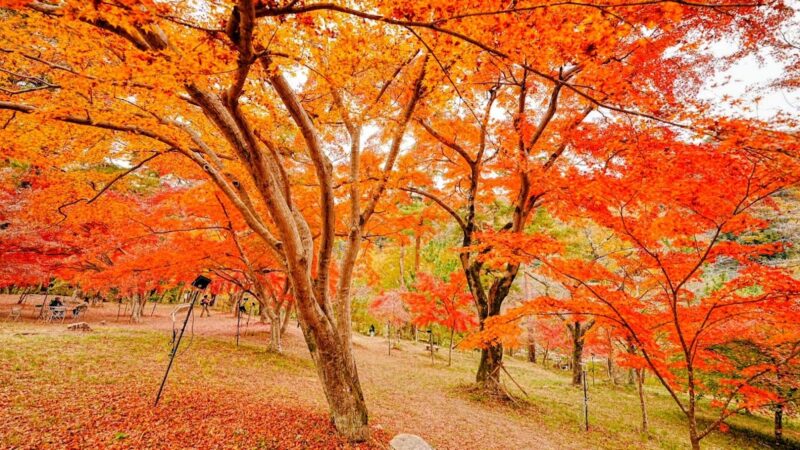
Autumn is the most beautiful season in Arashiyama Gorge. From mid-November to early December, the entire gorge is enveloped in autumn foliage. Maples, Japanese maples, and ginkgos turn red and yellow, creating breathtaking beauty through contrast with the rocky beds and clear stream.
Especially during the “Arashiyama Gorge Autumn Foliage Festival,” lighting events are held, allowing visitors to enjoy the foliage in a fantastical nighttime setting. As many tourists visit on weekends, visiting on weekdays is recommended.
The autumn foliage is typically at its peak around November 20, but this varies depending on that year’s climate, so checking the latest foliage information before visiting is recommended.
Winter in Arashiyama Gorge (December–February)
Winter in Arashiyama Gorge is wrapped in silence, with a calm atmosphere. With fallen leaves, the gorge’s terrain becomes more visible, and the beauty of exposed rock surfaces can be appreciated.
With good fortune, one might encounter the fantastical sight of the snow-covered gorge. Since this season has fewer visitors, it is ideal for those wishing to enjoy nature quietly.
Main Highlight Spots of Arashiyama Gorge
Arashiyama Gorge Barbecue Area Surroundings
This is the central area of Arashiyama Gorge, where many visitors begin their exploration. The barbecue area is by advance reservation and offers hand-free plans, making it easy to experience the outdoors.
With the clear Tsukigawa River spreading before it, this location is perfect for enjoying gorge scenery while barbecuing or playing in the river.
Monument to Akiko Yosano’s Poetry
Within the gorge is a stone monument bearing a poem composed by poet Akiko Yosano when she visited Arashiyama Gorge. The poem praising the beauty of “Hiki’s Arashiyama” speaks to the historical value of this place.
The area around the poetry monument also serves as a viewpoint where one can overlook the gorge—an absolute scenic spot.
Tsukigawa’s Stepping Stones and Rocky Beds
The Tsukigawa has naturally arranged stepping stones allowing visitors to cross while enjoying the gorge scenery up close. When water volume is low, one can walk across the rocky riverbed, experiencing the unique terrain firsthand.
The rocky beds are flat bedrock shaped by long-term water flow—a spot where one can feel the beauty of natural formation. It is popular as a location for photography.
Overlook Points
Multiple observation platforms are located along the hiking trail, offering spectacular views looking down on the gorge. Especially during autumn foliage season, the panoramic view of colorfully arrayed trees is magnificent.
The path to the observation platforms features gentle slopes, so they are accessible with comfortable sneakers or other easy-to-walk-in shoes.
Ōmurasakimorino (Great Purple Emperor Forest)
The area around Arashiyama Gorge is known as a habitat for the Ōmurasakicho (Great Purple Emperor), Japan’s national butterfly. In the Ōmurasakimorino, it is possible to observe the beautiful purple-winged Ōmurasakicho from late June to early July.
This is a must-see spot for those interested in nature observation.
Hiking Courses at Arashiyama Gorge
Arashiyama Gorge has well-maintained hiking courses suitable for beginners to intermediate hikers.
Gorge Strolling Course (Duration: About 1 Hour)
This is the most popular course, starting from the barbecue area and walking along the Tsukigawa. Visitors can easily enjoy the beautiful gorge scenery while listening to the river’s murmur.
- Distance: About 2 km
- Difficulty: Beginner
- Highlights: Rocky beds, stepping stones, autumn foliage along the river
Observation Deck Circular Course (Duration: About 2 Hours)
This course adds observation platforms to the gorge strolling course. Though somewhat undulating, it offers spectacular views of the gorge from above.
- Distance: About 4 km
- Difficulty: Beginner to intermediate
- Highlights: Panoramic views from observation decks, monument to Akiko Yosano’s poetry
Arashiyama Gorge and Kamagata Hachimangu Shrine Circular Course (Duration: About 3 Hours)
A somewhat longer course extending from Arashiyama Gorge to Kamagata Hachimangu Shrine. It combines historical shrine visits with nature exploration for a fulfilling hiking experience.
- Distance: About 6 km
- Difficulty: Intermediate
- Highlights: Kamagata Hachimangu Shrine, countryside scenery, bird watching
Hiking Notes
- Clothing: Wear comfortable sneakers or trekking shoes. Avoid sandals and heels.
- Belongings: Drinking water, towel, hat, insect repellent spray (summer)
- Weather: On rainy days, river water levels rise dangerously, so refrain from visiting.
- Schedule: Plan to descend before sunset with time to spare.
Access to Arashiyama Gorge
Access by Train and Bus
Using the Tobu Tojo Line:
- Get off at “Musashi Arashiyama Station” on the Tobu Tojo Line
- Board an Eagle Bus from the west exit heading to “Seserage Bus Center” (about 10 minutes)
- Get off at “Rest Area Entrance” or “Arashiyama Gorge Barbecue Area” bus stop, then walk about 3 minutes
Bus frequency is limited, so it’s recommended to check schedules in advance. Especially on weekends during autumn foliage season, temporary buses may operate.
By Foot:
It’s about 40-50 minutes on foot from Musashi Arashiyama Station to Arashiyama Gorge. The walk from the station to the gorge is also nature-rich, making a leisurely walk a good option.
Access by Car
Using the Kan’etsu Expressway:
- About 10 minutes (about 5 km) from “Arashiyama Ogawa IC”
- About 15 minutes (about 8 km) from “Higashimatsuyama IC”
Follow Route 254 and proceed according to signage. It’s convenient to enter “Arashiyama Gorge Barbecue Area” or “Saitama Prefecture Arashiyama Gorge” into your car navigation.
Parking Information
Arashiyama Gorge has multiple parking areas:
- Arashiyama Gorge Barbecue Area Parking: About 50 spaces (paid, approximately 500 yen per day)
- Tsukinowa Parking: About 30 spaces (free)
On weekends during autumn foliage season, parking lots often fill up, so arriving early is recommended. If full, parking near Musashi Arashiyama Station and accessing by bus or foot is an option.
Arashiyama Gorge Barbecue Area Information
Arashiyama Gorge Barbecue Area is a popular facility where one can enjoy barbecuing while appreciating gorge scenery.
Operating Season and Hours
- Operating Season: Mid-March to late November (closed in winter)
- Hours: 9:00–16:00 (final entry 14:00)
- Closed Days: Generally open throughout the operating period (may close on bad weather days)
Reservation Method
Barbecue area use requires advance reservation. Reservations can be made via the official website or by phone. Early reservations are especially necessary on weekends and during autumn foliage season.
Pricing Plans
- Plot Fee: Approximately 2,000–3,000 yen per section
- Equipment Rental: Grill set 1,500 yen–, table and chair set 1,000 yen–
- Food Sets: Hand-free plan (food and equipment included) approximately 3,000 yen per person–
Specific pricing varies with season and number of people, so confirm when making a reservation.
Facilities and Equipment
- Water and cooking area
- Restrooms
- Sales shop (beverages, seasonings, charcoal, etc.)
- Vending machines
- Parking lot
Bring-Your-Own Rules
Food and beverages can be brought in. However, trash must be taken home or separated into designated (paid) trash bags.
Tourist Spots Around Arashiyama Gorge
When visiting Arashiyama Gorge, you can also enjoy nearby tourist attractions.
Sugaya Castle Ruins (National Historic Site)
Known as the castle ruins of Shigeatsu Hatakeyama, a samurai of the Kamakura period. Located about 5 minutes by car from Arashiyama Gorge, it’s recommended for history enthusiasts. Earthen walls and moat remains are visible across the extensive grounds, allowing visitors to envision a medieval samurai’s castle.
Saitama Prefectural Arashiyama Historic Site Museum
Adjacent to Sugaya Castle Ruins, this museum teaches about the history and culture of the Hiki region. Exhibits on Shigeatsu Hatakeyama and the lives of medieval samurai are comprehensive.
- Hours: 9:00–16:30 (admission until 16:00)
- Closed: Mondays (or the next day if a holiday)
- Admission: 100 yen for general admission, 50 yen for high school and college students
National Musashi Kyuryo Forest Park
Located about 15 minutes by car from Arashiyama Gorge, this is Japan’s first national park. With an expansive 304-hectare area, it features flowers of all seasons, athletic courses, cycling paths, and more, offering full-day enjoyment.
Especially during autumn foliage season in mid-November, about 500 maples in the maple garden turn beautifully colored, making a combination tour of Arashiyama Gorge and this park recommended.
Ogawa Town Washi Papermaking Experience
Ogawa Town, next to Arashiyama, is known as “Washi Paper Country.” As a production area for “Hosokawa Paper,” registered as a UNESCO Intangible Cultural Heritage, facilities offer washi papermaking experiences.
Visitors can experience traditional washi papermaking and create original washi. It’s about 20 minutes by car from Arashiyama Gorge.
Michi no Eki Ogawa-machi
A roadside station where local fresh vegetables and specialty products can be purchased. A dining hall serves Ogawa Town’s specialty “Musashino Udon,” making it recommended as a lunch spot after exploring Arashiyama Gorge.
Gourmet and Lunch Spots Around Arashiyama Gorge
Dining Options Near Musashi Arashiyama Station
Several restaurants are located near Musashi Arashiyama Station.
- Udon and Soba Shops: Multiple shops serve Saitama’s famous Musashino Udon, known for its thick, chewy noodles.
- Cafes: Relaxation cafes are available after exploring.
- Teishoku (Set Meal) Restaurants: Local ingredient teishoku can be enjoyed.
Local Specialties
- Arashiyama Spicy Motsu Yakisoba: A town B-class gourmet featuring spicy stir-fried yakisoba
- Local Vegetables: Fresh produce available at roadside stations
- Local Sake: Saitama-produced sake
Best Season to Visit Arashiyama Gorge and Crowding
Best Season
First Place: Mid-November to Early December (Autumn Foliage Season)
This is the most beautiful time in Arashiyama Gorge. The gorge colored in reds and yellows is spectacular, attracting many photography enthusiasts.
Second Place: Late March to Early April (Cherry Blossom Season)
Spring with beautiful cherry blossoms and new greenery is also popular. Mild weather makes this ideal for hiking.
Third Place: May to June (Fresh Greenery Season)
Vibrant green is beautiful, and crowding is minimal, making this recommended for leisurely exploration.
Crowding Conditions and Visiting Tips
Crowded Times:
- Autumn foliage weekends (mid-to-late November)
- During autumn foliage festival period
- Golden Week
- Cherry blossom opening weekends
Tips to Avoid Crowds:
- Weekday Visits: If possible, visiting on weekdays allows leisurely exploration.
- Early Morning Visits: Arriving around 8:00–9:00 a.m. means empty parking and quiet gorge enjoyment.
- Before/After Peak Foliage: Shifting slightly from peak season significantly reduces crowds.
- Public Transportation: Using trains and buses avoids parking lot congestion.
Clothing and Belongings for Visiting Arashiyama Gorge
Clothing
Spring and Autumn:
- Long-sleeved shirt + light jacket
- Long pants (insect bite prevention)
- Comfortable sneakers or trekking shoes
- Hat (sun protection)
Summer:
- Breathable clothing
- Long-sleeved shirt (insect bite/sunburn prevention)
- Hat
- Sunglasses
Winter:
- Warm clothing (down jacket, etc.)
- Gloves, scarf
- non-slip shoes
Belongings Checklist
- Essential: Drinking water, towel, trash bag, smartphone (maps/communication)
- Recommended: Camera, binoculars (bird watching), insect repellent spray (summer), sunscreen, rain gear, light snacks
- Handy: Leisure sheet, folding chair, first aid kit, mobile battery
Arashiyama Gorge Autumn Foliage Lighting Event
Every late November, the “Arashiyama Gorge Autumn Foliage Festival” is held, featuring limited-time autumn foliage lighting during specific periods.
Lighting Information
- Dates: Several days centered around late November weekends (varies annually)
- Lighting Time: From sunset to around 20:00
- Fee: Free (though voluntary donations may be collected)
Lighting Highlights
Unlike daytime, this creates a fantastical atmosphere. Lit foliage reflected in the river is absolutely spectacular. For camera enthusiasts, this is an excellent photo opportunity.
Tripod shooting is possible, but during crowding, consideration for other visitors is necessary.
Notes During Event Period
- Parking is extremely congested; public transportation is recommended
- Temperatures drop at night, so don’t forget warm clothing
- Foot areas are dark; bring a flashlight or smartphone light
- Temporary buses may run during the event; confirm in advance
Photography Tips at Arashiyama Gorge
Recommended Photography Spots
- Near Tsukigawa Stepping Stones: A classic spot capturing river flow and gorge together
- Observation Decks: Panoramic gorge views are possible
- Area Around Akiko Yosano Poetry Monument: Combining monument and gorge background is popular
- Riverside Trail: Creates fantastical photos in tunnel-like tree areas
Best Photography Times
- Early Morning: Morning mist sometimes creates fantastical atmosphere
- Morning: Bright, clear foliage colors in front lighting
- Evening: Sunset-lit foliage is beautiful
- Lighting Time: Capture nighttime fantastical atmosphere (autumn foliage festival only)
Photography Points
- Foliage Photography: Using a polarizing filter makes foliage colors more vivid
- River Flow: Slow-shutter shooting smoothly expresses water flow (tripod required)
- Composition: Incorporating foreground rocks or trees adds depth
Nature Observation and Creatures at Arashiyama Gorge
Arashiyama Gorge is blessed with rich natural environments where various animals and plants can be observed.
Flora
- Trees: Japanese maple, maple, ginkgo, painted maple, konara oak, red pine, etc.
- Wildflowers: Seasonal flowers such as katakuri, nirinso, and yamayuri
- Ferns: Diverse fern species thrive in the gorge’s moist environment
Birds
Arashiyama Gorge is known as a bird watching spot.
- Resident Birds: Varied tit, great tit, long-tailed bushtit, Japanese woodpecker, etc.
- Summer Birds: Blue-and-white flycatcher, narcissus flycatcher, etc.
- Winter Birds: Daurian redstart, verditer flycatcher, etc.
Bringing binoculars allows for more detailed observation.
Insects
- Butterflies: Great Purple Emperor (national butterfly), swallowtail butterfly, fritillary, etc.
- Dragonflies: Various dragonfly species visible in summer
- Fireflies: Genji fireflies may be observed along the Tsukigawa in early summer
River Creatures
The Tsukigawa is home to freshwater fish such as Japanese dace and dace. With good water quality, sawagani (Japanese freshwater crabs) can also be observed.
History and Culture of Arashiyama Gorge
Reconsideration of the Place Name’s Origin
As mentioned, Arashiyama Gorge’s name is said to have been given by Dr. Shokuroku Honda, though this area was long known as “Hiki’s Arashiyama.” Beyond similarity to Kyoto’s Arashiyama, it has a unique beauty as a scenic location loved by local people throughout history.
Literary Connections
Poet Akiko Yosano’s visit to Arashiyama Gorge and her poem about its beauty are famous. The poem inscribed on the monument is a valuable cultural heritage conveying the appearance of Arashiyama Gorge in the Taisho era.
Many other literati and artists have visited this place and depicted Arashiyama Gorge in their works.
Regional Preservation Activities
The beautiful natural environment of Arashiyama Gorge is protected through preservation activities by residents and volunteer groups. Regular cleanup activities, removal of invasive plants, trail maintenance, and various other efforts are undertaken.
Visitors can cooperate with preservation by taking trash home and refraining from harvesting plants and animals.
Precautions and Etiquette When Visiting Arashiyama Gorge
Safety Precautions
- Flood Danger: After heavy rain or in rainy weather, river water levels may rise suddenly. Avoid visiting on bad weather days.
- Slippery Areas: Rocky and riverside areas are slippery; walk carefully.
- Heat Illness Prevention: In summer, hydrate frequently and take breaks while exploring.
- Insect Bite Prevention: Summer has many insects; don’t forget insect repellent.
- Getting Lost: Stay on marked hiking paths and follow signage.
Environmental Etiquette
- Always Take Trash Home: Take all trash with you to protect the natural environment.
- Prohibit Plant and Animal Collection: Collecting flowers and insects is prohibited. Enjoy observation only.
- Restricted Area Entry: Don’t enter off-limits areas for conservation.
- Fire Handling: Using fire outside barbecue areas is strictly prohibited.
- Noise Consideration: Don’t disturb other visitors or wildlife with loud voices or music.
Photography Etiquette
- Consideration for Other Visitors: Don’t block paths while photographing.
- Tripod Use Caution: Avoid tripods during crowding or choose non-obstructing locations.
- Drone Photography: Prior permission may be required. Avoid unauthorized flight.
How to Obtain Latest Information About Arashiyama Gorge
Official Information Sources
- Arashiyama Town Tourism Association: The official website provides latest tourism and event information.
- Saitama Prefecture Official Tourism Site: Includes Arashiyama Gorge information with other prefectural tourism information.
- Arashiyama Gorge Barbecue Area: Check operating information and reservation status.
Information Gathering via SNS
- Twitter/X: Search “#ArashiyamaGorge” for real-time foliage and crowding updates.
- Instagram: Search “#ArashiyamaGorge” or “#MusashisArashiyama” for latest photos and visitor reports.
Checking Foliage Information
During foliage season, peak timing can be confirmed at:
- Japan Meteorological Corporation “tenki.jp” foliage timing information
- Weather News Foliage Channel
- Arashiyama Town Tourism Association official site
Conclusion: Fully Enjoying Arashiyama Gorge’s Appeal
Saitama’s Arashiyama Gorge is a precious spot offering rich nature and beautiful gorge scenery despite its convenient approximately one-hour access from the city center.
Main Appeal of Arashiyama Gorge:
- Beautiful scenery in each season (especially stunning autumn foliage)
- Hiking courses enjoyable even for beginners
- Family-friendly barbecue area
- Rich natural environment for bird and nature observation
- Historical and cultural value (Akiko Yosano connection)
Visit Tips:
- The best season is mid-November through early December autumn foliage, though spring cherry blossoms and fresh greenery are also beautiful
- Visiting on weekdays or early morning is recommended to avoid crowds
- Prepare comfortable clothing and shoes with drinking water and other belongings
- Barbecue area use requires advance reservations
- Observe environmental etiquette and cherish nature
Arashiyama Gorge is a natural spot easily visited as a day trip yet offers new discoveries with each visit—a deeply rewarding place. By visiting across different seasons, you can fully appreciate the gorge’s changing appearance.
Combined with nearby tourist spots and historic sites, you can enjoy a more fulfilling day. Please use this article as reference when planning a visit to Arashiyama Gorge. The beautiful nature and serene gorge will surely provide special moments free from daily hustle and bustle.
-800x450.jpg)
-800x450.jpg)
-800x450.jpg)