
Korankeikei, Aichi Prefecture: Complete Guide | Four Seasons’ Charm, Access, and Surrounding Attractions Fully Explained
Korankeikei (香嵐渓), located in Asuke Town, Toyota City, Aichi Prefecture, is a beautiful gorge created by the Tomoe River, a tributary of the Yahagi River. Known nationwide as a premier autumn leaf-viewing destination with approximately 4,000 Japanese maples, its charm extends far beyond autumn. We provide a detailed introduction to Korankeikei’s appeal as it displays different faces throughout the four seasons—spring’s Katakuri flowers, summer’s fresh greenery and fireflies, autumn’s vibrant foliage, and winter’s serene silence—along with access methods and information on nearby attractions.
What is Korankeikei? History and Overview
Korankeikei is a gorge centered around Iimori Mountain (飯盛山) at an elevation of 254 meters and is designated as a scenic area within the Aichi Kogen Quasi-National Park. The history of autumn leaves in this area dates back to the Edo period, when in 1634 (Kanei 11), the 11th head priest of Kojaku Temple (香積寺) planted Japanese maple trees along the temple’s approach path.
Subsequently, from the Taisho era through the early Showa period, planting continued through the efforts of local residents and the Asuke Town Youth Association, and today approximately 4,000 maple trees color the gorge, making it the premier autumn leaf-viewing destination in the Tokai region. The variety of maple species numbers 11, including Iroha maple, Large Japanese maple, and Ura-ge Enkou maple, creating beautiful landscapes along the Tomoe River.
The name “Korankeikei” was given in 1930 (Showa 5) by the town mayor at the time, combining the “Ko” (香) from Kojaku Temple and “Ranki” (嵐気), meaning the wind blowing down from the mountains. Previously, it had been called “Iimori Mountain” or “Asuke Gorge.”
Four Seasons’ Charm of Korankeikei
Spring: Katakuri Flower Blooms and Cherry Blossoms
From mid-March to early April, approximately 50,000 Katakuri flowers bloom all at once on the northeast slope of Iimori Mountain. The sight of pale purple delicate flowers covering the hillside, also known as the “fairy of spring,” reveals a quiet beauty different from autumn leaves. Since Katakuri flowers have a short blooming period and are easily affected by weather, it is recommended to check bloom information beforehand to avoid missing the peak season.
During the same period, cherry blossoms also bloom, and around Taigetsu Bridge (待月橋), visitors can enjoy both cherry blossoms and Katakuri flowers. Spring at Korankeikei is less crowded than autumn, making it ideal for those who wish to enjoy leisurely walks.
Summer: Fresh Greenery, Clear Streams, and Firefly Light
From May to June, Korankeikei is enveloped in vivid fresh greenery. Walking along the clear Tomoe River, the greenery of trees and the pleasant sound of the stream provide comfort, making it popular as an summer retreat. Many families are seen enjoying water play.
From early to mid-June, firefly viewing is possible along the Tomoe River. Genji and Heike fireflies emit fantastical light, coloring the summer night. Fireflies are most actively flying around 8:00 to 9:00 PM, making this the recommended time to visit.
Autumn: Premier Autumn Leaf-Viewing Destination in Tokai
Korankeikei’s greatest charm is undoubtedly its autumn foliage. The peak season is typically from mid to late November, when approximately 4,000 maple trees dye the gorge in red, orange, and yellow hues.
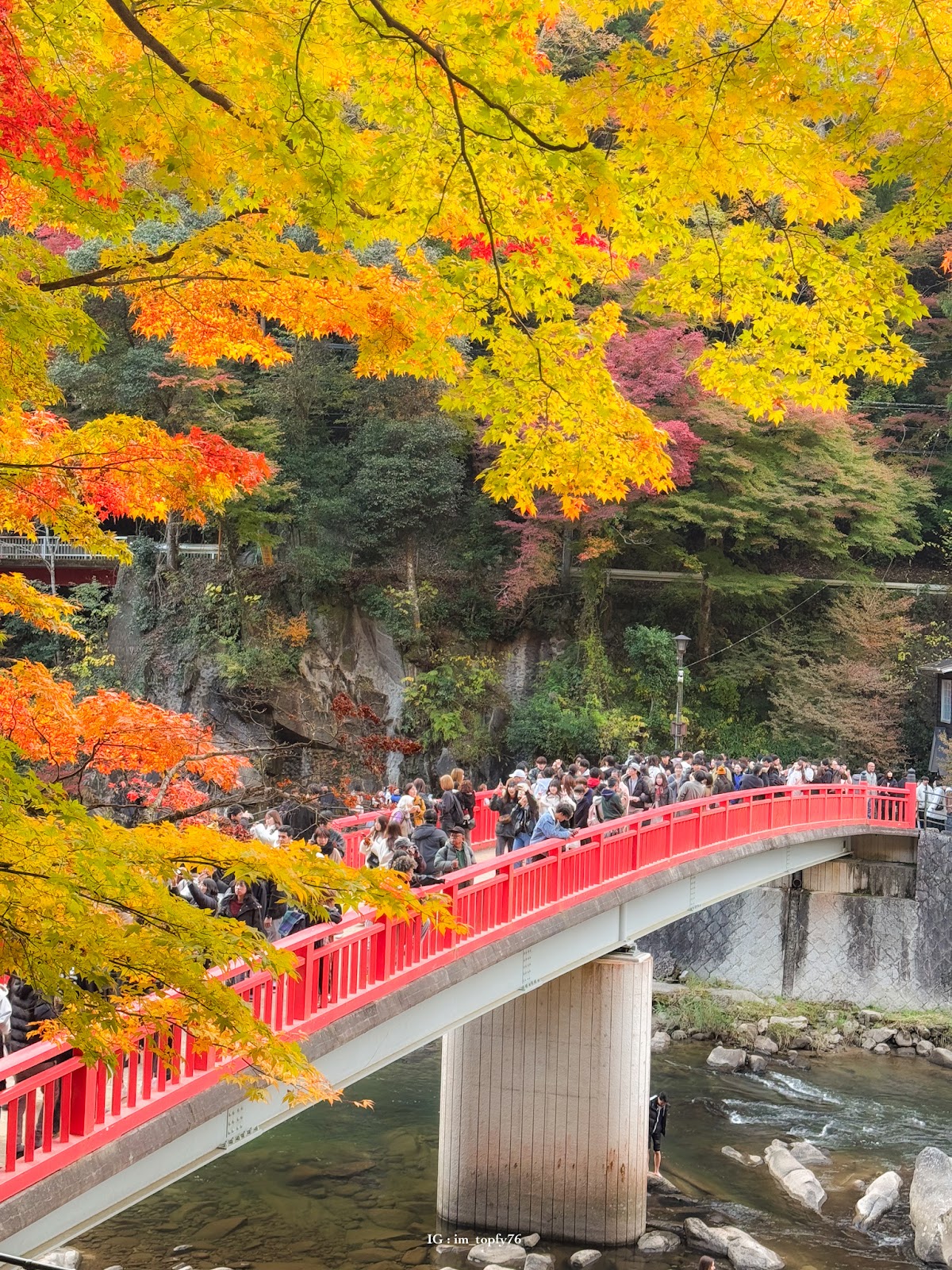
The view of autumn leaves from Taigetsu Bridge is particularly spectacular, with the bridge’s vermillion color harmonizing beautifully with the red foliage. The reflection of autumn leaves on the Tomoe River’s surface is also beautiful and serves as a popular photography spot.
Every November, the “Korankeikei Maple Festival” is held, during which illumination is provided from sunset until around 9:00 PM throughout the festival period. Visitors can enjoy the fantastical appearance of maple leaves, completely different from daytime, with many tourists gathering. The sight of the entire mountain illuminated by light creates a truly fantastical world.
During peak autumn leaf season, it becomes very crowded, so early morning visits, weekday visits, and the use of public transportation are recommended.
Winter: Gorge Beauty Wrapped in Silence
From December to February, winter at Korankeikei sees fewer tourists and peaceful hours. The sight of Iimori Mountain visible through bare trees and the clear, cold Tomoe River flowing through crisp air hold a beauty unique to winter.
The Asuke region has long been known for game cuisine featuring wild boar and deer, and during winter months, local dining establishments offer fresh game dishes. The local flavors unique to the cold season represent another charm of winter at Korankeikei.
Korankeikei’s Must-See Spots
Taigetsu Bridge (待月橋)
A symbol of Korankeikei, this vermillion-painted wooden bridge spans approximately 25 meters across the Tomoe River. Built in 1953 (Showa 28), this bridge offers panoramic views of beautiful gorge scenery both upstream and downstream.
Particularly during autumn leaf season, the view of foliage from atop the bridge is spectacular, attracting many tourists for photography. The bridge itself is visually striking and serves as a must-visit spot when experiencing Korankeikei.
Kojaku Temple (香積寺)
The temple that created Korankeikei’s autumn leaf history, Kojaku Temple is a Soto Zen Buddhist temple founded in 1427 (Eiroku 34). The original Japanese maple planted by High Priest Sanei remains in the temple grounds and displays magnificent autumn foliage.
The stone steps and surrounding area in front of the main hall are also known as an autumn leaf-viewing site where visitors can appreciate foliage in a quiet atmosphere. Exploring while feeling the temple’s historical presence is also recommended.
Iimori Mountain Hiking Course
Several hiking courses are maintained up to the summit of Iimori Mountain. The walk from trailhead to summit takes approximately 30 to 40 minutes, making it relatively accessible.
From the summit, visitors can see the Asuke townscape and surrounding mountains, with the autumn leaf carpet spread below being particularly impressive during leaf season. In spring, courses pass through Katakuri flower colonies, offering different experiences across seasons.
Tomoe River Riverside Promenade
The walking paths along the Tomoe River provide the most intimate way to experience Korankeikei’s nature. The experience of walking through maple tunnels while listening to the river’s gentle murmur is exceptional.
The promenade is relatively flat and easy to walk, making it safe for families and elderly visitors. Benches are placed at intervals, allowing visitors to enjoy views leisurely while taking breaks.
Access Methods to Korankeikei
By Public Transportation
From Nagoya area:
- Board the Meitetsu bus “Asuke-bound” from Meitetsu Higashi-Okazaki Station and get off at “Korankeikei” bus stop (approximately 70 minutes)
- Board the “Toyota Oidenbas” Sanage-Asuke Line from Aichi Loop Line “Kusaki Station” and get off at “Korankeikei” bus stop (approximately 60 minutes)
- Board the “Toyota Oidenbas” Sanage-Asuke Line from Meitetsu Toyota Line “Josuizu Station” and get off at “Korankeikei” bus stop (approximately 60 minutes)
From Meitetsu Mikawa Line area:
- Board the Meitetsu bus “Asuke-bound” from Meitetsu Mikawa Line “Saro Station” and get off at “Korankeikei” bus stop (approximately 40 minutes)
During autumn leaf season (November), direct buses from Nagoya Station and Higashi-Okazaki Station to Korankeikei may operate. Checking service information in advance is recommended.
By Automobile
From Nagoya area:
- Approximately 15 minutes from “Chikaraishi IC” on the Sano Green Road via Route 153
- Approximately 45 minutes from “Toyota IC” on the Tomei Expressway via Route 153
- Approximately 20 minutes from “Toyota Kanpachi IC” on the Tokai Ring Expressway via Route 153
From Kanto area:
- Approximately 50 minutes from “Toyokawa IC” on the Tomei Expressway via Routes 151 and 257
When using car navigation, search for “Korankeikei” or “Aichi Prefecture, Toyota City, Asuke Town, Iimori.”
Parking Information
Multiple paid parking lots surround Korankeikei with a combined capacity of approximately 1,000 vehicles. During normal periods, parking is free or costs approximately 500 yen, but during autumn leaf season (November) prices increase to approximately 1,000 yen.
During peak leaf-viewing season (November weekends), parking lots often reach capacity by late morning, and surrounding roads become very congested. Using public transportation is strongly recommended, but those driving should aim to arrive before 7:00 AM or consider visiting on a weekday.
Recommended Attractions Near Korankeikei
Shinshu Asuke Yashiki
Located about a 10-minute walk from Korankeikei, Shinshu Asuke Yashiki is an interactive folklore museum recreating a Meiji-era farmhouse. Visitors can observe and participate in traditional handwork demonstrations including charcoal making, weaving, bamboo crafts, and straw crafts.
The grounds contain thatched-roof main buildings, earth-walled storehouses, and a water mill, creating an atmosphere of stepping back in time. Various seasonal experience programs including making goheimochi (sweet rice cakes) and indigo dyeing make it popular with families.
Basic Information:
- Address: 36 Iimori, Asuke Town, Toyota City, Aichi Prefecture
- Operating Hours: 9:00 AM – 5:00 PM (last admission 4:30 PM)
- Closed: Thursdays (if a holiday, closed the following day), year-end and new year
- Admission: Adults 300 yen, Elementary and middle school students 100 yen
Asuke Townscape
Flourishing as a post station along the Nakuma Highway (Salt Road) during the Edo period, the Asuke townscape is designated as an Important Preservation District for Groups of Historic Buildings. White-walled earthen storehouses and shops with latticed doors line the streets, retaining strong echoes of the past.
Strolling through the townscape to discover local specialty shops, old-house cafes, and traditional craft shops is part of the enjoyment. “Manrin Bookstore,” in particular, is a used bookstore occupying a Meiji-era building and draws popularity for its nostalgic atmosphere.
Former Asuke Elementary School
The wooden school building constructed in the early Showa period remains and is open to visitors. The nostalgic classrooms and corridors convey the atmosphere of a Showa-era school and are popular photography spots.
Asuke Castle Ruins
Located at the summit of Mayumi Mountain (elevation 301 meters), this former mountain castle’s main compound and long buildings have been restored. The summit offers panoramic views of the Asuke townscape and surrounding mountains, with particularly beautiful scenery during autumn leaf season.
The hiking course from trailhead to summit takes approximately 20 minutes, offering enjoyment of both history and nature.
Recommended Cuisine Around Korankeikei
Goheimochi (五平餅)
Goheimochi, a representative local cuisine of the Asuke region, is a must-try when visiting Korankeikei. Cooked rice is mashed, wrapped around a skewer, topped with sweet-salty miso sauce, and grilled over charcoal.
Numerous goheimochi shops exist around Korankeikei, with each shop’s miso sauce flavor and shape varying. Sampling different shops is part of the fun.
Ayu (Sweetfish) Cuisine
The Tomoe River is known as a clear stream and premier ayu fishing location. From summer through autumn, local dining establishments serve fresh grilled ayu and candied ayu preparations.
Game Cuisine
The Asuke region has long been known for game cuisine featuring wild boar and deer, with fresh game dishes offered by various establishments, particularly during winter. Wild boar hot pot, venison steaks, and game curry offer varied preparation methods.
Asuke-Prepared Mikawa Soy Sauce
At soy sauce brewery “Kanesa Daikoku,” operating since the Edo period in Asuke, traditionally-made soy sauce can be purchased. Soy sauce made with Asuke’s clean water and carefully selected ingredients features deep, complex flavor.
Freshwater Fish Cuisine
Many riverside establishments serve freshwater fish cuisine, offering opportunities to taste not only ayu but also char and Japanese char. Freshwater fish cuisine enjoyed in a nature-surrounded environment has a distinctive taste.
Recommended Model Courses for Korankeikei Tourism
Day Trip Course (Autumn Leaf Season)
9:00 Arrive at Korankeikei, proceed to parking
9:30 View and photograph autumn foliage around Taigetsu Bridge
10:30 Walk the riverside promenade along Tomoe River
11:30 Hike Iimori Mountain (approximately 1 hour round trip to summit)
12:30 Lunch at Korankeikei area (goheimochi, freshwater fish cuisine, etc.)
14:00 Visit Kojaku Temple
15:00 Stroll through Asuke townscape
16:00 View Shinshu Asuke Yashiki
17:00 Depart Korankeikei
1 Night 2 Day Course
Day 1
1:00 PM Arrive at Korankeikei
1:30 PM Lunch
2:30 PM Riverside walk and Taigetsu Bridge area sightseeing
4:00 PM Stroll through Asuke townscape
5:30 PM Check in at lodging
6:00 PM Dinner (game cuisine, etc.)
7:30 PM View autumn leaf illumination (November only)
Day 2
8:00 AM Breakfast
9:00 AM Check out
9:30 AM Hike Iimori Mountain
11:00 AM Visit Kojaku Temple
12:00 PM View and experience Shinshu Asuke Yashiki
1:30 PM Lunch
3:00 PM Depart Korankeikei
Precautions and Advice for Korankeikei Tourism
Crowding Mitigation During Autumn Leaf Season
November’s autumn leaf season, particularly on weekends, experiences extreme crowding. Note the following:
- Early morning visits: Arriving before 7:00 AM allows viewing foliage in relatively uncrowded conditions
- Weekday visits: Visiting on weekdays is recommended when possible
- Public transportation use: Considering parking wait times, bus use is more efficient
- Consider overnight stays: Lodging in the Asuke area allows leisurely enjoyment of early morning and nighttime illumination
Clothing and Accessories
- Walking shoes: Comfortable sneakers or hiking boots are recommended for walking trails and mountain paths
- Season-appropriate clothing: Gorge areas have lower temperatures, requiring cold-weather preparation especially in fall and winter
- Rain gear: Since weather changes quickly, umbrellas or raincoats provide peace of mind
- Camera: With beautiful scenery throughout, bring cameras and chargers
Optimal Visiting Periods
- Autumn foliage: Mid to late November (peak approximately November 20)
- Katakuri flowers: Mid-March to early April
- Fresh greenery: May to June
- Fireflies: Early to mid-June
Since peak seasons vary with weather and temperature, checking official websites and SNS for latest information before visiting is recommended.
Korankeikei Basic Information
Name: Korankeikei (香嵐渓)
Location: Iimori, Asuke Town, Toyota City, Aichi Prefecture
Inquiries: Asuke Tourism Association (TEL: 0565-62-1272)
Admission: Free
Parking: Paid parking available (ordinary vehicles 500-1000 yen, rates vary by season)
Illumination Period: Throughout November (during Maple Festival period)
Illumination Hours: Sunset to approximately 9:00 PM
Official Website: Latest information available at Toyota City Tourism Association and Asuke Tourism Association websites
Conclusion: Korankeikei’s Charm Throughout the Four Seasons
Korankeikei in Asuke Town, Toyota City, Aichi Prefecture, is known as the Tokai region’s premier autumn leaf-viewing destination, yet its charm extends far beyond autumn. The gorge displays different faces throughout the seasons—spring’s Katakuri flower colonies, summer’s fresh greenery and fireflies, autumn’s magnificent foliage, and winter’s serene silence in this nature-rich gorge.
The autumn leaves painted by approximately 4,000 maple trees are breathtaking, with the view from Taigetsu Bridge and maple reflections on the Tomoe River being particularly essential viewing. The “Korankeikei Maple Festival” held in November includes nighttime illumination, creating a fantastical world.
The surrounding area offers attractions rich in history and culture including Shinshu Asuke Yashiki and the Asuke townscape, while local cuisine like goheimochi and game dishes add further appeal. Korankeikei, approximately one hour by car from Nagoya and accessible by public transportation, serves as a tourism destination enjoyable both for day trips and overnight stays, cherished by many.
While autumn leaf season brings crowds, early morning visits, weekday use, and public transportation utilization enable comfortable tourism. Please visit Korankeikei to experience the varied charm it offers across seasons.
-800x450.jpg)
-800x450.jpg)
-800x450.jpg)