Naruko Gorge, Miyagi Prefecture | Complete Guide to the Charm and Highlights of One of Tohoku’s Premier Autumn Foliage Destinations
Naruko Gorge: The Grand Canyon That Miyagi Prefecture is Proud of
Naruko Gorge (Naruko Kyo), located in Naruko Onsen, Osaki City, Miyagi Prefecture, is a gorge scenic spot representative of the Tohoku region. Included within Kurikoma Quasi-National Park and designated as a scenic site in Miyagi Prefecture, this grand gorge boasts magnificent natural scenery with cliffs ranging from 80 to 100 meters deep and approximately 4 kilometers long.
Formed over a long period through erosion by the Otani River, this gorge is situated at the boundary between the Nakayama Plain basin at the foot of Hanabuchiyama and Nanayama Mountain and the Naruko Basin. It is a work of natural art created through crustal uplift and river erosion. Particularly during the autumn foliage season from mid-October to early November, broadleaf trees such as beech, oak, and maple turn red and yellow, creating a beautiful contrast with the green of evergreens like pine. As one of Tohoku’s premier autumn foliage destinations, it captivates many tourists.
The Geology and Formation Process of Naruko Gorge
Gorge Formation Through Incised Meanders
The distinctive topography of Naruko Gorge was formed through incised meanders (sennyū kyokuryū) of the Otani River. Incised meanders occur when crustal uplift and river downcutting progress simultaneously, causing a meandering river to carve a deep valley. In Naruko Gorge, this geological process has progressed over tens of thousands of years or more, creating the magnificent gorge landscape we see today.
White Welded Tuff and Characteristic Rock Features
White welded tuff is extensively exposed throughout the Naruko Gorge area, giving the gorge landscape its characteristic brightness and texture. Welded tuff is a rock formed when volcanic ash ejected by volcanic activity accumulates and becomes consolidated, and it tells the story of this region’s volcanic history.
Along the gorge, individual oddly-shaped rocks such as Mushikui Rock, Couple Rock, Benkei Rock, and Byobu Rock formed through erosion can be found scattered about, delighting visitors. These unusual rocks have developed their distinctive shapes as a result of differential erosion caused by differences in rock type and the development of joints (cracks in rocks).
The History of Naruko Gorge and Its Connection with Humanity
Deep Ties with the Hot Spring Resort
Naruko Gorge has developed as part of the long-known Naruko Hot Spring resort area. The history of Naruko Hot Spring is ancient, with its name appearing in documents from the Heian period. Various hot springs, including Nakayama Onsen, are scattered around the gorge, and the area has been enjoyed by people as a tourist destination where one can enjoy both hot springs and gorge scenery simultaneously.
During the Edo period, this area was part of the Sendai domain’s territory and was used as a hot spring bathing place for domain samurai. From the Meiji period onward, with improvements in transportation networks, the natural beauty of Naruko Gorge became widely known, and development as a tourist destination progressed.
History of Scenic Site Designation and Preservation
The scenic value of Naruko Gorge was officially recognized when it was designated as a scenic site in Miyagi Prefecture. Additionally, as part of Kurikoma Quasi-National Park, it has been placed under national protection, with efforts made to balance the conservation of the natural environment with appropriate use. Through this designation, the gorge’s natural landscape is protected as a precious asset to be preserved for future generations.
The Charm of Naruko Gorge Throughout the Four Seasons
Spring to Early Summer: The Beauty of Fresh Greenery
When winter closure is lifted in mid-April, the Naruko Gorge enters its spring and fresh green season. The newly sprouted young leaves tint the gorge a pale green, and the Otani River’s flow, increased with snowmelt water, creates a powerful landscape. From May to June, the deepening green covers the entire gorge, allowing visitors to enjoy refreshing natural beauty.
Autumn: A Premier Autumn Foliage Destination Representing Tohoku
The season that brings the most tourists to Naruko Gorge is undoubtedly autumn foliage season. The leaves typically begin changing color from mid-October, with peak viewing from late October to early November.
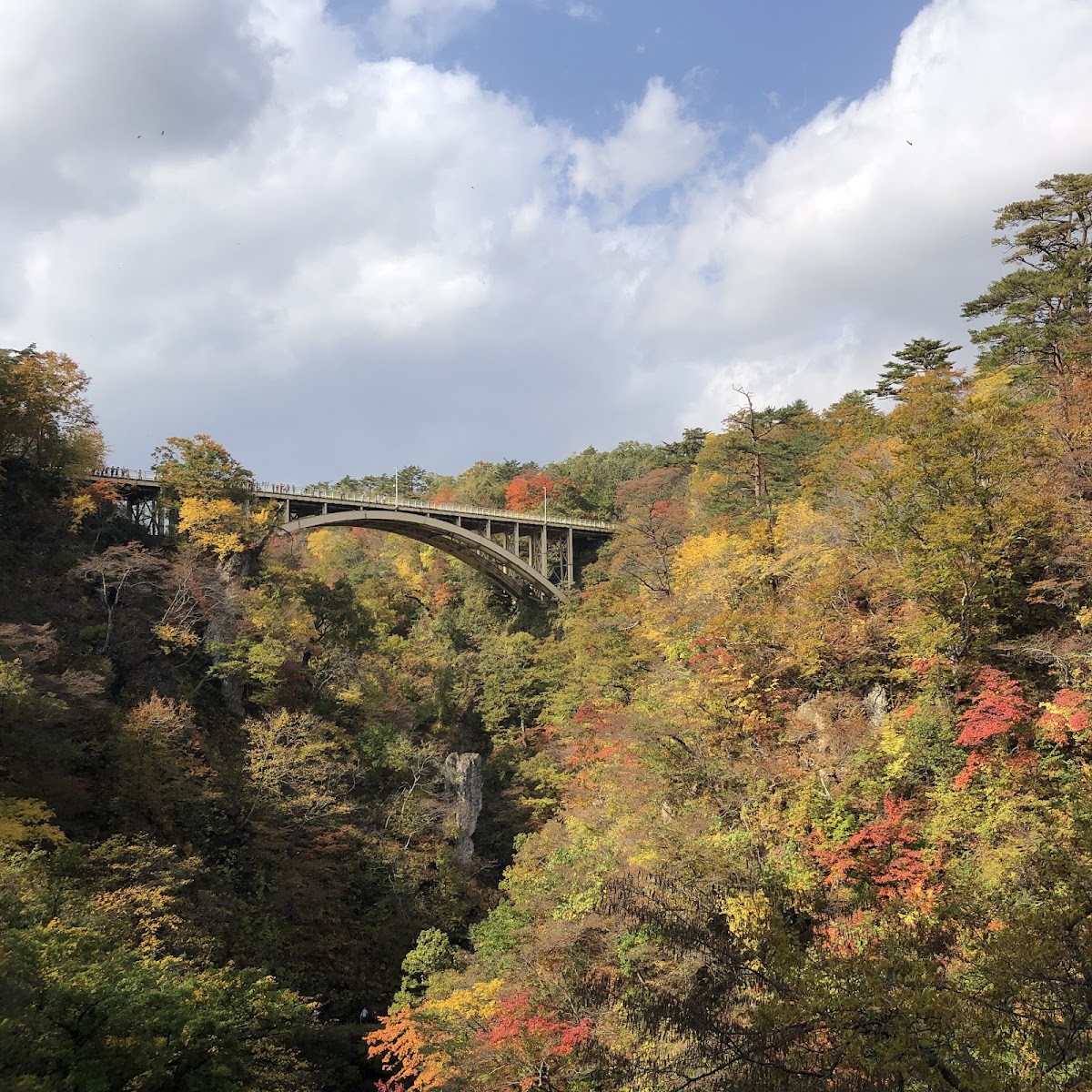
Deciduous broadleaf trees such as beech, oak, maple, and sumac turn brilliant shades of red, orange, and yellow, while scattered evergreens such as pine and cedar provide deep green accents, creating a contrast as beautiful as a painting made by nature itself. The sight of the entire 100-meter-deep grand gorge covered with autumn foliage is magnificent, and it is known as one of the premier autumn foliage spots in the Tohoku region.
During the autumn foliage season, visitors can take in panoramic views of the gorgeously colored gorge from viewpoints such as the observation deck at Naruko Gorge Rest House. On clear days in particular, the contrast between the blue sky and the autumn foliage is especially vivid, making it a popular spot among photography enthusiasts.
Winter: Quiet Snow Scenery
From late November onward, Naruko Gorge enters its winter closure period, but a gorge covered in snow possesses its own unique beauty. While access is restricted, viewing the snow-covered gorge from a distance where it can be seen offers a fantastical landscape enveloped in silence.
Major Tourist Spots in Naruko Gorge
Naruko Gorge Rest House and Observation Deck
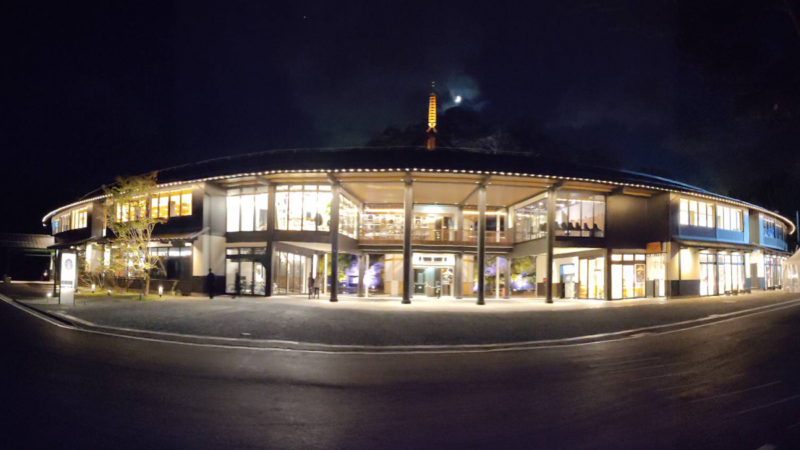
Completed in 2007, the Naruko Gorge Rest House is the hub facility for Naruko Gorge tourism. The facility features a rest area and shops where visitors can enjoy local specialty products and light refreshments.
The observation deck attached to the rest house is an excellent viewpoint overlooking Naruko Gorge. From this elevated position, visitors can take in views of the entire gorge, and especially during autumn foliage season, the observation deck attracts many tourists. From the observation deck, one can fully appreciate the complete view of the V-shaped valley carved by the Otani River, the cliffs on the opposite bank, and the beauty of the trees coloring the gorge.
Oofuka-sawa Bridge
Oofuka-sawa Bridge is one of the representative scenic viewpoints of Naruko Gorge. From this bridge, one can feel the depth and power of the gorge up close, and the dynamic landscape created by the Otani River’s flow far below and the cliffs on both banks is spectacular.
From the bridge, visitors can enjoy the gorge scenery in both upstream and downstream directions, and especially during autumn foliage season, the bridge itself becomes an excellent photography spot. However, avoid prolonged stays on the bridge or behaviors that impede traffic, and enjoy tourism with safety in mind.
Oofuka-sawa Walking Trail
For those who wish to experience Naruko Gorge’s nature more deeply, the Oofuka-sawa Walking Trail is recommended. This approximately 2.2-kilometer walking trail is maintained along the gorge, allowing visitors to enjoy forest bathing while observing the gorge’s natural beauty up close.
From the trail, one can view the gorge from angles different from the observation deck, experiencing the beauty of unusual rocks, trees, and mountain streams up close. However, the condition of the walking trail varies depending on weather and season, so it is recommended to confirm the opening status beforehand and visit wearing comfortable shoes and appropriate clothing.
Nakayama Onsen Entrance
The area near the Nakayama Onsen entrance side of Naruko Gorge is also an important viewpoint for viewing the gorge. From this area, one can enjoy the scenery of the upper reaches of the gorge, making it possible to combine hot spring town and gorge scenery tourism.
Access Information
Access by Public Transportation
By JR:
- Get off at “Naruko Onsen Station” on the JR Rikuu East Line
- Approximately 70 minutes (about 5 km) on foot from the station to Naruko Gorge Rest House
- Temporary buses may operate during autumn foliage season
By Scenic Bus:
- Buses operate from Naruko Onsen Station toward the Naruko Gorge area
- Services increase during autumn foliage season, but timetables should be confirmed in advance
- Get off at “Naruko Gorge” or “Naruko Gorge Rest House” bus stop
Access by Automobile
From the Tohoku Expressway:
- Approximately 50 minutes from Furukawa IC via National Route 47
- Approximately 1 hour 30 minutes from the Sendai direction
Parking Information:
- Parking available around Naruko Gorge Rest House
- Congestion is expected during autumn foliage season, so early morning visits are recommended
- Parking areas are available from mid-April to late November (winter closure)
Important Notes
- During winter (late November to mid-April), the rest house and observation deck are closed
- Access roads may become impassable due to snow accumulation and icy road conditions
- Autumn foliage season (particularly weekends from late October to early November) experiences heavy congestion
- Traffic restrictions may be implemented, so check the latest information
Tourist Spots Around Naruko Gorge
Naruko Hot Spring Resort
When visiting Naruko Gorge, be sure to enjoy the hot springs of Naruko Hot Spring Resort. Naruko Hot Spring Resort consists of five hot spring areas: Naruko Onsen, Higashi-Naruko Onsen, Kawatari Onsen, Nakayama Onsen, and Onigashira Onsen, making it one of the premier hot spring regions in Tohoku.
The springs feature diverse water qualities, including sulfur springs, bicarbonate springs, and chloride springs. Of the 11 types of hot spring water found in Japan, nine of them are said to exist in this region. Relieving fatigue from gorge exploration with a hot spring bath is one of the highlights of Naruko Gorge tourism.
Naruko Dam
Upstream of Naruko Gorge is Naruko Dam, which is also worth seeing. This arch concrete dam, completed in 1957, serves roles in hydroelectric power generation and flood control. The area around the dam reservoir is also known as a premier autumn foliage spot.
Kokeshi Museum
Naruko is also famous as a production area for the traditional craft “Naruko Kokeshi.” The Kokeshi Museum displays kokeshi dolls from throughout Japan and offers painting experience activities. Experiencing traditional culture alongside gorge tourism is also recommended.
Best Season for Naruko Gorge Tourism and How to Enjoy It
How to Enjoy Autumn Foliage Season
Recommended Visiting Period: Mid-October to early November (Peak: late October to early November)
Recommended Plan:
- Arrive early to secure parking
- Take in a panoramic view of the gorge’s autumn foliage from the observation deck
- Enjoy the foliage up close around Oofuka-sawa Bridge
- If time permits, take a walk on the Oofuka-sawa Walking Trail
- Enjoy day-trip hot spring bathing or stay at an inn in Naruko Hot Spring
Photography Tips:
- The observation deck offers beautiful morning light
- The area around Oofuka-sawa Bridge allows for varied angles of photography
- Clear day contrasts between blue sky and autumn foliage
- Soft light on cloudy days creates a fantastical atmosphere
How to Enjoy Fresh Green Season
Recommended Visiting Period: May to June
Fresh green season is less crowded than autumn foliage season, allowing visitors to enjoy the gorge scenery at leisure. The combination of vibrant green young leaves and the Otani River flowing abundantly with snowmelt water creates a landscape that conveys powerful vitality.
Basic Information on Naruko Gorge Tourism
Location: Naruko Onsen, Osaki City, Miyagi Prefecture, Hoshinuma Area
Operating Period: Mid-April to late November (Winter closure)
Operating Hours: Open all day (Rest house has business hours)
Admission Fee: Free
Contact:
- Osaki City Naruko Comprehensive Branch Community Promotion Division
- Naruko Hot Spring Tourism Association
Facilities:
- Parking lot (both paid and free, varies seasonally)
- Restroom (inside rest house)
- Rest area (rest house)
- Gift shop (inside rest house)
Precautions and Etiquette When Visiting Naruko Gorge
Safety Precautions
- Use of Walking Trails: Entering areas outside the maintained walking trails is dangerous. Due to risk of cliff collapse, enjoy tourism within designated areas.
- Weather Check: After rain or on rainy days, the ground becomes slippery. Wear appropriate shoes and avoid reckless actions.
- Winter Visits: Facilities are unavailable during winter closure. Additionally, snow accumulation and freezing present hazards.
Environmental Protection and Etiquette
- Carry Out Trash: To protect the natural environment, always carry out all trash.
- Plant Collection Prohibited: As a designated scenic site, plant collection is prohibited.
- Noise Consideration: This is a place to enjoy natural silence. Avoid loud voices and noise.
- Photography Etiquette: Be considerate of other tourists by being mindful of photography locations and timing.
Maximizing Your Enjoyment of Naruko Gorge’s Charm
Naruko Gorge is a natural treasure that Miyagi Prefecture is proud of. The grand gorge 100 meters deep carved by the Otani River over tens of thousands of years, the changing natural beauty throughout the four seasons, and in particular the spectacular autumn foliage representing Tohoku, give deep emotion to all who visit.
Protected as a scenic site within Kurikoma Quasi-National Park, this gorge is a precious natural heritage that will be passed on to future generations through proper use and observance of etiquette. Combining it with the hot spring culture of Naruko Hot Spring Resort makes for an even more enriching tourism experience.
Those wishing to avoid autumn foliage season crowds may consider visiting during fresh green season or on weekdays. No matter what season you visit, Naruko Gorge is an exceptional scenic spot in Tohoku that teaches visitors the greatness and beauty of nature.
When visiting Miyagi Prefecture, be sure to experience Naruko Gorge’s magnificent natural beauty and fully enjoy the geological miracle created by the Otani River and the feast of colors woven by the four seasons.