
.jpg)
Complete Guide to Otaigiri Gorge and Sotataki Waterfall Area (Niigata Prefecture) | Best Autumn Foliage Season, Access, and Climbing Information
The Otaigiri Gorge and Sotataki Waterfall area, located in Myoko City, Niigata Prefecture, is a treasure trove of nature spreading across the foothills of Mount Myoko. Centered on Sotataki Waterfall, which was selected as one of Japan’s Top 100 Waterfalls, the area captivates visitors with the outdoor hot spring at Tsubame Onsen, spectacular autumn foliage, and the scenic beauty of the gorge along the Otaigiri River. This article presents all the charms this region has to offer.
About Otaigiri Gorge and Sotataki Waterfall
Otaigiri Gorge is a beautiful gorge formed along the Otaigiri River from Tsubame Onsen. It spans an elevation of approximately 900m to 1,300m and is known as a starting point for climbing Mount Myoko, with a well-maintained walking trail extending upstream from Tsubame Onsen.
Characteristics of Sotataki Waterfall
Sotataki Falls is a magnificent waterfall located at Okura Valley, the source of the Otaigiri River. The drop is said to be approximately 80 meters, situated at an elevation of about 1,300m. The surrounding area features steep cliffs of pyroxene andesite called “tsubame lava,” creating an impressive landscape. Selected as one of Japan’s Top 100 Waterfalls, it is recognized as one of Niigata Prefecture’s representative waterfalls and attracts many climbers and tourists.
The waterfall can be viewed from a viewing platform, and during autumn foliage season, the contrast between the colored gorge and the white waterfall cascade is magnificent. For those who wish to experience the waterfall up close, it is possible to descend to the base of the falls; however, the trail has unmaintained sections and includes difficult passages requiring river crossing, so adequate equipment and experience are necessary.
Best Autumn Foliage Season and Its Appeal
The autumn foliage in the Otaigiri Gorge and Sotataki Waterfall area is known to be particularly beautiful in the Myoko region.
Best Time for Autumn Foliage
The color change typically begins in early October, with peak foliage occurring from mid-October through late October. Due to the high elevation, foliage progresses earlier than in lowland areas. Particularly during mid-October weekends, the area becomes crowded with tourists, and parking lots often reach capacity.
Characteristics of Autumn Foliage
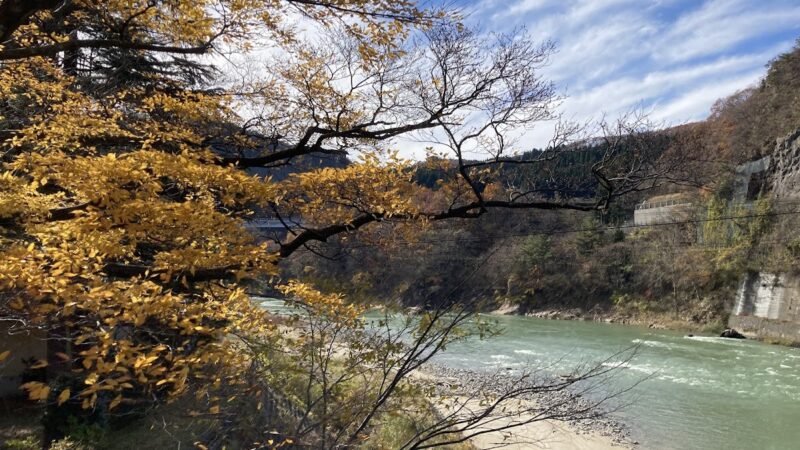
The autumn foliage in Otaigiri Gorge is centered on beech, rowan, and maple trees, with the entire mountain turning from yellow to orange and red. Walking along the gorge-side trail, you can experience being surrounded by autumn foliage from foot to head while listening to the babbling of the stream.
The path from Tsubame Onsen to the Sotataki viewing platform truly feels like walking through a tunnel of autumn leaves and is popular as a photography spot. In particular, the early morning hours when light filters through and the deep colors on overcast days are favored by photography enthusiasts.
Expected Congestion Times
During peak foliage season on weekends, parking lots become congested, especially between 10 AM and 2 PM. Early morning (7 AM to 8 AM) and evening (3 PM onwards) are relatively uncrowded, allowing you to enjoy the autumn foliage at leisure. Weekdays experience less congestion than weekends, though clear weather days require caution.
Access Methods and Parking Information
By Car
It is approximately 20 minutes from the Myoko Kogen IC of the Joshinetsu Expressway.
- Exit at Myoko Kogen IC and head toward Nagano on National Route 18
- Turn onto Prefectural Route 39 (Seki-Tsubame Onsen Line) toward Tsubame Onsen
- Arrive at the parking area at the entrance to Tsubame Onsen in about 10 minutes from National Route 18
The roads are paved, but as mountain roads, they feature sharp curves and steep grades. Winter closures occur from late November to late April, so caution is needed regarding visitation timing.
Parking
Near the entrance to Tsubame Onsen, there is a free parking lot for Mount Myoko climbers and day-trippers visiting the hot springs. A parking area near the visitor center is available, and public restrooms are also equipped. The lot accommodates approximately 50 vehicles and often reaches capacity from early morning on peak foliage season weekends.
Public Transportation Access
From JR Myoko Kogen Station, a local bus (Kekinan Bus) reaches Tsubame Onsen in approximately 30 minutes. However, as bus frequency is limited, it is recommended to check the timetable in advance.
Route from Tsubame Onsen to Sotataki Viewing Platform
Basic Information
- Distance: Approximately 1.5 km one way from parking lot to Sotataki Viewing Platform
- Time Required: 25–30 minutes one way
- Elevation Gain: Approximately 200m
- Difficulty: Beginner to intermediate (well-maintained trail with some steep sections)
Detailed Route
- Parking Lot to Tsubame Onsen Area (5 minutes)
Exit the parking lot and pass through the Tsubame Onsen village. A quiet onsen village with several hot spring inns.
- Onsen Village to Junction (5 minutes)
After passing through the onsen village, there is a junction. Right leads to the Otaigiri Gorge walking trail; left goes to Kogane no Yu hot spring and the Sotataki Viewing Platform.
- Junction to Kogane no Yu (10 minutes)
Taking the left path leads to the outdoor hot spring “Kogane no Yu.” Bathing while viewing autumn foliage is possible here.
- Kogane no Yu to Sotataki Viewing Platform (10 minutes)
Continuing upward from Kogane no Yu, you reach the viewing platform from which Sotataki can be seen.
Points of Caution
- Although the walking trail is maintained, it becomes slippery after rain
- Hiking boots or trekking shoes are recommended
- In the case of proceeding to the base of Sotataki, there are unmaintained sections, and signs reading “Danger Ahead: Unmaintained Route to Sotataki, Do Not Enter” may be posted
- The route to the waterfall base requires river crossing and has difficult sections, making it suitable only for advanced hikers
Outdoor Hot Springs “Kawara no Yu” and “Kogane no Yu”
One of the charms of Otaigiri Gorge is the outdoor hot springs located along the gorge.
Kawara no Yu
An outdoor hot spring located where you descend to the riverbed after walking the Otaigiri Gorge trail. It is characterized by pure white hot spring water, and you can enjoy open-air bathing while listening to the babbling stream and surrounded by autumn foliage. Free to use and co-ed, though swimwear is recommended.
Kogane no Yu
An outdoor hot spring located on the path from Tsubame Onsen to the Sotataki Viewing Platform. Also free to use, and during foliage season, you can bathe while viewing spectacular scenery. Like Kawara no Yu, it is co-ed with recommended swimwear.
Notes for Bathing
- Changing facilities are only minimal
- Pay attention to valuables management
- Hot spring water is high temperature; keep bathing time short
- Unavailable in winter due to snow accumulation
Otaigiri Gorge Walking Trail Exploration
Apart from Sotataki, exploring the walking trail of Otaigiri Gorge is also a popular course.
Somen Waterfall
Along the trail is a waterfall called “Somen Falls,” characterized by delicate water flow. During autumn foliage season, the contrast with the colored trees surrounding it becomes a beautiful photography spot.
Gorge Beauty
The walking trail along the Otaigiri River allows you to enjoy both the stream’s babble and autumn foliage—a luxurious course. Due to high elevation, it is cooler than lowland areas and comfortable for hiking even in summer. In autumn, the entire mountain turns yellow and orange, and even on days without direct sunlight, deep colors can be enjoyed.
Nearby Sightseeing Spots
Various attractive sightseeing spots are scattered around the Otaigiri Gorge and Sotataki Waterfall area.
Myoko Kogen (Imori Pond) Autumn Foliage
Imori Pond is a scenic spot with Mount Myoko in the background, and the collaboration of the reflection of inverted Mount Myoko and autumn foliage is spectacular. Located approximately 15 minutes by car from Otaigiri Gorge, it is recommended to visit both. Peak foliage is from mid to late October, with a maintained walking trail for easy exploration.
Naname Waterfall Autumn Foliage
Naname Falls, one of Japan’s Top 100 Waterfalls, is an impressive 55-meter drop. Located approximately 30 minutes by car from Otaigiri Gorge, during foliage season you can enjoy the collaboration of waterfall and autumn colors. About 15 minutes on foot from the parking area to the waterfall, making it relatively accessible.
Sasagamine Plateau Autumn Foliage
A high plateau at approximately 1,300m elevation featuring beautiful contrasts between vast grassland and autumn foliage. Approximately 40 minutes by car from Otaigiri Gorge. Peak foliage occurs from late September to early October, when beech and rowan trees display their colors.
Myoko Kogen Sky Cable and Suginohara Gondola
Ropeway and gondola systems allow you to view autumn foliage from the air. Myoko Kogen Sky Cable ascends to 1,300m elevation, where you can enjoy the carpet of autumn foliage spread below. Suginohara Gondola similarly offers aerial walks while enjoying foliage.
Utaiyama (Takatani Pond Area) Autumn Foliage
For those seeking full-fledged mountain climbing, Utaiyama is recommended. The autumn foliage around Takatani Pond peaks from late September to early October, with beautiful views of alpine plants and autumn colors. Day hiking is possible, though mountain hut stays are also popular.
Fudo Falls (O-taki)
A waterfall where the Otaigiri River drops further downstream, with a fall of approximately 80 meters. Located just below the Fudo Ohashi Bridge on Prefectural Route 396 connecting Seki Onsen and Akakura Onsen, making it easily accessible from a car. Fudo Myojin Shrine is enshrined near the waterfall basin.
Notes for Climbing and Trekking
Equipment
- Footwear: Hiking boots or trekking shoes are essential
- Clothing: Bring warm clothing as elevation is high (especially cool mornings and evenings in autumn)
- Rain Gear: Weather changes frequently; carry rain wear
- Water and Snacks: Bring drinking water and light provisions
Safety Measures
- The trail to Sotataki’s waterfall basin has unmaintained sections with posted signs warning against entry. Avoid taking risks
- At river crossing points, use judgment to turn back during high water
- Avoid solo travel; travel with multiple people when possible
- Mobile phone reception is unavailable in some areas; inform family or acquaintances of your destination beforehand
Best Season and Weather Conditions
During peak autumn foliage from mid to late October, temperatures drop significantly, with early morning and evening temperatures reaching around 5 degrees Celsius. Even daytime temperatures remain around 15 degrees, making layered clothing ideal. Fog is also prone to form during this period, and poor visibility can make waterfall photography and viewing difficult.
Photography Spots and Best Timing
Recommended Photography Spots
- Sotataki Viewing Platform: A classic spot with views of the entire waterfall and surrounding autumn foliage
- Near Kogane no Yu: Collaboration of outdoor hot spring and autumn foliage
- Otaigiri Gorge Walking Trail: Capturing gorge and foliage together
- Somen Falls: Delicate waterfall combined with autumn foliage
Best Timing for Photography
- Early Morning (6 AM to 8 AM): Morning light creates ethereal images; mist may add mystique
- Overcast Days: Deep-colored foliage can be captured
- Afternoon Slant Light: Creates three-dimensional photos
Accommodation and Hot Springs
Tsubame Onsen Accommodations
Tsubame Onsen has several hot spring inns offering source hot spring baths and cuisine using local ingredients. Reservations are difficult during foliage season, so early booking is recommended.
Nearby Hot Spring Areas
- Akakura Onsen: Approximately 15 minutes by car, with diverse options from large hotels to small inns
- Seki Onsen: Approximately 10 minutes by car, a historic hot spring area
- Myoko Onsen: Approximately 20 minutes by car, an area with many resort hotels
Four Seasons’ Charm
Spring (May to June)
Fresh green season when snowmelt swells Sotataki to impressive proportions. Alpine flowers begin blooming, and trekking is enjoyable in crisp air.
Summer (July to August)
High elevation provides cool conditions, ideal as an escape destination. Outdoor bathing is comfortable, and deep green gorge scenery can be savored.
Autumn (September to October)
The most popular season with spectacular autumn foliage. Peak season is mid to late October.
Winter (November to April)
Prefectural Route 39 closes seasonally, making general tourist access impossible. Only advanced snowshoe and backcountry skiers experience this silent world.
Summary
Otaigiri Gorge and the Sotataki Waterfall area represent a natural treasure of Myoko City, Niigata Prefecture. The area combines diverse attractions: Sotataki Falls, selected as one of Japan’s Top 100 Waterfalls; spectacular autumn foliage; outdoor hot springs; and Tsubame Onsen as a Mount Myoko climbing base.
From mid to late October at peak autumn foliage season, the entire mountain turns yellow and orange, and walking the gorge-side trail truly offers the experience of traversing a tunnel of leaves. Access from parking to the Sotataki Viewing Platform requires just 25 to 30 minutes one way, and along the way, outdoor hot springs “Kogane no Yu” and “Kawara no Yu” offer bathing opportunities while enjoying autumn colors.
Nearby scattered foliage spots such as Naname Falls, Imori Pond, and Sasagamine Plateau make the area ideal as a base for exploring Myoko region autumn foliage. Early morning quiet hours and the deep hues on overcast days showcase different facets of Otaigiri Gorge, revealing new discoveries with each visit.
Please experience firsthand the spectacular scenery created by Myoko’s magnificent nature. With appropriate equipment, safety measures, and respect for etiquette, enjoy a wonderful encounter with nature.
-800x450.jpg)
-800x450.jpg)
-800x450.jpg)