Sounkyo Gorge Hokkaido Complete Guide | A Journey Through the Breathtaking Scenery and Hot Springs of Kamui Mintara, the Garden of the Gods
Located in Kamikawa Town, near the center of Hokkaido, Sounkyo Gorge (層雲峡) is a magnificent valley that spreads across the Daisetsuzan National Park. The columnar jointed cliffs that stretch for approximately 24 km upstream of the Ishikari River convey the mystical landscape that the Ainu people called “Kamui Mintara (the Garden of the Gods).” This article presents all the charm that Sounkyo Gorge has to offer.
What is Sounkyo Gorge | Hokkaido’s Hidden Gorge Treasure
Sounkyo Gorge is a valley formed in the upstream section of the Ishikari River at the northern foothills of the Daisetsuzan mountain range that stretches across central Hokkaido. Welded tuff rock created by volcanic activity of Daisetsuzan approximately 30,000 years ago has been shaped by the erosional action of the Ishikari River over many years, creating the magnificent landscape seen today.
The Origin of the Name Sounkyo Gorge
The name Sounkyo Gorge was given by the writer Keigetsu Omachi in 1921 (Taisho 10). Before that, the Ainu people called this area “Souunbetsu” (a river with many waterfalls). It is said that when Omachi visited, he was impressed by the sight of clouds and mist flowing between the cliffs and named it “Sounkyo Gorge.”
Geographic Features and Scale
The gorge of Sounkyo continues for approximately 24 km along the Ishikari River, with columnar jointed rock walls reaching heights of 150 to 200 meters rising on both banks. Columnar jointing is a geological phenomenon in which magma cools and solidifies to form regularly shaped hexagonal or pentagonal columnar cracks. The rock walls of Sounkyo present a unique landscape that looks like giant stone pillars stacked upon one another.
Protected as part of the Daisetsuzan National Park, the surrounding area is covered with virgin forest, where spruce, fir, and birch trees display their appearances throughout the four seasons.
Sounkyo Onsen | One of Hokkaido’s Premier Hot Spring Towns
In the center of Sounkyo Gorge, there is a hot spring resort area called Sounkyo Onsen. It is the largest of its kind in the Daisetsuzan area and is widely known throughout Japan.
The History and Hot Spring Quality
The history of Sounkyo Onsen is relatively recent, with full-scale development beginning in the early Showa period. In 1954 (Showa 29), it was designated as part of Daisetsuzan National Park, and development as a tourist destination progressed.
The hot spring water is primarily simple hot spring water, characterized by colorless, odorless, and soft water. The source temperature is quite high at approximately 60 to 70 degrees Celsius and is said to be effective for neuralgia, muscle pain, joint pain, and poor circulation.
Characteristics of the Hot Spring Town and Accommodation Facilities
The Sounkyo Onsen resort area has approximately 10 accommodation facilities, ranging from large hotels to family-run inns. Many hotels feature large public baths and open-air baths where guests can enjoy hot springs while taking in the scenic views of the gorge.
The resort area also has restaurants and souvenir shops scattered throughout, where visitors can enjoy cuisine using seafood and mountain vegetables unique to Hokkaido, as well as local crafts. Convenience stores and gas stations are also available, providing a convenient base for tourism.
Major Sightseeing Spots in Sounkyo Gorge
The Sounkyo area has many spectacular natural attractions created by nature.
Ryusei Waterfall and Ginga Waterfall
The representative tourist attractions of Sounkyo Gorge are Ryusei Waterfall and Ginga Waterfall. These two waterfalls have been selected as part of “Japan’s Top 100 Waterfalls.”
Ryusei Waterfall has a drop of 90 meters, with a thick, single stream of water flowing powerfully downward, earning it the nickname “male waterfall.” In contrast, Ginga Waterfall has a drop of 120 meters, with water dividing into many streams and flowing down delicately, earning it the title “female waterfall.”
From the Sohaku Observation Platform, both waterfalls can be viewed simultaneously. The observation platform requires about a 20-minute climb on a hiking trail, but the effort is well worth it. The waterfalls display different appearances with each season: fresh greenery in spring, cool waters in summer, autumn foliage in fall, and frozen ice falls in winter.
Dai-kan and Ko-kan
Dai-kan (大函) and Ko-kan (小函) are spots where the columnar jointing of Sounkyo Gorge is most beautifully displayed.
Dai-kan features columnar jointed rock walls rising to approximately 200 meters in height, with a powerful and striking landscape. Ko-kan displays more delicate columnar jointing; while hikers could once access nearby areas via a hiking trail, the area is now closed to the public due to the danger of falling rocks. The view can be enjoyed from a scenic overlook along National Route 39.
Kuro-dake and the Ropeway
From Sounkyo Onsen, visitors can reach Kuro-dake, standing at an elevation of 1,984 meters, by transferring between a ropeway and lifts.
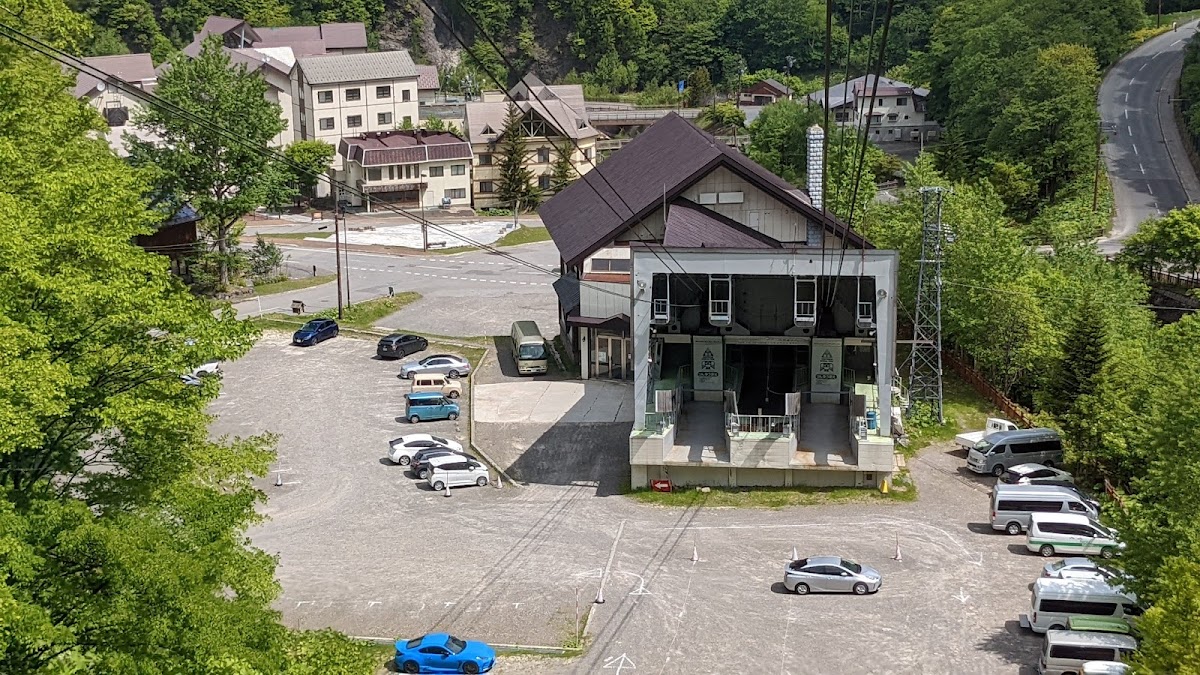
The Sounkyo-Kurodake Ropeway connects the hot spring resort to the 5th station of Kuro-dake at an elevation of 1,300 meters in approximately 7 minutes. From the 5th station, the Kuro-dake Pair Lift rises to the 7th station at an elevation of 1,520 meters, from which a hiking trail continues to the summit.
The 5th station features an observation platform and a rest house, offering magnificent panoramic views of the Daisetsuzan range. It is also a treasure trove of alpine plants, with approximately 300 species of alpine flowers blooming from late June to early August. In autumn, Japan’s earliest fall foliage can be seen, with the best viewing period from mid to late September.
In winter, it operates as a ski resort, popular with skiers and snowboarders seeking powder snow.
Sounkyo Visitor Center
The Sounkyo Visitor Center located in the hot spring resort area is a facility where visitors can learn about the nature and history of Daisetsuzan National Park. Dioramas, video exhibitions, and specimens provide clear explanations of the flora, fauna, and geology of Daisetsuzan.
Mountaineering information and trail maps are also provided, and stopping here before visiting Sounkyo or Daisetsuzan can help visitors gain a deeper understanding of nature. Admission is free, and there are rest areas and restrooms available.
Activities You Can Experience at Sounkyo Gorge
The Sounkyo area offers various activities for enjoying its magnificent natural surroundings.
Mountaineering and Trekking
Sounkyo Gorge is one of the main bases for mountaineering Daisetsuzan. From Kuro-dake, ridge trails continue to Asahi-dake (elevation 2,291 m), the main peak of Daisetsuzan, as well as Hokushin-dake and Hakuun-dake.
For beginners, a round-trip course from the 7th station of Kuro-dake to the summit (approximately 3 hours) is recommended. Those with greater confidence can tackle longer routes such as a loop course from Kuro-dake through Hokushin-dake and the Kuro-dake Stone House, or long-distance ridge trails.
Even in summer, temperatures are low and weather changes rapidly, so adequate equipment and preparation are necessary.
Gorge Walking
Hiking trails have been developed throughout Sounkyo Gorge, allowing visitors to enjoy the scenic valley with ease. There are trails around Ryusei and Ginga waterfalls as well as walking paths from the hot spring resort toward Dai-kan.
The fall foliage season (late September to early October) is particularly beautiful, with striking contrasts between the trees colored in red and yellow and the rock walls.
Cycling
The roads and highways surrounding Sounkyo are suitable for cycling. Rental bicycle facilities are available in the hot spring resort, allowing visitors to enjoy the scenery while cycling along the gorge.
Winter Limited | Ice Fall Festival
Every year from late January to mid-March, the Sounkyo Onsen Ice Fall Festival is held. Giant ice sculptures, ice falls, and ice tunnels are created in the riverbed of the Ishikari River, and at night they are illuminated to create a magical world.
Various events are also held, including ice slides, ice climbing experiences, and fireworks displays, making it a signature winter attraction of Sounkyo Gorge. Temperatures can drop below minus 20 degrees Celsius, so thorough cold weather precautions are essential.
Access to Sounkyo Gorge
Access to Sounkyo Gorge is available by car or public transportation.
Access by Car
From Asahikawa City: Approximately 1 hour 30 minutes (approximately 90 km) north on National Route 39
From Sapporo City: Approximately 3 hours (approximately 200 km) via Doa Expressway and Asahikawa-Monbetsu Expressway
From New Chitose Airport: Approximately 3 hours 30 minutes (approximately 230 km) via Doa Expressway
Multiple parking areas are available in the hot spring resort area, and day-trippers can use them as well. In winter, snow and ice on the roads are common, making studded tires essential.
Access by Public Transportation
Bus: Service is available from JR Asahikawa Station or Kamikawa Station on the Hokushin Bus line heading to Sounkyo Gorge. The journey takes approximately 1 hour 50 minutes from Asahikawa Station and approximately 30 minutes from Kamikawa Station. As service is limited, it is recommended to check the schedule in advance.
Seasonal Limited Buses: Direct buses may be available from Asahikawa Airport or Sapporo during summer and fall foliage season.
Best Seasons for Sounkyo Gorge Tourism
Sounkyo Gorge offers different attractions in each season, with some particularly recommended times:
Spring (May to June)
As snow melts, fresh greenery begins to sprout and alpine flowers start to bloom. From late May to early June, delicate flowers such as Ezono-tsugazakura and chinguruma can be seen on Kuro-dake. This is a beautiful time with contrasts between remaining snow fields and fresh greenery.
Summer (July to August)
This is the optimal season for mountaineering and trekking. Alpine flowers are most abundant, and the mountains of Kuro-dake and Daisetsuzan are colored like flower fields. Temperatures are more than 10 degrees lower than at lower elevations, making it a popular summer refuge destination.
Autumn (September to October)
The fall foliage season is the highlight of Sounkyo Gorge. Foliage begins at the summit of Kuro-dake from mid-September and gradually descends to lower elevations. From late September to early October is the peak foliage period in the gorge, with rowan, maple, and birch trees turning red and yellow, creating stunning contrasts with the columnar jointed rock walls.
Winter (January to March)
The Ice Fall Festival is held in the intense cold, with frozen waterfalls and ice sculptures creating a magical world. Skiing and snowboarding are also available, with powder snow quality among the highest in Japan. However, temperatures can drop below minus 20 degrees Celsius, requiring thorough cold weather protection.
Sightseeing Spots Around Sounkyo Gorge
When visiting Sounkyo Gorge, consider also visiting nearby attractions.
Daisetsuzan Asahi-dake
Asahi-dake (elevation 2,291 m), Hokkaido’s highest peak, is located approximately 1 hour drive from Sounkyo. The Asahi-dake ropeway ascends to Shigemi Station at an elevation of 1,600 meters, from which the summit is approximately 2.5 hours of hiking. The walking trail around Shigemi Pond is well-maintained and allows visitors to easily experience the alpine atmosphere.
Kamikawa Town Center
Approximately 30 minutes drive from Sounkyo, Kamikawa Town’s central area has supermarkets, restaurants, and gas stations. A roadside station near the base station of the Sounkyo-Kurodake Ropeway offers local specialty products.
Mikuni Pass
Mikuni Pass (elevation 1,139 m), Japan’s highest elevated national highway pass, is located approximately 40 km east of Sounkyo on National Route 273. The observation platform offers panoramic views of a primitive forest spread below, and the scenery is particularly beautiful during the fall foliage season.
Precautions and Etiquette for Sounkyo Gorge Tourism
Important precautions to know when visiting Sounkyo Gorge:
About Wildlife
The Sounkyo area is home to brown bears, sika deer, and arctic foxes. Brown bears in particular are dangerous animals, so please note the following when mountaineering or trekking:
- Carry a bear bell and make noise while walking
- Avoid hiking alone during early morning or dusk
- Always take food and trash with you
- If you find bear signs (footprints, droppings, etc.), turn back
Weather Conditions
Daisetsuzan has rapidly changing weather, with temperatures dropping below 10 degrees Celsius even in summer. When mountaineering, always bring warm clothing, rain gear, maps, compasses, and emergency food.
Environmental Conservation
Within Daisetsuzan National Park, the collection of plants, feeding animals, and campfires or camping outside designated areas are prohibited. Always take trash with you and help preserve the natural environment.
Winter Driving
In winter, road ice and blizzards with poor visibility frequently occur. Studded tires are essential, and those unfamiliar with winter driving should consider using public transportation.
Cuisine and Local Products of Sounkyo Gorge
The hot spring resort area and surrounding region offer dining experiences unique to Hokkaido.
Genghis Khan (Jingisukan)
Jingisukan, a Hokkaido regional specialty, is a popular menu item at Sounkyo. Fresh lamb is seasoned with special sauce and cooked with vegetables. It is served at restaurants and accommodation facilities in the resort area.
Mountain Vegetable Cuisine
From spring through early summer, various wild vegetables are harvested in the Sounkyo area. Dishes such as tempura and ohitashi (boiled vegetables) made with bracken, ostrich fern, Japanese spikenard, and fatsia shoots are seasonal delicacies.
Venison (Ezo Sika)
Increasingly popular is Ezo Sika (sika deer) meat. Low in fat and high in protein, with abundant iron content. It is served in various preparations including steak, stew, and sausage.
Local Sake and Craft Beer
Japanese sake and craft beer produced in the Kamikawa area are not to be missed. Local sake made with groundwater from Daisetsuzan is characterized by a clean, crisp taste.
Specialty Products and Souvenirs
Souvenir shops in the hot spring resort area offer wood carvings, photography collections of Sounkyo, and local confectioneries. Particularly popular are sweets named after Sounkyo and snacks made with Hokkaido ingredients.
History and Culture of Sounkyo Gorge
The history of Sounkyo Gorge traces back to the time of the Ainu people.
The Ainu People and Sounkyo Gorge
The Ainu people called this area “Souunbetsu” (a river with many waterfalls) and visited for hunting and gathering. They traveled along the Ishikari River to the alpine zone of Daisetsuzan, pursuing brown bears and sika deer.
The Ainu people called Daisetsuzan “Kamui Mintara” (the Garden of the Gods) and regarded it as a sacred place. This name is still used today to refer to Sounkyo and Daisetsuzan.
Modern Development
With the progression of Hokkaido development during the Meiji era, people began to venture into the Sounkyo area. However, due to the rugged terrain, full-scale development was delayed.
In the Taisho era, writer Keigetsu Omachi visited Sounkyo and named it “Sounkyo Gorge,” spreading awareness of the area. Hot spring development began in the early Showa period, and the area developed rapidly as a tourist destination during Japan’s period of high economic growth after World War II.
In 1954 (Showa 29), it was designated as part of Daisetsuzan National Park, and in 1967, the Sounkyo-Kurodake Ropeway opened, allowing general tourists to easily experience the nature of Daisetsuzan.
Sample Courses for Sounkyo Gorge Tourism
Here are suggested model courses for touring Sounkyo Gorge efficiently.
Day Trip Course (6 to 7 hours)
9:00 Arrive at Sounkyo Onsen, gather information at Sounkyo Visitor Center
9:30 Sounkyo-Kurodake Ropeway to 5th station
10:00 Enjoy views from 5th station observation platform, alpine plant observation
11:00 Return by ropeway
11:30 Travel to Ryusei and Ginga waterfalls
12:00 Trekking to Sohaku observation platform (approximately 40 minutes round trip)
13:00 Lunch in the resort area
14:30 View Dai-kan and Ko-kan from car
15:30 Day use hot spring bathing in resort area
16:30 Departure
1 Night 2 Day Course
Day 1
- Morning: Arrive at Sounkyo, take Kuro-dake Ropeway and Lift to 7th station
- Afternoon: Kuro-dake mountaineering (depending on fitness level) or 5th station nature walk
- Evening: Check in at hot spring resort, relax in hot springs
- Night: Enjoy Hokkaido cuisine
Day 2
- Morning: Ryusei and Ginga waterfall trekking
- Midday: Visit Dai-kan and Ko-kan, scenic gorge drive
- Afternoon: Travel to Kamikawa Town or Asahikawa City
Basic Information about Sounkyo Gorge
Location: Sounkyo, Kamikawa Town, Kamikawa District, Hokkaido
Inquiry: Sounkyo Tourism Association TEL 01658-2-1811
Access:
- Car: Approximately 90 km (approximately 1 hour 30 minutes) from Asahikawa City on National Route 39
- Bus: Approximately 1 hour 50 minutes from JR Asahikawa Station on Hokushin Bus
Parking: Multiple locations in resort area (free and paid)
Admission: Gorge viewing is free (separate fees for ropeway, etc.)
Recommended viewing time: 6 to 7 hours for day trip, 1 to 2 nights recommended
Official Website: Sounkyo Tourism Association https://sounkyo.net/
Summary | Experience Hokkaido’s Great Nature at Sounkyo Gorge
Sounkyo Gorge is a treasure trove of nature that Hokkaido is proud to offer. The columnar jointed cliffs stretching for 24 kilometers, the magnificent scenery of Ryusei and Ginga waterfalls, the panoramic views of the Daisetsuzan range from Kuro-dake, and high-quality hot springs—all these invite visitors to the “Garden of the Gods.”
Spring brings alpine flowers, summer offers cool weather, autumn displays brilliant foliage, and winter presents a magical ice fall festival. Sounkyo Gorge displays a different face with each season, and new discoveries await with every visit.
Access from Asahikawa Airport and Sapporo City is relatively good, making Sounkyo Gorge an ideal destination for Hokkaido trips or as a base for touring east and north Hokkaido. Whether you want to refresh yourself in nature, enjoy serious mountaineering, or relax in hot springs, you can savor Sounkyo Gorge’s appeal in your own style.
Sounkyo Gorge, the mysterious land the Ainu people called “Kamui Mintara,” awaits with its magnificent nature, abundant hot springs, and Hokkaido cuisine. Please visit this hidden gorge at least once and experience Hokkaido’s great nature with all your senses.