.jpg)
Art Path and Green Path (Kanazawa City, Ishikawa Prefecture) Complete Guide | The Charm of Historic Walking Routes and How to Enjoy All Four Seasons
In the Hontakenomori area of Kanazawa City, where cultural facilities are concentrated, there exists a quiet walking path that makes you forget the hustle and bustle of the city. These are the “Art Path” and “Green Path.” Connecting three cultural facilities—the Ishikawa Prefectural Art Museum, the Kanazawa City Nakamura Memorial Museum of Art, and the Suzuki Daisetz Museum—these paths are enveloped by the clear waters of the Tatsutsuji Water Channel and abundant greenery, creating a distinctive Kanazawa atmosphere.
What Are the Art Path and Green Path?
The Art Path and Green Path are two walking routes that traverse Kanazawa City’s cultural zone. These paths are not mere passages, but valuable spaces where visitors can experience Kanazawa’s history and culture, cherished by both locals and tourists alike.
Overview of the Art Path
The Art Path is a stone stairway walking route of approximately 120 meters connecting the Ishikawa Prefectural Art Museum, located on a hilltop, with the Kanazawa City Nakamura Memorial Museum of Art, situated on flat ground. This path, connecting the upper and lower terraces, features quite a steep incline, allowing visitors to feel nature’s topography while ascending and descending the stairs.
The most distinctive feature is the branch of the Tatsutsuji Water Channel flowing parallel to the stone steps. This water channel, flowing from Kenrokuen Garden, falls like a waterfall beside the stairs, providing visitors with refreshing sounds of water and negative ions. Surrounded by primeval forest and lush greenery, the silent space where only the sound of flowing water echoes is a healing spot that makes you forget daily hustle and bustle.
Overview of the Green Path
The Green Path is a nature trail of approximately 150 meters extending from the Kanazawa City Nakamura Memorial Museum of Art to the Suzuki Daisetz Museum. When you reach the bottom of the Art Path and proceed to the left, the Green Path appears.
Walking this path, you can see the Hontakenomori Park spreading out to your right, and you can view the “Former Honta Family Storehouse Gate,” designated as a Registered Tangible Cultural Asset of Japan. The nature trail, developed along the woods, has a different character from the Art Path and provides a flat, easy-to-walk route. From partway through, it becomes a gravel path; this walking route through the woods is a valuable space where you can fully experience nature while in an urban area.
Historical Background of the Tatsutsuji Water Channel and the Art Path
The Tatsutsuji Water Channel, which characterizes the Art Path, is an indispensable part of Kanazawa’s history. Understanding this water channel’s history adds deeper meaning to your stroll along the path.
Origins of the Tatsutsuji Water Channel
The Tatsutsuji Water Channel was constructed in 1632 (Kanei 9) on the orders of Maeda Toshinari, the third feudal lord of the Kaga Domain. Water was drawn from the upper reaches of the Saigawa River and supplied to Kanazawa Castle via Kenrokuen Garden. The channel stretches approximately 11 kilometers, making it a major civil engineering project that embodied the pinnacle of construction techniques of that era.
The landscape where a branch of the Tatsutsuji Water Channel, flowing from Kenrokuen Garden, cascades along the Art Path is a valuable heritage that transmits Kanazawa’s water culture, continuing from the Edo period to the present day. The presence of this water channel gives the path historical value beyond that of a simple walking route.
Development as a Cultural Facility Area
Currently, the Hontakenomori area, where the Art Path and Green Path are located, is known as a region with concentrated cultural facilities representative of Kanazawa. Besides the Ishikawa Prefectural Art Museum, the Kanazawa City Nakamura Memorial Museum of Art, and the Suzuki Daisetz Museum, the nearby National Crafts Museum and other institutions form a major cultural zone also called the “Forest of Culture.”
The Art Path and Green Path, developed as walking routes connecting these facilities, have become convenient shortcuts for tourists visiting cultural institutions, while also gaining value as tourist attractions in their own right.
Experiencing Seasonal Changes Throughout the Walking Routes
One of the major attractions of the Art Path and Green Path is the ability to feel nature’s seasonal changes up close. Despite being just a few minutes’ walk, these paths display a completely different appearance with each season.
The Art Path and Green Path in Spring
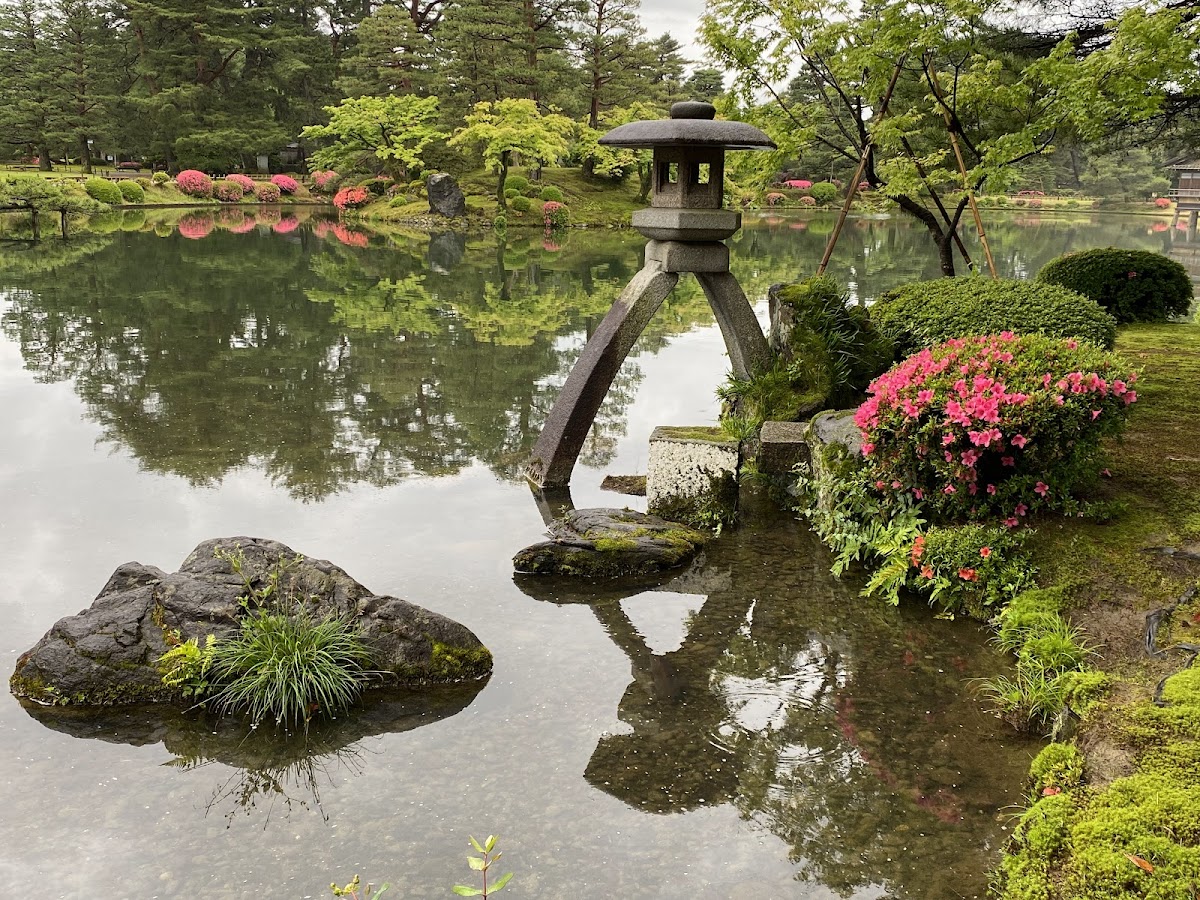
As spring arrives, the trees around the paths burst into leaf all at once, presenting a season of vivid new greenery. The sound of the Tatsutsuji Water Channel seems liberated from winter’s quietness, ringing out brightly and creating a space full of vitality. In Hontakenomori Park, cherry blossoms can also be enjoyed, and the blossom-viewing season brings many visitors.
The moss along the stone steps turns a vibrant green, glittering in the water spray—a beauty unique to spring. The landscape of water cascading through new greenery creates a refreshing impression for visitors.
The Art Path and Green Path in Summer
Summer is the season when green becomes most vivid. Trees grow thick, and the path becomes like a deep green tunnel. The sound of the Tatsutsuji Water Channel invokes coolness, and the air, full of negative ions, becomes a pleasant retreat from the heat.
Despite being in an urban area, the temperature can feel 2-3 degrees cooler than the surrounding areas, making it especially recommended for walks on hot days. The way dappled sunlight falls on the stone steps is also beautiful, making it an ideal season for photography.
The Art Path and Green Path in Autumn
Autumn is the season when autumn leaves color the paths. Maple and other deciduous trees turn red and yellow, creating a splendid landscape in contrast with the green evergreens. Fallen leaves covering the stone steps and floating on the Tatsutsuji Water Channel have a charming quality.
Walking while viewing colored leaves in autumn’s crisp air is extraordinary. The ginkgo trees in Hontakenomori Park also gleam in golden color, and the scenery viewed from the Green Path is magnificent.
The Art Path and Green Path in Winter
In winter, especially after snowfall, the Art Path displays an enchanting beauty. The contrast between the snow-covered stone steps and the Tatsutsuji Water Channel flowing beside them resembles a sumi-e painting. The space, silent except for the sound of water flowing beside the snow-laden evergreens, possesses a charm unique to winter.
However, due to snow and ice, the stone steps become slippery, so caution is necessary when walking in winter. It is recommended to wear appropriate footwear and use handrails while walking carefully.
How to Walk the Art Path and Green Path and Key Points
Here are some tips for effectively enjoying the Art Path and Green Path.
Recommended Route
The most recommended route is to start from the Ishikawa Prefectural Art Museum, descend the Art Path to the Kanazawa City Nakamura Memorial Museum of Art, then proceed through the Green Path to the Suzuki Daisetz Museum. This route centers on descending, making the walk relatively easy.
For the reverse route, you would climb the steep stone steps of the Art Path, but this too offers a sense of accomplishment, and the view from the Ishikawa Prefectural Art Museum after reaching the top is exceptional. Those confident in their fitness may prefer to deliberately choose the uphill route.
Time Required
Walking through the Art Path takes approximately 3-5 minutes, and the Green Path requires similar time. However, this is merely the time to pass through; if you walk slowly to enjoy the scenery or take photographs, allow approximately 10-15 minutes for each. For the overall stroll including both paths, excluding viewing time at each museum, plan for approximately 30 minutes to 1 hour.
Photography Spots
The most popular photography spot on the Art Path is the angle looking down the stone steps from the Ishikawa Prefectural Art Museum side. The spectacular view of the Tatsutsuji Water Channel cascading like a waterfall through the expansive greenery is breathtaking.
On the Green Path, it is recommended to photograph with the Former Honta Family Storehouse Gate in the background, or to capture the woodland trail. Since the path displays different faces depending on the season, there are always new discoveries with each visit.
Precautions
The Art Path features steep stone steps and becomes particularly slippery in rain or winter. Wear comfortable shoes and use handrails while walking carefully. For elderly visitors or those with concerns about their legs and lower back, consider choosing an alternative route rather than overexerting yourself.
Additionally, since the paths are relatively narrow spaces, it is important to walk with a spirit of consideration and yielding when encountering other visitors.
Surrounding Cultural Facilities and Highlights
When visiting the Art Path and Green Path, combining a tour of the surrounding cultural facilities allows for a more fulfilling experience.
Ishikawa Prefectural Art Museum
The Ishikawa Prefectural Art Museum, serving as the starting point of the Art Path, is a museum that collects and displays artworks and crafts related to Ishikawa Prefecture. You can view masterpieces of traditional crafts that Ishikawa boasts, including ancient Kutani ware and Kaga makie lacquerware, beginning with the National Treasure “Enameled Pheasant Incense Container.”
In addition to permanent exhibitions, special exhibitions are regularly held, providing new discoveries with each visit. The museum features windows overlooking the Tatsutsuji Water Channel, creating a space where nature and art harmonize.
Kanazawa City Nakamura Memorial Museum of Art
Located at the endpoint of the Art Path, the Kanazawa City Nakamura Memorial Museum of Art was established based on the collection of businessman Nakamura Eishun. It houses approximately 1,000 art and craft pieces, primarily tea ceremony utensils, along with calligraphy, paintings, ceramics, and lacquerware.
The Japanese garden is also beautiful, allowing visitors to enjoy seasonal scenery while having tea in the tea room. After fully experiencing nature through the Art Path, appreciating artworks in the calm atmosphere is an exceptional experience.
Suzuki Daisetz Museum
Located at the endpoint of the Green Path, the Suzuki Daisetz Museum is a facility introducing the philosophy and life of Suzuki Daisetz, a Buddhist philosopher from Kanazawa. The building, designed by architect Yoshio Taniguchi, is characterized by a spatial composition embodying Zen philosophy, including the “Space for Contemplation” and “Water Mirror Garden.”
Within the museum, enveloped in silence, you can encounter Daisetz’s works and philosophy. Visiting alongside the nature walks of the Art Path and Green Path creates a refreshing experience for both body and mind.
National Crafts Museum
The National Crafts Museum, which relocated from Tokyo to Kanazawa in 2020, is also located in the Hontakenomori area. As a museum specializing in modern crafts and design, it houses a wide range of works including ceramics, glass, lacquerware, wood and bamboo crafts, textiles, dolls, and metalwork.
The heavy appearance of the Meiji-period building moved to this location is also noteworthy. Visiting in combination with walks along the Art Path and Green Path deepens your understanding of Kanazawa’s culture.
Hontakenomori Park and Former Honta Family Storehouse Gate
Located adjacent to the Green Path, Hontakenomori Park was developed on the site of the former residence of the Honta family, a senior retainer of the Kaga Domain. With a spacious lawn, it serves as a gathering place for residents.
The Former Honta Family Storehouse Gate in the park is designated as a Registered Tangible Cultural Asset of Japan, conveying the vestiges of Edo period samurai residences. When walking the Green Path, definitely pay attention to this historic structure.
Access Information
Here is information on how to access the Art Path and Green Path.
Public Transportation Access
By Bus
Using a bus from JR Kanazawa Station is convenient.
- To Ishikawa Prefectural Art Museum: Get off at “Hirokasaka/21st Century Museum of Art” bus stop, approximately 5 minutes on foot
- To Nakamura Memorial Museum of Art: Get off at “Hondacho” bus stop, approximately 3 minutes on foot
- To Suzuki Daisetz Museum: Get off at “Hondacho” bus stop, approximately 5 minutes on foot
Take a bus heading toward “Hirokasaka/21st Century Museum of Art” or “Hondacho” from Kanazawa Station. The journey takes approximately 15 minutes.
By Foot
Located approximately 10 minutes on foot from Kenrokuen Garden and approximately 5 minutes on foot from the 21st Century Museum of Art, it is easily accessible as part of sightseeing in Kanazawa City.
By Car
Approximately 30 minutes from either the “Kanazawa West IC” or “Kanazawa East IC” of the Hokuriku Expressway. However, since the Art Path and Green Path themselves have no parking, you will need to use the parking facilities of nearby cultural institutions.
- Ishikawa Prefectural Art Museum: Paid parking available (approximately 50 spaces)
- Kanazawa City Nakamura Memorial Museum of Art: Free parking available (approximately 20 spaces)
- Suzuki Daisetz Museum: No dedicated parking (use nearby paid parking)
Parking lots may be crowded on weekends and during tourist season, so using public transportation is recommended.
Surrounding Tourist Attractions
Here are nearby tourist attractions to visit in combination with the Art Path and Green Path.
Kenrokuen Garden
Located approximately 10 minutes on foot from the Art Path, Kenrokuen Garden is listed as one of Japan’s three most celebrated gardens and a Special Place of Scenic Beauty. You can enjoy beautiful scenery changing with the four seasons, including Kasumigaike Pond, into which the Tatsutsuji Water Channel flows. It is definitely worth visiting to trace the origins of the Tatsutsuji Water Channel that flows along the Art Path.
Kanazawa Castle Park
Adjacent to Kenrokuen Garden, Kanazawa Castle Park is the site of the castle of the Kaga Domain’s million koku reign. With many points of interest including the restored Gojukken-Nagaya and Hishigashira tower, you can spend half a day to a full day leisurely exploring this area within walking distance from the Hontakenomori area.
21st Century Museum of Art
The 21st Century Museum of Art, which primarily exhibits contemporary art, is also located approximately 5 minutes on foot from the Art Path. You can view talked-about works such as Leandro Erlich’s “Swimming Pool.” Enjoying both traditional and contemporary art allows you to experience the diversity of Kanazawa’s culture.
Kinjo Reisawa
The Kinjo Reisawa, said to be the origin of Kanazawa’s name, is located near the Hontakenomori area. This small spring bears the legend of “a stream where gold was washed,” and while small, it is an interesting spot for understanding Kanazawa’s history.
Model Courses for Enjoying the Art Path and Green Path
Here are recommended walking courses centered on the Art Path and Green Path.
Half-Day Course (Approximately 3-4 hours)
- Kenrokuen Garden (60 minutes) – Enjoy the beauty of one of Japan’s three most celebrated gardens
- Ishikawa Prefectural Art Museum (60 minutes) – Appreciate Kaga’s traditional crafts
- Art Path (15 minutes) – Enjoy walking while appreciating the Tatsutsuji Water Channel and greenery
- Kanazawa City Nakamura Memorial Museum of Art (45 minutes) – View the tea ceremony utensil collection
- Green Path (15 minutes) – Enjoy the walk while viewing the greenery of Hontakenomori Park
- Suzuki Daisetz Museum (45 minutes) – Experience Zen philosophy
This course allows you to efficiently experience Kanazawa’s nature and culture.
Full-Day Course (Approximately 6-7 hours)
Explore Kenrokuen Garden and Kanazawa Castle Park in the morning, then follow the above half-day course after lunch. This plan encompasses Kanazawa’s major cultural attractions and provides a fulfilling day.
For lunch, it is recommended to enjoy local cuisine at Kaga restaurants and cafes scattered around the Hondacho area.
Clothing and Items to Bring When Visiting
Here is recommended clothing and items for comfortably exploring the Art Path and Green Path.
Clothing
- Comfortable walking shoes: Stone steps are steep, so sneakers or other non-slip, comfortable shoes are essential
- Easy-to-move clothing: Since there are stairs to climb and descend, choose clothing that allows free movement
- Seasonal appropriate clothing: Don’t forget sun protection in summer and warm clothing in winter
Items to Bring
- Camera: To photograph the beautiful scenery of each season
- Beverages: Water replenishment is especially important in summer
- Rain gear: Bring a folding umbrella when weather is unpredictable
- Towel: For wiping sweat in summer
Basic Information
Name: Art Path and Green Path (Bijutsu no Komichi, Midori no Komichi)
Location: Ishikawa Prefecture, Kanazawa City, Dewacho and Hondacho areas
Access:
- Approximately 15 minutes by bus from JR Kanazawa Station, get off at “Hirokasaka/21st Century Museum of Art” or “Hondacho” bus stop
- Approximately 10 minutes on foot from Kenrokuen Garden
- Approximately 5 minutes on foot from the 21st Century Museum of Art
Hours: Available 24 hours for strolling (however, daytime walks are recommended due to limited nighttime lighting)
Admission: Free
Time Required: Art Path approximately 3-5 minutes, Green Path approximately 3-5 minutes (approximately 10-15 minutes each for leisurely walks)
Best Season: Enjoyable throughout the year, but especially recommended during spring’s new greenery (April-May) and autumn’s colored leaves (October-November)
Inquiries:
- Kanazawa City Tourism Association: TEL 076-232-5555
- Ishikawa Prefecture Tourism Federation: TEL 076-232-0012
Conclusion
The Art Path and Green Path represent a lesser-known walking destination where Kanazawa’s culture and nature harmonize beautifully. These paths, connecting three cultural facilities—the Ishikawa Prefectural Art Museum, the Kanazawa City Nakamura Memorial Museum of Art, and the Suzuki Daisetz Museum—hold value far beyond that of a simple shortcut.
The Art Path with its cascading Tatsutsuji Water Channel, the Green Path enveloped by the greenery of Hontakenomori Park. Just a few minutes’ walk, yet these paths allow you to feel nature’s seasonal changes up close and create a healing space that makes you forget urban hustle and bustle despite being in the city.
When visiting Kanazawa, be sure to visit not only famous tourist spots but also these quiet walking paths. You will surely be able to experience an indulgent time unique to Kanazawa, enjoying both cultural facility tours and nature walks simultaneously.
The history of the Tatsutsuji Water Channel continuing since the Edo period, Kaga’s traditional culture, and the passage of the four seasons. The Art Path and Green Path are special places where all of these can be experienced, with Kanazawa’s appeal condensed into them.
-800x450.jpg)
-800x450.jpg)
-800x450.jpg)