.jpg)
Complete Guide to Shirakawa-go Gassho-zukuri Minka-en | Highlights, Access, and Experience Programs Explained in Detail
The “Gassho-zukuri Minka-en” in Shirakawa-go, Gifu Prefecture, is an open-air museum that preserves and displays gassho-zukuri buildings, a traditional Japanese architectural style. Among the UNESCO World Heritage Site of Shirakawa-go, this valuable facility allows visitors to closely observe historically significant gassho-zukuri houses and experience the living culture of that era, attracting many domestic and international tourists.
This article provides detailed explanations of everything you should know before visiting, from the charm of the Gassho-zukuri Minka-en to specific highlights, access methods, experience programs, and seasonal attractions.
What is Gassho-zukuri Minka-en?
Facility Overview and History
Gassho-zukuri Minka-en is an open-air museum that opened in 1967 (Showa 42) and preserves and displays gassho-zukuri houses relocated from various locations in Shirakawa-go. Its official name is “Shirakawa-go Gassho-zukuri Minka-en,” and it is a public facility operated by Shirakawa Village.
Within the garden, 26 gassho-zukuri houses built from the Edo period to the Meiji period have been relocated and preserved, of which 9 are designated as Gifu Prefecture Important Cultural Properties. These buildings are relocated structures of valuable architectural pieces that faced the risk of being submerged due to dam construction, playing an important role in passing down Shirakawa-go’s traditional culture to future generations.
Relationship with UNESCO World Heritage Site Shirakawa-go
Shirakawa-go was registered as a UNESCO World Heritage Site in December 1995 as “Gassho-zukuri Village of Shirakawa-go and Gokayama.” The Minka-en itself is not included within the World Heritage Site designation, but serves as an important spot for Shirakawa-go tourism by offering concentrated viewing opportunities of traditional architecture similar to the World Heritage settlement.
At the Minka-en, visitors can enjoy interior viewing and detailed observation of building structures that are difficult in the World Heritage settlement where residents still live, making it an ideal place to deepen understanding of gassho-zukuri architecture.
Characteristics of Gassho-zukuri Architecture
What is Gassho-zukuri?
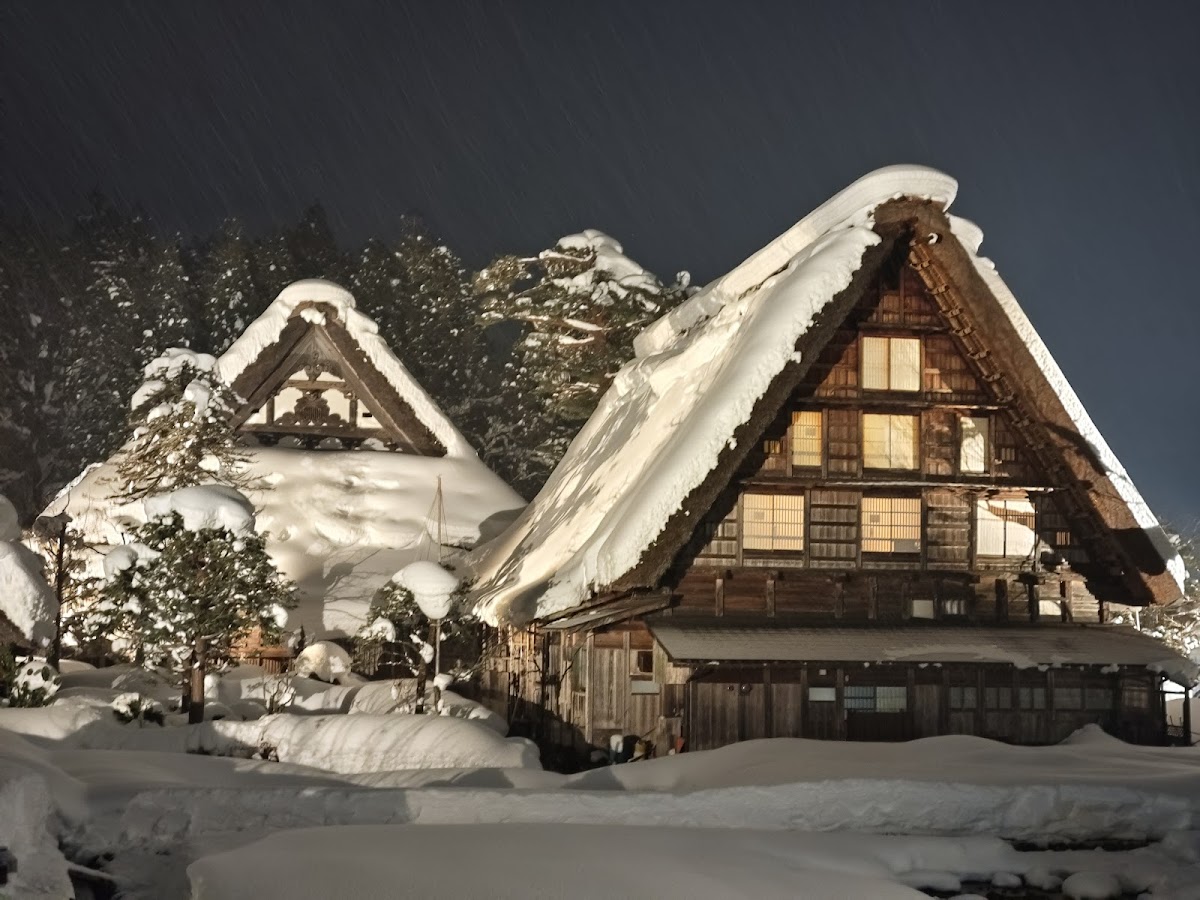
Gassho-zukuri is a traditional Japanese architectural style featuring steeply pitched thatched roofs. The name derives from the fact that the wooden materials supporting the roof resemble hands held together in prayer (gassho).
The main characteristics are as follows:
- Steeply pitched roof: Angled at 45-60 degrees, designed so snow slides off easily even in heavy snowfall areas
- Thatched roof: Made by layering plant materials such as pampas grass and reed, providing excellent insulation and ventilation
- Nail-free structure: Connected using rope and wooden joints in traditional craftsmanship
- Multi-story construction: 3-4 stories with upper floors used as work spaces for sericulture and other activities
- North-South orientation: Positioning considering wind flow and sunlight exposure
Why This Style Developed in This Region
The Hida area where Shirakawa-go is located is one of Japan’s heaviest snowfall regions. With 2-3 meters of snow accumulation in winter, gassho-zukuri developed to adapt to this harsh natural environment.
The steeply pitched roof allows snow to slide off naturally, reducing the labor of snow removal. The large attic space was used for sericulture, becoming an important industry for Shirakawa-go from the Edo to Meiji periods. Thatched roofs require replacement every 20-30 years, and this work has been carried out through a mutual aid system called “yui,” a distinctive feature of this region.
Highlights of the Minka-en
Introduction to Main Buildings
Yamashita House Residence
The largest gassho-zukuri house in the garden and a Gifu Prefecture Designated Important Cultural Property. Built in the late Edo period, it features an impressive 4-story structure. The interior displays period living tools and farm implements, providing concrete understanding of life in heavy snowfall areas.
Nakano House Residence
A Meiji-period gassho-zukuri house that offers detailed viewing of the upper floors during the era when sericulture flourished. The displays of silkworm racks and sericulture tools are extensive, making it ideal for understanding the region’s major industry at the time.
Former Toyama House Residence
Built in the mid-Edo period, this relatively small but structurally representative gassho-zukuri building clearly illustrates basic architectural principles. The re-created living space centered around the hearth helps visitors easily imagine family life of that era.
Exhibition Contents
At the Minka-en, various exhibitions convey not only the buildings themselves but also the living culture of the time.
Household Utensils Displays:
- Farm tools (hoes, shovels, threshing machines, etc.)
- Cooking equipment (pots, kettles, tableware)
- Heating implements (hearths, braziers)
- Lighting fixtures (standing lamps, oil lamps)
Industry-Related Displays:
- Sericulture tools (silkworm racks, cocoon baskets)
- Silk thread production equipment
- Woodworking tools
- Tools for mountain work
Clothing and Textile Displays:
- Traditional kimono
- Weaving looms
- Hemp and cotton products
Through these exhibits, visitors can learn about the wisdom and ingenuity of people who lived a near self-sufficient lifestyle in that era.
Seasonal Landscapes Within the Garden
Spring (March-May)
As snow melts, alpine plants begin to sprout in the garden. The contrast between the thatched roof and fresh greenery is beautiful, and spring flowers such as cherry blossoms and azaleas add color. Spring is relatively less crowded, allowing leisurely viewing.
Summer (June-August)
A lush green landscape unfolds, and the cool mountain climate is pleasant. The area beneath the thatched roof is surprisingly cool, allowing visitors to experience the ingenuity of the people’s dwellings of old. During summer vacation, families visit in greater numbers.
Autumn (September-November)
The autumn leaves season brings a spectacular collaboration between the gassho-zukuri buildings and colorful foliage. Late October through early November is peak autumn color season, ideal for photography. Clear air accompanies events featuring autumn flavors.
Winter (December-February)
Snow-covered gassho-zukuri landscapes are breathtakingly beautiful, like a painting. Particularly notable is the illumination event held from late January to early February. However, be aware that some facilities may close due to heavy snowfall, so advance confirmation is necessary.
Experience Programs
Straw Craft Experience
The Minka-en offers traditional straw craft experiences. Programs such as straw sandal-making and small craft creation are available for beginners. Activities typically take 30 minutes to 1 hour, and finished crafts can be taken home.
Soba-Making Experience
Visitors can experience making soba, a traditional Shirakawa-go food. Using local soba flour and learning traditional methods, participants make soba and enjoy eating what they’ve created. Advance reservations are required, and the program takes approximately 2 hours.
Folk Craft Creation
Depending on the season, various folk craft-making experience programs are offered. Participants can easily experience traditional crafts including bamboo weaving, plant dyeing, and washi paper making.
Seasonal Events
The Minka-en hosts various events throughout the year:
- Spring: Mountain vegetable foraging experience, rice planting experience
- Summer: Tanabata decoration making, river play experience
- Autumn: Rice harvesting experience, harvest festival
- Winter: Snow play, snow hut construction
Event schedules can be confirmed on the official website.
Access Methods
Access by Public Transportation
From Tokyo
- Shinkansen + Bus:
- Tokyo Station → (Hokuriku Shinkansen) → Kanazawa Station (approximately 2 hours 30 minutes)
- Kanazawa Station → (High-speed bus) → Shirakawa-go (approximately 1 hour 15 minutes)
- Shirakawa-go Bus Terminal → Minka-en (approximately 20 minutes walk or shuttle bus)
- Direct High-Speed Bus:
- Shinjuku → Shirakawa-go (approximately 5 hours 30 minutes)
- Direct access by reservation-based high-speed bus
From Nagoya
- JR + Bus:
- Nagoya Station → (JR Takayama Main Line) → Takayama Station (approximately 2 hours 30 minutes)
- Takayama Station → (Nohi Bus) → Shirakawa-go (approximately 50 minutes)
- High-Speed Bus:
- Nagoya → Shirakawa-go (approximately 3 hours)
From Osaka
- JR + Bus:
- Osaka Station → (JR Limited Express) → Takayama Station (approximately 4 hours)
- Takayama Station → (Nohi Bus) → Shirakawa-go (approximately 50 minutes)
Access by Private Vehicle
Travel Time from Major Cities
- From Nagoya: Approximately 2 hours 30 minutes via Tokai-Hokuriku Expressway
- From Kanazawa: Approximately 1 hour 30 minutes via Tokai-Hokuriku Expressway and Route 156
- From Toyama: Approximately 1 hour via Tokai-Hokuriku Expressway
Nearest Interchange
Shirakawa-go IC is the nearest interchange, with approximately 5 minutes’ drive to the Minka-en.
Parking Information
The Minka-en has a dedicated parking lot accommodating approximately 200 regular-sized vehicles. Parking fees are as follows:
- Regular cars: 500 yen
- Large buses: 1,000 yen
- Motorcycles: 200 yen
During high season (Golden Week, autumn foliage season, year-end holidays), parking lots become congested, so arriving early is recommended.
Transportation Within Shirakawa-go
From Shirakawa-go Bus Terminal to the Minka-en is approximately 20 minutes’ walk. For those with luggage or elderly visitors, using the paid village shuttle bus is convenient. Shuttle buses operate at 30-minute intervals with fares of 200 yen one-way.
Opening Information and Fees
Operating Hours
- March-November: 8:40-17:00 (last admission 16:30)
- December-February: 9:00-16:00 (last admission 15:30)
※Hours may change depending on weather conditions.
Closed Days
- Thursdays from December-March (excluding year-end/new year and holidays)
- Specific year-end/new year dates (check official website)
Admission Fees
- Adults: 600 yen
- Elementary and Middle School Students: 400 yen
- Preschool Children: Free
Group Discount (20 or more people):
- Adults: 500 yen
- Elementary and Middle School Students: 300 yen
Annual Pass:
- Adults: 1,500 yen
- Elementary and Middle School Students: 1,000 yen
Discounted Combination Tickets
Combination tickets with other Shirakawa-go facilities are also available:
- Minka-en + Wada House: 900 yen (regular 1,200 yen)
- Minka-en + Nagase House: 900 yen (regular 1,200 yen)
Nearby Tourist Spots
Shirakawa-go Gassho-zukuri Settlement (UNESCO World Heritage Site)
A UNESCO World Heritage Site district within walking distance of the Minka-en. A gassho-zukuri settlement where residents still live, visitors can view Important Cultural Property buildings such as the Wada and Kanda houses. The panoramic view of the settlement from the observation deck is must-see.
Ogicho Castle Ruins Observation Deck
An observation spot overlooking the entire Shirakawa-go settlement. Particularly beautiful at dusk or early morning, it’s ideal for photography. Approximately 10 minutes by car or 30 minutes’ walk from the Minka-en.
Doburoku Festival Hall
A museum related to “Doburoku Festival,” a traditional Shirakawa-go festival. Displays include tools and costumes used in the festival as well as information about doburoku (homemade sake) production processes.
Oishirakawa Onsen
A hidden hot spring located approximately 30 minutes by car from Shirakawa-go. The mountain scenery viewed from the open-air bath is spectacular, ideal for refreshing after sightseeing.
Gokayama Gassho-zukuri Settlement
A gassho-zukuri settlement registered as a UNESCO World Heritage Site alongside Shirakawa-go. Approximately 30 minutes by car from Shirakawa-go, it offers a quieter, more rustic atmosphere.
Important Notes and Etiquette When Visiting
Clothing and Items to Bring
- Spring/Fall: Large temperature variations; bring a light jacket
- Summer: Strong sunlight; hat and sunscreen essential
- Winter: Warm clothing, non-slip shoes, gloves necessary
- Year-round: Comfortable walking shoes, camera, drinking water
Photography Etiquette
- Photography is prohibited in certain interior areas; follow posted signs
- Be considerate of other visitors who might appear in photos
- Avoid tripod use during crowded periods
- Drone use is prohibited
Notes When Viewing Buildings
- Shoes must be removed inside buildings (slippers are provided)
- Do not touch displayed items
- Exercise caution around hearths due to fire hazards
- Use care when navigating steep stairs
Barrier-Free Information
Since the Minka-en preserves historic structures, complete barrier-free accommodation is limited:
- Gravel paths and slopes within the garden make wheelchair movement partially difficult
- Steep stairs within gassho-zukuri houses prevent wheelchair viewing
- Multi-purpose restroom is located at the administration building
- Those requiring assistance can receive accommodation by contacting in advance
Frequently Asked Questions
How much time should I allow for my visit?
Basic viewing requires approximately 1 hour 30 minutes to 2 hours. For thorough viewing or participation in experience programs, allow 3-4 hours.
Are there dining facilities?
A rest area within the garden provides light refreshments including soba and onigiri. For fuller meals, restaurants within the Shirakawa-go settlement are recommended.
Can I bring pets?
Pets are generally prohibited from entering the garden. However, guide dogs and service dogs are permitted.
Can I enjoy it in rainy weather?
Viewing is possible in rain, though rain gear is necessary. Indoor building viewing has roofing protection, so rain viewing is quite enjoyable. Wet thatched roofs are particularly atmospheric and photography-friendly.
Is foreign language support available?
English-language pamphlets are provided, and major exhibits include English explanations. Staff can provide basic English assistance.
Conclusion
Shirakawa-go Gassho-zukuri Minka-en is a valuable facility where visitors can experience Japanese traditional architecture and living culture. Combined with visits to the UNESCO World Heritage Site of Shirakawa-go, deeper understanding of gassho-zukuri architecture is achievable.
Beautiful seasonal landscapes, abundant exhibition content, and varied experience programs provide unforgettable memories to all visitors. Time spent away from urban bustle, immersed in the gassho-zukuri world that represents Japan’s original landscape, will surely become a treasured memory.
When visiting Shirakawa-go, be sure to stop by the Gassho-zukuri Minka-en. A precious opportunity awaits to touch history, culture, and the wisdom of our predecessors.
-800x450.jpg)
-800x450.jpg)