.jpg)
Akame Shijuhasshitaki (Mie Prefecture) Complete Guide: Access, Highlights, and the Charm of Four Seasons Thoroughly Explained
What is Akame Shijuhasshitaki?
Akame Shijuhasshitaki (赤目四十八滝) is a collective name for a series of waterfalls scattered throughout the Takigawa Gorge flowing through Akame Town, Nabari City, Mie Prefecture. Located on the border between the Iga and Yamato regions, it is known as a central tourist attraction of Murō Akame Aoyama Quasi-National Park.
Throughout the approximately 4-kilometer gorge, various large and small waterfalls exist in succession, with the actual number said to exceed 48. The name “Shijuhasshitaki” (Forty-Eight Falls) is a conventional way of collectively referring to numerous waterfalls found throughout Japan and does not indicate the actual number of waterfalls.
In 1970 (Showa 45), it was designated as part of the Murō Akame Aoyama Quasi-National Park and has been selected in four lists of the hundred best: “Japan’s Top 100 Waterfalls,” “Heisei’s Top 100 Waters,” “Top 100 Forests for Forest Bathing,” and “Top 100 Walking Routes.” It is one of Japan’s premier cascade waterfall groups.
History and Origin of Akame Shijuhasshitaki
The Origin of the Name “Akame”
There are several legends surrounding the name of Akame Shijuhasshitaki. The most famous is the legend that when the Ascetic En no Gyōja (役行者) was practicing asceticism at the waterfall, Fudō Myōō appeared riding on a bull with red eyes. This mystical event is said to have given birth to the place name “Akame.”
A Sacred Site for Shugendō and Ninja Training
The Akame Shijuhasshitaki gorge has long been used as a place of practice for Shugendō ascetics. The steep terrain, abundant water flow, and deep forests provided an ideal environment for training the body and mind.
Moreover, as it is near the birthplace of the Iga ninja tradition, it is also known as a place for ninja training. Today, it serves as the “Ninja Training Village,” offering ninja experience programs that can be enjoyed by both children and adults, making it a valuable tourism resource.
Access Methods
Access by Train and Bus
When using public transportation to reach Akame Shijuhasshitaki, Kintetsu Osaka Line’s “Akameguchi Station” is the nearest station.
Detailed Access Procedure:
- Get off at Kintetsu Osaka Line’s “Akameguchi Station”
- Take a Mie Kotsu bus “Akamé Falls” bound bus from the station (approximately 10 minutes)
- Get off at the final stop “Akamé Falls” bus stop
- It is about a 5-minute walk from the bus stop to the Akame Shijuhasshitaki entrance
Travel Time from Major Cities:
- From Osaka Namba Station: Approximately 1 hour 10 minutes
- From Nagoya Station: Approximately 1 hour 40 minutes (via Kintetsu Nagoya Line)
- From Kyoto Station: Approximately 1 hour 30 minutes
Access by Automobile
When Using Expressways:
- Approximately 20 minutes from “Hari IC” on the Meihan National Highway (approximately 15km)
- Approximately 40 minutes from “Tenri IC” on the Nishi-Meihan Expressway (approximately 30km)
- Approximately 30 minutes from “Ueno IC” on the Meihan National Highway (approximately 25km)
Car Navigation Settings:
Search for the address “3-chōme Nagasaka, Akame Town, Nabari City, Mie Prefecture, 861-1” and navigation will guide you to near the Akame Shijuhasshitaki entrance.
Parking Information
Multiple parking lots are provided around Akame Shijuhasshitaki.
Main Parking Lots:
- Akame Shijuhasshitaki Gorge Preservation Society Parking Lot: 800 yen for regular vehicles (per day)
- Nearby private parking lots: Approximately 500-700 yen
- Total parking capacity: Approximately 300 vehicles
Weekends and fall foliage season are crowded, so arriving early in the morning is recommended. Especially during the peak foliage season in November, arriving before 9 a.m. is ideal.
Business Hours and Entrance Fees
Business Hours
The business hours of Akame Shijuhasshitaki vary by season.
Summer Business Hours (Second Friday of March – November 30):
8:30 – 17:00
Winter Business Hours (December 1 – Second Wednesday of March):
9:00 – 16:30
※ Final entry is recommended to be at least one hour before closing time.
※ The trail may be closed during severe weather or when snow accumulates; it is recommended to check the official website in advance.
Entrance Fees
Individual Admission:
- Adults (High school students and above): 500 yen
- Children (Elementary and junior high school students): 250 yen
- Infants: Free
Group Rates (30 or more people):
- Adults: 450 yen
- Children: 200 yen
The entrance fee includes the cost of maintaining the walking trail and the use of toilets and rest areas.
Highlights of Major Waterfalls
The Akame Shijuhasshitaki gorge features a variety of uniquely named waterfalls. Here we introduce the most spectacular representative waterfalls.
Fudō Falls (不動滝)
The first major waterfall encountered from the entrance, with an impressive appearance at 15 meters high and 7 meters wide. Fudō Myōō is enshrined in front of the waterfall and has long been an object of worship.
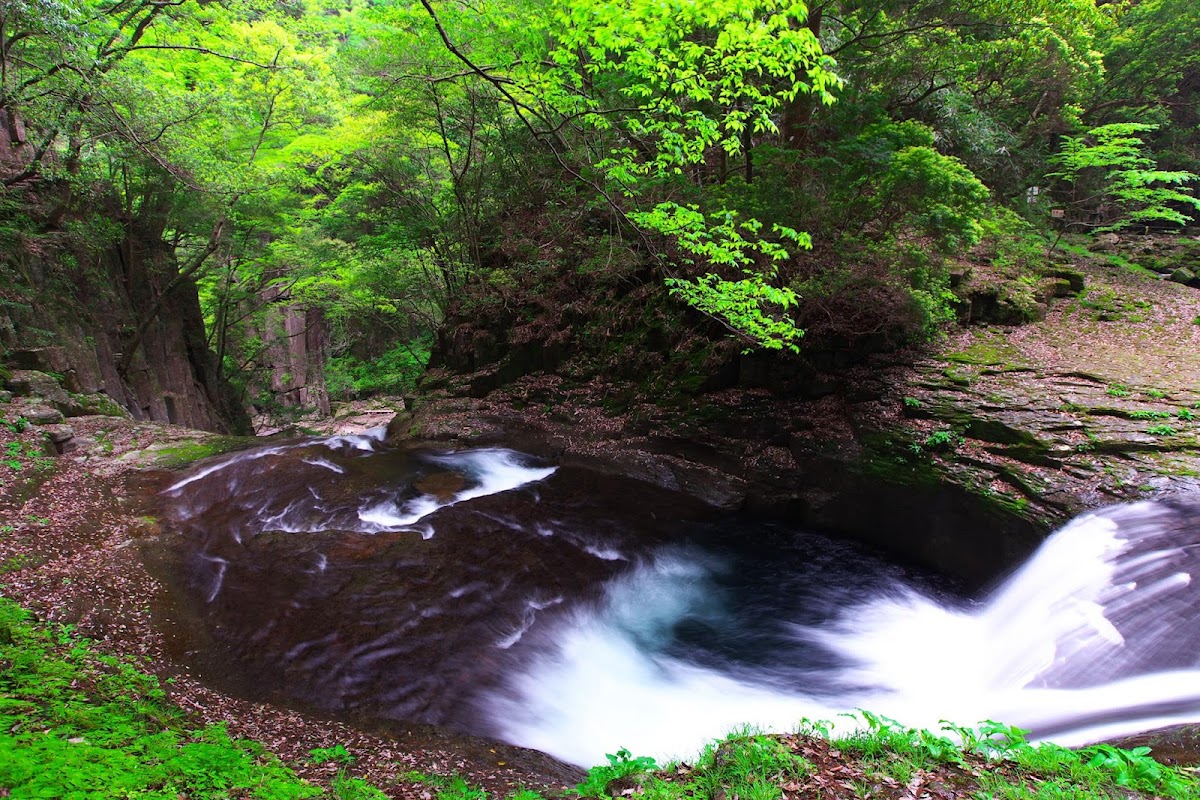
With good access about 6 minutes on foot from the entrance, it is a must-see even for those with limited time. The contrast between the deep blue color of the waterfall basin and the white water flowing down the rock face is beautiful and popular as a photography spot.
Senju Falls (千手滝)
A 15-meter-high waterfall where multiple streams of water flow down the rock face like the hands of the Thousand-Armed Avalokiteshvara (Senju Kannon), from which its name derives. It is located about 15 minutes on foot from the entrance.
Especially when the water volume is high, the entire waterfall appears wrapped in a white veil, offering a fantastical landscape. An observation platform has been set up in front of the waterfall for leisurely viewing.
Nunobiki Falls (布曳滝)
The largest waterfall in Akame Shijuhasshitaki at 30 meters high. Located somewhat deep in the gorge, about 40 minutes on foot from the entrance, its grandeur is stunning.
Named “Nunobiki Falls” from its elegant appearance resembling a white cloth being drawn down. The area surrounding the waterfall is particularly densely forested, making it a spot where you can fully enjoy negative ions.
Ninai Falls (荷担滝)
An 8-meter-high waterfall with the rare characteristic of two waterfalls merging into one. Located about 50 minutes on foot from the entrance, its unique form is the origin of its name, meaning “like carrying loads on a carrying pole.”
The waterfall basin is deep and features a beautiful emerald green color, making it a popular photo spot.
Biwa Falls (琵琶滝)
An elegant 15-meter-high waterfall located about 60 minutes on foot from the entrance. Its name comes from the waterfall’s resemblance to the biwa, a Japanese stringed instrument.
The area surrounding the waterfall is particularly quiet, with only the sound of water echoing, creating a mystical atmosphere. With fewer tourists this far in, there is a high possibility of having nature to yourself.
Seven-Colored Rock (七色岩)
Strictly speaking not a waterfall but a notable spot located at the deepest part of Akame Shijuhasshitaki. It can be reached in approximately 100 minutes (one way) on foot from the entrance.
The rock face contains seven-colored minerals that appear in various colors depending on the light, hence the name. Reaching here brings the sense of accomplishment of having completed serious hiking.
Detailed Hiking Course Information
Beginner’s Course (Round Trip Approximately 30 Minutes)
Course Overview:
Entrance → Fudō Falls → Entrance
Distance: Approximately 0.5km (one way)
Time Required: Approximately 6 minutes one way, approximately 30 minutes round trip (including viewing time)
Features:
The easiest way to experience the charm of Akame Shijuhasshitaki. The walking trail is well-maintained and can be walked in sneakers. Recommended for families with small children or those without much stamina. The impressive sight of Fudō Falls alone is sufficient for satisfaction.
Standard Course (Round Trip Approximately 2 Hours)
Course Overview:
Entrance → Fudō Falls → Senju Falls → Nunobiki Falls → Entrance
Distance: Approximately 2km (one way)
Time Required: Approximately 40 minutes one way, approximately 2 hours round trip (including viewing and break time)
Features:
An efficient course to tour the representative waterfalls of Akame Shijuhasshitaki. While the walking trail is well-maintained, there are some stairs and inclines, so appropriate footwear is necessary. Offers moderate exercise with both forest bathing and waterfall appreciation.
Full Hiking Course (Round Trip Approximately 3–4 Hours)
Course Overview:
Entrance → Fudō Falls → Senju Falls → Nunobiki Falls → Ninai Falls → Biwa Falls → Seven-Colored Rock → Entrance
Distance: Approximately 3.3km (one way)
Time Required: Approximately 100 minutes one way, approximately 3–4 hours round trip (including viewing and break time)
Features:
A full-scale course to experience the entire scope of Akame Shijuhasshitaki. The walking trail is well-maintained but has ups and downs, requiring stamina. Trekking shoes are strongly recommended.
Points for Choosing a Course
Regarding Reviews Saying It’s “Strenuous”:
You may see reviews of Akame Shijuhasshitaki’s hiking course mentioning it’s “strenuous,” but this mainly refers to the full hiking course (approximately 3–4 hours round trip). Even those who exercise infrequently can enjoy the beginner’s or standard courses without difficulty. It is important to select a course suited to your physical ability.
Clothing and Belongings:
- Comfortable walking shoes (trekking shoes or sneakers)
- Easy-to-move-in clothing
- Drinking water (vending machines are available only near the entrance)
- Towel
- Rain gear (weather can change quickly)
- Insect repellent spray (summer season)
Charm of Each Season
Akame Shijuhasshitaki presents a different face in each season as a naturally rich tourist destination.
Spring (March – May)
Spring at Akame Shijuhasshitaki is a season when the beauty of fresh greenery stands out. With snowmelt, the waterfall’s water volume increases, allowing you to see it with increased power.
Highlights:
- Early to mid-April: Mountain cherries color the gorge
- May: Fresh greenery shines brilliantly, ideal for forest bathing
- Abundant water volume increases waterfall impact
Recommended Points:
Spring has relatively few tourists, allowing for leisurely exploration. The temperature is also comfortable, making it suitable for extended hiking.
Summer (June – August)
Summer at Akame Shijuhasshitaki is popular as nature’s air conditioner. The gorge is 5–10 degrees Celsius cooler than the plains, attracting tourists seeking coolness.
Highlights:
- Powerful waterfalls due to abundant water
- Deep green forests
- Air rich with negative ions
- Possible encounter with giant salamanders (if lucky)
Recommended Points:
The gorge remains cool and comfortable even in hot summer. However, during the rainy season, the walking trail becomes slippery and requires caution. During summer vacation, it is crowded with families.
Autumn (September – November)
Autumn is the most beautiful season at Akame Shijuhasshitaki. Known as a famous foliage spot, it attracts many tourists annually.
Best Time for Foliage:
Early November – Late November (slight variations year to year)
Highlights:
- Foliage coloring the entire gorge
- Contrast between waterfalls and foliage
- Walking trail carpeted with fallen leaves
- Clear air and beautiful scenery
Recommended Points:
The foliage season is the busiest time. Especially during mid-November weekends, parking lots may reach capacity. Early morning visits (soon after opening) are recommended. Illumination events may be held.
Winter (December – February)
Winter at Akame Shijuhasshitaki offers a mystical atmosphere enveloped in silence.
Highlights:
- Frozen waterfalls (a fantastical sight of cascades turning to ice)
- Snow-covered gorge beauty
- Quiet environment with few tourists
- Crystal clear air
Points to Note:
Snow and ice may cause trail closures. Always check the official website before visiting. Cold-weather gear and non-slip shoes are essential.
Akame Falls Aquarium
Near the Akame Shijuhasshitaki entrance is the “Akame Falls Aquarium,” which reopened in 2022 after renovation.
Facility Overview
Akame Falls Aquarium is a freshwater fish specialty aquarium primarily displaying organisms living in the Akame Shijuhasshitaki streams. It features a comprehensive exhibition of giant salamanders, a specially designated natural monument.
Exhibition Content:
- Giant salamanders (multiple specimens on display)
- Stream fish (sweetfish, char, etc.)
- Amphibians and reptiles
- Aquatic insects
Admission Fee:
Included in the Akame Shijuhasshitaki entrance fee (no additional charge).
About Giant Salamanders
Giant salamanders are among the world’s largest amphibians and are endemic to Japan. The Akame Shijuhasshitaki streams are known as a valuable habitat for giant salamanders.
The aquarium allows you to observe giant salamanders rescued in the streams up close and learn about their ecology. With luck, you may even encounter wild giant salamanders during hiking.
Ninja Training Experience
Akame Shijuhasshitaki, known as the “Ninja Training Village,” offers various ninja experience programs.
Contents of Ninja Training Experience
Basic Programs:
- Throwing star throwing experience
- Blowgun experience
- Wall climbing training
- Water spider technique experience
- Ninja costume rental
Fees:
- Ninja costume rental: 1,000 yen for adults, 800 yen for children
- Training experiences: Approximately 300–500 yen each
Time Required:
Approximately 30 minutes to 1 hour
Target Ages and Reservations
Ninja training experiences can be enjoyed by ages 3 and up through adults. Reservations are not required; sign-ups are available at the day-of reception. However, group reservations are recommended in advance.
Particularly popular with families, children are delighted wearing ninja costumes. Experiencing this before or after hiking makes for a more fulfilling day.
Nearby Tourist Attractions
Various appealing tourist spots are scattered around Akame Shijuhasshitaki.
Akame Hot Spring Area
About a 10-minute drive from Akame Shijuhasshitaki is the Akame Hot Spring area. Perfect for relaxing your body after hiking.
Features:
- Water type: Alkaline simple hot spring
- Effects: Relieves neuralgia, muscle pain, fatigue, etc.
- Day-use bathing available at some facilities
Seirenjī Lake
A man-made lake in Nabari City where spring brings cherry blossoms and autumn brings foliage. Boating and cycling can be enjoyed around the lake.
Access:
Approximately 20 minutes by car from Akame Shijuhasshitaki
Nabari City Center
Nabari’s city center features historic townscapes and dining establishments offering local cuisine. You can taste regional specialties such as Iga beef and local sake.
Access:
Approximately 15 minutes by car from Akame Shijuhasshitaki
Dining Information
Dining Establishments Around Akame Shijuhasshitaki
Near the Akame Shijuhasshitaki entrance are several dining establishments and souvenir shops.
Recommended Menus:
- River fish dishes (salt-grilled sweetfish, char, etc.)
- Mountain vegetable dishes
- Handmade buckwheat noodles
- Tofu dengaku
- Dishes using Iga beef
Nabari Local Specialties
Recommended Souvenirs:
- Products using Akame Shijuhasshitaki spring water
- Local sake (Mie Prefecture sake)
- Ninja merchandise
- Local Japanese sweets
- Iga pottery ceramics
Photography Spots and Ways to Enjoy Photo-Worthy Moments
Akame Shijuhasshitaki is popular with photography enthusiasts.
Recommended Photography Points
- Front of Fudō Falls: A classic spot with the most powerful composition
- Observation Platform of Senju Falls: An ideal point to capture the entire waterfall
- Near the Basin of Nunobiki Falls: Creating fantastical photos with extended exposure
- Emerald Green Basin of Ninai Falls: Beautiful coloration
- Dappled Sunlight on the Walking Trail: Expressing the forest atmosphere
Photography Tips
Waterfall Photography:
- Slow shutter speed (approximately 1/4 to 2 seconds) to express water flow
- A tripod is convenient (though caution needed on narrow trail sections)
- Polarizing filter reduces water surface reflections
- Overcast days offer softer, easier-to-photograph light
Foliage Photography:
- Morning sidelighting is beautiful
- Composing waterfalls and foliage together is recommended
- Using fallen leaves as foreground creates depth
Safety Precautions for Enjoying Responsibly
Precautions on Walking Trails
- Beware Slippery Areas: The walking trail along the gorge has high humidity, and moss grows in some places
- Do Not Go Beyond Barriers: Waterfall basins are deep with fast currents, extremely dangerous
- Avoid Rashness During High Water: After heavy rain, water volume increases, and trails may flood
- Beware Wildlife: Encounters with Japanese hornets or Japanese vipers are possible
- Watch for Falling Rocks: Especially after rain, the danger of rockfalls increases
Health Management
- Stay Hydrated: Vending machines are only near the entrance, so bring drinking water
- Take Breaks: Rest appropriately at each waterfall’s observation platforms
- Heat Stroke Prevention: In summer, use hats and cooling items
- Cold Prevention: Don’t forget warm clothing in winter
Emergency Response
The walking trail has emergency contact signs at several locations. Should injury or illness occur, immediately contact the management office.
Emergency Contact:
Akame Shijuhasshitaki Gorge Preservation Society: 0595-63-3004
Frequently Asked Questions (FAQ)
Q1. How much time is needed to visit Akame Shijuhasshitaki?
A1. The shortest course (Fudō Falls only) takes about 30 minutes round trip, the standard course about 2 hours round trip, and the full course visiting all waterfalls about 3–4 hours round trip. Including ninja experiences and meals, planning a half-day to full day is recommended.
Q2. Can small children also enjoy it?
A2. Yes, they can. The short course to Fudō Falls can be walked by toddlers without difficulty. Since baby strollers cannot be used due to trail structure, carrying slings are recommended. Ninja experiences start from age 3 and are popular with families.
Q3. Can pets come along?
A3. Pets may enter with the trail but must be kept on leash and not disturb other tourists. Avoiding crowded seasons is recommended. Always remove pet waste.
Q4. Can you enjoy it on rainy days?
A4. Light rain allows visiting, but the walking trail becomes slippery and requires care. Heavy rain or high water may restrict entry. On rainy days, increased water volume makes falls more powerful, but prioritize safety in making decisions.
Q5. When is the best time for fall foliage?
A5. The usual peak is early to late November. Peak season is mid-November, when it is most crowded. Check foliage progress on the official website or SNS.
Q6. Is it open during winter?
A6. Yes, it operates in winter, but with shorter hours (9:00–16:30). Snow and ice may close trails; always check the official website before visiting.
Q7. Can wheelchair users visit?
A7. Unfortunately, the walking trail has many stairs and inclines, making wheelchair sightseeing difficult. The entrance area and Akame Falls Aquarium are barrier-free, but waterfall access is problematic.
Q8. What is the recommended season?
A8. The most popular is autumn foliage season, but spring’s fresh greenery and summer’s coolness are also recommended. Each season has distinct charm, offering enjoyment on repeat visits. Relatively uncrowded spring and winter allow savoring nature leisurely.
Conclusion
Akame Shijuhasshitaki is a treasure trove of nature that Nabari City, Mie Prefecture, takes pride in. The beautiful cascades connected throughout a approximately 4-kilometer gorge, rich forests, clear water, and seasonal landscapes continue to fascinate visitors.
Selected in four lists of the hundred best—”Japan’s Top 100 Waterfalls,” “Heisei’s Top 100 Waters,” “Top 100 Forests for Forest Bathing,” and “Top 100 Walking Routes”—and serving as the center of Murō Akame Aoyama Quasi-National Park, it achieves balance between natural environment protection and tourism development.
Multiple hiking courses enjoyable by beginners and advanced hikers alike, ninja training experiences, and an aquarium where giant salamanders can be seen offer diverse ways to enjoy the site.
Accessibility is relatively good, making day trips from Osaka or Nagoya possible. Whether you wish to refresh in nature, enjoy nature photography, or create family memories, Akame Shijuhasshitaki is recommended for everyone.
Akame Shijuhasshitaki reveals a different face with each passing season. By all means, visit multiple times to fully experience its charm. The beautiful art created by nature and the refreshing, negative-ion-rich air will invigorate both body and mind.
-800x450.jpg)
-800x450.jpg)
-800x450.jpg)