Ginzan Onsen Yamagata Prefecture Complete Guide | The Charm and How to Enjoy a Hot Spring Town Evoking Taisho Romance
Ginzan Onsen, located in Ohanazawa City, Yamagata Prefecture, is a hot spring resort where a world of Taisho-era romanticism unfolds as if you’ve stepped back in time. The wooden hot spring inns standing side by side on both banks of the Ginzan River, the gentle light of gas lamps glowing at dusk, and the natural beauty that changes with each season continue to captivate visitors.
This article provides a thorough explanation of everything about Ginzan Onsen, from its history and attractions to access methods, recommended accommodations, and nearby tourist spots. It covers all the information you need to know before making a reservation, from how to enjoy each season, to everything necessary for visiting Ginzan Onsen.
What is Ginzan Onsen | History and Origins
From the Discovery of Silver to Development as a Hot Spring Resort
The history of Ginzan Onsen begins with the discovery of silver ore by Giga Ichiro Zaemon of Kanazawa in Kaga Province in 1456 (Koushoku 2). Subsequently, in 1622 (Genwa 8), it flourished greatly as a shogunate-controlled public mountain, and at its peak, it is said to have had 49,000 households and a population of 220,000 people.
The hot spring itself was discovered by miners of the Noborisawa Silver Mine during the Keicho era (1596-1615). The hot spring played an important role as a therapeutic spa to heal the fatigue of people working in the silver mines.
A Hot Spring Town Retaining the Appearance of the Taisho Era
The current townscape of Ginzan Onsen centers on wooden multi-story inns built from the late Taisho period through the early Showa period. These buildings possess cultural heritage-level value and are artworks themselves.
Particularly noteworthy is the unique architectural style that fuses Western and Japanese elements. Three to four-story wooden inns line the banks of the Ginzan River, and their exteriors are decorated with ornaments called “koteejie” (plaster decorations). These koteejie are a decorative technique symbolic of Taisho romanticism, where flowers, birds, and landscapes are expressed three-dimensionally.
Becoming Nationally Famous through the NHK Asadora “Oshin”
Ginzan Onsen became nationally known when it was featured as the setting for the NHK Asadora (morning drama) “Oshin” aired in 1983. The nostalgic hot spring town scenery depicted in the drama captured the hearts of many viewers, and since then, Ginzan Onsen has become a popular resort attracting tourists from across the nation.
The Charm of Ginzan Onsen | Why It Attracts So Many People
The Fantastical Nightscape as Gas Lamps Light Up
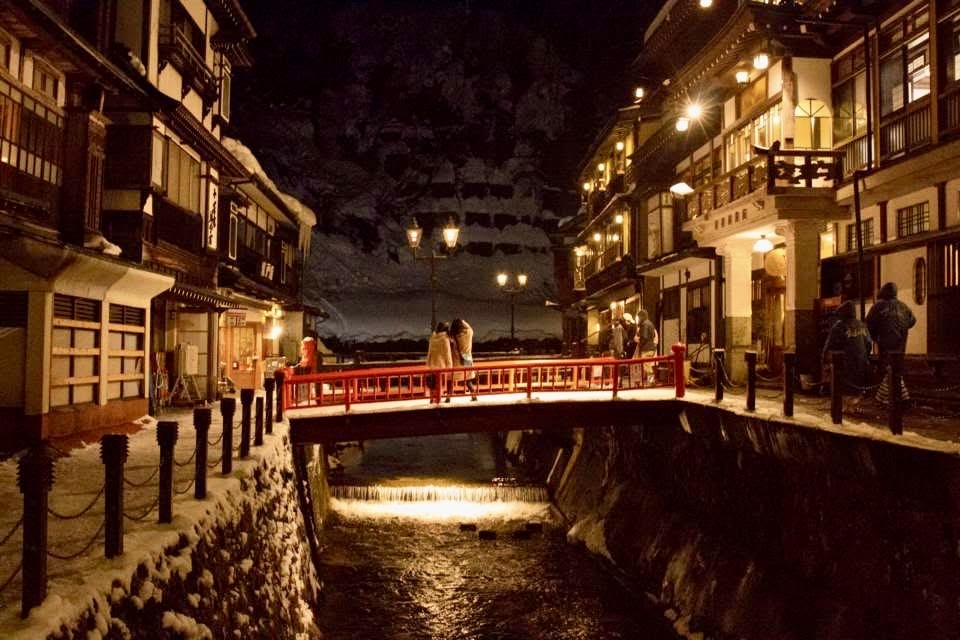
One of the greatest charms of Ginzan Onsen is the scenery of the hot spring resort after sunset. As dusk falls, the gas lamps throughout the resort are lit one by one, their warm light illuminating the stone-paved street.
The sight of wooden inns illuminated by the gentle glow of gas lamps is the essence of Taisho romanticism. Combined with the murmur of the river, an fantastical and emotionally rich atmosphere permeates the area. Many tourists choose to stay overnight rather than visit on a day trip just to see this nightscape, as the night in Ginzan Onsen possesses such special charm.
Scenic Beauty in All Four Seasons | How to Enjoy Each Season
Ginzan Onsen presents a completely different appearance in each season. The scenery created by nature can be called living art, transforming with the seasons.
Spring’s Fresh Green
Spring arrives with the melting of snow, a season when mountains are cloaked in fresh foliage. The green of newly budded young leaves reflects in the surface of the Ginzan River, and you can enjoy hot springs in refreshingly clear air. From late April through May, the contrast between remaining snow and new greenery is beautiful, making it an ideal time for photography.
Summer’s Cool Ravine Beauty
Summer at Ginzan Onsen is characterized by the coolness unique to mountainous areas. The ravine covered in deep green and the murmur of the clear stream make you forget the heat. Nights are particularly cool, making it an ideal season to enjoy strolling about in yukata (casual summer kimono).
Autumn’s Autumn Leaves
From mid-October through early November is the season of autumn leaves. The trees along the Ginzan River turn red and yellow, and the entire hot spring resort is wrapped in the colors of autumn foliage. The contrast between the light of the gas lamps and the autumn leaves is a spectacular sight unique to this season.
Winter’s Silvery White World
Many travelers describe winter at Ginzan Onsen as “the most beautiful.” In the snow-covered landscape, the sight of snow accumulated on the roofs of wooden inns combined with the light of gas lamps creates an almost otherworldly, fantastical beauty like an ink wash painting. Particularly on snowy nights, the hot spring resort is so romantic that it seems unreal, attracting many photography enthusiasts and couples.
Strolling Through the Nostalgic Townscape
The hot spring town of Ginzan Onsen is a short stretch of about 300 meters, yet it concentrates the nostalgia and longing of Taisho romanticism into this compressed space.
Walking along the stone-paved street, gazing at the architectural beauty of wooden inns, listening to the murmur of the river. This leisurely pace allows you to forget the hustle and bustle of daily life. Throughout the resort are scattered communal baths, foot baths, cafes, and souvenir shops, allowing you to enjoy Ginzan’s waters while strolling. Rental clothing shops offer period costumes from the Taisho era, so you can also enjoy commemorative photography in this nostalgic townscape.
Access Methods to Ginzan Onsen
Access by Public Transportation
When Using the Yamagata Shinkansen
The most common access method is the route using the Yamagata Shinkansen.
- From Tokyo Station to Oishida Station on the Yamagata Shinkansen “Tsubasa” in approximately 3 hours
- From Oishida Station to Ginzan Onsen by bus in approximately 40 minutes
From Oishida Station to Ginzan Onsen, a bus operated by Hanagasa Bus runs. However, the number of buses is limited, so it’s recommended to check the schedule in advance and make a reservation. Note that the service may be reduced during winter.
Access from Sendai Airport
If traveling by plane, Sendai Airport is convenient.
- From Sendai Airport to Sendai Station by train in approximately 25 minutes
- From Sendai Station to Oishida Station on the Yamagata Shinkansen in approximately 50 minutes
- From Oishida Station to Ginzan Onsen by bus in approximately 40 minutes
Access by Automobile
Car access is also possible, but careful attention to snow accumulation and freezing is necessary during winter.
From the Tokyo Area
Using the Tohoku Expressway, exit at Furukawa IC and travel via Route 47 in approximately 100 minutes.
From the Sendai Area
Using the Tohoku Expressway and Yamagata Expressway, exit at Higashine IC and travel via Route 13 and prefectural roads in approximately 60 minutes.
Regarding Parking
General vehicles cannot enter the hot spring resort. There is a town-operated parking lot (paid) near the entrance to the resort, from which you walk into the hot spring town. Guests can sometimes use the inn’s shuttle service, so it’s recommended to confirm this at the time of reservation.
Recommended Accommodations | Points on Choosing Your Inn
Representative Inns of Ginzan Onsen
Ginzan Onsen has more than 10 historic hot spring inns standing side by side. Each has its own characteristics, with varying attractions in terms of building beauty, hot spring quality, cuisine, and hospitality.
Notoya Inn
A four-story wooden inn built in 1921 (Taisho 10), and one of the representative buildings of Ginzan Onsen. Not only is the exterior beautiful, but the interior design is also superb—truly a building that can be called an artwork itself.
Koseikiya Annex
A renovated inn housed in a historically significant building constructed in 1918 (Taisho 7). It’s popular as an accommodation that preserves traditional architectural beauty while pursuing comfort.
Ginzan-so
A large inn located slightly away from the hot spring resort. It features Ginzan Onsen’s largest open-air bath, “Senkyo-no-yu,” where you can enjoy hot springs in spacious comfort. Day-use bathing is also available and is popular with tourists.
Reservation Tips and Precautions
The inns at Ginzan Onsen have few guest rooms, and during weekends and peak seasons for autumn leaves and snow scenery, it’s not unusual for them to be fully booked several months in advance.
Make Reservations Early
For popular inns and seasons, reservations 3-6 months in advance are recommended. In particular, Saturdays and holiday periods have high competition, so reservations as early as possible are necessary.
How to Check Availability
You can check availability on each inn’s official website or through reservation sites such as Rakuten Travel and Jalan.net. Official websites sometimes offer web-exclusive accommodation plans.
Confirm Cancellation Policy
Be sure to confirm the cancellation policy when making a reservation. Particularly during winter, disruptions to transportation due to weather conditions are possible, so it’s important to understand when cancellation fees apply.
Day-Use Bathing and Communal Baths
Shirogane-yu (Communal Bath)
“Shirogane-yu,” a communal bath in the center of the resort, offers day-use bathing. As the name suggests—Shirogane meaning “white silver”—you can enjoy the hot spring source of Ginzan Onsen at your convenience.
The fee is around 500 yen, affordable, and the bath is used by locals as well. It’s simple with only an indoor bath, but you can experience authentic hot springs with source water flowing directly.
Foot Bath Spots
There are also free foot bath spots throughout the resort. You can stop by casually during your stroll and soothe travel fatigue. Particularly in winter, it’s ideal for warming cold feet.
Day-Use Bathing Available at Inns
Some inns accept day-use bathing. Ginzan-so is particularly welcoming to day-use bathers, offering a spacious open-air bath. However, day-use bathing hours and fees vary by inn, so it’s recommended to confirm in advance.
Enjoying the Hot Spring Resort | Shops and Cuisine
Cafes and Sweets
Retro-atmosphere cafes and sweets shops are scattered throughout the resort.
Izu-no-Hana
A cafe famous for curry pan (curry bread). Freshly fried curry pan is perfect as a companion for your stroll.
Nogawa Tofu-ya
A stand-style tofu shop where fried tofu and deep-fried items are popular. You can enjoy freshly made flavors while walking through the resort.
Souvenir Shops
Shops along the resort sell local specialties and souvenirs.
- Yamagata sake
- Products using Ohanazawa watermelon
- Ginzan Onsen original goods
- Traditional crafts
and more—a variety of items that make memorable souvenirs.
Nearby Tourist Spots
Shirogane-no-Taki (White Silver Waterfall)
Located about a 20-minute walk from the resort, Shirogane-no-Taki is a must-see nature spot when visiting Ginzan Onsen. The waterfall, flowing from a height of about 22 meters, presents different appearances in each season. Particularly in winter, when the waterfall freezes, the sight of the ice waterfall is spectacular.
Noborisawa Silver Mine Cave
The site of the silver mine cave whose history inspired the name Ginzan Onsen. Part of it is open for viewing, allowing you to experience the history of silver mining firsthand.
Sightseeing in and Around Ohanazawa City
Ohanazawa City, where Ginzan Onsen is located, has other attractive tourist spots.
- Tokura Lake: Known as a famous spot for cherry blossoms, a beautiful lake
- Basho Seifuu Historical Museum: A museum with materials related to the poet Matsuo Basho
- Ohanazawa Watermelon Direct Sales Shop: Available during summer for purchasing local specialty watermelons
Event Information for Ginzan Onsen
Spring Events
With the melting of snow, the resort hosts events celebrating the arrival of spring.
Summer Events
Summer festivals and fireworks displays and other regional traditional events are held.
Winter Events
Snow lantern festivals and other events utilizing snow and light are held, further enhancing the romantic atmosphere of winter at Ginzan Onsen.
Event information can be found on Ginzan Onsen’s official website or Ohanazawa City’s tourism information.
The Hot Spring Quality and Benefits of Ginzan Onsen
Hot Spring Quality
The hot spring quality of Ginzan Onsen is sodium chloride/sulfate hot spring. It’s colorless and transparent with a faint sulfur aroma.
Benefits
- Neuralgia
- Muscle pain
- Joint pain
- Frozen shoulder
- Motor paralysis
- Joint stiffness
- Bruises
- Sprains
- Chronic digestive disorders
- Hemorrhoids
- Cold sensitivity
- Post-illness recovery period
- Fatigue recovery
- Health promotion
and various other benefits.
Precautions When Visiting Ginzan Onsen
Clothing and Items to Bring
Winter Clothing
Winter at Ginzan Onsen is extremely cold with heavy snowfall, so cold-weather preparation is essential.
- Thick coats or down jackets
- Waterproof shoes (snow boots recommended)
- Gloves, scarves, and hats
- Hand warmers
and other thorough cold-weather protection.
Summer Clothing
Even in summer, mornings and evenings can be cold in mountainous areas. It’s reassuring to bring something light to wear as a layer.
Etiquette and Rules
Photography Etiquette
Ginzan Onsen is popular as a photography spot, but the inns are operating facilities. Be considerate of guests’ privacy and refrain from directly photographing windows or entrances.
Points to Note in the Resort
- The resort is a vehicle-free zone
- Always take trash with you
- Keep conversations quiet and maintain the peaceful atmosphere
- Smoke only in designated areas
Tips for Avoiding Crowds
Ginzan Onsen is a popular tourist destination and gets crowded especially on weekends and during peak seasons for autumn leaves and snow scenery.
Weekday Visits
If possible, visiting on weekdays allows you to enjoy the resort more leisurely.
Early Morning and Evening Strolls
Early morning and during dinner hours when day-use tourists are fewer, you can stroll relatively quietly. Staying overnight allows you to enjoy these quiet times, which is a major advantage.
Ginzan Onsen’s Privacy Policy and Reservation Precautions
Personal Information Handling
When making accommodation reservations, you’ll be providing personal information. Confirm each inn or reservation site’s privacy policy and understand how your information will be managed before reserving.
When reserving through official sites and websites, it’s also important to verify that SSL encrypted communication is being used.
Cancellation Policy
As mentioned previously, each accommodation facility has a cancellation policy. During busy periods, these can be strict, so be sure to confirm before booking.
A One-Night, Two-Day Model Course for Maximizing Enjoyment of Ginzan Onsen
Day 1
12:00 Arrival at Oishida Station, travel to Ginzan Onsen by bus
13:00 Arrival at Ginzan Onsen, check in at inn
14:00 Resort stroll, relax at foot baths or cafes
15:30 Hiking to Shirogane-no-Taki
17:00 Return to inn, soothe fatigue in hot spring bath
18:00 Dinner (kaiseki cuisine using local ingredients)
20:00 Enjoy the nightscape of the gas-lit resort
21:00 Evening hot spring bathing
Day 2
6:00 Early morning resort stroll (quiet with few people)
7:00 Breakfast
9:00 Bathing at communal bath “Shirogane-yu”
10:00 Souvenir shop browsing
11:00 Check out
12:00 Nearby sightseeing (Noborisawa Silver Mine Cave, etc.)
14:00 Depart for Oishida Station, journey home
This model course is one example but includes content allowing you to fully savor the charms of Ginzan Onsen. Feel free to customize it according to season or events.
Conclusion: Spending Special Time at Ginzan Onsen
Ginzan Onsen in Ohanazawa City, Yamagata Prefecture, is a special hot spring resort where you can immerse yourself in the world of Taisho romanticism. The beauty of wooden inns lit by gas lamps, the spectacular scenery that changes with each season, and the benefits of historically significant hot springs. All of these combine to provide unforgettable memories to visitors.
Though access takes some time, you can spend special hours away from daily life in return. By making reservations early and dressing appropriately for the season, you can maximize enjoyment of Ginzan Onsen’s charms.
Fresh green spring, cool summer, autumn foliage, silvery white winter—whenever you visit, Ginzan Onsen welcomes you warmly. Why not take a trip where you’ll feel the leisurely passage of time in a nostalgic resort and refresh both body and mind?
Ginzan Onsen is truly one of Japan’s premier hot spring resorts, where new discoveries and inspiration await with each visit. I hope this article serves as a helpful reference for your visit to Ginzan Onsen.
Frequently Asked Questions (FAQ)
Q1: When is the best time to visit Ginzan Onsen?
A1: Ginzan Onsen has beauty in all seasons, but particularly popular are December through February when you can enjoy snow scenery and mid-October through early November when autumn leaves are beautiful. However, these periods get crowded, so reservations are necessary several months in advance. Spring and summer, relatively uncrowded, are also recommended for enjoying fresh foliage and cool weather.
Q2: Can Ginzan Onsen be enjoyed on a day trip?
A2: You can enjoy resort strolling, bathing at communal baths, and relaxing at cafes on a day trip. However, seeing the nightscape with lit gas lamps, Ginzan Onsen’s greatest charm, requires an overnight stay. Also, since buses from Oishida Station are limited, it’s important to confirm the schedule in advance for day trips.
Q3: What’s the approximate cost of accommodation at Ginzan Onsen?
A3: Accommodation costs at Ginzan Onsen vary depending on the inn, season, and plan, but generally 15,000 to 30,000 yen per person for one night with two meals is typical. Popular inns, weekends, and peak seasons may be higher. Early reservations or weekday stays can find relatively reasonable plans.
Q4: When traveling by car in winter, are studded tires necessary?
A4: When visiting by car during winter (November through March), studded tires are essential. Ginzan Onsen is in mountainous terrain with heavy snowfall and icy roads. Even with studded tires, those inexperienced with snow driving are advised to use public transportation. Also, major snow can close roads, so check weather forecasts and road conditions beforehand.
Q5: Are there places to eat near Ginzan Onsen?
A5: There are a few cafes and light food shops in the resort, but full-service restaurants are limited. Most tourists enjoy meals at their accommodations or, for day trips, eat in the area around Oishida Station or Ohanazawa City. In the resort, enjoying light snacks like curry pan and tofu dishes is recommended.
Q6: Can families with children enjoy Ginzan Onsen?
A6: Families with children can enjoy Ginzan Onsen, though there are some considerations. The resort has stone-paved streets and many stairs, making baby carriages difficult to use. Also, since a quiet atmosphere is prioritized, small children making noise may disturb other guests. With few child-oriented facilities, it’s somewhat more of an adult-oriented, peaceful resort.
Q7: Is Ginzan Onsen’s hot spring gentle on skin? Is it safe for sensitive skin?
A7: Ginzan Onsen’s hot spring quality of sodium chloride/sulfate is considered relatively gentle on skin. However, hot spring components vary individually, and for sensitive skin, rinsing with a shower after bathing is recommended as a precaution. If concerned, start with short bathing periods and observe your skin’s response.
Q8: What’s proper etiquette for photography at Ginzan Onsen?
A8: Ginzan Onsen is popular for photography but requires observing certain etiquette. Avoid directly photographing inn windows or entrances, respecting guests’ privacy. When using tripods, choose locations not obstructing passage and avoid occupying the same spot for extended periods. During night photography, use flash modestly and maintain the peaceful atmosphere.