Omogo Gorge, Ehime Prefecture Complete Guide | Shikoku’s Largest Gorge Beauty and Thorough Explanation of Access and Attractions
What is Omogo Gorge | A Designated Scenic Beauty in the Foothills of Mount Ishizuchi
Omogo Gorge (omogokei) is one of Shikoku’s largest gorges, located in Kuma Takahara Town, Kami-Ukena District, Ehime Prefecture. Spreading across the southern foothills of Shikoku’s highest peak, Mount Ishizuchi (1,982m), it attracts many tourists as a nationally designated scenic area.
The Omogo River flowing through this gorge is in the source region of the Yoshino River, known for having Japan’s finest water quality. The mystical blue water that has drawn attention as “Yoshino Blue” in Kochi Prefecture originates precisely here in Omogo Gorge. The river’s transparency is extraordinarily high, allowing one to clearly see the riverbed stones from the walking path.
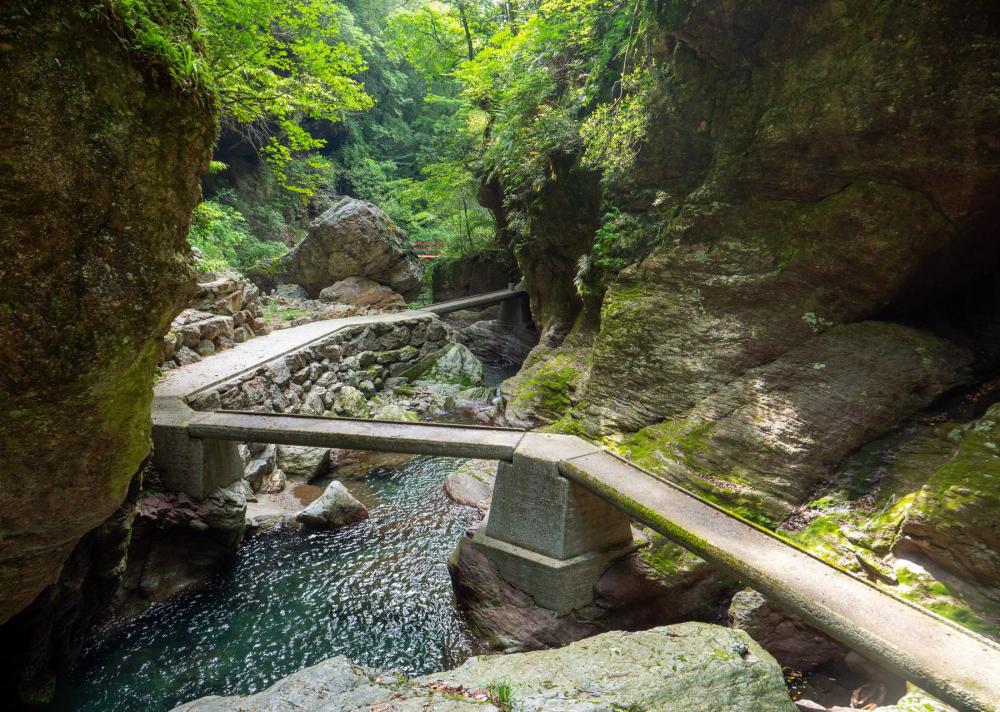
The entire gorge unfolds deep in the mountains, displaying a natural work of art woven from emerald green sparkling clear streams, steep cliffs, massive unusual rocks, and a rich primeval forest. It changes its appearance with the seasons, providing visitors with deeply moving landscapes.
Geographic Characteristics of Omogo Gorge
Omogo Gorge is a valley formed by the Omogo River, which flows down the southern slope of the Ishizuchi mountain range. Over long periods of time, granite bedrock has been eroded, creating the dynamic terrain seen today. The gorge extends approximately 10km in length, and the varied elevation creates a landscape rich in variation.
Geologically, deep granite is exposed in many places, and in particular, massive rock walls like Kamebara Rock display impressive natural sculptural beauty reaching heights of 100m and widths of 200m.
Attractions of Omogo Gorge | Scenic Viewpoints and Natural Formations
Goshoku Riverbank | Representative Scenic Spot of Gorge Beauty
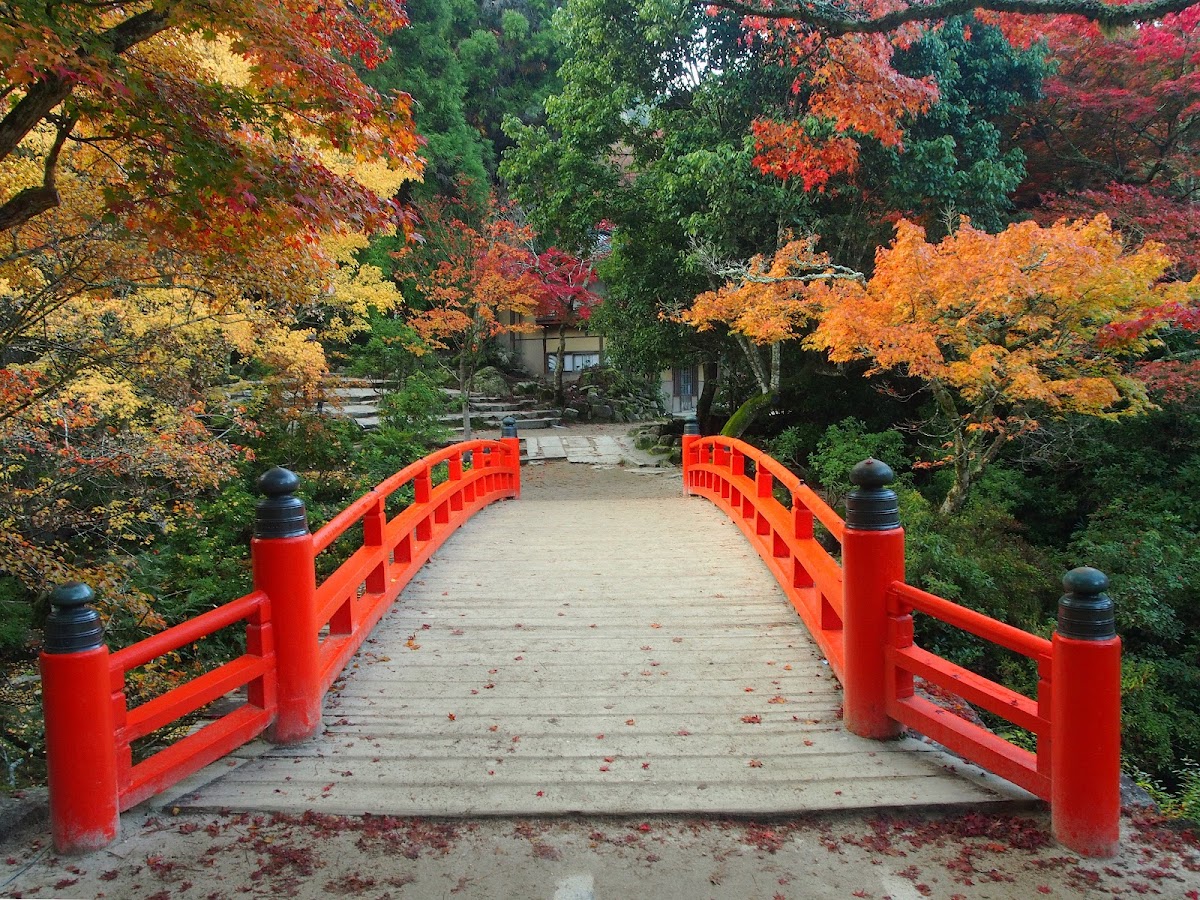
Goshoku Riverbank is a celebrated scenic area representing Omogo Gorge. This beautiful expanse of riverbank spreads where the river’s flow becomes gentler, with an elegant arched bridge creating a spectacular view harmonizing with the surrounding nature. The water’s transparency is particularly high, and the emerald green water surface glittering in sunlight is breathtakingly beautiful.
Goshoku Riverbank is accessible by car, making it easy for those without much physical confidence or time to experience the beauty of Omogo Gorge. The attraction is its accessibility—reaching it takes only a few minutes on foot from the parking area.
Kamebara Rock | Overwhelming Scale Granite Wall
Kamebara Rock (kamebara iwa) is a massive deep granite rock wall reaching heights of 100m and widths of 200m. True to its name, its smooth, rounded surface resembles a turtle’s belly, polished by water and wind over long periods, allowing one to witness natural sculptural beauty up close.
This rock wall is an important point demonstrating Omogo Gorge’s geological value and is popular as a photography spot.
Kouyou Riverbank | Autumn Scenic Spot
Kouyou Riverbank, true to its name, displays particularly beautiful scenery during autumn’s fall foliage season. Located along the middle of the Omogo main stream route, it is colored by broadleaf trees such as maples. The scenery created by the contrast of red and yellow fall colors with the emerald green clear stream and white granite is truly natural art.
Fall foliage typically peaks from late October through early November, attracting many tourists during this period.
Tsutensui Bridge | Viewpoint Overlooking the Gorge
Tsutensui Bridge is located at the endpoint of Omogo Gorge’s walking path, offering an excellent viewpoint overlooking the gorge. From the bridge, one can view the Omogo River’s clear stream, surrounding mountains, and steep rock walls all at once. Accessible via about a 20-minute walk on the Sekimon walking path, it has become a popular destination for many tourists.
Omogo Gorge Walking Paths | Hiking Courses and Required Time
Omogo Gorge has well-maintained walking paths where visitors can enjoy the gorge’s beauty up close. There are two main routes to choose from based on physical ability and available time.
Sekimon Walking Path (One-way approximately 20 minutes)
The Sekimon Walking Path is a route following the gorge from the Omogo Mountain Museum parking area to Tsutensui Bridge. With one-way distances of about 20 minutes and round trips of about 40 minutes, this is a relatively short course suitable for beginners and families.
The path is well-maintained and easy to walk, with points along the way where visitors can see the clear stream up close and observe unusual rocks. This is an ideal route for appreciating the river’s high transparency.
Omogo Main Stream Route (One-way approximately 45 minutes)
The Omogo Main Stream Route is a full-scale hiking course of about 45 minutes one-way, or about 90 minutes round trip. This popular course passes Kouyou Riverbank and other scenic spots, recommended for those wanting to experience Omogo Gorge’s charms more deeply.
This route allows visitors to venture deep into the gorge, enjoying quieter and more pristine nature. Visitors can savor the dynamic gorge beauty of waterfalls and rushing rapids in succession, with abundant photography spots.
Precautions for Walking the Paths
Please note the following when walking the paths:
- Clothing: Wear comfortable clothing and non-slip shoes (trekking shoes recommended)
- Weather: Exercise caution as paths become slippery in rain or after rain
- Time: Plan with enough margin to return before sunset
- Hydration: Don’t forget water replenishment, especially in summer
- Supplies: A camera, insect repellent spray, and towel are convenient to have
Omogo Gorge by Season | Seasonal Charm and Best Viewing Times
Spring (March–May) | New Green and Alpine Flowers
Spring at Omogo Gorge is a season when snowmelt increases water volume and the clear stream’s vigor increases. New green vegetation begins to sprout, and alpine flowers bloom in magnificent display, bursting with life force. Around Golden Week, cherry blossoms and rhododendrons color the gorge.
Temperatures are mild, making it suitable for hiking, and crowds are relatively small, allowing visitors to enjoy nature at a leisurely pace.
Summer (June–August) | Emerald Green Clear Stream and Summer Retreat
Summer at Omogo Gorge is the season when the emerald green clear stream shines most beautifully. The river’s transparency is striking, with the riverbed visible all the way to the bottom—a spectacular sight. With its high elevation, temperatures are lower than in lowland areas, making it popular as a natural summer retreat.
Many families enjoy river play, spending a refreshing summer day in the gorge. However, as summer brings more tourists, visiting during early hours is recommended.
Autumn (September–November) | Fall Foliage Spectacular
Autumn is the season when Omogo Gorge is most vividly colored. From late October through early November, maples, Japanese maples, and beeches display brilliant fall colors, dyeing the entire gorge in reds and yellows. At various locations including Kouyou Riverbank, the contrast between the emerald green clear stream and fall foliage creates spectacular views.
This period is also Omogo Gorge’s most crowded season, so visiting early morning or on weekdays is recommended.
Winter (December–February) | Silent Gorge and Ice Waterfalls
Winter at Omogo Gorge offers the pleasure of enjoying a snow-covered, silent gorge’s beauty. With few tourists, visitors can enjoy nature in solitude. During severe winter, waterfalls freeze into ice cascades, displaying fantastical landscapes.
However, snow accumulation and road surface freezing may close roads, so it’s important to confirm road conditions beforehand.
Access to Omogo Gorge | Directions by Car and Public Transportation
Access by Car
From Matsuyama City
- Approximately 78 minutes (about 64km) via Matsuyama Expressway/Matsuyama IC and Route 33
- Head south on Route 33 toward Kuma Takahara Town
- Enter Prefectural Road 12 (Omogo Gorge Line) toward Omogo Gorge
From Kochi City
- Approximately 90 minutes via Kochi Expressway/Ino IC, Route 194, and Prefectural Road 12
- Following the Yoshino River route, also allowing enjoyment of Yoshino Blue scenery
Parking Information
Omogo Gorge has multiple parking areas.
- Omogo Mountain Museum Parking Area: Accommodates about 50 vehicles, convenient as the walking path starting point
- Goshoku Riverbank Parking Area: Accommodates about 30 vehicles, close to Goshoku Riverbank
- Arrive early during fall foliage season when crowds peak
- Parking fee: Free (may be charged during certain periods)
Access by Public Transportation
From JR Matsuyama Station
- Board JR Shikoku Bus bound for Kuma Takahara (approximately 90 minutes)
- Transfer to Iyo Tetsu Nanyo Bus bound for Omogo at Kuma Takahara (approximately 45 minutes)
- Get off at “Omogo” bus stop, approximately 15-minute walk (about 2km)
※Bus frequency is limited, so it’s important to check schedules beforehand. Note that outside fall foliage season, service frequency is sparse.
Access Precautions
- Road closures may occur due to snow and freezing from December to March
- Traffic congestion may occur during fall foliage season (late October–early November)
- Set car navigation to “Omogo Mountain Museum” or “Omogo Gorge”
- Mobile phone signal is weak in some mountainous areas
Omogo Mountain Museum | Hub Facility for Omogo Gorge Tourism
Omogo Mountain Museum is a hub facility for Omogo Gorge tourism. It features exhibits on the natural environment, geology, and flora and fauna of the Ishizuchi mountain system, deepening understanding of Omogo Gorge and Mount Ishizuchi.
Facility Information
- Address: Omogo 650-1, Kuma Takahara Town, Kami-Ukena District, Ehime Prefecture
- Hours: 9:00 AM–5:00 PM (admission until 4:30 PM)
- Closed: Mondays (or following day if Monday is holiday), year-end/new year
- Admission: Adults ¥300, elementary and junior high school students ¥150
- Parking: Available (free, approximately 50 spaces)
The museum features rest areas and restrooms, convenient for breaks before and after walking path exploration. Learning about the gorge’s terrain and ecosystem before exploring enhances appreciation of nature.
Attractions Around Omogo Gorge | Notable Sites Worth Visiting
Mount Ishizuchi
Heading north from Omogo Gorge, one reaches Mount Ishizuchi, Shikoku’s highest peak. At 1,982m elevation, this sacred mountain is one of Japan’s 100 Famous Mountains. Climbing and ropeway tourism are available, offering spectacular summit views.
Kuma Takahara Sky Observatory
A celestial observation facility in Kuma Takahara Town, located at high elevation with clear air, allowing beautiful stargazing. Combining natural experience at Omogo Gorge with nighttime stargazing is recommended.
Roadside Station “Tenkuu no Sato Sunsan”
A roadside station in Kuma Takahara Town where fresh local agricultural products and specialty items can be purchased. The restaurant offers local cuisine, serving as an ideal rest stop for Omogo Gorge tourism.
Omogo Hot Spring
Hot spring facilities surround Omogo Gorge, allowing visitors to soothe bodies tired from gorge exploration. A relaxing time can be spent in natural hot springs surrounded by nature.
Omogo Gorge Tourism Model Courses | Day Trip and Overnight Plans
Day Trip Model Course (Approximately 5 hours total)
9:00 AM Depart Matsuyama City
↓ 80-minute drive
10:20 AM Arrive at Omogo Mountain Museum, park vehicle
10:30 AM Museum visit (approximately 30 minutes)
11:00 AM Explore Sekimon Walking Path (round trip approximately 60 minutes)
12:00 PM Lunch and rest at Goshoku Riverbank (packed lunch or nearby facilities)
1:00 PM Explore Omogo Main Stream Route (round trip approximately 90 minutes)
2:30 PM Depart Omogo Gorge
↓ 80-minute drive
4:00 PM Arrive Matsuyama City
Overnight Model Course (1 night, 2 days)
Day 1
- Morning: Depart Matsuyama City, lunch at roadside station
- Afternoon: Arrive at Omogo Gorge, explore walking paths
- Evening: Relax at Omogo Hot Spring
- Night: Stay at accommodation in Kuma Takahara Town
Day 2
- Morning: Mount Ishizuchi sightseeing or ropeway experience
- Afternoon: Kuma Takahara Sky Observatory or nearby attractions
- Evening: Return journey to Matsuyama City
Practical Information for Omogo Gorge Tourism | Fees, Hours, and Facilities
Basic Information
- Location: Wakayama, Kuma Takahara Town, Kami-Ukena District, Ehime Prefecture
- Hours: Open for exploration (walking paths recommended during daylight)
- Admission: Free
- Best Season: Fall foliage (late October–early November), new green (April–May), summer clear stream (July–August)
Facilities and Services
- Restrooms: Located near Omogo Mountain Museum and Goshoku Riverbank
- Vending Machines: Available near Omogo Mountain Museum
- Dining: Limited food service nearby
- Shops: Souvenir corner in Omogo Mountain Museum
Tourism Precautions
- Walking paths have slippery sections; wear appropriate shoes
- Wildlife hazards (wild boar, bears) require attention
- Take all garbage with you
- Some river swimming areas are dangerous; exercise caution
- Carry rain gear for sudden weather changes
Omogo Gorge and Yoshino Blue | Visiting the Clear Stream’s Source
Omogo Gorge is positioned in the source region of the Yoshino River, famous nationally as “Yoshino Blue.” The origin of the mystical blue water gaining attention in Kochi Prefecture is indeed this Omogo Gorge.
What is Yoshino Blue
Yoshino Blue is a term describing the mysterious blue color of the Yoshino River’s highly transparent water. The Yoshino River, which has repeatedly been ranked Japan’s cleanest in water quality surveys, captivates many people with its clarity and beautiful blue color.
Omogo Gorge Water Quality
The Omogo River flowing through Omogo Gorge is a clear stream nurtured by the rich forest of the Ishizuchi mountain system. The river’s transparency is remarkably high, with stones and fish in the riverbed clearly visible from walking paths. The water surface, shimmering emerald green, displays various expressions depending on the angle of sunlight, continuing to captivate visitors.
This clear stream is a gift created by the rich nature of Mount Ishizuchi and represents the greatest charm of Omogo Gorge.
Photography at Omogo Gorge | Tips for Capturing Spectacular Views and Best Spots
Recommended Photography Spots
- Goshoku Riverbank’s Arched Bridge: Harmonious composition of bridge, clear stream, and surrounding nature
- Kouyou Riverbank: Autumn contrast between foliage and clear stream
- Kamebara Rock: Imposing deep granite wall
- Tsutensui Bridge Viewpoint: Panoramic view of entire gorge
- Clear Stream from Walking Path: Photography of transparent riverbed
Photography Tips
- Time of Day: Soft morning light is recommended
- Polarizing Filter: Reduces water surface reflection, allowing clear riverbed photography
- Tripod: Effective for long exposures expressing water flow
- Wide-angle Lens: Suitable for expressing gorge expanse
- Macro Lens: Convenient for photographing rock texture, water droplets, and alpine flowers
Omogo Gorge Tourism Q&A | Frequently Asked Questions
Can Omogo Gorge be visited in winter?
From December to March, snow accumulation and road surface freezing may cause road closures. Before visiting, contact Kuma Takahara Town Tourism Association or road managers to confirm current conditions. The gorge’s silent winter beauty is appealing, but safety is paramount.
Can families with young children enjoy the area?
The Sekimon Walking Path is relatively flat and well-maintained, suitable for children in elementary school and above. However, since the path runs along the river, supervision of young children is essential. Baby strollers are impractical; carrying children with slings is recommended.
Is river play possible at Omogo Gorge?
During summer, river play is possible at locations like Goshoku Riverbank where flow is gentler. However, due to rapid currents and deep areas, careful attention is necessary. Particularly during high water, activities are dangerous; always check weather and water levels beforehand. Life jackets are recommended.
Is pet accompaniment possible?
Pets are allowed on walking paths but must be on leash, considering other visitors. Always remove pet waste.
When is fall foliage at its peak?
Fall foliage typically peaks from late October through early November. However, timing may vary depending on yearly weather conditions. Contact Kuma Takahara Town Tourism Association before visiting for the latest foliage information.
Can tourism proceed on rainy days?
Light rain allows tourism, but extra caution is needed as paths become slippery. Heavy rain or flooding makes tourism dangerous; avoiding such conditions is recommended. Additionally, rain reduces river transparency, potentially limiting full appreciation of the gorge’s greatest charm—its clear stream beauty.
Conclusion | Experiencing Shikoku’s Largest Gorge Beauty at Omogo Gorge
Omogo Gorge is a nationally designated scenic area in Kuma Takahara Town, Ehime Prefecture, displaying one of Shikoku’s largest natural beauties spreading across Mount Ishizuchi’s southern foothills. Known as the source of Yoshino Blue, it captivates visitors with its emerald green clear stream, highly transparent Omogo River, massive granite rock walls, and seasonal changes in gorge scenery.
Well-maintained walking paths allow everyone from beginners to serious hiking enthusiasts to enjoy gorge beauty at their own pace. Particularly the fall foliage season’s spectacular views are worth witnessing, and walking the Sekimon path or Omogo Main Stream Route provides close experience of nature’s sculptural beauty.
Its appeal includes excellent accessibility—about an 80-minute drive from Matsuyama City—allowing various tourism styles from day trips to overnight nature experiences. Using Omogo Mountain Museum as a base, visitors can tour attractions including Goshoku Riverbank, Kamebara Rock, Kouyou Riverbank, and Tsutensui Bridge, fully enjoying the Ishizuchi system’s rich nature.
Why not experience the spectacular views created by the clear stream and majestic nature that characterize Omogo Gorge, one of Shikoku’s representative gorges?