Tou no Hetsuji Complete Guide | Access, Highlights, and Tourist Information for This Scenic Spot in Fukushima Prefecture
Tou no Hetsuji, located in Shimogo Town, Minamiaizu District, Fukushima Prefecture, is a spectacular scenic gorge featuring a series of strange rock formations created over 1 million years through erosion by the Okawa River (Agano River). This natural work of art, designated as a National Natural Monument, displays beautiful scenery throughout the four seasons and continues to captivate many tourists.
This article provides a thorough explanation of everything you should know before visiting Tou no Hetsuji, from its attractions to detailed access methods, highlights, and nearby tourist information.
What is Tou no Hetsuji? Name Origin and History
The Meaning of “Hetsuji”
“Hetsuji” is a local dialect term used in the Aizu region to mean “a steep cliff approaching the river.” The name Tou no Hetsuji comes from the landscape of steep cliffs with rock formations resembling towers lined up in succession. This place name has been familiar to locals since ancient times, and this unique terminology emphasizes its individuality as a tourist destination.
A Geological History of 1 Million Years
The rock surface of Tou no Hetsuji exposes geological layers from approximately 1 million years ago. Over a long period, the violent flow of the Okawa River has eroded softer rocks such as tuff and tuff breccia, forming the complex-shaped rock formations seen today.
The rocks have been given individual names based on their shapes, such as “Eboshi Rock,” “Goma Tower Rock,” “Kurin Tower Rock,” “Yagura Tower Rock,” and “Lion Tower Rock,” allowing visitors to appreciate the sculptural beauty created by nature.
Value as a Nationally Designated Natural Monument
Tou no Hetsuji was designated as a National Natural Monument in 1943 (Showa 18). It is highly valued not only as geologically important material but also as a representative scenic site of Japanese gorge beauty.
Access Methods to Tou no Hetsuji
Access by Train
Using the Aizu Railway Aizu Line
- Nearest Station: Aizu Railway “Tou no Hetsuji Station”
- About 5 minutes walk from the station to the tourist site
- About 40 minutes from Aizu-Wakamatsu Station
- About 3 hours 50 minutes from Asakusa Station using the direct through limited express “Liberty Aizu” (Tobu Railway / Aizu Railway)
Although Tou no Hetsuji Station is unmanned, it is well-equipped as the nearest station to the tourist site, and following directional signs from the station, you can reach your destination without getting lost. The station building itself has a charming atmosphere and is popular as a photography spot.
Access by Car
From the Tokyo area
- About 50 minutes from “Shirakawa IC” on the Tohoku Expressway via National Route 289 (approximately 40 km)
- About 1 hour 20 minutes from “Nishinasuno-Shiobara IC” on the Tohoku Expressway via National Routes 400 and 121
From the Niigata area
- About 40 minutes from “Aizu-Sakashita IC” on the Banetsudoroad Expressway via National Routes 118 and 121
Parking Information
- Free parking available (approximately 50 regular parking spaces)
- Early arrival is recommended as parking lots become congested during peak tourist seasons and weekends
- Dedicated large bus parking also available
Access by Bus
From Aizu-Wakamatsu Station, board the Aizu Bus “Aizu-Tajima bound” and get off at “Tou no Hetsuji” bus stop. However, as the number of buses is limited, it is necessary to check the timetable in advance.
Highlights of Tou no Hetsuji and How to Enjoy It
Spectacular Views from the Suspension Bridge
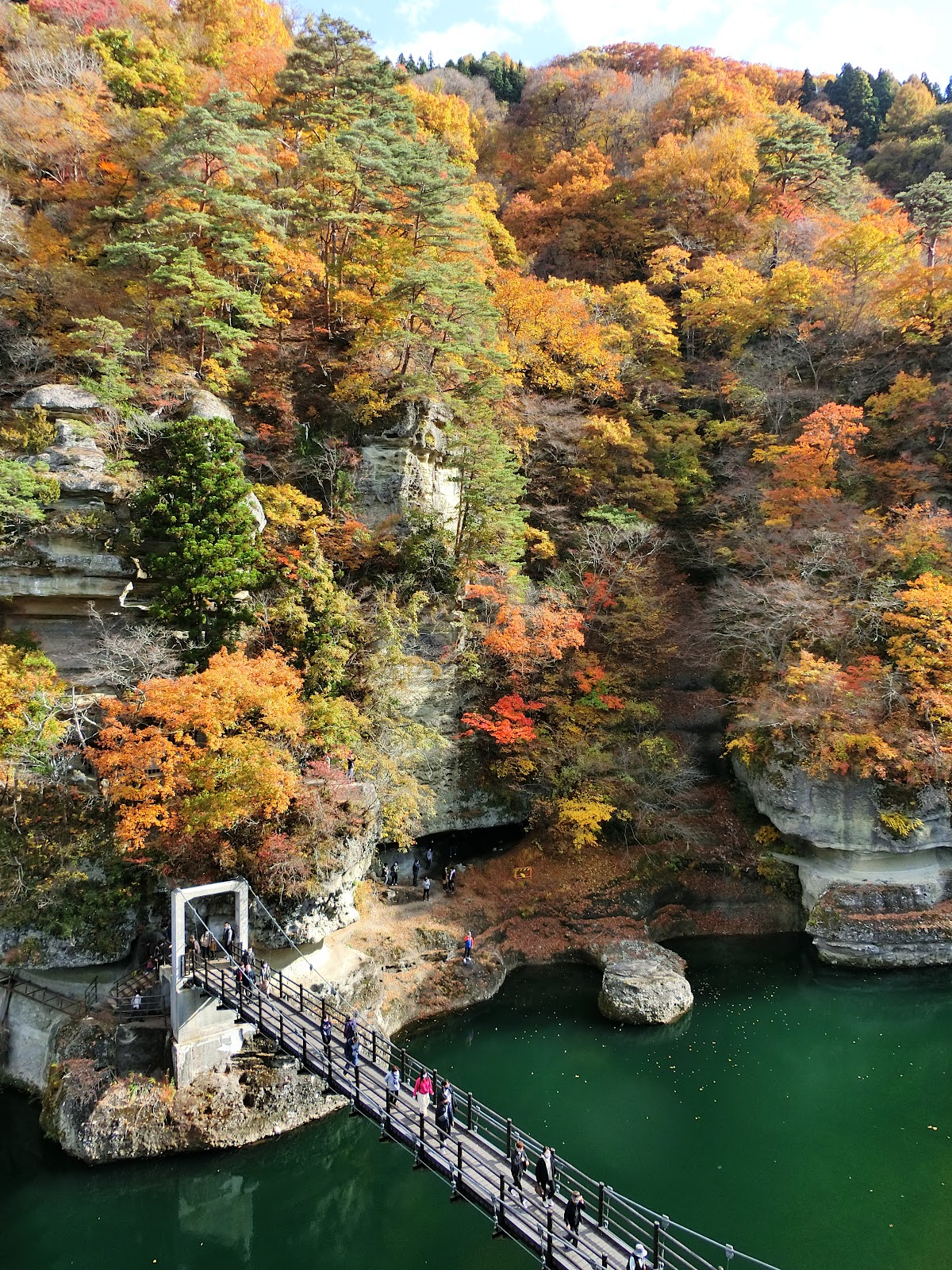
The highlight of Tou no Hetsuji is the experience of crossing the suspension bridge over the Okawa River. From the bridge, you can view the steep rock formations on both banks up close and enjoy the gorge beauty in a 360-degree panorama.
The suspension bridge has a limit on the number of people who can cross at once, and it sways, so those who are afraid of heights should be careful. However, this swaying also provides an amusement park-like enjoyment. The bridge is approximately 50 meters long, and we recommend walking slowly while enjoying the scenery.
Hiking Trails on the Opposite Bank and Kokuuzou Bodhisattva
On the opposite bank after crossing the suspension bridge, a hiking trail is well-maintained, allowing you to walk through the gaps between the rock formations. You can closely observe the rock surfaces and see in detail the striped patterns of geological layers formed over long periods and the complex formations created by water erosion.
At the end of the hiking trail, there is a small shrine built into the rock where Kokuuzou Bodhisattva is enshrined. This bodhisattva is believed to grant wisdom and blessing, and many people visit to pay their respects. The interior of the rock cavity is narrow and requires stooping to enter, but it is popular as a power spot with a mysterious atmosphere.
Observation Deck and Aerial Photography
An observation deck is installed near the parking lot, from which you can view the entire Tou no Hetsuji. This is the ideal point to capture the suspension bridge, rock formations, and the flow of the Okawa River in a single photograph.
Especially during the autumn foliage season, the contrast between the trees colored in red and yellow and the rock surface is beautiful, making it an excellent photography spot.
Riverside Promenade
Below Tou no Hetsuji, a riverside promenade is well-maintained, allowing you to view the rock formations from different angles. Looking up at the rock walls from near the water’s surface is truly spectacular and gives a different impression from viewing from above.
Four-Season Charm and Best Seasons to Visit
Spring (April to May)
The season when snowmelt increases the water flow, and the Okawa River’s current becomes powerful. New greenery begins to sprout, and the contrast with the rock surface is beautiful. Golden Week is crowded, but the scenery is worth experiencing.
Summer (June to August)
The gorge enveloped in deep green is cool and perfect as a summer retreat. The murmur of the river and the shade of green are pleasant, allowing comfortable tourism even in hot summer. However, be careful as the ground becomes slippery during the rainy season.
Autumn (October to November)
The most recommended season. Autumn foliage colors the gorge, and the scenery woven by rock formations and red and yellow trees is magnificent. The best viewing period is late October to early November, when many tourists and photographers visit.
At the peak of autumn foliage, parking lots often reach capacity, so visiting on weekdays or arriving early in the morning is recommended.
Winter (December to March)
Snow-covered rock formations have a fantastical beauty. With fewer tourists, you can enjoy the luxury of being alone with nature’s beauty in silence. However, snow and ice make the ground extremely hazardous, making winter-appropriate non-slip shoes essential. The suspension bridge may also freeze, and access may be restricted in some cases.
Time Required for Tourism and Precautions
Time Required
- Observation deck viewing only: approximately 15 minutes
- Crossing the suspension bridge and exploring the opposite bank: approximately 30 to 45 minutes
- Careful photography and exploring: approximately 1 to 1.5 hours
Including nearby dining and souvenir shops, a stay of about 2 hours is recommended.
Clothing and Items to Bring
- Comfortable walking shoes: The hiking trails have rocky areas and stairs, so sneakers or trekking shoes are ideal
- Comfortable clothing: When entering the rock cavity with Kokuuzou Bodhisattva, you need to stoop
- Camera: Many opportunities for spectacular photography
- Beverages: Hydration is especially important in summer
- Rain gear: The weather can change rapidly in mountainous areas
Safety Precautions
- The suspension bridge sways, so if visiting with small children, hold their hands firmly
- Rock surfaces are slippery, so be especially careful in rainy weather or winter
- Do not get too close to the river (particularly dangerous during high water)
- Do not enter areas outside the designated hiking trails
Nearby Tourist Attractions
Ouchi-juku (approximately 15 minutes by car)
A former post station town from the Edo period with its streetscape preserved and designated as a nationally important traditional building preservation district. The sight of thatched-roof houses lining the streets creates the sensation of traveling back in time. This is a popular spot often visited in conjunction with Tou no Hetsuji.
Yunogami Onsen (approximately 10 minutes by car)
Yunogami Onsen Station on the Aizu Railway is famous for its thatched-roof station building. The surrounding area has many day-use hot spring facilities, making it ideal for relaxing from sightseeing fatigue.
Aizu-Wakamatsu City (approximately 50 minutes by car)
Tourist attractions reflecting Aizu’s history are concentrated here, including Tsuruga Castle (Aizu-Wakamatsu Castle), Iiyama Hill, and samurai mansions. A tourism plan that combines Tou no Hetsuji with a tour of the Aizu area is popular.
Aizu Highland (approximately 30 minutes by car)
A naturally rich area where you can enjoy skiing in winter and trekking and camping in summer. Outdoor activities are abundant throughout the four seasons.
Dining and Souvenir Information
Nearby Restaurants
Various dining establishments using local ingredients are scattered around Tou no Hetsuji.
Recommended Dishes
- Aizu soba: A specialty of the Aizu region. Hand-made soba with a fragrant aroma
- Mountain vegetable dishes: From spring to early summer, dishes using locally harvested wild vegetables are excellent
- Iwana (char) salt grilled: Fresh freshwater fish caught in the Okawa River
- Aizu local chicken: Dishes using local brand chicken
Souvenirs
- Aizu sake: Fukushima Prefecture is a renowned sake production area. Local brewery sake is recommended
- Aizu lacquerware: Traditional craft lacquerware
- Okiagari Koboshi: Aizu local toy
- Aizu specialty sweets: Thin-skinned buns, yubesshi, and others
Souvenir shops near the parking lot sell local specialty products.
Basic Information about Tou no Hetsuji
Address
Shimogo Town, Minamiaizu District, Fukushima Prefecture, Yagoshita Tayabayashi
Hours
- Free viewing (24 hours)
- However, daytime visits are recommended as there is no lighting at night
Admission
- Free
Inquiries
- Shimogo Town Tourism Association: 0241-69-1144
Official Website
You can check the latest information on the Shimogo Town Tourism Association website.
Barrier-Free Information
- Wheelchair access possible to the observation deck
- The suspension bridge and opposite bank hiking trails have many stairs and steps, making wheelchair passage difficult
- Multi-purpose restroom available
Photography Tips and Best Spots
Recommended Photography Points
- Observation deck: A classic spot where you can view the entire scene from above. A wide-angle lens is recommended
- Center of the suspension bridge: Captures rock formations at close range
- Hiking trail on the opposite bank: Closeup of rock surface texture
- Riverside promenade: Angle looking up from below
- Tou no Hetsuji Station: Vintage station building and surrounding scenery
Best Times for Photography
- Morning: Sunlight illuminates the rock surface colors beautifully
- Autumn foliage season mornings: Morning mist may create fantastical photographs
- Evening: Slanting light emphasizes shadows and creates three-dimensional photos
Photography Precautions
- Avoid using tripods on the suspension bridge as it may inconvenience other tourists
- Pay attention to footing when photographing on rocky areas
- Drone photography may require prior approval, so please confirm
Suggested Model Courses
Day Trip Course (Departing from Tokyo)
8:00 AM Depart from Tokyo Station (Tohoku Shinkansen)
9:30 AM Arrive at Shin-Shirakawa Station, rent a car
10:30 AM Arrive at Tou no Hetsuji, explore (1.5 hours)
12:00 PM Lunch nearby (Aizu soba)
1:30 PM Ouchi-juku sightseeing (1.5 hours)
3:30 PM Day-use bathing at Yunogami Onsen (1 hour)
5:00 PM Head to Shin-Shirakawa Station
6:30 PM Arrive in Tokyo
1 Night 2 Days Course (Aizu Tour)
Day 1
- Morning: Sightseeing in Aizu-Wakamatsu City (Tsuruga Castle, Iiyama Hill)
- Afternoon: Tou no Hetsuji, Ouchi-juku
- Evening: Stay at Yunogami Onsen or in Aizu-Wakamatsu City
Day 2
- Morning: Trekking or hot springs at Aizu Highland
- Afternoon: Shopping in Aizu-Wakamatsu City and return trip
Local Insider Knowledge
Tips to Avoid Crowds
- During autumn foliage season, early morning weekdays (before 8 AM) are recommended
- After rain, there are fewer tourists, and wet rock surfaces appear darker and more beautiful
- On clear winter days, few people visit and you can have the snowy landscape all to yourself
Local Legend
Tou no Hetsuji has a legend that a giant who once lived in this area left footprints that became rocks when stepping across the river. Also, Kokuuzou Bodhisattva is revered by local people and is said to have merit in granting academic success.
How to Enjoy the Aizu Railway
The Aizu Railway operates various seasonal event trains. Traveling to Tou no Hetsuji while enjoying the scenery from a trolley train or observation train is also a wonderful experience.
Frequently Asked Questions
Q: Do I need a reservation to view Tou no Hetsuji?
A: Reservations are not necessary. You can view it freely.
Q: Can I enjoy it in rainy weather?
A: Viewing is possible in rainy weather, but you should be careful as the ground becomes slippery. Please prepare rain gear and non-slip shoes.
Q: Can I bring pets?
A: Pets are permitted, but a leash must be used, and consideration for other tourists is required.
Q: Are there accommodations nearby?
A: There are inns and hotels at Yunogami Onsen (approximately 10 minutes by car). More accommodations are available in Aizu-Wakamatsu City (approximately 50 minutes by car).
Q: Can I sightsee with a wheelchair?
A: Wheelchair access is possible to the observation deck, but the suspension bridge and opposite bank hiking trails have many stairs, making wheelchair passage difficult.
Conclusion: Experience the Natural Art of Tou no Hetsuji
Tou no Hetsuji in Fukushima Prefecture is a work of natural art created by an astronomical amount of time spanning 1 million years. Its value as a National Natural Monument becomes immediately apparent once you visit.
The successive rock formations creating a gorge, the thrilling views from the suspension bridge, the scenery that changes with the four seasons, and the abundant surrounding tourist resources. Tou no Hetsuji is an absolute must-see tourist destination when visiting Fukushima Prefecture.
Access is relatively good, reachable by both train and car, and enjoyable even for short periods. Combined with sightseeing at Ouchi-juku and Aizu-Wakamatsu City, a fulfilling Aizu trip becomes possible.
The beauty of the autumn foliage season is especially exceptional, but Tou no Hetsuji displays different faces regardless of the season you visit. Why not include Tou no Hetsuji, a scenic spot in Minamiaizu, Fukushima Prefecture, as a candidate for your next trip?
The miracle-like natural rock formations are waiting for you.