Takinoue Park Hokkaido Yubari City Complete Guide | Spectacular Spots of Chidori Falls and Ryusen Gorge
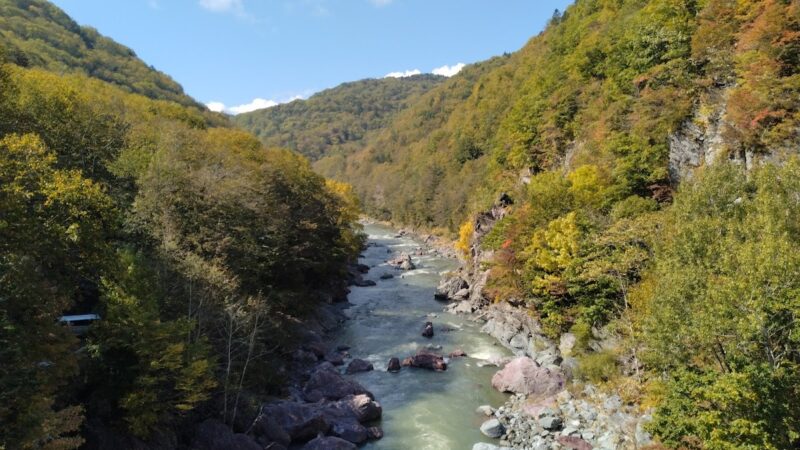
Takinoue Park, located in Yubari City, Hokkaido, is a natural park where you can enjoy magnificent gorge scenery formed by the long-term erosion of the Yubari River. Known in the Ainu language as “Ponsoukamuy Kotan (where the northern gods dwell, a place with small waterfalls),” this area continues to captivate visitors with its overwhelming landscape of countless large and small waterfalls and odd-shaped rocks, including Chidori Falls and Ryusen Gorge.
History and Geological Background of Takinoue Park
A Sacred Place Indicated by the Ainu Language
The area around Takinoue Park has long been called “Ponsoukamuy Kotan” by the Ainu people. This name is a combination of the words “Pon (small),” “So (waterfall),” “Kamuy (god),” and “Kotan (settlement/place),” meaning “a place where the northern god dwells, a place with small waterfalls.” Chidori Falls is also called “Penkeso” in Ainu, which refers to “Penke (upstream)” and “So (waterfall),” literally meaning an upstream waterfall.
This sacred name speaks to how full of natural power and beauty this place is.
Geological Landscape Created by Neogene Kawabashi Formation
The spectacular landscape of Takinoue Park is also highly valuable from a geological perspective. The riverbed of the Yubari River is widely exposed to alternating layers of conglomerate, sandstone, and mudstone of the Neogene Kawabashi Formation. These rock layers have been carved away by river erosion over many years, forming the beautiful gorge that exists today.
The geological landscape visible from above the Takinoue Park Suspension Bridge has been selected as one of “Hokkaido’s 100 Geological Sites” and attracts many geology enthusiasts and tourists as a powerful natural canvas. While the stratification is clearly observable on the riverbed flatland, some areas have been restricted from entry by park management for safety reasons. Please enjoy the scenery from designated walking paths.
Chidori Falls and Ryusen Gorge: Two Major Highlights
The Charm of Chidori Falls
Chidori Falls is a symbolic presence in Takinoue Park. This waterfall spanning the Yubari River features countless large and small waterfalls in succession, and its name comes from the graceful flow of water that appears as if plovers are flying about. The landscape created by the waterfall’s height and width displays a different appearance with each season.
In spring, snowmelt increases the water volume, displaying powerful and impressive scenes. Summer offers cool scenery surrounded by greenery, while autumn creates spectacular views in combination with fall colors. Chidori Falls, viewed from the suspension bridge and viewpoints within the park, is impressive from every angle.
Odd-Rock Formation of Ryusen Gorge
Ryusen Gorge is a gorge where numerous odd-shaped rocks tower, and along with Chidori Falls, it is another major attraction of Takinoue Park. The unique rock formations created by long-term erosion create a mysterious atmosphere as if a dragon were ascending to heaven.
Walking along the paths beside the gorge allows you to observe up close the odd-shaped rocks, which are like works of art created by nature. Especially during the fall foliage season, the contrast between trees dyed red and yellow and the gray rock surfaces is spectacular, completely captivating visitors.
Enjoying Takinoue Park Throughout the Four Seasons
Spring: Cherry Blossoms and New Green Season (Late April to May)
Takinoue Park typically opens around April 20th each year. With the arrival of spring, cherry blossoms bloom throughout the park and new green foliage begins to sprout. The waterfall, swollen with snowmelt, is full of power, allowing you to feel the force of nature unique to spring.
Although temperatures remain cool, this is a period when you can enjoy Hokkaido’s short spring with the joy of the park reopening after winter’s closure.
Summer: Cool Gorge Surrounded by Greenery (June to August)
Takinoue Park in summer becomes a cool resort surrounded by lush greenery. The sound of the Yubari River flowing through the gorge and the breeze blowing through the trees are pleasant, making you forget the heat of the city.
The park’s full-loop walking path is an excellent course for enjoying a forest bath while connecting with nature. You can enjoy a leisurely walk while bathing in plenty of negative ions.
Autumn: Spectacular Fall Foliage (Early to Mid-October)
The season when Takinoue Park is busiest with tourists is the fall foliage season. The prime viewing time is typically early to mid-October, when trees colored red and yellow paint the entire gorge.
Fall foliage reflected on the rock faces of Chidori Falls and Ryusen Gorge is truly a work of art painted by nature. The combination of waterfalls and fall colors viewed from the two bridges within the park is spectacular, and many photography enthusiasts visit. The park is also popular as a scenic drive route along National Route 274, and the exhilaration of driving or riding a motorcycle under the fall foliage is exceptional.
Since the fall foliage season is expected to be crowded, visiting early in the morning or on weekdays is recommended.
Winter: Closed Season (November to Mid-April)
Takinoue Park is closed during winter (around November to mid-April of the following year). This is a measure taken in consideration of safety due to Hokkaido’s harsh winter climate and heavy snowfall. No entry is permitted during this period, so please note this when planning your visit.
Facility Information at Takinoue Park
Walking Paths and Chashi Ruins
The park features approximately 1.5 km of walking paths allowing you to visit Chidori Falls, Ryusen Gorge, and other highlights throughout the park. While the walking path has some elevation changes, it provides moderate exercise and an intense natural experience.
The park also contains the remains of “Takinoue Chashi.” Chashi are fortifications or ritual sites built by the Ainu people, and this is an important historic site that speaks to the historical value of this area.
Parking and Facilities
Takinoue Park is equipped with a free parking lot that can accommodate approximately 50 regular vehicles. During busy times such as the fall foliage season, the lot may fill up, so it is recommended to visit with plenty of time to spare.
Restrooms are installed within the park, but there are no shops or dining facilities. It’s a good idea to prepare drinks and light snacks in advance.
Access Methods and Location Information
Basic Information
- Address: 〒068-0756 Takinoue 5, Yubari City, Hokkaido
- Opening Period: Around April 20 to late October (varies by year)
- Admission Fee: Free
- Parking: Free (approximately 50 spaces)
Access by Car
From New Chitose Airport: Approximately 1 hour 15 minutes (approximately 65 km)
- Approximately 15 minutes from Yubari IC on the Doo-oh Expressway via National Route 274
From Sapporo City Center: Approximately 1 hour 30 minutes (approximately 80 km)
- Via National Routes 12 and 274
From Chitose City: Approximately 1 hour (approximately 55 km)
- Via Prefectural Road 3 and National Route 274
National Route 274 is the main route toward Yubari with good road conditions. However, traffic volume increases during the fall foliage season and on weekends, so planning with extra time is recommended.
Access by Public Transportation
Public transportation access is limited. JR Sekisho Line “Shin-Yubari Station” is the nearest station, but the park is about 10 km from the station, requiring taxi or rental car use.
There are local buses from within Yubari, but with limited service, advance confirmation of schedules is necessary. Considering tourism flexibility, renting a car is most convenient.
Nearby Tourist Attractions and Combination Plans
Yubari Melon no Sato
Yubari is nationally famous as the “Town of Melons.” Combining your visit to Takinoue Park with visits to Yubari melon direct sales shops and farms is also recommended. Especially from late June through August during melon season, you can enjoy fresh Yubari melons.
Coal Museum
Yubari was once a prosperous coal mining town. The Yubari Coal Museum allows you to learn about the history of coal mining and life at that time, revealing a different aspect of Yubari from Takinoue Park.
Happiness Yellow Handkerchief Memories Square
Buildings used as filming locations for the movie “Happiness Yellow Handkerchief” have been preserved, and you can feel the Showa-era atmosphere.
Shuparo Lake
A man-made lake formed by the Yubari Shuparo Dam, selected as one of Japan’s 100 Dam Lakes. Located about 20 minutes by car from Takinoue Park, the lakeside scenery is also beautiful.
Precautions and Etiquette When Visiting
Clothing and Belongings
The walking paths have unpaved sections, so walking shoes (trekking shoes or sneakers) are essential. Even in autumn, mornings and evenings can be cold, so bring something to wear over other clothing.
Insect repellent spray, drinks, towels, cameras, binoculars, and other items will make for a more comfortable experience.
Safety Precautions
- Never enter restricted areas such as the riverbed flatland
- Be careful underfoot as some parts of the walking path are slippery
- If the weather deteriorates, do not push yourself and leave early
- There is a possibility of encountering wild animals, so do not shout or approach them
Environmental Protection Etiquette
Takinoue Park is a place where valuable natural environments are preserved. Please observe the following etiquette:
- Always take trash with you (there are no trash cans in the park)
- Do not damage or remove plants or rocks
- Do not enter areas outside designated walking paths
- Enjoy nature quietly without loud noise
- If bringing pets, keep them on a leash and bring away any waste
Best Photography Spots and Timing
Recommended Photography Points
- From the suspension bridge: An ideal angle overlooking Chidori Falls in their entirety
- Second Observation Platform: Captures the odd-rock formation of Ryusen Gorge
- Small waterfalls along the walking path: Allows close-up photography of water flow
- From under the bridge: Allows capturing the waterfall and bridge together in frame
Best Timing
- Fall foliage season: Early to mid-October on clear days, soft morning light is recommended
- New green season: Mid-May to early June, green dampened with morning dew is beautiful
- Time of day: Around 9:00 to 11:00 AM offers good lighting conditions
For fall foliage photography, overcast days also work well with uniform light and vivid colors, so sunny weather is not always necessary.
Planning to Maximize Enjoyment of Takinoue Park
Expected Time Required
- Walking only: 1 to 1.5 hours
- Including photography: 2 to 2.5 hours
- Leisurely enjoying nature: Approximately 3 hours
Recommended Visiting Period
The most recommended time is the fall foliage season from early to mid-October, but the new green season from late May to early June, or summer from July to August are also recommended for those wanting to avoid crowds. Each season has different charm.
Recommended Day Trip Model Course
Morning:
- 9:00 AM Arrive at Takinoue Park, start walking from parking lot
- 9:15 AM View Chidori Falls
- 9:45 AM Walk through Ryusen Gorge
- 10:30 AM Walk the park’s full-loop path
- 11:30 AM Leave the park
Afternoon:
- 12:00 PM Lunch in Yubari city (dishes using Yubari melon, etc.)
- 1:30 PM Visit the Coal Museum
- 3:00 PM Visit Happiness Yellow Handkerchief Memories Square
- 4:00 PM Depart for return journey
The Charm of Yubari City and Takinoue Park
Yubari City possesses multifaceted charm including its coal mining heritage, the Yubari melon brand, and abundant natural beauty. Takinoue Park represents the natural charm of the city, offering mystical and powerful scenery worthy of its name “where the gods dwell.”
The gorge beauty created by countless large and small waterfalls and odd-shaped rocks displays different appearances depending on the season and time of visit, with new discoveries possible with each visit. Takinoue Park, where you can escape urban hustle and refresh both body and mind in nature, continues to be loved as a hidden gem of Hokkaido tourism.
With relatively easy access just 1 hour 15 minutes by car from New Chitose Airport while preserving pristine nature, it is a precious spot. Be sure to visit Takinoue Park to experience the overwhelming natural power of a place the Ainu called “where the gods dwell,” where you can enjoy the beauty of each season: spring cherry blossoms, summer greenery, and autumn fall foliage.