Complete Guide to Ginnga and Ryusei Waterfalls|Thorough Explanation of Japan’s Top 100 Waterfalls in Sounkyo Gorge, Hokkaido
The Ginnga and Ryusei Waterfalls, located in Sounkyo Gorge in Kamikawa Town, Hokkaido, are spectacular waterfalls representative of Hokkaido, selected as one of Japan’s Top 100 Waterfalls. The two waterfalls flowing down the sheer cliff face are also called the “male waterfall” and “female waterfall” due to their contrasting appearances, captivating many tourists each year. This article provides a thorough explanation of everything you need to know before visiting, from the charm of Ginnga and Ryusei Waterfalls to access methods, best seasons, and nearby tourist attractions.
About Ginnga and Ryusei Waterfalls|The Appeal of Sounkyo Gorge’s Representative Waterfalls
Why They Were Selected for Japan’s Top 100 Waterfalls
The Ginnga and Ryusei Waterfalls were selected as one of the “Top 100 Waterfalls in Japan” chosen by the Ministry of the Environment and the Forestry Agency. Among 527 waterfall nominations from across the country, 100 waterfalls were selected, with 6 from Hokkaido, two of which are located in the Daisetsuzan area.
The reason these two waterfalls were selected for Japan’s Top 100 Waterfalls lies in their beauty and contrasting appearance. Though flowing down the same sheer cliff face, these two waterfalls display completely different characteristics, and the rarity of being able to view both simultaneously was highly evaluated.
Geographic Features of Sounkyo Gorge
Sounkyo Gorge is located within Daisetsuzan National Park and is characterized by a canyon that extends approximately 24 km along the Ishikari River with sheer cliff faces. The name derives from the Ainu language “Souunbetsu (a river with many waterfalls),” indicating that the area has long been known as a region with many waterfalls.
Both banks of the gorge are lined with columnar jointed cliffs exceeding 100 meters in height, through which the Ishikari River flows. These columnar joints were formed when volcanic rock cooled and created regular cracks, making Sounkyo Gorge’s landscape even more impressive.
Located approximately 66 km from Asahikawa city center, it is also known as one of Hokkaido’s premier hot spring resorts, about a 10-minute drive from Sounkyo Onsen hot spring town.
Ryusei Waterfall|The Appeal of the Powerful Male Waterfall
Characteristics of Ryusei Waterfall
Ryusei Waterfall is a spectacular waterfall with a drop of approximately 90 meters, flowing down all at once. With its large volume of water and powerful single stream, it truly lives up to the name “male waterfall.”
The waterfall roars as it falls down the sheer cliff face, creating white spray. The intensity of its flow gives the impression of a shooting star streaking across the sky, hence the name “Ryusei (shooting star) Waterfall.”
When viewed from the parking area, it is positioned closer to the foreground, and is the first waterfall visible from the entrance to the parking area along Route 39. From close up, its power is overwhelming, and water spray sometimes reaches visitors on the wind.
Highlights of Ryusei Waterfall
The greatest appeal of Ryusei Waterfall is its overwhelming water volume and power. Particularly during snowmelt season or after heavy rain, the water volume increases, presenting an even more spectacular sight.
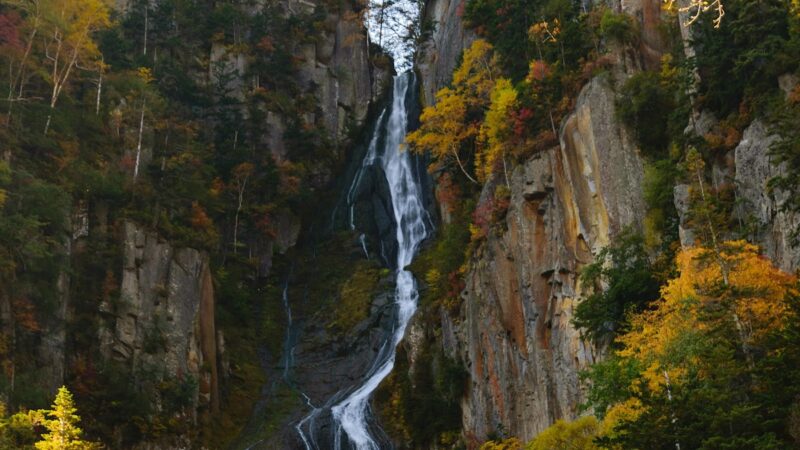
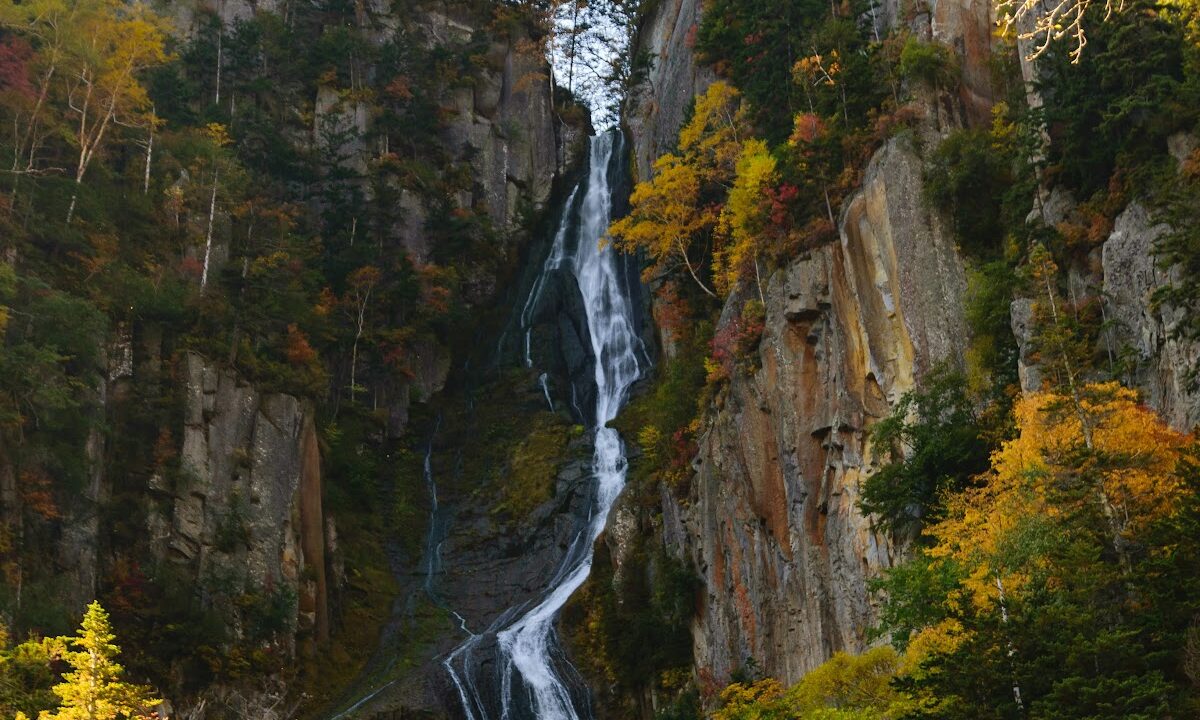
The columnar jointed rock faces surrounding the waterfall are also magnificent, creating a beautiful contrast between the black rock face and the white water. During autumn foliage season, the surrounding trees turn red and yellow, creating a spectacular view with the waterfall.
Walking along the well-maintained promenade from the parking area, you can get right up close to the waterfall and feel its roaring power with your entire body.
Ginnga Waterfall|The Appeal of the Delicate Female Waterfall
Characteristics of Ginnga Waterfall
Ginnga Waterfall is an elegant waterfall with a drop of approximately 120 meters, flowing down like delicate white threads. Though higher than Ryusei Waterfall, the way the water splits into multiple streams as it falls resembles the Milky Way, displaying an elegance befitting the name “female waterfall.”
The waterfall flows quietly down the rock face of the cliff, and its delicate appearance contrasts sharply with Ryusei Waterfall. As the water flows along the rock surface, it changes appearance depending on the angle of light, revealing different beauty at different times of day and seasons.
From the parking area, it is positioned deeper than Ryusei Waterfall, and its full appearance can be viewed from further along the promenade.
Highlights of Ginnga Waterfall
The greatest appeal of Ginnga Waterfall is its delicate and elegant flow. The way water flows along the rock face resembles white silk, with quiet beauty.
Especially during morning or evening sunlight, the water reflects the light and shines brilliantly, displaying beauty like the Milky Way as its name suggests. Additionally, when mist rises early in the morning, the entire waterfall is enveloped in a mystical atmosphere.
Though Ginnga Waterfall has less water volume compared to Ryusei, this allows for better appreciation of the delicate beauty of its flow. The trajectory of water flowing along the rock surface contours seems like a work of art created by nature.
Souhakudai|A Spectacular Viewpoint for Viewing Both Waterfalls Simultaneously
How to Reach Souhakudai
Souhakudai is a viewing platform where you can view both Ginnga and Ryusei Waterfalls simultaneously. It is located approximately 20 minutes’ walk uphill from the parking area.
The trail is well-maintained, but due to the elevation change, comfortable walking shoes and appropriate clothing are recommended. As the trail passes through forest, it remains relatively cool even in summer, allowing you to enjoy forest bathing while walking.
Though there are some steep sections along the trail, if you climb slowly with rest breaks, it is accessible even for those without high fitness levels. Plan for approximately 40 minutes to 1 hour for the round trip.
The View from Souhakudai
From Souhakudai, you can view both Ginnga and Ryusei Waterfalls simultaneously, falling on either side of a massive rock wall called Fudoiwa. This view is arguably the greatest highlight of Ginnga and Ryusei Waterfalls.
From the viewing platform, the contrasting nature of the two waterfalls becomes clear. Ryusei Waterfall flows powerfully on the right, while Ginnga Waterfall flows delicately on the left. This contrast is why they are called “male and female waterfalls,” or “husband and wife waterfalls.”
Especially during autumn foliage season, the landscape created by the colored trees, two waterfalls, and columnar jointed cliff faces is stunning. It is an ideal photography spot for camera enthusiasts.
Points to Note When Visiting Souhakudai
The trail to Souhakudai can become slippery depending on weather conditions. Special care is needed after rain or on rainy days. Additionally, as it is bear habitat, it is recommended to carry a bear bell or similar warning device.
In winter, the trail may be closed due to snow accumulation. It is recommended to check the latest information with the Sounkyo Gorge Tourism Association before visiting.
Benches are provided at the viewing platform, but there are no restrooms or shops. It is necessary to bring beverages for hydration from the parking area.
Best Seasons for Ginnga and Ryusei Waterfalls
Autumn Foliage Season (Late September to Early October)
The most popular season to visit Ginnga and Ryusei Waterfalls is late September through early October when autumn foliage reaches its peak. During this period, trees such as nanakamado, itayakaede, and katsura turn red and yellow, offering spectacular views of the waterfalls with autumn leaves.
The foliage in Sounkyo Gorge comes early by Hokkaido standards, beginning to color in mid-September. Due to the elevation differences, you can enjoy autumn leaves at different heights depending on the timing.
This period sees many tourists, and parking areas can become crowded. Early morning or weekday visits are recommended.
Fresh Green Season (June)
June’s fresh green season is also an ideal time to visit Ginnga and Ryusei Waterfalls. Snowmelt water increases the water volume, enhancing the waterfalls’ impact. Additionally, surrounding trees are enveloped in vibrant green, creating a refreshing landscape.
This season sees relatively few tourists, allowing for leisurely waterfall appreciation. The temperature is also comfortable, making it suitable for climbing to Souhakudai.
Summer Season (July-August)
Summer is the busiest season for Sounkyo Onsen hot spring town, with many tourists visiting Ginnga and Ryusei Waterfalls. Despite high temperatures, the waterfall area remains cool, making it popular as an summer retreat.
While water volume decreases compared to spring, the contrast between blue sky, green foliage, and white waterfalls creates beautiful scenery.
Winter Season Precautions
During winter (late November to April), some sections of Route 39 may be closed to traffic, restricting access to Ginnga and Ryusei Waterfalls. Additionally, snowfall may make parking areas and promenades unusable.
If visiting in winter, it is essential to check with the Sounkyo Gorge Tourism Association or road information beforehand. However, frozen waterfalls have a unique beauty, allowing you to enjoy winter-specific views.
Access Information|How to Reach Ginnga and Ryusei Waterfalls
Access by Car
From Asahikawa
- From Asahikawa city center, take Route 39 northbound approximately 66 km toward Kitami, about 1 hour 20 minutes travel time
- From Asahikawa Airport, approximately 1 hour 40 minutes
- From Sounkyo Onsen hot spring town, take Route 39 toward Asahikawa approximately 7 km, about 10 minutes travel time
From Kitami/Abashiri
- Take Route 39 toward Asahikawa, approximately 7 km past Sounkyo Onsen hot spring town
From Sapporo
- Take the Doo-O Expressway, exit at Asahikawa Takasu IC, then take Route 39, approximately 2 hours 30 minutes
A large free parking area is located along Route 39, accommodating approximately 50 regular vehicles and 10 large buses. It is recommended to arrive early during autumn foliage season due to congestion.
Access by Public Transportation
By Bus
- From JR Asahikawa Station, take the Dohoku Bus “Sounkyo/Kamikawa Line” for approximately 1 hour 50 minutes to “Sounkyo Onsen” bus stop
- From Sounkyo Onsen bus stop, take the Dohoku Bus for approximately 10 minutes to “Ginnga/Ryusei Waterfall” bus stop
Bus frequencies are limited, so it is recommended to check the schedule in advance. Particularly outside the autumn foliage season, service is infrequent and requires special attention.
By Taxi
- From Sounkyo Onsen hot spring town, approximately 10 minutes by taxi, approximately 2,000 yen
Parking and Facility Information
Parking is available 24 hours a day with no charge. Restrooms are installed at the parking area and are maintained cleanly.
A well-maintained promenade leads from the parking area to the waterfalls, and wheelchairs can access near the waterfalls (some steps present, attendant accompaniment recommended). However, the trail to Souhakudai features stairs and steep slopes, making wheelchair use impossible.
There are no shops or vending machines at the parking area, so it is recommended to purchase beverages and snacks in Sounkyo Onsen town before arriving.
Nearby Tourist Attractions|The Appeal of the Sounkyo Gorge Area
Sounkyo Onsen Hot Spring Town
Located approximately 10 minutes’ drive from Ginnga and Ryusei Waterfalls, Sounkyo Onsen is one of Hokkaido’s premier hot spring destinations. Positioned at the foot of Daisetsuzan, it is popular as a tourist destination where you can enjoy both gorge views and hot springs.
The hot spring town is lined with numerous hotels and inns, with day-use bathing facilities also available. The water is simple hot spring with purported benefits for neuralgia, muscle pain, and fatigue recovery.
Strolling through the hot spring town offers many souvenir shops and dining establishments where you can enjoy Hokkaido-specific gourmet foods and specialty products.
Daikan and Shokan
Located approximately 15 minutes’ drive from Ginnga and Ryusei Waterfalls, Daikan and Shokan are among Sounkyo Gorge’s premier scenic sites. Columnar jointed cliffs reaching heights of 200 meters or more create an overwhelming landscape.
Daikan can be viewed from a viewing platform, offering panoramic views of the sheer cliffs on both banks of the Ishikari River. Shokan previously had a promenade but is now closed to the public due to rockfall danger.
Sounkyo/Daisetsuzan Photography Museum
Located in Sounkyo Onsen hot spring town, this photography museum displays beautiful landscape photographs of Daisetsuzan throughout the four seasons. Through works photographed by professional photographers, you can understand the natural beauty of Daisetsuzan.
Admission is free, and visiting before exploring the area allows you to gather information about nearby attractions and photography spots.
Kurogake Ropeway
From Sounkyo Onsen hot spring town, you can take the Kurogake Ropeway to the fifth station of Kurogake at 1,300 meters elevation in approximately 7 minutes. A lift continues from the fifth station to the seventh station, where hiking trails begin.
The fifth station has a viewing platform overlooking Sounkyo Gorge and the Daisetsuzan mountain range. During autumn foliage season, the entire mountain turns color, and you can enjoy a spectacular aerial view.
Winter operation includes skiing, making it popular with skiers and snowboarders for powder snow.
Photography Spots and Tips for Ginnga and Ryusei Waterfalls
Photography from the Parking Area
The area immediately accessible via promenade from the parking area is a popular spot for close-up waterfall photography. Ryusei Waterfall is best photographed from the parking area entrance side, while Ginnga Waterfall is best from the rear.
Using a wide-angle lens allows you to capture the entire waterfall and surrounding rock faces in a single photograph. A telephoto lens lets you capture fine details of the water flow.
For expressing water flow, slow shutter speeds create smooth water effects. Using a tripod with an ND filter allows slow shutter photography even during daylight.
Photography from Souhakudai
Souhakudai is an excellent spot for photographing both waterfalls simultaneously. Using wide-angle to standard lenses allows you to capture both waterfalls and Fudoiwa in a single frame.
Golden hour and sunset times beautifully illuminate the waterfalls, allowing mystical photography. Particularly during autumn foliage season, the contrast between colored trees and waterfalls is beautiful, attracting many photographers.
Best Photography Timing
Time of Day
- Morning: Ryusei Waterfall receives light, and water spray sparkles brilliantly
- Evening: Ginnga Waterfall receives soft light, allowing elegant photography
Season
- Spring (May-June): Abundant snowmelt water creates powerful photographs
- Autumn (late September to early October): Beautiful waterfall and foliage collaboration
- Winter: Mystical frozen waterfall photography possible (note access challenges)
The History of Sounkyo Gorge and Ainu Culture
Origin of the Name Sounkyo Gorge
The name “Sounkyo Gorge” is said to have been given by the Meiji-era writer Keigetsui Omachi when he visited, comparing the appearance of multiple overlapping cliffs to “layered clouds.” Previously, it was called “Souunbetsu (a river with many waterfalls)” in the Ainu language.
From this name alone, you can understand that Sounkyo Gorge has long been known as an area with many waterfalls, with numerous falls besides Ginnga and Ryusei.
Ainu People and Sounkyo Gorge
The Sounkyo Gorge area was historically inhabited by the Ainu people. The Ishikari River was an important transportation route, and salmon and trout fishing were prevalent.
Daisetsuzan is called “Kamuimintar (a garden where gods play)” in the Ainu language and was revered as a sacred place. Sounkyo Gorge’s cliffs and waterfalls were also considered places where nature’s gods dwelled.
Today, facilities and events in the Sounkyo Gorge area allow visitors to learn about Ainu culture and understand Hokkaido’s history and heritage.
Lodging Information for Sounkyo Onsen
Recommended Accommodations
Sounkyo Onsen hot spring town offers various lodging options from large hotels to small inns. Many facilities offer views of the gorge, allowing you to enjoy hot springs while taking in nature.
Large Hotels
- Sounkyo Gorge Kanko Hotel: Popular for panoramic views of the gorge in the observation bath
- Hotel Taisetsu: Diverse hot spring facilities and abundant meals
- Sounkyo Mount View Hotel: Enjoy hot springs at reasonable prices
Inns and Guest Houses
- Asyoutei: Family-like atmosphere with attentive service
- Sounkyo-kaku Grand Hotel: Peaceful Japanese-style spaces
Day-Use Hot Spring Facilities
Without staying overnight, you can enjoy day-use bathing at various facilities. Relaxing in hot springs after visiting Ginnga and Ryusei Waterfalls is recommended.
Kurogake no Yu
- Day-use hot spring facility in Sounkyo Onsen town
- Features large bath and open-air bath overlooking the gorge
- Rates: Adults 600 yen, Children 300 yen
Many hotels also accept day-use bathing at approximately 1,000 yen. Confirm business hours before visiting.
Gourmet Information Around Ginnga and Ryusei Waterfalls
Gourmet Options in Sounkyo Onsen Hot Spring Town
Sounkyo Onsen hot spring town features various restaurants offering Hokkaido specialties.
Ramen
- Sounkyo Ramen: Local ramen known for rich miso broth
- Multiple shops each offer unique flavors
Jingisukan
- Many restaurants serve this Hokkaido specialty of grilled lamb
- Enjoy fresh lamb meat cooked over charcoal
Seafood Cuisine
- Dishes using fresh seafood from nearby waters
- Hotel and inn meals feature abundant seafood options
Souvenir Information
Souvenir shops throughout Sounkyo Onsen hot spring town offer Hokkaido specialty products.
Popular Souvenirs
- Shiroi Koibito, Marsei Butter Sandwich and other Hokkaido confections
- Sounkyo-specific sweets and goods
- Ainu crafts such as carved bears
- Daisetsuzan photography collections and postcards
Local Sake and Beer
- Hokkaido sake and shochu
- Taisetsu Craft Beer: Local beer using Sounkyo water
Precautions When Visiting Ginnga and Ryusei Waterfalls
Clothing and What to Bring
Clothing
- Comfortable walking shoes: Sneakers or hiking boots recommended for promenades and Souhakudai trail
- Layered clothing: Higher elevation means cooler temperatures; adjustable clothing is convenient
- Hat: Sun protection during bright days
- Rainwear: Weather changes quickly; rain gear provides peace of mind
Items to Bring
- Beverages: Bring in advance as parking area lacks shops and vending machines
- Camera: To record beautiful scenery
- Bear bell: Recommended for Souhakudai trail as bear precaution
- Insect repellent: Summer has many insects
Safety Precautions
Bear Safety
- Sounkyo Gorge is bear habitat. When hiking to Souhakudai, carry a bear bell and travel in groups
- Early morning and evening are peak bear activity times; extra caution needed
Weather
- Mountain weather changes quickly; check forecasts before visiting
- Rain makes promenades and trails slippery; watch your footing
- If thunder sounds, descend promptly
Winter Season
- Roads may close in winter. Always check road information before visiting
- Snow-covered trails require winter shoes and traction devices
Manners and Rules
Nature Preservation
- Take all garbage with you
- Plant collection and feeding animals are prohibited
- Stay on established promenades and trails
Photography Etiquette
- Be considerate of other tourists
- Drone use requires permission; check in advance
- When using tripods, ensure they do not obstruct foot traffic
Sounkyo Gorge Event Information
Sounkyo Gorge Fire Festival (Mid-July to Mid-August)
This summer event enlivens Sounkyo Onsen hot spring town with a recreation of traditional Ainu ceremonial fire rituals. Torch-bearing dancers parade through the hot spring town, concluding with fireworks lighting the night sky.
Events occur daily throughout the period, making it peak tourist season. Visiting Ginnga and Ryusei Waterfalls and enjoying hot spring town events is recommended.
Sounkyo Gorge Autumn Foliage Festival (Late September to Early October)
This autumn foliage season event features various festivities throughout the hot spring town. Local specialty goods sales and traditional arts performances allow visitors to experience Hokkaido culture.
This season showcases Sounkyo Gorge at its most beautiful, with Ginnga and Ryusei Waterfalls reaching peak autumn foliage.
Ice Waterfall Festival (Late January to Mid-March)
This winter signature event features ice structures built on the Ishikari River riverbed. Ice tunnels, ice waterfalls, and ice temples create a mystical ice world.
Evening illuminations bathe the ice in colorful lights, creating spectacular ice artistry. Fireworks light up the winter sky.
However, waterfall access may be restricted during this period, requiring advance confirmation.
Basic Information
Ginnga and Ryusei Waterfalls Basic Data
Location
〒078-1701 Sounkyo, Kamikawa-cho, Kamikawa-gun, Hokkaido
Access
- Car: Approximately 66 km from Asahikawa city center via Route 39, approximately 1 hour 20 minutes travel time
- Bus: From JR Asahikawa Station via Dohoku Bus approximately 1 hour 50 minutes, transfer to Sounkyo bus stop, then approximately 10 minutes to Ginnga/Ryusei Waterfall stop
Parking
- Free parking available (approximately 50 regular vehicles, approximately 10 large buses)
- Available 24 hours
Viewing Hours
- 24-hour viewing available (daytime visits recommended as no nighttime lighting)
- Possible winter road closures
Admission
- Free
Travel Time to Souhakudai
- Approximately 20 minutes one-way from parking area (approximately 40 minutes to 1 hour round trip)
Contact Information
- Sounkyo Gorge Tourism Association: 01658-5-3350
- Kamikawa-cho Industry and Economy Division: 01658-2-4058
Restrooms
- Available at parking area
Accessibility Information
- Parking area to waterfall promenade partially wheelchair accessible (attendant accompaniment recommended)
- Souhakudai trail features stairs and steep slopes; wheelchair use not possible
Summary|Fully Enjoy the Appeal of Ginnga and Ryusei Waterfalls
Hokkaido’s representative Ginnga and Ryusei Waterfalls in Sounkyo Gorge, selected as one of Japan’s Top 100 Waterfalls, continue captivating countless tourists. The location where you can simultaneously enjoy the powerful Ryusei Waterfall and the delicate Ginnga Waterfall, two contrasting waterfalls, is unique in Japan.
You can experience the waterfall impact from close range at the parking area, and hiking to Souhakudai offers spectacular views of both waterfalls simultaneously. Particularly during autumn foliage season, the contrast between colored trees and waterfalls is beautiful, drawing photographers and tourists.
Its proximity to Sounkyo Onsen hot spring town makes enjoying hot springs together convenient. Surrounded by Daisetsuzan’s magnificent nature, experience the beauty and power of Ginnga and Ryusei Waterfalls.
When visiting Hokkaido, definitely visit Ginnga and Ryusei Waterfalls to fully appreciate the charm of these waterfalls selected among Japan’s Top 100. The waterfalls’ appearance changes throughout the four seasons, surely creating unforgettable memories.