A Complete Guide to Onneto | Thoroughly Explaining the Mystery and Charm of Hokkaido’s Three Major Secret Lakes
Onneto, a miracle lake created by Hokkaido’s magnificent nature. Located at the westernmost end of Akan Mashu National Park, this lake captivates many tourists as a “mysterious lake” whose color changes depending on the viewing angle and time of day. This article comprehensively provides information you should know before visiting, from basic information about Onneto to its seasonal attractions, access methods, and surrounding tourist spots.
What is Onneto | One of Hokkaido’s Three Major Secret Lakes
Onneto is a lake with a circumference of about 2.5 km located within Akan Mashu National Park in the eastern part of Ashoro Town, Ashoro District, Hokkaido. It is situated on the western foot of Meakan Dake, surrounded by deep primordial forest, in a mystical location.
The Origin of the Lake Revealed by the Ainu Language
The name Onneto derives from the Ainu words “Onne-to,” meaning “old swamp” or “large swamp.” This name encodes the long history of the lake’s existence in this area. The Ainu people have revered this lake as a sacred place and have praised its beauty throughout the ages.
A Dammed Lake Born from the Eruption of Meakan Dake
Onneto is a dammed lake formed by volcanic activity of Meakan Dake. The flow of the Rawanji River that once ran through the western foothills was dammed by volcanic activity, giving birth to the lake as it exists today. This geological formation is the factor that creates Onneto’s unique landscape and water quality.
The lake has a maximum depth of about 10 meters, which is relatively shallow, and is characterized by high transparency. The water quality containing volcanic components is an important element that creates the color variations of the lake surface.
Positioning as One of Hokkaido’s Three Major Secret Lakes
Onneto is counted as one of “Hokkaido’s Three Major Secret Lakes” along with Mashu Lake and Shinonome Lake. Surrounded by deep primordial forest and situated quietly away from civilization, its appearance is indeed befitting of the name “secret lake” with its mystique.
Located at the western end of Akan Mashu National Park, the surrounding area features beautiful mountains including Meakan Dake and Akandake, forming a grand natural landscape. This location makes Onneto stand out as a special tourist destination.
The Mysterious Lake: Five-Colored Swamp | Reasons for Color Changes and Points of Interest
Onneto’s greatest appeal is its color variations, also known as the “Five-Colored Swamp.” Depending on the season, weather, time of day, and viewing angle, the lake surface changes to various colors including clear blue, emerald green, dark blue, and cobalt blue.
Why Does the Lake’s Color Change?
Several scientific factors are involved in Onneto’s color changes.
Water Quality and Mineral Components: Volcanic components flowing from Meakan Dake affect water quality and change the way light is reflected and absorbed. In particular, minerals such as sulfur and manganese are factors that create the unique colors.
Light Angle and Weather: The angle of sunlight changes how light is reflected and refracted on the water surface. In clear weather, the lake often appears a vivid emerald green, while in cloudy conditions, it appears a deep dark blue.
Water Depth and Lake Bottom: Since it is a relatively shallow lake, the color and texture of the lake bottom affect the color of the water. Because water depth varies by location, different hues are visible at different locations even at the same time.
Seasons and Aquatic Phytoplankton: As water temperature and sunlight hours change with the seasons, the amount of aquatic phytoplankton in the water changes, which is also a factor in color variations.
Best Timing to See the Most Beautiful Colors
To enjoy Onneto’s beauty to the fullest, the time of visit and weather are important.
Early Morning (6:00 a.m. to 8:00 a.m.): The time when the sunrise illuminates the lake surface reveals the most mystical colors. Particularly on clear days during early morning, there is a high probability of seeing transparent emerald green.
Around Noon: When the sun is high in the sky, the entire lake is brightly illuminated, and you can enjoy a vivid cobalt blue.
Dusk: The lake surface illuminated by the setting sun reflects orange and pink light, creating an entirely different fantastical atmosphere from daytime.
Cloudy Days: Surprisingly, Onneto on cloudy days is also appealing. You can enjoy deep dark blue and mysterious grayish tones.
Viewing Spots and Photography Points
Several viewing points are arranged along the lakeshore, each offering views of Onneto’s beauty from different angles.
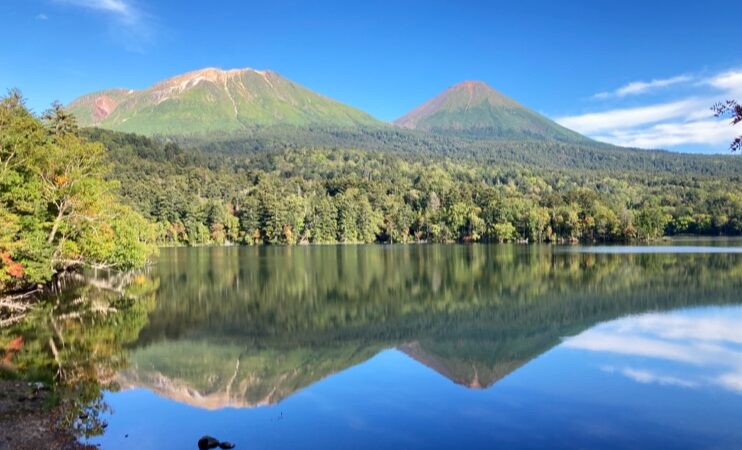
Onneto Viewing Deck: The main viewing spot located on the west side of the lake. From here, you can see an unobstructed view of the lake with both Meakan Dake and Akandake as a backdrop. It’s popular as an ideal place for commemorative photos.
Lakeshore Walking Path: A about 2.5 km walking path is arranged around the lake, allowing you to view the lake from various angles while walking. The appeal is the completely different color tones visible from different locations.
Northern Area: A relatively uncrowded spot where you can quietly view the lake. The composition with Meakan Dake directly in front is beautiful and popular with photography enthusiasts.
Onneto in the Four Seasons | Seasonal Attractions
Onneto reveals different expressions in each of the four seasons, and you can enjoy completely different landscapes depending on when you visit.
Onneto in Spring (May–June)
Onneto in spring, when snow melting progresses, is a season of beautiful contrast between fresh greenery and remaining snow.
In early May, snow may still remain, but gradually green begins to sprout, and the surrounding primordial forest is tinged with pale green. As meltwater flows in, the water volume is abundant with high transparency, making this the period when the most vivid emerald green can be seen.
By June, the fresh greenery becomes deeper, and the season becomes refreshing with the chirping of wild birds. Flowers such as Ezoyamezakura and Ezomurasakitsutsuji begin to bloom, adding a colorful atmosphere.
Spring Highlights: High water transparency from snowmelt, contrast between fresh greenery and remaining snow, bird observation
Onneto in Summer (July–August)
Summer is the season when the most tourists visit. The lake enveloped in deep green shows a vivid contrast between blue and green.
July is when alpine plants are in full bloom, and you can enjoy various flowers along the surrounding walking path. The primordial forest of Akaezomatsu and Todomatsu surrounding the lakeshore is covered in deep green, providing an ideal environment for forest bathing.
August has relatively stable weather, with high clear-weather rates. The mystical sight of morning mist covering the lake surface is a unique charm of this season.
Summer Highlights: Deep green primordial forest, alpine plants, early morning mist, camping and trekking
Onneto in Autumn (September–October)
Autumn is said to be the most beautiful season. The lakeshore adorned with autumn colors creates a spectacular view that overwhelms visitors.
From late September to early October, the peak of autumn colors arrives. Maple, rowan, and birch turn red and yellow, and the autumn leaves reflected on the lake surface are breathtakingly beautiful.
The first snow on Meakan Dake and autumn colors can sometimes be seen at the same time, creating a landscape of contrasting reds, yellows, greens, and whites that is truly spectacular.
Autumn Highlights: Autumn colors and their lake reflections, co-starring with the first snow, excellent visibility due to crisp air
Onneto in Winter (November–April)
During winter, roads are closed, so general tourists cannot visit. However, there are winter-only attractions for advanced visitors using snowshoes or cross-country skis.
The lake surface becomes completely frozen, becoming a silvery white world. The surrounding trees are covered with frost flowers, creating a fantastical winter landscape. In the silence with almost no footprints, you can experience Onneto as a true secret lake.
Winter Highlights: Frozen lake surface, frost flowers, silent snowy landscape (※Roads are closed in winter, general vehicles cannot pass)
Access Methods | How to Get There by Car and Public Transportation
Access to Onneto is most convenient by car, but it is also possible using public transportation.
Access by Car
From Sapporo: Approximately 4 hours 30 minutes (approximately 280 km)
- Approximately 3 hours 30 minutes to Ashoro IC via Dou-Ou Expressway
- Approximately 1 hour from Ashoro IC via National Route 241 (Akan Traverse Road)
- Enter Dodo 949 Onneto Line and approximately 15 minutes
From Kushiro: Approximately 2 hours (approximately 120 km)
- Via National Routes 240 and 241
- The route via Akankoji Hot Spring has good scenery and is recommended
From Obihiro: Approximately 2 hours (approximately 100 km)
- Head north on National Route 241
- Via Ashoro Town to Dodo 949
From Akankoji Hot Spring: Approximately 50 minutes (approximately 40 km)
- Head south on National Route 241
- This is the closest tourist base for access
Parking Information
A free parking lot is arranged at Onneto Lakeshore.
Capacity: Approximately 50 vehicles
Operating Period: Early May to early November (varies depending on snow conditions)
Fee: Free
Facilities: Restroom available (environmentally conscious toilet)
During autumn color season (late September to early October), it gets crowded, so early morning visits are recommended. On weekends and holidays, the lot may be full by around 8:00 a.m.
Access by Public Transportation
There is no direct public transportation to Onneto, so it is necessary to combine the following methods.
Nearest Station: JR Nemuro Main Line “Ikeda Station” or “Obihiro Station”
Bus: Buses to Ashoro Town are operated by Tokachi Bus, but there is no public transportation from Ashoro Town to Onneto.
Taxi: Taxi from Ashoro Town (approximately 30 minutes, approximately 8,000 yen one way)
Sightseeing Tours: Using a sightseeing tour departing from Akankoji Hot Spring or Obihiro is most practical.
Road Conditions and Passable Periods
Dodo 949 Onneto Line is closed during winter.
Passable Period: Typically early May to early November (varies depending on snow conditions)
Winter Closure Period: Mid-November to late April
For details on passable periods, check the latest information on the Ashoro Town Tourism Association or Hokkaido Development Bureau website.
Attractions and Tourist Spots Around Onneto
There are many attractive tourist spots scattered around Onneto to visit together.
Meakan Dake Climbing
Onneto is one of the main trailheads for climbing Meakan Dake.
Climbing Route: Approximately 4 hours from Onneto trailhead to summit
Difficulty: Intermediate level
Elevation: 1,499 m
Points of Interest: Crater lakes unique to active volcanoes, 360-degree panoramic views
The climbing season is from late June to early October. Autumn foliage season (late September to early October) offers particularly beautiful scenery, but it is crowded. Adequate equipment and planning are necessary for climbing.
Onneto Yugashira Falls
A waterfall about 5 minutes by car from Onneto, and a “waterfall where manganese ore deposits are currently being formed,” which is rare worldwide.
Characteristics: Water containing hot spring components flows, and manganese oxide deposits
Walking Path: Approximately 15 minutes on foot from parking lot
Points of Interest: High academic value natural phenomena, quiet waterfall in primordial forest
Around the waterfall, you can observe how manganese ore deposits are being formed. Particularly recommended for those interested in geology.
Onneto Nationally Designated Campground
A campground adjacent to the lakeshore where you can enjoy camping in nature.
Operating Period: Early June to early October
Number of Sites: Approximately 50 tent sites
Fee: 400 yen for adults, 200 yen for elementary and junior high students (per night)
Facilities: Cooking area, restroom, administrative office
The greatest advantage of staying at the campground is being able to have early morning Onneto to yourself. It is also an ideal environment for stargazing.
Meakan Onsen
A secret hot spring located north of Onneto on National Route 241.
Spring Quality: Simple sulfur hot spring
Day-Use Bathing: Possible (varies by facility)
Characteristics: One-inn lodge surrounded by primordial forest
Perfect for stopping by after climbing or hiking. The view of the primordial forest from the wild outdoor bath is exceptional.
Tourist Spots in Ashoro Town
Ashoro Town, the gateway to Onneto, also has points of interest.
Ashoro Town Fossil Museum: Displays valuable fossils including Desmostylus
Onneto Terrace: Viewing platform along Dodo 949
Ashoro Town Tourism Association: Tourist information acquisition, purchase of local specialty products
Onneto Walking Path | Walking Around the Lake
There is an arranged walking path around Onneto Lakeshore, allowing you to walk around the lake.
Overview of the Walking Path
Total Length: Approximately 2.5 km (circumference of lake)
Required Time: Approximately 1 to 1.5 hours walking leisurely
Difficulty: Beginner-friendly (partially unpaved)
Best Season: May–October
The walking path is relatively flat and requires no special equipment, but walking shoes are recommended.
Points of Interest Along the Walking Path
Western Area: Viewing deck with spectacular views of both Meakan Dake and Akandake
Northern Area: Walking through quiet forest, ideal for bird observation
Eastern Area: Place closest to the lake surface, can observe color changes in the water up close
Southern Area: Section with beautiful primordial Akaezomatsu forest
Precautions When Walking
- Wild Animals: This is a habitat area for brown bears. Carry something that makes noise such as a bell or radio
- Clothing: Don’t forget insect repellent and sunscreen measures
- Garbage: Always take it with you (no garbage cans are provided)
- Weather: Bring rain gear to prepare for sudden weather changes
- Restrooms: Use the parking lot restroom in advance (there are none along the walking path)
Practical Information for Onneto Tourism
Business Hours and Fees
Entrance Fee: Free
Viewing Hours: 24 hours (though nighttime is pitch black and dangerous)
Recommended Visiting Hours: From sunrise to sunset
Parking: Free
Restroom and Facility Information
The restroom in the Onneto area has an environmentally conscious toilet (as of fiscal year 2021).
Installation Location: Near parking lot
Type: Environmentally conscious bio-toilet
Usage Period: During road opening period (early May to early November)
Note: Closed during winter
Clothing and Items to Bring
Spring/Autumn: Warm clothing, rain gear, hat, gloves
Summer: Insect repellent spray, sunscreen, hat, drinking water
Year-round: Walking shoes, camera, binoculars (for bird watching)
Best Season and Crowding Situation
Most Beautiful Period: Late September to early October (autumn foliage season)
Most Crowded Period: Weekends and holidays during autumn foliage season
Relatively Quiet Period: Weekdays in June and July
Recommended Visiting Time: Early morning (6:00 a.m. to 8:00 a.m.) avoids crowds and offers beautiful colors
Nearby Accommodation Facilities
Onneto Nationally Designated Campground: Lakeshore campground
Meakan Onsen: About 15 minutes by car, one-inn hot spring
Akankoji Hot Spring: About 50 minutes by car, many accommodations in hot spring town
Ashoro Town: About 30 minutes by car, business hotels, etc.
Dining and Shopping
There are no restaurants or shops around Onneto.
Nearest Dining: Ashoro Town or Akankoji Hot Spring
Vending Machines: None at Onneto
Recommendation: Prepare and bring boxed lunches and beverages in advance
Natural Environment of Onneto and Conservation Activities
As Part of Akan Mashu National Park
Onneto is designated as a special protected area of Akan Mashu National Park, where strict nature conservation is practiced.
Designation Year: 1934 (originally designated as Akan National Park)
Area: Natural recreation forest of Meakan Onneto and surrounding areas
Conservation Targets: Primordial forest, lake ecosystem, wildlife
Primordial Akaezomatsu Forest
Particularly noteworthy in the Onneto area is the primordial Akaezomatsu forest with trees hundreds of years old.
Characteristics: Coniferous tree species unique to Hokkaido
Tree Age: Ancient trees of 200–300 years or older exist
Ecosystem: Habitat for diverse flora and fauna
This primordial forest maintains a valuable natural environment with minimal human intervention and has high academic value.
Wildlife
The Onneto area is a habitat for many wild animals including brown bears, Ezo deer, and Hokkaido foxes.
Main Animals: Brown bears, Ezo deer, Hokkaido fox, Ezo squirrel, Japanese flying squirrel
Birds: White-tailed eagle, black woodpecker, Japanese red woodpecker, etc., approximately 100 species
When encountering wildlife, maintain an appropriate distance and follow proper etiquette such as not feeding animals.
Environmental Conservation Efforts
Ashoro Town and the Ministry of the Environment undertake various initiatives to protect Onneto’s natural environment.
Trash Take-Back Campaign: Garbage cans are removed, and trash take-back is strictly enforced
Introduction of Environmentally Conscious Toilets: Minimizing environmental impact
Proper Maintenance of Walking Paths: Trail development that does not harm nature
Awareness of Proper Usage Etiquette: Information provision through signs and pamphlets
It is important that each of us who visits maintains awareness of protecting this precious natural resource.
Onneto Photography Guide | Information for Photography Enthusiasts
Onneto is one of Hokkaido’s leading photography spots. Here are tips for taking beautiful photographs.
Best Photography Times
Early Morning (Sunrise to 8:00 a.m.): Dramatic scenery of morning mist and sunrise
Around Noon: Vivid colors, contrast with blue sky
Dusk: Fantastical atmosphere illuminated by the setting sun
Cloudy Days: Deep tones, serene atmosphere
Recommended Photography Locations
Viewing Deck: Classic composition with Meakan Dake and Akandake as backdrop
Northern Lakeshore: Majestic Meakan Dake viewed directly from the front
Eastern Walking Path: Composition utilizing lake reflections
Onneto Yugashira Falls: Combination of primordial forest and waterfall
Photography Tips
Polarizing Filter: Suppresses water surface reflections, makes lake colors more vivid
Tripod: Essential for long exposures during early morning and dusk
Wide-Angle Lens: Optimal for capturing grand scenery
Telephoto Lens: Best for Meakan Dake details and bird photography
Seasonal Photography Themes
Spring: Fresh greenery and remaining snow, clear water from snowmelt
Summer: Deep green and blue sky, early morning mist
Autumn: Mirror image of autumn foliage, co-starring with first snow
Winter: Frozen lake surface, frost flowers (difficult access)
Frequently Asked Questions
Is there an entrance fee for Onneto?
No, viewing Onneto is free. The parking lot is also available for free use. However, if you use surrounding campgrounds or hot spring facilities, separate charges apply.
Can you visit Onneto in winter?
The road to Onneto (Dodo 949 Onneto Line) is typically closed during winter from mid-November to late April. General vehicle visits are not possible. It is possible to visit on foot with snowshoes, but this is for advanced users and requires adequate equipment and experience.
How long does Onneto sightseeing take?
If you just enjoy the view from the viewing deck, about 30 minutes is sufficient. If you walk the lakeshore walking path, allow 1.5 to 2 hours. It is recommended to allow a half-day if including photography and surrounding attractions.
When is the autumn foliage season?
Late September to early October is typically the peak for autumn colors. However, this varies depending on the year’s weather. The latest autumn foliage information can be checked on the Ashoro Town Tourism Association website or social media.
Is there danger of encountering a brown bear?
The Onneto area is a brown bear habitat. When walking, it is recommended to carry something that makes noise such as a bell or radio and to travel in groups. Extra caution is needed during early morning and dusk. If there are bear sighting reports, follow the signs and instructions of on-site personnel.
Can you enjoy Onneto on rainy days?
Yes, rainy Onneto also has unique charm. The mystical atmosphere of mist-covered lakes and the deep green of rain-soaked primordial forests offer a different beauty than clear weather. However, be very careful of footing as walking paths become slippery.
Can you camp at Onneto?
Yes, there is Onneto Nationally Designated Campground at the lakeshore, where camping is available from early June to early October. The appeal is being able to have early morning Onneto to yourself. Reservations are not required, but the autumn foliage season gets crowded.
Which is better, Lake Akan or Onneto?
Both are appealing, but they have different characteristics. Lake Akan has a hot spring town with many tourism facilities, while Onneto offers the quiet atmosphere of a secret lake and pristine nature. If you have time, visiting both is recommended. Since they are about 50 minutes apart by car, it’s possible to visit both in a day.
Conclusion | Making the Most of Onneto’s Charm
Onneto is a miracle lake created by Hokkaido’s magnificent nature. The lake surface, which constantly changes color depending on season, weather, and time of day, offers new discoveries no matter how many times you visit.
The quiet environment surrounded by primordial forest at the foot of Meakan Dake allows you to forget daily bustle. From spring’s fresh greenery to summer’s deep green, autumn’s fall colors, and winter’s silence, Onneto displays different expressions in each season and can be called Hokkaido’s premier scenic spot.
While access requires considerable time, the drive is itself a charming course showcasing Hokkaido’s grand scenery. Creating an itinerary that combines Akankoji Hot Spring and Ashoro Town will make for a richer Hokkaido trip.
To preserve this precious natural environment, remember to follow proper etiquette when visiting, and never forget to take garbage with you and show consideration for wildlife. Preserving this beautiful landscape for future generations is the responsibility of us visitors.
Please experience the spectacular views and quiet moments that the mysterious lake Onneto and Hokkaido’s magnificent nature offer. It will surely become an unforgettable memory.