Tachimata Gorge, Akita Prefecture | Complete Guide to Kobeé Falls, First Falls, and Second Falls [Latest 2024]
Tachimata Gorge (tachimata keikou), located in Kita-Akita City, Akita Prefecture, is a gorge with an elevation difference of 300 meters that developed on the west slope of Bunamori (elevation 1,015m), sourced from the Sado Wetland. Three renowned waterfalls cascade through its columnar jointed rock walls: the First Falls, the beautifully tiered Second Falls, and the magnificent Kobeé Falls with its 108-meter drop—Akita Prefecture’s largest—creating breathtaking scenery during the fresh green and autumn foliage seasons.
This article comprehensively covers everything you need to know before visiting Tachimata Gorge, from its attractions and specific access methods, trekking routes, best seasons, and surrounding information.
Overview and Characteristics of Tachimata Gorge
Tachimata Gorge is a nature-rich gorge located in the southeastern part of Kita-Akita City, Akita Prefecture, and is among the most popular areas in the tourism spots around Mori-Yoshiyama. The gorge’s name originates from Tachimata Stream, a tributary of the Uchiate River.
Geographic Features
This gorge, which developed like a folding screen on the west slope of Bunamori, is characterized by columnar jointing formed by volcanic activity. Three waterfalls cascade along the 300-meter elevation difference, each presenting a different appearance. The gorge is surrounded by deciduous broadleaf trees including Japanese beech, maple, and rowan, allowing visitors to enjoy seasonal scenery throughout the year.
Relationship with National Natural Monument Designation
The upper reaches of Tachimata Gorge are dominated by beautiful Japanese cedar groves called Momohora and Sado Sugi. These cedars are designated as a National Natural Monument, with many ancient trees exceeding 300 years old. When visiting Tachimata Gorge, you can also enjoy these precious natural heritage sites.
Three Celebrated Waterfalls of Tachimata Gorge
The greatest charm of Tachimata Gorge lies in its three distinctive waterfalls. Let us examine each in detail.
First Falls (Ichinotaki)
The first waterfall appears after approximately 10 minutes of walking from the parking lot.
Features:
- Drop: 38 meters
- Type: Straight waterfall descending columnar jointing
- Highlights: Contrast between geometric patterns of rock walls and white water flow
First Falls flows down a rock wall where hexagonal rock columns called columnar jointing are arranged in regular patterns, allowing visitors to observe the natural artistry up close. The area around the waterfall basin is relatively spacious and can be used as a resting spot. During the fresh green season, the surrounding greenery is vibrant, while in autumn the red and yellow leaves add color to the waterfall.
Second Falls (Ninotaki)
After detouring around First Falls and walking for approximately 30 minutes, you reach Second Falls.
Features:
- Drop: 20 meters
- Type: Tiered waterfall with stepped formation
- Highlights: Elegant movement of flowing water
Second Falls is a beautiful tiered waterfall where water cascades step by step. In contrast to the powerful impression of First Falls, it presents an elegant and delicate image. During periods of abundant water flow, mist rises from each step, and rainbows may be visible depending on the light. The area around the falls is rocky and popular as a photography spot.
Kobeé Falls (Kobeédaki)
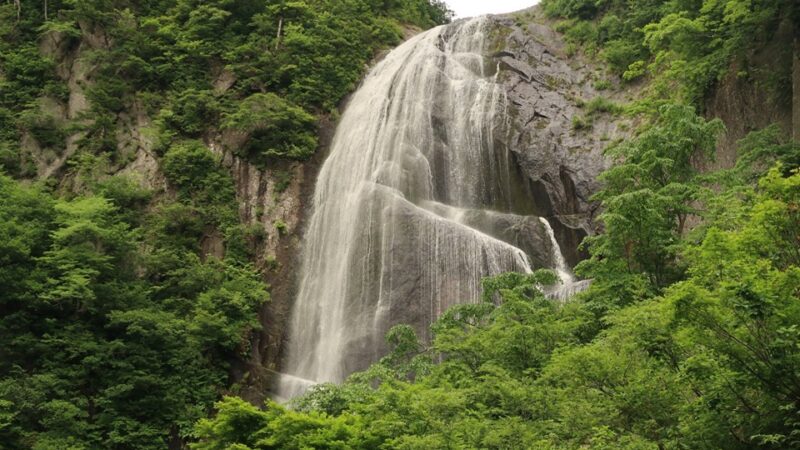
After climbing a steep slope through Japanese beech forest from Second Falls for approximately 20 minutes, you reach an observation platform where Kobeé Falls, the highlight of Tachimata Gorge, comes into view.
Features:
- Drop: 108 meters (Akita Prefecture’s largest)
- Type: Cascading waterfall down rocky slopes
- Highlights: Grand yet graceful water flow
Kobeé Falls is distinct from vertically plunging waterfalls; instead, it flows gently down the mountainside like a caress. With a drop of 108 meters, it boasts the largest in Akita Prefecture and can be felt to be majestic even from a distance. The observation platform provides a complete view of the waterfall, and especially during autumn foliage season, a spectacular scenery unfolds with the surrounding mountains and waterfall interwoven.
The waterfall’s name is said to originate from a person named Kobeé who once engaged in ascetic practice in this area.
Charm of the Autumn Foliage Season
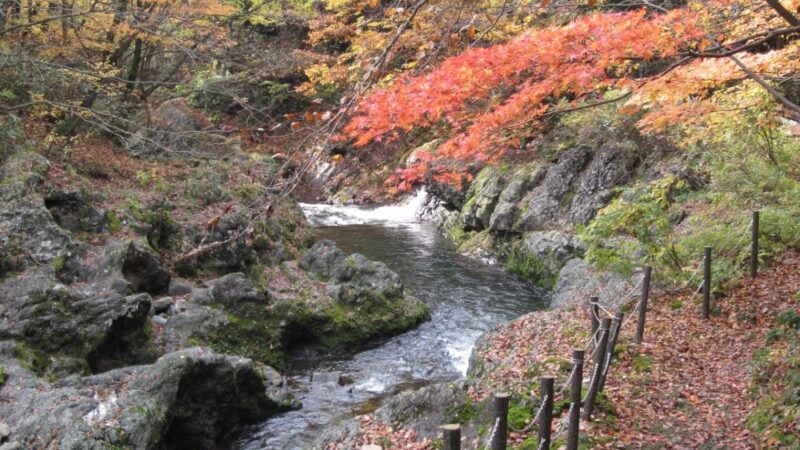
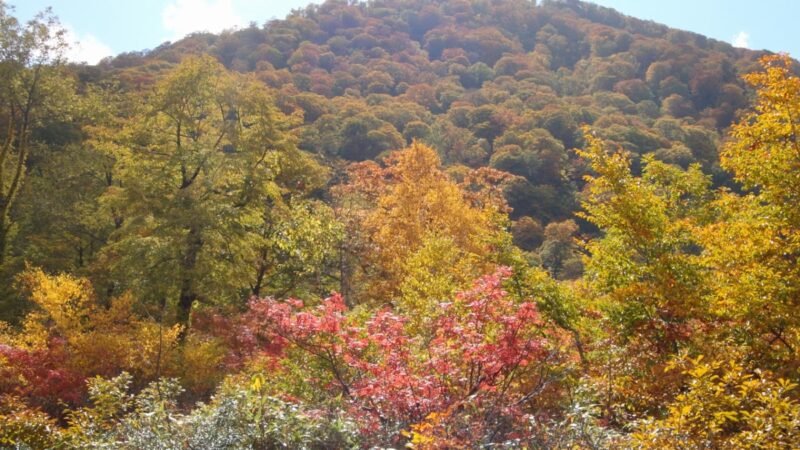
Tachimata Gorge is known as one of Akita Prefecture’s premier autumn foliage viewing destinations.
Best Period for Autumn Foliage
Peak Season: Mid-October to Late October
Due to the elevation difference, foliage progression varies by location, allowing you to enjoy autumn colors for an extended period. Generally, the foliage front begins at higher elevations around Kobeé Falls and gradually moves downstream.
Tree Species with Autumn Color
Main tree species showing autumn colors around Tachimata Gorge:
- Japanese beech: Yellow to orange
- Maple species: Vivid red
- Rowan: Deep crimson
- Mongolian oak: Brownish
- Poison sumac: Crimson
The colorful autumn foliage created by these species, combined with the white water flow and gray rock surfaces, forms a true masterpiece created by nature.
Autumn Foliage Photography Tips
- Morning photography recommended: Light quality is best, allowing beautiful photography of both waterfalls and foliage
- Full view from observation platform: From Kobeé Falls’ observation platform, you can see both the waterfall and surrounding foliage
- Around waterfall basins: Around First and Second Falls’ basins, you can photograph foliage reflected in the water
- Along walking trails: Photography spots are scattered along the trekking routes
Enjoying the Fresh Green Season
Beyond autumn foliage, the fresh green season at Tachimata Gorge is equally worthwhile.
Best Period for Fresh Green
Peak Season: Late May to Mid-June
Just after winter closure is lifted during this period, freshly sprouted young leaves shine in vibrant yellow-green, with the entire gorge brimming with vitality.
Characteristics of the Fresh Green Period
- Abundant water flow from snowmelt
- Increased waterfall power
- High forest bathing effects
- Less crowding
- Sounds of bird songs
Access Information
Detailed explanation of access methods to Tachimata Gorge.
Access by Car
From the Tohoku Expressway:
- Approximately 2 hours 20 minutes from Morioka IC
- Approximately 1 hour 30 minutes from Kazuno Hachimantai IC
Specific Route:
- Head north on National Route 105 toward Kita-Akita City
- From near Michi-no-Eki (Station) “Ani,” head east on Prefectural Route 308 for approximately 10 km
- Arrive at Tachimata Gorge entrance parking lot
Access by Public Transportation
Using Akita Nairiku Jukan Railway:
- Get off at Ani Matagi Station
- Approximately 30 minutes by car from the station (taxi required)
Notes:
Access by public transportation is inconvenient, so rental car use is recommended. If using a taxi, advance reservation is advised.
Parking Information
Tachimata Gorge Entrance Parking Lot:
- Parking spaces: Approximately 20
- Fee: Free
- Restroom: Available
- Open season: Late May to Mid-November
The parking lot may be full on weekends during autumn foliage season, so early morning arrival is recommended.
Trekking Routes and Time Required
Visiting the waterfalls of Tachimata Gorge constitutes a moderate exercise trekking course.
Basic Route
Parking Lot → First Falls → Second Falls → Kobeé Falls Observation Platform → Parking Lot (Round Trip)
Time Required by Section:
- Parking Lot → First Falls: Approximately 10 minutes (one way)
- First Falls → Second Falls: Approximately 30 minutes (one way)
- Second Falls → Kobeé Falls Observation Platform: Approximately 20 minutes (one way)
- Observation Platform → Parking Lot: Approximately 50 minutes (descent)
Total Time Required: Approximately 2.5-3 hours (including rest breaks)
Route Difficulty Level
Difficulty: Intermediate
- To First Falls: Beginner (well-maintained walking trail)
- To Second Falls: Intermediate (some steep sections)
- To Kobeé Falls: Intermediate to Advanced (steep switchback ascent)
Particularly from Second Falls to Kobeé Falls observation platform, consecutive steep uphill sections require considerable physical fitness.
Trekking Precautions
- Clothing and Equipment:
- Trekking shoes or non-slip footwear
- Comfortable, flexible clothing
- Rain gear (weather changes readily)
- Drinking water and provisions
- Insect repellent spray (summer)
- Safety Measures:
- Avoid traveling alone
- Confirm cell phone charge (weak signal in some areas)
- Plan with time to spare
- Do not proceed in bad weather
- Manners:
- Always carry trash away
- Do not pick plants
- Do not enter areas outside designated routes
- Do not feed wildlife
Available Periods and Winter Closure
Open Season
Late May to Mid-November
Specific opening dates vary depending on snow conditions, so it is recommended to confirm with Kita-Akita City Tourism Information Center or related facilities before visiting.
Winter Closure Period
Mid-November to Late May
During this period, heavy snow prevents entry into Tachimata Gorge. Roads are not cleared for snow removal, making access impossible.
Methods to Confirm Opening Status
- Kita-Akita City Tourism Information Center: 0186-62-1851
- Kita-Akita City Website
- Check for latest information at Michi-no-Eki “Ani”
Nearby Attractions
Attractions you can enjoy together when visiting Tachimata Gorge.
Momohora and Sado Sugi
Located upstream of Tachimata Gorge, this National Natural Monument features ancient Japanese cedar groves with magnificent trees exceeding 300 years old. While accessible on foot from Tachimata Gorge, round-trip travel requires 4-5 hours, necessitating a well-planned schedule.
An Falls (Annotaki)
A renowned waterfall with a 108-meter drop on Nakano Mata Stream before Tachimata Gorge. Accessible by a 5-minute walk from the parking lot, many visitors combine it with Tachimata Gorge.
Mori-Yoshiyama
A mountain at 1,454 meters elevation offering alpine plants in summer, autumn foliage in fall, and frost flowers in winter. Accessible via gondola, allowing easy enjoyment of alpine nature.
Michi-no-Eki “Ani”
A roadside station serving as the gateway to Tachimata Gorge. Local specialties and meals are available, along with tourism information. Exhibits on Matagi culture are also displayed.
Uchiate Hot Spring Matagi-no-Yu
A day-use hot spring facility approximately 20 minutes by car from Tachimata Gorge. Perfect for soothing tired bodies after trekking.
Nearby Accommodations
Accommodations near Tachimata Gorge are limited, so advance reservations are recommended.
Accommodations in Kita-Akita City
Mori-Yoshiyama Lodge:
- Approximately 40 minutes by car from Tachimata Gorge
- Hot spring available
- Cuisine using local ingredients is popular
Uchiate Hot Spring Matagi-no-Yu:
- Approximately 20 minutes by car from Tachimata Gorge
- Day-use bathing also available
- Accommodation without meals option available
Ani District Inns:
- Multiple accommodations where Matagi culture can be experienced
- Homey atmosphere
Accommodations in Takanosu and Odate Areas
Takanosu and Odate, approximately one hour by car from Tachimata Gorge, have numerous business hotels and hot spring inns. An early departure plan to visit Tachimata Gorge is also recommended.
Best Season and Recommended Visiting Periods
Autumn Foliage Season (Mid-October to Late October)
Most Highly Recommended Period
- Merits: Most beautiful scenery, optimal for photography
- Drawbacks: Crowding, parking lot may reach capacity
- Recommended visit days: Weekday early mornings
Fresh Green Season (Late May to Mid-June)
Hidden Gem Period
- Merits: Less crowding, abundant water flow, excellent for forest bathing
- Drawbacks: Insects abundant, unstable weather
- Recommended visit days: Weekends after several consecutive sunny days
Summer Season (July to August)
Period for Seeking Coolness
- Merits: Cool temperatures, deep green foliage, stable weather
- Drawbacks: Abundant insects, sometimes reduced water flow
- Recommended visit days: Early morning or evening
Early Autumn (September)
Period for Peaceful Enjoyment
- Merits: Less crowding, cool temperatures, fewer insects
- Drawbacks: Foliage coloring not yet advanced
- Recommended visit days: Weekdays avoiding holiday periods
History and Culture of Tachimata Gorge
Connection with Matagi Culture
The Tachimata Gorge area has long been an activity area for Matagi (traditional hunters). Kobeé, who gave his name to Kobeé Falls, is said to have been a Matagi or a person engaging in mountain asceticism. The nearby Ani district retains strong Matagi culture, where history can be learned at facilities like Matagi museums.
Connection with Momohora and Sado Sugi
The beautiful Japanese cedar groves of Momohora and Sado Sugi spreading upstream of Tachimata Gorge were designated as a National Natural Monument in 1921 (Taisho 10). These ancient trees once faced logging threats but have been protected through local conservation efforts, forming precious natural heritage.
Photography Guide
Photography Spots
First Falls:
- Photograph columnar jointing and waterfall together from the basin’s front
- Capture full view with wide-angle lens
- Emphasize waterfall height with vertical composition
Second Falls:
- Find angles emphasizing the stepped water flow
- Express water movement through slow shutter
- Be conscious of contrast with surrounding rocks
Kobeé Falls:
- Photograph waterfall details with telephoto lens from observation platform
- Capture surrounding mountains and waterfall together with wide-angle lens
- During foliage season, balance waterfall and foliage considerations
Photography Tips
- Tripod use: Essential for photographing beautiful waterfall flow
- ND filter: Effective for slow shutter capability even during daytime
- Polarizing filter: Suppresses water surface reflection, enhances foliage colors
- Early morning and evening: Soft light enables beautiful photography
- After rain: Increased water flow allows powerful waterfall photography
Nature Observation Points
Plants
Various plants can be observed around Tachimata Gorge according to elevation.
Lower Elevation Areas:
- Japanese beech, Mongolian oak, maple species
- Mountain wildflowers in spring such as dogtooth violet and Chionographis japonica
Higher Elevation Areas:
- Veitch fir, Tsuga diversifolia
- Wetland plants (around Sado Wetland)
Birds
- Blue-and-white flycatcher, Narcissus flycatcher (summer visitors)
- Great tit, Eurasian nuthatch (resident birds)
- Great spotted woodpecker, Japanese green woodpecker (woodpecker species)
- Crested serpent eagle (raptors)
Animals
- Japanese serow (Special Natural Monument)
- Asiatic black bear (caution required)
- Japanese squirrel
- Japanese dormouse
Bear Countermeasures:
Tachimata Gorge is an Asiatic black bear habitat. Carrying a bear bell during trekking and traveling in groups is recommended.
Basic Information Summary
Name: Tachimata Gorge (tachimata keikou)
Location: Kita-Akita City, Akita Prefecture
Main Attractions:
- First Falls (38-meter drop)
- Second Falls (20-meter drop)
- Kobeé Falls (108-meter drop)
Usage Period: Late May to Mid-November
Time Required: Round trip 2.5-3 hours
Parking: Available (free, approximately 20 spaces)
Restroom: Available at parking lot
Admission: Free
Difficulty Level: Intermediate
Inquiries:
- Kita-Akita City Tourism Information Center: 0186-62-1851
- Kita-Akita City Tourism Department: 0186-62-6618
Pre-Visit Checklist
Advance Preparation
- [ ] Confirm open season (note winter closure)
- [ ] Check weather forecast
- [ ] Prepare trekking shoes
- [ ] Prepare rain gear
- [ ] Prepare drinking water and provisions
- [ ] Prepare insect repellent spray (summer)
- [ ] Prepare bear bell
- [ ] Prepare camera and tripod (if photographing)
- [ ] Reserve accommodations (if necessary)
- [ ] Confirm gasoline level (few gas stations nearby)
Day-of Confirmation
- [ ] Confirm parking lot opening status
- [ ] Final weather confirmation
- [ ] Health check
- [ ] Confirm cell phone charge
- [ ] Confirm departure time (descend before sunset)
Summary
Tachimata Gorge is a natural treasure of Akita Prefecture. It boasts diverse attractions including three celebrated waterfalls led by the 108-meter Kobeé Falls, autumn foliage from mid-October to late October, and beautiful fresh greenery.
The round-trip trekking from the parking lot to Kobeé Falls observation platform requires 2.5-3 hours, with the First and Second Falls encountered along the way being equally impressive. While the steep climb from Second Falls to Kobeé Falls requires physical fitness, the magnificent sight of Kobeé Falls from the observation platform makes the effort worthwhile.
When visiting, confirm the facility is open during the late May to mid-November period and trek with appropriate equipment. The autumn foliage season is crowded, so early morning or weekday visits are recommended. Additionally, combining visits with nearby Momohora and Sado Sugi, An Falls, and Mori-Yoshiyama allows deeper experience of Kita-Akita’s abundant nature.
Tachimata Gorge continues to inspire visitors as a representative natural landscape of Akita Prefecture. Please visit this wonderful gorge at least once and experience the beauty of natural formations firsthand.