Mase Gorge, Akita Prefecture | Complete Guide to the Autumn Leaves of Sanjukama and the Spectacular Scenery of Potholes
Mase Gorge, located in Hachimine Town, Yamamoto District, Akita Prefecture, is a scenic area boasting some of the most beautiful gorge scenery in northeastern Japan, formed by the Mase River, which originates from the Shirakami Mountains, over a long period of time. In particular, the group of potholes known as “Sanjukama” (Thirty Pots) is renowned as a natural artwork created by massive basalt rocks and clear streams, and during autumn foliage season, it attracts many photographers and tourists.
This article provides comprehensive explanations of everything you need to know before visiting Mase Gorge, including its main attractions, practical access information, best seasons, photography spots, and nearby facilities.
What is Mase Gorge | A Spectacular Gorge Nurtured by the Shirakami Mountains
Geographical Features and Geological History
Mase Gorge was formed by the Mase River, which originates from Masedake (elevation 987.7 m), located on the border between Akita and Aomori prefectures. Three ravines—Ichinonota, Nakanonota, and Sannonota—converge about 3 kilometers upstream from the mouth and merge to form the Mase River, which flows into the Sea of Japan.
Particularly notable is the unique location of this gorge, situated only a few hundred meters from the coastline. Water flowing down steep slopes from the mountainous areas of the Shirakami Mountains intensely carves out a riverbed of basalt, Sobari andesite, and tuffaceous breccia, creating distinctive gorge scenery.
Attractions at Hachimine Shirakami Geopark
Mase Gorge is designated as one of the important geosites of Akita Prefecture’s Hachimine Shirakami Geopark. The terrain created by steep rock faces and intense water flow is a valuable natural heritage where one can physically feel the workings of the Earth. The entire gorge is enveloped in deep mountain wilderness, presenting different faces in each of the four seasons.
Sanjukama | The Gorge’s Greatest Attraction
What are Potholes (Ouketsu)?
Sanjukama is the most famous scenic spot in Mase Gorge, featuring countless potholes extending over approximately 1.5 kilometers. Potholes are circular holes carved out by rapid currents in rocks. They form over long periods as small stones carried by water flow rotate continuously in the same spot, gradually eroding the bedrock.
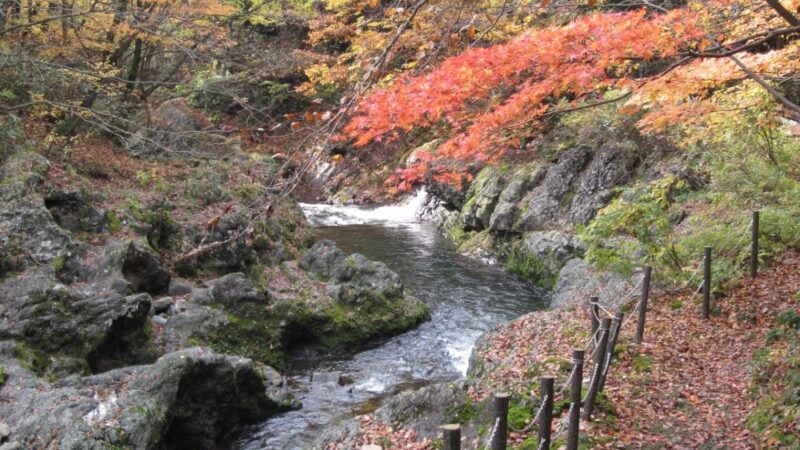
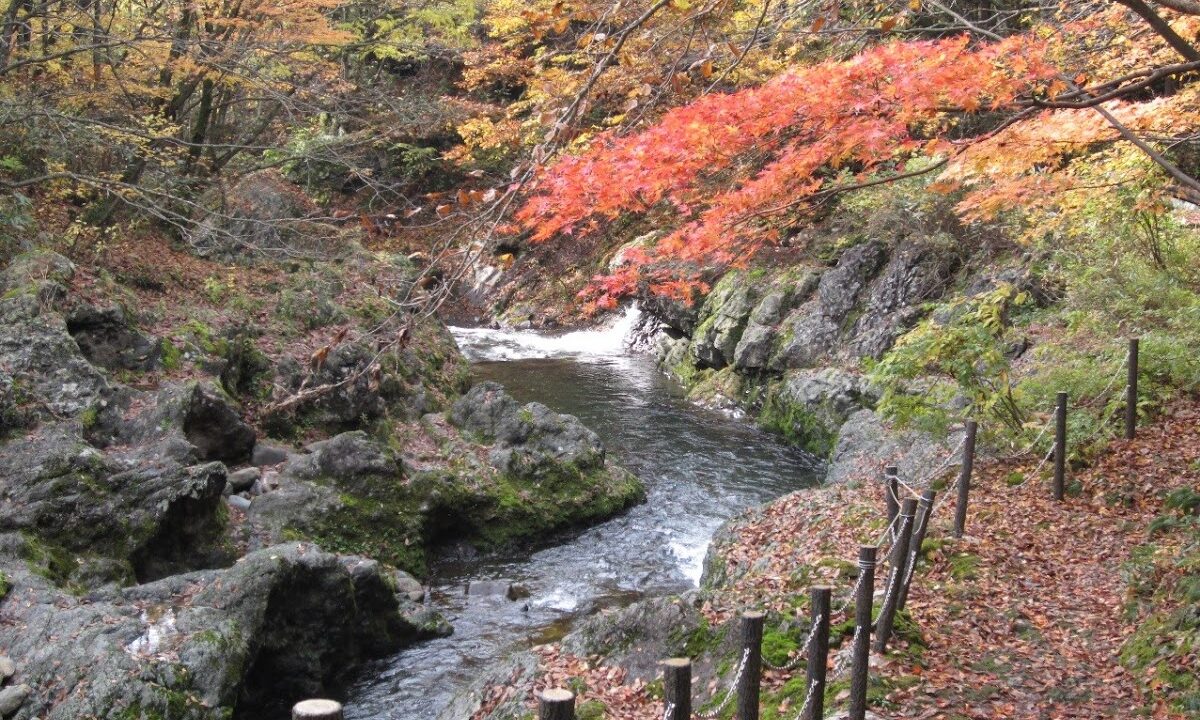
At Sanjukama, small waterfalls and plunge pools alternate continuously, offering varied gorge scenery. Clear streams flowing between massive basalt rocks and curious rock formations create landscapes that resonate deeply in the viewer’s heart.
Condition of Walking Trails
Sanjukama has well-maintained walking trails where one can easily enjoy the gorge scenery. Its proximity to National Route 101 ensures good accessibility. The trail is developed as the “Sanjukama Course” starting from the Morimori Bunakko Land parking area, and can be completed in about one hour even if you walk slowly and stop to take photographs.
The footpaths are relatively well-maintained, but as they are natural trails along the gorge, visitors are recommended to wear comfortable clothing and non-slip shoes.
Autumn Foliage in Mase Gorge | One of Northeastern Japan’s Premier Fall Foliage Spots
Peak Season and Characteristics of Autumn Foliage
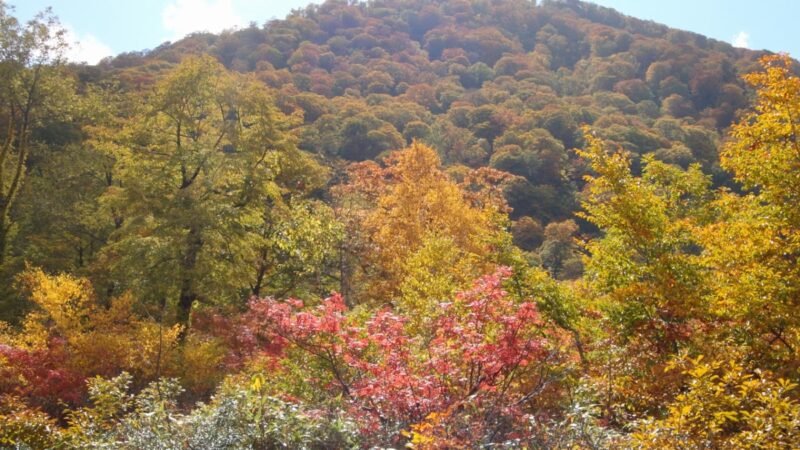
Mase Gorge’s autumn foliage typically peaks from early to mid-October. The contrast between the black basalt rocks and the foliage of maples and beeches is exquisite, captivating many photographers.
Particularly in the Sanjukama area, the foliage reflected in the potholes and the combination of clear streams and autumn leaves are beautiful, with many photography enthusiasts gathering during peak foliage season. The foliage along the forest road that runs toward the Shirakami Mountains area while keeping Mase Gorge on the left is also known as spectacular scenery.
Crowds During Foliage Season
The busiest periods are expected on weekends in mid-October, particularly on clear days. Early morning (around 7:00 AM to 9:00 AM) is relatively quiet, allowing photography of foliage illuminated by morning light, so early morning visits are recommended for those aiming to take photographs. Weekdays see fewer visitors than weekends, allowing for more leisurely exploration.
Appeal of the New Foliage Season
Beyond autumn foliage, the new foliage season from May to June is not to be missed. The contrast between vibrant young green leaves and clear streams offers a fresh beauty distinct from autumn. This season has fewer tourists and is a hidden gem for quietly enjoying nature.
Access Information | How to Get to Mase Gorge
Access by Car
From the Noshiro Area
- Head north along Route 101 along the coast
- Follow signs for the Mase area after entering Hachimine Town
- Travel time: approximately 40 minutes from Noshiro city center
From the Odate Area
- Head north on Route 7, then to Route 101 in Noshiro
- Then proceed as above
- Travel time: approximately 1 hour 30 minutes from Odate city center
From Akita City
- Take the Akita Expressway to Noshiro South IC
- Head to Hachimine Town via Routes 7 and 101
- Travel time: approximately 2 hours from Akita city center
Parking Information
A free parking area is available at Morimori Bunakko Land. Approximately 30 regular vehicles can be parked, and during peak foliage season, the lot may fill up. In such cases, nearby temporary parking spaces are available.
From the parking area to the entrance of the Sanjukama trail is very close, making access extremely convenient.
Access by Public Transportation
Public transportation access is limited. The nearest station is Morimori Station on the JR Gono Line, but it is about 8 kilometers from Mase Gorge, and bus service is infrequent, making taxi use practical. A taxi ride from Morimori Station takes approximately 15 minutes, with fares around 2,500 yen one way.
During tourist season, Hachimine Town may operate sightseeing or shuttle buses, so it is recommended to confirm in advance with the Hachimine Town Tourism Association.
Photography Spots and Camera Setting Tips
Recommended Photography Points
1. Sanjukama Pothole Group
Large potholes in the middle section of the trail are ideal photography spots where autumn foliage reflects on the water surface. Early mornings with no wind are particularly recommended.
2. Small Waterfalls and Autumn Foliage Collaboration
Several small waterfalls line the trail, allowing photography of flowing water and autumn foliage together. Using slow shutter speeds to express water flow creates impressive photographs.
3. Basalt Boulders and Clear Streams
The three-color contrast of black basalt, transparent clear streams, and autumn foliage is beautiful.
Best Timing for Photography
- Early morning (7:00 AM–9:00 AM): Morning light illuminates foliage beautifully. Fewer people allow concentrated shooting.
- Cloudy days: In gorge photography, soft overcast light beautifully expresses the texture of rock faces and water surfaces.
- After rain: Wet rocks appear black and shiny, foliage appears deeper in color. Increased water volume creates powerful photographs.
Camera Setting Advice
- Wide-angle lens: 16-35mm wide-angle lens is ideal for capturing the entire gorge atmosphere
- Telephoto lens: 70-200mm telephoto lens is effective for capturing details of potholes and waterfalls
- Polarizing filter: Reduces water surface reflections and expresses foliage colors vividly
- Tripod: Essential for slow shutter photography. The gorge is dark, making handheld shooting difficult in some cases
Walking Courses and Required Time
Sanjukama Course (For Beginners)
Distance: approximately 1.5 km (round trip)
Required time: 40 minutes to 1 hour
Difficulty: Beginner
Starting from the Morimori Bunakko Land parking area, this course follows well-maintained trails. It efficiently covers major potholes and waterfalls, making it ideal for first-time visitors and families. Even walking slowly while taking photographs requires about one hour to complete the circuit.
Mase Gorge Forest Road Course (For Intermediate Level)
Distance: approximately 5 km (one way)
Required time: 2 to 3 hours
Difficulty: Intermediate
This course proceeds from Sanjukama along a forest road toward the Shirakami Mountains. The road along the gorge is known as a foliage destination, allowing deeper immersion in nature. While the road is passable by car, hiking through and experiencing nature is also recommended. However, caution is necessary if bear sightings have been reported.
Precautions During Walks
- Clothing: Comfortable clothing and non-slip shoes (trekking shoes recommended)
- Supplies: drinking water, light snacks, rain gear, insect repellent spray (in summer)
- Bear precautions: Carry a bear bell; walking in groups is recommended
- Weather confirmation: Check weather information in advance; postpone visits if bad weather is expected
Salmon Runs | A Hidden Autumn Attraction
Salmon runs can be observed at Mase Gorge from October through November. The sight of salmon ascending the Mase River from the Sea of Japan is cherished as an autumn spectacle by local residents.
In shallow areas near Sanjukama, it is sometimes possible to observe salmon ascending to spawn up close. The ability to enjoy both autumn foliage and salmon runs simultaneously is a charm unique to Mase Gorge.
Utilizing Hachimine Town Shirakami Guides
Guide Tour Contents
Hachimine Town offers guide tours led by “Hachimine Town Shirakami Guides,” locals knowledgeable about nature and history. Walking with a guide allows learning about the geological features of Mase Gorge, animal and plant ecology, and regional history and culture—information individuals might miss.
Reservation Methods and Fees
Guide tours require advance booking. Reserve by phone or email with the Hachimine Town Tourism Association or the Hachimine Town Office’s Industrial Promotion Division.
Contact: Hachimine Town Tourism Association (within Hachimine Town Office’s Industrial Promotion Division)
Fee: Varies depending on group size and duration; confirm when booking
Duration: Courses of 1.5 to 3 hours are available
Guide fees are relatively reasonable, and small groups are accommodated. Particularly recommended for first-time visitors or those wishing to understand Mase Gorge more deeply.
Nearby Facilities and Places to Visit
Morimori Bunakko Land
The base facility for Mase Gorge exploration. Displays introduce the nature and culture of the Shirakami Mountains, allowing visitors to learn about Mase Gorge’s formation and ecosystem. Rest spaces and restrooms are available, making it ideal for breaks before and after exploration.
Operating hours: 9:00 AM–5:00 PM (subject to seasonal variation)
Closed: Mondays (or the next day if Monday is a holiday), year-end and New Year holidays
Admission: Free
Morimori Isaribi Onsen Hatahata-kan
A day-use hot spring facility approximately 15 minutes by car from Mase Gorge. Its open-air bath overlooking the Sea of Japan is popular, perfect for relaxing after gorge exploration. A dining area serves meals using local seafood.
Operating hours: 10:00 AM–9:00 PM
Bath fee: Adults 500 yen, children 250 yen
Spring quality: Sodium chloride spring
Michi no Eki Minehama
A roadside station along Route 101, approximately 20 minutes by car from Mase Gorge. Local agricultural and marine products and specialty items are sold. Processed hatahata products and Shirakami Mountains wild vegetables offer souvenirs unique to Hachimine Town.
Practical Advice for Visiting Mase Gorge
Best Season and When to Visit
For autumn foliage: Early to mid-October
For new foliage: Late May through mid-June
For salmon runs: Late October through early November
To avoid crowds: Weekday early mornings or new foliage season
Clothing and Packing Checklist
Essential Items
- Comfortable clothing (long sleeves and pants recommended)
- Trekking shoes or non-slip footwear
- Drinking water
- Towel
- Camera or smartphone
Helpful Items
- Rain gear (folding umbrella or rain wear)
- Hat
- Insect repellent spray (spring through fall)
- Bear bell
- Tripod (for photography)
- Binoculars (for bird watching or viewing distant scenery)
Operating Hours and Admission Fees
Mase Gorge itself is a natural gorge with no set operating hours or admission fees. It is freely accessible 24 hours, though daytime visits are recommended for safety. Visiting during Morimori Bunakko Land’s operating hours (9:00 AM–5:00 PM) allows use of restrooms and rest facilities, which is convenient.
Weather and Flood Precautions
Gorges are susceptible to weather conditions. After heavy rain or typhoons, trails may become dangerous due to swelling. Check weather forecasts before visiting and postpone visits if bad weather is expected.
The Akita Prefecture or Hachimine Town official websites and tourism association SNS may provide information about trail conditions and precautions, so check in advance.
Charm of Hachimine Town and Nearby Spots Worth Visiting
As a Gateway to Shirakami Mountains
Hachimine Town is one of the gateways to the Shirakami Mountains, a UNESCO World Natural Heritage site. Combining visits to Mase Gorge with other areas of the Shirakami Mountains allows deeper experience of nature’s appeal.
Scenic Sea Views and Marine Delicacies
Facing the Sea of Japan, Hachimine Town features beautiful coastlines as another attraction. Several locations are known as sunset viewing spots, and planning to view sunsets over the Sea of Japan after Mase Gorge exploration is recommended.
Additionally, as the production area of “hatahata,” Akita Prefecture’s representative fish, fresh hatahata cuisine can be enjoyed during winter.
Tsubaki Coast
Approximately 30 minutes by car from Mase Gorge, Tsubaki Coast is known as a natural habitat of Japanese camellias. In spring, red camellia flowers bloom profusely along the coast, creating beautiful scenery with contrasts between the blue of the Sea of Japan and red camellias.
Geological Value and Educational Significance
Pothole Formation Mechanisms
The potholes seen at Sanjukama in Mase Gorge are geologically extremely valuable landforms. Small stones carried by rapid currents enter depressions in the bedrock and, through continuous rotation by water flow, carve out circular holes over thousands to tens of thousands of years.
At Sanjukama, potholes of various sizes are formed continuously, offering an excellent teaching material for observing river erosion.
Types and Characteristics of Rocks
Rocks forming Mase Gorge are primarily basalt, Sobari andesite, and tuffaceous breccia. These volcanic rocks tell the story of this region’s volcanic activity history. Black basalt is hard and erosion-resistant, forming its distinctive rock face.
Use in School Education and Research
As part of the Hachimine Shirakami Geopark, Mase Gorge is utilized as an educational field for local schools and university research. It is a valuable location where nature can be studied from diverse angles—landform formation, ecosystems, and water quality.
Mase Gorge Through the Four Seasons | Seasonal Ways to Enjoy It
Spring (April–June)
With snowmelt, water volume increases, and the stream’s power intensifies. From late May through June, new foliage is beautiful, with vibrant young green leaves and clear streams creating a refreshing contrast. Spring wildflowers are also visible, making the season recommended for those wishing to quietly enjoy nature.
Summer (July–August)
The gorge enveloped in deep green becomes a retreat for those seeking coolness. Even in midsummer, the gorge interior remains relatively cool, and the sound of clear streams offers soothing relaxation. However, insects are abundant during this season, so insect repellent measures are essential.
Autumn (September–November)
Mase Gorge’s most radiant season. Autumn foliage from early to mid-October is spectacular, attracting many tourists. From late October, salmon runs are also visible, allowing one to feel autumn’s natural workings.
Winter (December–March)
Snow accumulation makes trail access difficult, making it not a typical tourist season. However, the gorge in snow scenery is fantastical, and those with winter mountaineering gear and sufficient experience can enjoy the tranquil, solitary gorge beauty.
Environmental Protection and Sustainable Tourism
Environmental Conservation Efforts
Mase Gorge is a valuable natural heritage, and Hachimine Town focuses on environmental protection. Visitors are expected to observe the following etiquette:
- Take all trash with you
- Do not pick plants
- Do not damage rocks or landforms
- Remain on designated trails
- Do not feed wildlife
- Enjoy nature quietly, avoiding loud voices
Coexistence with Local Communities
When visiting Mase Gorge, be conscious of contributing to the local economy. Patronizing local restaurants and souvenir shops contributes to sustainable tourism. Additionally, respecting regional culture and customs and being considerate of residents’ lives are important.
Conclusion | How to Fully Savor Mase Gorge’s Charm
Mase Gorge in Hachimine Town, Akita Prefecture, is a scenic area boasting some of the most beautiful gorge scenery in northeastern Japan, formed by the Mase River, which originates from the Shirakami Mountains, over a long period. The pothole group at Sanjukama, landscapes created by massive basalt rocks and clear streams, autumn foliage from early to mid-October, and salmon runs all allow experiencing nature’s seasonal workings.
Its accessibility from Route 101 and well-maintained trails make it easy for beginners to enjoy gorge scenery—with primary attractions accessible in about one hour of exploration starting from Morimori Bunakko Land.
For photography enthusiasts, early morning visits are recommended. Morning light illuminates foliage beautifully, and fewer people allow concentrated shooting. Participating in a Hachimine Town Shirakami Guide tour allows deeper learning about Mase Gorge’s nature and history.
When visiting Mase Gorge, observe natural conservation etiquette and practice tourism conscious of community coexistence. Preserving this beautiful gorge, which Akita Prefecture boasts, for future generations is our responsibility as visitors.
At Mase Gorge, nestled in the nature of the Shirakami Mountains, please fully enjoy spectacular gorge scenery and the colors of four seasons.