Complete Guide to Nakanomata Gorge (Akita Prefecture) | Directions to Yasuno Falls, Best Viewing Season, and Highlights Explained
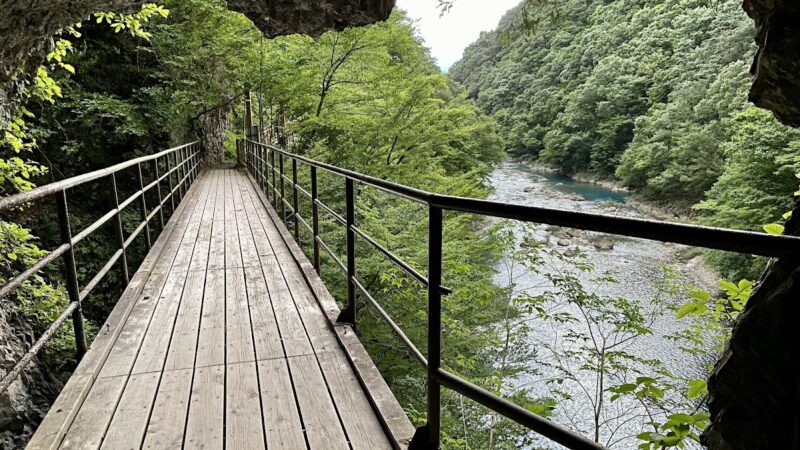
Nakanomata Gorge, located in the Okua-ni district of Kita-Akita City, Akita Prefecture, is a premier natural scenic spot in Akita, known for its magnificent gorge landscape stretching approximately 8km and “Yasuno Falls,” a renowned waterfall that was selected as the 2nd place winner in Japan’s Top 100 Waterfalls.
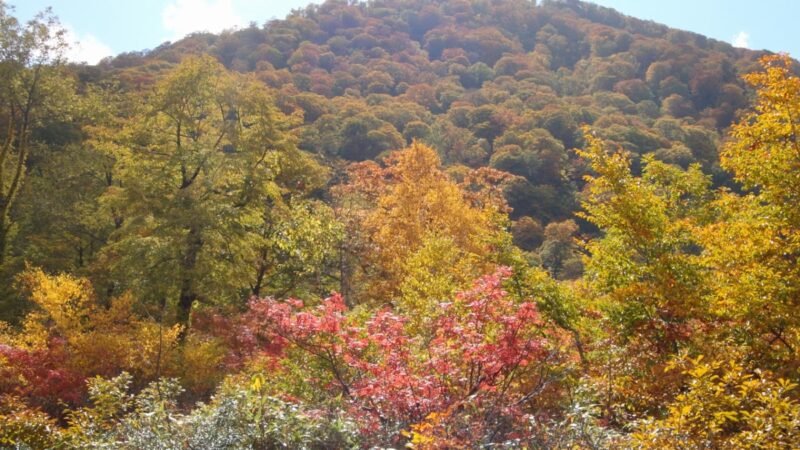
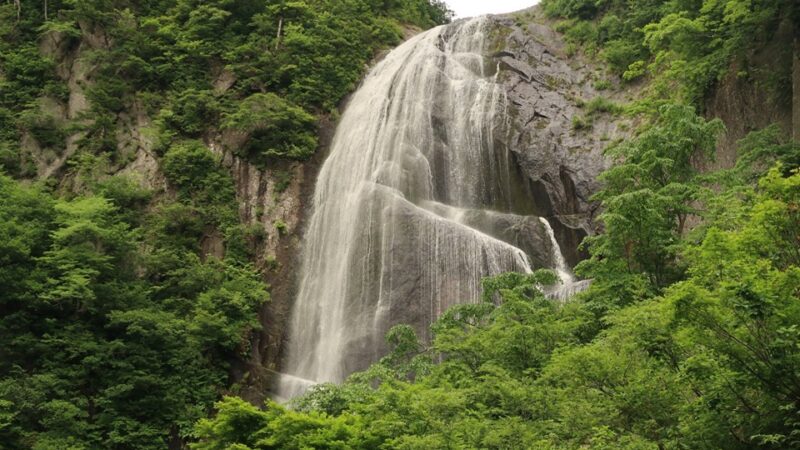
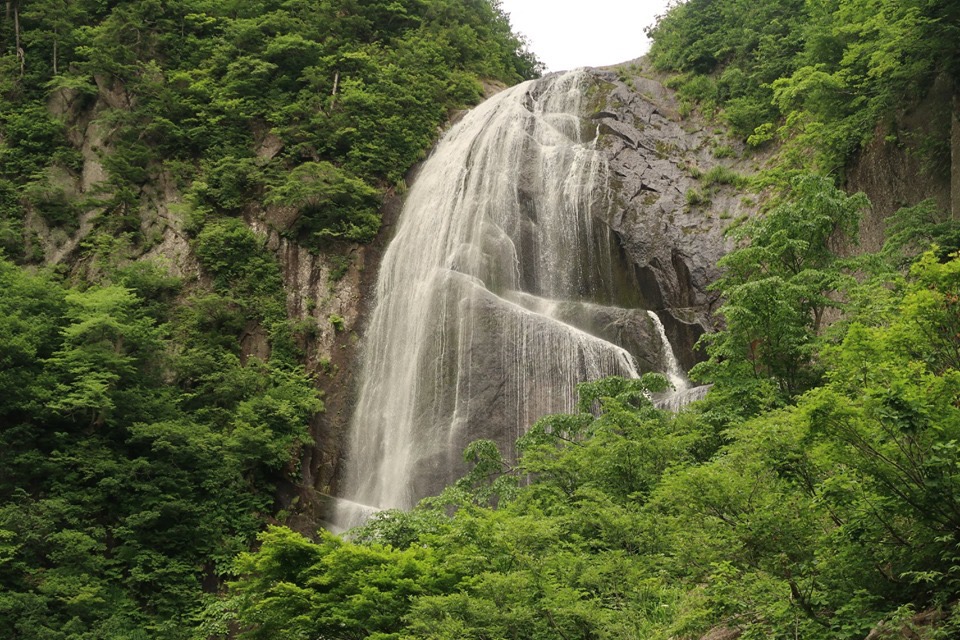
Yasuno Falls, located at an elevation of 900m with a drop of 90m, features a two-tier structure with a 60m upper section and 30m lower section, cascading down steep cliffs in a striking curtain-like white flow. Particularly during the autumn foliage season, diverse broad-leaved trees including Japanese maple, beech, rowan, and birch change color, captivating visitors with the striking contrast between the waterfall and foliage.
This article comprehensively covers access methods to Nakanomata Gorge and Yasuno Falls, detailed trekking courses, the best season to visit, and information on nearby hot springs and tourist attractions—everything you should know before your visit.
What is Nakanomata Gorge? Basic Information and Charm
Overview of Nakanomata Gorge
Nakanomata Gorge is a valley formed in the upper reaches of the Ategi River, which flows through the deepest part of Okua-ni in the Ani-uchiategi district of Kita-Akita City, Akita Prefecture. The gorge, stretching approximately 8km, maintains its primordial natural environment and displays different characteristics throughout the four seasons.
At the uppermost reaches of the gorge stands “Yasuno Falls,” a signature waterfall of the region, making it a popular destination for many tourists and trekking enthusiasts.
Geographic Features of Nakanomata Gorge
- Location: Ani-uchiategi, Kita-Akita City, Akita Prefecture
- Elevation: Gorge entrance approximately 750m, Yasuno Falls approximately 900m
- Gorge length: Approximately 8km
- Topography: Steep V-shaped valley
- Vegetation: Broad-leaved forest dominated by beech trees
Nakanomata Gorge is situated on the eastern side of the Moriyo-shi Mountain range and is a typical mountain gorge formed by abundant precipitation and steep terrain. The surrounding area is designated as the Moriyo-shi Prefecture Natural Park and is an important region from a nature conservation perspective.
Yasuno Falls: Japan’s Top 100 Waterfalls, Ranked 2nd
Characteristics of Yasuno Falls
Yasuno Falls (Yasu-no-taki) is a large waterfall with a drop of approximately 90m located in the upper reaches of Nakanomata Gorge, at an elevation of approximately 800-900m.
Waterfall structure:
- Upper section: Drop of approximately 60m, flowing down the rock face in a gentle cascade
- Lower section: Drop of approximately 30m, descending as a nearly vertical plunge
- Total drop: Approximately 90m
- Waterfall width: Approximately 10m (varies by season)
The two-tier waterfall features a contrasting structure between the gradual cascade of the upper section and the nearly vertical plunge of the lower section, each offering distinct beauty. The white curtain-like water flow descending the steep cliff creates a sublime landscape as if water were pouring down from heaven.
Recognition as Japan’s Top 100 Waterfalls, Ranked 2nd
Yasuno Falls was selected as the 2nd place winner in the general public voting for “Japan’s Top 100 Waterfalls,” making it an exceptionally popular waterfall. This high recognition reflects not only the beauty of the waterfall itself but also the overall charm, including harmony with the surrounding natural environment and the sense of achievement created by moderately difficult access.
The Legend of Yasuno Falls’ Tragic Love Story
Yasuno Falls is associated with a sorrowful love story passed down in the region.
According to local legend, long ago, a beautiful maiden named “Yasu” lived in this area. Yasu fell in love with a young man from the village, but their marriage was forbidden due to differences in social status and other circumstances. Desperate over this impossibility, Yasu threw herself into this waterfall and ended her life. Since then, the waterfall has been called “Yasuno Falls.”
This legend adds a mystical atmosphere to the waterfall, leaving a deep impression on the hearts of those who visit.
Access Methods to Nakanomata Gorge and Yasuno Falls
Access by Car
Car is the most convenient way to access Nakanomata Gorge.
Routes from major cities:
From Akita City:
- Exit at “Takanosu IC” on the Akita Expressway
- Head north on National Route 105
- Proceed toward the “Hiryūchi Station” on the Akita Interior Vertical Railroad
- Approximately 15km east from Hiryūchi Station
- Travel time: Approximately 2 hours
From Ōdate City:
- Via National Routes 285 and 105
- Head toward Hiryūchi Station
- Travel time: Approximately 1 hour 30 minutes
From Morioka City:
- Exit at “Nishinne IC” on the Tōhoku Expressway
- Via National Routes 282 and 105
- Travel time: Approximately 2 hours 30 minutes
Parking Information
Nakanomata Parking Lot:
- Parking spaces: Approximately 20
- Fee: Free
- Restroom: Available (simple toilet)
- Elevation: Approximately 750m
From the parking lot to Yasuno Falls is approximately a 60-minute trekking course. The parking lot may be full on weekends during the autumn foliage season, so early morning arrival is recommended.
Access by Public Transportation
Using Akita Interior Vertical Railroad:
- Get off at “Hiryūchi Station” on the Akita Interior Vertical Railroad
- Approximately 15km from the station to the entrance of Nakanomata Gorge
- Taxi is necessary (advance reservation recommended)
Access by public transportation is inconvenient, so renting a car is recommended.
Important Notes on Access
- Winter closure: Road is impassable from mid-November to late May due to snow
- Road conditions: The forest road is narrow with many curves; drive carefully
- Cell phone coverage: Many areas have no signal; prepare accordingly
- Fuel: The nearest gas station is in the Ani district (approximately 20km before the gorge)
Yasuno Falls Trekking Course Details
Course Overview
Nakanomata Parking Lot ⇔ Yasuno Falls
- Distance: Approximately 1.8km one way
- Time required: Approximately 60 minutes uphill, approximately 45 minutes downhill
- Elevation gain: Approximately 150m
- Difficulty: Beginner to intermediate
- Course type: Forest trail along the gorge
Detailed Course Guide
Start to 30 minutes:
From the parking lot, proceed on a forest path along the gorge. Initially, the path is relatively flat, allowing you to enjoy forest bathing while listening to the sound of the stream. Towering giant beech and Mizunara oaks line the path, providing the atmosphere of primordial forest.
30 minutes to 45 minutes:
The gradient gradually becomes steeper, with more exposed rocky areas and tree roots. Some areas are slippery, so careful attention to footing is necessary. The sound of the gorge water becomes louder, and you can sense that the waterfall is approaching.
45 minutes to 60 minutes (Arrival at lower section of Yasuno Falls):
After a final steep climb, the view suddenly opens, and the lower section of Yasuno Falls appears before you. The sight of the 30m drop of the lower waterfall flowing magnificently is awe-inspiring.
To the upper section of Yasuno Falls (additional 15 minutes):
For those with time and stamina to spare, climbing the even steeper trail will bring you to the base of the upper waterfall. From the upper section, you can view up close the 60m waterfall cascading down the rock face.
Clothing and Equipment for Trekking
Essential equipment:
- Trekking shoes (with non-slip soles)
- Rain gear (in preparation for weather changes)
- Drinking water (1 liter or more recommended)
- Snacks for the hike
- Map and compass (cell phone will be out of service)
Recommended equipment:
- Trekking poles
- Gloves
- Hat
- Insect repellent spray (summer)
- Bear bell (bear warning area)
- First aid kit
Clothing:
- Quick-drying long-sleeved shirt and long pants
- Rain jacket
- Change of clothes (to leave in the car)
Precautions During Trekking
- Bear countermeasures: This is a bear habitat. Carry a bear bell and avoid solo travel
- Fall hazard: The path near the gorge is slippery with risk of falling
- High water conditions: During or after rain, the stream becomes swollen; avoid reckless actions
- Time management: Ensure sunset is before descending; start descent by 2pm at the latest
- Solo travel: Try to travel with others; inform family of your climbing plan
Autumn Foliage Season: The Best Season for Nakanomata Gorge
Best Time for Autumn Foliage
Autumn foliage in Nakanomata Gorge is reputed to be particularly beautiful in Akita Prefecture.
Peak foliage period: Mid-October to late October
- Color change begins: Early October
- Peak foliage: Approximately October 15-25
- Leaf fall: Late October to early November
Due to the high elevation, foliage begins earlier here than in lowland areas. The timing varies by approximately one week depending on the year, so it is recommended to check the latest foliage information before your visit.
Tree Species That Change Color and Their Hues
Nakanomata Gorge displays diverse broad-leaved trees changing color, offering a rich color gradient.
Major tree species:
- Maple varieties: Vibrant red
- Rowan: Deep crimson
- Beech: Golden yellow
- Birch: Yellow
- Mizunara oak: Reddish-brown
- Poison ivy: Crimson
The mosaic pattern of red, yellow, orange, and green created by these trees is truly a work of art created by nature.
Best Photography Spots for Autumn Foliage
1. Viewpoint at lower section of Yasuno Falls:
An excellent photography point where you can capture the waterfall and autumn foliage simultaneously. Backlit morning light is recommended.
2. Forest path along the gorge:
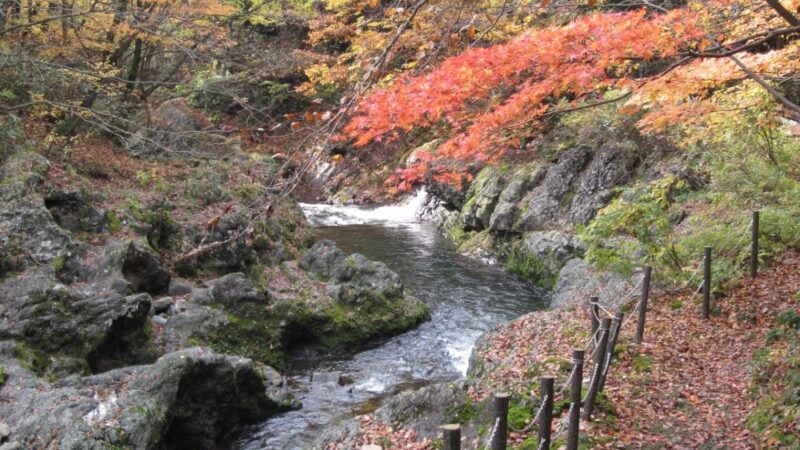
You can photograph the contrast between the stream and autumn foliage. The foliage reflected in the water surface is also a beautiful subject.
3. Area around Nakanomata Parking Lot:
Autumn foliage is beautiful here as well, allowing you to enjoy photography easily.
Photography tips:
- Foliage appears more vivid on cloudy days
- Use a polarizing filter to control water surface reflections
- A tripod allows you to reduce shutter speed and express the waterfall as fine threads
- Morning light is soft and beautiful
Expected Crowded Times
During the autumn foliage season, Nakanomata Gorge is visited by many tourists from Akita and beyond.
Crowded times:
- 9:00 AM to 2:00 PM: Most crowded
- Especially crowded: Mid-October weekends and holidays
Recommended visit times:
- Early morning (6:00 AM-8:00 AM): Parking lot has availability, and foliage illuminated by morning sun is beautiful
- Weekdays: Less crowded than weekends
- Evening (3:00 PM and later): Relatively empty as hikers descend (note sunset time)
Given the limited parking capacity, arriving very early in the morning on weekends during peak foliage is strongly recommended.
Charm of the New Foliage Season
In addition to autumn foliage, Nakanomata Gorge during the new foliage season is extremely beautiful and worth visiting.
Best time for new foliage: Late May to mid-June
As the snow melts and beech leaves bud in early summer, the gorge is surrounded by vivid green. Yasuno Falls, with increased water from snowmelt, is impressive in power and offers a different charm than the autumn foliage season.
Benefits of the new foliage season:
- Fewer tourists than during the autumn foliage season
- Cool and comfortable trekking
- Enjoyment of bird songs
- Mountain vegetable foraging possible (authorized areas only)
Hot Springs Around Nakanomata Gorge
After a gorge trek, it’s recommended to soothe your fatigue in the surrounding hot springs. Within a 10-30km radius of Nakanomata Gorge are hot springs representing Akita.
Shingyokawa Hot Spring (approximately 25km)
Spring quality: Acidic, carbon dioxide-containing, iron(II), aluminum-chloride spring
Characteristic: With a pH of 1.2, this is one of Japan’s most acidic hot springs and is known as a therapeutic spring.
- Hours: Day-use bathing 10:00 AM-3:00 PM
- Fee: Adults ¥800
- Travel time: Approximately 40 minutes by car from Nakanomata Gorge
- Feature: High radium content, popular with spa therapy guests
Ategi Hot Spring Matagi-no-yu (approximately 15km)
Spring quality: Sodium-chloride, bicarbonate spring
Characteristic: A day-use hot spring facility in the local Ani district where you can experience matagi (traditional hunter) culture.
- Hours: 10:00 AM-9:00 PM
- Fee: Adults ¥500
- Travel time: Approximately 25 minutes by car from Nakanomata Gorge
- Facilities: Dining hall, rest room
Quoins Moriyo-shi (approximately 20km)
Spring quality: Sodium-chloride spring
Characteristic: A lodging and day-use hot spring facility at the foot of Moriyo-shi Mountain. Features a spacious public bath.
- Hours: Day-use bathing 10:00 AM-8:00 PM
- Fee: Adults ¥500
- Travel time: Approximately 30 minutes by car from Nakanomata Gorge
- Facilities: Restaurant, lodging available
Tourist Spots Around Nakanomata Gorge
When visiting Nakanomata Gorge, it’s recommended to also tour nearby tourist attractions.
Momoana Gorge (approximately 12km)
Characteristic: A beautiful gorge surrounded by primordial beech forest, called the “mystery of the forest.”
- Travel time: Approximately 20 minutes by car from Nakanomata Gorge
- Trekking: Approximately 2 hours round trip
- Attractions: Giant beech trees, clear stream, moss-covered rocks
- Autumn foliage season: Mid to late October
Many visitors tour both Momoana Gorge and Nakanomata Gorge together, and if time permits, planning to enjoy both is recommended.
Tateamata Gorge and Kohyoe Falls (approximately 10km)
Characteristic: A gorge with a beautiful 20m waterfall.
- Travel time: Approximately 15 minutes by car from Nakanomata Gorge
- Note: In recent years, damage to forest paths has sometimes restricted viewing
- Pre-visit confirmation: Check with Kita-Akita City Tourism Division before visiting
Ani Gondola (Moriyo-shi Ani Ski Resort) (approximately 25km)
Characteristic: A gondola that takes you to near the summit of Moriyo-shi Mountain in approximately 20 minutes.
- Operating period: June-November (special operation during autumn foliage season)
- Fee: Round trip, adults ¥1,800
- Travel time: Approximately 35 minutes by car from Nakanomata Gorge
- Attraction: 360-degree panorama from the summit, sea of foliage
During the autumn foliage season, the sea of foliage viewed from the gondola is spectacular. You can enjoy foliage from a different perspective than Nakanomata Gorge.
Ani Matagi Materials Museum (approximately 20km)
Characteristic: A museum where you can learn about “matagi,” the traditional hunting culture of Akita.
- Hours: 9:00 AM-4:00 PM (winter closure possible)
- Fee: Adults ¥300
- Travel time: Approximately 30 minutes by car from Nakanomata Gorge
- Exhibition: Matagi tools, history of bear hunting, mountain life
Understanding the cultural background of the Ani district allows for deeper appreciation of the nature of Nakanomata Gorge.
Winter in Nakanomata Gorge
Winter Closure Period
Nakanomata Gorge is closed from mid-November to late May due to snow.
- Closure begins: Mid-November (timing varies with initial snowfall and road freezing conditions)
- Reopening: Late May to early June (depends on remaining snow conditions)
- Reason: The forest road is not cleared of snow
Visiting Yasuno Falls in winter requires snow mountain climbing equipment and experience and is not recommended for general tourists.
How to Confirm Reopening Timing
Spring reopening timing varies by year and should be confirmed before your visit.
Contact information:
- Kita-Akita City Tourism Division: 0186-62-1851
- Kita-Akita Tourism and Commerce Association: 0186-62-1851
Precautions and Etiquette During Your Visit
Safety Precautions
- Weather check: Weather changes rapidly in mountain areas. Consider canceling if rainy
- Health management: With elevation change, do not exert yourself if unwell
- Wildlife: Bears inhabit this area. Carry a bear bell and avoid solo travel
- Cell phone: Many areas lack coverage; plan for emergency response in advance
- Sunset time: Autumn has early sunset; begin descent by 3:00 PM
Environmental Conservation Etiquette
- Take all trash with you: Properly dispose of all your waste
- No plant collection: Collecting alpine plants or wild vegetables is prohibited
- Stay on designated trails: For vegetation protection, stay on marked trails
- Use restroom facilities: Use the parking lot restroom; avoid urinating in nature
- Respect quiet: Keep voices down and music off, respecting the natural quiet
Photography Etiquette
- Tripod consideration: On crowded days, position tripods to avoid blocking other hikers
- Drones: Confirm with management before use. Consider impact on wildlife
- SNS sharing: When posting, include accurate information and safety reminders
Model Courses to Enjoy Nakanomata Gorge
Day Trip Course (Autumn foliage season)
6:00 AM Depart from Akita City
8:00 AM Arrive at Nakanomata Parking Lot
8:15 AM Begin trekking
9:15 AM Arrive at Yasuno Falls, photography and break
10:00 AM Begin descent
10:45 AM Return to parking lot
11:30 AM Bathe and lunch at Ategi Hot Spring Matagi-no-yu
1:30 PM Tour Ani Matagi Materials Museum
3:00 PM Begin return journey
5:00 PM Arrive in Akita City
Two-Night One-Day Course
[Day 1]
12:00 PM Depart from Akita City
2:00 PM Trek through Momoana Gorge
5:00 PM Check into lodging (Quoins Moriyo-shi, etc.)
6:00 PM Dinner and hot spring
[Day 2]
6:00 AM Early departure
7:00 AM Trek to Nakanomata Gorge and Yasuno Falls
10:00 AM Return to parking lot
11:00 AM Ride Ani Gondola to Moriyo-shi Summit
2:00 PM Lunch
3:00 PM Begin return journey
5:00 PM Arrive in Akita City
Frequently Asked Questions (FAQ)
Q1: Can beginners visit Nakanomata Gorge?
A: Yes, if you have basic fitness, you can visit as a beginner. However, you’ll need to walk the 1.8km one-way, 150m elevation gain trail, so appropriate equipment like trekking shoes is necessary. If you’re accustomed to regular exercise, you should have no problem enjoying the experience. If uncertain, visiting with an experienced person is recommended.
Q2: When is the best time for autumn foliage?
A: The foliage is typically at its peak from mid-October to late October, with October 15-25 being the height of the season. However, timing can shift by about a week depending on that year’s temperatures, so confirming the latest information with Kita-Akita City Tourism Division or the tourism association before your visit is recommended.
Q3: Is it okay to bring small children?
A: It’s possible if your children are in upper elementary school or older and are accustomed to mountain walks. However, since there are slippery rocky areas and steep sections along the way, you should carefully consider safety if bringing very young children. Adjust pace to your children, plan with more frequent breaks, and avoid overexertion.
Q4: Can I visit in winter?
A: The forest road is closed from mid-November to late May due to snow, and general vehicles cannot pass. Winter visits require snow mountain climbing equipment and experience and are not recommended for general tourists. Spring reopening occurs in late May to early June, but timing varies by year and should be confirmed in advance.
Q5: Is the parking lot crowded?
A: The lot gets very crowded on weekends and holidays during the autumn foliage season. With only about 20 parking spaces, the lot often fills after 9:00 AM. To ensure parking, arriving early between 6-7 AM is recommended. Weekdays are relatively uncrowded.
Q6: Is it safe to go alone?
A: It’s possible but visiting with others is recommended. Since this is a bear habitat with many areas without cell phone coverage, solo travel increases risk. If going alone, inform family of your destination and expected return time, carry a bear bell, and choose busy times to visit.
Q7: Are restrooms available?
A: A simple toilet is available at the parking lot. Since there are no restrooms on the trail, be sure to use facilities before departure. Consider bringing a portable toilet.
Q8: Can I bring pets?
A: There are no legal restrictions, but pet accompaniment is not recommended given concerns about wildlife impact and consideration for other hikers. Particularly in a bear habitat, pet noise could create unexpected situations.
Q9: Can I go on rainy days?
A: Visiting is not recommended as conditions become slippery and dangerous. Especially after heavy rain or during rainfall, increased stream flow and slippery trails create hazards. Check the weather forecast and choose clear or overcast days.
Q10: Are there places to eat nearby?
A: There are no restaurants in the immediate Nakanomata Gorge area, so bringing a bento or snacks is recommended. The nearest restaurants are in the Ani district (approximately 20km away). The dining hall at Ategi Hot Spring Matagi-no-yu offers local cuisine.
Conclusion: Fully Enjoy Akita’s Grandeur Nature at Nakanomata Gorge
Nakanomata Gorge is Akita’s premier natural scenic spot, featuring Yasuno Falls, ranked 2nd in Japan’s Top 100 Waterfalls. Particularly from mid to late October during the autumn foliage season, you can enjoy spectacular views created by maples, beeches, and rowans interwoven with beautiful colors and a 90m-drop waterfall.
The 1.8km one-way, approximately 60-minute trek can be enjoyed by beginners with appropriate equipment and preparation. By departing early to avoid crowds and combining visits to nearby hot springs and tourist attractions, you can enjoy a fulfilling Akita trip.
When visiting, avoid winter closure period (mid-November to late May), carefully consider weather and physical condition, and remember environmental conservation. Akita’s deep natural beauty awaits you.