Momotsutani Gorge Akita Prefecture Complete Guide|Access, Highlights, and Surrounding Spot Information
Located in Morioka, Kitaakita City, Akita Prefecture, Momotsutani Gorge is a valley spanning the upper reaches of Lake Taihei and Oomatagokyo, boasting pristine natural beauty. This gorge, affectionately known as the “Walk Through Heaven,” features a gentle U-shaped topography dotted with large and small potholes (oukетsu) and waterfalls, surrounded by beech primeval forest. The glimmering clear stream enchants all who visit.
This article comprehensively covers everything you need to know before visiting, from the charms of Momotsutani Gorge to specific access methods, the best season to visit, and information about surrounding spots.
What is Momotsutani Gorge?|A Valley of Beauty Representative of Akita Prefecture
Momotsutani Gorge is located in the Norugawa source area of the Morioka district, Kitaakita City, Akita Prefecture. This gorge, spreading at the foot of Mount Moriyoshi, is situated in the upper reaches of Lake Taihei and Oomatagokyo, with its entire area designated as a Special Protection Zone for Wildlife Preservation.
Characteristics and Topography of the Gorge
The main feature of Momotsutani Gorge is its gentle U-shaped valley topography. Formed under the influence of the ice age, this terrain is characterized by smooth, one-piece rock riverbeds. The sight of clear streams elegantly flowing along the rock surface creates a unique landscape not found in other gorges.
Various sized potholes are scattered along the gorge. Potholes are circular depressions created in rocks as they are eroded by the river’s flow—natural artworks created over long periods. The potholes of Momotsutani Gorge are particularly well-preserved, and their number and scale are among the highest in the Tohoku region.
Why It’s Called “Walk Through Heaven”
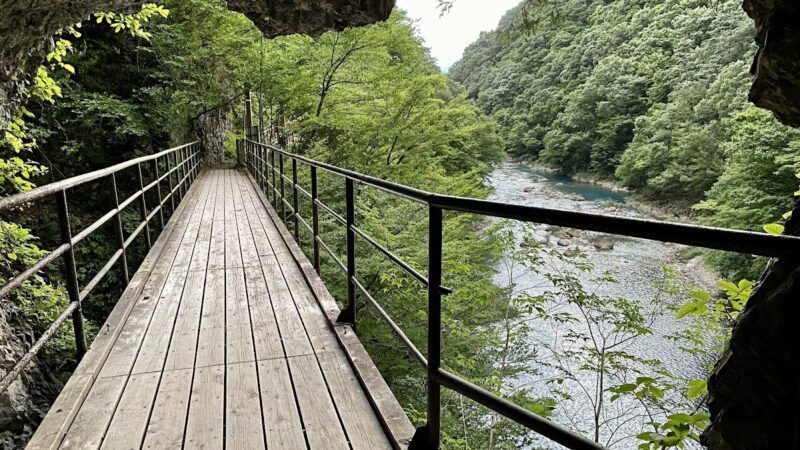
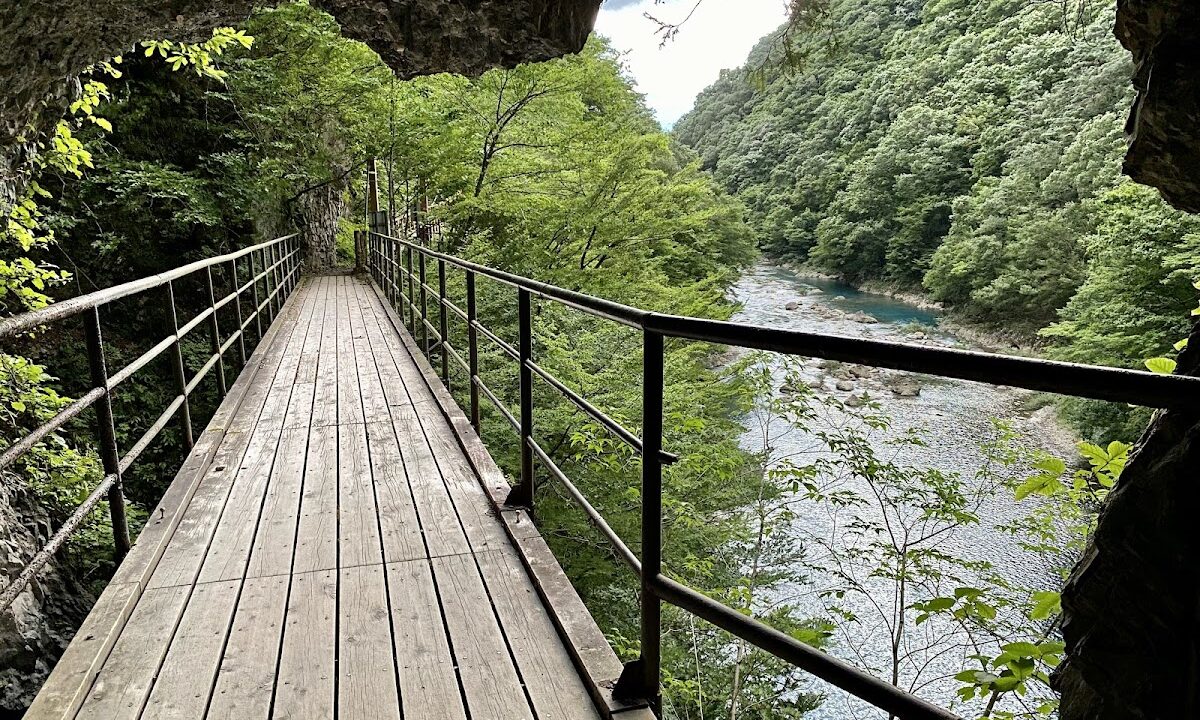
Momotsutani Gorge is called “Walk Through Heaven” because you can enjoy pristine natural beauty while walking on well-maintained trails. The combination of forest bathing surrounded by giant beech trees, the murmuring of clear streams, vegetation that changes with the seasons, and beautiful ridge coloration creates a landscape that truly feels like walking through heaven.
Particularly, the rich ecosystem that supports species like the pileated woodpecker has been preserved, and with luck, you may spot wild animals. The balance of maintaining a pristine environment with minimal human intervention while providing safe and well-maintained trails for hiking is why it is so highly regarded by trekking enthusiasts.
Momotsutani Waterfall|”Female Waterfall,” the Symbol of the Gorge
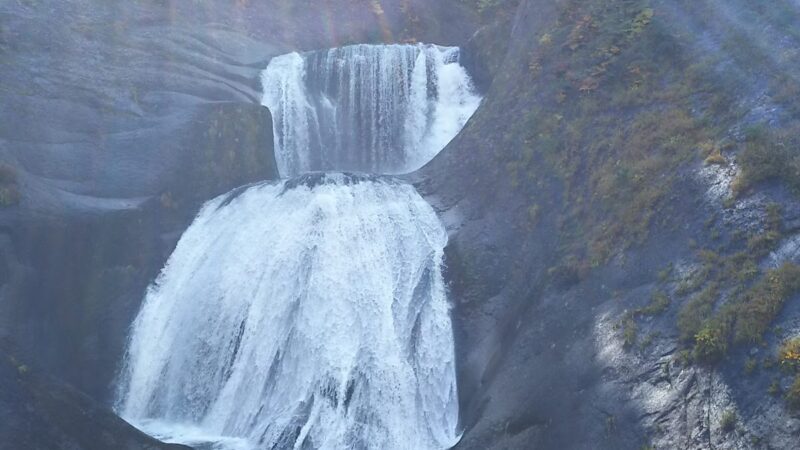
The highlight of Momotsutani Gorge is the waterfall located deep within, known as Momotsutani Falls. This approximately 30-meter-high waterfall is also called the “Female Waterfall” due to its graceful appearance and has long been cherished by local people as a waterfall for fertility and safe childbirth.
Characteristics of Momotsutani Waterfall
Momotsutani Falls is a type of waterfall known as a branched waterfall (bunshi-baku), characterized by multiple streams of water elegantly sliding down smooth rock surfaces. Rather than plunging dramatically, the water flows gently along the rock face, and its graceful appearance is truly worthy of the name “Female Waterfall.”
The area around the waterfall basin is relatively spacious, providing an excellent spot to view and photograph the waterfall from the front. During the fresh green season, the contrast between surrounding greenery and white water flow is beautiful, and during autumn foliage, the combination of trees colored in red and yellow with the waterfall creates a spectacular scene.
Waterfall Groups in the Upper Reaches
Beyond Momotsutani Falls, in the upper reaches, are waterfalls called Naka Falls and Male Falls. Accessing the upper reaches from Momotsutani Falls requires full mountaineering equipment, but this route is attractive for those seeking a more pristine natural experience.
Naka Falls, also called the 7-tiered waterfall, has a unique stepped form with water flowing down. Male Falls, in contrast to Momotsutani Falls, is characterized by a powerful water flow, and truly conveys the dynamic impact suggested by its masculine name.
Momotsutani Gorge Trail|Trekking Course Details
The main route for visiting Momotsutani Gorge is the trail starting from Moriyoshi Mountain Wildlife Center. While a well-maintained and easy-to-walk path, it offers authentic primeval forest trekking.
Course Overview and Route Information
Basic Information
- Starting Point: Moriyoshi Mountain Wildlife Center
- Ending Point: Momotsutani Falls
- One-way Distance: Approximately 4.2km (via Norugawa Trail)
- Travel Time: Approximately 60-70 minutes one way
- Elevation Change: Approximately 15m
- Difficulty: Beginner to Intermediate
Departing from Moriyoshi Mountain Wildlife Center, the first approximately 2km passes through beech primeval forest. This section is relatively flat, allowing for leisurely forest bathing. The trail follows the clear Norugawa stream, offering pleasant trekking accompanied by the sound of murmuring water.
At approximately the 2km mark, you reach the junction between Momotsutani Gorge and Akamizu Gorge. From here to Momotsutani Falls is approximately 1.3km, with hiking that enjoys gorge scenery. While the trail is maintained, there are rocky and wet areas, so trekking shoes or other non-slip footwear are recommended.
Highlights Along the Trail
The trail is home to giant natural Akita cedar trees, including specimens with chest-height diameters of 1-2 meters and cedars with unique shapes developed from prostrate branches. The 553 hectares including these Momotsutani cedars are designated as a National Natural Monument, preserving today a precious view of Japan’s primeval forests.
Large and small potholes are also scattered along the trail, allowing close observation of natural sculpture. Rock surfaces polished by water flow are like works of art and are popular photography spots.
Trekking Precautions
Momotsutani Gorge is a Special Wildlife Protection Zone with wild animals such as pileated woodpeckers in residence. Pay attention to the following while trekking:
- Bear Precautions: Carry a bear bell, travel in groups, make noise while walking
- Equipment: Trekking shoes, rain gear, drinking water, provisions
- Clothing: Long sleeves and pants, hat (insect protection)
- Time Management: Depart early enough to descend before sunset
- Weather Check: Confirm weather forecast in advance; cancel if conditions are poor
Best Season|Peak Times for Fresh Green and Autumn Foliage
Momotsutani Gorge presents different faces each season, with fresh green and autumn foliage seasons being particularly popular.
Fresh Green Season (Mid-May to June)
From mid-May to June, the fresh beech foliage is at its most beautiful. The vivid green of newly budding leaves contrasts with the clear stream, creating a landscape truly worthy of “Walk Through Heaven.”
During this period, snowmelt increases water volume, enhancing Momotsutani Falls’ power. Spring wildflowers also begin to bloom, making it an excellent season for plant observation. The relatively mild temperatures provide ideal trekking conditions.
Autumn Foliage Season (Early to Mid-October)
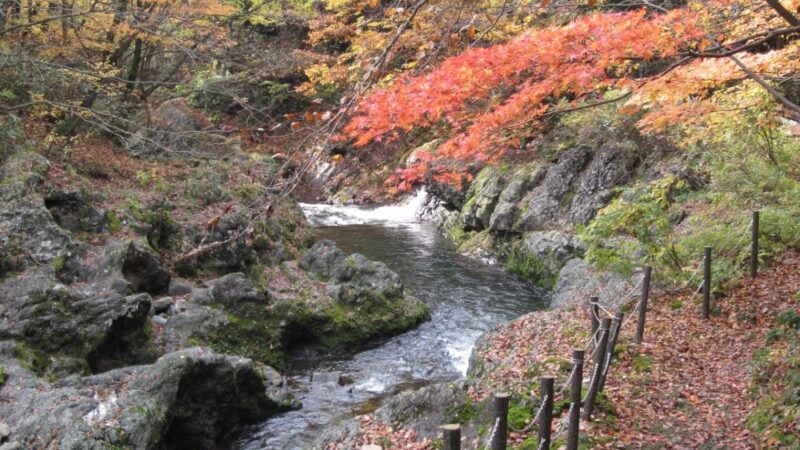
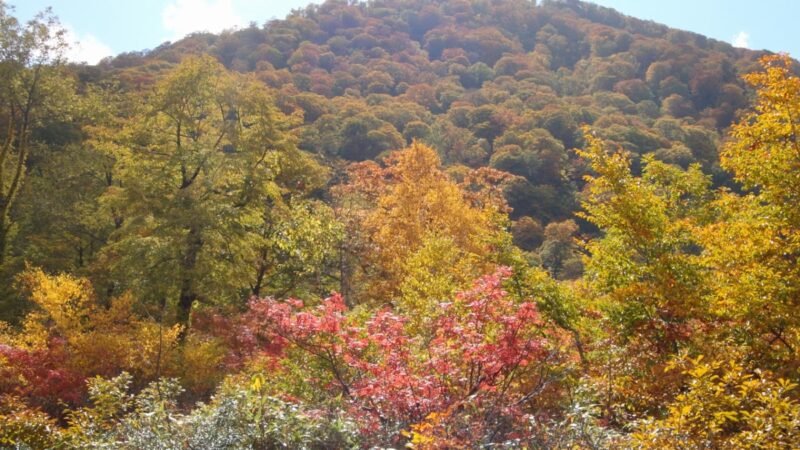
Momotsutani Gorge’s autumn foliage typically begins in early October and peaks in mid-October. The diverse foliage of beech, maple, rowan, and other species displays rich colors of red, yellow, and orange, with the entire gorge transformed like a brocade picture.
The autumn foliage around Momotsutani Falls is particularly spectacular, with colorful trees, white water flow, and smooth rock surfaces creating a magnificent vista. As many tourists visit during this period, visiting on weekdays or during early morning hours is recommended.
Foliage information is updated regularly on Akita Prefecture’s tourism information site and Kitaakita City’s official homepage, so check before visiting.
Summer Season (July to August)
Summer is when greenery deepens and forest bathing is optimal. The gorge area is cooler than surrounding regions and popular as a summer refuge. However, insects are numerous this season, so insect repellent is essential.
Winter Closure Period
Momotsutani Gorge is closed during winter (from mid-November to around May) due to snow accumulation. Trail opening dates vary by year, so always confirm the latest information before visiting.
Access Information|How to Get There by Car and Public Transportation
While car access is most convenient for visiting Momotsutani Gorge, public transportation options are available.
Access by Car
From Tokyo Area
- From Kazuno Hachimantai IC via Tohoku Expressway: approximately 50km (approximately 60 minutes)
- From Kitaakita IC via Akita Expressway: approximately 40km (approximately 50 minutes)
From Akita City
- Via National Routes 7 and 285: approximately 90km (approximately 2 hours)
GPS Navigation Settings
- Destination: Moriyoshi Mountain Wildlife Center
- Address: Morioka, Kitaakita City, Akita Prefecture
Free parking is available near Moriyoshi Mountain Wildlife Center. As parking spaces are limited, arriving early is recommended during busy periods like autumn foliage season.
Public Transportation Access
Train
- Transfer to Akita Nairiku Jukan Railway from JR Akita Shinkansen “Kakunodate Station”
- Get off at “Ani Maeda Station” or “Aniai Station” on Akita Nairiku Jukan Railway
- Approximately 30-40 minutes by taxi from the station
Since public transportation runs on limited schedules, confirm timetables in advance and consider arranging taxi reservations. Also remember to arrange return taxi service.
Smartphone Map Usage
Searching for “Moriyoshi Mountain Wildlife Center” on smartphone map applications displays route guidance from your current location. However, as cell service is unavailable in some mountainous areas, download map information beforehand or carry a paper map as backup.
Surrounding Spots|Tourist Destinations to Visit Along with Momotsutani Gorge
The area around Momotsutani Gorge features various attractions where you can enjoy nature and hot springs.
Akamizu Gorge
Another gorge continuing from the junction point of Momotsutani Gorge is Akamizu Gorge. Equally praised as a beautiful gorge, a well-maintained trail follows Akamizu Stream. With sufficient time and stamina, visiting both gorges provides a more enriching trekking experience.
Oomatagokyo
Located downstream from Momotsutani Gorge, Oomatagokyo is a scenic area selected as one of “Japan’s 100 Secret Destinations.” Accessible by sightseeing boat from Lake Taihei, the emerald-green clear stream and strange rocks create an awe-inspiring landscape. It offers gorge scenery distinct from Momotsutani Gorge.
Lake Taihei
A man-made lake at the entrance to Oomatagokyo, nestled at the foot of Mount Moriyoshi. The reflection of mountains on the lake surface is beautiful during fresh green and autumn foliage seasons, with sightseeing boat cruises being popular. Conveniently located for a stop on the way to and from Momotsutani Gorge.
Shinmama Onsen
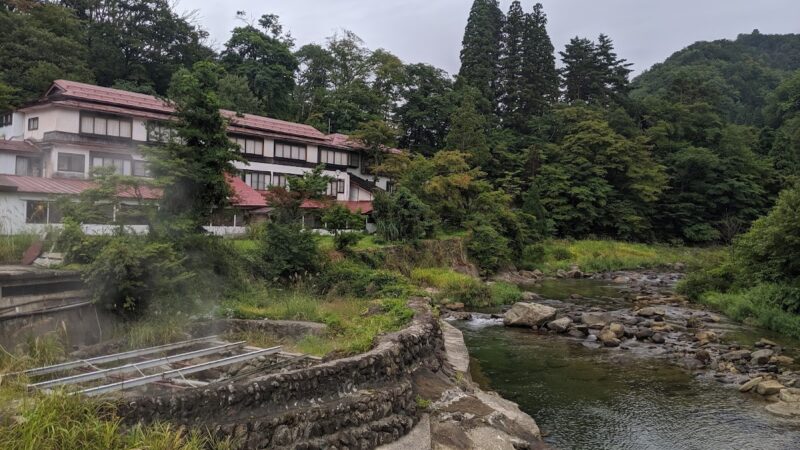
Approximately 30 minutes by car from Momotsutani Gorge, Shinmama Onsen is known as one of Japan’s most strongly acidic hot springs. With a pH of 1.2, this highly acidic water draws visitors from throughout the country for therapeutic bathing and spa treatments.
Characteristics of Shinmama Onsen
- Strongly acidic spring water (pH 1.2)
- Abundant hot water volume
- Day-use bathing available
- Accommodation facilities available
It’s ideal for soothing tired muscles from trekking, and pairing Momotsutani Gorge with Shinmama Onsen is a popular plan.
Tamagawa Onsen
Adjacent to Shinmama Onsen, Tamagawa Onsen also features the same highly acidic healing waters. Famous for its rock bath, where visitors lie on naturally heated rocks warmed by hot spring steam—a unique bathing style. As the natural hot spring with Japan’s highest discharge volume, it’s called the “Miracle Hot Spring” due to its potent healing properties.
Uchiage Onsen Matagi-no-Yu
A day-use hot spring facility in the Ani district of Kitaakita City. With a rustic lodge-style building befitting the Matagi culture region, visitors can enjoy pure hot spring bathing. Relatively close to Momotsutani Gorge, making it an easy stop.
Matagi Museum
Adjacent to Uchiage Onsen Matagi-no-Yu, the Matagi Museum allows visitors to learn about Matagi culture transmitted in the Ani region. Displays of hunting tools, living implements, and Matagi history make this a valuable facility for understanding Akita’s mountain culture.
Kumakuma Park
A bear breeding facility near Moriyoshi Mountain Wildlife Center where visitors can observe Japanese black bears up close and learn about bear ecology. Particularly popular with families with children.
An Falls
A cascade with a 90-meter drop, one of Akita Prefecture’s finest waterfalls. A different type from Momotsutani Gorge, the dramatic water flow of this waterfall is impressive. Visiting both with Momotsutani Gorge allows appreciation of Akita’s diverse waterfall charms.
Ways to Enjoy Momotsutani Gorge|Photography, Forest Bathing, and Nature Observation
Various ways to enjoy Momotsutani Gorge exist beyond trekking.
Photography Spots
Momotsutani Gorge is extremely popular as a photography location. Particularly recommended photography spots include:
- Momotsutani Falls: The gorge symbol with compositions capturing the entire waterfall
- Potholes: Macro photography of water flow and rock formations
- Giant Beech Trees: Capturing the mysterious forest atmosphere
- Streams and Autumn Foliage: Limited-season spectacular shots
When photographing, tripods are convenient but trails are narrow in places, so avoid inconveniencing other hikers. For waterfall photography, ND filters or slow shutter techniques effectively capture smooth water flow.
Forest Bathing and Refreshment
Momotsutani Gorge, surrounded by beech primeval forest, provides an ideal environment for forest bathing. Forest bathing offers various health benefits including stress reduction, immune enhancement, and relaxation effects.
Walking slowly while breathing deeply and listening to forest scents, bird songs, and stream murmurs allows you to escape daily hustle and enjoy healing time away from city life.
Wildlife and Plant Observation
The area around Momotsutani Gorge maintains a rich ecosystem ideal for observing wildlife and plants. Diverse animals including pileated woodpeckers, Japanese serows, squirrels, and birds inhabit the area, and you may encounter them with luck.
Plants include deciduous broadleaf trees like beech and mizunara, natural Akita cedar, spring wildflowers, and autumn mushrooms, allowing seasonal vegetation observation. Bringing binoculars and plant guides enriches nature appreciation.
Facility Information and Contact Information
Moriyoshi Mountain Wildlife Center
The base facility for Momotsutani Gorge trekking.
- Hours: 9:00-16:00 (varies seasonally)
- Closed: Winter closure period (mid-November to around May)
- Admission: Free
- Facilities: Exhibition room, restroom, parking
The exhibition room provides information about Mount Moriyoshi’s nature and wildlife. Stopping by before trekking for information gathering is recommended.
Contact Information
Kitaakita City Tourism Division
- Phone: 0186-62-1111 (main number)
Kitaakita City Tourism and Commerce Association
- Check latest trail opening information, weather conditions, etc.
Always confirm latest information before visiting, particularly trail opening status, weather conditions, and bear sighting reports.
Events and Featured Information
Various events and features are scheduled at Momotsutani Gorge during peak seasons.
Autumn Foliage Feature
During October’s autumn foliage season, Akita Prefecture and Kitaakita City tourism sites feature autumn foliage information regularly updated with peak timing, congestion status, and photography spots useful for visit planning.
Guided Trekking Tours
Local guide organizations offer guided trekking tours. Walking while listening to specialist guide commentary allows deeper understanding of Momotsutani Gorge’s nature and history.
Social Media Information Sharing
Recently, visitor photos taken on smartphones and shared via social media provide real-time gorge conditions. Searching hashtag “#桃洞渓谷” reveals current foliage status and congestion information.
Summary|Experience Akita’s Pristine Nature at Momotsutani Gorge
Momotsutani Gorge in Morioka, Kitaakita City, Akita Prefecture, is a precious location worthy of the “Walk Through Heaven” title, allowing appreciation of pristine natural beauty. Walking well-maintained trails, you can enjoy beech primeval forest, glimmering clear streams, and the graceful sight of Momotsutani Falls.
The best seasons are fresh green from mid-May through June and autumn foliage from early to mid-October, with autumn foliage beauty being exceptional. Starting from Moriyoshi Mountain Wildlife Center, you can reach Momotsutani Falls via approximately 4.2km one-way trekking in 60-70 minutes.
Surrounding locations including Shinmama Onsen, Tamagawa Onsen, Oomatagokyo, and Lake Taihei provide additional attractions, with 1-2 day circuits highly recommended. While car access is most convenient, combining public transportation and taxi is also possible.
Winter closure limits visits to the May to mid-November period. Always confirm latest opening information before visiting and prepare appropriate equipment for safe enjoyment of Akita’s pristine nature.
Frequently Asked Questions (FAQ)
Q1: Can beginners trek Momotsutani Gorge?
A1: Yes, beginners can trek here. The trail is well-maintained with approximately 15m elevation change, making the course relatively flat. However, the 4.2km one-way route requires approximately 3 hours round-trip, so basic fitness is necessary. With appropriate equipment like trekking shoes and a reasonable pace, beginners can fully enjoy the experience.
Q2: When is Momotsutani Gorge’s autumn foliage peak?
A2: The typical peak is early to mid-October. However, weather variations can shift this timing. Checking Kitaakita City tourism sites and social media for latest foliage information before visiting is recommended.
Q3: Is there bear encounter danger at Momotsutani Gorge?
A3: As the area is wildlife habitat, bear encounters are possible. Important precautions include carrying bear bells, making noise while walking, and traveling in groups. Always check latest bear sighting reports before departure. If encountering a bear, remain calm and quietly retreat.
Q4: Can public transportation reach Momotsutani Gorge?
A4: Public transportation access is possible but requires careful planning due to limited schedules. From Ani Maeda or Aniai Station on Akita Nairiku Jukan Railway, a taxi takes approximately 30-40 minutes. Pre-arrange return taxi service.
Q5: What equipment is needed for Momotsutani Gorge trekking?
A5: Essential equipment includes trekking shoes (or non-slip footwear), rain gear, drinking water, provisions, hat, long sleeves and pants, bear bell, map, smartphone (emergency), and first-aid kit. Seasonal additions include warm clothing or insect repellent.
Q6: Are accommodation facilities available near Momotsutani Gorge?
A6: Shinmama Onsen, Tamagawa Onsen, and other hot spring accommodations are nearby. Hotels and inns also exist in Kitaakita City and surrounding Kakunodate areas. For leisurely surrounding area exploration, a 1-2 day itinerary is recommended.
Q7: Can Momotsutani Gorge be visited in winter?
A7: Momotsutani Gorge closes during winter (mid-November to around May) due to snow. Trail access is unavailable, limiting visits to the May through mid-November period. Opening dates vary yearly, requiring advance confirmation.
Q8: What time is best for photography at Momotsutani Gorge?
A8: Early morning soft light (8:00-10:00 a.m.) is ideal. Morning hours provide excellent lighting conditions and often feature mist for atmospheric photography. Early arrivals also avoid crowds. Autumn foliage season daytime is beautiful, with early morning offering particular quiet for focused shooting.