Takadai Natural Observation Education Forest Complete Guide | Experience World Heritage-Class Beech Primary Forest in Fujisato Town, Akita Prefecture
The Takadai Natural Observation Education Forest, located in Fujisato Town, Yamamoto District, Akita Prefecture, is positioned adjacent to the core area of the Shirakami Mountains World Natural Heritage site, offering a valuable opportunity to experience pristine forest with ease. Because visitors can stroll through world heritage-class beech primary forest without full-scale mountaineering equipment, it has gained popularity among a wide range of visitors, from beginners to experienced hikers.
What is Takadai Natural Observation Education Forest?
The Takadai Natural Observation Education Forest spans an elevated plateau-like area at approximately 620 meters in altitude, situated between two high peaks—Fujisato Komagatake and Sangaizan—along the upper reaches of the Fujikoto River that flows through Fujisato Town. Comprising approximately 12 hectares, this forest consists of natural woodland dominated by beech trees and is recognized as one of the forests where visitors can experience the characteristics of the strictly off-limits core area, as a peripheral zone of the world heritage site.
Relationship with Shirakami Mountains World Heritage Site
The Shirakami Mountains is a collective term for an extensive mountain range of approximately 130,000 hectares spanning Aomori and Akita prefectures. Of this area, the central 16,971 hectares were registered as a World Natural Heritage site in December 1993. The site is home to the world’s largest primary beech forest with minimal human impact, where precious flora and fauna inhabit.
Although Takadai Natural Observation Education Forest is located outside the world heritage area, its ecosystem is said to be nearly identical to that of the core area. In other words, it is a precious spot where visitors can experience world heritage-class natural environments up close without entering the strictly off-limits core area.
The Appeal of Takadai’s Primary Beech Forest
Ancient Beech Trees Over 400 Years Old
The symbol of Takadai Natural Observation Education Forest is an ancient beech tree estimated to be over 400 years old. Its thick trunk and the dignified bearing it displays after surviving so many years are remarkable. This giant tree is located along the hiking trail, making it easily accessible for anyone to view.
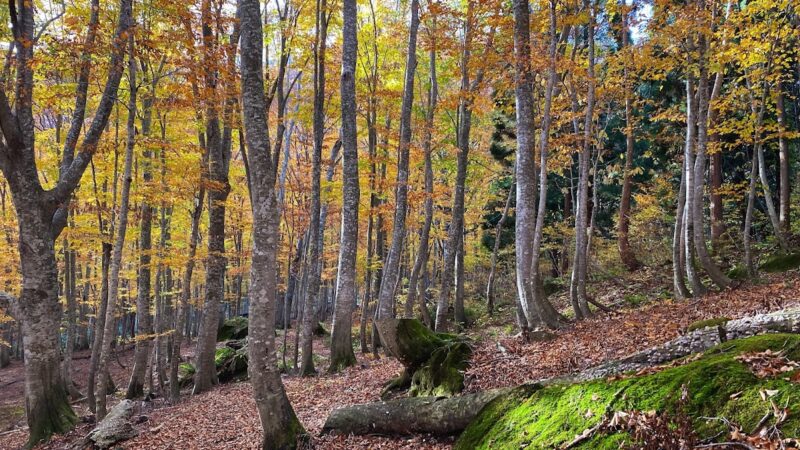
Around this ancient beech, beech trees of various ages coexist, allowing visitors to observe the generational succession of the forest. Fallen trees and standing dead trees remain in their natural state, serving as soil that nurtures new life—a sight truly unique to primary forests.
Natural Garden Woven by Moss-Covered Boulders and Scattered Rocks
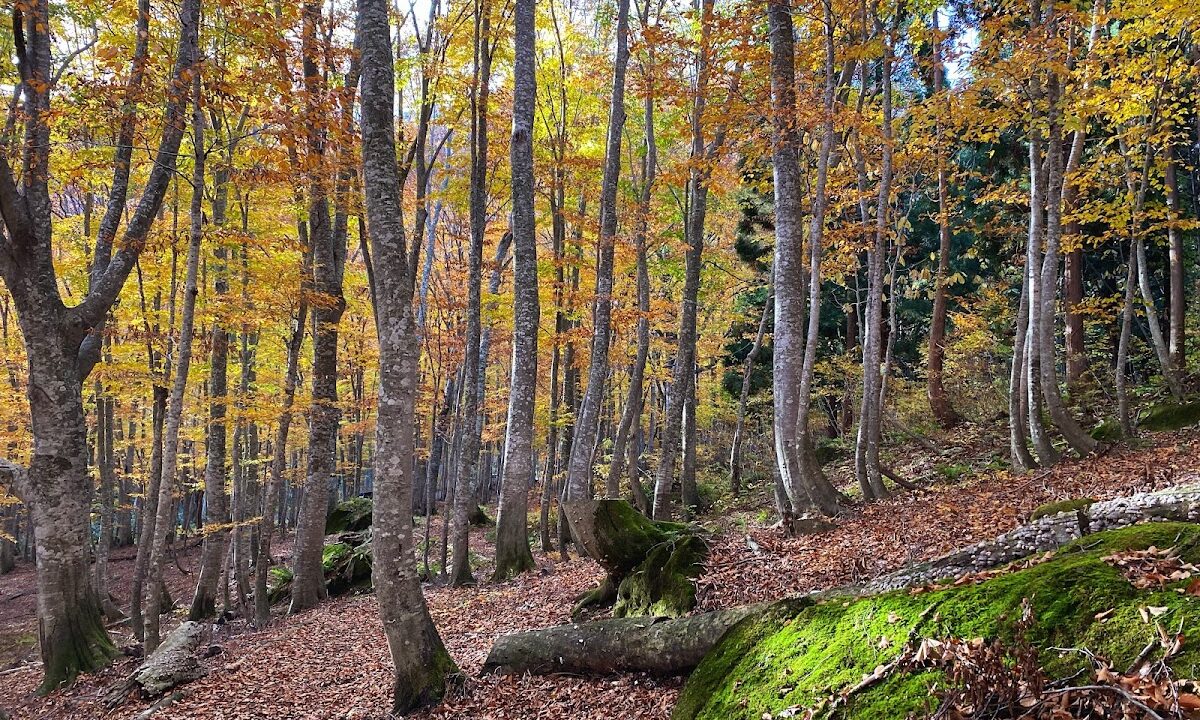
Another distinctive feature of Takadai Natural Observation Education Forest is the presence of numerous boulders and scattered rocks of various sizes throughout the forest. Over many years, these rocks have been covered with thick moss and, in harmony with ancient and young beech trees, create a landscape resembling a primordial natural garden.
The surfaces of moss-covered rocks are beautiful as soft green velvet, supporting diverse moss species that thrive in high-humidity environments. Tree roots extend from rock crevices, growing in ways that seem to embrace the rocks. This harmonious landscape of boulders and beech forest is truly one of Takadai’s signature attractions.
Pond with Japanese Tree Frogs and Black Salamanders
Along the hiking trail, there is a pond inhabited by Japanese tree frogs (Moriage frog) and black salamanders. From spring through early summer, it is sometimes possible to observe Japanese tree frogs depositing white foam-like egg clusters on tree branches overhanging the pond.
This pond also demonstrates the importance of aquatic environments in forest ecosystems. Beyond amphibians, one can quietly observe diverse creatures—birds and insects that gather seeking water—engaging in their vital activities.
The Spectacular Golden Autumn Foliage Season
Peak Foliage Viewing Period
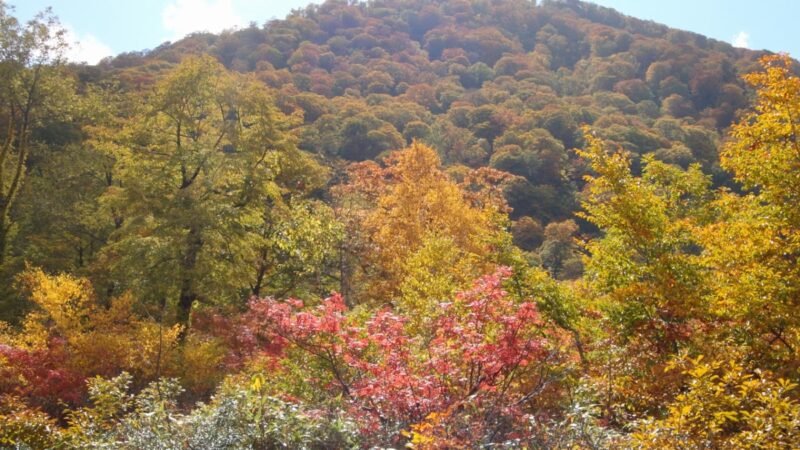
The autumn foliage at Takadai Natural Observation Education Forest typically reaches peak viewing from mid to late October. Due to its elevation of approximately 620 meters, visitors can experience autumn’s arrival earlier than in lowland areas.
As autumn arrives, beech leaves turn a brilliant yellow, enveloping the entire forest in golden hues. This “kōyō” (leaf yellowing) is beauty unique to beech forests, characterized by gentle, warm coloring that differs from the red foliage of other trees.
A Complete Golden Forest Appearing Only Three Days Per Year
Local wisdom holds that “the sight of the entire forest completely enveloped in gold appears only about three days per year.” Only those whose visit happens to coincide perfectly with ideal temperature, humidity, and sunlight conditions will encounter this spectacular landscape.
To witness the complete golden forest, one must carefully observe weather conditions and time the visit accordingly. Fujisato Town’s tourism association and Akita Prefecture’s tourism information websites update foliage progression regularly, so checking these before your visit is recommended.
Crowds During Peak Foliage Season
During peak foliage, especially on weekends and holidays, many tourists visit. With limited parking space, arriving early in the morning (around 8 to 9 AM) is recommended.
Weekdays are relatively quiet, allowing leisurely strolls through the peaceful forest. Those wishing to avoid crowds should consider visiting on weekdays. Additionally, the periods just before and after peak foliage (early October or early November) offer alternative views of the forest and are hidden gem timeframes.
Hiking Trails and Walking Course Details
Barrier-Free Accessible Hiking Trail
One of Takadai Natural Observation Education Forest’s major features is that portions of its hiking trail are designed for wheelchair accessibility. A paved, flat section extending approximately 300 meters from the entrance is accessible to wheelchair users and those with mobility concerns.
Even this section alone provides sufficient experience of beech giants, moss-covered rocks, and the forest atmosphere, making it suitable for short visits or those with limited physical stamina.
Full Loop Course (approximately 1.8 km)
For those confident in their physical abilities, the approximately 1.8-kilometer walking path established throughout the forest is recommended. The journey typically takes about 60 to 90 minutes at normal pace.
This course allows visitors to experience the following highlights:
- Entrance Zone: Secondary forest regenerating after harvesting
- Planted Cryptomeria Area: Section where visitors can learn the differences between artificial and natural forests
- Primary Beech Forest: First-growth forest with an ecosystem similar to the core area
- Boulder Zone: Fantastical area with moss-covered scattered rocks
- 400-Year-Old Beech: Plaza featuring the symbolic tree
- Japanese Tree Frog Pond: Vantage point for observing aquatic ecosystems
While the hiking trail is generally well-maintained, there are sections where tree roots protrude and areas that become slippery after rain. Walking shoes are recommended.
Important Notes for Walking
To safely enjoy Takadai Natural Observation Education Forest, please note the following:
- Bear precautions: The Shirakami Mountains area is home to Asian black bears. Carry bear bells or radios, and avoid traveling alone.
- Clothing: The forest is cooler than lowland areas, with shaded spots feeling chilly. Bring long sleeves and outerwear.
- Insect protection: Summer through autumn can see increased mosquitoes and horseflies. Insect repellent spray and long sleeves/pants are effective.
- Cell phone reception: Mountain areas have poor cell coverage. Check maps beforehand and establish a travel plan.
- Restrooms: Facilities exist near the parking area, but not along the trail. Use facilities before entering.
Access and Parking Information
Access by Car
Car access is most convenient for reaching Takadai Natural Observation Education Forest.
From Akita City:
- Approximately 50 minutes from “Noshiro Minami IC” on the Akita Expressway
- Head north on National Route 7, proceeding from Futatsui Town via Prefectural Route 317 to Fujisato Town
- Approximately 25 minutes on forest road from Fujisato Town center
From Hirosaki, Aomori Prefecture:
- Approximately 90 minutes from “Oowani Hirosaki IC” on the Tohoku Expressway
- Head south on National Route 7, accessing Fujisato Town via prefectural routes
Navigation System Entry:
Address searches may not display accurately. Searching for “Takadai Natural Observation Education Forest” or “Fujisato Komagatake Trailhead” works better.
Parking Information
Free parking is available near Takadai Natural Observation Education Forest’s entrance. However, capacity is limited to approximately 20 spaces, making early arrival recommended during peak foliage season.
The parking area provides restrooms and a basic information board. No trash bins are available, so please take all garbage with you.
Access by Public Transportation
Public transportation access is extremely limited. The nearest JR Ou Main Line station, “Futatsui Station,” requires approximately 40 minutes by taxi (approximately 8,000 yen one-way).
Some tourism bus tours operated by companies in Akita Prefecture include Takadai Natural Observation Education Forest. Check travel agency and Akita Prefecture Tourism Federation websites for current information.
Nearby Tourist Attractions
Shirakami Mountains World Heritage Center (Fujisato Hall)
A recommended stop before or after visiting Takadai Natural Observation Education Forest is the “Shirakami Mountains World Heritage Center (Fujisato Hall)” in Fujisato Town center. Visitors can learn about the Shirakami Mountains’ nature and ecosystems through videos and display panels.
Admission is free, featuring large screens introducing the Shirakami Mountains’ seasonal changes and three-dimensional dioramas displaying beech forest ecosystems, making it ideal for preparing before or reviewing after exploring Takadai.
Subari Lake (Subari-ko) Surroundings
Subari Lake, a representative scenic spot of Fujisato Town, is a reservoir lake created by damming the Fujikoto River. The lakeside Subari Park area offers beautiful reflections of autumn foliage on the water surface, a popular spot.
Subari Lake surroundings feature camping areas and hot spring facilities, serving as a base for accommodations during Shirakami Mountains tourism. It is approximately 30 minutes by car from Takadai Natural Observation Education Forest.
Fujisato Komagatake Climbing
For those enjoying full-scale mountaineering, climbing Fujisato Komagatake (1,158 meters elevation) is recommended. The trailhead is near Takadai Natural Observation Education Forest, with mountain-top views overlooking the Shirakami Mountains range.
The climbing course requires approximately 6 hours round-trip and suits intermediate climbers. The route passes through beech forest with observable vegetation changes as elevation increases.
Mase Gorge
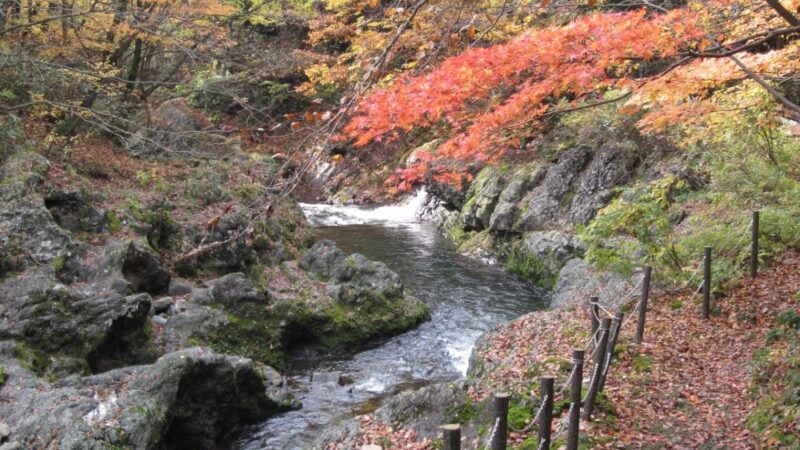
Mase Gorge represents the canyon beauty characteristic of Shirakami Mountains’ Akita Prefecture side. Located approximately 40 minutes by car from Fujisato Town, the gorge creates stunning landscapes through clear streams and oddly-shaped rocks.
A hiking trail along the gorge provides refreshing negative ion experiences. During foliage season, visitors experience distinctly different vibrant red and yellow autumn colors compared to Takadai’s yellowing foliage.
Seasonal Enjoyment
Spring (April to June)
As snow melts, the forest enters the new green season. Budding beech leaves display a beautiful yellow-green called “moegi-iro,” with the entire forest enveloped in soft light.
From May through June, coinciding with Japanese tree frog breeding season, white foam-like egg clusters may be spotted on pond branches. Spring wildflowers also bloom abundantly, with possible sightings of spring ephemeral plants like dogtooth violet and false hellebore.
However, some trail sections may be impassable due to remaining snow or snowmelt water. Check local tourism information before visiting for current trail conditions.
Summer (July to August)
Summer at Takadai is covered in deep green, ideal for forest bathing. The approximately 620-meter elevation provides cooler temperatures than lowlands, making it comfortable for escaping summer heat.
Beech leaves softly filter sunlight, and dappled light through the forest canopy creates beautiful scenes. Walking through the forest while hearing bird calls and insect sounds provides refreshing experiences for both mind and body.
High insect populations make insect protection essential. Additionally, even in summer, mornings and evenings may be chilly, so bringing a light jacket is advisable.
Autumn (September to November)
Autumn foliage season draws the most tourists to Takadai Natural Observation Education Forest. From mid to late October, beech yellowing reaches peak display, with the entire forest shining gold.
Foliage progression varies annually, but generally follows this pattern:
- Late September: Color change begins, green and yellow intermixed
- Early October: Increasing yellow, with beautiful gradient patterns
- Mid to late October: Peak viewing, golden forest
- Early November: Leaf fall begins, creating a yellow carpet on the ground
- Mid-November: Increased leaf fall, forest preparing for winter
Post-leaf-fall forests reveal tree structures, offering distinct alternate appeal.
Winter (December to March)
Winter snow closes hiking trails to general tourists. The Shirakami Mountains area is a heavy snowfall region with meters of accumulation.
However, snowshoe or cross-country ski-experienced visitors with proper winter mountain equipment may explore winter forests with professional guides. Fujisato Town occasionally offers winter guide tours.
Winter Shirakami Mountains display entirely different characteristics, allowing visitors to follow wildlife tracks and observe ice formations, offering completely different winter forest expressions.
Packing Checklist for Visiting Takadai
Prepare the following items for comfortable and safe walking:
Essential Items:
- Comfortable walking shoes (trekking shoes or athletic shoes)
- Drinking water (500ml or more)
- Bear bell or radio
- Rain gear (collapsible umbrella or rain jacket)
- Snacks (chocolate, candy, etc.)
Recommended Items:
- Jacket/cold-weather outerwear (temperature regulation)
- Insect repellent spray (spring to autumn)
- Sunscreen
- Hat
- Camera/smartphone (fully charged)
- Binoculars (for bird watching)
- Trash bag (for carrying out garbage)
- Map/guidebook
- First aid kit (bandages, antiseptic, etc.)
Convenient Additions:
- Trekking poles
- Spare socks
- Towel/handkerchief
- Plastic bags (for wet items)
- Insect bite medication
Photography Spots and Camera Setting Tips
Recommended Photo Locations
- 400-Year-Old Beech Giant: Shoot upward angle to emphasize trunk thickness and branch structure
- Moss-Covered Boulders and Beech Collaboration: Beautiful contrast between rock texture and trees
- Dappled Sunlight on Hiking Trail: Shoot into light for fantastical light rays
- Japanese Tree Frog Pond: Utilize water surface reflections in composition
- Golden Beech Forest: Use wide-angle shots for entire forest during foliage season
Photography Tips
Autumn Foliage Photography:
- Cloudy days produce vivid colors (watch for overexposure on sunny days)
- Polarizing filters enhance leaf color clarity
- Adjust exposure compensation to the positive side for brighter yellow representation
Forest Photography:
- Tripods enable shake-free shots in dim forest conditions
- Macro lenses effectively express moss texture
- Early morning light is soft, ideal for photography
Smartphone Photography:
- HDR mode balances exposure in high-contrast forest environments
- Display grid lines to maintain horizontal alignment
- Portrait mode blurs backgrounds, emphasizing subjects
Stay on established trails during photography; off-trail shooting damages vegetation. When using tripods, avoid obstructing other hikers’ passage.
Natural Protection and Shirakami Mountains
World Heritage Site Value
The Shirakami Mountains earned World Natural Heritage status because it preserves the world’s largest primary beech forest with minimal human impact. Beech forests serve as critical habitats for diverse flora and fauna, making ecosystem conservation paramount.
Though located outside the world heritage area, Takadai Natural Observation Education Forest maintains similar ecosystems, with its protection contributing to overall Shirakami Mountains conservation.
Rules Visitors Must Follow
To preserve precious nature for future generations, please observe these rules:
- Plant collection prohibited: Do not pick wild vegetables, flowers, or tree fruits
- Animal feeding prohibited: Do not disrupt wild animal ecosystems
- Trash removal required: Take all personal garbage with you
- Stay on designated trails: Prevent vegetation trampling
- Keep voices low: Consider wildlife and other visitors
- Smoking prohibited: Prevent forest fires
- Pet consideration: Use leashes; remove pet waste
Pursuing Sustainable Tourism
Recent increased visibility has raised Takadai Natural Observation Education Forest visitation, boosting regional development while increasing environmental pressure. Fujisato Town implements regular trail maintenance, information signage, and environmental education programs, pursuing balanced natural protection and tourism development.
Individual visitor environmental consideration helps preserve this beautiful forest for coming generations.
Local Accommodations and Hot Spring Facilities
Accommodation Options in Fujisato Town
Subari Lake Area:
- Subari Park Campground: Lakeside camping available
- Pensions/Private Lodges: Local ingredient cuisine featured
Fujisato Town Center:
- Business Hotels/Traditional Inns: Standard amenities available
Hot Spring Facilities
Poyoyon-no-Mori Otaki: Fujisato Town’s day-use hot spring facility, perfect for post-hike relaxation. An on-site restaurant features local ingredients.
Surrounding Municipality Hot Springs:
- Noshiro City: Noshiro Hot Spring, Hiyama Hot Spring, others
- Kita-Akita City: Hot springs surrounding Mt. Morioka
- Odate City: Odate Gurumi Hot Spring, others
Combining Shirakami Mountains tourism with hot spring soaking creates more fulfilling travel experiences.
Frequently Asked Questions
Q: Is entrance fee required for Takadai Natural Observation Education Forest?
A: Entrance is free. Parking is also complimentary. A voluntary contribution box may be present for facility maintenance support.
Q: How much time is required for the walk?
A: Barrier-free section only requires approximately 30 minutes round-trip; full loop course (approximately 1.8km) needs 60 to 90 minutes. Those enjoying photography or detailed nature observation should allocate approximately 2 hours.
Q: Is the location family-friendly?
A: Yes, well-maintained trails make child-accompanied visits safe. However, mind small children around exposed tree roots and steps. Bringing noise-making devices for bear precautions is recommended.
Q: Can pets accompany visitors?
A: Pet accompaniment is possible with mandatory leashing and waste removal. Considering the area as wildlife habitat, minimize pet ecosystem impact.
Q: Can wheelchair users complete the full course?
A: Only the approximately 300-meter entrance section features barrier-free wheelchair-accessible design. Full loop course sections contain steps and unpaved areas making wheelchair passage difficult.
Q: Is winter visitation possible?
A: Winter (December through March) seasonal snow closes trails to general tourists. Reopening timing varies with snowmelt conditions. Contact Fujisato Town tourism association before winter visits for status confirmation.
Q: Are nearby convenience stores or restaurants available?
A: No convenient stores or restaurants exist near Takadai Natural Observation Education Forest. Nearest commercial facilities are in Fujisato Town center (approximately 30 minutes by car). Prepare food and drinks beforehand.
Q: Are guided tours available?
A: Fujisato Town occasionally arranges nature guide tours for Shirakami Mountains. Contact Fujisato Town Tourism Association or Shirakami Mountains World Heritage Center (Fujisato Hall) for current information. Guide accompaniment enables deeper nature understanding.
Conclusion
Takadai Natural Observation Education Forest in Fujisato Town, Akita Prefecture, is positioned adjacent to Shirakami Mountains World Heritage site’s core area, offering accessible experience of primary beech forest. Established hiking trails enable varied visitors—beginners, elderly visitors, and wheelchair users—to experience world heritage-class natural environments directly.
Especially during mid to late October foliage season, beech yellowing paints the entire forest golden, with a completely gold forest appearing perhaps three days yearly—a truly spectacular sight. With abundant highlights including ancient 400-year-old beech trees, moss-covered boulders, and Japanese tree frog ponds, visitors experience the primordial forest’s mysterious atmosphere fully.
Car access proves most convenient, requiring approximately one hour from Akita or Noshiro cities. Prepare comfortable walking shoes and bear precautions; observe nature conservation rules; and help preserve this precious forest for future generations.
As a gateway to the Shirakami Mountains, Takadai Natural Observation Education Forest represents Japan’s finest primary forest experience. Consider visiting to witness this natural marvel displaying seasonal transformations, connecting with nature’s ancient legacy.