Natsui River Gorge Fukushima Prefecture | Complete Guide from Spectacular Autumn Leaves and Akayashio to Year-Round Attractions
The Natsui River Gorge, located in Iwaki City, Fukushima Prefecture, is a magnificent gorge stretching approximately 16 kilometers, formed over a long period of time as clear streams eroded the granite of the Abukuma mountain range. Designated as the Natsui River Gorge Prefectural Natural Park in 1953, this scenic area extends from Kawamae Station to Ogawago Station on the Bandai-Atsui Line, captivating many tourists as a natural artwork created by unusual rock formations and steep cliffs.
Overview and History of Natsui River Gorge
The Natsui River is a first-class river approximately 63 kilometers long that originates in the central Abukuma Plateau and flows to the Pacific Ocean while carving deep valleys. The Natsui River Gorge, located in its upper reaches, particularly shows the most beautiful scenery in the approximately 16-kilometer section from Kawamae to Ogawago.
The formation of the gorge took tens of thousands of years or more. The clear waters of the Natsui River continuously eroded the granite-based bedrock of the Abukuma mountain range, creating the steep cliffs and strangely shaped rocks visible today. This geological characteristic creates a unique landscape that sets it apart from other gorges.
The designation as a prefectural natural park was carried out for the purpose of protecting and preserving the region’s rich natural environment and scenic beauty. For over 70 years since then, the natural landscape has been continuously protected through the efforts of local residents and the administration.
Seasonal Attractions and Notable Spots
Spring’s Spectacular Akayashio (Rock Azalea) Scenery
The representative landscape of spring in the Natsui River Gorge is the mass bloom of Akayashio. From mid-April to early May, Akayashio that grows naturally on the cliffs and rocky areas along the gorge bloom all at once, coloring the entire gorge with pale pink flowers.
Akayashio is a warm-region azalea distributed in mountainous areas on the Pacific side of Honshu and is a species endemic to Japan. In the Natsui River Gorge, it is particularly abundant on steep terrain, creating an exquisite natural beauty through the contrast of rock faces, clear streams, and pale pink flowers. During this season, many photography enthusiasts and nature observers visit to enjoy the spring gorge beauty.
In addition to Akayashio, various azalea species such as Togokunitsutatsutsuji and Yamamitsuji color the gorge. Since these azaleas bloom at slightly different times, you can enjoy the flower scenery for an extended period from April to May.
Early Summer and Summer’s Fresh Green and Cool Streams
From early summer through summer, the Natsui River Gorge becomes a refreshing space wrapped in deep green. The fir and hornbeam trees growing along the valley create deep forests, with dappled sunlight reflecting off the clear stream creating a fantastical sight.
The temperature inside the gorge is several degrees lower than in the plains, making it comfortable even in midsummer, which makes it popular as a summer retreat. The murmuring of the clear stream and the rustling of leaves in the wind resound throughout, creating a healing spot where you can refresh yourself in nature.
The upper reaches of the clear stream are inhabited by mountain trout and Japanese char, making it an attractive area for fishing enthusiasts. Because the water quality remains highly transparent, you can also observe fish from the riverbank.
Autumn Foliage Season – The Most Popular Time
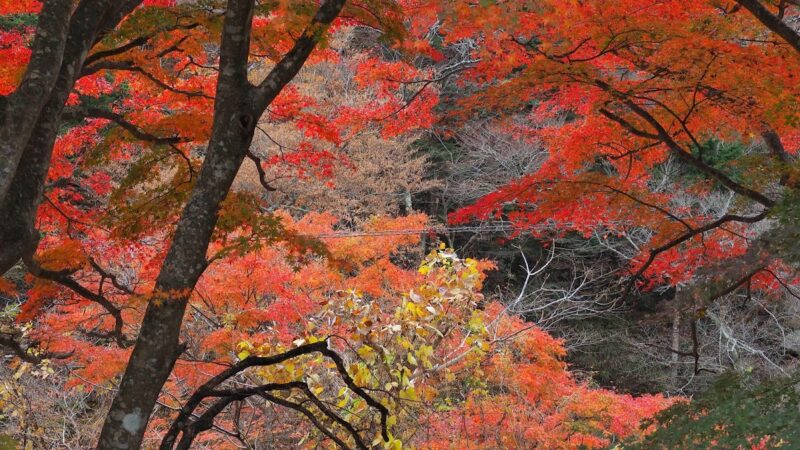
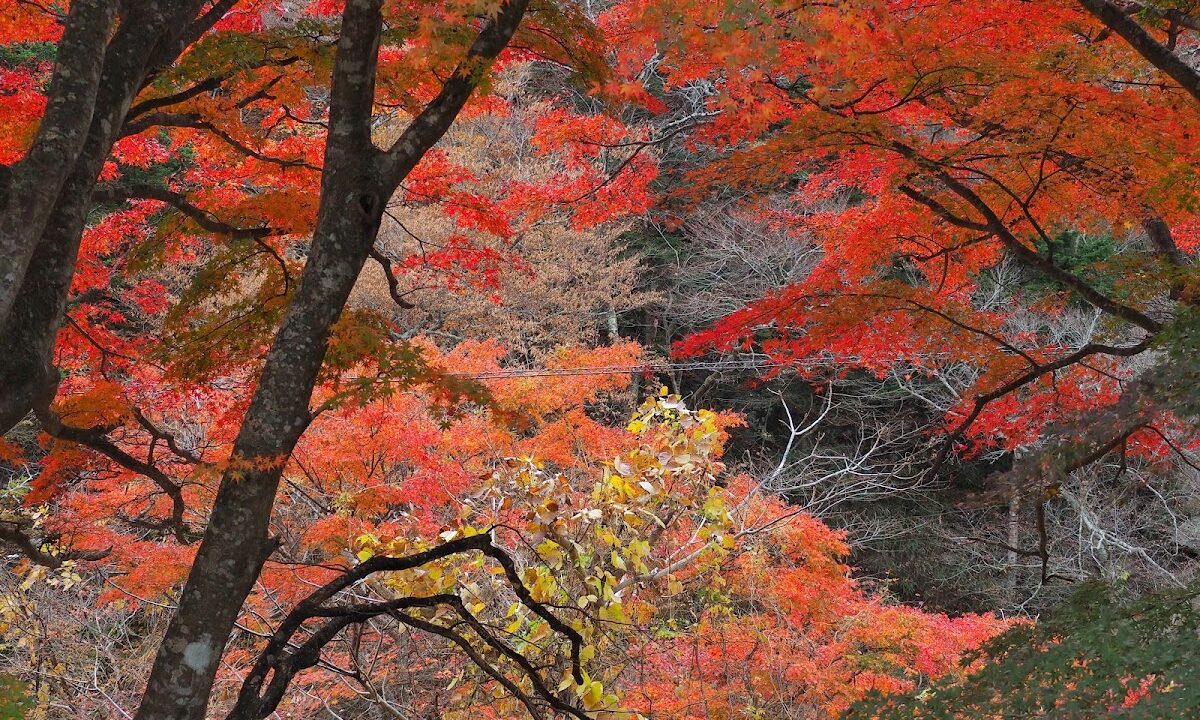
The Natsui River Gorge attracts the most tourists during the autumn foliage season from late October to mid-November. During this period, the gorge displays scenery that can truly be called a masterpiece painted by nature.
The maples and Japanese maples covering the cliffs turn brilliant red and orange, and the harmony of colors created by the green of evergreen trees, the white-gray of granite, and the blue of the clear stream is breathtaking. Especially on clear days, the contrast between the blue sky and autumn leaves becomes even more beautiful.
The best time for autumn foliage varies slightly from year to year depending on climate conditions, but generally begins to color in late October and reaches its peak in early to mid-November. By late November, leaf fall advances, but the carpet of fallen leaves also has charm and creates an atmosphere of late autumn.
During the autumn foliage season, trains on the Bandai-Atsui Line may run at reduced speed through the gorge section, allowing passengers to slowly enjoy the foliage scenery from the windows. This “autumn foliage train” has become a popular local event, beloved by railroad enthusiasts and tourists.
Winter’s Serene Gorge Beauty
The Natsui River Gorge in winter is visited by few people, evoking a sense of a separate world enveloped in silence. The entire gorge is covered in white due to snow accumulation, creating a monochromatic ink-wash painting-like landscape.
During the severe winter, waterfalls freeze and become ice falls. Furthermore, rime and frost cover the trees, creating a fantastical winter scene. However, during winter, access can become difficult due to frozen roads and snow accumulation, so adequate preparation and caution are necessary when visiting.
Major Attractions
Kagoba Falls (Kagoba no Taki)
The most famous attraction in the Natsui River Gorge is Kagoba Falls. Located near the center of the gorge, this waterfall resounds powerfully as water flows down the granite bedrock, presenting an impressive landscape.
The area around the falls is surrounded by steep cliffs, and especially during the autumn foliage season, the combination of waterfall and autumn leaves creates a spectacular view. The area around the pool of the falls has water spray, creating a healing spot where you can feel negative ions.
A hiking trail has been developed to Kagoba Falls, making it relatively easy to access. However, there are some difficult sections with poor footing, so comfortable hiking shoes are recommended.
Rock Formations and Cliff Scenery
A major feature of the Natsui River Gorge is the unusual rock formations and cliffs formed by erosion over the years. As erosion progressed along the joints (fractures in rock) characteristic of granite, varied terrain emerged, including columnar and tower-shaped unusual rocks and vertically cut cliffs.
In particular, on the towering cliffs, pines and maples take root from gaps in the rocks, conveying the strength and beauty of nature. Red pines are prominent on narrow ridge lines, and landscapes like Japanese paintings with harmonized rocks and trees continue for approximately 15 kilometers.
These unusual rock formations and cliffs are also valuable materials for geological study and have worth as teaching materials for learning the sculptural beauty of nature.
Train Views from the Bandai-Atsui Line
Another way to enjoy the scenery of the Natsui River Gorge is the views from trains on the Bandai-Atsui Line. In the section from Kawamae Station to Ogawago Station, the track is laid along the gorge, allowing passengers to fully enjoy the gorge’s beauty from the train windows.
Especially during the autumn foliage season, the train sometimes reduces speed through the gorge section, with consideration given for passengers to enjoy the scenery slowly. The gorge scenery viewed while swaying on a train has a different charm than hiking or driving through it.
For railroad enthusiasts, the trains running through the gorge themselves become subjects, and it is popular as a spot where you can photograph the harmony of nature and railroads.
Access Information and Nearby Facilities
Access by Car
When accessing the Natsui River Gorge by car, Iwaki Central IC on the Joban Expressway is the nearest interchange. It takes approximately 30 minutes from the IC to the gorge.
The typical route goes via National Route 49 and north on the Ono Shiokura Prefectural Road (Prefectural Route 14). Parking spaces are scattered along the gorge, but early arrival is recommended during congested periods like the autumn foliage season.
In winter, there is a possibility of icy roads and snow accumulation, requiring the installation of studless tires or the carrying of chains. Additionally, portions of the road along the gorge are narrow, so drive cautiously while watching for oncoming traffic.
Public Transportation Access
When using the JR Bandai-Atsui Line, Kawamae Station, Eda Station, and Ogawago Station serve as access points to the gorge. In particular, from Eda Station, you can access part of the gorge on foot in approximately 15 minutes.
However, the Bandai-Atsui Line has limited service, so it is necessary to check the timetable in advance and plan accordingly. It is also recommended to keep in mind the return train schedule and arrange an itinerary with plenty of time.
Nearby Lodging Facilities
When considering lodging around the Natsui River Gorge, Iwaki City proper and the Yumoto Hot Spring area are convenient. The Iwaki Yumoto Hot Spring, in particular, is located approximately 40 minutes by car from the gorge and is ideal as a tourism base.
Yumoto Hot Spring is an ancient spa with approximately 1,600 years of history, boasting abundant hot spring water and high-quality spring water. Relaxing your tired body in the hot spring after exploring the gorge is one of the pleasures of traveling. The hot spring resort has various types of lodging facilities, from established inns to modern hotels.
Iwaki City proper has many business hotels where you can stay at relatively reasonable prices. Using the city as a base also provides good access to other tourist attractions.
Surrounding Tourist Attractions
Seto Garo (Seto Garo)
Another scenic spot worth visiting in conjunction with the Natsui River Gorge is Seto Garo, also in Iwaki City. This gorge, known as a scenic area since the Edo period, extends for approximately 2.5 kilometers along the Seto River, a tributary of the Natsui River.
Seto Garo has an even more rugged terrain than the Natsui River Gorge, with continuous large and unusual rock formations, offering thrilling gorge scenery. Although hiking trails are developed, there are some difficult sections requiring a certain level of fitness and equipment.
Adatara Mountain Ropeway
As another natural spot in Fukushima Prefecture, the Adatara Mountain Ropeway is also recommended. While it is at a distance from the Natsui River Gorge, it is a must-visit spot for enjoying Fukushima’s mountain beauty.
Taking the ropeway to the summit station at approximately 1,350 meters elevation provides a 360-degree panoramic view. You can enjoy spectacular seasonal scenery including spring greenery, summer alpine plants, autumn foliage, and winter rime.
Jupialand Hirata’s Moss Pink
As a spring flower destination, Jupialand Hirata (Yomotake Forest Park) in Hirata Village, Ishikawa District is also popular. A hill with approximately 250,000 moss pinks planted becomes a pink carpet-like landscape from late April to early May.
Since the timing overlaps with the Natsui River Gorge’s Akayashio bloom, visiting both as a spring flower tour course in Fukushima Prefecture is recommended.
Natural Environment and Ecosystem of Natsui River Gorge
Vegetation Characteristics
The vegetation of the Natsui River Gorge is rich in diversity depending on altitude and terrain. In the moist environment of the valley floor, firs and hornbeams dominate and form deep forests. These trees have the resilience to endure the cool summers and harsh winters.
On the other hand, in dry-prone environments like narrow ridgelines and rocky areas, red pines stand out. Red pines have the characteristic of thriving even in poor soil, making them a representative tree species well-adapted to the gorge’s harsh environment.
Spring-blooming Akayashio and azalea species such as Togokunitsutatsutsuji and Yamamitsuji grow naturally on rocky areas and steep slopes, adding color to the gorge. These are warm-region plants reflecting the relatively warm Pacific-side climate.
Stream Ecosystem
The clear Natsui River stream is inhabited by mountain trout and Japanese char. These fish prefer cool, clear streams with good water quality, serving as indicator species for the Natsui River Gorge’s rich water environment.
Many aquatic insects also inhabit the stream area, serving as important food for fish. Nymphs of stoneflies, caddisflies, and mayflies are also indicator insects showing good water quality.
Additionally, many wild birds inhabit the forests around the gorge, with calls of Japanese bush warblers, varied tits, and Japanese tits echoing. With luck, waterside birds such as crested kingfishers and common kingfishers may also be observed.
Precautions and Etiquette When Visiting
Safety Considerations
When visiting the Natsui River Gorge, the following safety considerations are necessary.
Footing Safety: The hiking trail along the gorge has rocky areas and steep slopes with some slippery sections. Always wear comfortable hiking shoes, preferably trekking shoes. Avoid sandals and heeled shoes.
Weather Confirmation: Mountain weather changes rapidly, and sudden rain can cause flooding. Check the weather forecast in advance and avoid visiting if bad weather is expected or occurring.
Avoid Solo Hiking: Try to travel with multiple people to prepare for any accidents. Since cellular signals are weak in some areas, inform someone beforehand of your planned activities.
Winter Caution: In winter, frozen roads and snow accumulation can make access dangerous. Unless you have adequate equipment and experience, it is best to avoid visiting in winter.
Environmental Protection and Etiquette
The Natsui River Gorge is a valuable natural environment protected as a prefectural natural park. Each visitor should follow the following etiquette to preserve this beautiful nature for future generations.
Always Take Out Trash: There are no trash cans in the gorge. Take all trash with you. Cigarette butts are no exception.
Do Not Collect Plants: Plants such as Akayashio are protected. Picking flowers or branches is strictly prohibited. Photography is permitted, but be careful not to damage plants.
Do Not Capture Living Creatures: Capturing stream fish and insects disrupts the ecosystem. Observation is fine, but observe quietly.
Avoid Loud Voices: Other visitors come to enjoy the serenity of nature. Avoid shouting or playing music at high volume.
Do Not Trespass Beyond Designated Areas: To prevent danger and protect vegetation, do not enter areas marked as off-limits or areas beyond the hiking trail.
Photography Tips
Recommended Photography Spots
The Natsui River Gorge is a treasure trove of subjects for photography enthusiasts. Keep the following points in mind to capture impressive photographs.
Kagoba Falls Area: Compositions combining the waterfall, surrounding rock walls, and seasonal plants are popular. Especially during the autumn foliage season, you can capture beautiful photographs of the waterfall and autumn leaves in contrast.
Cliffs and Clear Stream: Compositions combining steep cliffs with clear streams effectively convey the gorge’s grandeur. Using a wide-angle lens allows you to capture dynamic scenery.
Bandai-Atsui Line Trains: Trains running through the gorge are subjects that can express the harmony between nature and human creation. Researching train schedules in advance is helpful.
Optimal Shooting Times
Early Morning: Early morning mist that envelops the gorge may allow you to capture fantastical images. Especially in autumn early mornings, autumn leaves illuminated by the rising sun are particularly beautiful.
Late Morning to Early Afternoon: When the sun is high, light reaches the entire gorge, allowing bright and vivid photographs.
Evening: A gorge illuminated by sunset takes on warm tones. However, darkness falls rapidly after sunset, so pay careful attention to returning safely.
Photography Equipment and Settings
Wide-Angle Lens: To capture the expanse of the gorge, a wide-angle lens (24mm or less) is effective.
Telephoto Lens: To capture details of distant waterfalls or cliffs, a telephoto lens (70mm or more) is convenient.
Tripod: A tripod is essential for slow shutter speed photography to express waterfall flow or for photography in dark gorge interiors. However, be mindful not to obstruct other visitors on narrow trail sections.
PL Filter: Effective for suppressing water surface reflections or rendering blue skies more vividly.
Regional History and Culture
Iwaki City and the Natsui River Connection
Iwaki City is located in the southeastern part of Fukushima Prefecture on the Pacific coast, characterized by a warm climate. The city’s area is the largest in Fukushima Prefecture and has diverse natural environments and rich historical and cultural heritage.
The Natsui River is one of the major rivers flowing through Iwaki City and has been deeply connected with the lives of local people since ancient times. The upper gorge area preserves natural scenery, while the middle and lower reaches are utilized as irrigation water and water for daily living.
Gorge and Regional Development
The Natsui River Gorge serves as an important tourism resource for Iwaki City, contributing to regional development. Especially during the autumn foliage season, many tourists visit, producing significant effects on the local economy.
Locally, efforts continue to protect the gorge’s natural environment while utilizing it as a tourism resource. Trail maintenance, installation of guide signs, and cleaning activities are conducted through cooperation among local residents, the administration, and volunteers.
Additionally, collaborative efforts between railway companies and the region, such as the operation of the “autumn foliage train” on the Bandai-Atsui Line, are promoting the gorge’s attractions from multiple angles.
Annual Events and How to Obtain Latest Information
Autumn Foliage Season Events
Every autumn foliage season, local tourism events may be held. Guided gorge walking tours, sales of local specialties, and photography contests are typically planned.
Information about these events can be confirmed on the Iwaki City tourism information site and the official website of the tourism association. Checking information in advance and planning to visit during events is recommended.
Sources for Latest Information
The latest information about the Natsui River Gorge can be obtained through the following methods.
Iwaki City Sightseeing and Product Association: The official website and SNS provide information about the gorge’s best viewing time and access information.
Fukushima Prefecture Tourism Information Site: Comprehensively provides tourism spot information for the prefecture, including detailed information about the Natsui River Gorge.
JR East: You can check the operational information for the Bandai-Atsui Line and the autumn foliage train operation schedule.
Local Roadside Stations and Tourist Information Centers: You can learn about the latest local information and hidden gem spots known only to local people.
Summary: How to Fully Enjoy the Charm of Natsui River Gorge
The Natsui River Gorge in Iwaki City, Fukushima Prefecture, is a magnificent 16-kilometer-long gorge formed as clear streams eroded the granite of the Abukuma mountain range. Designated as a prefectural natural park in 1953, this scenic area continues to captivate visitors with its seasonal natural beauty.
The pale pink of spring Akayashio, the deep green and cool streams of summer, the blazing autumn foliage, and the serene snowy winter landscape—the gorge presents a different face with each season, always offering new discoveries no matter how many times you visit. Particularly from late October to mid-November, the autumn foliage season is spectacular, with brilliant red and orange covering the cliffs, drawing many tourists.
With major attractions including Kagoba Falls, train views from the Bandai-Atsui Line, and rich natural environment and ecosystem, there are abundant elements of interest for nature and photography enthusiasts.
When visiting, pay careful attention to safety and follow environmental protection etiquette to preserve this beautiful nature for future generations. With appropriate equipment and planned activities, you can fully enjoy the charm of the Natsui River Gorge.
Combining a stay at the Iwaki Yumoto Hot Spring with gorge exploration allows for an enriching travel plan that includes both gorge trekking and hot spring bathing. Additionally, visiting nearby attractions such as Seto Garo along with the gorge offers a deeper experience of Iwaki City’s natural beauty.
The Natsui River Gorge, a treasure trove of Fukushima Prefecture’s nature, continues to provide visitors with awe and healing through its grand landscapes and rich natural environments. Please visit this beautiful gorge at least once to experience the sculptural beauty of nature.
-800x450.jpg)
-800x450.jpg)