.jpg)
Oku-Kuji Gorge (Ibaraki Prefecture) Complete Guide | Fall Foliage, Access, and Attractions Explained in Detail
The Oku-Kuji Gorge, which spans Daigo Town in Kuji District, Ibaraki Prefecture, is a representative scenic spot in Ibaraki Prefecture where visitors can enjoy the natural beauty created by the clear Kuji River and landscapes that change with the four seasons. Especially during the fall foliage season, maple, chinquapin, and oak trees paint the mountains in vibrant colors, attracting many tourists. This article provides detailed information you should know before visiting, including the charm of Oku-Kuji Gorge, attractions, access methods, and nearby tourist spots.
What is Oku-Kuji Gorge? Basic Information and Characteristics
Oku-Kuji Gorge is located on the border between Ibaraki and Fukushima Prefectures and is a gorge formed by the Kuji River, the main branch of the Kuji River water system originating from the north slope of Yami Mountain (elevation 1,021.8 meters), Ibaraki’s highest peak. This gorge, which extends approximately 25 kilometers in length, is protected as part of the Oku-Kuji Prefectural Natural Park, and a rich natural environment is maintained.
Geographic Features
The Oku-Kuji Gorge area has a unique topography where the Kuji River, National Route 118, and the JR Suigun Line run parallel to each other. These three elements intersect while cutting through the gorge, and the key feature is that beautiful scenery can be enjoyed from both car windows and trains. The elevation difference and complex terrain of the gorge create varied spectacular views.
The Kuji River is known for its “finest sweetfish in the Kanto region,” and the clarity of its water has been selected by the Ministry of the Environment as one of the “100 Best Waters in Japan.” The high transparency of the water flowing through the gorge captivates visitors.
History and Culture of Oku-Kuji Gorge
The Oku-Kuji area, centered on Daigo Town, is a region where forestry and agriculture have flourished since ancient times. Sweetfish fishing on the Kuji River using its clear water is a traditional industry that has continued since the Edo period, and many anglers still visit today. Additionally, old highways pass along the gorge, and they once played an important role as transportation routes for goods.
Oku-Kuji Gorge Fall Foliage | Viewing Season and How to Enjoy
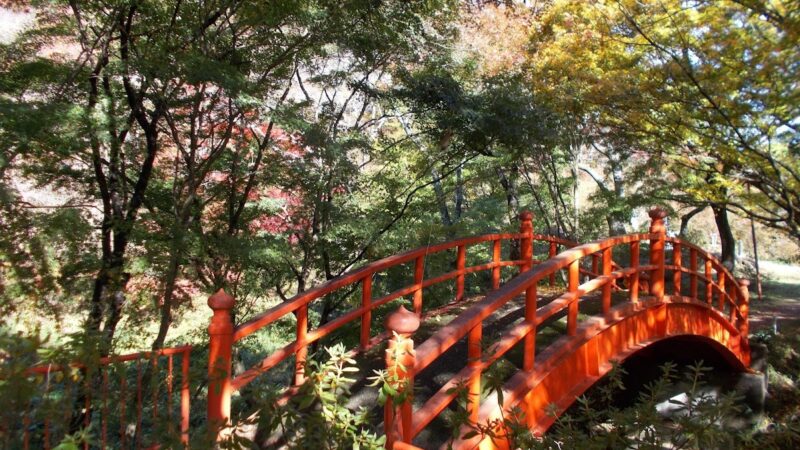
The greatest charm of Oku-Kuji Gorge is undoubtedly the autumn foliage. The sight of the vast area turning red and yellow is breathtaking, and it is known as one of the finest foliage viewing spots in Ibaraki Prefecture.
Foliage Viewing Season
The best time to see fall foliage at Oku-Kuji Gorge is typically from early November to mid-November. Because of the elevation difference, the colors begin to appear gradually from the tops of mountains, allowing visitors to enjoy beautiful foliage over approximately two weeks.
The foliage season varies slightly depending on temperature and weather, but generally follows this schedule:
- Late October: Trees at higher elevations begin to change color
- Early November: The entire gorge begins to reach peak viewing
- Mid-November: Peak beauty, the most vibrant period
- Late November: Leaf fall progresses, with late autumn atmosphere
Types of Trees Displaying Fall Colors
The main foliage trees found at Oku-Kuji Gorge include:
- Maple varieties: Turn vibrant red and are the main feature coloring the gorge
- Chinquapin: Change from yellowish-brown to reddish-brown
- Oak varieties: Display beautiful gradations from yellow to orange
- Japanese maple: Deep crimson colors shine in the gorge
The mixture of these trees creates a complex and beautiful color harmony rather than a single hue.
Best Spots for Foliage Viewing
There are several points in the Oku-Kuji Gorge area where foliage can be particularly beautiful:
Along National Route 118: You can enjoy continuous spectacular views while driving. Especially the section from the Korofuji area to the center of Daigo Town features a wonderful landscape where the Kuji River and foliage intertwine.
Around Fukurobiki Falls: A representative tourist spot in the Oku-Kuji Gorge area, with a magnificent collaboration between the falls and foliage.
JR Suigun Line Train Window: Viewing the foliage from a train window allows you to enjoy it in a leisurely manner. The section from Hitachi-Daigo Station to Yabusaki-san Station is particularly recommended.
Oku-Kuji Gorge Driving Course | Scenic Route Guide
Oku-Kuji Gorge is known as an “excellent driving course,” and centered on National Route 118, visitors can drive while enjoying varied landscapes.
Recommended Driving Route
Basic Route (approximately 2 hours)
- Start at Hitachi-Daigo Station area
- Head north on National Route 118 and enjoy the scenery of the Kuji River in the Korofuji area
- Take a break and tour Fukurobiki Falls (Time required: approximately 1 hour)
- Continue heading north toward Yabusaki-san (Fukushima Prefecture border)
- Return and dine or shop in the center of Daigo Town
Highlights Along the Drive
Scenery Along the Kuji River: Because National Route 118 runs along the Kuji River, you can constantly enjoy clear river water and gorge beauty. The reflection of foliage on the water surface and the contrast between rock faces and greenery are beautiful.
Tunnels and Bridges: The road weaving through the gorge has several tunnels and bridges, each offering views from a different angle.
Parallel with JR Suigun Line: In sections where the road and railway run parallel, the sight of trains becomes a popular photography spot.
Notes for Driving
- Congestion during Foliage Season: Weekends in November are particularly crowded, so an early morning departure is recommended
- Confirm Parking: Major tourist spots have parking areas, but they can become full, so check in advance
- Road Width: Some sections have narrow roads, so drive safely while being careful of oncoming traffic
- Gas Stations: Since this is a mountain area, it’s best to refuel at the center of Daigo Town for peace of mind
Access to Oku-Kuji Gorge
Oku-Kuji Gorge can be reached by both car and train, each with its own characteristics.
By Car
From Tokyo
- Approximately 50 minutes via National Route 118 from “Naka IC” on the Joban Expressway (approximately 50 km)
- Travel time: Approximately 2 hours 30 minutes from Tokyo
From Mito
- Heading north on National Route 118, approximately 1 hour (approximately 45 km)
From Fukushima
- Approximately 1 hour via National Route 289 and Route 118 from “Shirakawa IC” on the Tohoku Expressway
Parking is available at paid parking areas around Fukurobiki Falls (approximately 500 yen) and free parking at Daigo Town tourist facilities.
By Train
Using JR Suigun Line
- Approximately 1 hour 30 minutes from Mito Station to Hitachi-Daigo Station
- Approximately 2 hours from Koriyama Station to Hitachi-Daigo Station
Since the Suigun Line itself runs along the gorge, the train journey itself becomes sightseeing. Particularly during the fall foliage season, the views from the train windows are spectacular, and you can enjoy a leisurely trip.
Local and Tour Buses
A local bus operates from Hitachi-Daigo Station toward Fukurobiki Falls. Since the number of buses is limited, it’s necessary to check the schedule in advance. Additionally, temporary buses may be added during the foliage season.
Tourist Spots Around Oku-Kuji Gorge
In addition to gorge scenery, there are many other attractions in the Oku-Kuji Gorge area.
Fukurobiki Falls
Fukurobiki Falls, counted among Japan’s three most famous waterfalls, is a representative tourist spot in the Oku-Kuji Gorge area. The massive falls, 120 meters high and 73 meters wide, descend in four stages and are also called “Yondo Falls” (Four Times Falls), presenting a different appearance in each season.
During the foliage season, the collaboration between the falls and autumn colors is stunning, and the view from the observation platform is breathtaking. In winter, the falls may freeze into an “ice cascade,” making it enjoyable year-round.
- Admission: Adults 300 yen, Children 150 yen (observation facility usage fee)
- Operating Hours: 8:00 AM – 6:00 PM (8:00 AM – 5:00 PM in November)
- Time Required: Approximately 1 hour
Tsukimachi Falls
Tsukimachi Falls, 17 meters high and 12 meters wide, is known as a “back-view waterfall” where you can walk behind the falls. The area around the waterfall basin, filled with negative ions, is cool in summer and beautiful with foliage in autumn.
A tea house near the falls allows you to eat the local specialty soba while viewing the falls. Since it’s less crowded than Fukurobiki Falls, it’s recommended for those who want to enjoy nature at a leisurely pace.
Ryujin Great Suspension Bridge
The Ryujin Great Suspension Bridge is a 375-meter pedestrian suspension bridge that crosses Ryujin Gorge at a height of 100 meters. From the bridge, you can enjoy a 360-degree panoramic view of Ryujin Dam and the surrounding mountains.
During the foliage season, the sea of autumn colors spreading below is spectacular, making it one of Ibaraki Prefecture’s finest foliage spots. The bridge is also popular for bungee jumping.
- Admission: Adults 320 yen, Children 210 yen
- Operating Hours: 8:30 AM – 5:00 PM
- Parking: Free
Daigo Hot Spring
To relieve the fatigue of Oku-Kuji Gorge sightseeing, Daigo Hot Spring is recommended. Located along the Kuji River, the hot spring area has excellent day-use bathing facilities. The spring water is alkaline simple hot spring, gentle on the skin, and known as a “beauty hot spring.”
The hot spring area has many accommodations, allowing you to enjoy Oku-Kuji’s nature while staying for an extended period.
Apple Picking and Agricultural Products Farmers’ Markets
Daigo Town is also known as an apple production area, and apple picking is available in autumn. Additionally, at the roadside station “Oku-Kuji Daigo,” you can purchase fresh local agricultural products and souvenirs.
Specialty products include:
- Oku-Kuji Apples: Well-balanced sweetness and acidity
- Oku-Kuji Shamo: A local chicken breed with good meat quality
- Konnyaku: Handmade konjac is popular
- Hitachi Autumn Buckwheat: Fragrant locally produced buckwheat
Gourmet Information for Oku-Kuji Gorge
The Oku-Kuji area has delicious gourmet offerings that make use of local ingredients.
Sweetfish Cuisine
The Kuji River is famous for its “finest Kanto sweetfish,” and wild sweetfish in particular are exquisite. You can enjoy them in various preparations including salt grilling, sweet simmering, and frying. Specialty sweetfish restaurants and inns often serve them as course meals.
The sweetfish season is June to September, but frozen and processed products are available year-round.
Hitachi Autumn Buckwheat
Hitachi Autumn Buckwheat, a branded buckwheat from Ibaraki Prefecture, is characterized by its high fragrance and sweetness. Daigo Town has many soba restaurants where you can enjoy “three fresh” soba—freshly ground, freshly made, and freshly boiled.
Many restaurants near Fukurobiki Falls and around Tsukimachi Falls allow you to eat soba while enjoying the scenery.
Oku-Kuji Shamo Cuisine
Oku-Kuji Shamo is a branded local chicken that Ibaraki Prefecture takes pride in. Characterized by firm meat texture and strong umami, it is served in various dishes including oyakodon, grilled chicken, and hot pot. Many restaurants in Daigo Town serve shamo cuisine, and you should definitely try it when visiting.
Roadside Station Gourmet
At the roadside station “Oku-Kuji Daigo,” you can enjoy light meals and sweets made with local ingredients. From apple pie and soft serve ice cream to dishes using local vegetables, you can enjoy Oku-Kuji’s flavors easily.
Oku-Kuji Gorge’s Four Seasons | Charms Beyond Fall Foliage
While Oku-Kuji Gorge is famous for foliage, each season offers different attractions.
Spring at Oku-Kuji Gorge
From late March to early April, wild cherry blossoms begin to bloom, painting the mountains in soft pink. Also, during the fresh greenery season (late April to May), vibrant green covers the gorge, creating a refreshing landscape.
This season has fewer tourists and is a hidden gem season for quietly enjoying nature.
Summer at Oku-Kuji Gorge
June to August is when the greenery deepens, and river play and sweetfish fishing in the Kuji River become available. The cool air of the gorge and clear stream make it ideal as a summer retreat.
The areas around Fukurobiki Falls and Tsukimachi Falls are particularly cool, allowing you to refresh yourself while bathed in negative ions.
Winter at Oku-Kuji Gorge
December to February allows you to see the “ice cascade” when Fukurobiki Falls freeze, offering a magical winter landscape. Additionally, the gorge dusted with snow is special, and the winter Oku-Kuji Gorge, enveloped in silence, is also popular among photographers.
While the cold is severe, a winter trip while warming up in hot springs is also appealing.
Model Courses for Oku-Kuji Gorge Sightseeing
Here are model courses for efficiently exploring the Oku-Kuji Gorge area.
Day Trip Course (by Car)
9:00 AM Arrive at Hitachi-Daigo Station area, gather information at the roadside station
9:30 AM Drive north on National Route 118, enjoy gorge scenery
10:30 AM Visit Fukurobiki Falls (Time required: approximately 1 hour)
12:00 PM Lunch with soba around Fukurobiki
1:30 PM Tour Tsukimachi Falls
2:30 PM Move to Ryujin Great Suspension Bridge (20 minutes by car)
3:00 PM Stroll on Ryujin Great Suspension Bridge
4:30 PM Day-use bathing at Daigo Hot Spring
6:00 PM Purchase souvenirs at roadside station, head home
1 Night 2 Days Course
[Day 1]
Morning: Arrive and drive through the gorge
Afternoon: Tour Fukurobiki Falls and Tsukimachi Falls
Evening: Check in at a Daigo Hot Spring inn
Night: Enjoy sweetfish cuisine or Oku-Kuji Shamo
[Day 2]
Morning: Visit Ryujin Great Suspension Bridge
Afternoon: Apple picking experience, shopping at roadside station
Return: Drive home slowly along National Route 118
Notes and Etiquette for Oku-Kuji Gorge Sightseeing
Clothing and Belongings
- Comfortable Walking Shoes: Sneakers or other comfortable walking shoes are essential for exploring along the gorge and viewing falls
- Cold-Weather Clothing: Since this is a mountain area, fall and winter temperatures are lower than in urban areas. Bring a jacket
- Rainwear: Since weather can change suddenly, having a compact umbrella or raincoat is reassuring
- Camera: Because there are many spectacular spots, ensure your camera and smartphone are fully charged
Natural Conservation and Etiquette
- Take Trash with You: To protect the natural environment, always take trash with you
- Plant Collection Prohibited: Collecting plants within the prefectural natural park is prohibited
- Respect Closed Areas: Avoid entering dangerous areas or private property
- Do Not Feed Wildlife: Do not feed wild animals to protect the ecosystem
Safety Notes
- Caution During High Water: After heavy rain, the river swells, so stay away from the riverbank
- Slippery Surfaces: Areas around falls and along the gorge are slippery, so walk carefully
- Bear Sightings: There are rare reports of bear sightings. Take measures such as carrying a bell
Accommodations Around Oku-Kuji Gorge
The Oku-Kuji Gorge area has various types of accommodations.
Hot Spring Inns
Daigo Hot Spring has several hot spring inns along the Kuji River. You can enjoy hot springs while listening to the river’s murmur and cuisine made from local ingredients. Particularly during the foliage season, these are popular, so early reservations are recommended.
Hotels and Business Hotels
The center of Daigo Town has affordable business hotels. They are convenient as sightseeing bases and suitable for multiple-night stays.
Inns and Pensions
Family-run inns and pensions are scattered throughout the area. The appeal is their homey atmosphere and warm hospitality.
Campgrounds
For outdoor enthusiasts, campgrounds along the Kuji River are recommended. You can enjoy river play and barbecuing while spending time in nature.
Photography Spots at Oku-Kuji Gorge
For photography enthusiasts, Oku-Kuji Gorge is an excellent shooting field.
Recommended Photography Points
Scenic Viewpoints along National Route 118: There are several spots overlooking the gorge where you can photograph the majestic landscape with a wide-angle lens.
Fukurobiki Falls Observation Platform: There are first and second observation platforms from which you can photograph the falls from different angles. Tripod use is also possible.
JR Suigun Line Photography Locations: Photographs combining trains, gorges, and foliage are popular. It’s also recommended to ask local photography enthusiasts about shooting points.
Best Photography Timing
- Early Morning: Morning mist sometimes appears, allowing for mystical photographs
- Evening: Foliage illuminated by the western sun shines beautifully
- Cloudy Days: For falls photography, soft light on cloudy days is ideal
Information Useful for Oku-Kuji Gorge Sightseeing
Tourist Information Center
Daigo Town Tourist Association
- Address: 2669-3 Ikeda, Daigo Town, Kuji District, Ibaraki Prefecture
- Phone: 0295-72-0285
- Operating Hours: 8:30 AM – 5:15 PM
You can obtain tourist pamphlets and check the latest foliage information and event details.
How to Check Foliage Information
Since the foliage season varies by year, check the latest information before your visit:
- Daigo Town Tourist Association official website
- Ibaraki Prefecture Tourism and Products Association “Kanko Ibaraki”
- Various foliage information websites (Walker Plus, etc.)
- Social media hashtag searches (#okukunji-gorge #daigo-town-foliage)
Event Information
In autumn, events such as “Oku-Kuji Daigo Festival” are held. Timing your visit to coincide with events allows for a more fulfilling sightseeing experience.
Summary: Fully Enjoy the Charm of Oku-Kuji Gorge
Oku-Kuji Gorge is a representative tourist destination in Ibaraki Prefecture where visitors can enjoy the natural beauty created by the clear Kuji River and landscapes that change with the four seasons. Especially from early to mid-November during the fall foliage season, maples, chinquapins, and oaks paint the mountains in vibrant colors, captivating visitors.
The driving course centered on National Route 118 is an excellent route for enjoying continuous spectacular views, and nearby tourist attractions such as Fukurobiki Falls, Tsukimachi Falls, and Ryujin Great Suspension Bridge are well-developed. Additionally, cuisine such as sweetfish dishes, Hitachi autumn buckwheat, and Oku-Kuji Shamo should not be missed.
With good accessibility, approximately 2 hours 30 minutes from Tokyo, Oku-Kuji Gorge can be enjoyed as a day trip or as a 1-2 day stay. It’s a tourist area recommended for everyone—those who want to refresh themselves in nature, those who want to see beautiful fall foliage, and those who want to enjoy delicious cuisine.
When visiting, check foliage information and access details in advance, and enjoy nature while respecting etiquette. The rich natural environment and warm hospitality of Oku-Kuji Gorge will surely create wonderful memories for you.
-800x450.jpg)
-800x450.jpg)