
Nakakamado Weeping Japanese Maple: A Complete Guide to Fukushima Prefecture’s Nationally Designated Natural Monument
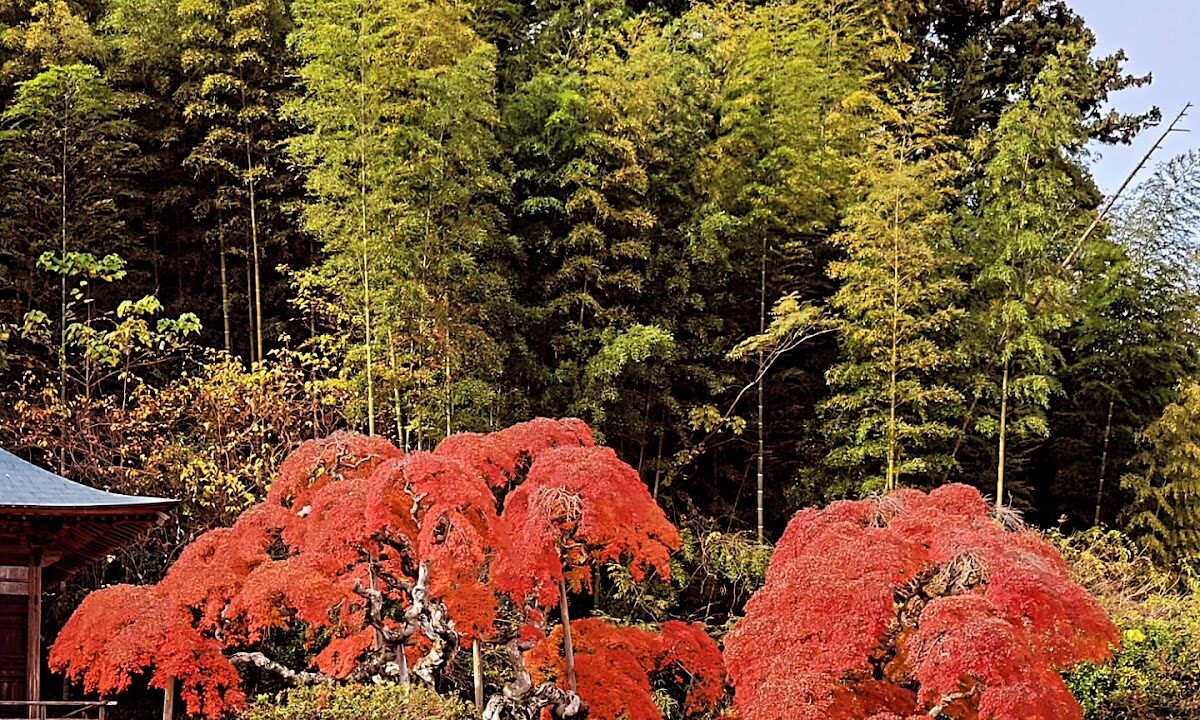
The “Nakakamado Weeping Japanese Maple” located in Nakakamado, Watanabe Town, Iwaki City, Fukushima Prefecture, is an extraordinarily rare mutant form of Japanese maple (Acer palmatum) that was designated as a national natural monument in 1937 (Showa 12). Its uniquely twisted trunk and branches that drape like an open umbrella have captivated countless visitors as a work of art created by nature.
About the Nakakamado Weeping Japanese Maple
The Nakakamado Weeping Japanese Maple consists of two Japanese maples—one large and one small—growing within the grounds of Kannon-do Temple. These are believed to be congenital mutant strains and exhibit distinctive tree shapes entirely different from ordinary Japanese maples.
Value as a Nationally Designated Natural Monument
On June 15, 1937 (Showa 12), this tree was designated as a national natural monument. The designation was based on its extremely rare morphological characteristics of pronounced “weeping” and “twisting” caused by mutation of the Japanese maple. Iwaki City serves as the management organization, and the tree is properly preserved in accordance with the Cultural Properties Protection Law.
Detailed Tree Specifications
The specifications of the large specimen (the larger Weeping Japanese Maple) are as follows:
- Tree Height: 6.8 meters
- Circumference at Root: 2.75 meters
- Diameter at Breast Height: 3.5 meters (some sources cite 1.1 meters)
- Spread of Canopy: Approximately 10 meters east-west, approximately 2 meters north-south
- Tree Age: Unknown
The trunk is characteristically white and twisted, with knots appearing in places. This combination of twisting and weeping creates a unique landscape not seen in other types of maples.
The Mechanism of Japanese Maple Mutation
The Nakakamado Weeping Japanese Maple is a mutant strain of Acer palmatum. While ordinary Japanese maples typically have an upright form, this individual is believed to have acquired the characteristics of drooping branches and a twisted trunk through genetic mutation.
Characteristics of the Mutation
While weeping cherry blossoms and weeping plum trees are widely known as ornamental varieties, weeping maples are extremely rare. Particularly those arising from natural spontaneous mutations are valuable from an academic perspective. The Nakakamado Weeping Japanese Maple can be considered a miraculous tree born from such a natural coincidence.
Best Viewing Season and Color Transitions
The Nakakamado Weeping Japanese Maple is known as one of the most famous autumn foliage sites in Fukushima Prefecture, where the leaves change color at one of the latest times.
Peak Viewing Period
Typically, the foliage reaches peak color from mid-November to late November. The period around late November is often the height of the season, making this a valuable autumn foliage site that can be enjoyed even after other foliage spots in Fukushima Prefecture have finished.
Color Gradient
As autumn progresses, leaves gradually transition from orange to deep red in a gradient effect. Combined with the tree’s unique weeping form that spreads like an umbrella, it creates a fantastical landscape as if a red umbrella had descended to the ground.
Best Timing for Photography
Many photography enthusiasts visit during the foliage season. Taking photos in soft morning light reveals beautiful transmitted light through the leaves and more vivid gradations. Evening light with its low angle also effectively accentuates the tree’s three-dimensionality.
Access Information
Here is detailed information on how to access the Nakakamado Weeping Japanese Maple.
Location
Address: Fukushima Prefecture, Iwaki City, Watanabe Town, Nakakamado, Omote-mae 117-2 and surrounding areas
Access by Public Transportation
It is approximately 15 minutes by car from JR Joban Line “Izumi Station.” Access by public transportation alone is difficult, so taxi use is recommended. If taking a taxi from Izumi Station, the one-way fare is approximately 2,000 yen.
Access by Car
If using the Joban Expressway:
- Approximately 20 minutes from Iwaki Yumoto Interchange
- Approximately 25 minutes from Iwaki Central Interchange
Access via National Route 6 is also possible, with the route heading toward Watanabe Town being convenient. When using a car navigation system, search for “Nakakamado Weeping Japanese Maple” or “Iwaki City Watanabe Town Nakakamado Kannon-do” for best results.
Parking Information
There are a few parking spaces near Kannon-do Temple, but congestion is possible during peak foliage season. Please plan extra time when visiting. Parking is free.
Basic Information and Viewing Points
Operating Hours and Admission
- Viewing Hours: No specific restrictions (daytime viewing recommended)
- Admission Fee: Free
- Viewing Period: Year-round (foliage season: mid-November to late November)
Since the tree is located within temple grounds, please be respectful of worshippers during your visit.
Points to Note When Visiting
- Natural Monument Protection: It is strictly prohibited to touch the tree or break branches
- Respect for Private Grounds: Kannon-do Temple is also a place of local worship, so please view quietly
- Trash Disposal: For environmental protection, please take all trash with you
- Weather Check: Foliage conditions vary with climate, so checking information before visiting is recommended
How to Check Latest Information
You can check foliage progress and peak viewing information on the Iwaki City tourism information website and the Fukushima Prefecture Tourism Bureau official site. Real-time information on social media is also helpful.
Recommended Nearby Attractions
Here are nearby tourist spots in the Iwaki City area worth visiting along with the Nakakamado Weeping Japanese Maple.
Iwaki City Tono Auto Campground
A facility where you can enjoy camping in a natural environment. Located approximately 30 minutes by car from the Nakakamado Weeping Japanese Maple, it is recommended for outdoor enthusiasts.
Yunodake Area
The Yunodake Parking Areas (both uphill and downhill) on the Joban Expressway are convenient rest stops. Local specialty products are also sold here, making it suitable for souvenir shopping.
Iwaki Yumoto Hot Spring
Iwaki Yumoto Hot Spring, known as “Yumoto,” is approximately 20 minutes by car from the Nakakamado Weeping Japanese Maple. A plan to enjoy a soak in the hot spring after viewing the foliage is also recommended. The historic hot spring town has many accommodations and offers day-trip bathing as well.
Aquamarine Fukushima
A representative aquarium of Iwaki City, approximately 40 minutes by car from the Nakakamado Weeping Japanese Maple. With abundant marine life exhibits, it is also popular with families.
Dining Information in the Area
Local Cuisine of Iwaki City
Iwaki City is surrounded by sea and mountains, so fresh seafood and agricultural products are abundant. In particular, deep-sea fish called “meikari” are known as a famous local dish when prepared as fried appetizers.
Recommended Restaurant Areas
There are numerous restaurants serving dishes made with local ingredients around Izumi Station and in the Yumoto Hot Spring town. Why not stop by before or after foliage viewing?
Nearby Accommodation Information
Inns and Hotels at Iwaki Yumoto Hot Spring
The Iwaki Yumoto Hot Spring, the closest hot spring area to the Nakakamado Weeping Japanese Maple, has diverse accommodations ranging from traditional inns to modern hotels. Reservations can be crowded during the foliage season, so early booking is recommended.
Hotel Midori Iwaki Ueda
A business hotel offering reasonable prices. It is conveniently located as a tourism base within Iwaki City.
Hotels Near Izumi Station
Several business hotels are located near Izumi Station, offering convenient access when using public transportation.
History and Cultural Background of the Nakakamado Weeping Japanese Maple
Relationship with Kannon-do Temple
The Nakakamado Weeping Japanese Maple grows beside Kannon-do Temple, the center of local worship. This temple has long been cherished by local residents and the Weeping Japanese Maple itself has been loved as a symbolic presence of the community.
Circumstances of National Monument Designation
In the early Showa period, as nationwide protection of valuable natural heritage was being promoted, this maple with its distinctive tree form was recognized for academic value and designated as a national natural monument in 1937. Since that time, conservation efforts by local residents have been ongoing, and today Iwaki City and the community continue to cooperate in preservation efforts.
Positioning in the Local Community
The Nakakamado Weeping Japanese Maple is not only a valuable cultural property of Iwaki City but also a source of pride for the community. During foliage season, it attracts many visitors from inside and outside the prefecture, contributing to regional revitalization.
The Nakakamado Weeping Japanese Maple Through the Seasons
Spring Fresh Verdure
Beyond autumn foliage, the spring fresh greenery also offers beautiful scenery. From April to May, the emergence of young leaves is filled with vitality and offers different charm from autumn.
Summer Deep Green
During summer, dense green leaves create the shade-providing canopy, and the umbrella-shaped form provides cool shade. During this period, visitor numbers are low, allowing quiet appreciation of the tree.
Winter Tree Form Beauty
After the leaves fall in winter, the twisted trunk and drooping branches’ skeletal structure become clearly visible, allowing appreciation of the tree’s intrinsic unusual beauty. The sight with accumulated snow is also fantastical.
Tips and Etiquette for Photography
Photography Points
The classic angle captures the whole tree from the Kannon-do Temple side, but photographing from various angles allows expression of the tree’s three-dimensional beauty. Especially effective is the angle shooting upward from beneath the drooping branches, where the transmitted foliage light appears beautifully.
Photography Etiquette
- When using tripods, be considerate of other visitors
- Do not enter inside barriers to protect the tree
- Be mindful not to obstruct temple worshippers
- Avoid occupying a location for extended periods
Tourism Information About Iwaki City
Characteristics of Iwaki City
Iwaki City is located in the southeastern part of Fukushima Prefecture along the Pacific Ocean and features a warm climate. It is the largest city by area in the Tohoku region and possesses diverse tourism resources including sea, mountains, and hot springs.
Other Cultural Properties and Natural Monuments
In addition to the Nakakamado Weeping Japanese Maple, Iwaki City has many cultural properties and natural monuments. The Iwaki City Museum of History provides detailed information about these.
Tourism Seasons
Beyond the November foliage season, the city offers year-round attractions including spring cherry blossoms, summer beach bathing, and winter hot springs.
Editorial Recommendations
The greatest charm of the Nakakamado Weeping Japanese Maple lies in the unique beauty of form created by nature. The organic form created by the combination of twisting and weeping cannot possibly be artificially created and is truly a natural artwork.
Particularly, late November during foliage season is a valuable period when it can be enjoyed even after other foliage spots in Fukushima Prefecture have finished. The gradient from orange to red makes the tree’s distinctive form stand out even more.
When visiting, please take time to observe carefully. By viewing from various angles, you can appreciate the tree’s complex structure and the mystery of nature. A tourism plan combining nearby Iwaki Yumoto Hot Spring is also recommended.
Summary
The Nakakamado Weeping Japanese Maple is an extraordinarily rare mutant Japanese maple and a nationally designated natural monument of which Iwaki City is proud. This giant tree, with a height of 6.8 meters and canopy spread of approximately 10 meters east-west, creates a unique landscape with its twisted trunk and drooping branches.
The foliage, which typically peaks around late November, displays beautiful gradations from orange to red and is known as one of Fukushima Prefecture’s most famous autumn foliage sites for its late-season timing. Access is convenient at approximately 15 minutes by car from JR Izumi Station and approximately 20 minutes from Iwaki Yumoto IC on the Joban Expressway.
Please enjoy this artwork created by nature in the serene environment of the temple grounds. By visiting together with nearby tourist attractions such as Iwaki Yumoto Hot Spring, you can experience a more enriching trip to Fukushima Prefecture.
-800x450.jpg)
-800x450.jpg)
-800x450.jpg)