Complete Guide to Fukuman Kokuzō Bodhisattva Enzenji Temple|A Historic Temple with 1,200 Years of History in Yanagitsu Town, Fukushima Prefecture
Fukuman Kokuzō Bodhisattva Enzenji Temple (福満虚空藏菩薩圓藏寺), located in Yanagitsu Town, Kawanuma District, Fukushima Prefecture, is an ancient temple representing the Aizu region with over 1,200 years of history. The solemn appearance standing on the sacred rocky mountain of Reigan-san, overlooking the Tadami River, exerts an overwhelming presence to all who visit. This article provides a comprehensive introduction to the charm of Enzenji Temple, including its history, principal deity, access methods, and nearby attractions.
History and Origins of Fukuman Kokuzō Bodhisattva Enzenji Temple
Founding in Daido 2 (807)
Fukuman Kokuzō Bodhisattva Enzenji Temple was founded in Daido 2 (807) by the venerable monk Tokuichi Daishi. Tokuichi Daishi was an eminent monk who flourished from the Nara period through the early Heian period, and was an important figure who spread Buddhist culture throughout the Aizu region. Among the temples Tokuichi Daishi established in Aizu, Enzenji Temple occupies a particularly important position and has developed as the largest Buddhist center in Oku-Aizu.
The temple’s mountain name is Reigan-san (霊巌山), and it currently belongs to the Rinzai School, Myoshinji Branch. For over 1,200 years, it has gathered the faith of the people of Aizu and has been cherished as “Yanagitsu’s Kokuzō-sama.”
Deep Connection with Kōbō Daishi
The principal image of Enzenji Temple, the Fukuman Kokuzō Bodhisattva, is said to have been carved by Kōbō Daishi Kūkai. Kōbō Daishi is known as the founder of the Shingon school, a great monk of the early Heian period, and was known for his deep faith in Akashagarba Bodhisattva. In his youth, he is said to have practiced the Kokuzō Gumonnji dharma and attained infinite memory and wisdom.
This principal image is said to have been carved by Kōbō Daishi himself, or alternatively, created under his guidance, and has become the source of the temple’s spiritual efficacy.
One of Japan’s Three Great Akashagarba Bodhisattvas
Fukuman Kokuzō Bodhisattva Enzenji Temple is counted as one of the Three Great Akashagarba Bodhisattvas in Japan (Nihon San Kokuzō-son). The other two temples are as follows:
- Daiman Kokuzō Bodhisattva (Muramatsu-san Kokuzō-dō, Tokai Village, Naka District, Ibaraki Prefecture)
- Nōman Kokuzō Bodhisattva (Nōmanji Temple, Amatsu-Komminato, Kamogawa City, Chiba Prefecture)
These three Akashagarba Bodhisattvas are named “Fukuman,” “Daiman,” and “Nōman” respectively, symbolizing various virtues governed by Akashagarba Bodhisattva, including wisdom, wealth, and artistic skill. The Fukuman Kokuzō Bodhisattva is particularly believed to grant the blessings of “complete good fortune,” and is visited by worshippers seeking business prosperity and household peace.
About the Principal Deity: Fukuman Kokuzō Bodhisattva
What is Akashagarba Bodhisattva
Akashagarba Bodhisattva (Kokuzō Bosatsu) is a bodhisattva possessing infinite wisdom and compassion as vast and boundless as the universe itself. In Sanskrit, it is called “Akashagarba,” which means “the treasury of the void.” It is believed to store all virtues and bestow them abundantly upon those who seek them.
It is particularly said to bring benefits such as improved memory and wisdom, academic achievement, and advancement in the arts, and has been the object of faith for those dedicated to learning since ancient times.
Guardian Bodhisattva for Those Born in the Years of the Ox and Tiger
The Fukuman Kokuzō Bodhisattva is the lifetime guardian principal deity (ichidai-mamori-honzon) for those born in the Year of the Ox (ushi) and Year of the Tiger (tora). A lifetime guardian principal deity is a Buddha determined by one’s birth year zodiac sign that is believed to protect one throughout one’s entire life.
For those born in the years of the Ox and Tiger, a pilgrimage to Fukuman Kokuzō Bodhisattva Enzenji Temple holds special significance. It is believed that by visiting during major life transitions or periods of difficulty and offering prayers to the principal deity, one receives wisdom and courage.
The Temple Grounds and Attractions of Enzenji
The Solemn Appearance of the Kokuzō Hall
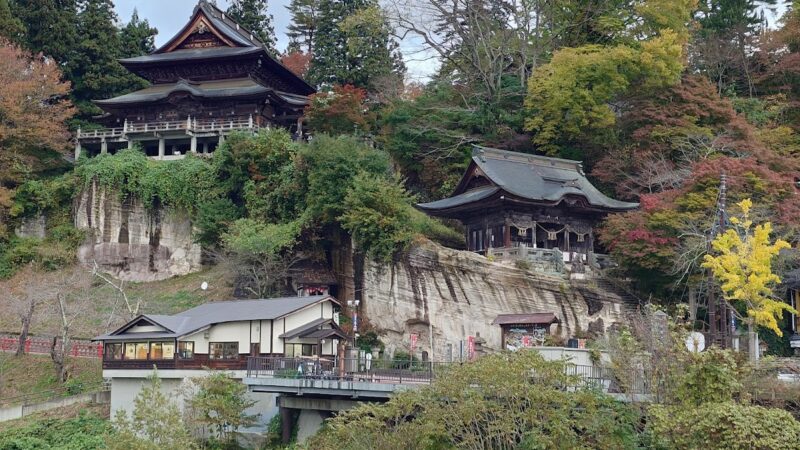
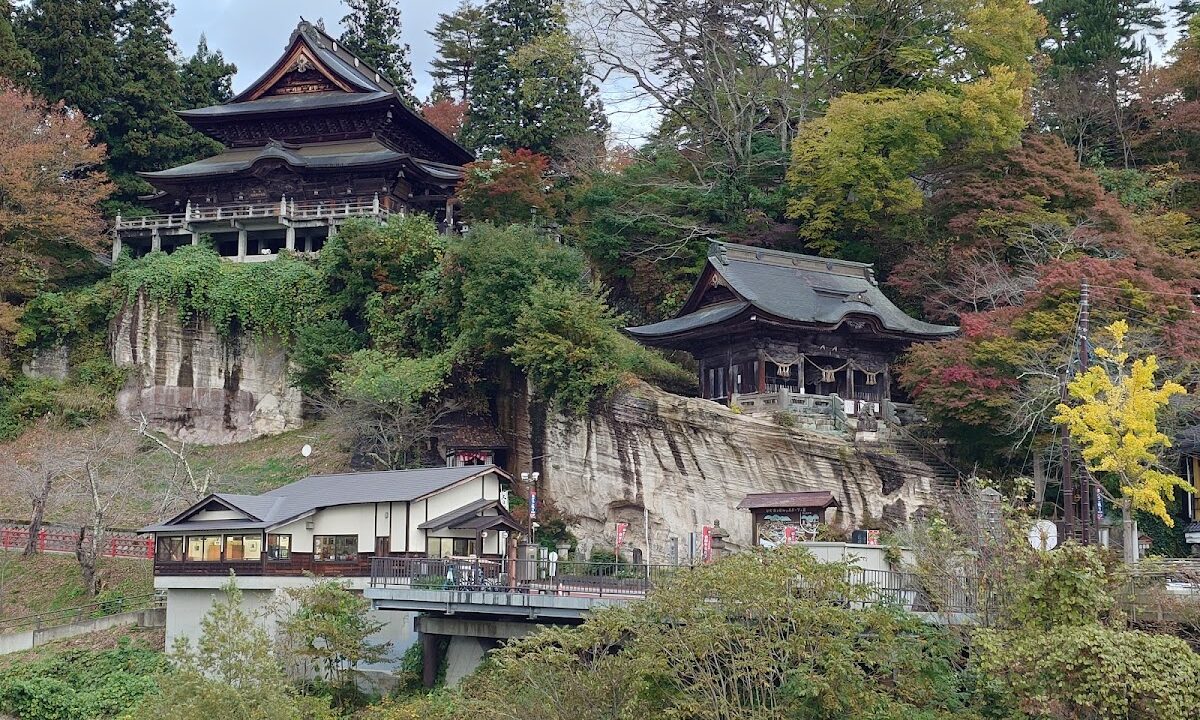
The centerpiece of Enzenji Temple is the Kokuzō Hall. Built on a sheer cliff overlooking the Tadami River, this hall presents a weighty and solemn appearance against a white rock face. While the current structure has been rebuilt following several fires and natural disasters, its imposing form continues to welcome visitors unchanged.
Within the hall resides the principal image of Fukuman Kokuzō Bodhisattva, and visitors can worship in an austere atmosphere. The interior decorations and Buddhist implements convey the weight of history, telling the story of 1,200 years of faith.
The Legend of Aka-Beko (Red Cow)
Enzenji Temple is also known as the birthplace of the “Aka-Beko” legend, famous as a folk craft of the Aizu region.
According to legend, when the Kokuzō Hall was being constructed, while struggling with material transport, a herd of red cows appeared from nowhere to help. When the construction was completed, the red cows are said to have turned into stone, remaining in the temple grounds.
From this legend, the Aka-Beko spread throughout the Aizu region as a charm for warding off evil and ensuring good health. There are also Aka-Beko monuments on the temple grounds that serve as memorable photography spots for visitors.
Natural Beauty Through the Four Seasons
The temple grounds and surrounding area of Enzenji are also scenic spots where visitors can enjoy natural beauty throughout the four seasons.
Spring Cherry Blossoms: Cherry trees are planted on the temple grounds and along the Tadami River, and in spring, pale pink flowers adorn the ancient temple. The scenery created by the red bridge that symbolizes Yanagitsu Town (Zuikoji Bridge), the cherry blossoms, and the temple buildings enchants many photography enthusiasts as a representative spring landscape of Aizu.
Autumn Foliage: In autumn, the temple grounds are enveloped in fall colors, with trees dyed red and yellow further enhancing the solemn beauty of the ancient temple. Combined with the scenic beauty of the Tadami River gorge, a picture-like landscape unfolds.
View from Kiyohime Park: From Kiyohime Park on the opposite bank, one can see the entire panorama of Enzenji Temple standing on the cliff overlooking the Tadami River. This scenery has been selected as one of “Fukushima’s 50 Scenic Views,” and is a must-see viewing spot when visiting Enzenji Temple.
Worship Information and Access
Basic Information
Official Name: Fukuman Kokuzō Bodhisattva Reigan-san Enzenji Temple
Sect: Rinzai School, Myoshinji Branch
Principal Deity: Fukuman Kokuzō Bodhisattva
Address: 176 Jikecho, Yanagitsu, Yanagitsu Town, Kawanuma District, Fukushima Prefecture
Phone: 0241-42-2002
Visiting Hours: Temple grounds open to public (hall worship restricted depending on time)
Admission: Free for temple grounds (separate fee for special worship)
Access Methods
By Train:
- Get off at “Aizu-Yanagitsu Station” on the JR Banetsu Line, approximately 10 minutes walk
- From Aizu-Wakamatsu Station, approximately 40 minutes by train
By Car:
- Approximately 20 minutes from “Aizu-Sakashita IC” on the Banetsu Expressway via National Route 252
- Parking: Multiple parking lots in the gate town (free and paid)
By Bus:
- From Aizu-Wakamatsu Station on Aizu Bus heading for “Yanagitsu/Miyashita,” approximately 1 hour, get off at “Yanagitsu” and walk 5 minutes
Tips for Worship
When visiting Enzenji Temple, keeping the following points in mind will allow for a more fulfilling worship experience.
- Time of Visit: Early morning hours offer a quiet and solemn atmosphere. Morning worship is recommended.
- Temple Stamps: You can receive a temple stamp (goshuin) at the temple office. Both pre-printed and hand-written stamps are available.
- Talismans and Offerings: A variety of protective talismans and offerings unique to Enzenji Temple are available, including Fukuman Kokuzō Bodhisattva talismans and Aka-Beko merchandise.
- Photography: Photography is generally permitted on the temple grounds, but may be prohibited inside the hall. Please be respectful when taking photos.
Attractions in Yanagitsu Town and Surrounding Tourism
Yanagitsu Hot Spring District
Yanagitsu Town, which prospered as a gate town of Enzenji Temple, has hot spring inns and public bath facilities scattered throughout. Relaxing at the hot springs after worship is one of the pleasures of Yanagitsu sightseeing.
The hot spring district along the Tadami River features a variety of accommodations, from established traditional inns to modern hotels, where visitors can fully enjoy the nature and history of Oku-Aizu.
Yanagitsu Cuisine
Awa Manju: A traditional confection known as a specialty of Yanagitsu. This modest-tasting sweet rice cake is filled with red bean paste using “awa,” a type of glutinous rice, and is sold in confectionery shops on the temple approach and in the gate town. It is popular as a souvenir from visiting the temple.
Aizu-Yanagitsu Sauce Katsudon: A local specialty dish of Yanagitsu that has become established. Served at local eateries and inns, this hearty tonkatsu served with sauce is perfect for a meal after worship.
Saito Sei Museum of Art
An art museum displaying works by Saito Sei, a printmaker born in Yanagitsu Town. Located within walking distance of Enzenji Temple, visitors can appreciate works depicting the Aizu landscape and the four seasons of Yanagitsu. It is popular as a cultural facility where art and history can be enjoyed simultaneously.
Koshidai no Sakura
A giant cherry tree over 400 years old designated as a natural monument of Yanagitsu Town. Located approximately 15 minutes by car from Enzenji Temple, it blooms magnificently in spring. Known as a famous cherry blossom spot in Oku-Aizu, it is popular with nature enthusiasts.
Annual Events and Festivals at Enzenji Temple
Major Annual Events
Throughout the year, Enzenji Temple holds various religious services and events.
New Year’s Prayers: During the first three days of the New Year, many worshippers visit to offer prayers for the new year.
Setsubun Festival: In February, a purification service is held on Setsubun day.
Spring Grand Festival: In spring, a grand festival is held in conjunction with the feast day of the principal deity.
Autumn Grand Festival: An autumn festival is also held during the fall foliage season, attracting many worshippers.
Events in Yanagitsu Town
89th Rei Matsuri Lantern Floating Fireworks Festival: A traditional Yanagitsu event held in summer. Lanterns are floated on the Tadami River and fireworks illuminate the night sky. A mystical scene can be enjoyed with Enzenji Temple as the backdrop.
40th Furusato Aizu Artisan Festival: An event featuring traditional crafts of the Aizu region, where exhibits, sales, and hands-on experiences with folk crafts including Aka-Beko are available.
New Sake Evaluation Gold Medal Winners’ Tasting at Three Breweries: The Aizu region is known as a sake production area, and sake events featuring local breweries are also held. Visitors can enjoy Aizu’s sake culture alongside their pilgrimage.
As a Center of Aizu Buddhist Culture
One of the Aizu Six Pilgrimages
Fukuman Kokuzō Bodhisattva Enzenji Temple is counted as one of the “Aizu Six Pilgrimages” (Aizu-roku-moude). The Aizu Six Pilgrimages refers to pilgrimage to six representative holy sites in the Aizu region, consisting of the following temples and shrines:
- Fukuman Kokuzō Bodhisattva Enzenji Temple (Yanagitsu Town)
- Torioi Kannon Nyohoji Temple (Nishi-Aizu Town)
- Nakata Kannon (Aizu-Misato Town)
- Tatsugi Kannon (Aizu-Sakashita Town)
- Tsuruga Castle Inari Shrine (Aizu-Wakamatsu City)
- Koike Kannon (Aizu-Wakamatsu City)
It is believed that by visiting these holy sites, various blessings are obtained, and they have become an important part of the faith culture of the Aizu region.
The Footsteps of Tokuichi Daishi
Tokuichi Daishi, who founded Enzenji Temple, established numerous temples throughout the Aizu region and laid the foundation for Buddhist culture. In addition to Enzenji Temple, temples with connections to Tokuichi Daishi such as Shojoji Temple (Yugawa Village) and Keiryuji Temple (Nishi-Aizu Town) are scattered throughout Aizu.
By visiting these temples, one can gain a deeper understanding of Aizu’s Buddhist history and the achievements of Tokuichi Daishi.
Etiquette and Attitudes for Worship
When visiting Enzenji Temple, please observe the following etiquette.
- Attire: As this is a sacred place, avoid excessive exposure and wear clean clothing.
- Worship Procedure: First, rinse your hands and mouth at the water basin. In the main hall, clasp your hands in reverence and offer your prayers with sincerity.
- Photography: Photography is generally permitted on the temple grounds, but be considerate of the hall interior and other worshippers. Avoid flash photography and refrain from using tripods.
- Offering: Place your monetary offering quietly in the offering box. Tossing it in is considered disrespectful.
- Quietness: Avoid loud conversation or noise on the temple grounds, and maintain a peaceful demeanor.
Conclusion: An Ancient Temple of Aizu Where 1,200 Years of History Lives On
Since its founding in Daido 2 (807), Fukuman Kokuzō Bodhisattva Enzenji Temple has been an ancient temple gathering the faith of the people of Aizu for over 1,200 years. As one of Japan’s Three Great Akashagarba Bodhisattvas and as the guardian bodhisattva for those born in the Years of the Ox and Tiger, it continues to be visited by many pilgrims today.
Enzenji Temple possesses many charms: its solemn appearance standing on a sheer cliff overlooking the Tadami River, its principal deity believed to have been carved by Kōbō Daishi, the Aka-Beko legend, and the natural beauty of all four seasons.
When visiting Aizu-Wakamatsu or Oku-Aizu, be sure to visit Fukuman Kokuzō Bodhisattva Enzenji Temple in Yanagitsu Town and experience firsthand the atmosphere of this holy site where 1,200 years of history lives on. After worship, it is recommended to relax at Yanagitsu Hot Springs and enjoy local cuisine such as Awa Manju and Aizu-Yanagitsu Sauce Katsudon.
May the Bodhisattva of wisdom and compassion, Fukuman Kokuzō, bring infinite blessings of good fortune to your life.
-800x450.jpg)
-800x450.jpg)