Otakuroku Park, Tokyo: Complete Guide – From Autumn Leaves Viewing Spot to History and Access
Otakuroku Park, located in Ogikubo, Suginami Ward, Tokyo, is a Japanese garden where you can feel serenity and Japanese aesthetics despite being in the heart of the city. Developed from the former residence of Motoo Otakuroku, known as a music critic, the park has become a hidden gem that attracts many visitors, especially during autumn’s fall foliage season. This article provides a comprehensive explanation of the attractions of Otakuroku Park, its history, seasonal highlights, and access methods.
About Otakuroku Park: A Japanese Garden Spreading Across a Former Music Critic’s Estate
Otakuroku Park is a municipal park located in Ogikubo, Suginami Ward, Tokyo. With a site area of approximately 20,000 square meters, it has been developed as a stroll-style Japanese garden centered on a traditional garden.
Motoo Otakuroku and the Park’s History
Motoo Otakuroku (1893-1979) was a pioneering figure in Japanese music criticism. He is known for his achievements in introducing French modern music, including Debussy and Ravel, to Japan.
In 1981, following Otakuroku’s death in 1979, the property was bequeathed to Suginami Ward, and “Otakuroku Park” officially opened on October 1, 1981. While preserving the atmosphere of the garden that Motoo loved during his lifetime, it has been developed as a place of respite for ward residents.
Characteristics and Appeal of the Park
The greatest characteristic of Otakuroku Park is its serene space that makes you forget the hustle and bustle of the city. There are abundant points of interest, including approximately 70 meters of ginkgo tree-lined avenue continuing from the entrance, a Japanese garden centered on a pond, the tea house “Akamatsuan,” and a memorial museum that is the former residence of Motoo Otakuroku.
Particularly during autumn’s fall foliage season, ginkgo and Japanese maple trees change color, making it one of the most popular fall foliage spots in Tokyo.
Otakuroku Park Through the Four Seasons: Seasonal Highlights
Otakuroku Park is a place where you can enjoy the beauty of all four seasons. Let’s take a closer look at the attractions of each season.
Spring: Season of Cherry Blossoms and New Growth
Spring at Otakuroku Park is a season when cherry blossoms bloom and new greenery sprouts. Several cherry trees are planted throughout the park and bloom from late March to early April.
Trees around the pond all bud at once, and the green of fresh leaves is dazzling. You can feel the arrival of spring in the quiet Japanese garden.
Summer: Deep Green and the Pursuit of Coolness
Summer at Otakuroku Park is enveloped in deep green. The shade around the pond provides a coolness that makes you forget the heat of the city.
The sound of cicadas echoes, and you can observe carp swimming in the pond. On summer afternoons, you can see people enjoying reading on benches in the shade.
Autumn: Spectacular Fall Foliage and Illumination
Autumn is the season when Otakuroku Park shines most brightly. From late November to early December, the ginkgo and Japanese maple trees in the park change color, creating a spectacular fall foliage landscape.
Golden Ginkgo Tree-Lined Avenue
The approximately 70-meter ginkgo tree-lined avenue continuing from the entrance turns golden from mid-to-late November. The tunnel created by large ginkgo trees standing on both sides is truly awe-inspiring in beauty.
Fall Foliage in the Japanese Garden
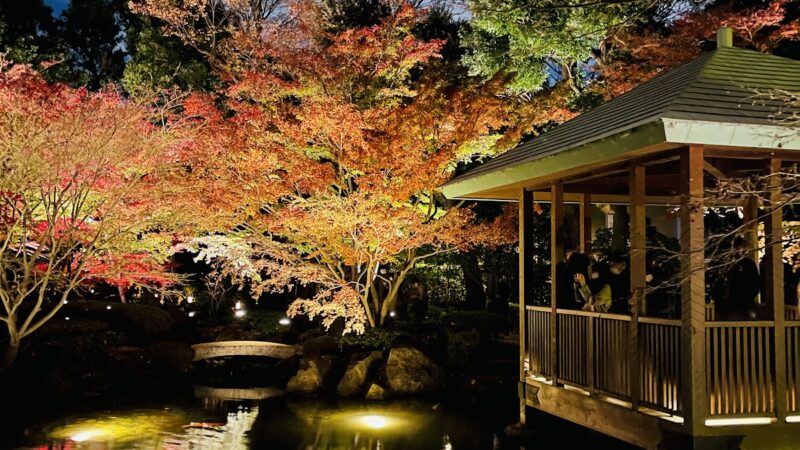
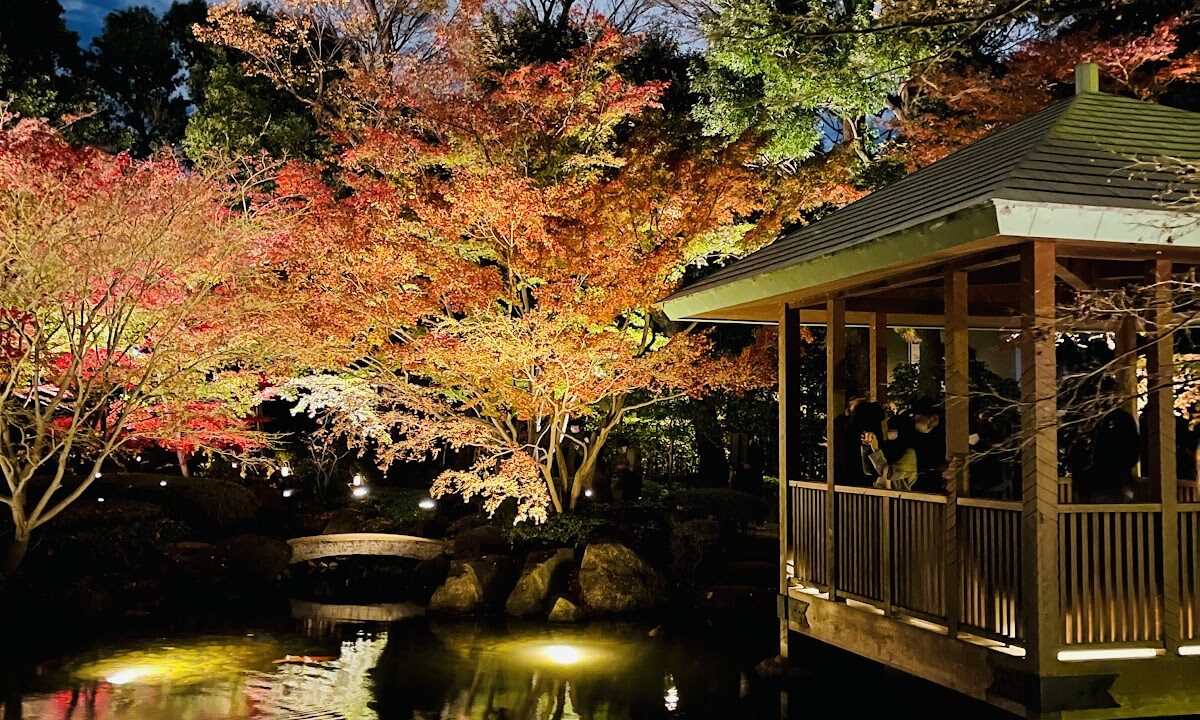
Approximately 200 maple trees are planted around the pond and turn bright red from late November to early December. The fall foliage reflected in the pond is popular among photographers as “inverted fall foliage.”
Fall Foliage Illumination Event
From late November to early December each year, the “Otakuroku Park Fall Foliage Illumination” is held. During this event period, park hours are extended, allowing visitors to enjoy the fantastical illuminated foliage after sunset.
The illuminated ginkgo tree-lined avenue and maple trees display a completely different appearance from daytime, and the sight reflected on the water surface is breathtaking in beauty. The park is crowded with many visitors during the event period, but it is still worth visiting as one of the top fall foliage illumination spots in Tokyo.
Winter: A Quiet Japanese Garden
Winter at Otakuroku Park is enveloped in fallen leaves and silence. On snowy days, the snow-covered Japanese garden reveals a beauty like another world.
Fewer people visit, allowing for a quiet stroll through the garden. The winter-bare landscape also has a unique charm characteristic of Japanese gardens.
Main Facilities and Highlights of Otakuroku Park
Ginkgo Tree-Lined Avenue: Symbol of the Park
The approximately 70-meter ginkgo tree-lined avenue continuing from the main gate is the symbolic landmark of Otakuroku Park. Ancient ginkgo trees over 100 years old stand on both sides, welcoming visitors throughout the four seasons.
During autumn’s foliage season, it becomes a tunnel of golden color, and after the leaves fall, a yellow carpet spreads across the ground. Simply walking down this avenue provides a special experience that makes you forget the hustle and bustle of the city.
Japanese Garden: A Stroll-Style Garden Centered on a Pond
The Japanese garden centered on a pond is the heart of Otakuroku Park. By walking around the pond, you can enjoy garden beauty from various angles.
Carp swim in the pond, and stone bridges, stepping stones, stone lanterns, and other features are arranged throughout, showing elements of a traditional Japanese garden at every turn. The harmony of seasonal plants and the water surface brings healing to visitors.
Tea House “Akamatsuan”: Authentic Tea House Architecture
The park contains the tea house “Akamatsuan.” This tea house was built by Motoo Otakuroku and is a formal sukiya-style architectural structure.
Normally only the exterior can be viewed, but during tea ceremony events and other occasions, there are opportunities to view the interior. The appearance of the tea house, using the Japanese garden scenery as borrowed landscape, evokes the beauty of Japanese architecture.
Otakuroku Memorial Museum: Traces of a Music Critic
In the memorial museum, which preserves the former residence of Motoo Otakuroku, you can view the study and reception room that Motoo used. Materials and documents from his time as an active music critic, including his favorite piano, are also displayed.
The memorial museum is normally open on weekends and holidays, and is a precious facility where you can learn about Motoo Otakuroku, who loved both music and gardens.
Access to Otakuroku Park
Access by Train
The nearest station to Otakuroku Park is “Ogikubo Station” on the JR Chuo Line and Tokyo Metro Marunouchi Line.
Access from Ogikubo Station
- Approximately 10 minutes walk from the south exit of Ogikubo Station
- Distance is approximately 700 meters
- From the station, head south, cross Aome Street, and proceed through residential areas
The route from the station to the park is relatively easy to follow with directional signs. Since the walk goes through residential areas, you can enjoy the quiet environment as you make your way there.
Access by Bus
If using the bus, take the Kanto Bus or Seibu Bus from the south exit of Ogikubo Station and get off at the “Ogikubo Police Station” bus stop, followed by approximately 2 minutes walk.
However, since buses do not run frequently, we recommend walking.
Access by Car and Parking
Otakuroku Park does not have a dedicated parking lot. If you drive, you will need to use a nearby coin parking facility.
Especially during the fall foliage season and illumination period, surrounding roads become congested, so we strongly recommend using public transportation.
Basic Information About Otakuroku Park
Opening Hours and Closure Days
Regular Period
- Opening hours: 9:00 AM to 5:00 PM
- Closure days: Year-end and New Year (December 29 – January 1)
Fall Foliage Illumination Period
- Opening hours: 9:00 AM to 8:00 PM (last entry at 7:45 PM)
- Period: Approximately 10 days from late November to early December each year
Admission Fee
Admission is free. Anyone can enter freely.
Location and Contact Information
- Address: 3-33-12 Ogikubo, Suginami Ward, Tokyo 167-0051
- Phone: 03-3398-5814 (Otakuroku Park Management Office)
Park Rules and Precautions
When visiting Otakuroku Park, please follow these rules.
- Pets are not allowed (except guide dogs and assistance dogs)
- Eating and drinking in the park are only allowed in designated areas
- Picking and damaging plants are prohibited
- When using a tripod for photography, be considerate of other visitors
- During the illumination period, crowds are large, so visit with a spirit of consideration
Tourist Attractions Around Otakuroku Park
Attractions Near Ogikubo Station
Ogikubo, where Otakuroku Park is located, is a central area in Suginami Ward, Tokyo. Around Ogikubo Station are shopping streets and ramen restaurants, and “Ogikubo Ramen” is known nationwide.
It is also recommended to enjoy walking through the streets of Ogikubo before or after visiting the park.
Zenfukuji Park
Zenfukuji Park, located about 2 kilometers northwest of Otakuroku Park, is a nature-rich park centered on Zenfukuji Pond. You can enjoy bird watching and walking.
Igusa Hachiman Shrine
Igusa Hachiman Shrine, located about 1.5 kilometers north of Ogikubo Station, is an ancient shrine with connections to Minamoto no Yoritomo. With its spacious grounds and impressive shrine building, it becomes crowded with worshippers during New Year’s and Shichigosan season.
Kadokawa Garden and Gengizan
Kadokawa Garden, located about 1 kilometer south of Ogikubo Station, is a garden developed from the former residence of Genichi Kadokawa, the founder of Kadokawa Publishing. It is recommended to visit this space, which harmonizes a Japanese garden and Western building, together with Otakuroku Park.
How to Enjoy Otakuroku Park: Tips for Your Visit
Optimal Time to Visit
Otakuroku Park can be enjoyed throughout the year, but the most recommended times are as follows.
Fall Foliage Season (Late November to Early December)
This is the time most people visit, with magnificent fall foliage of ginkgo and maple trees. Especially during the illumination period from dusk to night, you can enjoy a fantastical sight.
If you want to avoid crowds, early mornings on weekdays or right after opening are recommended.
Spring Fresh Greenery (April-May)
This is a beautiful season of fresh greenery after cherry blossoms bloom. It is relatively quiet, allowing you to enjoy the garden peacefully.
Photography Tips
Otakuroku Park is also popular with photography enthusiasts. Here are some photography tips.
Ginkgo Tree-Lined Avenue
The ginkgo tree-lined avenue continuing from the entrance creates a composition with depth when photographed head-on. During the golden foliage season, you can photograph a golden tunnel.
Pond’s Inverted Foliage
The fall foliage reflected in the pond of the Japanese garden is popular as a subject known as “inverted fall foliage.” Early morning and evening on windless days capture particularly beautiful reflections.
Illumination
During the illumination period, use of tripods may be restricted. With hand-held photography, you can still take beautiful photos by adjusting techniques such as raising ISO sensitivity.
Tips for Avoiding Crowds
The fall foliage season, especially during the illumination period, is very crowded. Here are some tips for avoiding crowds.
- Choose to visit on weekdays
- Aim for right after opening (9:00 AM) or just before closing
- Even during the illumination period, right after it starts or near the end is relatively uncrowded
- Visit slightly before or after the peak foliage period (mid-November or mid-December)
Combining with Local Cuisine
Ogikubo is known as “the city of ramen,” with many ramen restaurants around the station. It is recommended to enjoy Ogikubo ramen before or after visiting the park.
Also, the shopping streets have long-established traditional Japanese sweet shops and cafes that can be enjoyed along with your stroll.
Event Information for Otakuroku Park
Fall Foliage Illumination
The fall foliage illumination held from late November to early December each year is the largest event at Otakuroku Park. During the event period, park hours are extended, allowing visitors to enjoy the nighttime Japanese garden.
Detailed dates are announced on the official Suginami Ward website, so it is recommended to check before visiting.
Music Events
In commemoration of music critic Motoo Otakuroku, concerts may be held in the park and memorial museum. Featuring mainly classical music, these events offer a special experience where the garden’s atmosphere and music harmonize.
Tea Ceremonies
Irregular tea ceremonies are held at the tea house “Akamatsuan.” This is a precious opportunity to enjoy matcha in a formal tea house while viewing the Japanese garden scenery.
Clothing and Items to Bring When Visiting Otakuroku Park
Clothing Recommendations
Since Otakuroku Park involves strolling through a Japanese garden, the following clothing is recommended.
- Easy-to-walk-in shoes (the park has gravel paths and stepping stones)
- Season-appropriate clothing (especially note temperature drops in fall and winter)
- Attention to cold temperatures at night during the illumination period
Checklist of Items to Bring
- Camera (especially recommended during the fall foliage season)
- Beverages (while there are vending machines in the park, they are few in number)
- Rain gear (for times of uncertain weather)
- Insect repellent spray (during summer)
Learning More About Otakuroku Park’s History
The Life and Achievements of Motoo Otakuroku
Motoo Otakuroku was born in Tokyo in 1893 (Meiji 26). After graduating from Tokyo Imperial University (now the University of Tokyo), he studied in Europe.
After returning to Japan, he worked as a music critic and is particularly known for introducing French Impressionist composers like Debussy and Ravel to Japan. He is also known for his research on Chopin and left many publications.
He established his residence in Ogikubo in 1933 (Showa 8), and spent approximately the next 46 years of his life there until his death. While engaged in music criticism, he devoted himself to garden making and laid the foundation for the current Japanese garden.
The Path to Becoming a Park
Motoo Otakuroku died in 1979 (Showa 54) at the age of 86. During his lifetime, he had the wish that “many people would enjoy this garden,” and in his will, the land and buildings were bequeathed to Suginami Ward.
Out of respect for Motoo’s wishes, Suginami Ward preserved the garden’s atmosphere while developing it as a public park, opening it on October 1, 1981. It has been cherished as a park for over 40 years since, enjoyed by ward residents and tourists alike.
Design Philosophy of the Garden
The Japanese garden of Otakuroku Park is said to have involved Motoo Otakuroku himself in its design. It is a stroll-style garden centered on a pond, designed so that visitors can enjoy various landscapes while walking.
The ginkgo tree-lined avenue incorporates Western elements while achieving harmony with the Japanese garden, creating a unique design. The space reflects the aesthetic sensibilities of Motoo, who loved both music and gardens, and the fusion of Western and Eastern culture.
Otakuroku Park and Suginami Ward’s Culture
Garden Culture of Suginami Ward
In addition to Otakuroku Park, Suginami Ward has several gardens developed from former residences of cultural figures, such as Kadokawa Garden. These have become cultural assets of the ward, known as “Suginami’s garden culture.”
Ogikubo as a City of Music
Many musicians and cultural figures, including Motoo Otakuroku, have lived in Ogikubo. Today, with music halls and live houses present, it also has the aspect of a “city of music.”
Music events held at Otakuroku Park can be said to inherit this tradition.
Conservation and Future of Otakuroku Park
Conservation Activities
The beautiful landscape of Otakuroku Park is maintained by Suginami Ward and community volunteers. Regular garden maintenance, tree management, and cleaning activities are conducted.
Particularly before the fall foliage season, meticulous preparations are made, including fallen leaf cleanup and tree pruning.
Future Prospects
Otakuroku Park is planned to be preserved and utilized going forward as a precious green space in an urban area and as a cultural heritage site.
To help more people learn about Motoo Otakuroku’s achievements and the garden’s beauty, there are plans to enhance educational programs and cultural events.
Conclusion: Fully Enjoying the Charm of Otakuroku Park
Otakuroku Park is a municipal park in Ogikubo, Suginami Ward, Tokyo, centered on a Japanese garden. Developed from the former residence of music critic Motoo Otakuroku, the park boasts some of Tokyo’s finest beauty, particularly during the autumn fall foliage season.
With abundant points of interest, including approximately 70 meters of ginkgo tree-lined avenue, a stroll-style Japanese garden centered on a pond, the tea house “Akamatsuan,” and the Otakuroku Memorial Museum, there is much to see. The garden, which displays a different face with each season, offers new discoveries with every visit.
With good access—approximately 10 minutes walk from Ogikubo Station on the JR Chuo Line and Tokyo Metro Marunouchi Line—and free admission, the park welcomes all. While the fall foliage illumination season is particularly popular, each season offers different charms: spring’s fresh greenery, summer’s deep green, and winter’s silence.
For those seeking to forget the hustle and bustle of the city and heal their hearts in a quiet Japanese garden, those wishing to enjoy spectacular fall foliage scenery, and those wanting to experience traditional Japanese culture, Otakuroku Park is the perfect destination. Why not visit it, combined with walking through the streets of Ogikubo and nearby tourist attractions?
Why not see for yourself the beauty of the garden that music critic Motoo Otakuroku loved and wished for many people to enjoy?