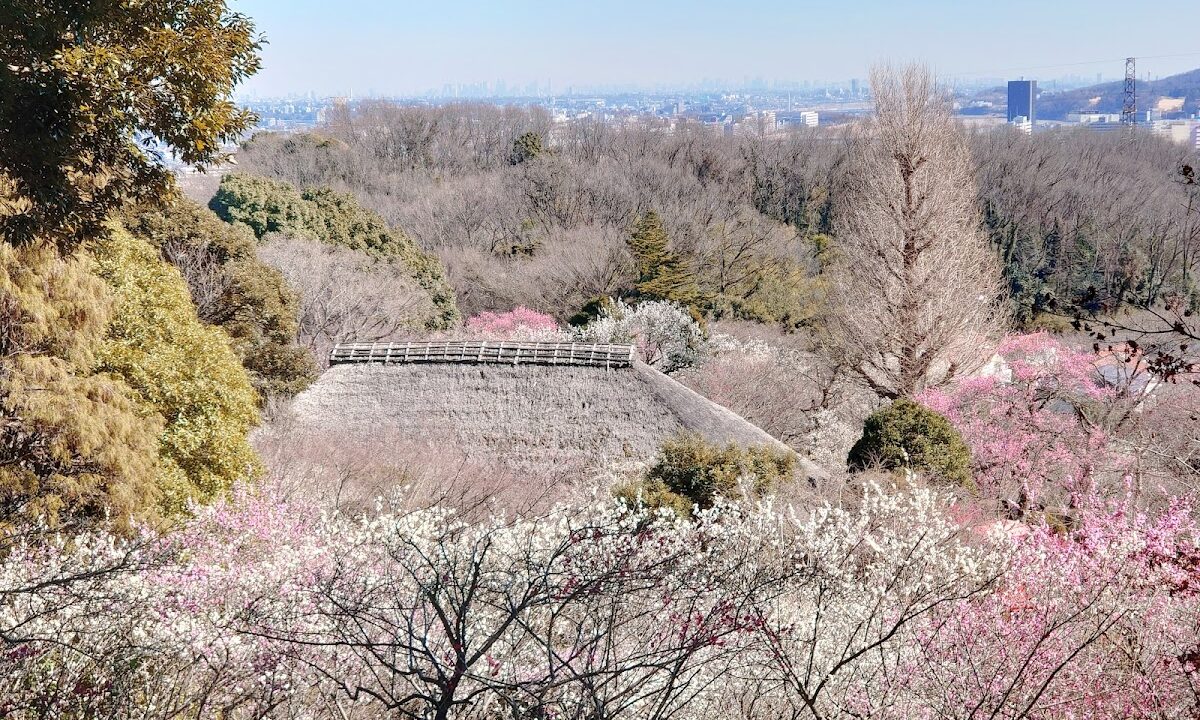
Keio Mogusaen Garden Tokyo | The Charm and Complete Guide to a Famous Plum Blossom Destination Continuing from the Edo Period
Located in Momiji, Hino City, Tokyo, Keio Mogusaen Garden is known as a beautiful Japanese garden with a heritage passed down since the Edo period. This Japanese garden, nestled in a corner of the Tama Hills, is particularly famous as a renowned plum blossom destination, with approximately 50 varieties of 500 plum trees blooming magnificently from February to March each year. This article provides detailed information about Keio Mogusaen Garden’s history, highlights, seasonal attractions, access methods, admission fees, and more.
History and Origins of Keio Mogusaen Garden
A Story Beginning with Shoren-ji Temple
The history of Keio Mogusaen Garden dates back to the Kyoho era (1716-1736) of the Edo period. It is said to have begun when Jushoinin Jigaku Mototei, the wife of Okubo-ko, the lord of Odawara Castle, rebuilt Shoren-ji Temple on this site to honor the memory of Nobuyasu, the eldest son of Tokugawa Ieyasu.
Shoren-ji Temple was built in a location adjacent to the north of Momiji Hachimangu Shrine, and a beautiful garden was constructed within its grounds. This garden was known as a fine garden since the Edo period and became a place visited by many men of letters and artists. In particular, the poet Wakayama Bokusui was said to have loved this place and visited it frequently to compose poetry.
Restoration and Public Opening in the Meiji Period
As time progressed into the Meiji period, Shoren-ji Temple fell into disuse, but the garden was restored by Aoki Kakuzou, a merchant from the local Momiji area. Aoki made efforts to restore the neglected garden and open it to the public, preserving this historic space for future generations.
Subsequently, the garden came under the ownership of Keio Electric Railway and is now enjoyed by many people as “Keio Mogusaen Garden.” Designated as a historic garden under the control of Hino City as “Mogusaen Garden (Shoren-ji Temple Site),” it is protected as a valuable historical garden within Tokyo.
Highlights of Keio Mogusaen Garden
Charm as a Famous Plum Blossom Destination
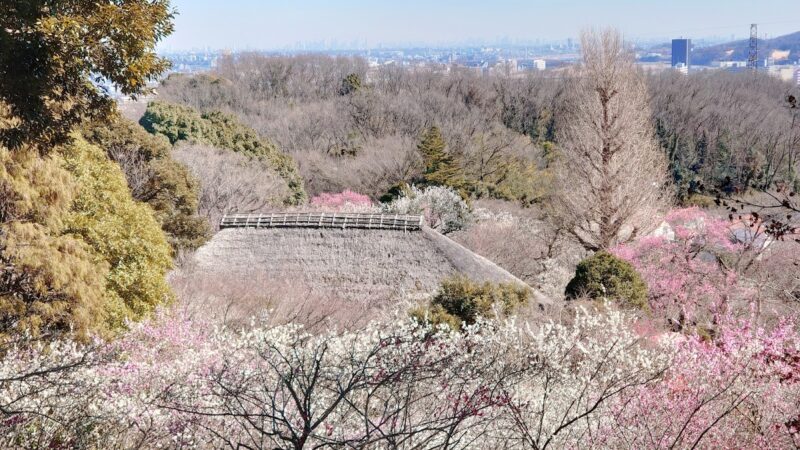
The greatest attraction of Keio Mogusaen Garden is undoubtedly the plum blossoms. The garden features approximately 50 varieties of 500 plum trees that bloom successively from early February to mid-March.
Particularly famous is the “Jushobaï” plum tree. This tree is said to have been planted by Jushoinin Jigaku Mototei herself, who rebuilt Shoren-ji Temple, and has become a symbol of the garden. A wide variety of plum varieties, including white plum blossoms, red plum blossoms, and weeping plums, are available, each blooming at different times, allowing for extended enjoyment of plum viewing.
During the plum blossom season, “Plum Blossom Festivals” are held, attracting many tourists and photography enthusiasts. The plum grove spread across the hills offers views of the distant high-rise buildings of Shinjuku and Mount Fuji, creating a luxurious space where one can enjoy both plum blossoms and panoramic views.
Charming Structure of the Japanese Garden
Keio Mogusaen Garden is a strolling-style Japanese garden with the characteristics of a traditional Japanese landscape garden. At the center of the garden is a heart-shaped pond, around which visitors can stroll and enjoy the garden’s beauty from various angles.
Stone lanterns and stepping stones are placed around the pond, and the reflections of trees on the water surface present different expressions throughout the seasons. The design takes advantage of the undulating terrain, creating a composition where new scenery appears with each step forward, allowing visitors to appreciate the sophistication of Edo-period landscape design techniques.
Tea Houses and Historic Structures
There are two traditional tea houses within the garden. One is “Shoren-an,” with a thatched roof, and the other is “Sanreki-an,” built with abundant solid Akita cedar.
Shoren-an is a building that conveys the legacy of the former Shoren-ji Temple, and its modest appearance provides a sense of nostalgia and comfort to visitors. Sanreki-an is a relatively newer structure, but a high-quality space built with modern techniques while faithfully adhering to traditional tea house architectural styles.
These tea houses are usually viewed from the exterior, but their interiors may be opened to the public during special tea ceremonies and events. We recommend inquiring in advance about facility usage.
Historic Cottage and Atmosphere
A historic cottage from the end of the Edo period has also been relocated to the garden, offering glimpses of the lifestyle of that era. This cottage is also utilized as an exhibition space, with seasonal exhibitions and materials related to local history occasionally on display.
Flora and Nature Throughout the Seasons
Arrival of Spring
Spring at Keio Mogusaen Garden begins with the blooming of plum blossoms. Early-blooming plums begin to open in early February, and the garden is filled with the fragrance of plum blossoms until mid-March. After the plums, cherry blossoms, azaleas, wisteria, and other flowers bloom in succession, creating a landscape of full spring beauty.
Particularly from mid to late April, azaleas planted throughout the garden bloom in vivid colors, creating a beautiful contrast with the new greenery.
Early Summer to Summer
From May to June, hydrangeas and irises come into full view. The hydrangeas blooming around the heart-shaped pond delight visitors during the rainy season. Additionally, this is the season when the new greenery is most beautiful, with the trees’ green foliage vibrant to the eye.
In summer, the shade within the garden becomes a cool place of rest. Due to the natural richness of the Tama Hills, the temperature is lower than in the city center, making it enjoyable as a place to escape the heat.
Autumn Foliage
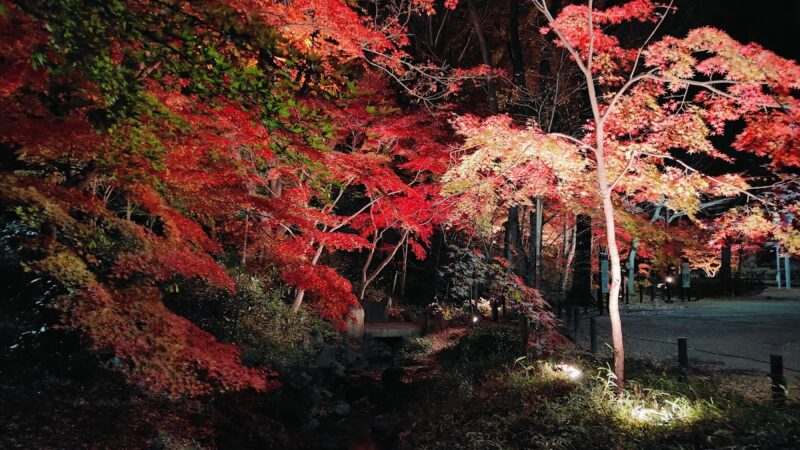
From mid-November to early December, it is the season of autumn foliage. Maples and Japanese maples color in red and yellow, dyeing the garden in autumn hues. In particular, the sight of foliage reflected in the heart-shaped pond is spectacular, attracting many photography enthusiasts.
Although Keio Mogusaen Garden is known as a plum blossom destination, the beauty of autumn foliage should not be overlooked. The undulating terrain allows for enjoyment of foliage scenery with elevation differences, allowing visitors to experience a three-dimensional autumn landscape.
Winter Tranquility
Winter at Keio Mogusaen Garden is enveloped in quiet serenity. The sky visible through the bare branches is expansive, and on clear winter days, one can view Mount Fuji and the Tanzawa mountain range in the distance.
From late January, early-blooming plum blossoms begin to bloom, and color returns to the garden. The plum blossoms blooming in the cold winter are symbols of hope announcing the arrival of spring, warming the hearts of visitors.
Views and Scenic Beauty
Keio Mogusaen Garden is positioned on a highland of the Tama Hills, offering excellent views. From viewing spots within the garden, one can see the skyscrapers of central Tokyo, and on clear days, Mount Fuji, the Tanzawa Mountains, and the Chichibu range.
Particularly during the plum blossom season, visitors can simultaneously capture blooming plum blossoms in the foreground and Mount Fuji in the distance in photographs, making it an excellent photography spot. This excellent view is one of the reasons why many men of letters and artists visited this place during the Edo period.
Connection with Literati and Scholars
Keio Mogusaen Garden is a place loved by many men of letters and artists. In particular, the poet Wakayama Bokusui especially loved this place, visiting frequently to compose poetry. Bokusui loved the nature and tranquility of Momiji, and his works reflect his experiences in this place.
Throughout the garden are scattered poetry stones and inscribed monuments of Bokusui and other literati, allowing visitors to enjoy a literary walk. This space, where history and literature intersect, is not merely a tourist destination but a place where one can deeply appreciate Japanese culture.
Facility Information and Usage Guide
Basic Information
Location
191-0033 Momiji, Hino City, Tokyo
Telephone Number
042-591-3478
Hours of Operation
9:00 AM–5:00 PM (November, December, and January until 4:30 PM)
*Admission until 30 minutes before closing time
Closed Days
Every Wednesday (if a holiday, the following day)
December 30 – January 3
*Open daily during plum blossom festival period
Admission Fee
Regular Period
- Adults: 300 yen
- Children (elementary school and below): 100 yen
Plum Blossom Festival Period (February–March)
- Adults: 500 yen
- Children (elementary school and below): 100 yen
Autumn Foliage Season (mid-November–early December)
- Adults: 300 yen
- Children (elementary school and below): 100 yen
*Fees may change, so please check the official website before visiting.
Access
By Train
About 10 minutes on foot from Keio Line “Mogusaen Station”
- Approximately 30 minutes by limited express train on the Keio Line from Shinjuku Station; disembark at Mogusaen Station
- The route from the station to the garden involves an uphill slope, so please wear comfortable shoes
By Car
About 20 minutes from “Kunitachi-Fuchu IC” on the Chuo Expressway
*Parking available for approximately 30 vehicles (free)
*During the plum blossom festival period, congestion is expected; use of public transportation is recommended
Best Seasons to Visit and How to Enjoy
Plum Blossom Season (February–March)
If you are to visit Keio Mogusaen Garden, the best season is undoubtedly the plum blossom blooming period. From early February through mid-March, approximately 50 varieties of 500 plum trees bloom successively, filling the garden with a vibrant atmosphere.
During the plum blossom festival period, various events may be held primarily on weekends. Visiting early in the morning allows you to enjoy plum blossoms illuminated by the morning sun and the quiet garden with few people.
Autumn Foliage Season (November–December)
The autumn foliage season from mid-November to early December is also not to be missed. With fewer crowds than during the plum blossom season, you can enjoy autumn foliage viewing at a leisurely pace. Especially on sunny mornings, the light illuminates the trees, making the foliage shine beautifully.
Season of Fresh Greenery (April–May)
While not as well-known as plum blossoms or autumn foliage, the fresh greenery season is also a charming time at Keio Mogusaen Garden. The young leaves’ green is dazzling, and you can also enjoy flowers such as azaleas and wisteria. The weather is pleasant, making it an ideal season for strolling.
Nearby Tourist Attractions
Momiji Hachimangu Shrine
A shrine located immediately next to Keio Mogusaen Garden that has been the center of faith in this area since ancient times. The views from its grounds are also good, and a visit together with the garden is recommended.
Takahatafudoson Kongoji Temple
A temple located several stations away by Keio Line and one of the three major Fudoson temples in the Kanto region. It is also known as the family temple of Hijikata Toshizo of the Shinsumi, and is a historically significant temple.
Tama Zoological Park
A metropolitan zoo located approximately 10 minutes by Keio Line from Mogusaen Station. With a vast grounds housing many animals, it is recommended for families with children.
Photography Tips
Keio Mogusaen Garden is perfect for photography with numerous ideal spots. The following points are particularly recommended.
- Around the Heart-shaped Pond: The images of plum blossoms and autumn foliage reflected in the pond are excellent subjects.
- Viewing Spots: One of the few places where you can simultaneously photograph plum blossoms in the foreground and Mount Fuji in the background.
- In Front of Shoren-an: A combination of thatched roof and plum blossoms or autumn foliage creates a photograph full of Japanese aesthetics.
- Stone Steps and Plums: Plum blossoms blooming along the garden’s stone steps are spots that easily create compositions with depth.
When photographing, please be considerate of other visitors, and it is recommended to confirm with staff members regarding tripod usage.
Inquiries and Latest Information
The latest information and event details for Keio Mogusaen Garden can be found on the official website. Please check the site before your visit for information on blooming conditions, foliage viewing times, facility usage details, and more.
Official Website
https://www.keio-mogusaen.jp/
Telephone Inquiries
042-591-3478 (during business hours)
During plum blossom festivals and special events, hours of operation and admission fees may change, so please confirm in advance.
Tips for Enjoying Keio Mogusaen Garden
Clothing and Belongings
- The garden has uneven terrain and many slopes, so comfortable walking shoes are essential
- In summer, prepare a hat or parasol; in winter, prepare warm clothing
- A camera or binoculars will enhance your enjoyment
- It is recommended to bring beverages (there are no vending machines within the garden)
Time Required
Plan for approximately one to one and a half hours for leisurely strolling. If you wish to enjoy photography or close observation, allow about two hours.
Tips for Avoiding Crowds
- Saturdays, Sundays, and holidays during the plum blossom festival period are crowded. Weekdays and the time immediately after opening are recommended
- The autumn foliage season is less crowded than the plum blossom season, allowing for leisurely enjoyment
- Rainy days have fewer visitors and offer a more atmospheric experience (rain gear is essential)
Conclusion
Keio Mogusaen Garden is a valuable Japanese garden that conveys the history continuing from the Edo period and the beauty of nature to the present day, while being easily accessible from central Tokyo in Momiji, Hino City, Tokyo. While particularly famous as a plum blossom destination, it offers a variety of charms throughout the year, including seasonal flowers, autumn foliage, panoramic views, and historic structures.
For approximately 300 years since Jushoinin Jigaku Mototei rebuilt Shoren-ji Temple and created the garden, this place, loved by many men of letters and where Wakayama Bokusui composed his poetry, continues to provide comfort and inspiration to many people today.
The garden’s accessibility, being just a 10-minute walk from Keio Line Mogusaen Station, is also one of its attractions. For those who wish to escape the hustle and bustle of the city and leisurely experience the world of a charming Japanese garden, Keio Mogusaen Garden is an ideal destination. Why not visit this hidden gem of Hino City, Tokyo during your next day off?