
Noyamakita and Rokudosan Park, Tokyo Complete Guide | Charm and How to Enjoy Tokyo’s Largest-Class Natural Park
While located in Tokyo, Noyamakita and Rokudosan Park is where you can fully enjoy the rich satoyama (traditional rural village) landscape and nature. This prefectural park, which spans from Musashimurayama City to Mizuho Town, boasts an area of approximately 132.4 hectares (1,323,900 m²), making it one of the largest prefectural parks in Tokyo. Located at the western end of the Sayama Hills, the natural landscape woven by mixed forests and yato (valleys cut into hills) is truly a “green island” remaining in the metropolitan area.
This article provides detailed information you should know before visiting, from the charm of Noyamakita and Rokudosan Park to specific ways to enjoy it, access methods, and facility information.
Noyamakita and Rokudosan Park | Tokyo’s Largest-Class Urban Park
Noyamakita and Rokudosan Park is located within the Sayama Natural Park area and is a prefectural park developed as a place where urban residents can connect with nature while preserving the rich natural environment of the Sayama Hills. The Sayama Hills span both Saitama and Tokyo prefectures and are known as a model for the “Totoro Forest.”
Within the park, there are Katakuri flower colonies and firefly habitats, as well as facilities where you can experience valuable satoyama culture, including traditional thatched-roof satoyama farmhouses from the Edo period and Kishida rice paddies. The diversity of ways to enjoy the park—hiking, bird watching, forest play, and satoyama experiences—is a major attraction.
Basic Park Information
Location: Infopark Information Center: 4-2 Mitsuki, Musashimurayama City, Tokyo; Ishihata and Hakone-Gasaki, Mizuho Town, Tokyo
Area: Approximately 132.4 hectares (1,323,900 m²)
Opening Hours: Always open (except some facilities)
Admission: Free
Closure Days: None (however, facilities such as satoyama farmhouses are closed during year-end/New Year holidays)
Management Organization: Sayama Hills Partners (Seibu-Musashino Partners)
Main Areas and Facilities in Noyamakita and Rokudosan Park
The vast park is divided into several areas, each with its own unique charm.
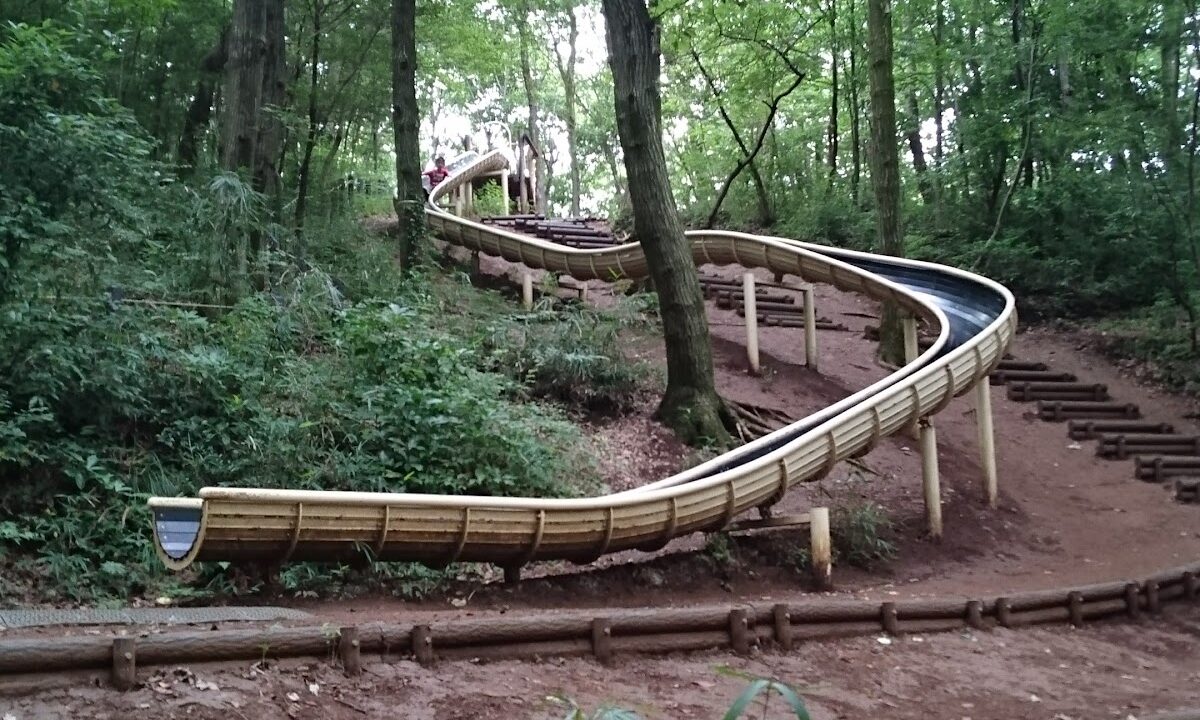
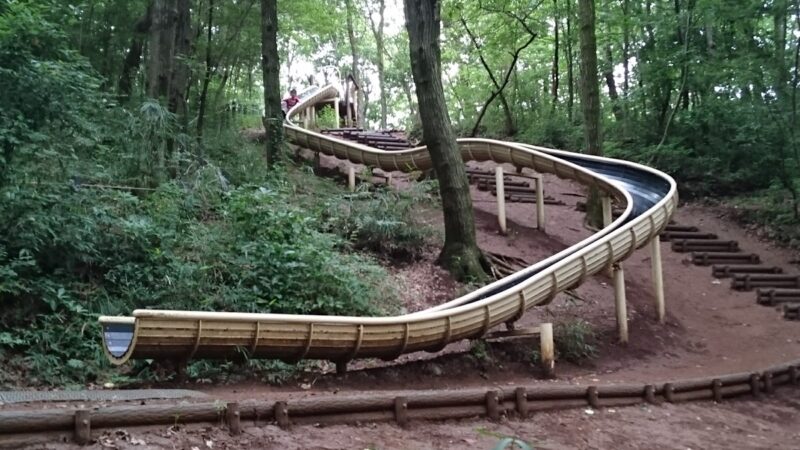
Asobi no Mori (Play Forest) | Playing with Nature Using Wooden Play Equipment
“Asobi no Mori,” developed with the theme “Gentle to Nature,” features 22 wooden play equipment structures named after creatures living in the forest. The features include universal-design equipment that allows everyone—from young children to the elderly and people with disabilities—to play freely in the great outdoors.
You can feel the warmth of wood while playing on equipment that makes use of the natural terrain. This area is extremely popular with families with children. Admission is free and a parking lot is available, making it easy to visit.
Boken no Mori (Adventure Forest) | Observation Deck and Athletic Course
Located on the east side of “Asobi no Mori,” “Boken no Mori” is an area designed to spark a sense of adventure. The highlight is an observation deck 8 meters high with a perimeter of approximately 60 meters. While enjoying an aerial walk in the forest, the view from the treetop allows you to observe nature from a perspective different from usual.
Additionally, wooden athletic play equipment is plentiful, making it ideal for children who like to exercise and play. This is a place where you can actively enjoy yourself while appreciating the changing face of the forest with the seasons.
Satoyama Experience Area | Recreating Edo Period Scenery
Particularly distinctive in Noyamakita and Rokudosan Park is the “Satoyama Experience Area,” where you can experience satoyama life and culture. Centered on Miyanoiri Yato, the park’s largest valley, rice paddies, fields, streams, and surrounding mixed forests spread out, conveying Japan’s original natural landscape to the present day.
Satoyama Farmhouse
The “Satoyama Farmhouse,” a relocated and restored farmhouse from the late Edo period, is a valuable facility featuring traditional architecture with a thatched roof. The space allows you to experience life of the time, featuring a hearth, earthen floor, and veranda. Regular events and workshops to learn satoyama culture are held.
Opening Hours: 9:00-16:30
Closed: Year-end/New Year holidays (December 29 – January 3)
Admission: Free
Kishida Rice Paddies
At “Kishida Rice Paddies” near the satoyama farmhouse, you can actually experience rice cultivation. From planting to harvesting, you can learn traditional Japanese rice farming through seasonal agricultural work. Working together with volunteers and local people provides a valuable experience for deeper understanding of satoyama living.
Information Center
The Information Center, serving as the gateway to the park, provides park information, distributes pamphlets, and announces events. For first-time visitors, it is recommended to obtain a park map here and check highlights and latest information.
Location: 4-2 Mitsuki, Musashimurayama City, Tokyo
Phone: 042-531-2325
Opening Hours: 8:30-17:30
Closed: Year-end/New Year holidays
Enjoying Nature Through the Seasons | Highlights and Observation Spots
A major charm of Noyamakita and Rokudosan Park is the rich nature that changes throughout the year.
Spring | Katakuri Flower Colony
From late March to early April, delicate purple flowers bloom abundantly in the Katakuri flower colony within the park. Katakuri is also called “Spring Ephemeral,” announcing the arrival of spring on the forest floor of mixed forests and is a valuable plant.
The mixed forest of the Sayama Hills maintains an environment suitable for Katakuri growth, and there are few places in Tokyo where you can observe Katakuri on such a scale. Since the flowering period is short, it is recommended to check the best viewing time before visiting.
Early Summer | Firefly Observation
From early to mid-June, you can observe the magical light of fireflies in the clear streams within the park. Genji fireflies and Heike fireflies inhabit the area, and the presence of these creatures indicates that a clean water environment is maintained.
Firefly observation sessions are held regularly, providing a valuable opportunity to observe while listening to expert commentary. The ability to see fireflies near the city center speaks to the richness of this park’s natural environment.
Summer | Strolling Through Lush Mixed Forests
The mixed forest in summer provides cool shade. The forest interior shaded by deciduous trees such as konara oak, kunugi oak, and Chinese parasol tree is several degrees cooler than the city center and functions as nature’s air conditioning. Hiking while listening to cicada calls is a uniquely summer experience.
Autumn | Season of Autumn Colors and Harvest
From late October to November, the mixed forest is painted in beautiful autumn foliage. The yellow leaves of konara and kunugi oaks and the red leaves of Yamakura cherry and Japanese maple color the hills vividly.
Additionally, rice harvesting takes place in Kishida rice paddies, allowing visitors to experience the satoyama harvest season. Acorn gathering is also a popular activity for children.
Winter | Optimal Season for Bird Watching
Winter, when leaves fall and visibility improves, is the optimal season for bird watching. Winter birds such as daurian redstart, white’s thrush, and dusky thrush migrate in, and resident birds like coal tit, varied tit, and Japanese pygmy woodpecker remain active.
Several points within the park are suitable for bird watching, and binoculars allow more detailed observation. Bird watching in the crisp winter air is a quiet way to enjoy nature.
Hiking Courses and Recommended Routes
Noyamakita and Rokudosan Park is also popular as part of the Sayama Hills hiking course network. Multiple routes take advantage of the undulating terrain and can be chosen according to fitness level and purpose.
Beginner Course (approximately 2 hours)
Information Center → Asobi no Mori → Boken no Mori → Akasaka Yato → Information Center
A course with many flat sections that families can comfortably walk. You can enjoy nature leisurely while playing on equipment.
Intermediate Course (approximately 3-4 hours)
Information Center → Rokudosan Observation Platform → Miyanoiri Yato → Satoyama Farmhouse → Kishida Rice Paddies → Information Center
After walking along the ridge of the hills and enjoying the view from the observation platform, you descend into the valley to tour the satoyama experience area. You can fully enjoy the varied terrain and scenery.
Advanced Course (approximately 5-6 hours)
A full-fledged hiking course that traverses the Sayama Hills. Starting from Noyamakita and Rokudosan Park, it continues along the ridge to Sayama Lake, Hachikoku Mountain Greenery, and Higashiyamato Park. Recommended for those confident in their fitness level.
Park Volunteers and Satoyama Conservation Activities
Park volunteers are actively engaged in Noyamakita and Rokudosan Park. Based in the satoyama experience area, they engage in diverse activities including managing mixed forests, maintaining paddies and fields, holding nature observation sessions, and more.
Volunteer Activities
- Cutting underbrush and thinning mixed forests
- Agricultural work in rice paddies and fields
- Supporting nature observation sessions and events
- Maintaining the satoyama farmhouse
- Providing guidance and interpretation to visitors
Participating in volunteer activities allows for deeper learning about satoyama nature and culture. Regular briefing sessions and experience sessions are held, so those interested should contact the park management office.
Access Methods | Access by Train, Bus, and Car
Access by Train and Bus
To the Information Center
- From Tachikawa Station North Exit on the JR Chuo Line, take Tachikawa Bus heading to Hakone-Gasaki Station, get off at “Kishi” and walk approximately 10 minutes
- From Higashiyamato Station on the Seibu Tamagawa Line, take a Metropolitan Bus heading to Ome Bus Garage, get off at “Kishi” and walk approximately 10 minutes
- From Hakone-Gasaki Station on the JR Hachioji Line, take Tachikawa Bus heading to Tachikawa Station North Exit, get off at “Kishi” and walk approximately 10 minutes
To Asobi no Mori and Boken no Mori
- From Tachikawa Station North Exit on the JR Chuo Line, take Tachikawa Bus heading to Hakone-Gasaki Station, get off at “Mine” and walk approximately 15 minutes
- From Musashi Sunagawa Station on the Seibu Tamagawa Line, walk approximately 25 minutes
Access by Car
Information Center Parking Lot
- Address: 4-2 Mitsuki, Musashimurayama City, Tokyo
- Capacity: Approximately 45 vehicles
- Operating Hours: 8:30-17:30
- Fee: Free
Akasaka Parking Lot
- Address: 6-31-1 Honcho, Musashimurayama City, Tokyo
- Capacity: Approximately 40 vehicles
- Operating Hours: 8:30-17:30
- Fee: Free
Noyamakita Park Parking Lot (Municipal)
- Parking lot near Asobi no Mori
- Capacity: Approximately 30 vehicles
- Fee: Free
※On weekends and holiday seasons, the parking lots tend to be congested, so the use of public transportation is recommended.
Differences Between Municipal Noyamakita Park and Prefectural Noyamakita and Rokudosan Park
Visitors often confuse “Municipal Noyamakita Park” and “Prefectural Noyamakita and Rokudosan Park.”
Municipal Noyamakita Park is managed by Musashimurayama City and is located on the east side of “Asobi no Mori” within Prefectural Noyamakita and Rokudosan Park. As a municipal park with its own independent facilities, it is particularly well-equipped with play equipment for families.
Prefectural Noyamakita and Rokudosan Park is a broad-area park managed by Tokyo and covers a wider area including the municipal park. It features diverse natural environments and facilities including the satoyama experience area and the Rokudosan area.
The two are adjacent and can be used together in practice, but understanding that they have different management organizations is helpful when researching facilities and event information.
Park Usage Rules and Etiquette
To preserve the rich natural environment and enable all visitors to enjoy the park comfortably, please observe the following rules and etiquette.
Prohibited Activities
- Collecting plants and wildlife (flowers, insects, bird eggs, etc.)
- Littering (please take all trash with you)
- Use of fire (barbecue, fireworks, etc.)
- Off-leash pets (always use a leash)
- Cycling (except in designated areas)
- Vehicles entering areas other than designated zones
- Playing music at high volume
- Setting up tents or tarps (except in designated areas)
Etiquette
- Refrain from feeding birds and wild animals
- Be considerate of other visitors
- When hiking, pay attention when passing others and exchange greetings
- When taking photographs, do not disturb other visitors
- Use restrooms cleanly
Event Information and Experience Programs
Noyamakita and Rokudosan Park hosts various events and experience programs throughout the year.
Regularly Held Programs
- Rice Paddy Experience Program: Experience the entire rice-growing process including planting, weeding, harvesting, and threshing
- Nature Observation Sessions: Observe seasonal flora and fauna with experts
- Satoyama Guide Walks: Stroll through the park with a guide
- Craft Classes: Experience crafts using natural materials
- Katakuri Observation Sessions (limited to spring)
- Firefly Observation Sessions (limited to early summer)
Special Events
- Satoyama Farmhouse Festival: An event where you can experience traditional events and culture
- Harvest Festival: An event celebrating autumn’s abundance
- Mochi-Making Gathering: A year-end tradition event
Event details and application methods can be found on the park’s official website and the Sayama Hills Metropolitan Park portal site (https://sayamaparks.com/). Many popular events require advance registration, so it is recommended to check early.
Enjoying Surrounding Facilities and the Sayama Hills Area Together
Noyamakita and Rokudosan Park is one of the metropolitan parks scattered throughout the Sayama Hills. There are other attractive parks nearby, and visiting them in combination allows for even more enriching nature experiences.
Sayama Park
A park adjacent to Lake Tamagawa (Murayama Reservoir) with beautiful lakeside views. It is also known as a famous cherry blossom viewing spot.
Hachikoku Mountain Greenery
A greenery area featuring mixed forest said to be one of the model locations for the movie “My Neighbor Totoro.” You can enjoy a quiet forest stroll.
Higashiyamato Park
Mixed forests centered on konara and kunugi oaks are preserved here, creating an ideal environment for bird watching.
Nakafuji Park
A park in Mizuho Town that is beloved as a local gathering place.
Sayama-Sakaigreenway
A greenway connecting Tamagawa Lake to the Sakai Water Purification Station, popular for cycling and jogging.
The “Sayama Hills Hiking Course,” which tours these parks, is also developed, allowing you to enjoy the entire hill range over a day.
Photo Spots and Instagram-Worthy Points
Noyamakita and Rokudosan Park has numerous locations suitable for photography.
Recommended Photo Spots
- Rokudosan Observation Platform: Panoramic views of the surrounding landscape from the ridge of the hills
- Satoyama Farmhouse: The thatched roof and surrounding farmland scenery are picturesque
- Katakuri Flower Colony (spring season): A fantastical sight with purple flowers spreading like a carpet
- Observation Viewing Deck: Unique views from the treetop
- Miyanoiri Yato: Beautiful combination of valley formation and mixed forest
- Kishida Rice Paddies: Changing rice paddy views with each season
Searching hashtags such as “#Noyamakita Rokudosan Park” or “#Sayama Hills” on Instagram and other social media will show beautiful photographs from other visitors.
Conclusion | Experience Satoyama in Tokyo’s Largest-Class Natural Park
Noyamakita and Rokudosan Park is a valuable place where you can experience rich satoyama nature and culture while located in Tokyo. As one of the largest prefectural parks by area, it maintains an environment where valuable organisms such as Katakuri and fireflies inhabit.
Families with children can enjoy wooden play equipment and athletic courses in “Asobi no Mori” and “Boken no Mori,” while nature enthusiasts can indulge in hiking, bird watching, and photography. Those interested in satoyama culture can learn about traditional Japanese living by participating in experience programs at the satoyama farmhouse and Kishida rice paddies.
The changing natural landscape of the Sayama Hills through the seasons offers new discoveries with each visit. The location is also attractive, being accessible within about an hour from the city center, making it ideal for weekend day trips.
Please visit this wonderful park, which can be used free of charge. The experience of refreshing yourself in nature and touching satoyama culture will surely become a memorable experience.
Contact Information
Noyamakita and Rokudosan Park Information Center
Phone: 042-531-2325
Official Website: https://sayamaparks.com/kouen/noyama/
Enjoy nature and satoyama experiences at Noyamakita and Rokudosan Park, where you can have a genuine satoyama experience in Tokyo.

-800x450.jpg)