
.jpg)
Yagi-ga-hana (Niigata Prefecture) Complete Guide: Enjoying Spectacular Rock Walls and the Natural Beauty of the Ikarashi River
Yagi-ga-hana, located in Sanjo City, Niigata Prefecture, is a natural work of art created by overwhelming rock walls reaching approximately 200 meters in height and the clear stream of the Ikarashi River flowing at their base. Known as one of Niigata Prefecture’s representative scenic spots, this location attracts many climbers, rock climbers, and nature enthusiasts from throughout the prefecture and beyond, displaying a different charm with each season.
Yagi-ga-hana: The Natural Sculptural Beauty of Which Niigata Prefecture Boasts
Yagi-ga-hana (やぎがはな) is a massive rock wall towering in the Kitagobyogawa district of Sanjo City, Niigata Prefecture. Located on the northeastern slope of Awe-dake, this cliff formed by the erosion of the Ikarashi River was named “Yagi-ga-hana” (literally “goat’s nose”) from its shape, which protrudes like a nose.
Geological Features and Formation Process
The rock walls of Yagi-ga-hana are composed mainly of andesitic lava and tuff. The rock base formed by volcanic activity millions of years ago has, over a long period of time, undergone erosion by the Ikarashi River, resulting in the current nearly vertical cliff face. The surface of the rock wall bears distinctive patterns created by weathering and erosion, and it attracts attention as a geologically valuable natural heritage. In particular, the stratification structure of the rock wall serves as an important clue in understanding the history of volcanic activity.
Historical and Cultural Background
The area around Yagi-ga-hana has long been a place of human habitation, and settlements were formed while receiving the bounty of the Ikarashi River. During the Edo period, this region was located along an important highway connecting Echigo and Aizu, and was known as a landmark for travelers. Local folklore and legends related to Yagi-ga-hana are passed down among residents and have become part of the region’s cultural identity. In modern times, its value for nature conservation and as a tourism resource has been recognized, and it is enjoyed by many people under proper management.
Access Methods to Yagi-ga-hana
There are two main ways to access Yagi-ga-hana: by automobile and by public transportation.
Access by Automobile
When using the Hokuriku Expressway:
- Approximately 30 minutes from Sanjo-Tsubame IC
- Via Prefectural Route 228 to National Route 289
- Proceed toward Kitagobyogawa and follow directional signs
When using the Kan’etsu Expressway:
- Approximately 40 minutes from Nagaoka IC
- Via National Routes 8 and 289
A free parking area with spaces for approximately 20 vehicles is available near the Yagi-ga-hana trailhead. However, it may become congested during the autumn foliage season and weekends, so early arrival is recommended.
Access by Public Transportation
Using JR Shin’etsu Main Line:
- Approximately 40 minutes by bus or taxi from Higashi-Sanjo Station
- Since the number of buses is limited, advance confirmation of timetables is necessary
Taxi Service:
- Approximately 30 to 40 minutes by taxi from Higashi-Sanjo Station
- One-way fare is approximately 5,000 to 6,000 yen
Since public transportation options are limited, access by automobile is most convenient.
Detailed Yagi-ga-hana Climbing Course Guide
Multiple climbing routes are established at Yagi-ga-hana, offering courses that can be enjoyed by both beginners and experienced climbers.
Standard Climbing Course (For Beginners)
Course Overview:
- Time required: Round trip approximately 2 hours 30 minutes to 3 hours
- Distance: Approximately 2 km one way
- Elevation gain: Approximately 300 m
- Difficulty: Beginner to intermediate
Course Details:
- Trailhead to Observation Platform (Approximately 45 minutes)
- A gentle uphill climb continues from the trailhead
- A pleasant trail through cedar forests
- There are sections where you cross small streams
- Observation Platform to Yagi-ga-hana Summit (Approximately 30 minutes)
- The climb becomes steeper
- There are several chain sections, but they are well-maintained
- On rocky terrain, aim for three-point contact
- Summit (Elevation approximately 634 m)
- A 360-degree panoramic view can be enjoyed
- On clear days, the Japan Sea and Echigo Plain are visible at a glance
- Rest areas are available, making it ideal for lunch
Advanced Route
For experienced climbers, more challenging routes also exist. These routes feature successive steep rocky areas and chain sections, requiring appropriate equipment and experience. Solo climbing is not recommended; always climb with multiple people.
Climbing Precautions and Preparation
Required Equipment:
- Hiking boots (with good grip)
- Gloves (for chain sections)
- Helmet (for falling rock protection, recommended)
- Sufficient water and snacks
- Rainwear (in case of sudden weather changes)
- Map and compass (or GPS device)
Safety Measures:
- Watch for sudden weather changes (especially summer thunderstorms)
- Exercise extreme caution regarding falling rocks on cliff faces
- Avoid solo climbing
- Submission of a climbing notification is recommended
- Health management and planning that avoids overexertion
Yagi-ga-hana: A Sacred Site for Rock Climbing
Yagi-ga-hana is known as one of Niigata Prefecture’s premier rock climbing spots. The nearly vertical rock wall is an attractive challenge for climbers.
Climbing Routes
More than 20 climbing routes, from beginner to advanced level, have been developed at Yagi-ga-hana.
Main Routes:
- Beginner routes (5.8-5.10a): Ideal for beginner practice
- Intermediate routes (5.10b-5.11d): Demanding technical movement
- Advanced routes (5.12a or higher): Challenging lines for experts
Rock Climbing Precautions
Safety Management:
- Use of appropriate climbing equipment (rope, harness, helmet, etc.)
- Accompanying by experienced climbers is recommended
- Exercise caution regarding falling rocks and confirm that no one is below
- From a nature conservation perspective, minimize chalk use
Manners and Rules:
- Never forget consideration for local residents
- Always take litter with you
- Be careful not to damage vegetation
- Avoid making noise
The Charm of Yagi-ga-hana Through the Seasons
Yagi-ga-hana displays different faces with each season, offering various ways to enjoy it depending on the time of visit.
Spring (March to May)
Spring at Yagi-ga-hana is the season of new greenery. As snow melts, the mountains begin to turn green, and a landscape full of vitality unfolds.
- The contrast between lingering snow and fresh green is beautiful
- Bird songs echo
- Local people engaged in mountain vegetable picking
- The Ikarashi River’s water volume increases, creating a powerful flow
Precautions:
- Exercise caution as lingering snow can be slippery
- Streams may swell from snowmelt
Summer (June to August)
Summer at Yagi-ga-hana is when the greenery is most lush. The combination of a cool river flow and rock walls brings refreshment.
- Mountains covered in deep green
- River play in the Ikarashi River is enjoyable
- Early morning or evening climbing is recommended (daytime requires heat countermeasures)
- Observation of summer plants and insects
Precautions:
- Heat stroke prevention is essential (sufficient water intake)
- Watch for sudden thunderstorms
- Don’t forget insect repellent measures
Autumn (September to November)
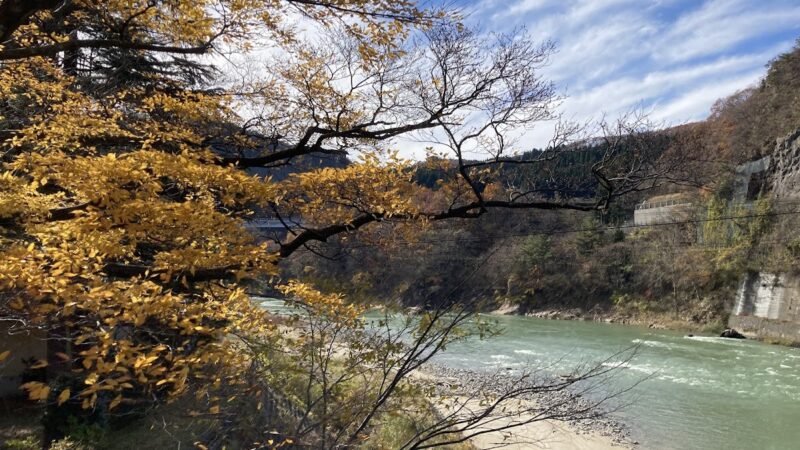
Autumn at Yagi-ga-hana is a famous autumn foliage destination attracting many tourists. The contrast between the rock wall and autumn colors is spectacular.
Autumn Foliage Viewing Season:
- Peak foliage typically occurs from late October to early November
- Beech, oak, and maple trees turn color
- The contrast of gray rock wall with red and yellow foliage is spectacular
Recommended Viewing Points:
- Observation platform midway on the trail
- Walking paths along the Ikarashi River
- Views from the opposite bank (panoramic views of the entire rock wall)
Precautions:
- Expect congestion during foliage season
- The parking lot may become full
- Be careful with clothing as temperature changes are significant
Winter (December to February)
Winter at Yagi-ga-hana is a special season where snow-covered scenery and ice falls can be seen. However, snowfall makes climbing an advanced-level activity.
- Snow-covered rock walls in a mystical appearance
- Beauty of frozen waterfalls and icicles
- Atmosphere of winter mountains enveloped in silence
Precautions:
- Winter climbing requires adequate equipment and experience
- Watch for avalanche risk in certain areas
- Daylight hours are short, so act early
- Watch for icy roads and snow accumulation
Tourist Attractions Around Yagi-ga-hana
When visiting Yagi-ga-hana, you can also enjoy nearby tourist attractions.
Awe-dake
Located south of Yagi-ga-hana, Awe-dake (elevation 1,292 m) is a representative mountain of the Chuetsu region of Niigata Prefecture. A large “love” character monument stands at the summit, making it a popular scenic spot.
- Ridge traverse from Yagi-ga-hana is possible (for advanced climbers)
- The summit offers views stretching to the Echigo Plain, Japan Sea, and Sado Island
- Multiple trails are available, allowing selection based on level
Ikarashi River Gorge
The gorge scenery of the Ikarashi River flowing at the base of Yagi-ga-hana must not be missed.
- Landscape created by clear stream and massive rocks
- Leisurely walking on paths along the river
- Popular as a river play spot for families in summer
- Known as a fishing spot (stream trout fishing)
Michi-no-Eki “Kangaku-no-Sato Shitada”
A roadside station approximately 15 minutes by car from Yagi-ga-hana.
- Sale of fresh local vegetables and specialty products
- Local cuisine available at dining establishments
- Well-equipped rest facilities
- Convenient for gathering tourism information
Sanjo City Center
Known as a town of metal processing, Sanjo offers facilities where you can experience traditional craftsmanship and purchase traditional crafts such as cutlery.
- Tsubame-Sanjo Local Industry Promotion Center
- Sanjo Smithy Workshop (knife sharpening experience, etc.)
- Hachiman Park (famous cherry blossom spot)
Photography Guide for Yagi-ga-hana
Yagi-ga-hana is also popular as a photography spot. Tips for taking impressive photographs are introduced.
Recommended Photography Points
1. Full View Photography from the Opposite Bank
- Capture the entire rock wall from the opposite bank of the Ikarashi River
- A wide-angle lens is recommended
- The time when morning light illuminates the rock wall is beautiful
2. Low-Angle Photography from River Edge
- A composition that emphasizes the power of the rock wall
- Incorporating the Ikarashi River’s flow as foreground is effective
3. Panoramic Photography from Summit
- Comprehensive views of the Echigo Plain and surrounding mountains
- Using a telephoto lens to capture distant scenery is also interesting
4. Special Composition During Autumn Foliage Season
- Contrast between rock wall and autumn foliage
- On days with morning fog, mystical photographs can be captured
Best Timing for Photography
Time of Day:
- Early morning: Soft light and possibility of morning fog
- Midday: Rock wall is sunlit, creating three-dimensionality
- Evening: Rock wall bathed in sunset is beautiful
Season:
- Autumn foliage season (late October to early November) is most popular
- New greenery season (May) offers a refreshing impression
- Winter snow scenery is mystical
Photography Etiquette
- Do not photograph off trail
- Be considerate of other climbers
- When using a tripod, confirm surrounding safety
- Avoid damaging the natural environment
Nature and Ecosystem of Yagi-ga-hana
The area around Yagi-ga-hana is blessed with rich natural environments where diverse plants and animals inhabit.
Vegetation
Trees:
- Deciduous broadleaf trees such as beech and mizunara oak
- Coniferous trees such as cedar and cypress
- Maple species (stars of autumn foliage)
- Yamayama cherry (spring color)
Herbaceous Plants:
- Spring alpine wildflowers (katakuri, wood anemone, etc.)
- Summer alpine plants
- Autumn mushroom species
Fauna
Mammals:
- Japanese serow (special natural monument)
- Japanese monkey
- Asian black bear (caution required)
- Small mammals such as squirrels and rabbits
Birds:
- Birds of prey such as golden eagles and mountain hawk-eagles
- Woodpecker species
- Kingfishers inhabit areas along streams
- Migratory birds in spring and autumn
Precautions:
- Carrying bells or radios is recommended for bear countermeasures
- Feeding wild animals is strictly prohibited
- Always take litter with you
Local Cuisine and Specialty Products
When visiting Yagi-ga-hana, you’ll want to enjoy local food culture as well.
Recommended Cuisine
Soba:
- The Sanjo area is a source of high-quality soba
- Enjoy hand-made soba at local restaurants
- Mountain vegetable soba is especially recommended
Italian:
- Niigata Prefecture’s B-class gourmet “Italian”
- A unique dish of fried noodles topped with meat sauce
- Available at dining establishments throughout Sanjo City
Local Sake:
- Niigata Prefecture is a famous sake-producing region
- Enjoy local brewery sake
- Sake brewed with clear water from the Ikarashi River
Specialty Products and Souvenirs
Metal Products:
- Sanjo City is a town of metal processing
- Knives, nail clippers, kitchen utensils, and more
- High-quality products reflecting traditional craftsmanship
Agricultural Products:
- Fresh mountain vegetables (spring season)
- Local rice
- Seasonal vegetables and fruits
Lodging Facilities and Campgrounds
Various types of accommodations are available around Yagi-ga-hana.
Lodging Facilities
Inns and Pensions:
- Rest and relieve fatigue at local hot spring inns
- Homey atmosphere at small pensions
- Enjoy local cuisine
Hotels:
- Business hotels in Sanjo City center
- Convenient access
- Relatively affordable prices
Campgrounds
Multiple campgrounds along the Ikarashi River allow for a leisurely time in nature.
- Auto camping sites available
- Bungalows and cottages also available
- River play and fishing are enjoyable
- Reservation required; advance confirmation necessary
Planning and Preparation for Visiting Yagi-ga-hana
Key points for planning and preparation to comfortably enjoy Yagi-ga-hana are summarized.
Day Trip Plan Examples
Standard Course (Climbing Focus):
- 8:00 Parking lot arrival, preparation
- 8:30 Begin climbing
- 10:30 Summit arrival, rest and lunch
- 11:30 Begin descent
- 13:00 Return to parking lot
- 13:30 Nearby sightseeing or hot springs
- 16:00 Begin return journey
Leisurely Course (Sightseeing Focus):
- 9:00 Parking lot arrival
- 9:30 Walk along Ikarashi River
- 11:00 Light climb to observation platform
- 12:00 Descent and lunch
- 14:00 Shopping at roadside station
- 15:30 Begin return journey
Packing Checklist
Essential Items:
- Hiking boots or trekking shoes
- Backpack
- Drinking water (1 liter or more)
- Snacks (rice balls, bread, chocolate, etc.)
- Rainwear
- Map or smartphone (GPS app)
- First aid kit
- Headlight (just in case)
Recommended Items:
- Trekking poles
- Gloves (for chain sections)
- Hat, sunglasses
- Sunscreen
- Insect repellent spray
- Camera
- Spare change of clothes
- Towel
Weather Confirmation and Judgment
Always check the weather forecast before climbing, and have the courage to change or postpone plans if bad weather is predicted.
Conditions Warranting Cancellation or Postponement:
- Precipitation probability of 50% or higher
- Thunder advisory in effect
- Strong wind advisory in effect
- Typhoon approaching
- Heavy snow forecast for winter
Important Safety Precautions for Safe Climbing
Key safety precautions to safely enjoy Yagi-ga-hana are summarized.
Preparation Before Climbing
- Health Management
- Get sufficient sleep the night before
- Avoid climbing if ill
- Consult with a doctor if you have chronic conditions
- Information Gathering
- Confirm latest trail information
- Check weather forecast
- Know sunset time
- Plan Sharing
- Inform family and friends of your destination and expected return time
- Submit a climbing notification if possible
During Climbing
- Pacing
- Walk at a comfortable pace
- Take frequent breaks and hydrate
- Rest early if fatigue is felt
- Preventing Trail Loss
- Stay on established trails
- Check map at junctions
- Have the courage to turn back if uncertain
- Attention on Rocky Terrain
- Practice three-point contact
- Use chains as assistance
- Watch for falling rocks and confirm no one is below
Emergency Response
In Case of Accident or Injury:
- Move to a safe location first
- Call 119 (from a location where mobile phone is connected)
- Perform first aid
- Wait for rescue without moving unnecessarily
If Lost:
- Stop and avoid unnecessary movement, confirm your location
- Call for rescue on mobile phone
- Do not descend into streams (increased danger of being lost)
- Act before sunset
Environmental Conservation Activities at Yagi-ga-hana
Various conservation activities are being carried out to preserve Yagi-ga-hana’s beautiful nature for the future.
Local Efforts
- Trail maintenance and upkeep
- Periodic cleanup activities
- Awareness activities for vegetation protection
- Efforts aimed at coexistence with wildlife
What Visitors Can Do
Leave No Trace Principle:
- Take All Litter with You
- Food wrappers, tissues, and all other waste
- Pick up litter you find along the way
- Avoid Damaging Vegetation
- Stay on established trails
- Do not collect plants
- Do not write on rocks
- Consider Wildlife
- Do not feed animals
- Do not speak loudly
- Maintain appropriate distance
- Exercise Caution with Fire
- No open flames except in designated areas
- Always take cigarette butts with you
Conclusion: Fully Enjoy the Charm of Yagi-ga-hana
Yagi-ga-hana is a natural treasure of which Niigata Prefecture can be proud. The overwhelming rock wall of 200 meters in height, the beauty of the clear Ikarashi River, faces changing with each season, and a rich ecosystem. All of these harmonize to provide visitors with an unforgettable experience.
The charm of Yagi-ga-hana is that it can be enjoyed by everyone from climbing beginners to advanced climbers, each at their own level. Whether it’s family hiking, serious climbing, rock climbing, photography, or autumn foliage viewing, it can be visited according to your purpose.
When visiting, be sure to prepare appropriately and take safety precautions, while being mindful of the natural environment. In doing so, you can pass on Yagi-ga-hana’s wonderful nature to future generations.
If you have the opportunity to visit Niigata Prefecture, be sure to visit Yagi-ga-hana. There awaits a meeting with majestic nature that can never be experienced in the city. The power of rock walls, the murmur of the river, the silence of the forest, and the panoramic view from the summit. Yagi-ga-hana will surely provide you with special memories.
-800x450.jpg)
-800x450.jpg)
-800x450.jpg)