
.jpg)
Otani Dam (Niigata Prefecture) Complete Guide: The Charm of Himesayuri Lake and Its Role in Flood Control
The Otani Dam, located in Sanjo City, Niigata Prefecture, is a prefectural multipurpose dam constructed in the upper reaches of the Ikarashi River, part of the Shinano River water system. Completed in 1993 as a rockfill dam with a height of 75.5 meters, it plays an important role in flood control and water supply for the region. This article provides comprehensive information about the Otani Dam, from detailed specifications to tourist attractions in the surrounding area.
Overview and Basic Information about Otani Dam
Dam Specifications
The Otani Dam is a prefectural dam managed by Niigata Prefecture, constructed with government subsidies as a subsidized multipurpose dam. Its official completion year is 1993 (Heisei 5), with the primary purposes being flood control of the Ikarashi River and water supply to Sanjo City.
Main Specifications:
- Type: Rockfill dam
- Dam height: 75.5 meters
- Dam crest length: Approximately 300 meters
- Total storage capacity: Approximately 12 million cubic meters
- Effective storage capacity: Approximately 11 million cubic meters
- Watershed area: 101 hectares
- River system: Shinano River system, Ikarashi River
- Location: 171-2 Otani, Sanjo City, Niigata Prefecture
- Administrator: Niigata Prefecture
- Dam number: 781
Name Change from Ikarashi River Dam to Otani Dam
Initially, a name derived from the river name “Ikarashi River Dam” was planned, but upon impoundment, the name was changed to “Otani Dam” after the submerged district. This renaming was intended to show respect for the Ooe and Otani settlements that were submerged and to convey the region’s history to future generations. At the same time, the reservoir was named “Himesayuri Lake” and has become cherished as a regional symbol.
Flood Control Mechanism of Otani Dam
Importance of Flood Control Function
The Ikarashi River basin where the Otani Dam was constructed has historically suffered from flooding. Downstream from the dam lies the urban area of Sanjo City, where heavy rains have caused serious inundation damage. The Otani Dam functions as an important flood control facility to mitigate such flood damage.
Performance During the 2004 Niigata and Fukushima Heavy Rainfall
During the heavy rainfall that occurred in July 2004 (Heisei 16), the Otani Dam demonstrated outstanding flood control capacity. This rainfall brought record-breaking precipitation and caused severe damage throughout Niigata Prefecture. However, the flood control by the Otani Dam significantly mitigated damage in downstream areas.
The dam retains a portion of incoming floodwater and adjusts the discharge to downstream areas, suppressing rises in river water levels. Through this function, inundation damage to the Sanjo urban area was kept to a minimum.
Renewed Contribution During 2011 Water Disaster
In 2011 (Heisei 23), heavy rainfall again caused flooding in Niigata Prefecture, and the Otani Dam once again demonstrated its flood control function, protecting downstream areas. These accomplishments, displayed on panels at the Otani Dam Fureai Museum, provide evidence of the dam’s flood control effectiveness.
Reservoir Capacity Distribution Diagram
The Otani Dam reservoir has capacity allocated according to its intended use:
- Flood control capacity: Capacity for temporarily storing water during floods
- Water use capacity: Capacity for water supply purposes
- Sediment accumulation capacity: Capacity reserved for long-term sediment deposition
This rational capacity allocation enables the coexistence of flood control and water use.
Characteristics and Structure of Rockfill Dams
What is a Rockfill Dam
The Otani Dam is constructed as a “rockfill dam” type. This refers to a dam built by stacking rock, differing from concrete dams in its characteristics.
Advantages of Rockfill Dams:
- Rock extracted locally can be used as the primary material, reducing construction costs
- High resistance to earthquakes
- Good adaptability to ground conditions
- Easy harmonization with natural landscapes
Otani Dam Embankment Structure
The Otani Dam embankment is a “center impermeable wall type” rockfill dam, with an impermeable core material such as clay placed in the center and supported by rock on both sides. The rock-stacked embankment presents an appearance resembling a natural rocky mountain, harmonizing with the surrounding alpine landscape.
The height of 75.5 meters is equivalent to approximately a 25-story building, presenting an overwhelming presence when viewed up close. In particular, the view of Himesayuri Lake from the dam crest is spectacular and captivates visitors.
Charm of Himesayuri Lake
Origin of the Lake’s Name
The artificial lake formed by the Otani Dam was named “Himesayuri Lake.” This name derives from the rare alpine plant “Himesayuri” (Asiatic lily) that grows naturally in this region. Himesayuri is an endemic Japanese species found only in parts of Niigata, Yamagata, and Fukushima prefectures, displaying delicate pink flowers.
Scenic Views Throughout the Four Seasons
Spring (April–May)
As snow melts, fresh greenery sprouts, and the lake surface is surrounded by vibrant green. During this period, Himesayuri blooms on the surrounding mountains, displaying its delicate appearance.
Summer (June–August)
Himesayuri Lake, wrapped in deep green, is popular with visitors seeking coolness. The contrast between the blue sky and the surrounding mountains reflected on the lake surface is beautiful and popular as a photography spot.
Autumn (September–November)
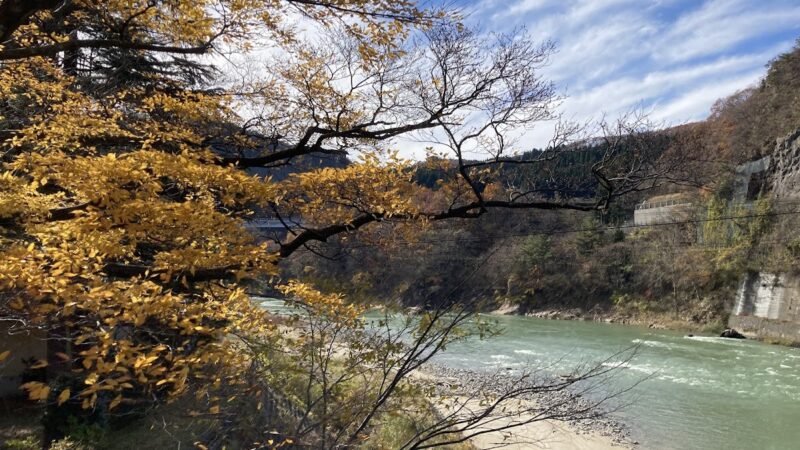
The main attraction of the Otani Dam area is autumn foliage. The entire mountainside is painted in shades of red and yellow, and the sight of autumn leaves reflected on the lake surface is breathtaking. Mid-October to early November is peak foliage season, attracting many tourists and photography enthusiasts.
Winter (December–March)
A quiet, snow-covered landscape spreads out. During winter, some facilities may close due to snowfall, but the dam in a snowy landscape exudes a mystical atmosphere.
Otani Dam Fureai Museum
Overview of the Museum
The Otani Dam Fureai Museum introduces the dam’s roles and mechanisms, the history and lifestyle of the Ooe and Otani settlements where it was built, and the surrounding natural environment. This is a must-visit spot when visiting the dam.
Exhibits
Dam Mechanisms and Functions
- Dam model display: Precise models allowing three-dimensional understanding of the Otani Dam’s structure
- Video materials: Clear explanations of the dam construction process and flood control mechanisms
- Panel displays: Detailed introduction of the dam’s activities during the 2004 Niigata and Fukushima heavy rainfall and the 2011 water disaster
Memory of Submerged Settlements
The history and lifestyle of the Ooe and Otani settlements are displayed through photographs and materials. Records of the settlements before submersion, residents’ daily lives, and traditional events are preserved, serving as valuable historical records conveying the region’s history to future generations.
Surrounding Natural Environment
There are exhibits on the flora and fauna of the Ikarashi River basin, particularly introducing rare plants including Himesayuri, and information about the surrounding natural environment.
Usage Information
- Location: Otani, Sanjo City, Niigata Prefecture
- Opening hours: Usually 9:00 AM – 5:00 PM (varies by season)
- Closed days: Closed during winter period (December–March) in some cases
- Admission: Free
- Parking: Available (free)
Hayabusa Plaza and Surrounding Facilities
Hayabusa Plaza
Around the Otani Dam, a rest area called “Hayabusa Plaza” has been developed. This plaza is enjoyed as a place where dam visitors can take a break or enjoy a picnic.
From the plaza, you can view the dam embankment and Himesayuri Lake in their entirety, making it an excellent photography point. Benches and pavilions are installed, allowing visitors to spend leisurely time in nature.
Surrounding Natural Environment
The area around the dam is blessed with rich natural surroundings, making it suitable for birdwatching and nature observation. From spring to autumn, various birds can be observed, making it an attractive spot for nature enthusiasts.
Access and Location Information
Access by Car
From the Hokuriku Expressway
- Approximately 40 minutes from Sanjo-Tsubame IC
- Via National Route 289 toward Otani
From Niigata City area
- Approximately 1 hour 30 minutes via National Routes 8 and 289
Public Transportation Access
Public transportation access is limited, so visiting by car is recommended. The nearest station is Higashi-Sanjo on the JR Shinetsu Main Line, but the distance from there to the dam is considerable, making rental car use convenient.
Location Map (Watershed Map)
The Otani Dam is located in the upper reaches of the Ikarashi River in the Shinano River water system. The Kasabori Dam is located downstream, and the two dams work together in flood control of the Ikarashi River. The completion of the Otani Dam has reduced the management burden on the Kasabori Dam, realizing more effective flood control.
The watershed is primarily composed of mountainous terrain and covered by rich forests. These forests perform water source maintenance functions, producing high-quality water.
Requests and Precautions from Otani Dam
Safety Management
The dam is an important infrastructure facility, so please note the following points when visiting:
- Restricted entry areas: Never enter areas restricted for management purposes
- Discharge warning: A siren sounds when water is released from the dam. If a warning sounds, promptly move to a safe location
- Weather changes: Weather can change suddenly in mountainous areas. Pay attention to weather information and avoid visits during bad weather
Cooperation in Environmental Conservation
- Take trash with you: Please take all trash with you to preserve the natural environment
- Prohibition on collecting flora and fauna: Collecting rare plants including Himesayuri is prohibited
- Use of open flames: Use of fire outside designated areas is strictly prohibited to prevent forest fires
Winter Visits
During winter (December–March), snowfall may cause the Fureai Museum to close and some roads to be closed. If planning a winter visit, it is recommended to contact the Niigata Prefecture Sanjo Regional Promotion Bureau beforehand.
Otani Dam as a Filming Location
The Otani Dam has been used as a filming location for movies and dramas due to its grand landscape. The characteristic stone-stacked embankment of the rockfill dam, the surrounding mountains, and the beautiful scenery of Himesayuri Lake create a unique atmosphere for video productions.
Registered in the Niigata Location Guide, it is a popular spot receiving many inquiries from film and drama production professionals. General tourists also increasingly visit as “pilgrimage sites” to experience in person the scenery they saw in movies or dramas.
Relationship with Kasabori Dam
Downstream from the Otani Dam is the Kasabori Dam. The Kasabori Dam was built before the Otani Dam but had insufficient capacity and posed challenges for flood control. For this reason, Niigata Prefecture completed the Otani Dam in 1993 to strengthen flood control capacity in the upper reaches.
With the completion of the Otani Dam, the burden on the Kasabori Dam was reduced, and the cooperation of the two dams significantly improved flood control effectiveness of the Ikarashi River. This coordination between upstream and downstream dams is evaluated as a good example of effective watershed management.
Role as Water Source for Sanjo City Water Supply
In addition to flood control, the Otani Dam also serves an important water use function of supplying water to Sanjo City. It stores clean water from the Ikarashi River and supplies it stably, supporting the lives of Sanjo City residents.
The water stored in the reservoir is supplied to each household through water purification plants under proper water quality management. The existence of the Otani Dam enables stable water supply even during droughts and serves as important infrastructure supporting the region’s living foundation.
Points for Visiting Otani Dam
Recommended Photography Spots
- Dam crest: The view overlooking Himesayuri Lake from the top of the embankment is spectacular
- Hayabusa Plaza: An excellent viewpoint overlooking the entire dam
- Lakeside during foliage season: The autumn foliage reflected on the lake surface is a must-see
Best Season for Visiting
- Autumn foliage viewing: Mid-October to early November
- Fresh greenery and Himesayuri: May–June
- Summer coolness: July–August
Estimated Duration
- Dam viewing only: 30 minutes to 1 hour
- Including Fureai Museum: 1 hour 30 minutes to 2 hours
- Including surrounding exploration: 2 to 3 hours
Regional History and Memory of Submerged Settlements
With the construction of the Otani Dam, the Ooe and Otani settlements were submerged. These settlements had long histories with unique cultures and traditions developed over time. Naming the dam “Otani Dam” and displaying the settlement’s memory in the Fureai Museum demonstrate respect for the submerged region and an intention to convey its history to future generations.
The museum exhibits photographs of the settlements before submersion, household tools, and records of traditional events, allowing visitors to learn about the lives of those who once inhabited these places. The dam is not merely a civil engineering structure but an entity imbued with regional history and the feelings of its people.
Conclusion
The Otani Dam serves as the cornerstone of flood control and water use in Sanjo City, Niigata Prefecture, playing an important role in protecting the region’s safety and livelihood. Its flood control function was demonstrated during the 2004 and 2011 water disasters, contributing significantly to damage reduction in downstream areas.
The structural beauty of the rockfill dam, the seasonal landscapes of Himesayuri Lake, and especially the autumn foliage captivate visitors. The Fureai Museum allows visitors to learn not only about the dam’s mechanisms but also the history of submerged settlements, giving the facility value both as a civil engineering structure and as a place conveying regional memory.
When visiting Niigata Prefecture, be sure to visit the Otani Dam and experience its grand appearance, the surrounding nature, and the region’s history. A visit during foliage season will become an unforgettable memory.
Telephone number and contact information:
Niigata Prefecture Sanjo Regional Promotion Bureau, Regional Development Division (for inquiries about dam management)
-800x450.jpg)
-800x450.jpg)
-800x450.jpg)