Hakkōda Mountain Aomori Prefecture Complete Guide | Mountain Climbing, Tourism, Hot Springs, and Access Information Summary
What is Hakkōda Mountain | One of Japan’s One Hundred Famous Mountains Boasting Aomori Prefecture
Hakkōda Mountain (hakkōdasan) is a collective term for the majestic mountains rising on the south side of Aomori City, Aomori Prefecture. Rather than being a single peak called “Hakkōda Mountain,” it is a collective term for 18 mountains forming multiple volcanoes, with Ōdake (elevation 1,585m) as the main peak, and is counted among Japan’s One Hundred Famous Mountains.
Located roughly in the center of Aomori Prefecture, with Lake Towada spreading about 20km to the south, Hakkōda Mountain belongs to the Nasu volcanic belt and is composed of stratified volcanoes and lava domes. The name is said to derive from “eight (many) shield-shaped peaks,” and it indeed forms a magnificent mountain mass with multiple peaks in succession.
The Origin of the Name Hakkōda
The name Hakkōda has various theories, but the most plausible is that it derives from “eight peaks shaped like helmet crests or shields.” Although actually composed of 18 peaks, when viewed from a distance, multiple peaks appear to line up like shields, giving rise to this name. There is also a theory of Ainu language origins, reflecting the region’s history and culture in the name.
Northern and Southern Hakkōda | Characteristics of Two Mountain Masses
Hakkōda Mountain is broadly divided into the Northern Hakkōda Range and the Southern Hakkōda Range. Each possesses distinct characteristics and offers different appeals to climbers and tourists.
Composition of the Northern Hakkōda Range
Northern Hakkōda comprises 10 peaks led by the main peak Ōdake with an elevation of 1,585m: Takada-Ōdake, Ido-dake, Akakura-dake, Maeyama, Tamomatake, Kodake, Iōdake, Ishikura-dake, and Hinagimi-dake. These mountains have relatively gentle slopes, with characteristics of high-altitude plateaus at elevations of 1,200-1,400m.
Ōdake is the highest peak of Hakkōda Mountain, and from the summit spreads a magnificent view overlooking Aomori city, Mutsu Bay, and on clear days, even Hokkaido. Takada-Ōdake is the second-highest peak with well-developed climbing routes. Tamomatake is close to the mountain-top park station accessible by the Hakkōda Ropeway, making it popular as a place where beginners can easily enjoy the alpine atmosphere.
Charms of the Southern Hakkōda Range
Southern Hakkōda is positioned opposite to Northern Hakkōda across National Route 103 and comprises 6 peaks with Kushigamine (elevation 1,517m) as the main peak. Compared to Northern Hakkōda, fewer climbers visit, making it possible to enjoy quieter mountain walks.
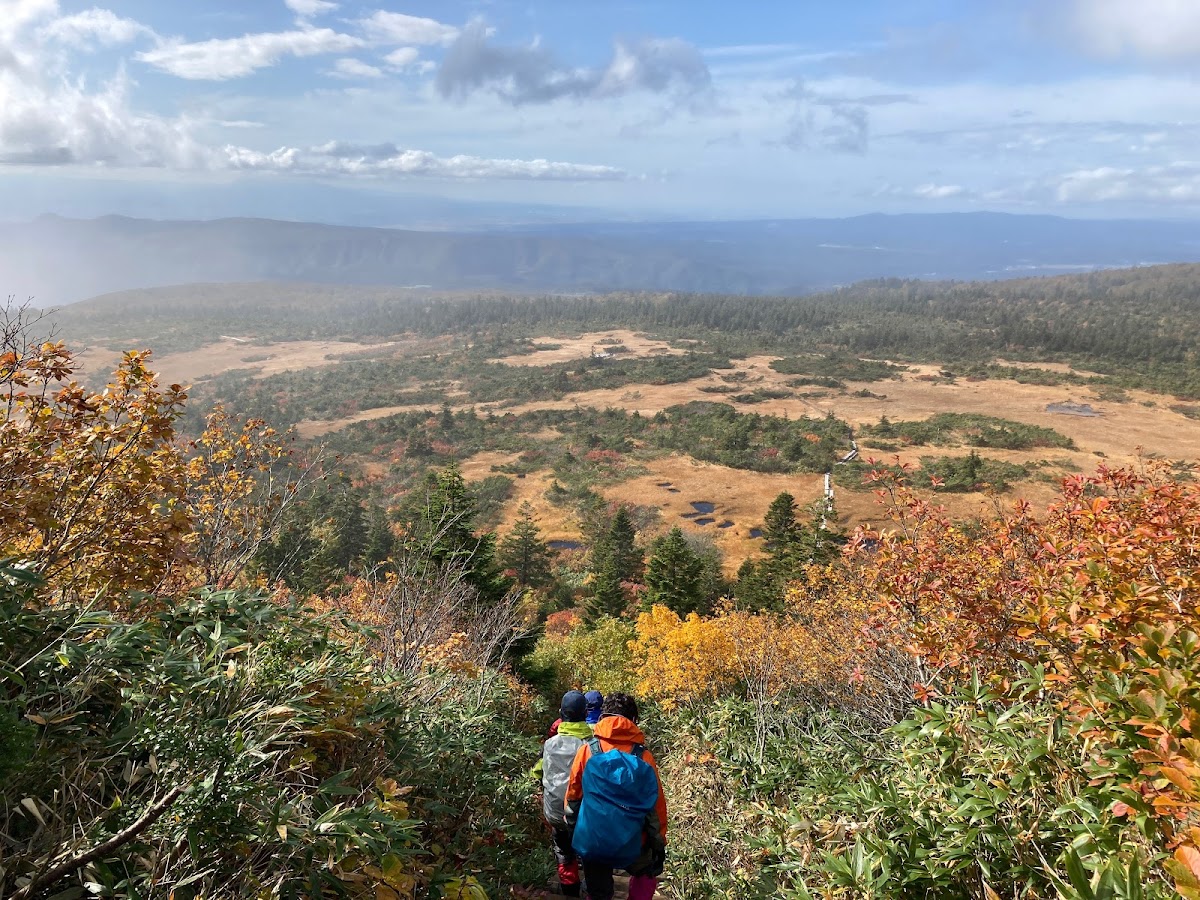
Southern Hakkōda retains pristine nature, with virgin beech forests and alpine wetlands. The view from Kushigamine is magnificent, overlooking all the mountains of Northern Hakkōda. Additionally, Southern Hakkōda has numerous wetlands, making it a treasure trove of wetland plants.
Climbing Routes on Hakkōda Mountain | From Beginners to Advanced Climbers
Multiple climbing routes are developed on Hakkōda Mountain, allowing course selection according to fitness level and experience, from beginners to advanced climbers.
Standard Course Using the Hakkōda Ropeway
The most popular route involves taking the Hakkōda Ropeway to Tamomatake (elevation 1,324m) all at once, then heading toward Ōdake from there. From the ropeway’s mountain-top park station to the summit of Ōdake is a round-trip course time of about 4 hours.
This route requires minimal elevation gain and has relatively well-maintained trails, making it ideal for day hiking. There are also routes passing through Akakura-dake or Idodake, where one can enjoy views of alpine plants and wetlands.
Climbing Route from Suka-yu Hot Spring
A climbing route starting from Suka-yu Hot Spring is also popular. The course passing through Sennin-daira Hut to reach Ōdake is a round-trip of about 6-7 hours and offers more serious mountaineering.
This route allows experiencing Hakkōda’s rich nature from the base to the summit, observing changes in vegetation by elevation. Along the way, one can also see traces of volcanic activity such as Jigoku-numa (Hell Pond), allowing one to experience the formation of Hakkōda Mountain.
Takada-Ōdake and Ido-dake Loop Course
A loop course from the Hakkōda Ropeway mountain-top park station via Takada-Ōdake and Ido-dake back to Tamomatake is also popular. Since it doesn’t ascend Ōdake, the course time is shorter at about 3-4 hours, providing the satisfaction of visiting multiple peaks.
This course walking through high-plateau terrain with scattered wetlands and ponds offers a route that allows enjoying diverse scenery of Hakkōda Mountain.
Climbing Kushigamine in Southern Hakkōda
Climbing the main peak of Southern Hakkōda, Kushigamine, is a round-trip course of about 6 hours from the trailhead along National Route 103. Since it has fewer climbers than Northern Hakkōda, it is recommended for those wishing to enjoy quiet mountain walks.
As you ascend through primordial beech forests and your elevation increases, the view eventually opens to reveal a magnificent panorama overlooking the mountains of Northern Hakkōda.
Hakkōda Mountain Throughout the Seasons | Spring, Summer, Autumn, and Winter Attractions
Hakkōda Mountain displays different faces throughout the year, each season offering unique charms.
Spring Hakkōda | Season of Snowmelt and Fresh Greenery
Spring on Hakkōda Mountain arrives late, with snow remaining near the summit even in May. With the snowmelt, alpine plants begin budding all at once, with Mizubasho and Lycopodium decorating the wetlands.
From April to May, spring skiing can be enjoyed from the Hakkōda Ropeway, making for a season of beautiful contrast between new greenery and remaining snow.
Summer Hakkōda | Alpine Plants and Refreshing Breezes
From June to August, summer is the most vibrant season on Hakkōda Mountain. Diverse alpine plants such as Nikkō-kisuge, watage, and Chinguruma bloom profusely in wetlands and along trails.
Mountains at the 1,500m level are cool even in midsummer, perfect for summer hiking. You can escape the heat of Aomori city and feel the refreshing breeze of the highlands. Small ponds called tetou dot the wetlands, creating beautiful scenery reflecting blue skies and mountains.
Autumn Hakkōda | One of Japan’s Premier Fall Foliage Destinations
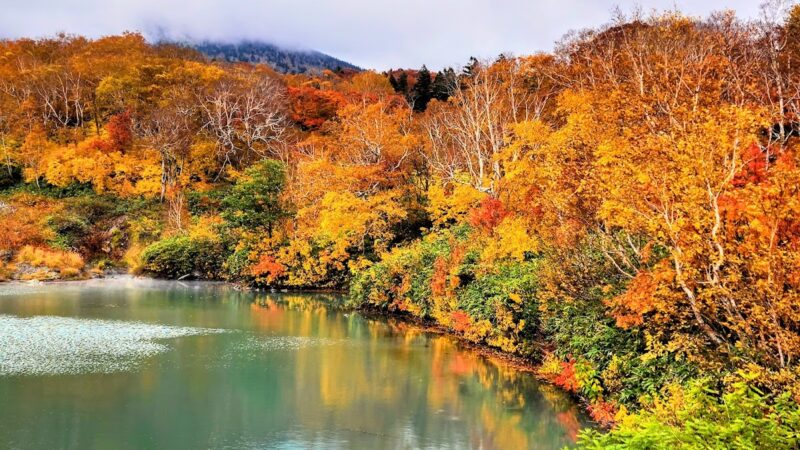
Hakkōda Mountain is known as one of Japan’s most renowned fall foliage sites, with the entire mountain engulfed in blazing colors from late September to mid-October. Beech, rowan, and birch turn red and yellow, creating magnificent contrast with green conifers.
Particularly stunning is the foliage around Suka-yu Hot Spring and the Hakkōda Ropeway, attracting many tourists. The foliage around Jigoku-numa is also a popular spot, with the sight of greenish pond water and vibrant fall colors weaving together being a must-see.
Due to the elevation difference, foliage gradually descends from summit to base. As foliage spots change according to timing, one can select foliage spots according to visitation period.
Winter Hakkōda | A World of Frost-Covered Trees and Snow Mountains
Winter Hakkōda Mountain is world-renowned as a location for frost-covered trees (ice monsters). From January to February, the harsh cold, strong winds, and abundant moisture create frost-covered trees that fascinate visitors with their appearance like snow monsters.
The Hakkōda Ropeway operates year-round in winter, allowing frost-covered tree viewing from the ropeway and snowshoe hiking around the mountain-top park station. On clear days, pure white frost-covered trees stand against blue skies with the distant view of Aomori Bay spreading magnificently.
However, winter conditions on Hakkōda Mountain are extremely severe, requiring proper equipment and experience. The “Hakkōda Snow March Disaster” occurring in January 1902 (Meiji 35) is a historical event illustrating the severity of winter on Hakkōda Mountain.
Hot Springs Around Hakkōda Mountain | Relaxation After Mountain Activities
Rich hot spring resources created by volcanic activity surround Hakkōda Mountain, allowing one to ease fatigue after climbing and sightseeing.
Suka-yu Hot Spring | One of Japan’s Premier Hot Springs
Suka-yu Hot Spring (sukayuonsen) is the representative hot spring at the base of Hakkōda Mountain. This hot spring with approximately 300 years of history is known for its strongly acidic sulfur spring and famous for its “Hiba Thousand-Person Bath.”
The mixed-gender large bath constructed entirely from Hiba wood spans 160 tatami mats and offers four sources: “Hot Bath,” “Cold Bath,” “Four-Six Bath,” and “Bath Waterfall.” Known as a therapeutic hot spring, many long-stay spa guests frequent this genuine hot spring inn.
Around Suka-yu Hot Spring are also walking sites including Jigoku-numa, allowing one to enjoy hot springs combined with nature tourism.
Hakkōda Hot Spring and Sarukura Hot Spring
Multiple hot springs dot the area around Hakkōda Mountain beyond Suka-yu. Hakkōda Hot Spring and Sarukura Hot Spring each possess different water qualities and atmospheres, allowing one to enjoy hot spring tours.
Many hot springs exist as single-inn establishments in quiet mountains with facilities for thoroughly enjoying hot springs. Many allow day-use bathing, making it easy to stop by after climbing.
Hakkōda Ropeway | Scenic Vistas from the Sky
The Hakkōda Ropeway is a central facility for Hakkōda Mountain tourism. In about 10 minutes of aerial travel from the base station (approximately 670m elevation) to the mountain-top park station (approximately 1,320m elevation), one gains elevation rapidly.
Basic Information on the Ropeway
The ropeway operates year-round, allowing enjoyment of Hakkōda Mountain’s seasonal scenery from the sky. Especially during fall foliage and frost-tree seasons, it becomes crowded, so using earlier time slots is recommended.
Around the mountain-top park station are maintained trails to Tamomatake and observation decks, allowing high-mountain atmosphere experience even without climbing equipment. On clear days, a grand panorama spreads, overlooking Aomori city, Mutsu Bay, Mount Iwaki, and even distant Hokkaido.
Ropeway Experiences Through the Seasons
The ropeway’s charm lies in experiencing completely different scenery each season: spring’s remaining snow and fresh greenery, summer’s refreshing highlands, autumn’s carpet of foliage, and winter’s frost-covered trees. Particularly stunning is autumn’s foliage season, where views from the ropeway of the foliage sea below are spectacular, attracting many tourists.
Winter use also includes frost-tree viewing, skiing and snowboarding, and snowshoe hiking.
Hakkōda Mountain Ski Areas | Powder Snow Paradise
Multiple ski areas surround Hakkōda Mountain, known for abundant snowfall and high-quality powder snow.
Hakkōda Ski Area
Utilizing the Hakkōda Ropeway, Hakkōda Ski Area is acclaimed internationally by skiers as a mecca for ungroomed backcountry skiing. The expansive slope descending from the ropeway’s mountain-top station is covered in deep powder snow, providing supreme skiing experiences.
However, courses are ungroomed with high difficulty, suited for advanced skiers. For safety, guide-accompanied skiing or carrying beacon and safety equipment is recommended.
Hakkōda International Ski Area
Hakkōda International Ski Area is a more general ski area with groomed course maintenance. Diverse courses from beginner to advanced allow enjoyment across levels, suitable for family skiing.
Hakkōda Mountain’s History | The Hakkōda Snow March Disaster
Inseparable from discussing Hakkōda Mountain is the “Hakkōda Snow March Disaster” occurring in January 1902 (Meiji 35). This incident is known as the greatest alpine disaster in Japanese mountaineering history.
Overview of the Disaster
Prior to the Russo-Japanese War, the 5th Infantry Regiment of Aomori conducted a winter training snow march on Hakkōda Mountain. However, struck by violent blizzards, 199 of 210 participants died in an unprecedented calamity.
Simultaneously, the 31st Infantry Regiment of Hirosaki also conducted a snow march but returned safely due to careful preparation and appropriate judgment. This contrasting outcome illustrates lessons about winter mountains’ severity and importance of preparation, still recounted today.
Impact on Posterity
This incident became widely known through novelist Shichirō Nitta’s novel “Hakkōda Mountain Wandering Death” and the film adaptation “Hakkōda Mountain.” Currently, a memorial to the disaster victims stands in Hakkōda Mountain, conveying winter Hakkōda’s severity.
Access to Hakkōda Mountain | How to Get There from Aomori City
Access to Hakkōda Mountain typically begins from Aomori City.
Access by Public Transportation
From JR Aomori Station, board JR Bus Tōhoku’s “Mizuumi-go” reaching the Hakkōda Ropeway Station in about 60 minutes. Suka-yu Hot Spring takes approximately 80 minutes. Buses run several times daily with seasonal variation, requiring advance timetable confirmation.
During tourism seasons like fall foliage, additional express buses may operate.
Access by Private Vehicle
From central Aomori City, heading south on National Route 103 (Hakkōda Gold Line) reaches the Hakkōda Ropeway in about 40 minutes. Free parking is complete, making private vehicle access convenient.
In winter, studless tires are essential due to snow and road freezing. Additionally, heavy snow may cause road closures, making weather information confirmation important.
Access from Lake Towada Area
A route heading north on National Route 103 from Lake Towada is also available. From Lake Towada to Suka-yu Hot Spring is about 30 minutes, to the Hakkōda Ropeway about 40 minutes. This route, known as the “Hakkōda·Towada Gold Line,” is recognized as a fall foliage destination.
Model Courses for Hakkōda Mountain Tourism
We present model courses for efficiently enjoying Hakkōda Mountain.
Day-Trip Tourism Course
Morning: Bus from Aomori Station to Hakkōda Ropeway (approximately 60 minutes) → Ropeway to mountain-top park station (approximately 10 minutes) → Tamomatake area walk (approximately 1 hour)
Afternoon: Return by ropeway → Move to Suka-yu Hot Spring (approximately 15 minutes by car) → Jigoku-numa walk (approximately 30 minutes) → Bathe at Suka-yu Hot Spring (approximately 1 hour) → Return to Aomori Station
This course efficiently enjoys aerial travel, alpine scenery, and hot springs in one day.
One Night, Two Days Course Including Climbing
Day 1: From Aomori Station to Suka-yu Hot Spring → Ōdake climbing (round-trip 6-7 hours) → Overnight at Suka-yu Hot Spring
Day 2: Surrounding area walk including Jigoku-numa → Move to Hakkōda Ropeway → Ascend to summit by ropeway → Tamomatake·Takada-Ōdake loop (approximately 3 hours) → Return to Aomori Station
This course combines serious climbing with sightseeing, allowing deep experience of Hakkōda Mountain’s charms.
Fall Foliage Season Touring Course
Route: Aomori City → Hakkōda Ropeway → Suka-yu Hot Spring → Tsuta Hot Spring (Tsuta Seven Ponds) → Lake Towada → Oirase Gorge → Aomori City
This course tours Aomori’s representative fall foliage destinations from Hakkōda Mountain to Lake Towada and Oirase Gorge in one day, a luxurious plan. Car rental is recommended.
Precautions and Etiquette for Hakkōda Mountain Tourism
Checking Weather Conditions
Hakkōda Mountain has high elevation with changeable weather. Especially in winter, conditions become extremely severe, making advance weather forecast confirmation and proper equipment preparation essential.
When climbing, provide a climbing notice, carry appropriate equipment (thermal wear, rain gear, maps, compass, etc.), and choose courses suited to your fitness and skills.
Nature Conservation and Etiquette
Hakkōda Mountain is designated a National Park of Towada-Hachimantai, with protected rich nature. Don’t leave marked trails, refrain from plant collection, and always take trash with you.
Wetlands particularly suffer from trampling damage, so always walk wooden trails where installed.
Bear Countermeasures
Asiatic black bears inhabit areas around Hakkōda Mountain. When climbing, carry a bear bell, avoid solo activities in early morning or evening, and take measures to avoid bear encounters.
Tourist Spots Around Hakkōda Mountain
Jigoku-numa
Located about 5 minutes’ walk from Suka-yu Hot Spring, Jigoku-numa is a pond created by volcanic activity. The greenish mystical water surface and surrounding trees create beautiful scenery, particularly popular as a scenic spot during fall foliage season.
A maintained trail allows easy walks. While snow-covered in winter, the snow scenery is also extraordinarily beautiful.
Suiren-numa
Located about 10 minutes by car from the Hakkōda Ropeway, Suiren-numa is a beautiful pond surrounded by wetlands. Water lilies bloom in early summer, and grass-colored autumn foliage is magnificent in fall.
A wooden trail circles the perimeter allowing about 30-minute loops. The pond’s scenery with Hakkōda’s mountains as backdrop is popular as a photo spot.
Jōgakura Large Bridge
Located on the Hakkōda·Towada Gold Line, Jōgakura Large Bridge is a 360m upper-deck arch bridge with magnificent views from the bridge. Below flows the Jōgakura Gorge, with the entire gorge burning in fall foliage during that season creating a spectacular vista.
An observation deck and parking at the bridge base make it ideal as a drive rest spot.
Hakkōda Mountain’s Flora and Fauna | Rich Ecosystem
Alpine Plant Treasure Trove
Hakkōda Mountain boasts abundant plant species due to elevation differences and diverse environments. Alpine wetlands host dense growth of watage, mizubasho, and lycopodium, becoming flower fields in early summer.
High-altitude zones feature alpine plants including Chinguruma, Iwakagami, and Hakusan-shakunage, delighting climbers. Autumn’s grass-colored foliage beautifully stains entire wetlands golden.
Coexisting Wild Animals
Hakkōda Mountain hosts diverse mammals including Asiatic black bears, Japanese serows, foxes, and hares. Birds of prey including golden eagles and mountain hawk-eagles, along with Japanese ptarmigans, are also visible.
These animals evidence well-maintained rich natural environments. Observe at appropriate distances, absolutely avoiding feeding.
Facilities Information for Hakkōda Mountain
Hakkōda Ropeway
Hours: 9:00-16:20 (varies seasonally)
Rates: Round-trip Adult 2,000 yen, elementary 700 yen (as of 2024)
Closed: During maintenance periods (approximately 2 weeks early November)
Contact: 017-738-0343
Suka-yu Hot Spring
Day-use bathing hours: 7:00-17:30 (reception until 17:00)
Rates: Adult 1,000 yen, elementary 500 yen
Closed: No closures
Contact: 017-738-6400
Hakkōda Visitor Center
A facility for learning about Hakkōda’s nature and history. Also provides climbing information, convenient for pre-climb research.
Summary | Fully Enjoy Hakkōda Mountain’s Charms
Hakkōda Mountain, counted among Japan’s One Hundred Famous Mountains, is Aomori Prefecture’s representative alpine tourism destination, allowing diverse enjoyment including climbing, sightseeing, hot springs, and skiing.
The magnificent landscapes formed by 10 peaks of Northern Hakkōda with Ōdake as the main peak and 6 peaks of Southern Hakkōda with Kushigamine as the main peak, totaling 18 mountains, continue captivating visitors year-round.
Spring’s fresh greenery and alpine plants, summer’s refreshing highlands, autumn’s blazing foliage, winter’s mystical frost-covered trees—Hakkōda displays completely different faces seasonally. Using the Hakkōda Ropeway allows those without climbing experience to easily experience alpine atmosphere, while serious climbers have multiple routes including Ōdake available.
After climbing or sightseeing, ease fatigue at Suka-yu Hot Spring and other renowned hot springs, then walk scenic spots like Jigoku-numa and Suiren-numa. Such enriching time is Hakkōda Mountain’s charm.
When visiting Aomori Prefecture, be sure to experience Hakkōda Mountain’s magnificent nature. The stature of a Japan’s One Hundred Famous Mountain and volcanic-created unique scenery will surely create unforgettable memories.
Hakkōda Mountain Basic Information
Location: Komago Fukasawa, Aomori City, Aomori Prefecture
Highest Peak: Ōdake (elevation 1,585m)
Mountain Region: Towada-Hachimantai National Park
Inquiry: Hakkōda Development Council Secretariat (Aomori City Economic Department Tourism Section) TEL: 017-734-5153
Access: About 60 minutes by bus from JR Aomori Station (Hakkōda Ropeway)
Website: Aomori Prefecture Tourism Information Site Amazing AOMORI
Hakkōda Mountain is a natural treasure boasting Aomori Prefecture, moving all who visit. With appropriate preparation and planning, safely savor Hakkōda Mountain’s attractions.