.jpg)
Rakuhoku Rengeji Temple (Kyoto Prefecture) Complete Guide | History, Gardens, Temple Stamps, and Autumn Leaves Highlights
Located in a quiet residential area of Sakyo Ward, Kyoto City, Rakuhoku Rengeji Temple is known for the beauty of its pond-viewing landscape garden and as a famous autumn foliage spot, yet it remains a hidden gem with relatively few visitors. Revived in the early Edo period by a retainer of the Kaga Maeda clan, it is a historically significant temple that involved renowned cultural figures of the time such as Ishikawa Jozan and Kano Tanyu, and is highly valued as a cultural heritage site.
This article comprehensively introduces everything you should know before visiting Rakuhoku Rengeji Temple, from its history to highlights, temple stamp information, and access methods.
What is Rakuhoku Rengeji Temple? Basic Information and Overview
Temple Basic Data
Official Name: Kimyozan Rengeji Temple (帰命山 蓮華寺)
Sect: Tendai Buddhism
Principal Image: Shakyamuni Buddha
Temple Founder: Shitsuzo-bo Shitoshun
Re-founder: Imaeda Chikayoshi
Year of Re-foundation: 1662 (Kanbun 2)
Address: 〒606-0065 Kamitakano Yahata-cho, Sakyo Ward, Kyoto City, Kyoto Prefecture
Viewing Hours: 9:00 AM–5:00 PM
Admission Fee: ¥400 for adults
Parking: Available (free, limited spaces)
Rakuhoku Rengeji Temple is a Tendai Buddhist temple located in the northern part of Kyoto City, in the Rakuhoku area. Its mountain name “Kimyozan” (Returning to Buddha) signifies devotion to Amida Buddha in Buddhism, reflecting the temple’s history with Pure Land Buddhist elements.
Position in the Rakuhoku Area
The Iwakura and Kamitakano area where Rengeji is located is a quiet residential area northeast of Kyoto city center, at the foot of Mt. Hiei. Nearby are temples and shrines representative of Rakuhoku, such as Hachidai Shrine, Akayama Zenin, and Kurama Temple, making the area popular as a route for temple stamp collecting and autumn foliage viewing.
History of Rakuhoku Rengeji Temple | Restoration Story from the Onin War
From Founding to the Onin War
The history of Rakuhoku Rengeji Temple traces back to “Sairyo-in,” a Pure Land Buddhist temple that once stood far south of its current location, around Nishi-Hachijo Shiokomoji (present-day area around Kyoto Station). This temple held a certain position among medieval Kyoto temples of the Pure Land Buddhist tradition.
However, like many other temples and shrines in Kyoto, it was destroyed by fire during the Onin War (1467-1477), and subsequently fell into a long period of decline. During this time, many Kyoto temples were lost to warfare, resulting in immeasurable cultural loss.
Re-foundation by the Kaga Maeda and Imaeda Clans
In the early Edo period, in 1662 (Kanbun 2), Imaeda Minbu Chikayoshi, a senior retainer of the Kaga Maeda clan, relocated the dilapidated temple to its present location in Kamitakano to honor the posthumous memory of his grandfather, Imaeda Shigenao.
In his later years, Imaeda Shigenao became a Buddhist priest and established a residence in this Kamitakano area. It is said that he deepened his friendship with renowned cultural figures of the time, such as Ishikawa Jozan and Kano Tanyu, and spent his later years in tranquility. His grandson, Imaeda Chikayoshi, continued his grandfather’s legacy by re-establishing the temple in the place where those cherished memories were formed.
Connections with Edo Period Intellectuals and Artists
In re-founding Rakuhoku Rengeji Temple, it is known that renowned cultural figures representative of the time in Kyoto cooperated.
Ishikawa Jozan (1583-1672)
Known as a poet and Chinese studies scholar who founded Shisendo. He is said to have been involved in the landscape design of Rengeji’s pond-viewing garden.
Kano Tanyu (1602-1674)
A leading painter of the Kano school in the early Edo period. He is suggested to have been involved in the temple’s wall paintings and other artistic works.
Kinoshita Junan (1621-1699)
A Confucian scholar who served Tokugawa Tsunayoshi. He contributed to establishing the cultural foundation of Rengeji.
High Monks of Obaku Buddhism (Zen Master Yinyuan, Zen Master Muyan, etc.)
High monks of the Obaku sect who came to Japan from China are also said to have exerted cultural influence on the temple’s re-establishment.
Through the cooperation of these literati, Rengeji was formed not merely as a memorial temple but as a precious cultural heritage symbolizing Kyoto culture of the early Edo period.
The Renowned Landscape Garden | Ishikawa Jozan’s Pond-Viewing Landscape Garden
Garden Characteristics and Composition
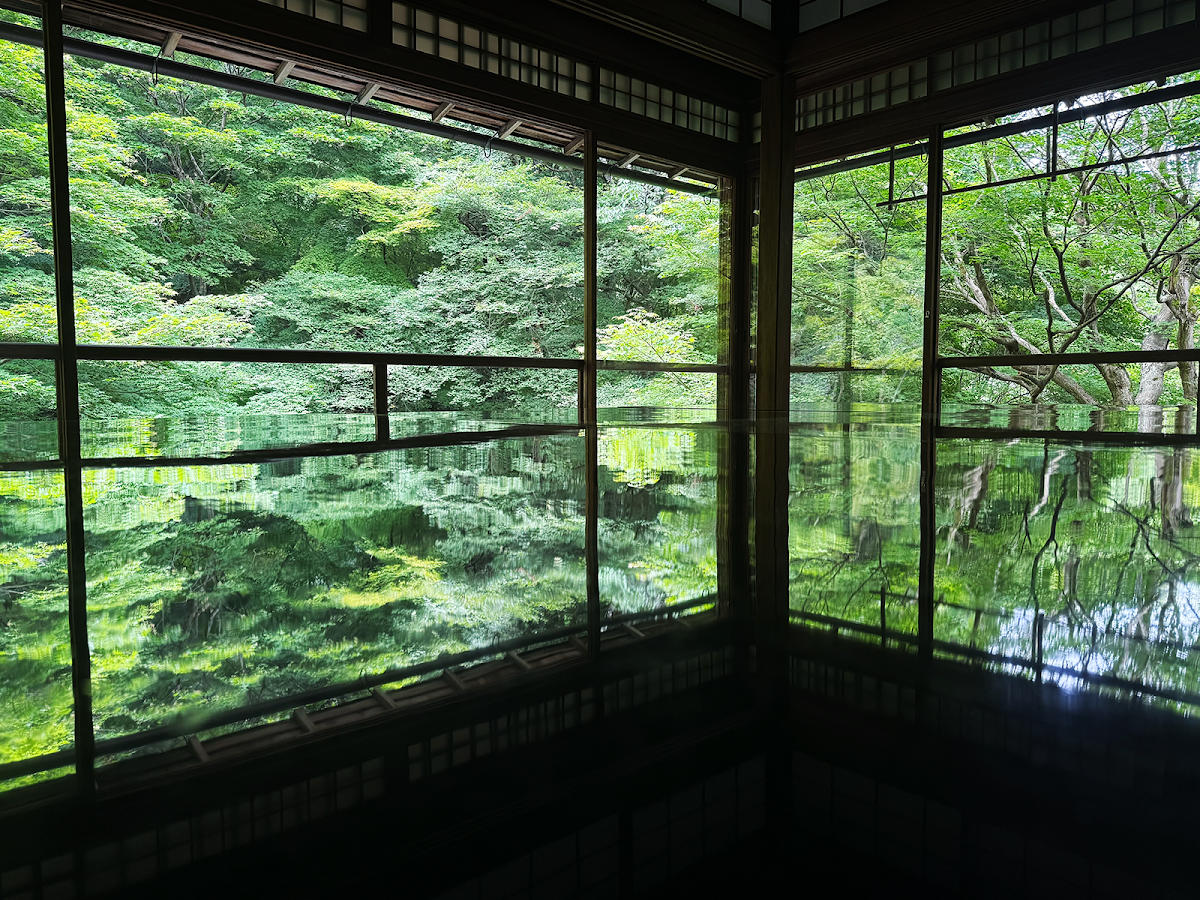
The greatest attraction of Rakuhoku Rengeji Temple is the pond-viewing landscape garden (chisen kanshogishiki teien) said to be designed by Ishikawa Jozan. This garden is designed with the premise of being viewed from the verandah of the main hall, and it is calculated to appear most beautiful when viewed while seated.
At the center of the garden is positioned a heart-shaped pond, surrounded by plantings of Japanese maple, azaleas, and other flora. Various sizes of rocks are arranged around the pond, and a technique of expressing natural scenery through stone arrangements is employed.
The Charm of the Rengeji-style Stone Lantern
Within the garden stands a distinctive stone lantern called the “Rengeji-style lantern.” This lantern has a unique hexagonal shape with steeply pitched roof panels and was favored by tea ceremony practitioners during the Edo period.
The Rengeji-style lantern, due to its graceful form, was imitated in subsequent tea gardens and Japanese gardens, becoming established as one style of stone lantern. As a precious stone artifact from the time of founding, it enhances the cultural value of the garden.
Garden Beauty Throughout the Four Seasons
Spring (March–May)
Fresh green leaves sprout, and azaleas and other flowers bloom. There are still few visitors, allowing peaceful enjoyment of the garden.
Early Summer (June–August)
A season when young green maples are beautiful. The gradations of green are reflected in the pond, creating a cool landscape. In recent years, attention has grown as a spot for viewing “young green maples.”
Autumn (late November–early December)
During autumn foliage season, the entire garden turns red and gold, attracting the most visitors. The best viewing is from late November through early December, and the sight of foliage reflected in the pond is incomparably beautiful.
Winter (December–February)
A garden blanketed in snow presents the serene beauty of ink-wash painting. Because there are few tourists during this season, one can luxuriously enjoy the garden in solitude.
Garden Highlights | Main Hall, Bell Tower, and Well Shelter
Main Hall
The main hall was built at the time of re-establishment in 1662 (Kanbun 2) and preserves the original appearance from its founding. It enshrines the principal image of Shakyamuni Buddha and is designed so that the garden can be viewed in its entirety from inside.
The experience of sitting on the verandah of the main hall and gazing at the garden is the greatest appeal of visiting Rengeji Temple. You can lose track of time and fully immerse yourself in the garden’s beauty.
Bell Tower
The grounds preserve an early Edo period bell tower. Retaining the architectural style of the original founding, it is designated as a cultural property of Kyoto City.
Well Shelter
Within the garden stands a structure called a well shelter, which covers a well. This is also one of the precious stone artifacts from the time of founding and serves as an important historical remains conveying the living practices of that era.
Temple Stamp Information at Rakuhoku Rengeji
Design and Characteristics of the Stamp
At Rakuhoku Rengeji Temple, you can receive a temple stamp featuring the principal image, Shakyamuni Buddha. The calligraphy reads either “Shakyamuni Buddha” or “Rengeji,” and seals of the mountain name and temple name are stamped.
Characterized by simple yet powerful calligraphy, it is a stamp that conveys the dignity of a Tendai Buddhist temple.
Where and When to Receive the Stamp
Location: Main hall reception (same as viewing admission)
Hours: 9:00 AM–5:00 PM (same as viewing hours)
Donation: Approximately ¥300–500
You can request the stamp at the viewing admission desk. While stamps are typically written directly in your stamp book rather than being pre-written, pre-written stamps may be provided during busy times or when staff are absent.
Recommended Temple Stamp Collecting Route
The Rakuhoku area has many temple stamp spots besides Rengeji.
Rakuhoku Temple Stamp Collecting Model Course:
- Rengeji Temple
- Hachidai Shrine (approximately 10 minutes on foot)
- Akayama Zenin (approximately 15 minutes on foot)
- Kurama Temple (by Eizan Electric Railway)
This route allows you to visit the major temples and shrines of the Rakuhoku area in half a day to a full day.
Rakuhoku Rengeji as an Autumn Foliage Destination
Best Viewing Time and Characteristics
Among Kyoto’s famous autumn foliage spots, Rakuhoku Rengeji Temple reaches its peak relatively late in the season.
Best Viewing Period: late November–early December
Peak: approximately November 25–December 5
Because it is located at a slightly higher elevation than Kyoto city center, the foliage colors turn later than at other famous spots, allowing you to enjoy beautiful autumn leaves even after other destinations have passed their peak.
Crowd Conditions and Photography Tips
Even during autumn foliage season, the crowds are not as heavy as at Kiyomizu Temple or Arashiyama. However, in recent years the temple has gained attention through social media, and it can become crowded from mid-morning to afternoon on weekends.
Recommended visiting times:
- Weekdays right after opening (9:00–10:00 AM)
- Weekdays near closing (4:00–5:00 PM)
Photography points:
- Photographing the entire garden from the main hall’s verandah
- Reflections of foliage in the pond
- Combining the Rengeji-style lantern with foliage
- Contrasts of moss and fallen leaves
Regarding tripod use, restrictions may apply during busy times, so it is recommended to confirm in advance.
Access | Getting There by Train, Bus, or Car
By Train
Eizan Electric Railway (Recommended)
- Transfer to Eizan Electric Railway at Demachi Masugata Yodo Station on the Keihan Line
- Get off at Miyake Hachiman Station on the Eizan Main Line
- Approximately 7 minutes on foot from the station
The Eizan Electric Railway offers beautiful views from the train windows, and during autumn foliage season is known for its “autumn leaves tunnel” section. It’s a route you can enjoy in combination with Rakuhoku sightseeing.
By Bus
From JR Kyoto Station
- Board Kyoto Bus “Ohara-bound” (approximately 45 minutes)
- Get off at “Kamibashi” stop, approximately 1 minute on foot
From Subway Kokusaikaikan Station
- Board Kyoto Bus “Ohara-bound” (approximately 15 minutes)
- Get off at “Kamibashi” stop, approximately 1 minute on foot
Since bus service is limited, it is recommended to check the timetable in advance.
By Car and Parking Information
From Kyoto City Center
- Head north on National Route 367 (Kurama Kaido)
- Travel time: approximately 30 minutes
Parking:
- Free parking lot on temple grounds (limited spaces)
- Likely to be full during autumn foliage season
- Nearby coin parking: Times Takao-ga-ike Station North (approximately 10 minutes on foot), Times Hiei Hospital Front (approximately 14 minutes on foot)
During weekends in autumn foliage season, parking lots become congested, making public transportation highly recommended.
Admission Fees and Viewing Hours Details
Fee Structure
Individual admission:
- Adults: ¥400
- High school students: ¥400
- Junior high school students: ¥300
- Elementary school students: ¥200
Group discount:
- 20 or more people qualify for group discount (advance reservation required)
Viewing Hours and Closed Days
Regular viewing hours: 9:00 AM–5:00 PM (open year-round)
On days when special religious services or events are held, viewing may not be available, so it is recommended to confirm in advance.
Nearby Attractions to Enjoy Together
Spots Within Walking Distance
Hachidai Shrine (approximately 10 minutes on foot)
A shrine associated with swordmaster Miyamoto Musashi. Known as the site of the duel at Ichijoji Sagarimatsu.
Shisendo (approximately 15 minutes on foot)
A mountain retreat founded by Ishikawa Jozan. You can sense the aesthetic sensibility of Jozan, who designed Rengeji’s garden.
Nearby Spots Accessible by Eizan Electric Railway
Kurama Temple (approximately 20 minutes by Eizan Electric Railway)
The site where the young Ushiwaka Maru (Minamoto no Yoshitsune) trained. A mountain temple.
Kifune Shrine (approximately 25 minutes by Eizan Electric Railway)
An ancient shrine famous as a deity for romantic matchmaking. Also known for riverside dining.
Akayama Zenin (approximately 15 minutes on foot)
A branch temple of Enryaku Temple on Mt. Hiei. Also known as an autumn foliage destination.
Etiquette and Precautions When Visiting
Etiquette Within the Temple Grounds
- Maintain silence: Rengeji is a temple whose charm lies in its quiet atmosphere. Please refrain from loud conversation.
- No eating or drinking in the main hall: Consumption of food and beverages inside the main hall or on its verandah is prohibited.
- Confirm tripod use: During crowded times, tripod use may be restricted.
- No entry into the garden: The pond-viewing landscape garden is for viewing only. Entry into the garden is not permitted.
- No smoking: The entire temple grounds are non-smoking.
Clothing and What to Bring
- Footwear: Shoes must be removed when entering the main hall. Slip-on shoes are recommended.
- Seasonal clothing: The interior of the main hall becomes cold in winter. Dress warmly.
- Rain gear: There are uncovered sections from the parking lot to the main hall.
Conclusion | The Appeal of Rakuhoku Rengeji Temple
Rakuhoku Rengeji Temple is a precious temple that preserves the culture of the early Edo period to this day. With the re-establishment by Imaeda Chikayoshi, retainer of the Kaga Maeda clan, the cooperation of renowned cultural figures such as Ishikawa Jozan and Kano Tanyu, and many attractions including a beautiful pond-viewing landscape garden and the Rengeji-style lantern, there is much to see.
The beauty during autumn foliage season is particularly exceptional, and as a hidden gem of Kyoto it continues to enchant many visitors. However, unlike famous tourist destinations, it is not as crowded and allows for leisurely appreciation of the garden—another major appeal.
Access is excellent: approximately 7 minutes on foot from Eizan Electric Railway’s Miyake Hachiman Station, or approximately 1 minute on foot from Kyoto Bus’s Kamibashi stop. It is also recommended to include it in a temple stamp collecting or autumn foliage viewing route along with nearby attractions such as Hachidai Shrine, Akayama Zenin, and Kurama Temple.
Rakuhoku Rengeji Temple, where you can enjoy the garden’s seasonal beauty in tranquility, is well worth a visit during Kyoto sightseeing. The view of the garden from the main hall’s verandah will surely become an unforgettable memory.
-800x450.jpg)
-800x450.jpg)
-800x450.jpg)