.jpg)
Eiheiji Temple (Fukui Prefecture) Complete Guide | History, Highlights, Experiences, and Access Information
Daihozan Eiheiji, located in Eiheiji Town, Yoshida District, Fukui Prefecture, is a Zen sanctuary representing Japan and attracts many pilgrims from both domestically and internationally. This temple, situated in a deep mountain valley, serves as one of the two main temples of the Soto Zen sect alongside Soji-ji Temple, and remains an active training monastery where monks continue their rigorous practices today. This article comprehensively covers information you should know before visiting Eiheiji, from its history and highlights to experience programs, access methods, and surrounding tourist information.
What is Daihozan Eiheiji?
The History and Founding of Eiheiji
Daihozan Eiheiji is a central temple of the Soto Zen sect founded by Zen Master Dogen in 1244 (Kangen 2). After accumulating Zen practice in China (Song Dynasty), Zen Master Dogen returned to Japan and taught the path of practice centered on zazen meditation called “Shikantaza” (just sitting). Originally called “Sanshomatsu-ho Great Buddha Temple,” it was later renamed “Kichijoyama Eiheiji.”
The name Eiheiji is said to have been given in reference to the Baima Temple built during the Yongping era in China. For over 770 years since its founding, it has continued to function as a Zen training monastery. Currently, approximately 150 unsui (training monks) pursue their rigorous practice daily.
The Teachings of Soto Zen and Eiheiji’s Role
Soto Zen is one of the two major schools of Japanese Zen Buddhism, alongside the Rinzai school. Together with Soji-ji Temple (Yokohama, Kanagawa Prefecture), Eiheiji serves as a head temple of the Soto Zen sect, overseeing approximately 15,000 branch temples nationwide. The teachings of Soto Zen are based on “Shusho Ichinyo,” the concept that practice and enlightenment are not separate; zazen itself is the form of Buddha.
At Eiheiji, not only zazen but also meals, cleaning, and sleep are considered practice, with all activities—eating, standing, sitting, and lying down—becoming places for Zen practice. This strict tradition of training has been passed down from the temple’s founding to the present day.
The Eiheiji Temple Grounds and Seven-Hall Complex
The Composition of the Seven-Hall Complex
Within the Eiheiji temple grounds stand over 70 buildings, with seven main structures at the center known as the “Seven-Hall Complex.” These buildings are connected by covered corridors, allowing training monks to move about without getting wet on rainy or snowy days.
The Seven-Hall Complex consists of the following buildings:
- Sanmon (Mountain Gate): The grand two-story main gate of Eiheiji where the world of practice begins.
- Butsuden (Buddha Hall): The central building of Eiheiji housing the three Buddhas—Shakyamuni Buddha, Maitreya Buddha, and Amitabha Buddha.
- Hatto (Dharma Hall): The place where sermons and various services are held, featuring beautiful painted ceiling art.
- Sodo (Monks’ Hall): The sacred space where training monks practice zazen meditation, also called the “Cloud Hall.”
- Kuiin (Kitchen Building): The temple kitchen where meals are prepared.
- Yokushitsu (Bath House): Where training monks purify themselves, with bathing also considered part of practice.
- Toso (Toilet): Strictly following protocol, using the toilet is also considered practice.
Notable Architectural Highlights
Sanshokaku Hall
One of Eiheiji’s representative buildings, Sanshokaku’s second-floor main room spans 156 tatami mats. The greatest highlight is the ceiling completely decorated with 230 painted panels. These paintings were created in 1930 by 144 renowned artists, depicting flowers, birds, natural phenomena, and Japan’s four seasons in vivid color.
Particularly, “the Carp Painting,” “the Lion Painting,” and “the Squirrel Painting” are called “the Three Paintings of Sanshokaku,” with a legend that finding these paintings grants wishes. Visitors enjoy looking up at the ceiling in search of these images.
Shoyoden Hall
The mausoleum housing Zen Master Dogen’s remains, one of the most sacred places at Eiheiji. Every morning, training monks pay their morning respects to Zen Master Dogen here. The atmosphere is solemn, allowing visitors to also offer quiet prayers.
Chujaku Gate
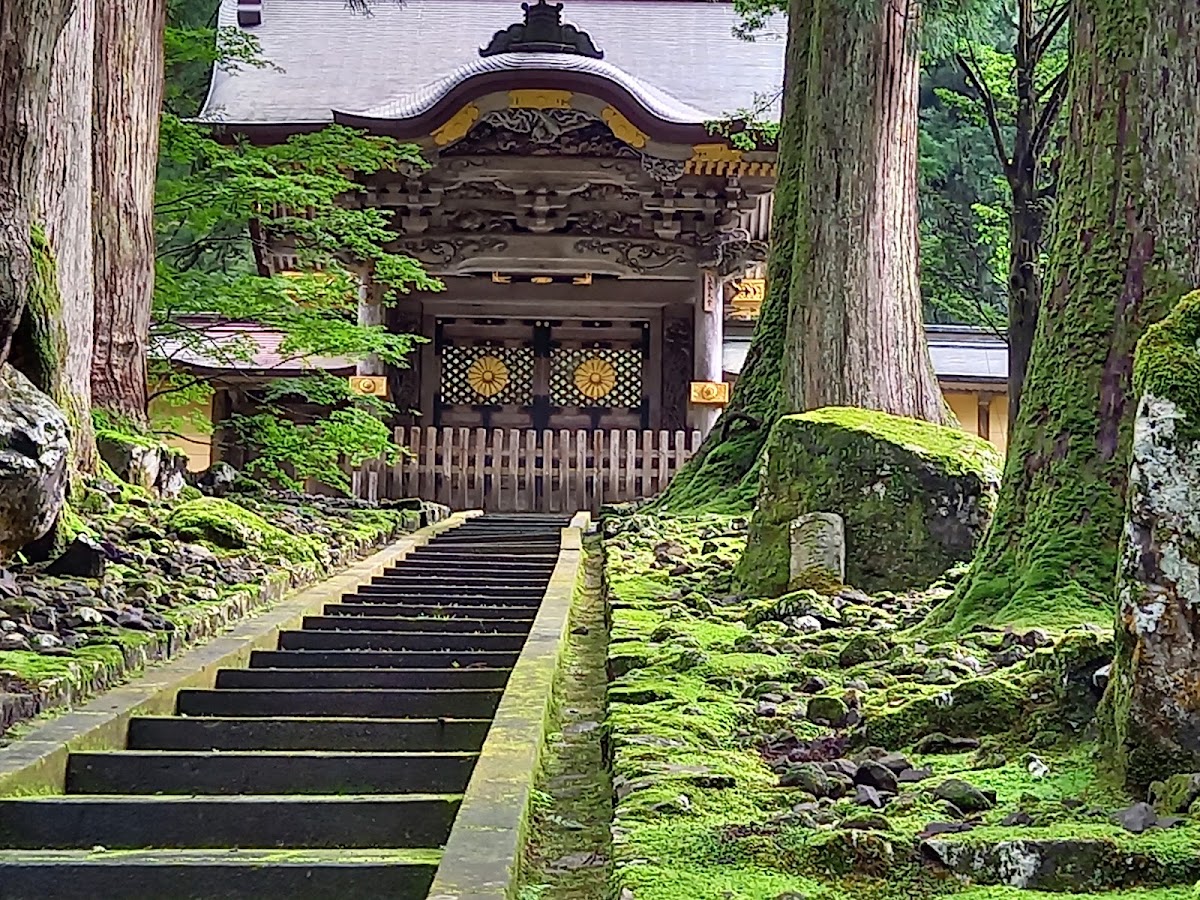
Positioned between the Mountain Gate and Buddha Hall, this gate features beautiful carvings. Passing through this gate gives visitors the sensation of entering deeper into the world of practice.
Visiting and Experiencing Eiheiji
Visitor Information
Visiting Hours
- 8:30 AM to 4:30 PM (Last admission at 4:00 PM)
- Hours may vary seasonally
- Open year-round (Some areas may be closed due to special events)
Admission Fees
- Adults: ¥700
- Elementary and middle school students: ¥300
- Visitors with disability certificates: ¥300
- Preschool children: Free
Reception (General Reception Desk)
Visits begin with registration at the general reception desk, where admission fees are paid and pamphlets distributed. Those planning group visits are advised to contact in advance for a smooth visit.
Zen Practice and Lodging Experiences
Eiheiji offers Zen practice and lodging training experiences that are open to the general public.
Zazen Experience
A day-trip zazen meditation program where visitors can learn proper zazen posture and breathing techniques under the guidance of training monks. Open to beginners, it provides a valuable opportunity to calm the mind and face oneself.
Overnight Sesshin (Training Retreat)
One or two-night programs allowing participants to experience the daily life of training monks, including early morning zazen, eating etiquette, and cleaning. Experiencing Eiheiji’s daily routine deepens understanding of Zen teachings. Prior reservation is required with limited capacity; early application is recommended.
Sutra Copying and Buddha Painting Experiences
In a peaceful environment, visitors can participate in copying sutras or painting Buddhist figures while calming the mind. These popular programs enhance concentration and bring mental peace.
Etiquette and Dress Code for Visitors
As an active training monastery, visitors should observe the following etiquette:
- Dress Code: Avoid revealing clothing; wear comfortable, clean attire. During winter, warm clothing is necessary as the grounds can be cold.
- Photography: Photo taking is generally permitted, but photographing monks and inside the Monks’ Hall are prohibited.
- Silence: Avoid loud conversation so as not to disturb training.
- Footwear: Since many areas require removing shoes, easily removable footwear is recommended.
Access Information
Public Transportation
By Train and Bus
- From JR Fukui Station
- Take the Echizen Railway Katsuyama-Eiheiji Line to “Eiheiji-guchi Station” (approximately 30 minutes)
- From Eiheiji-guchi Station, take the Keifuku Bus “To Eiheiji,” getting off at the final stop (approximately 15 minutes)
- A 5-minute walk from the bus stop
- Direct Bus
- The Keifuku Bus “Eiheiji Liner” operates from the east exit of JR Fukui Station (approximately 30 minutes)
- Service is limited; check the schedule in advance
Taxi from the Nearest Station
From Eiheiji-guchi Station, a taxi ride takes approximately 10 minutes, costing around ¥2,000.
By Car
Using Expressways
- Approximately 20 minutes from “Fukui-Kita IC” on the Hokuriku Expressway (approximately 12 km)
- Approximately 10 minutes from “Eiheiji-Sando IC” on the Chubu-Longitudinal Expressway (approximately 6 km)
Navigation Settings
Address: 5-15 Shibi, Eiheiji Town, Yoshida District, Fukui Prefecture
Phone: 0776-63-3102
Parking Information
Multiple parking facilities surround Eiheiji:
Parking Lots Around the Eiheiji Approach
Several paid parking lots and coin parking are available along the approach road, charging approximately ¥400-¥500 per day and located 5-10 minutes’ walk from Eiheiji. Tourist seasons and weekends are crowded; early arrival is recommended.
Town Parking Lot
The town of Eiheiji operates parking facilities at relatively reasonable rates.
The Charm of Eiheiji’s Temple Town
The History and Atmosphere of the Approach
The Eiheiji approach is a stone-paved pedestrian path approximately 500 meters long leading to the temple. Souvenir shops and restaurants line both sides, preserving the atmosphere of a historic temple town. Simply walking the approach allows one to feel the spiritual atmosphere of this historic Zen region.
Gate Town Cuisine
Eiheiji Soba
Local soba noodles made with regionally grown buckwheat flour are a specialty around Eiheiji. The soba used in training monks’ vegetarian cuisine has a simple yet profound flavor. Several traditional soba restaurants line the temple town, each offering their unique preparation.
Shojin Cuisine (Vegetarian Buddhist Cuisine)
Restaurants offer the vegetarian cuisine eaten by Eiheiji’s training monks. Dishes prepared without meat or fish using vegetables, tofu, and sesame offer healthy satisfaction. “Goma-dofu” (sesame tofu) is particularly famous, characterized by a smooth texture and rich sesame flavor.
Goma-Dofu (Sesame Tofu)
Eiheiji’s goma-dofu differs from ordinary tofu, made with sesame and kudzu starch. Characterized by a chewy texture and concentrated sesame flavor, it is extremely popular as a souvenir. Many shops in the temple town sell it, with many offering tastings.
Souvenirs and Shopping
Folk Crafts and Regional Products
The temple town offers abundant Eiheiji-related souvenirs:
- Charms and Sutra Booklets: Eiheiji-original amulets and sutra booklet holders are popular pilgrimage mementos.
- Incense and Incense Sticks: Incense sticks and fragrances matching those used at Eiheiji are available.
- Zen Goods: Zazen meditation cushions, prayer beads, and other Zen-related items are sold.
- Local Sake: Fukui Prefecture is renowned for quality sake, making local brewery products popular souvenirs.
Surrounding Tourist Attractions
Sights Within Eiheiji Town
Kippo-ji Temple
An ancient temple located approximately 15 minutes by car from Eiheiji where Zen Master Dogen is said to have stayed before founding Eiheiji. Housing the important cultural property “Hakusan Descent Buddha” sculptures, it is recommended for history enthusiasts.
Eiheiji Hot Spring “Zen no Sato”
A day-use hot spring facility ideal for relaxing after Eiheiji sightseeing. Outdoor baths offer beautiful natural views, allowing visitors to refresh after their visit.
Fukui Prefecture-Related Attractions
Fukui City Area
Located approximately 30 minutes by car from Eiheiji, Fukui City features the following:
- Fukui Castle Ruins: The former residence of the Matsudaira clan, Fukui domain rulers, now housing the prefectural government.
- Yohokukan Garden: A beautiful Japanese garden designated as a National Scenic Spot.
- Ichijodani Asakura Clan Ruins: A reconstructed castle town from the Sengoku period, a historic site.
Tojinbo
Located approximately one hour by car, this scenic area features dramatic sea cliffs created by rough waves on the Japan Sea, designated as a National Natural Monument.
Dinosaur Museum
One of the world’s three major dinosaur museums, located in Katsuyama City, approximately 40 minutes by car from Eiheiji. Particularly popular with families.
Eiheiji Through the Seasons
Spring at Eiheiji
From April to May, cherry blossoms and new greenery are at their finest. You can visit in the fresh air following winter snowmelt. Golden Week is crowded; weekday visits are recommended.
Summer at Eiheiji
Located in a deep mountain valley, Eiheiji remains relatively cool even in summer. Surrounded by verdant trees, the grounds allow visitors to forget urban heat. July and August see many visitors with an energetic atmosphere.
Autumn at Eiheiji
From late October through November, Eiheiji is known as a maple viewing destination. Temple grounds blaze with red and gold autumn colors, creating a beautiful harmony with the seven-hall complex. Peak season brings crowds; early morning visits are recommended.
Winter at Eiheiji
Snow-covered Eiheiji presents the year’s most serene and mystical atmosphere. The seven-hall complex amid snowy landscapes appears fantastical, popular with photographers. However, snow and icy roads require careful driving.
Suggested Eiheiji Pilgrimage Courses
Day-Trip Pilgrimage Course (Approximately 3-4 hours)
- Reception Desk Registration (10 minutes)
- Gaze at Sanshokaku’s Ceiling Paintings (20 minutes)
- Visit the Seven-Hall Complex Following the Route (60-90 minutes)
- Mountain Gate → Buddha Hall → Dharma Hall → Monks’ Hall → Shoyoden
- Explore the Grounds (30 minutes)
- Lunch and Shopping in the Temple Town (60-90 minutes)
Experience-Focused Course (Approximately 5-6 hours)
- Morning: Zazen Experience (90 minutes)
- Seven-Hall Complex Visit (90 minutes)
- Vegetarian Lunch at a Temple Town Restaurant (60 minutes)
- Sutra Copying or Buddha Painting Experience (60 minutes)
- Souvenir Shopping (30 minutes)
Full-Day Course Including Surrounding Sites
- Morning: Eiheiji Visit (2-3 hours)
- Temple Town Lunch (60 minutes)
- Afternoon: Visit Kippo-ji Temple or Ichijodani Asakura Clan Ruins (2 hours)
- Eiheiji Hot Spring Bath (60 minutes)
Eiheiji’s Annual Events
Throughout the year, various services and events are held at Eiheiji. Major events include:
Nehan-e (Nirvana Memorial Service): February 15
Commemorating Buddha’s passing into nirvana.
Hanamatsuri (Flower Festival/Buddha’s Birthday): April 8
Celebrating the birth of Buddha.
Dogen Zenji Tanjo-e (Dogen’s Birthday Service): May 19
Celebrating the birth of Eiheiji’s founder Zen Master Dogen.
Segaki-e (Feeding the Hungry Ghosts Service): August
An ancestral memorial service.
Daruma-ki (Bodhidharma Memorial): October 5
Commemorating the death date of Bodhidharma, founder of Zen Buddhism.
Jodo-e (Enlightenment Memorial Service): December 8
Commemorating Buddha’s enlightenment. The Rohatsu Tasshin intensive zazen practice is conducted during this period.
Practical Information and Frequently Asked Questions
Basic Information
Name: Daihozan Eiheiji
Address: 5-15 Shibi, Eiheiji Town, Yoshida District, Fukui Prefecture, 910-1228
Phone: 0776-63-3102
FAX: 0776-63-3115
Official Website: https://daihonzan-eiheiji.com/
Estimated Time Requirements
- Seven-Hall Complex visit only: 60-90 minutes
- Leisurely sightseeing: 2-3 hours
- Including experience programs: Half day to full day
Tips for Avoiding Crowds
- Weekday mornings (right after opening) are least crowded
- Autumn foliage season (November) and Golden Week are especially crowded
- Winter (January-February) is relatively quiet, though snow precautions are necessary
Accessibility Information
Eiheiji is built on a mountainside with many stairs, limiting wheelchair access to certain areas. Contacting ahead may allow support within available scope.
Nearby Accommodations
Within Eiheiji Town
- Several minshuku (family-run inns) and traditional inns are available
- Overnight stays at Eiheiji are also possible (advance reservation required)
Fukui City Area
- More accommodation options available, from business hotels to luxury traditional inns
- Approximately 30 minutes by car to Eiheiji, or about 45 minutes by public transportation
The Significance of Visiting Eiheiji
Daihozan Eiheiji is not merely a tourist destination but a living training monastery. Witnessing the sincere practice of the unsui monks provides an opportunity to step back from modern society’s hustle and bustle and contemplate oneself.
The teaching of “Nikon” (now, this moment) proclaimed by Zen Master Dogen—to live treasuring the present moment—may be a message especially needed by today’s busy people. The experience at Eiheiji becomes a precious moment that remains in one’s heart even after returning to daily life.
In the silence of deep mountains, touching the Zen teachings preserved for over 770 years—this is the true value of an Eiheiji pilgrimage. When visiting Fukui Prefecture, be sure to visit this Zen sanctuary and discover inner peace.
Summary
Daihozan Eiheiji, founded by Zen Master Dogen, has maintained its role as a Soto Zen training monastery unchanged to the present day. The temple grounds centered on the seven-hall complex, the beautiful painted ceiling panels in Sanshokaku Hall, and the sincere dedication of training monks all profoundly move visitors.
Access is approximately one hour from Fukui Station by public transportation or about 20 minutes by car from Fukui-Kita IC on the Hokuriku Expressway, making it a relatively accessible destination. Beyond sightseeing, numerous programs enrich the experience, including zazen meditation and overnight training retreats, allowing deeper Zen exploration.
In the temple town, enjoy specialties like Eiheiji soba and goma-dofu sesame tofu. The surrounding area features historic sites including Kippo-ji Temple and Ichijodani Asakura Clan Ruins. Eiheiji’s seasonal beauty means new discoveries await with each visit.
In search of inner peace, be sure to visit Eiheiji in Fukui Prefecture.
-800x450.jpg)
-800x450.jpg)