
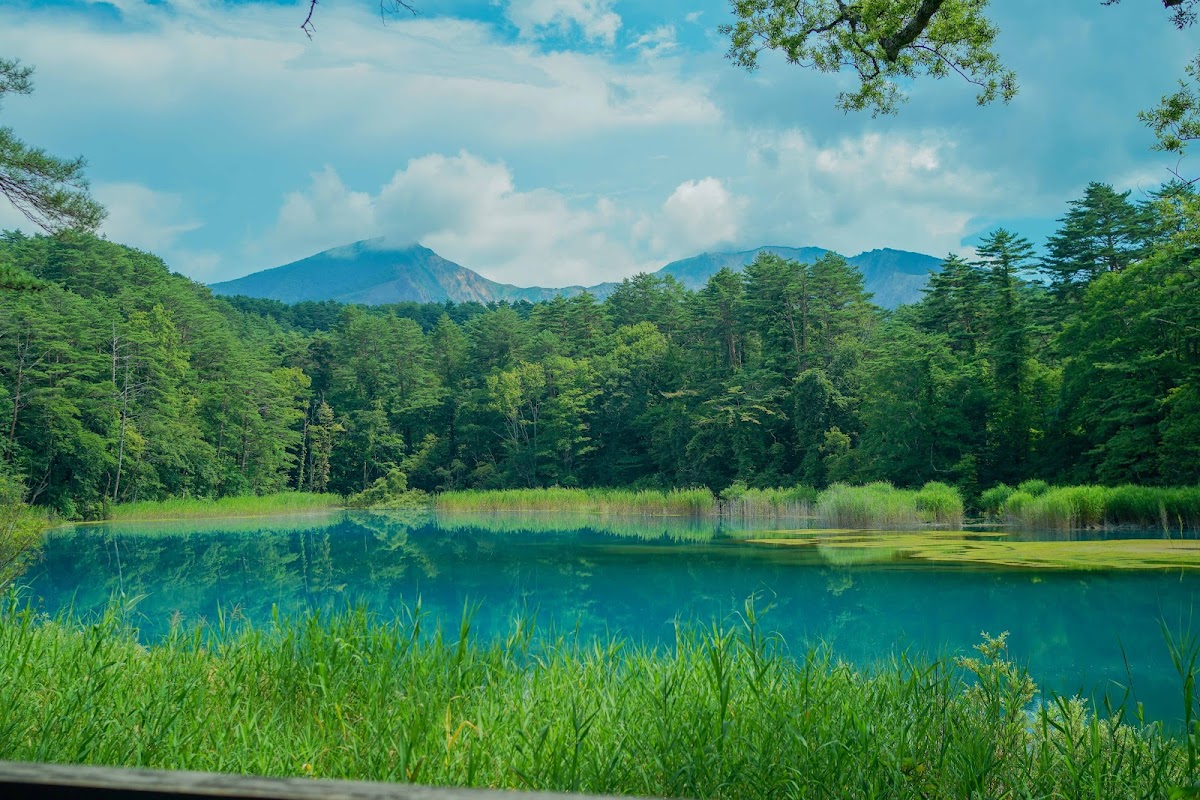
Lake Goshikinuma (Fukushima Prefecture) Complete Guide | Thorough Explanation of Access, Attractions, and Best Season
Lake Goshikinuma, located on the Urabandai Plateau in Fukushima Prefecture, is known as one of Japan’s premier tourist destinations, featuring a group of lakes and ponds with mystical colors including emerald green, cobalt blue, and turquoise blue. This beautiful landscape, formed by the eruption of Mount Bandai, displays different appearances throughout the four seasons, continuing to fascinate visitors.
This article provides thorough explanations of detailed access methods to Lake Goshikinuma, the charm of walking courses, the best season to visit, and surrounding tourist spots—information you should know before your visit.
What is Lake Goshikinuma? The Mystical Lake and Pond Group of Urabandai, Fukushima
Lake Goshikinuma is a collective name for several dozen large and small lakes and ponds in Kitashiobara Village, Yama District, Fukushima Prefecture. Formally called the “Goshikinuma Lakes and Ponds Group,” it is designated as a specially protected area of Bandai Asahi National Park.
The Formation of Lake Goshikinuma
On July 15, 1888 (Meiji 21), a phreatic eruption of Mount Bandai occurred, causing the collapse of the mountain’s northern slope. This massive landslide blocked rivers, creating more than 300 large and small lakes and ponds, including Lake Hibara. The Goshikinuma Lake and Pond Group is particularly known among these for its beautiful colors.
Why Does It Appear as Five Colors?
The mystical colors of Lake Goshikinuma are created by several factors working in complex combination.
Main Factors:
- Differences in water quality – Each pond contains different types and quantities of minerals and fine particles
- Differences in water depth – Light reflection and absorption change depending on water depth
- Weather and angle of light – The color changes depending on how sunlight hits the water
- Volcanic materials – Minerals derived from Mount Bandai’s volcanic activity are dissolved in the water
- Microorganisms and algae – Aquatic life affects the coloration
In particular, colloidal fine particles contained in the water scatter sunlight, creating the beautiful blue-green colors. Additionally, because the way colors appear changes depending on the season, time of day, and weather conditions, you can enjoy different appearances each time you visit.
Introduction to Lake Goshikinuma’s Main Ponds
The Goshikinuma Lake and Pond Group has many ponds, but here we introduce representative ponds visible from the nature exploration path.
Bishamon Pond (Bishamon-numa)
The largest pond in the Goshikinuma Lake and Pond Group, with an area of approximately 10 hectares. It is characterized by beautiful emerald green water surface and offers boat sightseeing. The landscape with Mount Bandai in the background is known as the signature scenic view of Lake Goshikinuma.
Characteristics:
- The largest area in the Goshikinuma Lake and Pond Group
- A boat dock where you can enjoy sightseeing on the lake in a rowboat
- Excellent views of Mount Bandai
- Well-equipped facilities including parking and restrooms
Aka Pond (Aka-numa)
As the name suggests, it is characterized by reddish-brown water with high iron content. With a completely different color from other ponds, you can experience the diversity of Lake Goshikinuma.
Midoro Pond (Midoro-numa)
The water surface is beautifully blue-green, and wetland plants are abundant around the pond. Different plants bloom with the seasons, making it an ideal spot for nature observation.
Tatsuno Pond (Tatsuno-numa)
A small pond but impressive with its deep blue color. The way surrounding trees are reflected on the calm water surface is truly picturesque in its beauty.
Benten Pond (Benten-numa)
The cobalt blue water surface is beautiful, located near the end of the Goshikinuma Nature Exploration Path. There is a small island in the center of the pond, creating a picturesque landscape.
Ruri Pond (Ruri-numa)
As its name suggests, it is characterized by a lapis lazuli colored (deep blue) water surface. Though a small pond, the intensity of its color stands out, making it popular as a photography spot.
Ao Pond (Ao-numa)
Characterized by a vivid turquoise blue water surface, it is said to be one of the most beautifully colored ponds in Lake Goshikinuma. On clear days, it displays a blue as beautiful as a tropical sea.
Yanagi Pond (Yanagi-numa)
Located near the end of the exploration path, it is characterized by a calm water surface. The surrounding vegetation is also lush, allowing you to enjoy a peaceful walk.
How to Walk the Goshikinuma Nature Exploration Path
The main route to enjoy Lake Goshikinuma is the “Goshikinuma Nature Exploration Path.” This is a walking path approximately 3.6 kilometers long, with an estimated walking time of about 1 to 1.5 hours one way.
Course Overview
Starting Point: Lake Goshikinuma Entrance (near Urabandai Highland Station) or Bishamon Pond (near Urabandai Products Hall)
Distance: Approximately 3.6km
Walking Time: Approximately 60~90 minutes one way
Difficulty Level: Beginner-friendly (mostly flat terrain)
Attractions: Bishamon Pond, Aka Pond, Midoro Pond, Tatsuno Pond, Benten Pond, Ruri Pond, Ao Pond, Yanagi Pond, etc.
Recommended Ways to Walk
From Bishamon Pond to Yanagi Pond (Downhill Course):
Starting from the Bishamon Pond side creates a slightly downward slope, making the walk physically easier. You can start by viewing the largest Bishamon Pond and then visit various ponds.
From Yanagi Pond to Bishamon Pond (Uphill Course):
Walking in the opposite direction, you arrive at the largest Bishamon Pond at the end, creating a sense of climax. However, the route has a slight uphill slope.
Notes for the Exploration Path
- Road Surface Conditions – Wooden boardwalks and dirt paths continue. In rainy weather, surfaces become slippery, so wear non-slip shoes.
- Restrooms – There are no restrooms along the exploration path. Use facilities at Bishamon Pond or the Yanagi Pond side.
- Food and Drink – There are no shops along the path. Prepare in advance.
- Time Required – Including photography and breaks, plan for 3-4 hours for a round trip.
- Clothing – Wear season-appropriate clothing. Even in summer, insect repellent measures are necessary.
Lake Goshikinuma’s Best Season and the Charm of the Four Seasons
Lake Goshikinuma offers beautiful scenery year-round, but each season has different charms.
Spring (April~May)
The season of snowmelt brings abundant water. Fresh greenery begins to sprout, allowing for walks in a refreshing atmosphere. However, early April may still have remaining snow.
Charm:
- Beautiful fresh greenery
- Abundant water volume
- Relatively fewer tourists
Summer (June~August)
Vegetation becomes deep green, making it an ideal season for a summer retreat. The high altitude means it remains relatively cool even during the height of summer, allowing for comfortable walks.
Charm:
- Contrast between deep green and pond blue
- Cool and comfortable weather
- Observation of various birds and insects
Notes:
- Many tourists
- Many insects, so insect repellent is essential
Autumn (September~November)
The most recommended season. The spectacular scenery created by autumn foliage and the colors of Lake Goshikinuma is breathtaking.
Best Viewing Period: Mid to late October
Charm:
- Performance of autumn foliage and pond colors
- Clear air makes colors more vivid
- Optimal lighting for photography
Notes:
- Extremely crowded during autumn foliage season
- Early morning visits are recommended
- Reserve accommodations early
Winter (December~March)
Lake Goshikinuma covered in snow is a fantastic world enveloped in silence. However, the exploration path is often closed in winter, so prior confirmation is recommended.
Charm:
- Contrast between snowy landscape and pond colors
- Quiet and mysterious atmosphere
- Fewer tourists
Notes:
- The exploration path may be closed
- Essential warm clothing and winter gear
- Be careful of road freezing
Access Methods to Lake Goshikinuma
Access by Car
From Tokyo:
- Tohoku Expressway → Koriyama JCT → Banetsutsu Expressway → Inawashiro Bandai-Kogen IC → Via National Route 459 and Prefectural Route 64, approximately 25 minutes
- Total time: Approximately 3 hours 30 minutes from Tokyo
From Sendai:
- Tohoku Expressway → Fukushima JCT → Tohoku Central Expressway → Yonezawa Central IC → Via National Route 121 and Prefectural Route 2, approximately 50 minutes
- Or, Tohoku Expressway → Koriyama JCT → Banetsutsu Expressway → Inawashiro Bandai-Kogen IC
From Niigata:
- Banetsutsu Expressway → Aizu-Wakamatsu IC → Via National Route 115 and Prefectural Route 64, approximately 40 minutes
Parking Information
Bishamon Pond Side (Urabandai Products Hall):
- Capacity: Approximately 200 spaces
- Fee: Free (may be charged during busy periods)
- Restrooms and shops available
Lake Goshikinuma Entrance Side (Urabandai Highland Station):
- Capacity: Approximately 50 spaces
- Fee: Free
- Restrooms available
Notes:
Parking lots may become full during autumn foliage season or on weekends. An early morning visit is recommended.
Access by Public Transportation
Train + Bus:
- Get off at “Inawashiro Station” on the JR Banetsutsu Line → Bandai Toto Bus to “Urabandai Highland Station” or “Lake Goshikinuma Entrance” for approximately 30 minutes
- Get off at “Inawashiro Station” on the JR Banetsutsu Line → Bandai Toto Bus to “Bandai Highland,” get off at “Urabandai Products Hall” for approximately 25 minutes
Express Bus:
- Express buses operate directly from Tokyo (Shinjuku) to Urabandai (seasonal operation)
- Travel time: Approximately 4 hours 30 minutes
Bus Notes:
- Limited number of buses, so please check the schedule in advance
- Some routes may be closed or reduced during winter
Taxi Use
From Inawashiro Station to Lake Goshikinuma takes approximately 30 minutes by taxi, with a fare of around 5,000 yen.
Model Courses for Lake Goshikinuma Sightseeing
One-Day Course (Duration: Approximately 5-6 hours)
9:00 Arrive at Bishamon Pond, use parking lot
9:15 Boat sightseeing (optional, approximately 30 minutes)
9:45 Start Goshikinuma Nature Exploration Path
11:15 Arrive at Yanagi Pond
11:30 Lunch (around Urabandai Highland Station)
12:30 Return to Bishamon Pond by bus or taxi
13:00 Visit Urabandai Visitor Center
14:00 Sightseeing around Lake Hibara
15:00 Depart
One Night, Two Days Course
Day 1:
- Afternoon: Arrive at Lake Goshikinuma, walk the nature exploration path
- Evening: Stay at a hot spring inn in Urabandai
Day 2:
- Morning: Lake Hibara sightseeing cruise or Mount Bandai climbing
- Afternoon: Aizu-Wakamatsu sightseeing (Tsuruga Castle, etc.)
Tourist Spots Around Lake Goshikinuma
Lake Hibara (Hibara-ko)
Located approximately 5 minutes by car from Lake Goshikinuma, it is the largest lake in Urabandai. You can enjoy activities such as sightseeing cruises, canoeing, and fishing. In winter, sweetfish fishing is also popular.
Mount Bandai
An active volcano with an elevation of 1,816 meters and one of Japan’s 100 famous mountains. Multiple climbing courses are available for everyone from beginners to advanced climbers. From the summit, you can view Lake Inawashiro and the lake and pond group of Urabandai.
Urabandai Visitor Center
A facility where you can learn about the nature and history of Urabandai. Detailed exhibits about the formation and ecosystem of Lake Goshikinuma are displayed. Free admission; it is ideal for gathering information before your walk.
Moroishi Museum of Modern Art
An art museum known for its Salvador Dalí collection. You can enjoy art appreciation in the midst of Urabandai’s natural surroundings.
Nakatsugawa Gorge
A gorge with beautiful fresh greenery and autumn foliage, with a well-maintained walking path. You can experience a different charm of nature compared to Lake Goshikinuma.
Aizu-Wakamatsu City Center
Located approximately 40 minutes by car from Lake Goshikinuma, it has many historical tourist spots including Tsuruga Castle (Aizu-Wakamatsu Castle), samurai residences, and Iiyama.
Items and Clothing for Lake Goshikinuma Sightseeing
Essential Items
- Comfortable walking shoes – Sneakers or trekking shoes recommended
- Drinks – There are no shops along the exploration path
- Camera – Many scenic spots
- Rainwear – Mountain weather changes quickly
- Hat – Sun protection
Season-Specific Clothing
Spring and Autumn:
- Long-sleeve shirt + fleece or jacket
- Bring warm clothing as mornings and evenings are cold
Summer:
- Breathable clothing
- Insect repellent spray essential
- Sunscreen
Winter:
- Warm clothing, gloves, hat
- Waterproof shoes
- Hand warmers and other heating items
Notes and Etiquette for Lake Goshikinuma Sightseeing
Etiquette for Nature Conservation
- Always take trash with you – There are no trash boxes along the exploration path
- Do not collect plants and animals – Collecting items in national parks is prohibited
- Walk only on designated paths – To protect vegetation, stay on the trail
- Speak quietly – Consideration for wildlife and other tourists
- Pet walks – Always use a leash, and take feces with you
Safety Precautions
- Bear caution – The Urabandai area is home to bears. Carry a bear bell
- Check weather – Mountain weather changes quickly; check the forecast beforehand
- Avoid going alone – Walk in groups when possible
- Allow time to return before sunset – Plan to descend before dark
- Manage your health – Walk at a comfortable pace
Photography Etiquette
- Tripod use – Be considerate of other tourists during crowded times
- Drone photography – Unauthorized drone use in national parks is prohibited
- Avoid long-term occupation – Share popular photo spots with other visitors
Accommodations Around Lake Goshikinuma
The Urabandai area has various types of accommodations.
Hot Spring Inns and Hotels
The Urabandai area has “Urabandai Hot Spring” with many hot spring inns. Perfect for relaxing after exploring Lake Goshikinuma.
Characteristics:
- Hot springs with direct source flow
- Cuisine using local ingredients
- Good access to Lake Goshikinuma
Pensions and Private Inns
Enjoy a home-like atmosphere at reasonable prices. You can also hear local information from the owners.
Campgrounds
Several campgrounds in Urabandai allow you to enjoy camping in nature.
Main Campgrounds:
- Campground along Lake Hibara shore
- Campground along Lake Sohara shore
Tips for Booking Accommodations
- Advance reservations are essential during autumn foliage season (mid to late October)
- Weekends and holidays are particularly crowded
- Confirm the distance from accommodations to Lake Goshikinuma
Frequently Asked Questions About Lake Goshikinuma Sightseeing
Q: How long does it take to walk around Lake Goshikinuma?
A: The Goshikinuma Nature Exploration Path is approximately 3.6km one way, taking about 1 to 1.5 hours of walking time. However, including photography and breaks, plan for 3-4 hours for a round trip.
Q: Can you walk the path with a wheelchair or stroller?
A: The nature exploration path has many wooden boardwalks and dirt paths with steps, making wheelchair or stroller access difficult. Only some areas around Bishamon Pond have been made barrier-free.
Q: Can you walk with a pet?
A: You can walk with a pet, but you must always use a leash and take feces with you and follow other etiquette rules.
Q: Can you enjoy it on a rainy day?
A: On rainy days, the ground becomes slippery, but the wet greenery is beautiful, offering a different charm. However, during heavy rain or rough weather, refrain from walking for safety reasons.
Q: Can you walk in winter?
A: The exploration path may be closed in winter due to snow. We recommend confirming at the Urabandai Visitor Center before your visit.
Q: Can you fish at Lake Goshikinuma?
A: Fishing is prohibited within the Goshikinuma Lake and Pond Group. If you wish to fish, please use nearby Lake Hibara.
Q: How much is the boat fee at Bishamon Pond?
A: A rowboat costs approximately 1,000 yen for 30 minutes (fees may change). Operating season is from late April to early November.
Q: What is the best time of day for the colors to look most beautiful?
A: Early morning on a sunny day is recommended. The colors appear most vivid around 10am to 2pm when the sun is higher in the sky.
Summary: Enjoy the Natural Beauty of Fukushima at Lake Goshikinuma
Lake Goshikinuma on the Urabandai Plateau in Fukushima Prefecture is one of Japan’s premier scenic destinations, where mystical colors and abundant nature interweave. This beautiful landscape, created by the eruption of Mount Bandai—a product of nature’s workings—gives deep emotion to all who visit.
The nature exploration path of approximately 3.6km is easy for beginners to walk, allowing you to enjoy different colors of lakes and ponds while experiencing nature throughout the seasons. The beauty of the autumn foliage season is particularly exceptional, and you will encounter scenery that will remain a lifetime memory.
When visiting Lake Goshikinuma, prepare appropriate clothing and equipment, and enjoy your walk while following nature conservation etiquette. The surrounding area has many attractive tourist destinations including Lake Hibara, Mount Bandai, and historical sites in Aizu-Wakamatsu. We recommend visiting with plenty of time to spare.
Lake Goshikinuma, a natural jewel of Fukushima Prefecture. Please confirm its beauty with your own eyes. It is sure to become a special place you will want to visit again and again.
-800x450.jpg)
-800x450.jpg)
