.jpg)
Haruna Mountain and Lake Haruna (Gunma Prefecture) Complete Guide|Thorough Explanation of the Charm and How to Enjoy the Jomo Three Mountains
Overview of Haruna Mountain and Lake Haruna
Haruna Mountain (Harunasan) is an active volcano located in Takasaki City, Gunma Prefecture, and together with Akagi Mountain and Myogi Mountain, is known as the “Jomo Three Mountains,” serving as a symbol of Gunma Prefecture. Haruna Mountain is not a single mountain, but rather a general term for the outer rim mountains that form a caldera and the central volcanic cone, with the beautiful caldera lake of Lake Haruna spreading at its center.
The highest peak is Kamongatake at an elevation of 1,449 meters. Lake Haruna is situated at approximately 1,100 meters elevation and is known as one of Gunma Prefecture’s premier highland resort areas. This region, where nature can be enjoyed throughout the four seasons, is a treasure trove of diverse leisure activities including mountain climbing, hiking, boating, and hot springs.
Positioning as the Jomo Three Mountains
Gunma Prefecture is home to three renowned mountains—Akagi Mountain (elevation 1,827 meters), Haruna Mountain (elevation 1,449 meters), and Myogi Mountain (elevation 1,103 meters)—collectively known as the “Jomo Three Mountains.” All were formed through volcanic activity, and Akagi and Haruna Mountains, positioned east and west across the Tone River, underwent active volcanic activity during the same period, developing into stratovolcanoes.
These mountains are also featured in the Gunma Prefectural Anthem and are deeply rooted as part of the prefecture’s identity. Haruna Mountain in particular is easily accessible from Takasaki and Maebashi cities, making it familiar to many tourists and climbers.
Geological Features and Topography of Haruna Mountain
Structure as a Complex Volcano
Haruna Mountain exhibits a special volcanic form called a “complex volcano.” This is a structure where newer volcanoes erupted within an older crater, consisting of an outer rim mountain and a central volcanic cone.
Major peaks comprising the outer rim mountain:
- Kamongatake: Elevation 1,449 meters, the highest peak of Haruna Mountain
- Bingushiyama: Elevation 1,350 meters
- Eboshidake: Elevation 1,363 meters
- Himurosan: Elevation 1,307 meters
- Tenmokusan: Elevation 1,303 meters
- Somayama: Elevation 1,411 meters
These outer rim mountains encircle the caldera, with the central volcanic cone Haruna Fuji (elevation 1,391 meters) and the caldera lake Lake Haruna positioned within.
Characteristics of Haruna Fuji
Haruna Fuji is appreciated as “Haruna’s Mt. Fuji” for its beautiful conical shape. Its graceful form reminiscent of Mt. Fuji has captivated many artists and photographers, particularly when reflected on the lake’s surface.
As a central volcanic cone, Haruna Fuji is a typical example of a lava dome and serves as an important research subject in geology. A ropeway operates to the summit, reaching the top station in just 2 minutes and 50 seconds, allowing beginners and families to easily enjoy spectacular views from the summit.
Formation History and Characteristics of Lake Haruna
Lake Haruna as a Caldera Lake
Lake Haruna is a caldera lake formed by the volcanic activity of Haruna Mountain. Volcanic activity of Haruna Mountain, which began approximately 50,000 years ago, proceeded through multiple large-scale eruptions to create the present topography. A caldera formed particularly as a result of massive eruptions approximately 30,000 and 24,000 years ago.
Subsequently, water accumulated within the caldera, giving birth to the present Lake Haruna. The lake belongs to the Tone River water system and has a perimeter of approximately 4.8 kilometers, an area of approximately 1.2 square kilometers, and a maximum depth of approximately 12-15 meters.
Water Quality and Ecosystem of Lake Haruna
Because Lake Haruna is situated at the high elevation of 1,100 meters, it remains relatively cool even in summer, making it popular as an escape from the heat. The lake water has high transparency, and the mirror-like water surface reflecting the surrounding mountains is cherished as the “Eight Views of Lake Haruna.”
The lake is home to smelt, carp, crucian carp, and other species, with ice fishing for smelt being enjoyable during winter months (only when ice thickness meets safety standards). Additionally, cherry blossoms, azaleas, evening primrose, and other flowers bloom around the lakeshore with the seasons, and particularly during the autumn foliage season, the brilliant colors reflected in the lake water fascinate visitors.
Volcanic Activity History of Haruna Mountain
Eruptions from Ancient to Medieval Times
Haruna Mountain’s volcanic activity is said to have begun approximately 500,000 years ago. The most active period was approximately 50,000 to 20,000 years ago, during which multiple large-scale eruptions occurred, forming the present caldera topography.
Even after entering the historical period, Haruna Mountain continued its activity, with particular attention given to the eruption in the 6th century. An eruption occurring in the early 500s CE (late Kofun period) showered large quantities of volcanic ash and pumice on surrounding areas, burying contemporary settlements and farmland. The volcanic ash layer from this eruption is called “Haruna Mountain Futatsutake Shibukawa Tephra (Hr-FA)” and serves as an important stratigraphic marker for archaeological dating.
Present-Day Volcanic Activity Status
The last eruption is believed to have occurred approximately 1,500 years ago, with relatively quiet conditions prevailing currently. However, Haruna Mountain is designated as an “active volcano” by the Japan Meteorological Agency and is under constant observation.
A magma chamber is believed to exist underground, and the possibility of future eruptions cannot be completely ruled out. Accordingly, Gunma Prefecture and Takasaki City are advancing volcanic disaster prevention measures, with evacuation plans formulated according to volcanic alert levels.
Human History of Haruna Mountain and Lake Haruna
A Mountain of Faith Since Ancient Times
Haruna Mountain has long been an object of mountain worship. The summit of Somayama, one of the outer rim mountains, is home to the inner sanctuary of Haruna Shrine, having flourished as a sacred site of mountain ascetic practice. Haruna Shrine is said to have been founded in the 6th century and has a history of over 1,400 years.
The main shrine is located approximately 15 minutes by car from Lake Haruna, on the eastern slope of Haruna Mountain, with shrine buildings situated in an austere atmosphere surrounded by massive and unusual rocks. The main hall and sacred music hall designated as Important Cultural Properties of the nation are decorated with intricate carvings from the Edo period and have become popular as power spots.
The Man’yoshu and Haruna Mountain
Haruna Mountain appears in literary works since ancient times. The “Collection of Ten Thousand Leaves” (Man’yoshu) contains poems singing of “Ikapo,” which is believed to refer to the area around present-day Ikaho Hot Spring, that is, the region on the eastern slope of Haruna Mountain.
For ancient people, Haruna Mountain was simultaneously a sacred mountain and the center of life and culture. Agriculture was conducted at the foot of the mountain, hot springs gushed forth, and the mountain supported people’s livelihoods.
Development Since the Modern Era
From the Meiji period onward, the area around Haruna Mountain underwent development as a tourist destination. Particularly from the Taisho through early Showa periods, hotels and villas were constructed on the shores of Lake Haruna, with many cultural figures and politicians visiting as a retreat from summer heat.
In 1953, the Haruna Mountain Ropeway opened, greatly facilitating access to Haruna Fuji. Additionally, in 1958, Lake Haruna was designated as a prefectural Haruna Park, with efforts made to balance natural environment protection and tourism development.
Hiking Routes and Trails of Haruna Mountain
Major Climbing Courses
Haruna Mountain offers diverse hiking routes enjoyable by beginners through advanced climbers.
1. Haruna Fuji Ropeway Course (For Beginners)
The most accessible route, where one ascends from the lake shore via ropeway to the summit station, then proceeds on foot for approximately 15 minutes to reach the Haruna Fuji summit (1,391 meters). The summit offers a 360-degree panoramic view, and on clear days, Mt. Fuji and Mt. Asama can be seen in the distance. Round-trip time is approximately one hour.
2. Kamongatake Mountain Climbing Course (For Intermediate Climbers)
A course targeting Kamongatake, Haruna Mountain’s highest peak. Starting from near the Visitor Center on the lake shore, one reaches the summit in approximately 2-3 hours. The elevation gain is approximately 350 meters, providing moderate physical exertion, with the summit offering panoramic views of Lake Haruna and Haruna Fuji.
3. Outer Rim Mountain Traverse Course (For Advanced Climbers)
A full-scale traverse course around Haruna Mountain’s outer rim. A route proceeding from Kamongatake via Bingushiyama, Eboshidake, and Tenmokusan, requiring approximately 5-7 hours. Physical fitness and experience are necessary, but varied scenery and a sense of accomplishment are rewarding.
4. Somayama Climbing Course (For Intermediate to Advanced Climbers)
A course targeting Somayama (1,411 meters), which houses Haruna Shrine’s inner sanctuary. Featuring chains and rocky sections that require some technical skill, this popular route allows one to experience the atmosphere of mountain faith traditions.
Mountain Climbing Precautions and Best Season
The best season for climbing Haruna Mountain is May through November. Particularly, the spectacular scenery of fresh green in May-June and autumn foliage in October-November are remarkable. Winter (December-March) features snowfall requiring winter mountain gear such as crampons.
When climbing, please note the following:
- Carry rain gear and warm clothing to prepare for sudden weather changes
- Prepare adequate water and trail snacks
- Submit a mountain climbing notification (to Gunma Police or mountain entrance boxes)
- Avoid solo climbing; travel in groups
- Pre-confirm mobile phone coverage
- Check volcanic activity information
Tourism and Leisure Around Lake Haruna
Activities at Lake Haruna
Lake Haruna offers various leisure activities throughout the year.
Spring to Autumn Activities:
- Boating: A variety of boats are available for rental, including hand-rowed boats, pedal boats, and motorboats
- Sightseeing cruises: Enjoy approximately 20 minutes of lake cruising aboard a sightseeing boat circumnavigating the lake
- Cycling: A cycling road approximately 4.8 kilometers in circumference around the lake is developed
- Fishing: Smelt, carp, crucian carp, and other species can be caught (a fishing license is required)
- Camping: Multiple campgrounds around the lake offer barbecue and tent camping
Winter Activities:
- Smelt fishing: Smelt fishing from the ice surface or docks is popular (ice surface fishing availability depends on ice conditions)
- Illumination: The Lake Haruna Illumination Festival during winter creates a fantastical world of lights
Haruna Mountain Ropeway
The ropeway connecting the Lake Haruna shore to the Haruna Fuji summit is a historic facility that opened in 1953. Spanning 527 meters with an elevation gain of 286 meters, it connects the two in approximately 2 minutes and 50 seconds.
- Operating hours: 9:00-17:00 (with seasonal variations)
- Fares: Adults round-trip 900 yen, children round-trip 450 yen (as of 2024)
- Closed: Open year-round except for inclement weather
From the summit station, spectacular views extend across Lake Haruna, the Kanto Plain, and even as far as Mt. Fuji.
Haruna Lake Hot Spring District
Multiple hot spring facilities surround Lake Haruna. One can refresh in hot springs after mountain climbing or leisure activities.
- Yusuage Hot Spring: A day-use hot spring facility on the lake shore
- Haruna Lake Hot Spring Yusuage Motoyuu: A hot spring where source hot water flows directly into baths
- Ikaho Hot Spring: Located on the eastern slope of Haruna Mountain, approximately 20 minutes by car away, this is a representative hot spring district of Gunma Prefecture
Prefectural Haruna Park Visitor Center
Located on the Lake Haruna shore, the Visitor Center allows learning about Haruna Mountain’s formation, the flora and fauna, and geology.
- Location: 845 Haruna Lake Town, Takasaki City, Gunma Prefecture
- Hours: 9:00-15:45
- Admission: Free
- Closed: Year-end/New Year holidays, severe weather
- Phone: 027-374-9215
The exhibits provide detailed information about Haruna Mountain’s volcanic activity history, surrounding natural environment, and wildlife, making it ideal for gathering information before climbing or as a rainy-day destination.
Natural Environment of Haruna Mountain and Lake Haruna
Vegetation and Seasonal Changes
The Haruna Mountain area features diverse vegetation due to elevation differences.
Lower mountain zone (up to 800 meters):
Deciduous broad-leaved forests of Japanese oak, Chinese parasol tree, and Japanese red pine spread.
Mountain zone (800-1,200 meters):
Deciduous broad-leaved forests of Japanese beech, Mongolian oak, and maple species. The Lake Haruna area falls within this vegetation zone.
Subalpine zone (1,200 meters and above):
High elevations such as Kamongatake feature needle-leaf trees including Himalayan fir and Hondo spruce.
Seasonal highlights:
- Spring (April-May): Cherry blossoms, azaleas, and Japanese kerria bloom in profusion
- Early summer (June-July): Fresh greenery is beautiful, with evening primrose flowers adorning the lake shore
- Autumn (October-November): The fall foliage is spectacular, with maples, mountain ash, and beech trees turning red and yellow
- Winter (December-March): Snow-covered landscapes and the frozen Lake Haruna’s fantastical scenery can be enjoyed
Wildlife
Diverse wildlife inhabits the Haruna Mountain area.
Mammals:
Japanese sika deer, wild boar, Japanese macaque, red fox, raccoon dog, flying squirrel, and others
Birds:
Varied tit, great tit, coal tit, great spotted woodpecker, northern goshawk, golden eagle, and approximately 100 other species
Amphibians and Reptiles:
Japanese tree frog, Japanese newt, Japanese striped snake, Japanese rat snake, and others
While encountering these wild animals while climbing is possible, bear sightings are rare, though taking precautions such as bells is recommended.
Access to Haruna Mountain and Lake Haruna
Access by Car
Via Kan-Etsu Expressway:
- Approximately 40 minutes (approximately 20 km) from Shibukawa Ikaho IC
- Approximately 60 minutes (approximately 30 km) from Maebashi IC
Via Joshin-Etsu Expressway:
- Approximately 50 minutes (approximately 25 km) from Matsui Myogi IC
Multiple free parking areas are available near Lake Haruna, with approximately 500 parking spaces secured. However, parking lots may fill during foliage season and weekends, so early arrival is recommended.
Access by Public Transportation
From JR Takasaki Station:
- Gunma Bus “Lake Haruna bound” approximately 90 minutes, get off at final stop “Lake Haruna”
- Approximately 4-6 bus departures daily (varies seasonally)
From JR Shibukawa Station:
- Gunma Bus “Lake Haruna via Ikaho Hot Spring” approximately 60 minutes
Since bus frequency is limited, checking the schedule in advance is recommended.
Tourist Season and Congestion
Most congested periods:
- Golden Week (late April-early May)
- Autumn foliage season (mid-October-early November)
- Summer vacation period (late July-August)
During these periods, parking lots may become full, with early morning arrival or public transportation use recommended.
Relatively uncrowded periods:
- Weekdays generally
- June (rainy season)
- Winter (December-March, noting winter road driving precautions)
Haruna Mountain and Lake Haruna in Literature and Popular Culture
Yumeji Takehisa and Lake Haruna
Yumeji Takehisa, a painter representative of Taisho Romanticism, was known to have a deep affection for the Lake Haruna landscape. The beautiful scenery woven by Haruna Fuji and Lake Haruna influenced his works, and he visited the area multiple times.
A “Yumeji Monument” is erected on the Lake Haruna shore, inscribed with poetry by Yumeji about Lake Haruna. Today, many artists and photographers continue to visit this location, leaving the beautiful Lake Haruna scenery in their works.
Initial D as a Setting
Haruna Mountain features as an important setting in the popular manga and anime “Initial D.” In the work, it is depicted under the name “Akina Mountain,” where protagonist Takumi Fujiwara engages in drift racing along mountain passes, bringing the location fame.
Influenced by this, many domestic and international fans have visited Haruna Mountain, with it becoming known as a pilgrimage destination. However, the actual Haruna Mountain roads are ordinary residential roads, and speeding or dangerous driving is strictly forbidden. Please drive safely.
Other Literary Works
Haruna Mountain and Lake Haruna appear in numerous literary works.
- Travel essays by Kasai Zenzaburo
- Short poems by Akiko Yosano
- Poetry by Bokusui Wakayama
These literati were also captivated by Haruna’s natural beauty, immortalizing it in their works.
Surrounding Tourist Spots
Haruna Shrine
Located on the eastern slope of Haruna Mountain, Haruna Shrine is an ancient shrine with a history of over 1,400 years. The grounds, surrounded by massive and unusual rocks, exude a mystical atmosphere and have recently become popular as a power spot.
- Location: 849 Haruna Mountain Town, Takasaki City, Gunma Prefecture
- Visiting hours: 7:00-18:00 (5:00 PM in winter)
- Parking: Free (approximately 200 spaces)
- Travel time from Lake Haruna: Approximately 15 minutes by car
The main hall, side halls, and worship hall designated as Important Cultural Properties of the nation are decorated with intricate Edo period carvings and are a must-see.
Ikaho Hot Spring
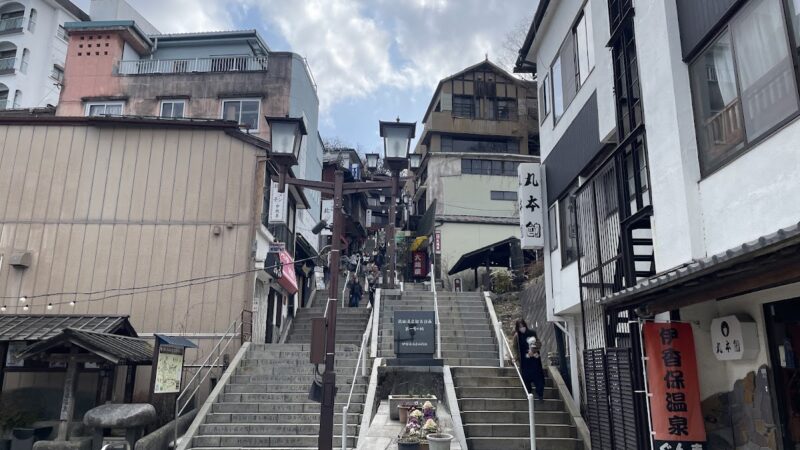
Located on the eastern slope of Haruna Mountain, Ikaho Hot Spring is one of Gunma Prefecture’s representative thermal resorts. This hot spring district, famous for its stone-step street, is approximately 20 minutes by car from Lake Haruna.
- Spring type: Sulfate spring, metasilicic acid spring
- Benefits: Neuralgia, muscle pain, joint pain, poor circulation, etc.
- Main facilities: Numerous day-use hot springs, inns, and hotels
A popular plan combines Haruna Mountain climbing or Lake Haruna sightseeing with a hot spring inn overnight stay.
Ikaho Green Farm
A tourist ranch spreading across the Haruna Mountain foothills where visitors can interact with animals and enjoy various experiences.
- Location: 2844-1 Kanai, Shibukawa City, Gunma Prefecture
- Operating hours: 9:00-16:00 (varies seasonally)
- Admission: Adults 1,500 yen, children 800 yen (as of 2024)
- Travel time from Lake Haruna: Approximately 30 minutes by car
Visitors can interact with sheep, goats, rabbits, and other animals, with experience programs such as butter-making and ice cream-making fully available.
Mizusawa Kannon (Mizusawa Temple)
An ancient temple known as the 16th pilgrimage temple of the Bando Thirty-Three Kannon Pilgrimage.
- Location: 214 Mizusawa, Ikaho Town, Shibukawa City, Gunma Prefecture
- Visiting hours: 8:00-17:00
- Travel time from Lake Haruna: Approximately 25 minutes by car
The grounds feature a hexagonal hall, which is said to grant wishes when rotated. Additionally, surrounding the area are well-known Mizusawa udon noodle restaurants where one can enjoy a meal after visiting.
Conclusion: The Charm of Haruna Mountain and Lake Haruna
Haruna Mountain and Lake Haruna are enchanting tourist destinations representing Gunma Prefecture, offering natural scenery and diverse leisure activities. As one of the Jomo Three Mountains cherished by prefecture residents, the beautiful landscape created by its unique complex volcano geology continues to captivate visitors throughout the four seasons.
With hiking routes enjoyable by beginners through advanced climbers, lake recreation including boating and fishing, surrounding hot springs and tourist attractions, and a harmonious blend of rich natural environments with history and culture, the Haruna Mountain and Lake Haruna area allows visitors to spend fulfilling time whether visiting for the day or staying overnight.
When visiting Gunma Prefecture, please be sure to visit Haruna Mountain and Lake Haruna and fully experience its charm. The panoramic views from the summit overlooking the Kanto Plain, the appearance of Haruna Fuji reflected on the lake surface, and the natural beauty of the four seasons will surely become unforgettable memories.
-800x450.jpg)
-800x450.jpg)
-800x450.jpg)