Garo Plateau Beech Primeval Forest Complete Guide | Visiting Japan’s Largest Beech Forest
The Garo Plateau Beech Primeval Forest, located in Shimamaki Village in the Shiribeshi District of Hokkaido, is a magnificent natural treasure spreading across the Kariba Mountain Range. This beech primeval forest, boasting an area of 10,700 hectares—Japan’s largest class—continues to captivate many nature enthusiasts and photographers as a precious spot where one can experience Hokkaido’s rich natural environment.
This article comprehensively introduces information you should know before visiting, from the charm of the Garo Plateau Beech Primeval Forest to practical access information and seasonal highlights.
What is the Garo Plateau Beech Primeval Forest?
Japan’s Largest Class Beech Primeval Forest
The Garo Plateau Beech Primeval Forest is an vast beech forest spanning an altitude of 500-800 meters in the Kariba Mountain Range. Its area extends to approximately 10,700 hectares, equivalent to roughly 2,300 Tokyo Domes. This vast primeval forest maintains its natural form with minimal human intervention, boasting the largest scale among beech forests in Japan.
Beech is Japan’s representative deciduous broadleaf tree, also called the “mother of forests.” This is because beech forests nurture rich ecosystems and serve as habitats for diverse plants and animals. The beech primeval forest at Garo Plateau is no exception, serving as a treasure trove of biodiversity where many wild animals and rare plants inhabit.
Beech’s Northern Limit and Garo Plateau’s Position
The distribution of beech in Hokkaido is limited, with natural growth only on the Oshima Peninsula. The “Kuromatsunai Lowland” connecting Sutsu and Oshamambe is considered beech’s northern limit, and the Garo Plateau Beech Primeval Forest lies near this northern boundary.
The Utasai Plant Community Protection Forest in Kuromatsunai Town is famous as the “Northern Limit Beech Forest,” but the Garo Plateau Beech Primeval Forest demonstrates overwhelming presence in terms of scale. Since fiscal year 2007, the Hokkaido Forest Management Bureau has implemented the “Northern Limit Beech Restoration Project,” working to restore beech forests affected by past logging.
Seasons and Highlights of Garo Plateau Beech Primeval Forest
Spring: Brilliance of Fresh Greenery
From late May to June, the beech forest at Garo Plateau becomes enveloped in vibrant fresh green leaves. The newly sprouted beech leaves shine in a transparent yellow-green, twinkling as they receive sunlight. During this period, the entire forest brims with vitality, and bird calls become more active.
For birdwatching enthusiasts, spring at Garo Plateau is an ideal field. Diverse birds such as the Great Spotted Woodpecker, Japanese Woodpecker, and Emerald-spotted Wood Warbler can be observed. Walking through the forest at dawn, various bird calls echo, allowing you to experience a sense of oneness with nature.
Summer: Deep Green Forest Bathing
During summer from July to August, beech leaves become a deep green, enveloping the entire forest in dark verdure. During this period, Garo Plateau is popular as a cool and comfortable forest bathing spot. The shade created by beech leaves provides pleasant coolness even in midsummer.
Walking along the forest path, the murmur of clear streams flowing through the forest and the sound of wind rustling through the trees soothe the soul. On summer nights, a star-filled sky spreads out, providing an ideal environment for celestial observation. If you stay at the Garo Plateau Campground, you can enjoy a beautiful starry sky that is never visible in urban areas.
Autumn: Spectacular Fall Foliage
The season when the Garo Plateau Beech Primeval Forest attracts the most tourists is the autumn foliage season. Typically from late September through mid-October, the vast beech primeval forest begins to color all at once.
The spectacle of a 10,700-hectare beech forest—Japan’s largest class—glowing in golden hues is truly breathtaking. The gradient from beech’s characteristic yellow to orange hues covers the entire mountain. On clear days, the contrast with the blue sky is beautiful, and many people visit for photography.
The peak foliage viewing time varies slightly year to year, but generally early October is the height of the season. During this period, while walking along the forest paths, you can enjoy the sound of fallen leaves crunching underfoot and the sight of yellow leaves dancing in the wind.
Winter: Silent Snowy Landscape
In winter, the Garo Plateau is covered in deep snow, making access difficult, but it becomes an attractive field for advanced enthusiasts enjoying snowshoeing and cross-country skiing. The beech forest covered in snow is enveloped in silence, creating a mystical atmosphere.
Winter requires sufficient equipment and experience, but the rare experience of tracking wild animal footprints in the sparsely visited primeval forest in winter is invaluable.
Garo Waterfall: A Famous Cascade to Visit with the Primeval Forest
When visiting the Garo Plateau Beech Primeval Forest, be sure to also visit the “Garo Waterfall.” It is located approximately 1.5 kilometers along a forest trail from the Garo Plateau Campground, about 30-40 minutes on foot.
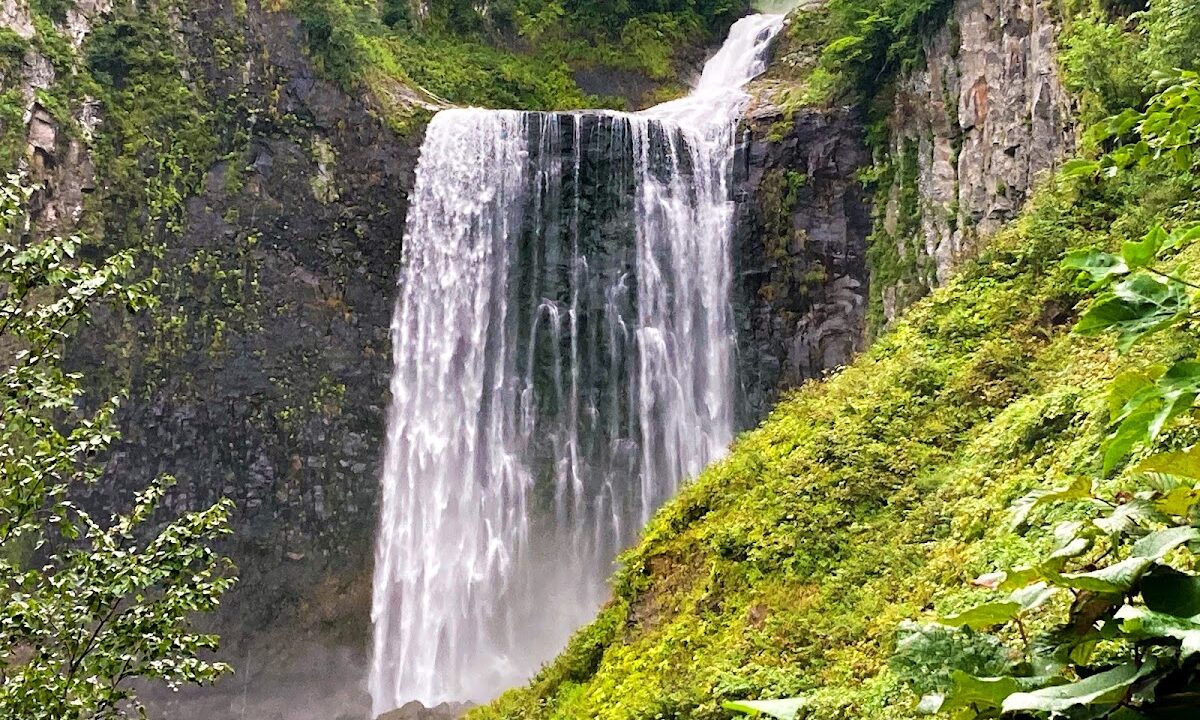
Garo Waterfall is a impressive waterfall with a drop of approximately 70 meters, selected as one of “Japan’s 100 Finest Waterfalls.” The waterfall flowing through an environment surrounded by the beech primeval forest displays different expressions throughout the seasons.
In spring, snowmelt increases water volume; in summer, it bustles with people seeking coolness; in autumn, the collaboration with fall foliage is beautiful; and in winter, it transforms into a frozen ice cascade. The forest trail is relatively well-maintained, but some sections are slippery, so visiting in appropriate footwear such as trekking shoes is recommended.
Garo Plateau Campground: Base for Primeval Forest Tourism
To fully enjoy the Garo Plateau Beech Primeval Forest, using the Garo Plateau Campground as your base is convenient. This campground has good access to the beech primeval forest and Garo Waterfall, and is a popular spot where you can experience camping in magnificent nature.
Campground Facilities
The campground features tent sites as well as bungalows, providing a safe option for beginners. The parking lot can accommodate 100 standard vehicles and 4 large vehicles, with basic facilities such as restrooms and cooking areas.
Due to high elevation, it can be cold even at night in summer. We recommend bringing warm clothing on your visit. Additionally, the surrounding campground area is a wildlife habitat, so careful management of food is essential.
Excellent Stargazing Location
The Garo Plateau Campground is located away from city lights, making it ideal for stargazing. On clear nights, the Milky Way is clearly visible, and shooting stars can be frequently observed. From summer through autumn, particularly beautiful starry skies can be expected.
Bringing a telescope allows for more detailed celestial observation. Using star charts or astronomy apps, fully enjoy Hokkaido’s night sky.
Access Information
Access by Car
Access to the Garo Plateau Beech Primeval Forest is most convenient by private vehicle.
From Sapporo:
- Approximately 3 hours 30 minutes from Sapporo via National Route 230
- Cross Nakayama Pass and proceed via Kimobetsu and Rusutsu to Shimamaki Village
From Hakodate:
- Approximately 3 hours from Hakodate via National Route 5 and National Route 229
- Head north along the coast from Oshamambe
From Niseko:
- Approximately 1 hour 30 minutes from Niseko
- Proceed via Rankoshi Town to Shimamaki Village
The road to the Garo Plateau Campground includes some narrow mountain roads. In winter, there are periods when the road is closed due to snowfall, so check road conditions in advance.
Access by Public Transportation
Access by public transportation is limited. While there are local bus routes to the nearest bus stop, the distance from there to Garo Plateau is considerable, so renting a car is strongly recommended.
Renting a car from “Oshamambe Station” or “Kuromatsunai Station” on the Hakodate Main Line is the most practical option.
Precautions and Etiquette When Visiting
Clothing and Equipment
When visiting the Garo Plateau Beech Primeval Forest, prepare the following equipment:
- Trekking shoes: The forest trail is maintained but has slippery sections
- Warm clothing: Due to high elevation, it gets cold even at night in summer
- Rain gear: Mountain weather changes quickly, so waterproof clothing is essential
- Insect repellent: Summer sees more insects
- Drinking water and snacks: No vending machines nearby
- Hat and sunscreen: Don’t forget UV protection
Natural Conservation Etiquette
The Garo Plateau Beech Primeval Forest is a precious natural environment. Observe the following etiquette:
- Take all trash with you: Never leave litter to keep nature clean
- Don’t collect plants: Many rare plants grow here
- Stay on designated trails: Walk only on marked paths to protect the forest ecosystem
- Don’t feed wildlife: Feeding disrupts the ecosystem
- Use fire only in designated areas: Follow rules to prevent forest fires
Safety Precautions
- Bear safety: Brown bears may be encountered in Hokkaido’s mountain forests. Carrying a bear bell and traveling in groups is recommended
- Check weather: Confirm the weather forecast before departure and avoid going in bad weather
- Mobile phone reception: Signals don’t reach some mountain areas. Plan your route in advance and avoid solo travel
- Check sunset time: Especially from autumn onward, sunset comes early, so plan with time to spare
Nearby Tourist Attractions
Shimamaki Village Coastline
Shimamaki Village faces the Sea of Japan, with beautiful coastlines continuing throughout. You can enjoy seascapes in contrast to the beech primeval forest. Fresh seafood is also a major attraction, with sea urchin and abalone being exceptional.
Kariba-Motsuta Prefectural Natural Park
The Kariba Mountain Range area, including the Garo Plateau, is designated as the Kariba-Motsuta Prefectural Natural Park. Rich natural environments are protected, and various trekking courses are maintained.
Utasai Plant Community Protection Forest in Kuromatsunai Town
The “Northern Limit Beech Forest,” known as the Utasai Plant Community Protection Forest, is also located about an hour’s drive away. You can experience a beech forest with a different atmosphere from Garo Plateau.
Photography Tips
The Garo Plateau Beech Primeval Forest is full of appealing subjects for photography enthusiasts.
Tips for Fall Foliage Photography
- Time of day: Early morning or evening soft light is most beautiful
- Composition: Including the trail creates depth in the photo
- Polarizing filter: Reduces leaf reflection and makes colors vivid
- Cloudy days work too: Soft light enhances foliage colors
Tips for Fresh Greenery Photography
- Use backlighting: Transmitted light emphasizes the brilliance of new leaves
- Macro photography: Details of budding and young leaves are also appealing
- Wide-angle lens: Express the forest’s dynamic nature
Conservation Activities at Garo Plateau Beech Primeval Forest
Various efforts are underway to protect the precious ecosystem of the Garo Plateau Beech Primeval Forest.
The Hokkaido Forest Management Bureau designates the beech forest in Shimamaki Village as a “Forest Tree Genetic Resource Protection Forest,” implementing conservation activities. This is an important effort to protect the genetic diversity of beech and pass it on to future generations.
Additionally, for surrounding beech forests affected by past logging, the “Northern Limit Beech Restoration Project” is underway, promoting natural regeneration and guiding forests to a beech-dominant and healthy state.
We visitors can also contribute to protecting this precious primeval forest by following proper etiquette and caring for nature.
About Shimamaki Village
Shimamaki Village, where the Garo Plateau Beech Primeval Forest is located, is a small village with a population of approximately 1,500. Surrounded by a coastline facing the Sea of Japan and mountains of the Kariba Range, this nature-rich region has fishing and agriculture as main industries.
There are hot spring facilities in the village where you can relax after exploring the beech primeval forest. You can also enjoy cuisine using fresh seafood, with sea urchin from spring through summer being particularly exquisite.
Shimamaki Village is also a member of the “Japan’s Most Beautiful Villages” association, continuing to protect its beautiful natural scenery and culture.
Conclusion: The Charm of Garo Plateau Beech Primeval Forest
The Garo Plateau Beech Primeval Forest is a magnificent beech forest boasting Japan’s largest class area of 10,700 hectares. It displays different expressions throughout the four seasons, with autumn foliage season being particularly spectacular.
This place, where you can experience Hokkaido’s great nature, continues to captivate many people—nature enthusiasts, photographers, and camping lovers alike. Visiting in conjunction with Garo Waterfall and the Garo Plateau Campground allows for a richer nature experience.
While access takes considerable time, it is well worth the effort. With appropriate equipment and proper etiquette, fully savor the charm of this precious primeval forest. Escaping urban bustle and experiencing the rich ecosystem nurtured by the beech forest will surely deepen your appreciation for nature.
Why not visit the Garo Plateau Beech Primeval Forest on your next vacation to experience the spectacular views and magnificent nature unique to Hokkaido woven by Japan’s largest beech forest?