
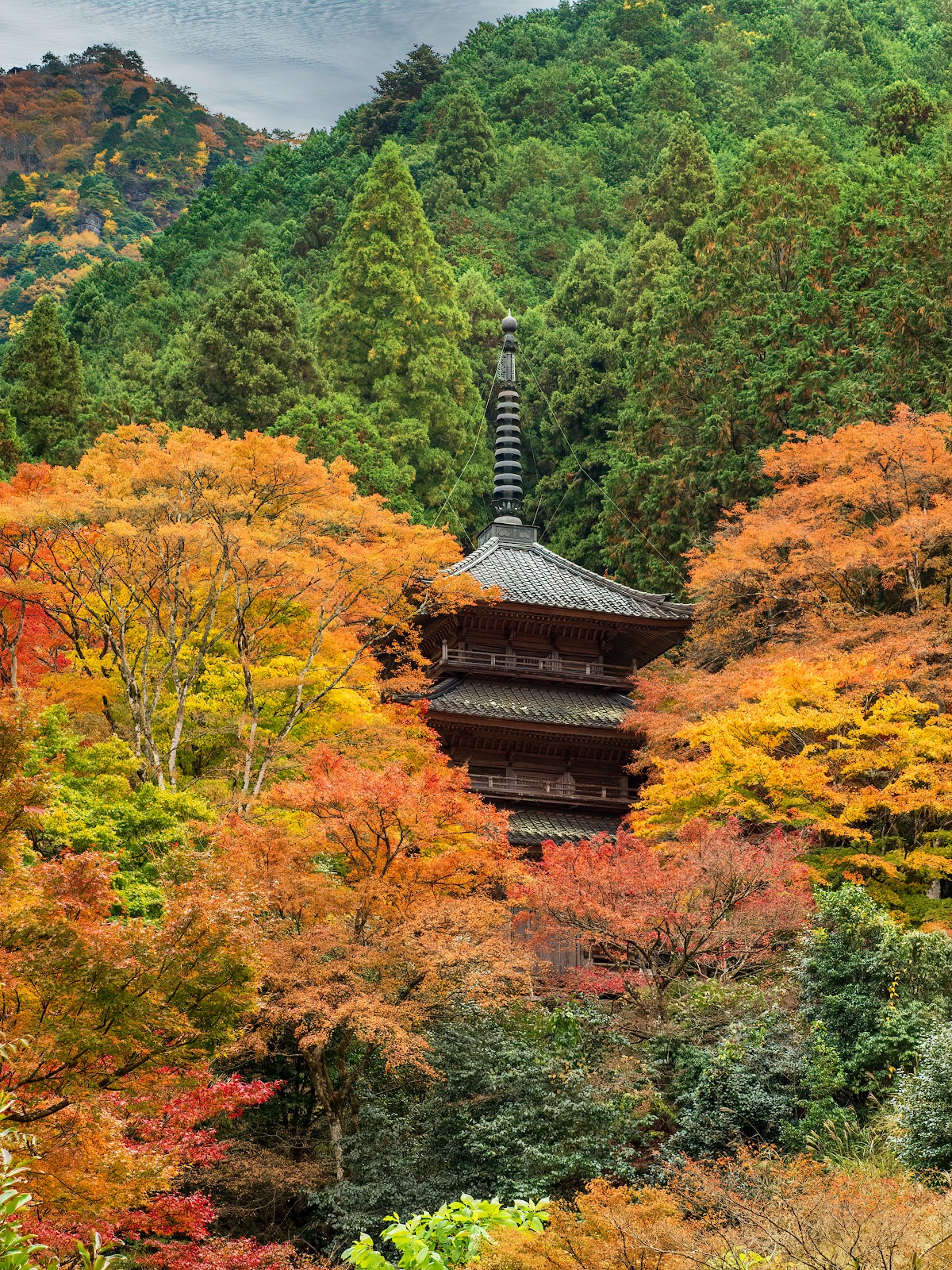
Kogenji Temple (Hyogo Prefecture, Tanba City) Complete Guide | Heavenly Eye Maple Autumn Leaves, Access, and Visiting Information
Kogenji Temple, located in Aogaki Town, Tanba City, Hyogo Prefecture, is a renowned Rinzai Zen temple founded in the Kamakura period and is known as one of the “Three Tanba Autumn Leaf Mountains,” a celebrated autumn foliage destination. The temple grounds are adorned with approximately 200 to 500 maple trees, including the Heavenly Eye Maple brought back from China, attracting numerous tourists each year. This article provides detailed information about Kogenji Temple’s history, highlights, access methods, and visiting information.
History and Background of Kogenji Temple
Founding and Zen Master Enkeisoyuu
Kogenji Temple was founded in 1325 (Shojuu 2) during the Kamakura period by Zen Master Enkeisoyuu (遠谿祖雄). Master Enkeisoyuu was a distinguished monk who trained in Hangzhou, China, and after returning to Japan, established this temple. In the following year, 1326 (Kareki 1), Emperor Go-Daigo granted the temple the name “Kogenji,” giving it official recognition as a prestigious institution.
The Name “Western Heavenly Eye”
Kogenji Temple is known by the alternate name “Western Heavenly Eye” as the head temple of the Rinzai Zen Chubun sect. This corresponds to Seiun Temple in Yamanashi Prefecture being called the “Eastern Heavenly Eye.” The term “Heavenly Eye” derives from Tianmu Mountain in Zhejiang Province, China, reflecting the deep connection with Hangzhou’s Tianmu Mountain where Master Enkeisoyuu trained.
Relationship with the Imperial Family
Kogenji Temple not only received its name from Emperor Go-Daigo but also was designated as an imperial votive temple by Emperor Go-Kashiwara, who granted it the imperial decree of purple robes for all time. This was evidence of special protection and prestige recognized by the imperial family, demonstrating that it was a central institution of Buddhist culture in the Tanba region.
Highlights of Kogenji Temple
Heavenly Eye Maple (Tenmoku-kaede)
The greatest attraction of Kogenji Temple is the “Heavenly Eye Maple,” which Zen Master Enkeisoyuu is said to have brought back from Tianmu Mountain in Hangzhou, China. The Heavenly Eye Maple has distinctive characteristics different from ordinary maples, with deeply cut leaves that turn brilliant scarlet to deep crimson during autumn foliage season. Approximately 200 to 500 maple trees (the number varies by source) are planted throughout the temple grounds, creating a spectacular autumn foliage landscape in fall.
Temple Complex Architecture
The temple grounds of Kogenji feature a formally arranged Buddhist complex characteristic of Zen temples.
Somon Gate (Outer Gate)
The Somon Gate at the entrance of the approach path is the first gate to Kogenji Temple. From here, approximately 50 stone steps form a beautiful pathway lined by maple trees on both sides.
Sanmon Gate (Mountain Gate)
Located at the top of the stone steps from the Somon Gate, the Sanmon Gate serves as the formal entrance to the temple. It exudes the solemn atmosphere characteristic of Zen temples.
Butsuden (Buddha Hall)
The Butsuden, which houses the principal image of Shakyamuni Buddha, is the central building of Kogenji Temple. It serves as an important space functioning as a meditation hall for Zen practice.
Hojo (Abbot’s Quarters)
Where the abbot resides and conducts religious services and receives guests, the Hojo is the central building for temple administration. It is available by reservation for enjoying vegetarian Buddhist cuisine.
Shoro (Bell Tower)
The bell tower housing the temple bell is one of the architectural features that enhances the atmosphere of the temple grounds.
Tahoto (Two-Tiered Pagoda)
The two-tiered pagoda enshrining Buddhist relics adds a distinctive character to the landscape of the temple grounds.
Autumn Foliage Tunnel on the Approach Path
The approximately 50-stone-step approach path from the Somon Gate to the Sanmon Gate is one of the most impressive landscapes at Kogenji Temple. Maple trees are planted on both sides of the path, and in autumn they form a tunnel of autumn foliage welcoming visitors. The beauty of the autumn leaves seen from above while climbing the stone steps one by one is truly worthy of being called a spectacular view.
Double Cherry Blossoms in Spring
Kogenji Temple is also known for its beautiful double cherry blossoms in spring. During the cherry blossom season, the temple grounds are tinted in pale pink, offering a different charm than autumn. Kogenji Temple, displaying different faces throughout the four seasons, is a worth-visiting destination year-round.
The Three Tanba Autumn Leaf Mountains
Kogenji Temple is counted as one of the “Three Tanba Autumn Leaf Mountains” together with Entsuji Temple and Sekiganji Temple. These three temples are representative autumn foliage destinations in the Tanba region, each with its own unique appeal.
- Kogenji Temple: Vivid autumn foliage from Heavenly Eye Maples and a stone-step approach path
- Entsuji Temple: Autumn foliage covering the entire temple grounds and a tranquil atmosphere
- Sekiganji Temple: Autumn foliage landscape harmonizing with mountain nature
As one of the foremost autumn foliage destinations in Santan (Tanba, Tajima, and Tango), Kogenji Temple attracts particularly large numbers of tourists.
Autumn Foliage Viewing Season and How to Enjoy It
Peak Foliage Season
The peak season for autumn foliage at Kogenji Temple is typically from early November to mid-November. While the dates may vary depending on weather and temperature, during this period the entire temple grounds turn red and yellow, offering the most beautiful scenery.
Crowds During Foliage Season
During the peak foliage season, especially on weekends and holidays, many tourists visit and crowding is expected. For those wishing to enjoy the autumn foliage leisurely, visiting on weekdays in the early morning or morning hours is recommended. Additionally, surrounding roads may also be congested during foliage season, so it is necessary to plan with extra time.
Photography Spots
The following are particularly recommended photography spots at Kogenji Temple:
- Stone steps from Somon Gate to Sanmon Gate: Upward angle of the autumn foliage tunnel
- View from the Sanmon Gate: Landscape overlooking the entire temple grounds
- Midway along the approach path: Combination of stone steps and autumn foliage
- Around the Buddha Hall: Contrast between architectural structures and autumn foliage
Vegetarian Buddhist Cuisine Experience
At Kogenji Temple, visitors can enjoy vegetarian Buddhist cuisine prepared by the abbot on a reservation basis. Vegetarian Buddhist cuisine is a Buddhist meal prepared without meat or fish, using only plant-based ingredients such as vegetables, grains, and legumes.
Characteristics of Vegetarian Buddhist Cuisine
The vegetarian Buddhist cuisine at Kogenji Temple is authentic, prepared with care by the abbot himself. Dishes using seasonal vegetables are characterized by simple yet profound flavors that bring out the taste of the ingredients. Through meals based on Zen philosophy, visitors can refresh both body and mind.
Reservation Method
Vegetarian Buddhist cuisine is completely by reservation only. For those wishing to visit, it is necessary to contact Kogenji Temple by phone in advance and inform them of the desired date, time, and number of people. Especially during foliage season, reservations are in high demand, so early booking is recommended.
Access Information
Access by Car
From Maizuru-Wakasa Expressway
- Approximately 20 minutes from Kasuga IC
- Approximately 10 minutes from Aogaki IC
Kogenji Temple has a parking lot that is free to use. However, during foliage season, the parking lot may be full, so arriving early is recommended.
Access by Public Transportation
By JR
- Get off at “Kashiwara Station” on the JR Fukuchiyama Line
- Board the Shinki Green Bus heading to “Saji”
- Get off at “Higashi-Ashida” bus stop
- Approximately 20 minutes on foot
Since the frequency of public transportation is limited, it is recommended to check the timetable in advance. Using a taxi is also worth considering.
Address
〒669-3821 Hyogo Prefecture, Tanba City, Aogaki Town, Higikura 514
Visiting Information
Visiting Hours
8:00–16:30 (last entry around 16:00)
※Hours may change depending on the season and events.
Admission Fee
- Adults: 300 yen
- Junior high school students and below: Free
※Special viewing fees may be set during foliage season.
Closed Days
Generally open year-round, though visiting may not be possible during religious services or events.
Inquiries
For those wishing to confirm the latest information before visiting, please contact Kogenji Temple directly.
Nearby Tourist Attractions
Tourist Attractions in Tanba City
When visiting Kogenji Temple, it is recommended to tour other tourist attractions in Tanba City as well.
Entsuji Temple
One of the Three Tanba Autumn Leaf Mountains, located approximately 30 minutes by car from Kogenji Temple.
Sekiganji Temple
Also one of the Three Tanba Autumn Leaf Mountains, an ancient temple in a quiet mountain environment.
Tanba Ryuu Fossil Workshop
An exhibition facility related to dinosaur fossils discovered in Tanba City, recommended for families.
Sample Itinerary
Day Trip Course for Enjoying Autumn Foliage
- Morning: Autumn foliage viewing at Kogenji Temple (2 hours)
- Lunch: Local cuisine in Tanba City
- Afternoon: Autumn foliage viewing at Entsuji Temple or Sekiganji Temple
- Late afternoon: Purchase Tanba specialty products at a roadside station
Kansai Flower Temple Pilgrimage Sites
Kogenji Temple is designated as the fourth pilgrimage site of the “Twenty-Five Kansai Flower Temple Pilgrimage Sites.” This pilgrimage course involves visiting flower-famous temples in the Kansai region and allows visitors to enjoy flowers throughout the four seasons. Kogenji Temple is particularly known for the beauty of its autumn foliage and cherry blossoms, and attracts many pilgrims.
The Appeal of Tanba City
Characteristics of the Tanba Area
Tanba City is located in the central-east part of Hyogo Prefecture and is a region where abundant nature and historical culture are harmonized. Since ancient times, it has flourished as an important transportation junction connecting Kyoto and the Sanin region, and many temples and shrines remain.
Tanba Specialty Products
- Tanba Black Soybeans: Known as Japan’s finest black beans, a specialty product
- Tanba Chestnuts: Large-grained chestnuts with strong sweetness
- Tanba Matsutake Mushrooms: Aromatic, high-quality ingredients
- Tanba Sasayama Beef: Tender and flavorful Japanese beef
When visiting Kogenji Temple, be sure to enjoy cuisine and souvenirs made with these specialty products.
Things to Note When Visiting
Clothing and Items to Bring
- Comfortable walking shoes: Walking shoes are essential as there is a stone-step approach path
- Seasonally appropriate clothing: As the temple is located in a mountainous area, it may be cooler than urban areas
- Camera: Don’t forget to capture the beautiful autumn foliage
- Beverages: Hydration is particularly important during summer
Etiquette and Rules
- The temple grounds are a sacred space. Please visit quietly
- Photography inside buildings may be prohibited
- Be sure to take all trash with you
- Do not damage plants or break branches
- Smoking is only permitted in designated areas
Weather-Related Changes
Visiting is possible even on rainy days, but caution is necessary as stone steps become slippery. During severe weather such as typhoons, visiting may be suspended.
Annual Events at Kogenji Temple
Various Buddhist events are held throughout the year at Kogenji Temple.
- Spring: Hanamatsuri (celebration of the birth of Buddha)
- Summer: Urabon-e (Obon Buddhist services)
- Autumn: Autumn Grand Festival
- Winter: New Year’s Eve Bell Ringing
By participating in these events, visitors can more deeply experience the history and culture of Kogenji Temple.
Photography Tips
Points for Autumn Foliage Photography
- Lighting conditions: The soft light of early morning or uniform light on cloudy days are suitable for autumn foliage photography
- Composition: Including stone steps or architectural structures creates depth in photographs
- Angles: Photographing the autumn foliage tunnel from an upward angle is particularly striking
- Details: Close-ups of individual leaves also make beautiful photographs
Photography by Season
- Spring: Contrast between double cherry blossoms and fresh greenery
- Summer: Deep green and cool-looking temple grounds
- Autumn: Gradation of changing autumn foliage
- Winter: Serene beauty of snow-covered temple grounds
Voices of Those Who Visited Kogenji Temple
Many tourists have been moved by the beauty of Kogenji Temple, and especially during foliage season, comments such as “the beauty exceeded expectations” and “the autumn foliage tunnel on the stone steps is magnificent” are frequently heard. Additionally, the quiet and calm atmosphere of the temple grounds is highly appreciated, and many visitors offer feedback such as “it was an experience that felt like having one’s spirit cleansed.”
Those who experienced the vegetarian Buddhist cuisine report positive comments such as, “the gentle flavor that brings out the taste of ingredients refreshed both body and spirit,” and “the warm meal reflected the abbot’s consideration.”
Summary
Kogenji Temple in Tanba City, Hyogo Prefecture, is a historic Rinzai Zen temple continuing from the Kamakura period and a renowned temple known for its Heavenly Eye Maple autumn foliage. Approximately a few hundred maple trees, beginning with the Heavenly Eye Maple brought from China by Zen Master Enkeisoyuu, adorn the temple grounds, and especially in autumn it becomes a popular destination attracting numerous tourists.
The autumn foliage tunnel covering the stone-step approach path, formally designed temple buildings, and the serene atmosphere of the temple grounds provide visitors with profound emotional experiences. The spring double cherry blossoms are also beautiful, allowing visitors to enjoy different faces throughout the four seasons.
With excellent access from the Maizuru-Wakasa Expressway, it is also possible to tour other tourist attractions in Tanba City. The reservation-based vegetarian Buddhist cuisine offers the opportunity to experience authentic meals based on Zen philosophy.
As one of the Three Tanba Autumn Leaf Mountains and the fourth pilgrimage site of the Kansai Flower Temple Pilgrimage Sites, Kogenji Temple is a leading tourist destination in Hyogo Prefecture. Time spent in quiet contemplation in these beautiful grounds where history and nature are harmonized provides a precious experience that allows one to forget the hustle and bustle of daily life. Please visit Kogenji Temple once and experience its charm firsthand.
-800x450.png)
-800x450.jpg)
-800x450.jpg)