
.jpg)
Kakusenkei (Ishikawa Prefecture) Complete Guide | Seasonal Highlights, River Bed Dining, and Access Information
Kakusenkei (鶴仙渓), located in Yamaka Onsen, Kaga City, Ishikawa Prefecture, is a spectacular scenic spot boasting the finest gorge beauty in the Hokuriku region. This gorge, which spreads across the middle reaches of the Daishoji River, captivates many tourists with its landscape of unusual rock formations created by sandstone erosion, clear streams, and nature’s seasonal splendor.
In this article, we will convey all the charms of Kakusenkei and provide detailed information useful for planning your visit.
Kakusenkei | Gorge Beauty Representative of Hokuriku
Kakusenkei is a gorge located within the Yamaka-Dainichiyama Prefectural Natural Park, an artwork of nature created by the clear waters of the Daishoji River flowing along the hot spring town of Yamaka Onsen. It refers to the approximately 1.3 km section from Koirogi Bridge upstream to Kuroya Bridge downstream, with the “Kakusenkei Walking Trail” developed along the gorge.
History and Origin of the Name
The name Kakusenkei is said to derive from the impression the famous poet Matsuo Basho received when he visited this area during his travels for “The Narrow Road to the Deep North” and stayed in Yamaka Onsen. Basho praised the natural beauty of this place with the poem “In Yamaka, don’t pluck the chrysanthemums / the scent of hot water.” The Basho Hall still stands along the gorge today, allowing visitors to retrace the footsteps of the poet.
The character “鶴” (crane) is used in the gorge’s name, said to be chosen because the elegant landscape reminds people of the graceful nature of cranes.
Geological Characteristics
The most distinctive feature of Kakusenkei is the numerous unusual rock formations created by sandstone erosion. Over long years, the clear waters of the Daishoji River have carved the rocks, creating a unique landscape. The environment created by the depth of the gorge and the river’s flow, full of negative ions, provides healing to those who visit.
The Three Famous Bridges of Kakusenkei
Essential to walking the Kakusenkei Walking Trail are three symbolic bridges spanning the gorge. Each possesses different charms and serves as highlights of the Kakusenkei tour.
Koirogi Bridge
Koirogi Bridge, located upstream of Kakusenkei, is a beautiful bridge entirely constructed of cypress wood. This bridge, approximately 21 meters long, is characterized by its traditional design that blends into the gorge’s natural landscape and is popular as a photography spot.
There are several theories about the origin of the bridge’s name: one suggests it comes from “行路危” (dangerous passage), and another that it derives from the cricket insects that inhabit this area.
The area around the bridge is particularly beautiful during the autumn foliage season, with the striking contrast between trees colored in red and yellow and the cypress construction creating breathtaking beauty.
Ayatoriashi Bridge
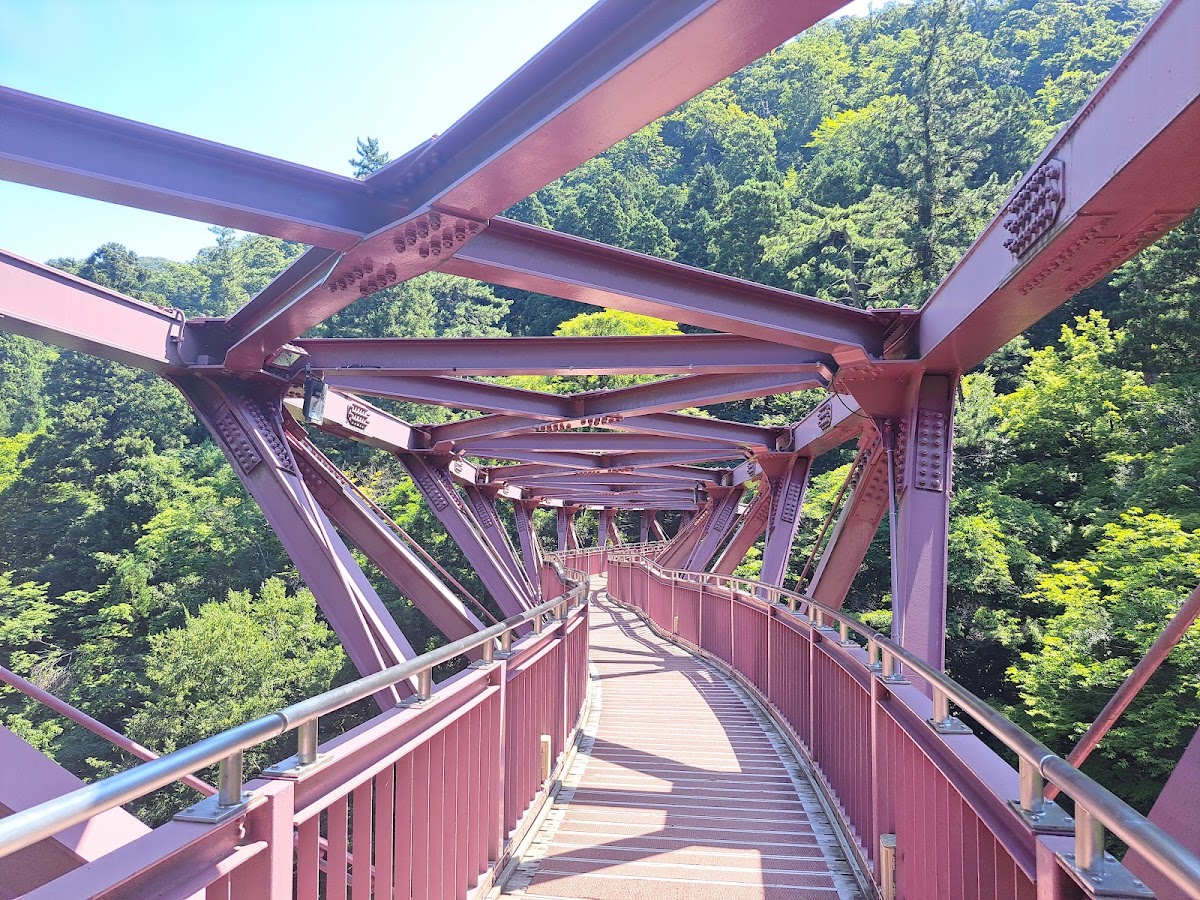
Ayatoriashi Bridge, located at approximately the midpoint of the Kakusenkei Walking Trail, is characterized by its contemporary design. This bridge, approximately 94 meters long and 1.5 meters wide, has a distinctive S-shaped form, and as its name suggests, possesses an elegant curved beauty reminiscent of “ayatori” (string figures).
Designed in 1990 by renowned flower arrangement master Hiroshi Teshigahara, the bridge’s purple railings and creative form bring modern art elements to the traditional gorge beauty, adding new charm to Kakusenkei.
Near Ayatoriashi Bridge, the “Kakusenkei River Bed” is set up, becoming a special experience spot from spring to autumn.
Kuroya Bridge
Kuroya Bridge, located downstream of Kakusenkei, serves as the starting or ending point of the walking trail. While more modest compared to Koirogi Bridge and Ayatoriashi Bridge, the gorge scenery viewed from here is also splendid.
The area around Kuroya Bridge is relatively open, serving as a viewpoint from which the entire gorge can be seen.
Kakusenkei River Bed | Special Moments Tasted in the Gorge
When discussing the charms of Kakusenkei, the “Kakusenkei River Bed” is indispensable. Set up near Ayatoriashi Bridge, this river bed is a special experience spot unique to Kakusenkei, boasting the finest gorge beauty in Hokuriku.
Charm of the River Bed
The river bed is a luxurious space where you can feel the murmuring of the clear Daishoji River close at hand, enjoy the deep green of the gorge, the songs of wild birds, and air full of negative ions. While viewing fresh green in spring or autumn leaves in fall, you can spend refined moments that can only be experienced here.
Sitting in a seat set on the river and spending time slowly surrounded by the gorge’s nature is a special experience that makes you forget the hustle and bustle of daily life.
Sweets Supervised by Rokuzaburo Dojo
Another pleasure of the river bed is special confections supervised by Rokuzaburo Dojo, a “master of Japanese cuisine” from Yamaka Onsen. Exquisite sweets enjoyed while viewing the beautiful gorge landscape add elegance to your mood.
Different menus are offered each season, and creative sweets utilizing local ingredients offer new discoveries with each visit. Enjoying sweets while feeling the cool river breeze is truly a moment of bliss.
Operating Period and Hours
The Kakusenkei River Bed operates on a limited seasonal basis from spring to autumn. Generally, it operates from early April to late November, though it may vary depending on weather and river conditions, so confirmation before visiting is recommended.
Operating hours are typically from 9:30 a.m. to around 4:00 p.m., with last orders usually 30 minutes before closing. Especially during the autumn foliage season on weekends, crowds are expected, so it’s advisable to visit with plenty of time to spare.
Kakusenkei in All Four Seasons
One of the great attractions of Kakusenkei is that it presents different faces in each season. It is known as a scenic area worth visiting throughout the year.
Spring Fresh Green (April–May)
In spring, freshly budding new green colors the Kakusenkei gorge in vibrant green. Life returns to the gorge that had been silent through winter, with the songs of wild birds echoing.
The river bed opens during this season, allowing you to enjoy the gorge’s beauty in still-cool air. The powerful flow of the Daishoji River, swollen with snowmelt water, is also a sight to see.
Summer Deep Green (June–August)
In summer, Kakusenkei becomes a cool refuge with deep green covering the landscape. The gorge’s trees grow thickly, and dappled sunlight gently illuminates the walking trail. The sound of the river murmuring combined with lush greenery creates negative ions that bring a refreshing coolness that makes you forget the heat.
Summer is especially pleasant for taking breaks at the river bed, with moments feeling cool river breezes being particularly special.
Autumn Foliage (Late October–Late November)
Kakusenkei becomes most crowded with tourists during autumn foliage season. Typically from early November, Japanese maples, maples, and zelkovas begin to change color, reaching their peak from mid to late November.
The sight of the entire gorge turning red, yellow, and orange is spectacular, with foliage reflected in the clear stream also beautiful, creating truly painterly scenery. The autumn leaves viewed from Koirogi Bridge and Ayatoriashi Bridge are particularly stunning, drawing many photographers.
Crowds are expected during foliage season, so early morning visits or weekday use are recommended. Walking the foliage trail in the quiet early morning hours creates an even more magical atmosphere.
Winter Silence (December–March)
Winter Kakusenkei is charming for its snow-covered tranquil landscape. Bare trees reveal the gorge’s skeletal structure, presenting a completely different appearance from summer.
During snowfall, caution is needed on the walking trail, but the gorge’s beauty amid snow scenes is also exceptional. While the river bed doesn’t operate in winter, you can enjoy the luxury of slowly touring the silently enveloped gorge.
How to Walk the Kakusenkei Walking Trail
To fully enjoy Kakusenkei, walking the developed trail is optimal. The approximately 1.3 km trail is maintained for enjoying gorge beauty up close.
Characteristics of the Walking Trail
The Kakusenkei Walking Trail extends approximately 1.3 km from Kuroya Bridge to Koirogi Bridge, allowing you to enjoy beautiful nature while walking along the gorge. The path is relatively flat and well-maintained, though some sections have stairs and uneven terrain.
From the trail, you can closely observe the gorge’s unusual rocks, clear streams, and seasonal flowers. Benches are placed at various points, allowing you to rest and stroll leisurely.
Required Time
Walking the trail from end to end typically takes 30 to 40 minutes. However, if walking slowly while taking photos and enjoying scenery, allow about an hour. If taking a break at the river bed, add additional time.
Clothing and Supplies
Though the trail is maintained, comfortable shoes (sneakers or trekking shoes) are recommended for walking in nature. Heels and sandals should be avoided.
Dress according to the season, bringing a hat and sunscreen in summer and insect repellent, plus warm clothing in fall and winter. Bringing beverages is also convenient.
Nearby Points of Interest
Several attractive spots worth visiting together are scattered around Kakusenkei.
Basho Hall
The Basho Hall, built to commemorate Matsuo Basho, is located along the Kakusenkei Walking Trail. You can trace Basho’s footsteps during his stay in Yamaka Onsen, making it a must-see for literature fans.
Mugenin
Mugenin, nestled along the gorge, is a facility for taking breaks in a quiet atmosphere. It is appreciated as a place to rest while enjoying the gorge’s beauty.
Yamaka Onsen Hot Spring Town
Before or after exploring Kakusenkei, strolling through the Yamaka Onsen hot spring town is also recommended. Yamaka Onsen, with its 1,300-year history, features hot spring facilities including the public bath “Kiku-no-Yu.” The town is lined with souvenir shops and restaurants where you can enjoy local specialties and cuisine. Known as one of the Kaga Hot Spring Areas, Yamaka Onsen is worth visiting as a set with Kakusenkei.
Yuge Street
Yuge Street running through the center of Yamaka Onsen is a charming walking path full of hot spring atmosphere. Traditional crafts shops and Japanese sweets stores line the stone-paved path, allowing you to experience the unique ambiance of a hot spring town.
Basic Information
Address and Location
Address: Yamaka Onsen Higashi-cho to Shimotani-cho, Kaga City, Ishikawa Prefecture
Area: Yamaka Onsen
Contact Information
Yamaka Onsen Tourism Association
Phone: 0761-78-0330
Checking the latest information before visiting and river bed operating conditions is recommended by contacting here.
Entrance Fees and Usage Charges
Exploring the Kakusenkei Walking Trail is free. If using the river bed, dining charges apply separately.
Parking Information
Several parking areas are available for accessing Kakusenkei.
Ayatoriashi Bridge Parking
The most easily accessible parking, located just before Ayatoriashi Bridge. From here, you can access the trail’s midpoint and are close to the river bed, making it convenient.
Koirogi Bridge Area Parking
Parking space is also available near Koirogi Bridge, convenient if you want to start exploring from the upstream side.
During busy seasons like autumn foliage, parking lots may fill up, so arriving early is recommended.
Access Methods
By Car
From Kaga IC on the Hokuriku Expressway:
Approximately 19 minutes (approximately 12.4 km)
Head toward Yamaka Onsen via National Route 8 and prefectural roads. Setting your destination as “Ayatoriashi Bridge Parking” is the clearest route.
Using a car navigation system to set “Ayatoriashi Bridge” or “Yamaka Onsen Tourism Association” is convenient.
By Public Transportation
From JR Kaga Onsen Station:
Take the Hokuriku Bus “Onsen Yamaka Line heading to Yorikino” (approximately 34 minutes)
Get off at “Kiku-no-Yu Mae” bus stop, approximately 5 minutes walk (approximately 0.3 km)
Bus frequency is limited, so checking the timetable in advance is recommended. Be sure to confirm the return bus time.
From Kanazawa Station:
JR limited express from Kanazawa Station to Kaga Onsen Station takes approximately 25 minutes, then transfer to a bus. Alternatively, direct express buses to Yamaka Onsen also operate from Kanazawa Station (varies by operating days and season).
By Taxi
Taking a taxi from Kaga Onsen Station takes approximately 20 minutes to arrive. It’s a convenient option for groups or those with luggage.
Nearby Accommodations
When visiting Kakusenkei, staying in Yamaka Onsen and enjoying both hot springs and gorge beauty leisurely is recommended.
Yamaka Onsen Inns and Hotels
Yamaka Onsen features various types of accommodations from historic inns to modern hotels. Many are within walking distance to Kakusenkei, allowing early morning trail exploration.
Choosing accommodations in the town center allows efficient use of time, including evening hot spring town strolls and early morning Kakusenkei exploration.
Other Hot Springs in Kaga Onsen Area
Besides Yamaka Onsen, the Kaga Onsen Area includes Yamashiro Onsen, Katayamazu Onsen, and Awazu Onsen. Staying at these hot springs and visiting Kakusenkei during the day is also a popular plan.
Photography Spots and Photogenic Locations
Kakusenkei is also attractive for photography enthusiasts.
Recommended Photography Points
Koirogi Bridge
The beautiful cypress bridge contrasted with the gorge and autumn foliage is spectacular. Compositions including the bridge are also popular.
Ayatoriashi Bridge
Distinctive for its S-shaped design, it allows for photographs with a modern art quality. The gorge viewed from above the bridge is also a beautiful subject.
Views from the River Bed
Gorge landscapes photographed from the river bed become vivid images full of immediacy.
Stream from the Walking Trail
Clear water and rock combinations photographable from various points on the trail serve as beautiful subjects throughout the seasons.
Best Photography Timing
Autumn foliage season is most popular, but the new growth season also offers vibrant green ideal for photography. Photography during early morning or evening with soft light is recommended, and especially mystical photos can be captured on days with morning mist.
Points to Note During Your Visit
Safety Precautions
- The trail is maintained but becomes slippery during rain or snowmelt periods, requiring caution
- Avoid getting too close to the river, especially when accompanied by small children
- Implement thorough insect repellent measures in summer and warm clothing in winter
Etiquette
- For nature conservation, always take trash with you
- Collecting plants or writing on rocks is strictly prohibited
- Remember courtesy to other visitors and maintain a quiet environment
- When using the river bed, follow staff instructions
Sightseeing Model Courses Including Kakusenkei
Day Trip Course
Morning: Arrive at JR Kaga Onsen Station → Take bus to Yamaka Onsen → Kakusenkei tour (Koirogi Bridge→Ayatoriashi Bridge→Kuroya Bridge)
Lunch: Sweets break at river bed
Afternoon: Yamaka Onsen town stroll / Day bath at Kiku-no-Yu → Souvenir shopping
Evening: Bus back to Kaga Onsen Station
Two-Day, One-Night Course
Day 1:
Afternoon arrival → Check in at Yamaka Onsen accommodation → Hot spring town stroll → Dinner and hot spring bathing
Day 2:
Early morning Kakusenkei tour (quiet time recommended) → Breakfast → Check out → Leisurely river bed relaxation → Nearby sightseeing (Basho Hall, etc.) → Lunch and departure
Kaga Hot Spring Area Circuit Course
A popular two-night, three-day course visiting Kakusenkei and Yamaka Onsen, along with other Kaga Onsen Area hot springs (Yamashiro Onsen, Katayamazu Onsen), Natadera Temple, and Kutani Ware kilns.
Conclusion | Savor Hokuriku’s Natural Beauty at Kakusenkei
Kakusenkei in Yamaka Onsen, Kaga City, Ishikawa Prefecture, is a scenic area worth visiting throughout the year, boasting gorge beauty unrivaled in Hokuriku. Touring three distinctive bridges—Koirogi Bridge, Ayatoriashi Bridge, and Kuroya Bridge—while walking the approximately 1.3 km trail, you can fully enjoy nature’s seasonal splendor.
The spring fresh green and autumn foliage seasons are particularly beautiful, enchanting many tourists. Experiencing the special river bed with sweets supervised by renowned chef Rokuzaburo Dojo while viewing gorge beauty is an unforgettable experience unique to this place.
Easily accessible by bus from Kaga Onsen Station, by car it’s approximately 19 minutes from Kaga IC on the Hokuriku Expressway. Staying in Yamaka Onsen allows leisurely enjoyment of both hot springs and gorge beauty.
Please visit Kakusenkei, which was loved by Matsuo Basho, and personally experience its natural beauty. The murmuring of the gorge’s clear stream, songs of wild birds, and seasonal colors will surely provide healing time that lets you forget the hustle and bustle of daily life.
-800x450.jpg)
-800x450.jpg)
-800x450.jpg)