Kinshūko Lake, Iwate Prefecture | Complete Guide to Submerged Forest and Autumn Foliage Scenic Spots
Located in Nishi-Waga Town, Waga District, Iwate Prefecture, Kinshūko Lake is a beautiful artificial lake formed by the Yuda Dam. The mysterious submerged forest in spring and the brocade-like autumn foliage in fall paint the lake’s surface throughout the seasons, captivating all who visit. Nestled between National Route 107 and the JR Kitakami Line, it has become a popular destination for driving and rail travel.
About Kinshūko Lake | A Scenic Masterpiece Created by Yuda Dam
Kinshūko Lake is an artificial lake created in 1965 by damming the Waga River with the Yuda Dam. The dam has a height of 89.5 meters and employs a gravity arch dam structure. Located near the border between Iwate and Akita prefectures, it spreads along National Route 107 (nicknamed the Shiki Line), an important transportation route connecting the two prefectures.
The lake’s name derives from how the surrounding area becomes beautifully colored like brocade during autumn’s foliage season. The landscape, like a miniature garden, is known as a representative natural beauty of the Tohoku region, attracting many photographers and tourists.
The lake covers approximately 3.4 square kilometers, with abundant nature spreading around it. While serving flood control and power generation functions through the dam, it simultaneously functions as an important tourism resource for the region.
Kinshūko Lake’s Submerged Forest | A Mystical Scenic Wonder Only in Spring
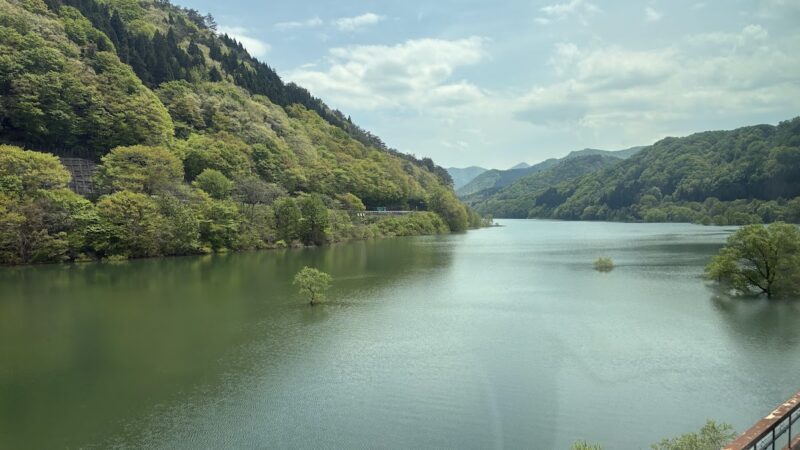
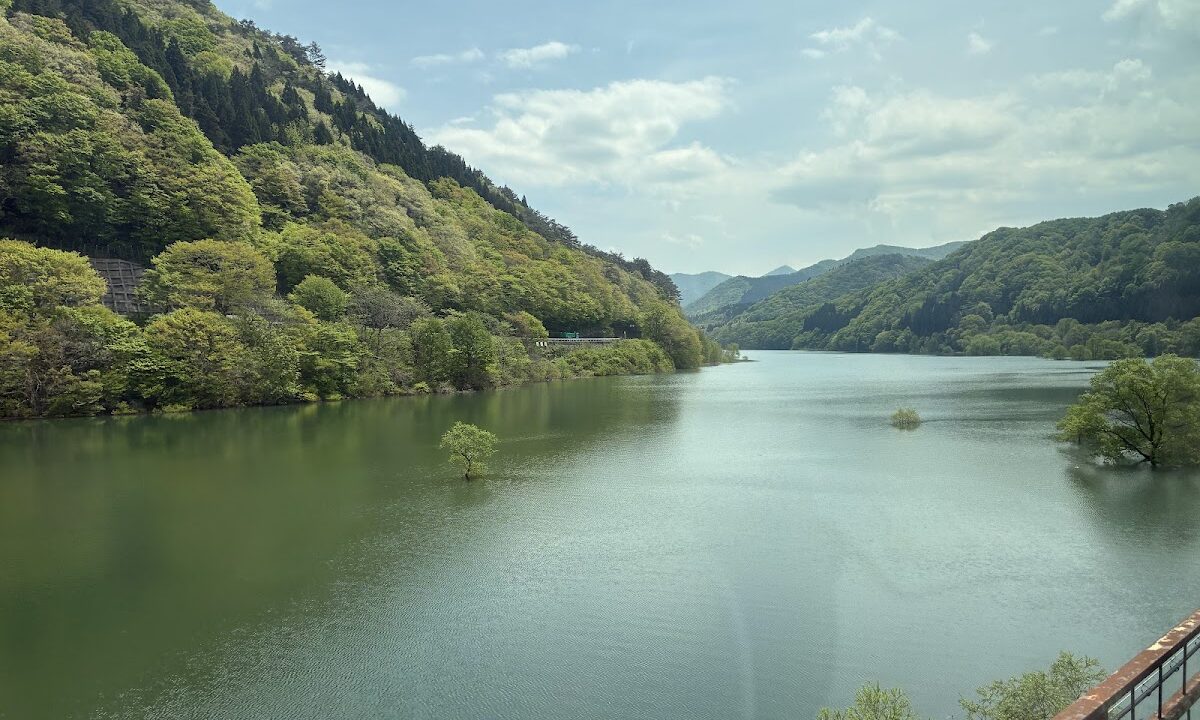
The hidden charm of Kinshūko Lake is the “submerged forest” that appears from spring through early summer. This phenomenon can be seen when the lake’s water level rises significantly due to snowmelt during the season of fresh greenery.
When the Submerged Forest is Visible and Its Mechanism
The submerged forest is most beautiful typically from late April through early June. During this period, snow accumulated on the surrounding mountains melts all at once, and large amounts of water flow into Kinshūko Lake through the Waga River. As a result, the lake’s water level rises several meters above normal, creating a scene where trees along the shoreline become submerged underwater.
The characteristic feature of the submerged forest is the fantastical landscape created by tree trunks and branches protruding from the water’s surface. The interplay of fresh green vegetation, blue lake water, and the silhouettes of submerged trees creates a sensation of having wandered into another world.
Best Viewing Spots for Submerged Forest and How to Enjoy It
The submerged forest can be best observed from observation points along National Route 107 and walking trails established along the lake shore. Particularly in the quiet early morning hours, the lake surface becomes calm like a mirror, allowing you to enjoy the “mirror effect” of the submerged forest reflecting in the water.
For photography, backlighting silhouette photography and compositions emphasizing the fresh greenery are popular. Additionally, combining photographs of the JR Kitakami Line’s red bridge crossing with the submerged forest has become a popular theme among railway enthusiasts and photography lovers.
The submerged forest visible during the season of abundant water and fresh greenery is definitely worth seeing. You can appreciate a serene beauty different from the autumn foliage season.
Kinshūko Lake’s Autumn Foliage | The Seasonal Spectacle That Inspired the Lake’s Name
The greatest charm of Kinshūko Lake is undoubtedly the autumn foliage season. During this season, which inspired the lake’s name, the surrounding mountains are dyed red and yellow, and the scenery reflected in the lake is truly like “brocade.”
Best Foliage Viewing Times and Color Information
Kinshūko Lake’s autumn foliage typically reaches its peak from mid-October through early November. Since the timing of color change varies by elevation and location, you can enjoy foliage for approximately three weeks.
The colors become most vivid in late October, when maple, beech, oak, and other broad-leaved trees turn color all at once. The maple foliage along National Route 107 (Shiki Line) is particularly spectacular, allowing you to enjoy constantly changing scenery while driving.
Best Foliage Viewing Spots
The area around Kinshūko Otaki (Yuda Sand Storage Dam) is the most popular foliage spot. The contrast between the white concrete of the sand storage dam and the autumn foliage is beautiful, and nighttime illumination is also provided. The combination of illuminated foliage and waterfall creates a fantastical landscape recognized as a Japanese night view heritage site.
The area near Waga River’s Makibuchi is also known as a spectacular foliage spot. The natural beauty woven together by the river’s flow and autumn colors soothes the hearts of all who visit.
The combination of the red bridge and JR Kitakami Line should not be missed. The moment when the Kitakami Line train passes over the red bridge framed by autumn foliage is an excellent photo opportunity. We recommend checking train schedules in advance before visiting.
JR Kitakami Line and the Red Bridge | A Must-See Spot for Railway Enthusiasts
When speaking of Kinshūko Lake’s charms, the JR Kitakami Line and the red bridge spanning the lake are indispensable. This combination holds special significance for railway enthusiasts and photography lovers.
The Appeal of the Kitakami Line and Operating Information
The JR Kitakami Line is a local railway connecting Kitakami Station in Kitakami City, Iwate Prefecture, to Yokote Station in Yokote City, Akita Prefecture. In the area around Kinshūko Lake, there is a section running along the lake where passengers can enjoy beautiful scenery from the train windows.
Particularly, “Hotto Yuda Station” serves as the base for Kinshūko Lake tourism and is known for having a hot spring facility inside the station building. Its unique feature of being able to bathe in the hot spring during train waiting times has made it increasingly popular.
Photographing the Red Bridge and Using the Timetable
The red bridge spanning Kinshūko Lake is a photography spot that is particularly striking during the foliage season. The contrast between the bridge’s red color, the surrounding foliage, and the blue lake surface creates beautiful photographs.
The key to photography is confirming the train schedule in advance. Since the JR Kitakami Line has limited frequency, it is important to check the timetable and aim for the moment when the train passes. The moment when the train crosses the bridge is also appealing, allowing you to capture dynamic photographs.
Various angles of photography are possible from observation spots along National Route 107 and the lake shore. The bridge displays different faces depending on the season and time of day, offering new discoveries with each visit.
Access to Kinshūko Lake | How to Get There by Car, Train, or Bus
Kinshūko Lake can be accessed by multiple methods: car, train, or bus. Understanding the characteristics of each transportation method will help you choose the one that best suits your travel style.
Access by Car
Using the Akita Expressway
- Approximately 15 minutes from Yuda IC
- Approximately 5 minutes from Kinshūko IC
Via National Route 107
- Approximately 1 hour from Kitakami City area
- Approximately 1 hour from Yokote City, Akita Prefecture area
National Route 107, also called the “Shiki Line,” offers beautiful scenery along the road, making the drive itself part of the tourism experience. However, during winter, there is a possibility of snow and icing, so studless tires are essential.
Access by Train
“Hotto Yuda Station” on the JR Kitakami Line is the nearest station.
- Approximately 1 hour from Kitakami Station to Hotto Yuda Station
- Approximately 10 minutes by car from Hotto Yuda Station to Kinshūko Lake
Walking from the station is difficult, so we recommend using a taxi or rental car. However, since the number of taxis around the station is limited, it is advisable to make a reservation in advance.
Access by Bus
There is a town-operated bus that runs within Nishi-Waga Town, but its frequency is limited. For tourism purposes, using a car or rental car is most convenient.
Michi-no-Eki (Roadside Station) Kinshūko | Use It as Your Tourism Base
“Michi-no-Eki Kinshūko,” located along National Route 107, is a convenient facility to serve as your base for Kinshūko Lake tourism.
Facility Information and Operating Status
At Michi-no-Eki Kinshūko, you can purchase local specialty products and souvenirs and enjoy meals. Products made with “Nishi-warabi” (a regional specialty of Nishi-Waga Town) and “mountain vegetables,” as well as local dairy products, are popular.
※Note: The facility temporarily closed due to road closures on National Route 107 in the past, but has resumed operations with the opening of detour routes. It is recommended to confirm the latest operating information before visiting.
How to Enjoy the Roadside Station
The roadside station can be utilized not only as a rest stop during driving but also as a spot to enjoy local cuisine. Local specialties and seasonal dishes are offered, allowing you to experience the region’s food culture.
It is also convenient as a hub for gathering tourism information. You can learn about tourism spots around Kinshūko Lake, event information, and seasonal highlights.
Tourism Spots Around Kinshūko Lake | Experience the Charm of Nishi-Waga Town
By visiting tourism spots around Kinshūko Lake, you can experience the charm of Nishi-Waga Town more deeply.
Yuda Hot Spring Gorge
Nishi-Waga Town is known as a treasure trove of hot springs. The Yuda Hot Spring Gorge contains multiple hot spring areas, each offering different spring qualities and atmospheres. After visiting Kinshūko Lake, it is recommended to relax at a hot spring and soothe your fatigue.
The hot spring inside “Hotto Yuda Station” is popular as a unique hot spring where you can bathe conveniently during train waiting times.
Kinshūko Service Area
The Kinshūko Service Area on the Akita Expressway is an upper and lower combined service area. You can enjoy views of Kinshūko Lake from the expressway, and local specialty products are also available for purchase.
Nearby Natural Spots
Around Kinshūko Lake, hiking courses and nature walking trails are well maintained. Along the Waga River’s promenade, you can enjoy walking and experience nature’s four seasons up close.
Best Seasons for Kinshūko Lake Tourism and Event Information
Kinshūko Lake has different charms in each season, but we will introduce particularly recommended times and events.
Spring (Late April through Early June): Submerged Forest Season
This is when the submerged forest from snowmelt becomes visible. The contrast between fresh greenery and the submerged forest is beautiful, offering a quiet charm different from the foliage season. Tourist numbers are relatively low, so you can enjoy the scenery leisurely.
Autumn (Mid-October through Early November): Peak Foliage Season
This is when Kinshūko Lake is most lively. The Kinshūko Otaki illumination event is held, allowing you to enjoy beautiful scenery day and night. Weekends and holidays are crowded, so visiting on weekdays or early in the morning is recommended.
Summer (July through August): A Summer Retreat
Summer at Kinshūko Lake is appealing for its cool climate and lush green scenery. As a summer retreat in the Tohoku region, you can escape the heat and enjoy driving and walking.
Winter (December through March): Snowy Landscape and Silence
In winter, Kinshūko Lake displays a quiet, snow-covered landscape. Road conditions require caution in winter, but the beauty of the snowy scenery is exceptional.
Precautions and Recommended Items for Kinshūko Lake Tourism
To comfortably visit Kinshūko Lake, here are some precautions and recommended items.
Clothing and Items
- Season-appropriate clothing: Since it is a mountainous area, temperatures are lower than in lowland areas. Especially in spring and autumn, bring warm clothing.
- Comfortable walking shoes: For walking on trails, sneakers or trekking shoes are suitable.
- Camera/smartphone: Essential for capturing beautiful scenery.
- Binoculars: Useful for bird watching and observing distant views.
Safety-Related Precautions
- Winter road conditions: Snow and icing are possible, so studless tires are essential.
- Weather changes: The mountain area has changeable weather, so check the forecast.
- Bear warnings: The surrounding area is rich in nature, so take precautions such as carrying a bear bell.
Etiquette and Rules
- Trash disposal: For nature conservation, always take trash with you.
- No trespassing on private property: When looking for photography spots, be careful not to trespass on private land without permission.
- Traffic rule compliance: National Route 107 has traffic, so avoid roadside parking and use designated parking areas.
Kinshūko Lake and Nishi-Waga Town Cuisine
Along with Kinshūko Lake tourism, enjoy the local cuisine of Nishi-Waga Town.
Nishi-Warabi
“Nishi-warabi,” a specialty of Nishi-Waga Town, is known as high-quality warabi with thick and soft texture. You can enjoy it in various forms such as warabi mochi and dishes using warabi.
Mountain Vegetable Cuisine
Blessed with abundant nature, Nishi-Waga Town produces various mountain vegetables throughout the seasons. At the roadside station and local eateries, you can enjoy local dishes prepared with fresh mountain vegetables.
Dairy Products
Dairy products made by ranching in Nishi-Waga Town are also popular. Try soft-serve ice cream and yogurt during your driving break.
Kinshūko Lake Photography Guide | Take Instagram-Worthy Photos
Kinshūko Lake is an extremely popular photography spot. Here are tips for taking beautiful photographs.
Photography Tips by Time of Day
Early morning (before and after sunrise)
- The lake surface is calm, making mirror effects easily achievable
- Morning mist sometimes occurs, allowing for fantastical photographs
Daytime
- Foliage colors photograph vibrantly
- The contrast between blue sky and foliage is beautiful
Late evening (before and after sunset)
- Foliage illuminated by the setting sun glows golden
- The sunset reflected in the lake is also beautiful
Composition Ideas
- Red bridge and train: Research train schedules and aim for the moment of passage
- Lake surface reflections: On calm days, photograph autumn foliage reflected in the lake
- Submerged forest silhouettes: A fantastical composition using backlighting
- Aerial view from National Route 107: Capture the entire lake from a high position
Photography Etiquette
At popular photography spots, do not forget consideration for other tourists. Avoid extended spot reservations and dangerous photography locations.
Basic Information | Check Before Visiting Kinshūko Lake
Address
〒029-5500 Iwate Prefecture, Waga District, Nishi-Waga Town
Access
- Approximately 10 minutes by car from Hotto Yuda Station on the JR Kitakami Line
- Approximately 15 minutes by car from Yuda IC on the Akita Expressway
- Approximately 5 minutes by car from Kinshūko IC on the Akita Expressway
Inquiries
Nishi-Waga Town Tourism Association
Phone: 0197-82-3290
Parking
Multiple parking spaces along National Route 107 (free)
Michi-no-Eki Kinshūko parking is also available
Admission Fee
Free (natural scenery)
Viewing Hours
24 hours (however, be cautious regarding safety when visiting at night)
Best Season
- Submerged forest: Late April through early June
- Autumn foliage: Mid-October through early November
Nearby Facilities
- Michi-no-Eki Kinshūko
- Hotto Yuda Station (with hot spring facility)
- Kinshūko Service Area (Akita Expressway)
Summary | Experience Iwate’s Natural Beauty at Kinshūko Lake
Kinshūko Lake is a natural treasure of Nishi-Waga Town in Iwate Prefecture. The mysterious submerged forest in spring, the brocade-like autumn foliage in fall, and the landscape woven together with the JR Kitakami Line’s red bridge give deep emotion to all who visit.
While driving along National Route 107 (Shiki Line), you can enjoy constantly changing beautiful scenery, and at Michi-no-Eki Kinshūko, you can encounter local cuisine and specialty products. You can also soothe your travel fatigue with hot springs at the Yuda Hot Spring Gorge.
While Kinshūko Lake displays different appearances with each season, the spring submerged forest and autumn foliage season are particularly must-see. When traveling the Tohoku region, be sure to visit Kinshūko Lake and experience Iwate’s abundant natural beauty.
Photography, driving, rail travel, hot springs, and more—the Kinshūko Lake area offers various ways to enjoy itself. Depending on your travel style, make the most of this beautiful scenic area.