
.jpg)
Sanzen-in Complete Guide | History, Highlights, and Four Seasons’ Charm Explained Thoroughly
Located in Ohara, Sakyo Ward, Kyoto City, Sanzen-in is a prestigious temple of the Tendai sect nestled in the serene mountain village at the foot of Mount Hiei. In the solemn grounds far removed from the hustle and bustle of the city, a National Treasure Amida Triad and moss-covered beautiful gardens continue to captivate visitors. This article provides detailed information about Sanzen-in’s history, highlights, seasonal attractions, and access methods.
Sanzen-in | A Historic Monzeki Temple Among the Five Tendai Sect Monzeki
Sanzen-in, known as Gyozan, is a Tendai sect temple counted among the five monzeki of the Tendai sect, a prestigious monzeki temple with high status. A monzeki refers to a historic temple where members of the imperial family or nobility serve as head priests. Three temples—Sanzen-in, Myohoji, and Seirenin—are called the “three monzeki,” and including Bishamonon and Manjuji, they are referred to as the “five monzeki.”
Origins and History of Sanzen-in
The history of Sanzen-in traces back to the 8th century. It is said to have begun when Saicho (Dengyō Daishi), the founder of the Tendai sect, constructed a single hall in the south valley of the eastern pagoda of Mount Hiei’s Enryaku-ji Temple when establishing it. Initially called the “Ennyūbō,” it began as Saicho’s personal chapel.
In the late Heian period, members of the imperial family began to reside at the temple, and it came to be called the “Nashimoto Monzeki” and “Kajii Monzeki.” Subsequently, it passed through various conflicts such as the Ōnin War and moved around Kyoto while continuing its history.
In 1871 (Meiji 4), the governmental office in Ohara became the new main temple building. The temple was renamed “Sanzen-in” after the imperial calligraphy of Emperor Gomizunoo inscribed on the personal chapel of the Kajii Monzeki: “Ichinen Sanzen-in” (One Thought, Three Thousand Realm). This is the current form of Sanzen-in. The adjacent Ōjōgokuraku-in was also incorporated into the temple grounds at this time, forming the present vast temple complex.
Highlights of Sanzen-in | National Treasures and Beautiful Gardens
The grounds of Sanzen-in are filled with historically valuable buildings, Buddhist statues, and beautiful gardens that display the changing faces of each season.
National Treasure Ōjōgokuraku-in and the Amida Triad
The greatest highlight of Sanzen-in is the Ōjōgokuraku-in, designated as a National Treasure, and the Amida Triad statue enshrined within. Ōjōgokuraku-in is a building constructed in the late Heian period with an irimoya-style roof and bark shingles, a precious cultural property that conveys the architectural style of the Fujiwara period to the present day.
The Amida Triad statue enshrined within the hall (seated Amida Buddha, seated Avalokiteśvara Bodhisattva, and seated Mahasthamaprapta Bodhisattva) is characterized by an elegant and serene expression. Particularly notable is the placement of Avalokiteśvara and Mahasthamaprapta in a unique posture called “Yamato seiza,” which is said to be a device to fit them in the hall with its low ceiling. This triad is highly evaluated as a masterpiece of late Heian period Buddhist art.
Yūseiden Garden | The Beauty of Moss-Covered Grounds
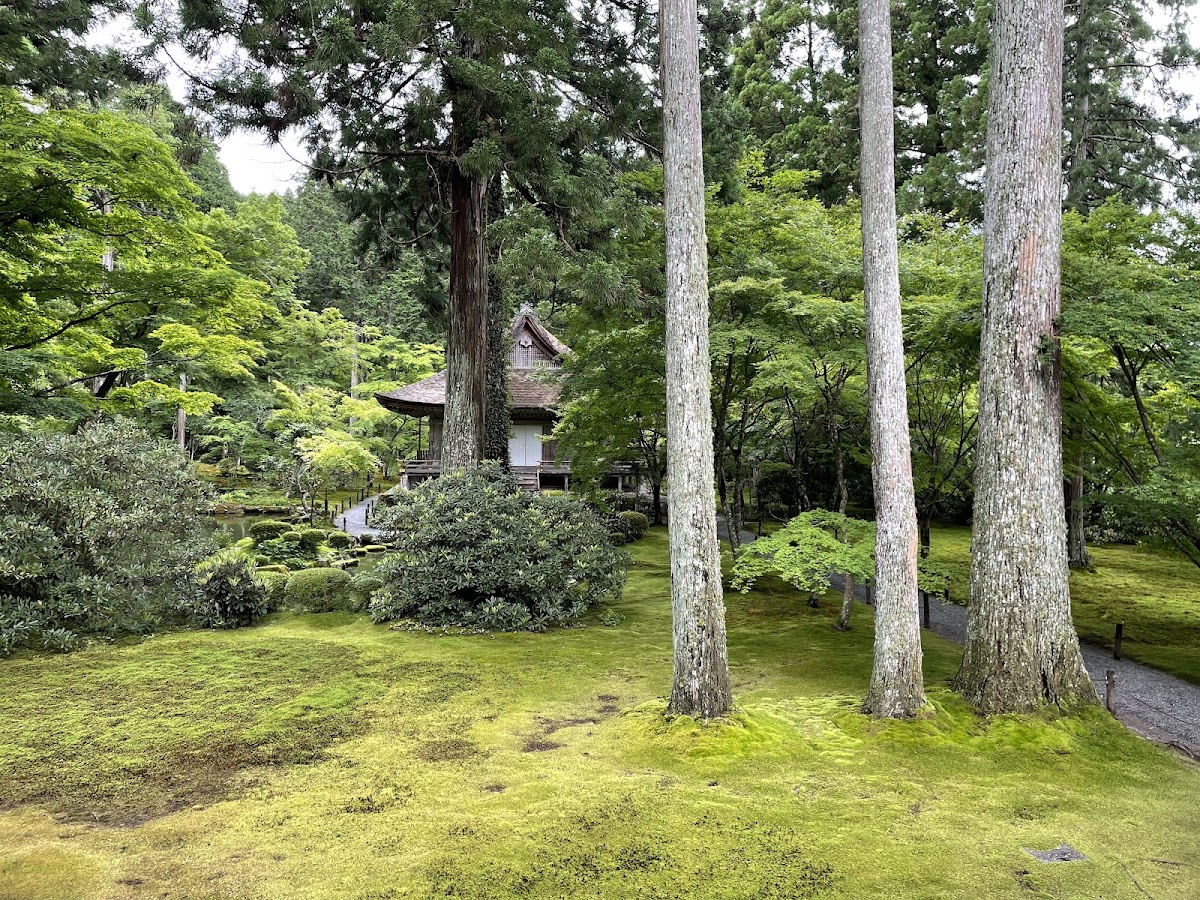
The garden “Yūseiden” spreading before the Shinden is a representative landscape of Sanzen-in. Fresh green moss densely covering the ground beneath the cedar groves creates a fantastical landscape like a carpet of velvet spread underfoot.
The moss-covered garden features Ōjōgokuraku-in standing quietly, creating a beautiful space where nature and architecture harmonize. In the fresh green season of spring, the vibrant greenery captivates visitors; in autumn, the contrast between red leaves and moss green; in winter, the elegant snow-covered appearance. Each season enchants those who visit.
Warabe Jizō | Symbols of Healing
If you look closely at the moss garden of Yūseiden, you’ll find charming stone sculptures of “warabe jizō” (child Jizō statues) hidden throughout. These works were created by stone sculptor Takashi Sugimura, and their appearance peeking out from among the moss brings comfort to visitors’ hearts.
Exploring the garden while searching for warabe jizō is one of the pleasures of visiting Sanzen-in. Since each has a different expression and pose, they are also popular photography spots.
Shūhekien | Pond-Viewing Style Garden
Shūhekien viewed from the guest hall is maintained as a pond-viewing style garden. In contrast to Yūseiden, it is an elegant garden centered on a pond, where you can enjoy the sight of seasonal flowers and trees reflected on the water’s surface.
Shūhekien displays different faces with each season—cherry blossoms in spring, fresh greenery in early summer, and autumn leaves in fall. It is recommended to sit on the veranda of the guest hall and appreciate it leisurely.
Shinden and Guest Hall | Grand Architectural Spaces
The Shinden is the central building of Sanzen-in, a prestigious shoin-style structure. The interior retains sliding door paintings by the Kanō school of painters, conveying the prestige of the monzeki temple of old to the present. The guest hall is arranged as a space for visitors to appreciate the gardens, and the view of Shūhekien from here is exceptional. The building itself also has high historical value, making it interesting to observe the architectural style.
Konjiki Fudō Hall and Benten Pond
Deep within the temple grounds stands the Konjiki Fudō Hall, which houses the golden Acala (Fudō Myōō) said to have been created by Chishō Daishi. This Fudō is venerated as the principal object of the goma ritual.
Near Konjiki Fudō Hall is Benten Pond, and the quiet atmosphere by the water adds further charm to the temple grounds. The pond’s surroundings are adorned with seasonal plants, and the scenery is particularly beautiful during the spring fresh greenery and autumn leaves.
Sanzen-in Through the Four Seasons | Seasonal Attractions
Sanzen-in displays different faces throughout the year, and is one of Kyoto’s most outstanding tourist destinations.
Spring at Sanzen-in | Cherry Blossoms and Fresh Green
In spring, cherry blossoms planted throughout the temple grounds come into bloom. Particularly from early to mid-April, it is a luxurious period when both cherry blossoms and fresh green shoots can be enjoyed simultaneously. The sight of cherry blossoms scattering on the moss has an aesthetic appeal, and you can savor the unique scenery of spring.
Early Summer at Sanzen-in | Hydrangeas and Young Maple Leaves
From June, approximately 1,000 hydrangea plants bloom in the temple grounds. Particularly at the “Ajisai-en” (Hydrangea Garden), various varieties of hydrangeas bloom in a riot of colors, creating a beautiful contrast with the green moss. Additionally, the refreshing green of young maple leaves is another charm of early summer at Sanzen-in.
Autumn at Sanzen-in | A Famous Autumn Leaves Destination
Sanzen-in is known as one of Kyoto’s representative autumn leaves viewing spots. From mid to late November, the entire temple grounds turn red and yellow, and particularly the contrast between the moss green and autumn leaves is praised as “an Eastern jewel box” for its beauty.
You can enjoy different autumn leaves scenery throughout the grounds—the maple leaves adorning Ōjōgokuraku-in, the collaboration of moss and leaves at Yūseiden, the leaves reflected on the water at Shūhekien. Although the autumn leaves season is crowded, you can enjoy relatively leisurely viewing by visiting early in the morning or on weekdays.
Winter at Sanzen-in | The Profound Beauty of Snow Scenery
In winter, particularly after snowfall, Sanzen-in becomes a separate world enveloped in silence and profundity. The snow-covered moss garden, Ōjōgokuraku-in dressed in snow, and the landscape woven by white and green contrasts offer a special beauty not found in other seasons.
Winter also brings fewer tourists, allowing for quiet worship. However, since Ohara is a particularly cold area even within Kyoto City, take thorough precautions against the cold before heading out.
The Village of Ohara | Attractions Around Sanzen-in
Ohara, where Sanzen-in is located, has long been known as a place where nobles and monks withdrew to escape the city’s hustle and bustle. In the idyllic mountain village atmosphere of Ohara, attractive tourist spots other than Sanzen-in are scattered about.
Jakkō-in | A Temple Associated with The Tale of the Heike
Jakkō-in, located about a 20-minute walk from Sanzen-in, is known as the temple where Empress Dowager Kenreimon-in, who appears in “The Tale of the Heike,” withdrew to live. The temple grounds have a delicate and elegant atmosphere that differs from Sanzen-in.
Hōsen-in and Shōrin-in | The Beauty of Frame Garden
Hōsen-in is a sub-temple of Shōrin-in and is famous for its “frame garden” viewed from the guest hall. The design of viewing the garden by treating the space between pillars as a frame offers a taste of the essence of appreciating Japanese gardens. Shōrin-in is known as the fundamental center for shōmyō (Buddhist chant) and carries forward the history of Buddhist music to the present day.
The Landscape of Ohara Village | Farmland and Nature
The village of Ohara still retains farmland scenery where one can feel the seasonal rural activities. Spring rice planting, summer green paddies, autumn golden rice stalks, and winter snow-covered landscape—a landscape that might be called the original Japanese countryside spreads before you.
Sanzen-in Visiting Information | Admission, Hours, and Access
Admission Fees
- Adults: 700 yen
- Junior high and high school students: 400 yen
- Elementary school students: 150 yen
※Group discounts available (30 or more people)
Visiting Hours
- March to December 7: 9:00 AM–5:00 PM (admission until 4:30 PM)
- December 8 to February: 9:00 AM–4:30 PM (admission until 4:00 PM)
※Closed: Open year-round (no holidays)
Access Methods
Access by Public Transportation
From Kyoto Station
- Take Kyoto Bus route 17 “Ohara bound” from Kyoto Station (approximately 60 minutes)
- Get off at “Ohara” bus stop, 10-minute walk
From Kokusai Kaikan Station
- Get off at Kokusai Kaikan Station on the Karasuma Line
- Take Kyoto Bus route 19 “Ohara bound” (approximately 20 minutes)
- Get off at “Ohara” bus stop, 10-minute walk
Access by Car and Parking
Sanzen-in does not have dedicated parking. There are several private paid parking lots in the Ohara area that you may use.
- Multiple private parking lots around Ohara bus stop
- Fees: approximately 500–1,000 yen per day
- Public transportation is recommended during the autumn leaves season due to congestion
Address and Contact Information
- Address: 540 Raigōin-chō, Ōhara, Sakyō Ward, Kyoto City, Kyoto Prefecture 601-1242
- Phone: 075-744-2531
- Official Website: https://www.sanzenin.or.jp/
Tips for Visiting Sanzen-in and Etiquette
Estimated Time for a Visit
To slowly explore the grounds of Sanzen-in, plan for approximately 60–90 minutes. If you wish to thoroughly enjoy photography and garden appreciation, it is recommended to set aside about 2 hours.
Clothing and Belongings
- Since the grounds have slopes and stairs, comfortable walking shoes are recommended
- Insect repellent spray is useful in summer
- Thorough cold-weather preparation in winter (Ohara is a particularly cold area even within Kyoto City)
- A camera is a must-have (however, photography is prohibited inside Ōjōgokuraku-in)
Photography Etiquette
Photography within the temple grounds is generally permitted, but please note the following:
- Photography is prohibited inside Ōjōgokuraku-in
- Be considerate of other visitors’ experience
- Avoid using tripods during crowded times
- Do not step on the moss of the gardens
Dining and Souvenirs Around Sanzen-in
Ohara Specialty “Shiba-zuke”
Ohara is known as the birthplace of the Kyoto pickle “shiba-zuke.” Along the approach to Sanzen-in, long-established shops selling shiba-zuke are lined up, and free samples are available. These are popular souvenirs.
Dining Establishments in Ohara Village
Around the approach, there are various dining establishments serving dishes using Kyoto vegetables, yuba (tofu skin) cuisine, and soba noodles. Meals enjoyed surrounded by Ohara’s natural environment are extraordinary.
Rest Stops at Tea Houses
Tea houses are located within the grounds and along the approach, where you can rest with matcha and Japanese sweets. A cup of tea while gazing at the gardens makes for a wonderful memory of your visit.
Conclusion | A Peaceful Moment at Ohara and Sanzen-in
Sanzen-in in Ohara, Kyoto, is a prestigious Tendai sect temple with a history spanning over 1,200 years. It is rich in sights to see: the National Treasure Ōjōgokuraku-in and Amida Triad, beautifully moss-covered gardens, and warabe jizō, each displaying different faces through the four seasons.
By strolling through the solemn grounds of this temple in the village of Ohara, far from urban commotion, and savoring the beautiful scenery woven by nature and history, you will experience a calm and tranquil time that refreshes the soul.
When visiting Kyoto, be sure to make the trip to Sanzen-in. The beauty of the autumn leaves season is particularly exceptional, but no matter what season you visit, you will discover the unique charm of this wonderful temple.
While the access from Kyoto Station takes about an hour by bus and requires some distance, in return, a special space enveloped in silence and nature awaits you. Together with the landscape of the Ohara village, spend a peaceful time at Sanzen-in.
-800x450.jpg)
-800x450.jpg)
-800x450.jpg)