.jpg)
Kurama Temple (Kyoto Prefecture) Complete Guide | History, Highlights, Access, and Power Spots Fully Explained
About Kurama Temple
Kurama Temple (Kuramadera) is the head temple of the Kurama Kōkyō sect, located in Kurama Honmachi, Sakyō Ward, Kyoto City. With its premises situated on the slopes of Mount Kurama at an elevation of 584 meters, it is known as a sacred mountain boasting over 1,200 years of history.
Basic Information about Kurama Temple
Kurama Temple was founded in Hōki 1 (770), the late Nara period, when Ganshō Shonin, a senior disciple of Ganjin, enshrined Vaiśravaṇa (Bishamon-ten). As the guardian deity of the north of Heian-kyō, it received devoted faith from the imperial court. It is also famous for being mentioned in Sei Shōnagon’s “Pillow Book” with the phrase “what is near yet far: the switchback path of Kurama.”
The current principal image is called “Sonten” and represents a unique faith form expressing the trinity of Vaiśravaṇa, the Thousand-Armed Avalokiteśvara, and the Mahārāja of the Protective Dharma. This “Sonten” faith expresses the great spirit of the universe and forms the foundation of the independent religion of Kurama Kōkyō.
History of Kurama Temple
Multiple legends surround the founding of Kurama Temple. The most credible account states that in Hōki 1 (770), Ganshō Shonin ascended Mount Kurama following a divine revelation in a dream and enshrined Vaiśravaṇa. Originally affiliated with the Ritsu sect, it later changed to the Shingon sect and then the Tendai sect, before finally becoming independent and founding the Kurama Kōkyō sect in Shōwa 22 (1947).
During the Heian period, it is known as the place where Minamoto no Yoshitsune, under his childhood name Ushiwaka-maru, spent approximately ten years from age seven. After his father Minamoto no Yoshitomo’s defeat in the Heiji Rebellion, young Ushiwaka-maru was left in Kurama Temple’s care, where he is said to have mastered martial arts and studies. The temple grounds retain legends of Ushiwaka-maru learning martial arts from tengu, continuing to enchant many pilgrims today.
From medieval times onward, it prospered as an important sacred site in Kyoto. It experienced tumultuous history, including being burned down by Oda Nobunaga during the Sengoku period, but was repeatedly restored and continues to the present day.
Highlights of Kurama Temple
The temple grounds feature diverse attractions ranging from historic structures to natural vistas and power spots.
Niō Gate (Mountain Gate)
The Niō Gate, located about a 3-minute walk from Kurama Station on the Eizan Electric Railway, serves as the starting point for visits to Kurama Temple. This solemn gate, rebuilt in Meiji 44 (1911), houses Niō statues said to be carved by Unkei, welcoming pilgrims. An entry fee of 500 yen (aisanryoku) is paid here to enter the temple grounds.
Passing through the Niō Gate marks the beginning of the stone-step path of “ninety-nine switchbacks” (tsudzuraori) mentioned in Sei Shōnagon’s “Pillow Book.” This path continues to the Main Hall, allowing visitors to fully experience the natural atmosphere of Mount Kurama.
Yuki Shrine
Located along the path from the Niō Gate to the Main Hall, Yuki Shrine was transferred from the Imperial Palace in Kyoto by imperial decree in Tengyō 3 (940), during the reign of Emperor Suzaku. It is famous for the Kurama Fire Festival, where every October 22, parishioners carrying torches process through the streets with the chant “Sairei, Sairyō.”
The main hall is designated as a National Important Cultural Property, preserving architectural styles from the Momoyama period. The shrine grounds feature a large cedar tree over 800 years old, and many pilgrims visit to feel its spiritual power.
Main Hall (Kondō)
The Main Hall of Kurama Temple, serving as the temple’s center, is a magnificent structure located at approximately 410 meters elevation. The current building was rebuilt in Shōwa 46 (1971) and houses the principal image, Sonten, in its inner chamber.
The Main Hall features a wide platform from which visitors can enjoy panoramic views of Kyoto’s cityscape and the ridges of Mount Hiei. Spring blossoms, early summer greenery, and autumn foliage enchant visitors with seasonal beauty. The views from this platform are among the major pleasures of visiting Kurama Temple.
Kongō-shō (Power Spot)
Located in the forecourt of the Main Hall, the Kongō-shō is known as Kurama Temple’s greatest power spot. A hexagram (Star of David) pattern is engraved on the stone pavement, and it is believed that standing at its center allows one to receive cosmic energy.
The Kongō-shō is said to be “a place where the power of the universe descends,” and many pilgrims meditate and offer prayers here. Particularly during full moon nights, the “May Full Moon Festival (Uesak Festival)” is held, attracting practitioners and believers from around the world.
The hexagram pattern symbolizes the harmony of heaven and earth, yin and yang, and spirit and matter, visually expressing the cosmological worldview of Kurama Kōkyō. While photography is permitted, it is important to visit this sacred place with reverence.
Reihokan (Kurama Mountain Museum)
Located east of the Main Hall, the Reihokan is a museum displaying the history and cultural properties of Kurama Temple. It houses a National Treasure statue of Vaiśravaṇa, Important Cultural Properties including Buddhist scriptures, Buddhist statues, and ancient documents.
Particularly noteworthy is the collection of Buddhist art from the Heian and Kamakura periods. Visitors have a precious opportunity to view artifacts close up that chronicle Kurama Temple’s long history. Exhibition contents change seasonally, offering new discoveries with each visit.
Oku-no-in Mao-den (Inner Sanctuary)
Continuing further along the mountain trail from the Main Hall leads to the Oku-no-in Mao-den. This is a mystical place where the Mahārāja of the Protective Dharma, said to have descended from Venus 6.5 million years ago, is enshrined.
According to Kurama Kōkyō doctrine, this Mahārāja is revered as the spirit king of Earth, watching over humanity’s evolution. The legend of Ushiwaka-maru learning martial arts from tengu is believed to derive from this Mahārāja.
The area around the inner sanctuary is enveloped by deep forest, exuding a mystical atmosphere. A path from here also leads toward Kifune Shrine, making it popular as a hiking route from Kurama to Kifune.
Kino Ne-michi (The Root Path)
The Kino Ne-michi, encountered between the Main Hall and the inner sanctuary, represents one of Kurama Temple’s signature landscapes. Roots of giant cedar trees protrude across the surface, creating a distinctive vista.
This location is said to be where Ushiwaka-maru trained, legend having it that he honed his agility by leaping over the roots. Visitors today must carefully avoid stepping on the roots as they proceed. The path is particularly slippery on rainy days and requires special caution.
Ikitsugi no Mizu (Breath-catching Water)
Along the path stands “breath-catching water,” a natural spring said to have refreshed Ushiwaka-maru during his training. Clear water continues to flow here, soothing weary pilgrims.
Mount Kurama has long been known as a place where sacred waters spring forth, and this is one such example. When drinking, please do so at your own discretion.
How to Tour Kurama Temple
Routes and points for efficiently and thoroughly experiencing Kurama Temple.
Standard Pilgrimage Route
From Niō Gate to Main Hall (approximately 30 minutes on foot)
- Alight at Kurama Station on Eizan Electric Railway (3-minute walk)
- Pay entry fee of 500 yen at Niō Gate
- Ascend the ninety-nine switchback path
- Visit Yuki Shrine (approximately 10 minutes from Niō Gate)
- Continue climbing stone steps
- Arrive at Main Hall and Kongō-shō (approximately 20 minutes from Yuki Shrine)
This classic route allows leisurely appreciation of nature. Recommended for those with confidence in their stamina or wishing to visit with a spirit of spiritual practice.
Cable Car Route (Time-saving Course)
- Walk 2 minutes from Niō Gate to Fumyōden (Cable Car Mountain Gate Station)
- Take cable car to Tahōtō Station (2-minute ride, 200 yen donation)
- Walk approximately 10 minutes to Main Hall from Tahōtō Station
The cable car is known as Japan’s shortest, covering a height difference of approximately 90 meters in 2 minutes. Convenient for those with concerns about physical fitness or limited time. Note that operation hours are 8:40–16:25 (last upward car at 16:05).
Kurama to Kifune Ridge Hike
For those with ample time and stamina, a hiking course from Kurama Temple through the inner sanctuary to Kifune Shrine is recommended.
- Main Hall of Kurama Temple (starting point)
- Pass through Kino Ne-michi (approximately 15 minutes on foot)
- Oku-no-in Mao-den (approximately 20 minutes on foot)
- Kifune Shrine’s inner sanctuary (approximately 25 minutes on foot)
- Kifune Shrine’s main hall (approximately 10 minutes on foot)
The overall course takes approximately 1.5 to 2 hours. While mostly downhill, the mountain trail requires sturdy footwear and appropriate clothing. From Kifune, access the Eizan Electric Railway’s Kifune-guchi Station by bus.
Notes for Visiting
- Visiting Hours: 9:00–16:15 (Reihokan closed Mondays; shortened hours in winter)
- Duration: Approximately 1.5 hours round trip from Niō Gate to Main Hall; over 3 hours including the inner sanctuary
- Clothing: Sturdy walking shoes and flexible clothing are essential. Stone steps make heels and sandals unsuitable
- Essentials: Drinking water, towel, rain gear (for weather changes)
- Physical Fitness: Continuous stone steps require adequate rest breaks and a comfortable pace
Annual Events at Kurama Temple
Throughout the year, Kurama Temple holds various religious ceremonies. Visiting during these events allows deeper experience of the temple’s appeal.
May Full Moon Festival (Uesak Festival)
Held on the full moon night in May (typically mid-May), the May Full Moon Festival is among the temple’s most important events. Based on the Buddhist belief that Śākyamuni Buddha’s birth, enlightenment, and nirvana all occurred on full moon nights, cosmic energy is said to descend to earth on this day.
All-night prayers are offered at the Kongō-shō before the Main Hall, attracting thousands of pilgrims from around the world. Participants meditate under moonlight, seeking unity with the cosmos. Participation is free, though warmth is necessary due to nighttime temperatures.
Kurama Fire Festival (Yuki Shrine Annual Festival)
Held October 22 annually, the Kurama Fire Festival is counted among Kyoto’s three most spectacular festivals. Conducted as Yuki Shrine’s annual festival, from evening through midnight, parishioners carrying large and small torches process through Kurama with the chant “Sairei, Sairyō.”
The festival climax features countless torches filling the stone steps, creating a spectacular scene like a sea of flame. The festival is said to originate from the torch-bearing procession that accompanied the shrine’s transfer from the Imperial Palace to Kurama in Tengyō 3 (940).
The event draws large crowds on the day, making early arrival and warm clothing advisable.
Bamboo-Cutting Ceremony
Held annually on June 20, the bamboo-cutting ceremony commemorates Minei Shōnin’s slaying of a giant serpent. Practitioners known as Kurama monks compete in how quickly they can fell green bamboo with swords.
The bamboo represents Tanba and Ōmi districts, also serving as a divination ceremony for the year’s harvest. The spectacle of the skilled bamboo-cutting is impressive, preserving Kurama Temple’s tradition of ascetic practice.
Other Major Events
- Hatsutora Grand Festival (Tora day in January): Vaiśravaṇa’s auspicious day; fire ritual offerings
- Setsubun Festival (February 3): Lucky bean distribution and demon-expulsion ceremony
- Flower Offering (Mid-April): Floral tributes to the principal image during cherry blossom season
- Yoshitsune Memorial Festival (September 15): Memorial service honoring Minamoto no Yoshitsune
- Autumn Grand Festival (November 3): Important ceremony during autumn foliage season
Nearby Spots to Visit with Kurama Temple
The Kurama area features numerous sites of historical and natural interest.
Kifune Shrine
Located approximately one hour on foot via mountain trail from Kurama Temple, Kifune Shrine is an ancient sanctuary dedicated to the water deity. Famous as a shrine for matchmaking, it is particularly popular for summer river-bed dining and winter snow scenery.
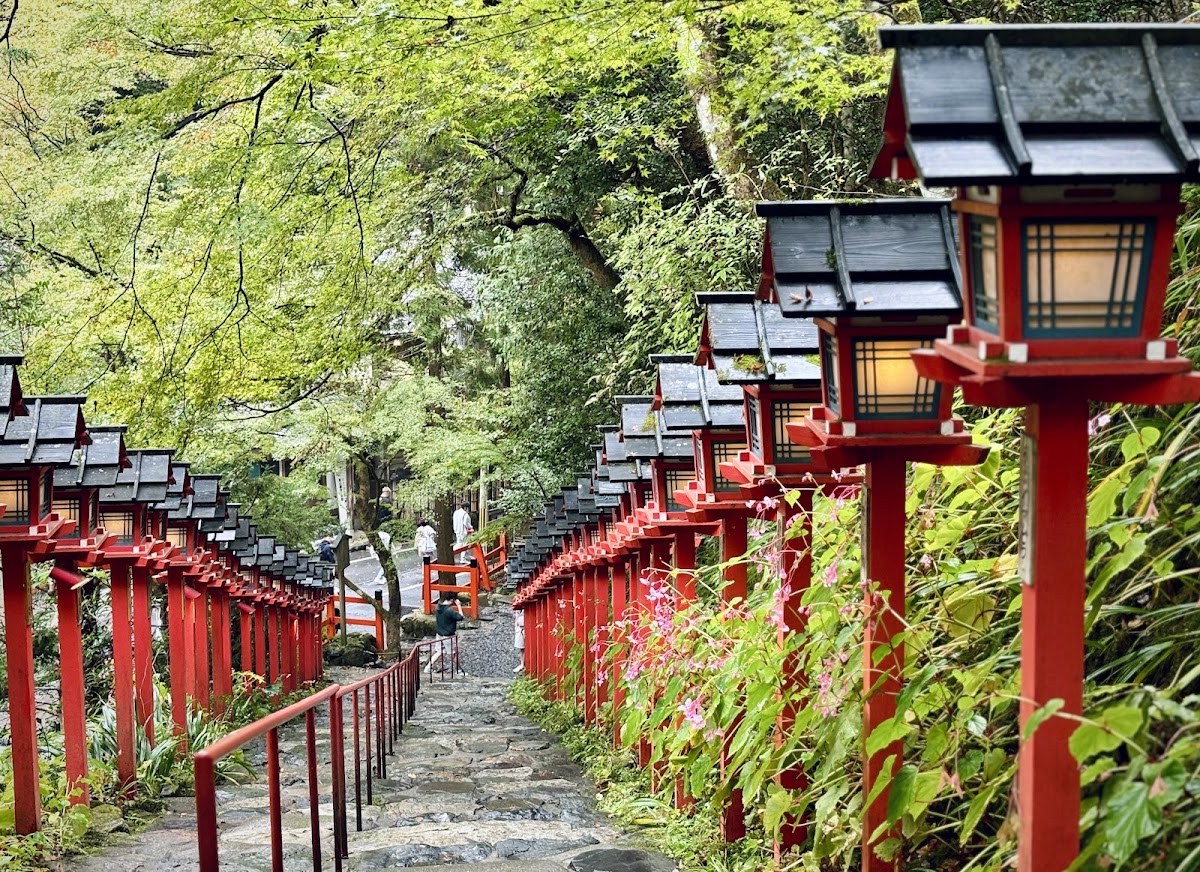
Vermillion-painted lantern-lined stone steps represent one of Kyoto’s signature photo locations. The water fortune-telling slip, which reveals characters when placed in the shrine’s sacred water, is also popular. A day-long tour combining Kurama Temple and Kifune Shrine constitutes a standard Kyoto northern sightseeing route.
Kurama Onsen
Kurama Onsen, a 3-minute walk from Kurama Station on Eizan Electric Railway, perfectly soothes fatigue from visiting Kurama Temple. The sulfur hot spring’s open-air bath offers views of Mount Kurama’s natural surroundings, with day-use bathing available.
The facility includes dining where seasonal Kyoto cuisine is served. Relieve post-pilgrimage fatigue in the hot spring and enjoy unhurried time.
Eizan Electric Railway
The railway itself used to access Kurama is part of the tourist experience. From Demachi-Yanagi Station to Kurama Station takes approximately 30 minutes, with natural scenery visible from the cars.
Particularly during autumn foliage season, a section called the “maple tunnel” features reduced-speed running with interior lights dimmed for backlighting of foliage. Tourist trains including “Hiei” and “Kirara” operate, popular with railway enthusiasts.
Ōhara and Sanzen-in Temple
Extending the trip slightly from Kurama allows visiting Sanzen-in in Ōhara, approximately 40 minutes by Kyoto Bus. This Tendai Buddhist temple is known for its moss-covered gardens and Amida Triad statues.
Enveloped in silence and mountain village tranquility, offering seasonal natural beauty. A different temple experience from Kurama Temple’s character.
Mount Hiei Enryaku-ji Temple
Visible from Kurama Temple’s Main Hall, Mount Hiei itself is worth visiting. As the headquarters of the Tendai sect and called the “Mother Mountain of Japanese Buddhism,” visiting Enryaku-ji in contrast with Kurama Temple deepens appreciation of northern Kyoto’s Buddhist culture.
Access to Kurama Temple
By Train
Most Recommended Route
- From Kyoto city via Keihan Electric Railway to Demachi-Yanagi Station
- Transfer to Eizan Electric Railway at Demachi-Yanagi
- Eizan Electric Railway Kurama Line to the terminal, Kurama Station (approximately 30 minutes)
- 3-minute walk from Kurama Station to Niō Gate
Eizan Electric Railway has limited train frequency; checking the timetable beforehand is recommended. Particular attention to the last return train time is necessary.
By Car
Approximately 40 minutes north from Kyoto via National Route 367 (Kurama Kaido). Kurama Temple lacks a dedicated large parking lot; paid private parking must be used.
Heavy congestion occurs during foliage season and on Fire Festival day, making public transportation recommended.
By Bus
Kyoto Station’s Kyoto Bus Route 17 to Kurama is possible, though the approximately one-hour journey and limited frequency make train access more convenient.
Etiquette for Visiting Kurama Temple
Kurama Temple as a Place of Practice
Kurama Temple functions as a training ground today and is not merely a tourist destination. The terminology “aisanryoku” (loving the mountain) for the entry fee indicates visitors should approach with a spirit of cherishing the mountain and harmonizing with nature.
Within the grounds, avoid loud noise and eating outside designated areas. Collecting plants or animals and trespassing beyond designated paths are prohibited.
Photography Etiquette
Photography is permitted in most temple areas, though restrictions exist for the Main Hall interior and museum interiors. Always check signage and follow rules.
Respect fellow pilgrims’ privacy. Particularly, if someone meditates at Kongō-shō, observe quietly and thoughtfully.
Harmony with Nature
Mount Kurama is a sacred mountain blessed with rich nature. Always remove trash, avoiding damage to the environment. Seasonal wildlife encounters may occur, but never feed animals or approach indiscriminately.
Kurama Temple’s Seasonal Appeal
Spring (March–May)
Spring showcases beautiful cherry blossoms and fresh greenery. Early to mid-April sees cherry blossoms flourishing throughout the grounds. Particularly striking are blossoms near the Main Hall, creating beautiful contrasts with blue skies.
The May Full Moon Festival offers the year’s most mystical experience. The refreshing stone-step path through new greenery provides ideal conditions for devotional visiting.
Summer (June–August)
Summer on Mount Kurama feels cooler than the city, enveloped in deep green. June 20’s bamboo-cutting ceremony represents early summer tradition, attracting many pilgrims.
While rainy season creates slippery stone steps requiring caution, mist-shrouded grounds create fantastical atmosphere. Summer vacation brings family visitors, creating lively scenes.
Autumn (September–November)
Autumn ranks among Kurama Temple’s most beautiful seasons. Late October through mid-November brings brilliant foliage, painting the path red and gold. Particularly striking is the Kino Ne-michi’s foliage, attracting photography enthusiasts.
October 22’s Fire Festival represents autumn’s signature event. The flame and foliage contrast creates magical impressions becoming lifetime memories.
Winter (December–February)
Winter Kurama Temple is enveloped in silence with a solemn atmosphere. Snow-covered grounds create otherworldly beauty, particularly striking on the Main Hall and Niō Gate. The snowy scenes resemble paintings.
With fewer visitors, unhurried visiting is possible. However, frozen stone steps require anti-slip footwear and warm clothing.
Conclusion
Kurama Temple stands as a sacred mountain representing Kyoto, featuring over 1,200 years of history, the Ushiwaka-maru legend, power spot Kongō-shō, abundant nature, and unique religious philosophy. Walking the path from Niō Gate through the Main Hall to the inner sanctuary allows transcending urban noise and harmonizing with nature.
Enjoyable throughout year-round beauty—spring blossoms, summer greenery, autumn foliage, winter snow—constitutes Kurama Temple’s appeal. Visiting during annual events like the May Full Moon Festival or Fire Festival provides deeper experiences.
Kurama Temple visits represent not mere tourism but spiritual practice meeting self and feeling the universe’s great power. Visit this sacred mountain in comfortable clothes and reverent heart. Surely unforgettable experience awaits.
-800x450.jpg)
-800x450.jpg)
-800x450.jpg)