
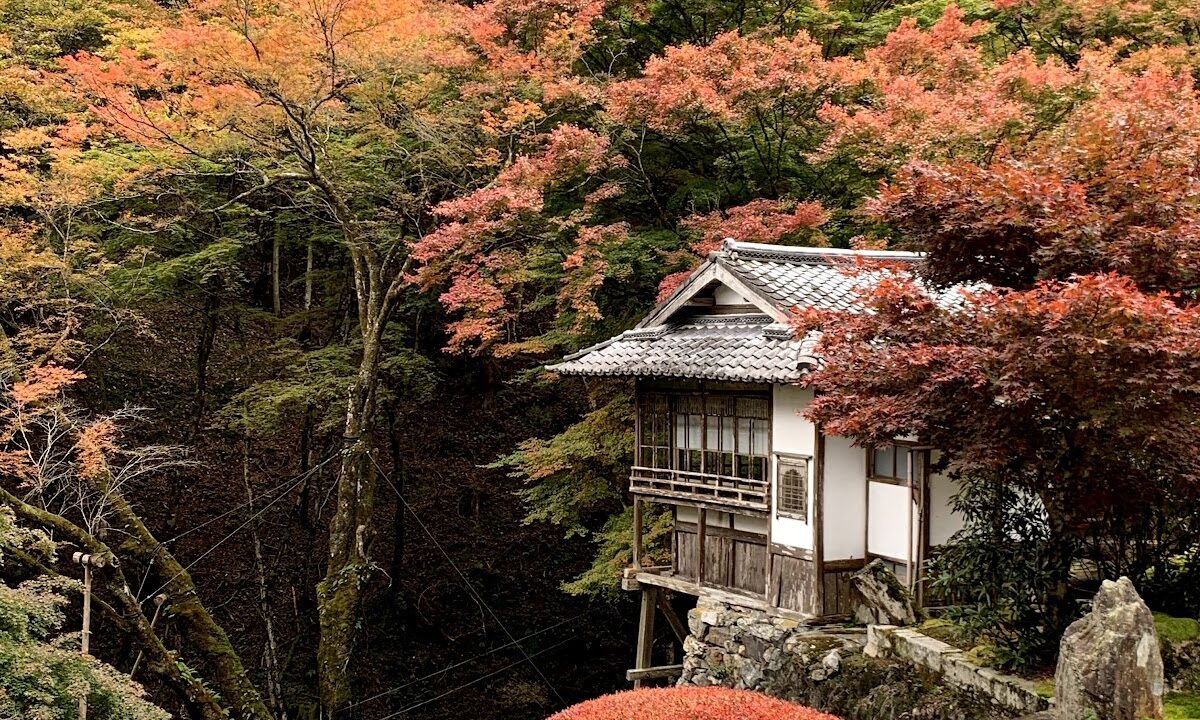
Kochidani Amida-ji Temple (Kyoto Prefecture) Complete Guide: Hidden Autumn Foliage Spot and the Mystery of Sokushinbutsu
Located in the mountainous areas north of Ohara in Sakyo Ward, Kyoto City, and even deeper into the mountains, Kochidani Amida-ji Temple (こちだに あみだじ) is a true “hidden gem” far removed from the hustle and bustle of famous temples like Sanzen-in and Jakkoin. While known as an autumn foliage viewing spot since the Edo period, it receives few visitors, offering a special space where one can savor history and nature in silence.
This article provides comprehensive information about Kochidani Amida-ji Temple, covering its history, highlights, access methods, and precautions for visiting this mysterious temple.
Kochidani Amida-ji Temple: History and Origins
Official Name and Sect
The official name of Kochidani Amida-ji Temple is “Komyozan Hōgokuin Amida-ji,” belonging to the Jōdo sect, specifically the Chionin faction. The mountain name is Komyozan and the temple name is Hōgokuin, though it is commonly called “Kochidani Amida-ji” after the local place name.
Temple Founding by Tanzei Shōnin
Amida-ji Temple was founded in March of Keichō 14 (1609) by Tanzei Shōnin (たんぜいしょうにん). Tanzei Shōnin was born in Ōmi Province (present-day Shiga Prefecture) in 1552, became a monk at a young age, and eventually reached the land of Kochidani after traveling to various temples throughout the country.
Tanzei Shōnin is also known as a monk who practiced “mokuji-gyō” (木食行), an ascetic practice of abstaining from grains and consuming only nuts and wild plants. The master continued this harsh training throughout his life and was also called the “Mokuji Shōnin.”
A Hall for Nyohō Nenbutsu Practice
Tanzei Shōnin chose the Kochidani area to establish a hall for nyohō nenbutsu practice. Nyohō nenbutsu is a form of training in which one copies the Lotus Sutra and recites the name of Amida Buddha through the merit of this act. The master determined that the quiet environment of Kochidani would be his final place of practice and spent his days in nenbutsu meditation.
On May 23 of Keichō 18 (1613), Tanzei Shōnin entered jūjō (入定) at age 62. Jūjō is the final stage of ascetic practice in which one enters meditation while still alive and achieves buddhahood in one’s current form. The master’s body remains enshrined in the Kaisan Cave within the temple and is known as Japan’s southernmost sokushinbutsu (self-mummified Buddha).
Imperial Connections
Amida-ji Temple has deep connections with the imperial household. The treasure hall displays items related to the imperial family, and records remain of visits and donations by successive emperors. This distinguished history speaks to the temple’s prestige and spiritual efficacy.
Highlights of Kochidani Amida-ji Temple
White Plaster Chinese-Style Temple Gate
At the entrance to the approach path to Kochidani Amida-ji Temple stands a white plaster-coated Chinese-style bell tower gate. This distinctive architectural style sets it apart from other Kyoto temples. The white walls stand out against the deep surrounding greenery, creating an exotic atmosphere that draws visitors into another world.
Beyond the gate, the path to the main hall continues as a steep uphill slope for approximately 15 minutes. This approach itself can be considered a place of training, though the natural beauty along the way eases the fatigue.
The 800-Year-Old Japanese Maple of Kochidani
One of the temple’s greatest highlights is a massive ancient maple tree with an estimated age of over 800 years. This “Kochidani Maple” is designated as a Kyoto City-Designated Natural Monument and stands majestically on the south side of the approach path.
The trunk circumference spans several meters, and its presence is overwhelming. While it displays different faces throughout the four seasons—fresh green in spring, deep green in summer, and autumn colors—it is especially spectacular during the autumn foliage season when approximately 300 maples around the tree dye the entire mountainside a brilliant red.
A Renowned Autumn Foliage Spot Since the Edo Period
Among the many temples in Ohara with beautiful autumn foliage—such as Sanzen-in and Jakkoin—the maple colors at Amida-ji are considered particularly beautiful. Known as an autumn foliage viewing spot since the Edo period, it has been cherished as a place that announces the arrival of autumn to northern Kyoto.
The tunnel of autumn leaves lining the approach path, the picturesque landscape formed by Jissō Waterfall and autumn colors, and the sea of autumn foliage visible from the main hall—these scenes will remain deeply etched in the hearts of all who visit.
Peak foliage typically occurs from early to mid-November. The colors appear slightly earlier than other foliage spots in Ohara, making it recommended to visit as a precursor to the autumn foliage season.
Jissō Waterfall
On the left side of the approach path stands Jissō Waterfall. The waterfall, surrounded by deep greenery, exudes cool air even in summer and provides visitors with a refreshing sensation. The composition created by the ancient maple and the waterfall is reminiscent of a Japanese painting.
The sound of the waterfall, the chirping of birds, the rustling of trees in the wind—stepping away from urban noise and listening to nature’s sounds is truly therapeutic for the soul.
Important Cultural Property: Wooden Amida Tathagata Seated Statue
On the right side of the inner sanctuary of the main hall stands a wooden Amida Tathagata seated statue from the Kamakura period. This Buddhist statue was designated as a National Important Cultural Property in 1950 (Shōwa 25).
Though the sculptor is unknown, the work demonstrates the high technical skill of Kamakura-period sculptors. The serene expression and well-proportioned form bring peace to all who view it. While photography is prohibited within the main hall, taking time to quietly pay respects and commune with this precious cultural treasure leaves a profound impression on the heart.
The Tanzei Shōnin Statue: A Statue with Implanted Hair
The main hall also enshrines a statue of Tanzei Shōnin that the master himself is said to have carved. The most distinctive feature of this statue is that the master implanted his own hair into it, earning it the name “statue with implanted hair.”
This statue is venerated for safe childbirth protection, and many visitors come to pray for safe delivery. The compassion of the master embodied in this statue continues to receive the wishes of people to this day.
Kaisan Cave and Sokushinbutsu
Behind the main hall lies a rocky cavern that Tanzei Shōnin had monks excavate one year before his jūjō. This is the Kaisan Cave (開山窟).
Within this cave is enshrined the sokushinbutsu (mummified Buddha form) of Tanzei Shōnin. The sokushinbutsu of Tanzei Shōnin is known as Japan’s southernmost sokushinbutsu, a precious legacy that speaks to the master’s strict ascetic practice and deep faith.
Sokushinbutsu are normally not open to the public, though they may be viewable on special occasions. Its mysterious presence symbolizes the spiritual efficacy of Amida-ji Temple.
Modern Karesansui Dry Landscape Garden
Amida-ji Temple also features a karesansui dry landscape garden created in modern times. Composed of white sand and stone arrangements, this simple garden embodies Zen spirit and can be viewed quietly from the main hall.
The opportunity to appreciate this beautiful garden in virtual solitude, without the crowds of Sanzen-in, is a luxury unique to Kochidani Amida-ji Temple. Sitting on the veranda and gazing at the garden while calming one’s mind is truly a moment of bliss.
Treasure Hall
The treasure hall displays the personal effects of Tanzei Shōnin and items related to the imperial family. Ritual implements and writings used by the master, along with items donated by successive imperial family members, allow visitors to view precious materials that tell the story of Amida-ji Temple’s history.
Access: How to Reach Kochidani Amida-ji Temple
Location
83 Kochidaira-chō, Ohara, Sakyo Ward, Kyoto City
Access by Public Transportation
Access to Kochidani Amida-ji Temple by public transportation is somewhat inconvenient due to its remote location.
- Get off at “Kokusaikaikan” Station on the Kyoto City Subway Karasuma Line
- Board Kyoto Bus Line 19 heading to “Ohara/Koideishi”
- Get off at “Kochidani” bus stop (approximately 20 minutes)
- Walk approximately 15 minutes from the bus stop
Alternatively, from Kyoto Station or Shijō Kawaramachi, take Kyoto Bus Line 17 to “Ohara” bus stop and transfer to Kyoto Bus Line 19.
Access from Sanzen-in
From Sanzen-in, the hub of Ohara sightseeing, to Kochidani Amida-ji Temple is approximately a one-hour walk. For those with good hiking stamina, walking while enjoying Ohara’s nature is also an option.
From Sanzen-in, heading approximately 2km north and traversing mountain paths, comfortable shoes and appropriate clothing are recommended.
Access by Car
When visiting by car, head north from Kyoto city on National Route 367, passing through Ohara toward the Kochidani area. While the temple has parking, spaces are limited, so caution is needed during peak foliage season and other busy times.
The mountain roads are narrow, and passing oncoming vehicles can be difficult in some areas, so careful driving is essential.
Viewing Information
Viewing Hours
9:00 AM – 4:00 PM (hours vary by season)
Closure Days
Winter closure from January through February. The temple is not open to visitors during this period.
Admission Fee
- Adults: ¥400
- High school and middle school students: ¥300
- Elementary school students: ¥200
Contact
Telephone: 075-744-2048
It is recommended to call ahead to confirm details about viewing or information about special viewings.
Precautions and Etiquette for Visitors
Clothing and Gear
The path from the gate to the main hall involves a steep uphill slope. Comfortable hiking shoes and flexible clothing are essential. Particular caution is needed during rainy weather or autumn foliage season when footing can be slippery.
Even in summer, the mountain area is cool, though climbing the slope causes perspiration. Bringing a towel and drinks is advisable.
Photography
Photography of the temple grounds is generally permitted, but photography inside the main hall or of Buddhist statues is prohibited. Additionally, respect the comfort of other visitors by photographing mindfully.
Preserving Silence
Kochidani Amida-ji Temple is a place of silence that Tanzei Shōnin chose for his nenbutsu training. Refrain from loud conversation or noise, and maintain a quiet demeanor while paying respects.
Restrooms and Shops
Restrooms are available on the grounds, but there are no shops or vending machines. It is recommended to prepare drinks and light snacks beforehand.
Nearby Tourist Attractions
Sanzen-in
Sanzen-in, the center of Ohara sightseeing, is located approximately 2km south of Kochidani Amida-ji Temple. A Tendai-sect monzeki (head temple) of imperial rank, it is famous for its beautiful gardens and moss-covered grounds. It becomes especially crowded during foliage season but is a must-see when visiting Ohara.
Jakkoin
Jakkoin, another representative temple of Ohara, is linked to the Tale of the Heike. Known as the place where Kenreimonin Tokuko spent her final years, its quiet presence touches the heart.
Ohara Village
In Ohara Village, one can encounter the culture of the “Ohara women” (大原女), traditional traveling merchants. Popular experiences include costume fittings where visitors don traditional Ohara women’s clothing and explore the Ohara landscape in these garments.
Seryō
Continuing north from Kochidani leads to the Seryō (芹生/せりょう) settlement. Located in the most remote area of Kyoto city, this region retains near-primordial forest. It is also popular as a hiking course.
Kochidani Amida-ji Temple Through the Four Seasons
Spring: Season of New Green
Spring at Kochidani Amida-ji Temple is a season of beautiful fresh greenery. The 800-year-old maple also displays vibrant new leaves, and a landscape full of life unfolds. Wild vegetables and plants sprout, and the breath of nature can be felt throughout.
Summer: Deep Green and Cool Breezes
Summer at Amida-ji becomes a refreshing retreat covered in deep green with pleasantly cool air. The sound of Jissō Waterfall invokes coolness and allows visitors to forget the summer heat of the city.
Autumn: Spectacular Autumn Foliage
Autumn is the season when Kochidani Amida-ji Temple shines brightest. Approximately 300 maple trees turn color simultaneously, dyeing the entire mountainside in brilliant red. The true value of this autumn foliage spot, which has been treasured since the Edo period, can be fully appreciated.
Winter: Winter Closure
January and February bring winter closure, and the temple is not open to visitors. The snow-covered, silent grounds become a special landscape known only to the training monks.
The Significance of Visiting Kochidani Amida-ji Temple
Kochidani Amida-ji Temple stands apart from the commercialized temples of Kyoto, preserving the original essence of a Buddhist temple.
The “silence” and “place of practice” that Tanzei Shōnin sought remain unchanged more than 400 years later. Because so few visitors come, one can find time to confront oneself and calm one’s mind.
The ancient maple, whose age exceeds 800 years, has lived far longer than any human lifetime and has watched over countless pilgrims. Standing before this ancient tree, we simultaneously feel the greatness of nature and the transience of human life.
The Important Cultural Property statue of Amida Tathagata, the sokushinbutsu of Tanzei Shōnin, and the beautiful autumn foliage that has continued since the Edo period—all of these make Kochidani Amida-ji Temple a special place.
Conclusion: Finding Peace of Mind at a Hidden Gem
Kochidani Amida-ji Temple is a true “hidden gem” that remains free of throngs of tourists precisely because of its inconvenient access. Yet this very inconvenience protects the temple’s silence and sanctity.
After visiting famous temples like Sanzen-in and Jakkoin, venture further north to Kochidani Amida-ji Temple. There, the depth of Kyoto and the essence of Japanese spiritual culture are alive and breathing.
Especially during the autumn foliage season, the beauty will captivate your heart. But whenever you visit, the nature of Kochidani and the virtue of Tanzei Shōnin will soothe and purify your mind.
From Ohara village, 2km further north. Please journey to the other world that awaits there. Kochidani Amida-ji Temple quietly waits for you.
-800x450.jpg)
-800x450.jpg)
-800x450.jpg)