
.jpg)
Higashiyama・Kiyomizu-dera Complete Guide 2024: Access, Highlights, and Surrounding Sightseeing Thoroughly Explained
Kiyomizu-dera Temple, located in Higashiyama Ward, Kyoto City, Kyoto Prefecture, is a leading tourist attraction in Japan visited by approximately 5 million people annually. As a component asset of the UNESCO World Heritage site “Historic Monuments of Ancient Kyoto,” it continues to captivate many pilgrims and tourists from around the world. This article provides a thorough explanation of everything you need to know before visiting, including the history and highlights of Kiyomizu-dera, tourist spots in the surrounding Higashiyama area, and access methods.
History and Origin of Kiyomizu-dera
The Story of Its Founding
The history of Kiyomizu-dera dates back to 778 (Hoki 9) in the late Nara period. According to tradition, the temple’s origin lies in the discovery of a sacred spring by the high priest Enchin during his practice in the Otowa Mountains, guided by a divine revelation in his dream. Subsequently, Sakanouye no Tamuramaro established the main hall in 798 (Enryaku 17), and the temple developed as a sacred site for Kannon worship.
The name “Kiyomizu” (pure water) derives from the clear water of the Otowa Waterfall. This sacred water has been revered since ancient times as “golden water” and “life-extending water,” and remains a symbol of Kiyomizu-dera visited by many pilgrims today.
Sect and Principal Image
Kiyomizu-dera is the head temple of the Kitahosokaiji sect, and its principal image is the Eleven-headed Thousand-armed Avalokiteshvara. This Kannon is known as the “Kiyomizu-style Kannon,” a unique form that is unveiled once every 33 years as a secret Buddha. The next unveiling is scheduled for 2033, and the previous unveiling in 2000 attracted many pilgrims.
UNESCO World Heritage Registration
In 1994 (Heisei 6), Kiyomizu-dera was registered as part of “Historic Monuments of Ancient Kyoto” on the UNESCO World Cultural Heritage list. This recognition was given for the outstanding universal value of Japan’s historical structures and gardens, positioning it as one of 17 temples, shrines, and castles representing Kyoto as an international protected site.
Major Highlights of Kiyomizu-dera
Nio Gate and West Gate
The Nio Gate, the main entrance to Kiyomizu-dera, is an Important Cultural Property that was destroyed during the Onin Rebellion in 1467 and underwent dismantling and restoration in 2003 (Heisei 15). The vermillion-lacquered gate houses Nio statues said to have been carved by Unkei.
The West Gate is positioned as the eastern gate of the Pure Land Paradise and is known as a famous location for “Nisso-kan,” where the sun sets directly in front on the spring and autumn equinoxes. During these periods, visitors gather to observe the sunset over the gate.
Kiyomizu Stage (Main Hall)
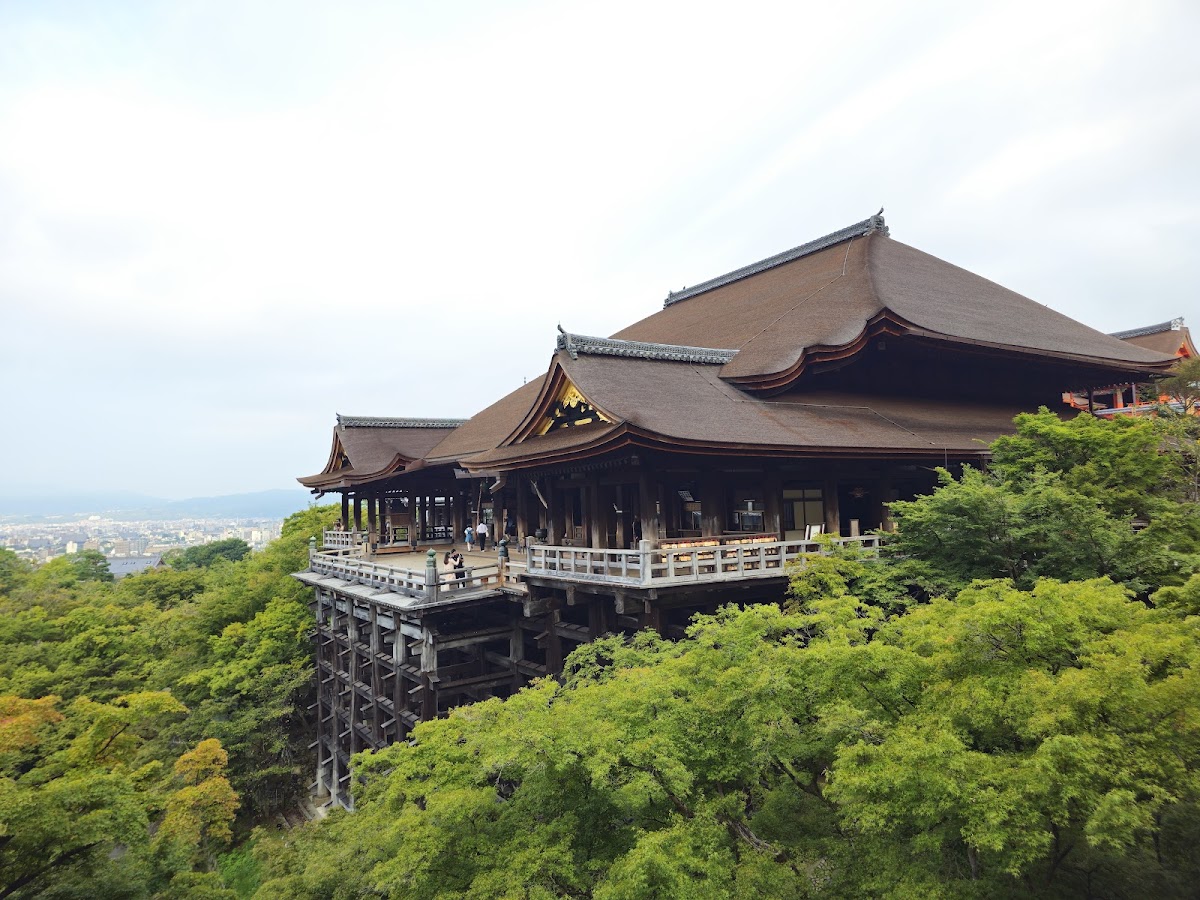
The most famous “Kiyomizu Stage” is the jutting stage structure of the main hall. Measuring approximately 13 meters in height and 18 meters in width, this stage was built using “kakedukuri” (cantilevered construction), a traditional technique that uses no nails.
The 139 cypress pillars supporting the stage were cut from ancient timber over 400 years old, representing the finest achievement of Japanese architectural techniques. The famous Japanese phrase “to jump off the Kiyomizu stage” originated from this location, which offers a panoramic view of Kyoto’s cityscape.
The main hall is designated a National Treasure and underwent major restoration work from 2017 to 2020 for the first time in approximately 50 years. The cypress bark roof uses approximately 110,000 pieces of bark and was beautifully replaced by skilled craftsmen through hand labor.
Otowa Waterfall
The Otowa Waterfall, which gave its name to Kiyomizu-dera, is sacred water that flows in three streams. Each stream is said to grant benefits: “academic success,” “romantic love,” and “long life.” Visitors are advised to drink only a sip using a wooden ladle according to proper etiquette.
The water source is located in the mountains of Otowa, maintaining a constant temperature year-round (approximately 10 degrees Celsius). This pure water has been treasured as “golden water” and “life-extending water” since the Heian period, even among the nobility.
Jishu Shrine
Located within Kiyomizu-dera’s grounds, Jishu Shrine is popular as a sacred site for matchmaking, particularly among young women. The main hall, constructed in 1633 (Kanei 10), is designated an Important Cultural Property.
The most famous feature is the “Love Divination Stones,” which are said to fulfill romantic wishes if visitors can walk between two stones approximately 10 meters apart with their eyes closed. Scientific dating suggests these stones date from the Jomon period, indicating this was a place of worship in ancient times.
Three-Story Pagoda
The three-story pagoda, approximately 31 meters in height, ranks among the largest three-story pagodas in Japan. Designated an Important Cultural Property and reconstructed in 1632 (Kanei 9), it features striking vermillion color and magnificent polychromatic decorations in its interior.
The pagoda houses a statue of Dainichi Nyorai, with heavenly beings and dragons painted on the ceiling and pillars. This tower, visible from a distance, is one of Kiyomizu-dera’s symbols and appears in numerous photographs.
Kodai Pagoda
Located on the cliff face south of the main hall, the Kodai Pagoda is a place of faith for safe childbirth wishes. This three-story pagoda, approximately 15 meters tall, is believed to have been reconstructed in 1500 (Meiou 9) and is designated an Important Cultural Property.
The Kodai Pagoda offers a spectacular viewpoint overlooking the Kiyomizu Stage, making it one of the few places to photograph the complete view of the main hall, popular among photography enthusiasts.
Kiyomizu-dera’s Appeal by Season
Spring Cherry Blossom Season (Late March to Early April)
Kiyomizu-dera is home to approximately 1,500 cherry trees, including Somei Yoshino and Yamato cherry blossoms, making it a renowned cherry blossom viewing spot in Kyoto. The blossoms surrounding the main hall and near the Releasing Life Pond are particularly spectacular, creating stunning contrasts with the vermillion-lacquered structures.
During spring evening special viewings, cherry blossoms and the grounds are illuminated, creating a magical atmosphere. Viewing the night cherry blossoms from the Kiyomizu Stage is considered one of the highlights of Kyoto tourism.
New Green Season (May to June)
The new green period, when tourists are relatively fewer, is an ideal time to visit and worship at leisure. The bright green foliage surrounding the temple grounds creates a refreshing landscape, and early morning visits allow for quiet moments accompanied by birdsong.
Summer’s Fresh Green Maple (July to August)
Summer at Kiyomizu-dera features beautiful fresh green maple leaves, offering a cool aesthetic. Though the heat is intense, early morning and evening visits are recommended. During the Senninichi Pilgrimage period (August 9-16), a single visit is said to grant the benefits of one thousand pilgrimages, attracting many visitors.
Autumn Maple Leaf Season (Mid-November to Early December)
Kiyomizu-dera’s autumn leaves rank among the most beautiful in Kyoto, with approximately 1,000 maple trees adorning the grounds. The viewing season typically peaks from late November to early December, and the harmony between the red and yellow foliage and historic structures is breathtaking.
During autumn evening special viewings, the illuminated maple leaves create a golden cloud-like appearance enveloping the grounds, and the sight from the Kiyomizu Stage is indescribably beautiful. However, this period is extremely crowded, making weekdays or visiting right after opening recommended.
Winter Snow Scenery (December to February)
Though snow rarely falls in Kyoto, snow-covered Kiyomizu-dera offers exceptional beauty. In particular, the snow-laden Kiyomizu Stage is enchanting, and visitors fortunate enough can experience a silver-white world.
Winter is the least crowded season, making it ideal for those seeking quiet worship. Additionally, from New Year’s Eve night through New Year’s Day, the temple is open all night and attracts many first-visit worshippers.
Illumination and Special Viewings
Spring, Summer, and Autumn Evening Special Viewings
Kiyomizu-dera holds evening special viewings three times yearly:
- Spring: Late March to early April (cherry blossom season)
- Summer: Mid-August (during Senninichi Pilgrimage period)
- Autumn: Mid-November to early December (maple leaf season)
Viewing hours are typically 6:00 PM to 9:00 PM (reception ends), with separate admission from daytime viewing. Evening viewings illuminate the entire grounds, and the “Kannon Compassion Light,” a single blue beam, illuminates Kyoto’s night sky. This light is visible from many locations throughout Kyoto, serving as a landmark indicating Kiyomizu-dera’s direction.
Special Public Viewings
The normally closed “Jojuin” garden is occasionally open to the public in spring and autumn (varies by year). Known as the “Moon Garden,” this landscape garden with pond and strolling path is a masterpiece designated as a National Scenic Site.
Access to Kiyomizu-dera
Train and Bus Access
Kiyomizu-dera lacks a nearby train station, so bus access is most convenient:
From Kyoto Station
- City Bus 100 or 206 systems, get off at “Gojozaka,” approximately 10 minutes walk
- City Bus 86 or 206 systems, get off at “Kiyomizu-michi,” approximately 10 minutes walk
- Duration: Approximately 15 minutes by bus plus 10 minutes walking
Using Keihan Railway
- Approximately 25 minutes walk from Keihan “Kiyomizu Gojo Station”
- From Keihan “Gojo Kawaramachi Station,” take City Bus 207 to “Kiyomizu-michi,” approximately 10 minutes walk
Using Hankyu Railway
- From Hankyu “Kawaramachi Station,” take City Bus 207 to “Kiyomizu-michi,” approximately 10 minutes walk
Taxi
From Kyoto Station to Kiyomizu-dera takes approximately 15 minutes by taxi, with fares around 1,500 to 2,000 yen. Taxi use is worth considering for multiple travelers or those with luggage.
Private Vehicle or Rental Car
There is no dedicated parking for Kiyomizu-dera, and surrounding paid parking lots are limited. Particularly during cherry blossom and maple leaf seasons, surrounding roads become heavily congested, making public transportation strongly recommended.
If driving is necessary, parking near Kyoto Station and then proceeding by bus or taxi is advisable.
Pedestrian Approach
The slopes (Kiyomizu-zaka and Gojo-zaka) from the bus stop to Kiyomizu-dera feature rows of souvenir and restaurant shops, creating a scenic, atmospheric approach. Slowly walking through this street allows enjoyment of Kyoto’s traditional streetscape. The slopes are steep in places, so visiting in comfortable footwear is recommended.
Viewing Information and Admission Fees
Viewing Hours
- Regular period: 6:00 AM to 6:00 PM
- Summer (July and August): 6:00 AM to 6:30 PM
- Evening special viewing periods extend to 9:00 PM (reception ends)
*Hours may vary by period; please check the official website for the latest information.*
Admission Fees
- General admission: 400 yen
- Elementary and middle school students: 200 yen
- Evening special viewing: General 400 yen, students 200 yen (day and night alternate)
Jishu Shrine is free to visit, though admission is required to enter the Kiyomizu-dera main hall area.
Estimated Time Required
- Kiyomizu-dera only: Approximately 60 to 90 minutes
- Including surrounding exploration: Approximately 2 to 3 hours
- Entire Higashiyama area: Half day to full day
Time varies depending on crowding and photography duration, but plan for at least one hour for a leisurely visit.
Surrounding Tourist Spots in Higashiyama Area
After visiting Kiyomizu-dera, be sure to explore the surrounding Higashiyama area. Historic streetscapes and numerous attractions are concentrated within walking distance.
Ninen-zaka and Sannen-zaka (Sannenzaka)
The stone-paved slopes continuing north from Kiyomizu-dera are Ninen-zaka and Sannen-zaka. The town retains Edo-period charm and is designated a National Important Traditional Building Preservation District.
Sannen-zaka (Sannenzaka) carries a legend: “falling on this slope results in death within three years,” with the belief that buying a gourd immediately after falling prevents the misfortune. Realistically, the steep stone steps require careful footing.
Both sides are lined with Kyoto souvenir shops, pottery stores, and dessert restaurants, making the walk itself enjoyable. Particularly recommended are:
- Kyoto-style specialty shops: Fans, Japanese small goods, Kyoto ware and Kiyomizu ceramics
- Dessert restaurants: Warabi mochi, matcha parfait, dango
- Traditional craft shops: Lacquerware, bamboo goods, washi paper products
Kodai-ji Temple
This temple was founded by Nene, the wife of Toyotomi Hideyoshi, to honor Hideyoshi’s memory. The architecture and gardens representing Momoyama culture are beautiful, and spring and autumn illuminations are particularly enchanting.
Kodai-ji highlights:
- Reliquary (otamaya): Housing statues of Hideyoshi and Nene, featuring masterpiece Kodai-ji lacquerware
- Garden: A pond strolling garden attributed to Kobori Enshu
- Bamboo grove: Particularly beautiful when illuminated
Yasaka Pagoda (Hokanji Temple)
The five-story pagoda serving as Higashiyama’s symbol stands approximately 46 meters tall. Tradition says it was founded by Prince Shotoku in 589, though the current pagoda dates from 1440.
The area around Yasaka Pagoda is popular as a Kyoto photography spot, allowing simultaneous capture of stone-paved slopes and the five-story pagoda. Pagoda interiors are normally closed but occasionally open for special viewings.
Yasaka Shrine
Known affectionately as “Gion-san,” Yasaka Shrine is the head shrine of all Yasaka shrines throughout Japan. Revered for preventing epidemics and dispelling misfortune, the July Gion Matsuri is one of Japan’s three major festivals.
Located approximately 20 minutes walk from Kiyomizu-dera, it’s ideal as an Higashiyama exploration endpoint. The grounds are open 24 hours, with evening lantern illumination creating a magical atmosphere.
Gion and Hanamikoji Street
Spreading west of Yasaka Shrine, Gion is Kyoto’s representative geisha district. Hanamikoji Street features rows of latticed town houses, and fortunate visitors may glimpse geishas or entertainers.
Evening and nighttime strolls are recommended, with glowing lights from teahouses and restaurants illuminating the street, creating uniquely Kyoto atmosphere. However, trespassing on private property and photographing entertainers without permission are prohibited; respect local etiquette.
Kenninji Temple
Kyoto’s oldest Zen temple, Kenninji is famous for Sotatsu Tawaraya’s “Wind God and Thunder God Screen” (reproduction on display). The abbot’s residence features splendid dry landscape gardens including “Taiou Garden” and “Shio-on Garden,” providing serene Zen experiences.
The ceiling’s “Double Dragon Painting” is impressive, with two dragons depicted across 108 tatami mats. Located near Gion, it integrates easily into Higashiyama exploration.
Nene-no-Michi Road
A stone-paved small path connecting Kodai-ji Temple and Maruyama Park named after Nene. With fewer tourists than major sites, it offers peaceful exploration.
Upscale restaurants and hidden-gem cafes line the path, allowing enjoyment of Kyoto atmosphere. Further exploration into narrow alleys like Ishi-bei-koji reveals even more charming landscapes.
Recommended Exploration Routes
Half-Day Course (Approximately 3 to 4 hours)
- Kiyomizu-dera (90 minutes): Visit main hall, Kiyomizu Stage, Otowa Waterfall, Jishu Shrine
- Sannen-zaka and Ninen-zaka (30 minutes): Souvenir shopping and photography
- Kodai-ji Temple (60 minutes): View gardens and reliquary
- Yasaka Shrine (30 minutes): Worship and grounds exploration
- Gion (30 minutes): Stroll Hanamikoji Street
Full-Day Course (Approximately 6 to 7 hours)
Morning:
- Kiyomizu-dera (early morning visit recommended)
- Sannen-zaka and Ninen-zaka for shopping
- Kodai-ji Temple visit
Lunch: Nene-no-Michi area or Gion for Kyoto cuisine or yudofu (hot pot tofu)
Afternoon:
- Yasaka Pagoda area for photography
- Kenninji Temple visit
- Yasaka Shrine worship
- Gion and Hanamikoji Street exploration
- Kamogawa River walk (time permitting)
Tips for Efficient Exploration
- Early morning hours: With 6:00 AM opening, early visits avoid crowds
- Reverse route: Since most tourists head from Kiyomizu-dera toward Gion, consider Gion→Kiyomizu-dera alternatively
- Slope considerations: Choose routes descending to Kiyomizu-dera rather than ascending for comfort
- Rest stops: Breaks at cafes in Sannen-zaka area increase exploration comfort
Dining and Souvenir Information
Recommended Dining Near Kiyomizu-dera
Yudofu (Hot Pot Tofu) and Kyoto Cuisine
The Higashiyama area features many yudofu restaurants, ideal for post-pilgrimage lunch. Traditional shops showcase delicate tofu flavors made with Kyoto groundwater.
Yatsuhashi Sweets
Numerous yatsuhashi shops surround Kiyomizu-dera. From traditional hard-baked varieties to fresh yatsuhashi and limited-edition flavors, many shops offer tastings while browsing.
Matcha Sweets
Dessert restaurants near Sannen-zaka offer matcha parfaits, matcha ice cream, warabi mochi, and other treats, perfect exploration breaks.
Kyoto Pickles
Shops featuring traditional Kyoto pickles like senzuke (thin radish), suguki, and ibigaki line the approach. Many shops offer tastings for preference selection.
Popular Souvenirs
Kiyomizu Ware (Kyoto Ceramics)
The Kiyomizu-dera area is the birthplace of Kiyomizu ware, with numerous pottery shops. Handcrafted artisan works and affordable options range widely.
Japanese Small Goods and Crafts
Fans, furoshiki (wrapping cloth), hand towels, coin purses, and other Kyoto-style goods are abundantly available, with designs ranging from traditional to contemporary.
Incense and Scent Pouches
As a center of incense culture, Sannen-zaka features incense specialty shops. Scent pouches are popular portable souvenirs.
Kyoto-Exclusive Sweets
Beyond yatsuhashi, matcha chocolate, Kyoto candy, and Kyoto-exclusive Kit Kats and other contemporary souvenirs are well-stocked.
Visitor Guidelines and Etiquette
Clothing and Belongings
- Comfortable walking shoes: Slopes and stone pavement necessitate comfortable footwear like sneakers
- Season-appropriate clothing: Summers are hot, winters cold; layering enables temperature adjustment
- Sun protection: Strong summer sun requires sunglasses and hats
- Rain gear: Fold-up umbrellas provide security with changeable weather
Crowding Mitigation
- Avoid peak seasons: Cherry blossom and maple leaf weekends experience extreme crowds
- Early morning visits: Right after 6:00 AM opening offers relative quiet
- Weekday visits: When possible, weekday visits are preferable
- Off-season timing: January-February and June-July attract fewer tourists
Visiting Etiquette
- Photography-restricted areas: Photography is prohibited in certain locations like hall interiors
- Otowa Waterfall protocol: Respect queue order; use ladles without direct mouth contact, receiving water in hands. Choose only one stream per etiquette
- Consideration for others: Photograph thoughtfully to avoid disrupting other visitors
- Restricted dining areas: Consume food only in designated zones
Accessibility Information
As a temple on hillsides, Kiyomizu-dera features numerous stairs and slopes, making complete wheelchair accessibility challenging. Please note:
- Wheelchair access from Nio Gate to main hall is possible but requires assistance
- Otowa Waterfall’s steep stairs present wheelchair difficulties
- Multi-purpose restrooms are available on grounds
- Prior consultation with temple offices may secure available support
Annual Temple Events
Major Annual Events
Shusho-e New Year Observance (January 1-7)
A solemn ceremony praying for new year peace and abundant harvests, conducted in the main hall for seven days from New Year’s Day.
Seiryuu-e Blue Dragon Festival (March 14-15, September 14-15)
Kiyomizu-dera’s Kannon avatar, the blue dragon, leads monks and worshippers in procession around the grounds twice yearly, showcasing powerful dragon performances.
Senninichi Pilgrimage (August 9-16)
Considered an especially auspicious period for Kannon worship, a single visit during this period is said to grant benefits equivalent to one thousand pilgrimages. Evening viewings also operate, attracting many visitors.
Bodhi Day (December 8)
A ceremony commemorating the day Buddha achieved enlightenment.
Special Viewings and Events
Throughout the year, special public viewings and cultural events occur. Consulting the official website for latest information is recommended.
Nearby Accommodations
The Higashiyama area features diverse lodging options from luxury ryokan to business hotels and guesthouses.
Recommended Areas
Higashiyama and Gion Area
Closest to Kiyomizu-dera, allowing early-morning visits. Town house conversions offer distinctly Kyoto experiences.
Kyoto Station Area
Excellent transportation access with abundant hotel options. Approximately 15 minutes by bus to Kiyomizu-dera.
Kawaramachi-Shijo Area
Abundant restaurants and shopping, ideal for combining tourism and shopping.
Lodging Tips
- Early reservations: Cherry blossom and maple leaf seasons fill reservations months in advance
- Breakfast-included plans: Convenient for pre-visit meals before early visits
- Town house stays: Traditional Kyoto town house experiences are increasingly popular
Conclusion: Maximizing Kiyomizu-dera Enjoyment
Kiyomizu-dera, with over 1,200 years of history, ranks among Japan’s premier tourist attractions. The Kiyomizu Stage’s panoramic views, the Otowa Waterfall’s sacred waters, nature’s seasonal transformations, and surrounding historic streetscapes offer endless discoveries.
Following these points ensures richer experiences during visits:
- Select timing carefully: Early mornings, weekdays, and off-seasons avoid crowding
- Plan surrounding exploration: Sannen-zaka, Kodai-ji, Gion and walking-distance highlights enrich visits
- Enjoy seasonal beauty: Cherry blossoms, fresh greenery, maple leaves, and snowy scenes offer distinct seasonal appeal
- Wear comfortable footwear: Multiple slopes demand comfortable shoes and clothing
- Allocate sufficient time: Plan minimum one hour for Kiyomizu-dera, with half-day duration including surrounding exploration
Kiyomizu-dera and surrounding Higashiyama represent Kyoto tourism’s essence. History, culture, nature, dining, and shopping concentrate within walking distance, offering fresh discoveries on repeated visits.
Using this guide, fully savor Kiyomizu-dera and Higashiyama’s attractions. Heartily experience the beauty and historical weight of the thousand-year-old capital, Kyoto.
-800x450.jpg)
-800x450.jpg)
-800x450.jpg)