
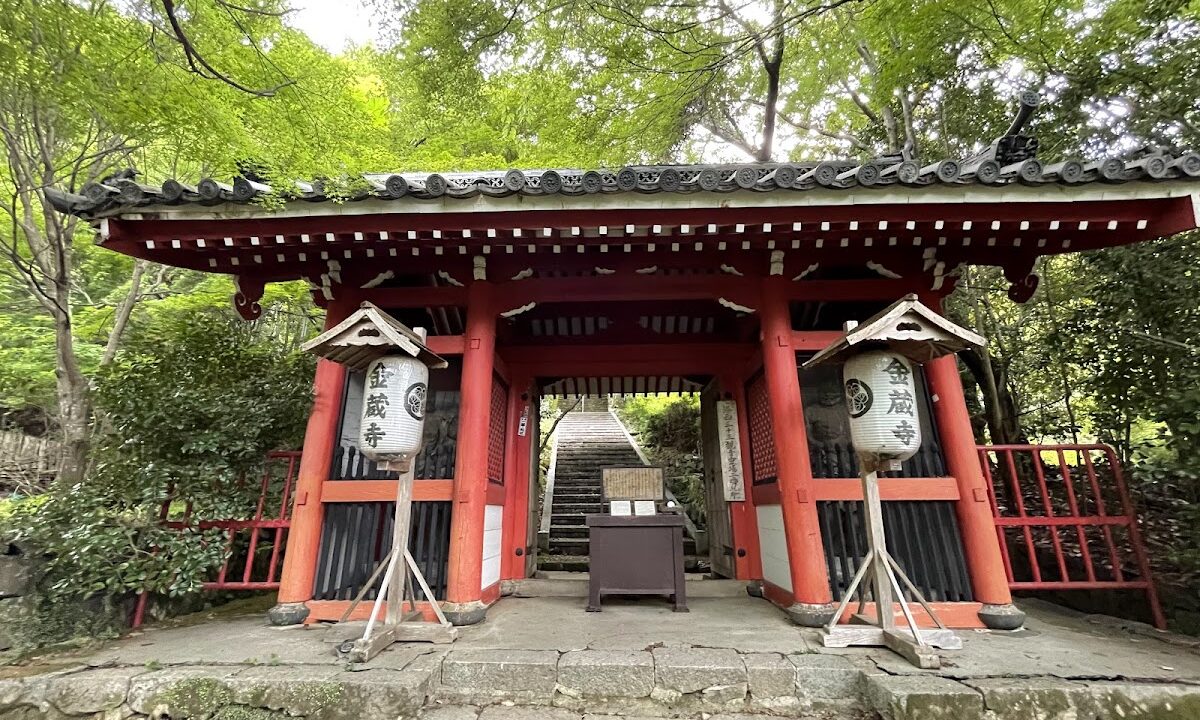
Kinkoku-ji Temple (Kyoto) Complete Guide | Hidden Tendai Buddhist Ancient Temple and Autumn Foliage Spot on Mount Koshio
Kinkoku-ji Temple (金蔵寺), located on the southeastern slope of Mount Koshio (elevation 642m) in Nishikyo Ward, Kyoto City, is known as a quiet mountain temple away from the hustle and bustle of Kyoto. It is rarely crowded with large numbers of tourists on ordinary days, making it a hidden gem where you can worship in a calm atmosphere. This article provides detailed information about Kinkoku-ji Temple’s history, highlights, access methods, and the charm of the autumn foliage season—everything you should know before visiting.
History and Origins of Kinkoku-ji Temple
Founding in the Nara Period and Status as an Imperial Prayer Temple
Kinkoku-ji Temple was founded in 718 (Yoro 2) by Zen Master Ryuho at the imperial behest of Emperor Gensho as a Tendai Buddhist temple. Known as Nishi-Iwakura-san, it is recognized as an ancient temple with origins dating back to the Nara period.
About ten years after its founding, in 728 (Jinki 5), Emperor Shomu granted the temple the imperial rescript name “Kinkoku-ji.” This plaque was an important symbol of the temple’s prestige, attesting to Kinkoku-ji’s deep connection with the imperial family. It is also said that Emperor Shomu had Buddhist scriptures copied and buried at this location.
Role in Protecting the Imperial Capital After the Relocation to Heian-kyo
In 794 (Enryaku 13), when Emperor Kanmu relocated the capital to Heian-kyo, Kinkoku-ji Temple played an important role. Emperor Kanmu performed a ceremony of burying scriptures in the four cardinal directions to protect the imperial capital, and named Mount Koshio in the west, where Kinkoku-ji stands, “Nishi-Iwakura-san.”
The name “Iwakura” refers to a sacred place where deities descend, indicating that Kinkoku-ji was positioned as a holy site to protect the west of Heian-kyo. Due to this historical background, Kinkoku-ji became not merely a mountain temple but an important place of prayer for the peace and security of the capital.
Destruction During the Onin War and Revival by Keisho-in
Despite its long history, Kinkoku-ji Temple suffered a tragedy when many of its temple buildings were destroyed in the Onin War that began in 1467. This conflict brought catastrophic damage to all of Kyoto, and Kinkoku-ji was no exception.
After a long period of decline following the destruction, a turning point came during the Edo period. The dedicated faith of Keisho-in (桂昌院), the mother of the fifth shogun of the Edo bakufu, Tokugawa Tsunayoshi, led to the temple’s revival. Keisho-in is known for her efforts to restore many temples and shrines in Kyoto, and Kinkoku-ji was one of the temples that benefited from her patronage.
The main hall, opening hall, and other major buildings seen today were constructed during this revival period under Keisho-in’s patronage, making them valuable cultural assets that preserve the architectural style of the Edo period.
Temple Grounds and Highlights of Kinkoku-ji Temple
Main Hall and Principal Image of Eleven-Faced Thousand-Armed Kannon
The main hall of Kinkoku-ji Temple houses the principal image, the Eleven-Faced Thousand-Armed Avalokitesvara (Kannon). This image of Kannon is revered for its compassionate nature, said to listen to the various wishes of people and bestow salvation with its thousand arms.
The main hall is built on the mountainside, and its interior is enveloped in a solemn atmosphere. Visitors can calm their minds and offer prayers to Kannon in the quiet space. Since the temple rarely becomes crowded with large numbers of worshippers on ordinary days, you can spend a leisurely time here—another charm of Kinkoku-ji Temple.
Opening Hall and Successive Monastic Leaders
Another important building alongside the main hall is the opening hall, which enshrines Zen Master Ryuho, the founding abbot, as well as the successive monastic leaders who built Kinkoku-ji’s history.
The opening hall is the spiritual center of Kinkoku-ji Temple, a space infused with respect for the predecessors who have maintained the temple’s traditions and dharma lamp. The building’s appearance conveys the weight of history and a tranquil atmosphere.
Spectacular Panorama of Kyoto Basin
One of the great attractions of Kinkoku-ji Temple is the magnificent view of Kyoto Basin from the temple grounds. Taking advantage of its location on the mountainside of Mount Koshio, one can view the Kyoto cityscape from the temple buildings.
Particularly on clear days, the town of Kyoto spreads out below, and on the far horizon, one can see Mount Hiei. This panorama helps visitors realize why Emperor Kanmu chose this location as a sacred site for the imperial capital’s protection during the relocation to Heian-kyo.
The contrast between the quiet temple grounds and the grand scenery creates a special experience that moves visitors and allows them to forget the hustle of daily life.
Autumn Foliage at Kinkoku-ji Temple | Autumn Attractions
A Hidden Gem for Autumn Foliage Known by the Few
Kinkoku-ji Temple has recently garnered attention as a hidden gem where particularly beautiful autumn foliage can be enjoyed among Kyoto temples. The usually quiet temple grounds are adorned with beautifully colored leaves during the foliage season, captivating visitors.
Compared to famous foliage spots like Arashiyama and Tofuku-ji, Kinkoku-ji sees fewer visitors, making it possible to appreciate the autumn foliage in a calm setting. The landscape created by trees dyed red and yellow in this natural, mountain temple environment truly deserves to be called spectacular.
Peak Foliage Season
The peak foliage season at Kinkoku-ji Temple typically occurs from mid-November to late November. Due to its elevated location on the mountainside of Mount Koshio, it tends to color slightly earlier than the Kyoto cityscape.
At the peak of foliage, the entire temple grounds are enveloped in vivid autumn colors, creating a magnificent contrast between the temple buildings such as the main hall and opening hall with the colored leaves. The morning sunlight on clear days especially brings out the brilliant colors, making it an ideal time for photography.
Cautions During Foliage Season
As the beauty of the autumn foliage has become more widely known, more visitors come during the fall season than usual. However, compared to other famous temples, there is still less congestion, though parking space is limited, so arriving early is recommended.
Also, since the temple is located on a mountainside, temperatures are lower than in the lowlands. When visiting during the foliage season, it is advisable to prepare warm clothing.
Access Methods and Basic Information
Access by Public Transportation
For those visiting Kinkoku-ji Temple by public transportation, the nearest bus stop is the “Minami-Kasugacho” stop served by Hankyu Bus.
Access from JR and Hankyu:
- From JR Mukodai Station or Hankyu Higashi-Mukodai Station, board the Hankyu Bus bound for “Minami-Kasugacho”
- Get off at “Minami-Kasugacho” bus stop and walk approximately 40 minutes on mountain trails
From the bus stop to Kinkoku-ji Temple, you will walk about 2.5 km on a mountain trail. Although the path is maintained, as it involves continuous uphill climbing, it is recommended to visit in comfortable shoes and easy-moving clothing. Especially during the foliage season, the trail can become crowded, so planning with extra time is necessary.
Access by Car and Parking
To visit by car, access via National Route 9 and Prefectural Route 10 (Ooe-Kutakake Line).
Parking Information:
- Kinkoku-ji Temple has a dedicated parking lot
- Parking capacity is limited, so early arrival is recommended during busy periods such as the foliage season
- It is a short walk from the parking lot to the temple grounds
As driving on mountain roads is involved, there are many curves and some sections with narrow road widths. Those unfamiliar with driving or those in large vehicles should exercise caution.
Visitation Information and Fees
Basic Information:
- Address: 1639 Ishizaku-cho, Ohara-no, Nishikyo Ward, Kyoto City, Kyoto Prefecture
- Phone: 075-331-0023
- Visitation Hours: Generally daytime (early confirmation recommended)
- Admission Fee: Voluntary offering
- Sect: Tendai Buddhism
- Mountain Name: Nishi-Iwakura-san
Due to its nature as a mountain temple, visitation conditions may change depending on weather and season. Particularly for those planning to visit during winter or rainy weather, it is recommended to confirm in advance by phone.
Tourist Spots Around Kinkoku-ji Temple
Oharano Shrine
Located approximately 10 minutes by car from Kinkoku-ji Temple, Oharano Shrine was founded in 784 (Enryaku 3) when Emperor Kanmu relocated to Nagaoka, enshrining the deities of Kasuga Taisha from Nara. Also called “Kyoto Kasuga,” it is known as a shrine with ties to the Fujiwara clan.
The grounds feature a beautiful garden and is popular as an autumn foliage spot. Visiting together with Kinkoku-ji Temple allows for a deeper understanding of the historical significance of this area.
Yoshimine-ji Temple
Yoshimine-ji Temple, located on the mountainside of Nishi-yama, is a renowned Tendai Buddhist temple known as the 20th station of the Saigoku Thirty-Three Kannon Pilgrimage. It is approximately 15 minutes by car from Kinkoku-ji Temple.
The panoramic view from the grounds is also excellent, overlooking the Kyoto Basin. The “Yuryū Pine” (游龍の松), with a tree age exceeding 600 years, is designated as a National Natural Monument and is worth seeing. During the foliage season, approximately 3,000 maple trees color the grounds, drawing many visitors.
Komyo-ji Temple
Komyo-ji Temple in Nagaoka City is a major Jodo (Pure Land) Buddhist temple with connections to Honen Shonin. It is approximately 20 minutes by car from Kinkoku-ji Temple.
The approach, known as the “Maple Approach,” is one of Kyoto’s premier autumn foliage spots, with approximately 500 maple trees turning brilliant red in fall. In contrast to the quiet foliage at Kinkoku-ji, you can enjoy autumn leaves on a grand scale.
Points to Keep in Mind When Visiting Kinkoku-ji Temple
Clothing and Items to Bring
Since Kinkoku-ji Temple is located on a mountainside, the following preparations are recommended when visiting:
- Comfortable walking shoes: Sneakers or trekking shoes are ideal since you will walk on mountain trails from the bus stop or parking lot to the temple grounds
- Easy-moving clothing: As there are stairs and slopes, comfortable clothing is advisable
- Warm outerwear: Mountain temperatures are lower than in the lowlands, so warm clothing is especially important in autumn and winter
- Beverages: Since there are few vending machines or shops in the area, it is wise to prepare them beforehand
- Camera: The location is ideal for photographing spectacular scenery and foliage
Optimal Times to Visit
Kinkoku-ji Temple displays beautiful scenery in each season, but particularly recommended times are:
- Autumn foliage season (mid-November to late November): The most popular time, offering wonderful autumn foliage
- New foliage season (May to June): A refreshing time when lush green trees and clear air are pleasant
- Early morning: Few people are about, allowing for worship in a quiet atmosphere. The grounds lit by the morning sun are also beautiful
Etiquette and Precautions
Kinkoku-ji Temple currently functions as an active place of worship. When visiting, please observe the following etiquette:
- Move quietly within the temple grounds and refrain from loud conversation
- Take photographs only in permitted locations (photography may be prohibited inside the main hall, for example)
- Always take all trash with you
- Do not touch or damage plants or structures
- Smoking is permitted only in designated areas
Savoring the Charms of Kinkoku-ji Temple Deeply
Feeling History in Silence
The greatest charm of Kinkoku-ji Temple lies in its quietness and historical depth. With a history spanning over 1,300 years from its Nara period founding and serving an important role in protecting the imperial capital of Heian-kyo, this temple is an indispensable part of Kyoto’s history.
Since the temple rarely becomes crowded with large numbers of tourists on ordinary days, you can spend time appreciating history while listening to birdsong and the wind among the grounds. This quiet atmosphere is truly the great value of visiting Kinkoku-ji Temple.
As a Hidden Gem in Kyoto
While Kyoto has many famous temples, it is these hidden gems like Kinkoku-ji that truly hold Kyoto’s charm. Though access is somewhat inconvenient, such inconvenience makes the special experience unique to those who visit all the more valuable.
The view of Kyoto Basin from the mountainside of Mount Koshio, wonderful autumn foliage in fall, and most importantly, the environment where you can calm your mind and worship in a quiet setting—these are precious experiences difficult to obtain at commercialized temples.
Different Faces in Each Season
While autumn foliage is famous at Kinkoku-ji, the temple actually presents different faces across all seasons. In spring, fresh greenery is beautiful; in summer, it is enveloped in deep green; in winter, snow-covered grounds create a fantastical atmosphere.
No matter how many times you visit, there are always new discoveries, and the ability to feel different charms each season is a major characteristic of Kinkoku-ji. Once you visit and take a liking to it, revisiting in different seasons is recommended.
Conclusion
Kinkoku-ji Temple is an ancient Tendai Buddhist temple nestled on the mountainside of Mount Koshio in Nishikyo Ward, Kyoto City. Since its founding in 718, it has a history spanning over 1,300 years and served an important role in protecting the imperial capital of Heian-kyo. After being destroyed in the Onin War, it was revived in the Edo period by Keisho-in, the mother of shogun Tokugawa Tsunayoshi, and its present form reflects the weight of history.
The temple grounds offer a panoramic view of the Kyoto Basin, and particularly during the autumn foliage season, a spectacular landscape unfolds. It is a major attraction that rarely becomes crowded with large numbers of tourists on ordinary days, allowing for leisurely worship in a calm atmosphere.
Though access is somewhat inconvenient, this very inconvenience creates a special experience unique to those who visit. As a hidden gem in Kyoto, it is particularly recommended for history lovers, nature enthusiasts, and those seeking quiet places.
On your next Kyoto trip, why not extend your journey a bit further and visit Kinkoku-ji Temple? It is certain to become an unforgettable memory.
-800x450.jpg)
-800x450.jpg)
-800x450.jpg)