
Ankoku-ji Temple (Ayabe City, Kyoto Prefecture) Complete Guide | Autumn Foliage Viewing Spot with Ties to Ashikaga Takauji – Highlights, Access, and History
Ankoku-ji Temple, located in Ayabe City, Kyoto Prefecture, is a historically profound temple known as a site closely associated with Ashikaga Takauji, the first shogun of the Muromachi Shogunate. Famous as a premier autumn foliage destination, the temple grounds are adorned with approximately 100 Japanese maple trees during fall. This article provides detailed information about Ankoku-ji Temple’s history, highlights, access methods, and visiting information—everything you should know before your visit.
About Ankoku-ji Temple | A Venerable Temple Built at the Birthplace of Ashikaga Takauji
Ankoku-ji Temple is a Rinzai Zen Buddhist temple located at 1 Teranodango, Ankoku-ji-cho, Ayabe City, Kyoto Prefecture, formally known as “Ankoku Zen Temple.” It is an ancient temple said to have been founded in 993 (Jōryaku 4), and later came to be deeply revered by Ashikaga Takauji during the Muromachi period.
Deep Connection with Ashikaga Takauji
The most distinctive feature of Ankoku-ji Temple is that it is said to be the birthplace of Ashikaga Takauji. Within the temple grounds stands a well that is believed to have been used as the birthing water when Takauji was born, making it an essential must-see spot for history enthusiasts. Additionally, the graves of Takauji, his mother Uesugi Kiyoko, and his wife Noriko are enshrined within the grounds, underscoring the temple’s significance as a place intimately connected to the Ashikaga family.
Historical Background of Ankoku-ji’s Establishment
Ashikaga Takauji built “Ankoku-ji” temples and “Risho Pagodas” in 66 provinces and two islands nationwide to console the spirits of those who perished in the warfare of the Northern and Southern Courts period and to pray for the peace and stability of the land. The Ankoku-ji in Ayabe was positioned as the Ankoku-ji temple for Tanba Province and was developed as a temple with special significance as Takauji’s birthplace. Through this historical process, Ankoku-ji became not merely a provincial temple but an important institution embodying the political and religious ideals of the Muromachi Shogunate.
Highlights of Ankoku-ji Temple | Historic Structures and Natural Beauty in Harmony
The temple grounds of Ankoku-ji feature historically valuable buildings and cultural properties alongside nature’s seasonal beauty. Here are the main highlights that captivate visitors.
The Thatched-Roof Main Hall | Experiencing Medieval Atmosphere
The symbol of Ankoku-ji Temple is its traditional thatched-roof main hall. This main hall is said to have been founded by Ashikaga Takauji in prayer for the peace of the land, and its simple yet imposing appearance evokes the medieval atmosphere for those who visit. Thatched roofs require periodic re-thatching, a traditional technique demanding considerable labor and skill, yet Ankoku-ji continues to preserve this tradition to this day.
Within the main hall are enshrined nationally designated Important Cultural Properties, including the Shakyamuni Trinity Seated Statues. Interior viewing requires advance reservation. The time spent facing the Buddhist images in the quiet of the main hall, feeling the weight of history, provides visitors with a profound spiritual experience.
Ashikaga Takauji’s Birth Water Well | A Spot for Historical Romance
Within the temple grounds stands a well believed to have been used as birthing water when Ashikaga Takauji was born. This well is an important historical relic demonstrating that the temple is the birthplace of Takauji and has become a popular spot visited by many history enthusiasts. The area around the well has been maintained and explanation plaques are displayed, allowing visitors to understand its historical significance while viewing it.
The birthing well holds significance beyond being merely a historical site. The fact that Ashikaga Takauji, a figure of paramount importance in Japanese history who founded the Muromachi Shogunate, drew his first breath in this place gives Ankoku-ji special historical value.
Graves of Ashikaga Takauji and His Family
Within the grounds are enshrined the graves of Ashikaga Takauji, his mother Uesugi Kiyoko, and his wife Noriko. These graves are important historical relics demonstrating the deep bond between the Ashikaga family and Ankoku-ji Temple. The graves are positioned in a quiet location where visitors can offer their respects in silence while reflecting on historical figures.
In particular, Takauji’s grave is a precious spot for historical researchers and enthusiasts as the resting place of this historically important figure, the founder of the Muromachi Shogunate.
National Important Cultural Properties | Shakyamuni Trinity Seated Statues and Precious Buddhist Images
Ankoku-ji houses multiple nationally designated Important Cultural Properties, including the Shakyamuni Trinity Seated Statues. These Buddhist images are precious cultural heritage conveying the excellent Buddhist art of the medieval period to the present day. Through interior viewing, visitors can observe these cultural properties up close, though advance reservation is required.
The refined carving techniques of the Buddhist images and the solemn atmosphere preserved through long history hold significant value for those with interest in Buddhist art.
As a Celebrated Autumn Foliage Destination | The Charm of Ankoku-ji in Fall
Ankoku-ji is known as one of the premier autumn foliage destinations in Kyoto Prefecture. When autumn arrives, approximately 100 Japanese maple trees within the grounds display vibrant colors, drawing many tourists and photography enthusiasts.
Peak Foliage Season
The autumn foliage at Ankoku-ji typically reaches its peak from early to late November. Due to differences in elevation and sun exposure, the trees change color progressively throughout different areas of the grounds, making it possible to enjoy beautiful foliage regardless of when in November you visit. From the green-and-red gradient in early season to the brilliant crimson at peak season to the carpet of fallen leaves in late autumn, the temple’s foliage displays different appearances depending on when you visit.
Harmony of Foliage and Thatched Main Hall
One reason why Ankoku-ji’s autumn foliage is considered particularly beautiful is its harmony with the traditional thatched main hall. The contrast between the ancient architecture and vibrant foliage symbolizes Japanese autumn landscape beauty, captivating many. Photographs of the foliage with the main hall as backdrop have particularly become popular compositions on social media.
Selection for “Kyoto’s 200 Natural Selections”
Ankoku-ji is situated in a natural-rich environment surrounded by mountains and forests and has been selected for “Kyoto’s 200 Natural Selections.” The beauty extends beyond the foliage season, with verdant spring growth also magnificent, allowing visitors to experience seasonal changes throughout the year. The quiet environment removed from urban hustle and bustle is an ideal place to calm one’s mind and engage with nature.
The Anime “Ikkyū-san” Connection | Cultural Influence
Ankoku-ji Temple is also said to have been the model for the temple featured in the popular anime “Ikkyū-san.” This theory arose because the temple’s thatched-roof main hall and the tranquil atmosphere of its mountain setting overlap with the anime’s world.
Anime fans and families with children visit as “sacred site pilgrimage,” experiencing destinations from the work, establishing the temple as having multifaceted appeal connected not only to historical value but also to contemporary popular culture.
Ankoku-ji Temple Visiting Information | Hours, Admission, and Interior Viewing
Here is a summary of essential information to know when visiting Ankoku-ji Temple.
Visiting Hours
Ankoku-ji’s viewing hours vary by season.
- Summer (April–September): 8:00–18:00
- Winter (October–March): 8:30–17:00 (or 9:00–17:00)
The temple is generally open year-round but may be unavailable for viewing due to religious services or events, so advance confirmation is recommended if you wish to be certain of viewing.
Admission Fee
Entry to the grounds is generally free, but interior viewing of the main hall requires a donation. While no specific amount is set, a typical guideline is approximately 300–500 yen.
Interior Viewing
Interior viewing of the main hall to observe Important Cultural Property Buddhist images requires advance reservation. If you visit without reservation, you can stroll the grounds but may be unable to enter the main hall. To arrange interior viewing, advance contact by telephone (0773-44-1565) is recommended.
Blessings
Ankoku-ji is said to provide blessings for safe childbirth, fertility, and good fortune. Due to the presence of Ashikaga Takauji’s birth water well, many visitors come to pray for safe childbirth.
Access | How to Get There by Train, Bus, and Car
Detailed explanation of access methods to Ankoku-ji Temple, organized by transportation mode.
Access by Public Transportation
Using JR + Aya Bus
- Alight at Ayabe Station on the JR Sanin Main Line or Maizuru Line
- Board the “Aya Bus Kuroya Line” from Ayabe Station
- Alight at “Ankoku-ji-mae Bus Stop,” approximately 2 minutes on foot
Aya Bus runs on a limited schedule, so confirming the timetable in advance is recommended. The distance from Ayabe Station to Ankoku-ji is approximately 10 km, with bus travel time of approximately 20–30 minutes.
Using Taxi
When using a taxi from Ayabe Station, travel time is approximately 15 minutes. Taxi use is worth considering during times with few bus services or when visiting with a group.
Access by Automobile
Using Kyoto縦貫 Expressway
- Exit at Ayabe Ankoku-ji IC on Kyoto縦貫 Expressway
- Cross the JR Maizuru Line railroad crossing and proceed west
- Arrive at Ankoku-ji in approximately 5 minutes
The temple is extremely close to the interchange, making automobile access very convenient. The fact that the interchange itself is named “Ankoku-ji” underscores the temple’s regional importance.
Parking Information
Ankoku-ji has a parking lot for visitors. Parking is free but may reach capacity during peak foliage season or other busy times. For visits during November weekends or holidays, arriving early is recommended.
The walk from the parking lot to the grounds is very short with excellent access.
Sightseeing Spots Around Ankoku-ji | Attractions in Ayabe City
Visiting nearby sightseeing spots when visiting Ankoku-ji makes for a more fulfilling trip.
Gunze Museum Garden
Ayabe City is known as the birthplace of Gunze, a fiber company. The Gunze Museum Garden allows visitors to learn about Gunze’s history and the development of the textile industry. Located approximately 10 minutes by car from Ankoku-ji, it is recommended for those interested in industrial heritage.
Ayabe Rose Garden
The Ayabe Rose Garden, where approximately 1,200 varieties of 5,000 roses are cultivated, attracts many tourists during spring and autumn bloom seasons. With Ankoku-ji’s foliage season coinciding with autumn rose season, tours combining both are popular.
Kimio-yama Komyō-ji Temple
Known as “Tanba’s Maple Leaf Temple,” Komyō-ji is another premier autumn foliage destination in Ayabe City. Offering a different foliage experience from Ankoku-ji, it is popular with foliage tour visitors.
Best Seasons to Visit Ankoku-ji | Unique Charm in Each Season
Ankoku-ji is worth visiting throughout the year, though each season offers distinct appeal.
Spring (April–May)
In the season of new foliage, the grounds are enveloped in vibrant green. Tourist numbers are relatively low, making it an ideal time for quiet worship. The mild spring weather is perfect for leisurely historical exploration.
Summer (June–August)
The grounds wrapped in deep green create a refreshing atmosphere. Located in mountainous terrain, temperatures are lower than in urban areas, making it pleasant as a summer retreat.
Autumn (November)
The most recommended season. Approximately 100 Japanese maple trees display vibrant color, with the entire grounds illuminated by foliage. The contrast between the thatched main hall and autumn colors creates a unique seasonal landscape. With many visitors arriving, weekday or early morning visits are suggested.
Winter (December–February)
Grounds covered with snow create a mystical, silent atmosphere. This is the lowest tourism season, ideal for those seeking quiet worship. However, note that winter operating hours are reduced.
Understanding Ankoku-ji’s History More Deeply | Politics and Religion in the Muromachi Period
Deeper understanding of Ankoku-ji’s historical significance requires knowledge of the political and religious context of the Muromachi period.
Establishment of Ankoku-ji and Risho Pagodas
Ashikaga Takauji, together with his younger brother Tadayoshi, issued an “Edict on the Establishment of Ankoku-ji and Risho Pagodas” in Enkyō 1 (1338), a grand plan to console the spirits of those who perished in the Northern and Southern Courts turmoil and to pray for state stability by establishing Ankoku-ji temples and Risho Pagodas in 66 provinces and two islands nationwide.
This policy involved not merely religious consideration but also political intent to demonstrate the legitimacy of the newly established Muromachi Shogunate and establish nationwide control systems. Regional Ankoku-ji temples functioned as bases for extending shogunate authority throughout the provinces.
Ayabe Ankoku-ji’s Special Position
Among Ankoku-ji temples established nationwide, the Ayabe temple held special significance as Ashikaga Takauji’s birthplace. An existing ancient temple was designated as an Ankoku-ji, and development proceeded to establish it as a site associated with Takauji.
This made Ayabe’s Ankoku-ji more than simply Tanba Province’s Ankoku-ji, giving it the character of a spiritual homeland for the Ashikaga family.
Faith Transmitted Across Centuries
After the Muromachi period, Ankoku-ji continued to function as the religious center of the region. Through the confusion of the Sengoku period and transformations of the Edo period, the temple’s functions were maintained, continuing to welcome many worshippers to the present day.
The Important Cultural Property Buddha image collection particularly testifies to careful preservation through long history, representing the crystallization of regional people’s faith and cultural property protection efforts.
Recommended Ways to Spend Time at Ankoku-ji | Suggested Visit Plans
Here are recommended ways to spend time when visiting Ankoku-ji.
Standard Visit Plan (Approximately 1 hour)
- Walk from parking lot or bus stop to grounds (5 minutes)
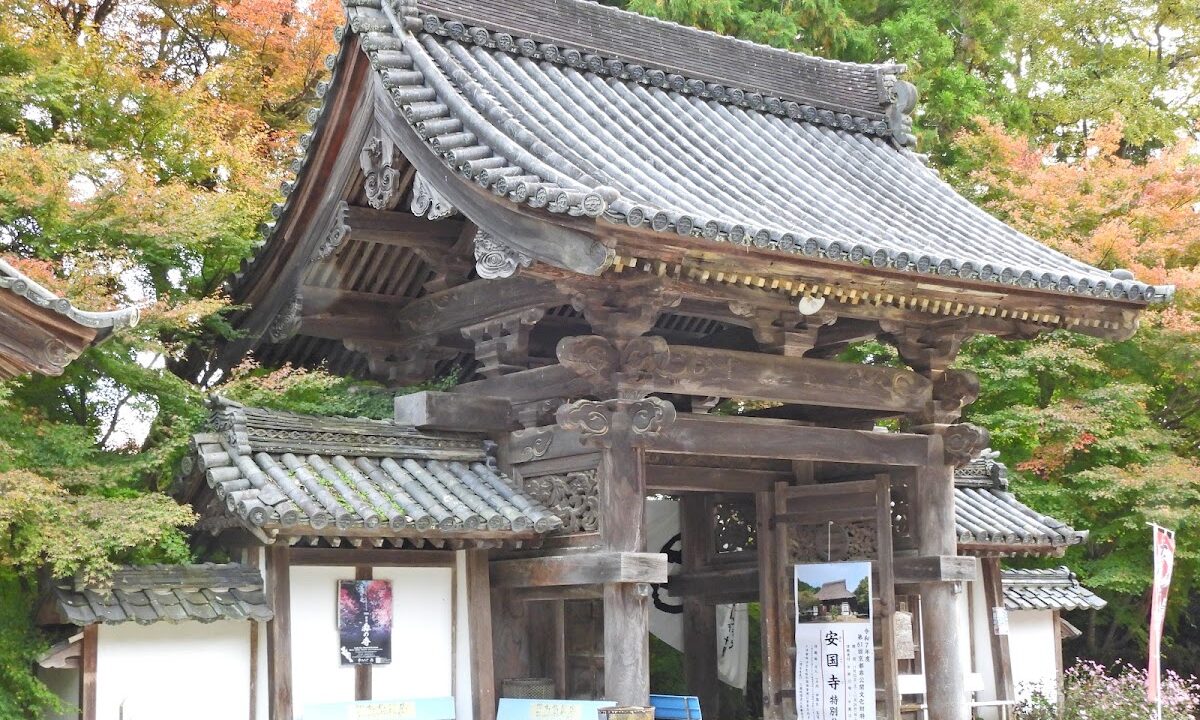
- Pass through the mountain gate and explore the grounds (15 minutes)
- Appreciate the thatched main hall exterior
- View Ashikaga Takauji’s birth water well
- Enjoy seasonal foliage and natural surroundings
- Pay respects at graves of Ashikaga Takauji and family (10 minutes)
- Interior hall viewing (with advance reservation) (20 minutes)
- View Important Cultural Property Buddhist images
- Spend time in quiet meditation or prayer
- Leisurely explore grounds while departing (10 minutes)
In-Depth Enjoyment Plan (2–3 hours)
For those wishing to thoroughly enjoy photography or historical exploration:
- Photograph the thatched main hall and foliage from various angles
- Reflect on history at the birthing well
- Sit on temple benches for reading or meditation
- Explore surrounding nature trails
- Observe seasonal flowers and plants
Autumn Foliage Season Tips
When visiting during the November foliage season, note these points:
- Early morning visits: Avoid crowds and enjoy foliage in peaceful atmosphere
- Weekday visits: Fewer people than weekends, better for photography
- Morning light: Better light angles in morning, ideal for photography
- Check weather: Clear skies produce most beautiful foliage displays
Precautions and Etiquette When Visiting Ankoku-ji
When visiting Ankoku-ji Temple, observe the following points and maintain proper etiquette.
Worship Etiquette
- Move quietly through the grounds, respecting other worshippers
- Photograph the main hall or Buddhist images only when permitted
- Show respect when visiting graves and maintain silence
- Always take trash with you
Attire and Belongings
- Located in mountainous terrain, temperatures run cooler than urban areas. Particularly in fall-winter, prepare for cooler weather
- Some grounds areas are unpaved, so comfortable walking shoes are recommended
- Foliage season can bring strong sun exposure; bring hats or sunscreen
Photography
- Ground landscape photography is generally permitted but be considerate of other visitors appearing in shots
- When using tripods, select locations that don’t block passage
- Commercial photography may require advance permission
Access to Ayabe City and Lodging Information
Access information to Ayabe City where Ankoku-ji is located and surrounding lodging options.
Access to Ayabe City
From Kyoto
- Approximately 1 hour 30 minutes on JR Sanin Main Line from Kyoto Station to Ayabe Station
- By automobile via Kyoto縦貫 Expressway, approximately 1 hour 30 minutes
From Osaka
- Approximately 2 hours from Osaka Station to Ayabe Station via JR Fukuchiyama Line and Sanin Main Line
- By automobile via Chugoku Expressway and Maizuru-Wakasa Expressway, approximately 2 hours
Nearby Lodging Facilities
The following lodging options are available within and near Ayabe City.
Within Ayabe City
- Business hotels: Several near Ayabe Station with reasonable rates
- Agricultural, forestry, and fisheries experience lodges: Accommodations offering regional nature and culture experience
- Traditional inns: Japanese-style accommodations featuring local cuisine
Nearby Areas
- Fukuchiyama City: Approximately 30 minutes by car from Ayabe, with more lodging options
- Maizuru City: A Japan Sea port town with abundant lodging featuring seafood cuisine
Conclusion | Ankoku-ji: A Special Place Where History and Nature Harmonize
Ankoku-ji Temple in Ayabe City, Kyoto Prefecture, is a temple of multifaceted appeal as both the birthplace of Ashikaga Takauji and a celebrated autumn foliage destination. Rich in historically significant sights including the thatched main hall, the birth water well, and Important Cultural Property Buddha images, the grounds are adorned by approximately 100 Japanese maple trees each autumn.
Though less famous than renowned temples in Kyoto’s urban core, this very characteristic makes it a hidden gem where one can quietly savor history and nature. Ankoku-ji is a must-visit temple when exploring Kyoto’s northern region, a place to contemplate Muromachi-period history while enjoying nature’s seasonal beauty.
Whether making advance reservations to view Important Cultural Properties, visiting during peak foliage season for spectacular scenery, or approaching the temple based on your particular interests, numerous ways of enjoying Ankoku-ji exist. Appealing to history enthusiasts, nature lovers, and photography enthusiasts alike, it is a profoundly compelling destination.
When visiting Ayabe City, be sure to stop at Ankoku-ji Temple. You will discover the opportunity to spend peaceful time at a site closely associated with Ashikaga Takauji, an important historical figure.
-800x450.jpg)
-800x450.jpg)
-800x450.jpg)