.jpg)
Kaochi Valley (Mie Prefecture Nabari City) Complete Guide: The Charm and How to Enjoy the Spectacular Gorge Known as the “Yabaoji of the Kansai Region”
Kaochi Valley (kaochidani), located in Nabari City, Mie Prefecture, is a approximately 8km gorge spanning the upper reaches of the Seirenjiji River, a tributary of the Nabari River. The landscape of columnar jointing rocks lined up as if split by an axe is also called the “Yabaoji of the Kansai Region,” and as part of the Muro-Akame-Aoyama Quasi-National Park, it continues to captivate many tourists. This article thoroughly introduces the charm of this spectacular gorge, from its geological characteristics to seasonal highlights, access methods, and surrounding tourist attractions.
Kaochi Valley: Natural Art Carved by 15 Million Years of History
Overview and Geographic Location of Kaochi Valley
Kaochi Valley is a gorge located in the southwestern part of Nabari City, Mie Prefecture, in the upper reaches of the Seirenjiji River. Belonging to the Kizu River water system, this gorge begins after passing through a tunnel from the Seireniji district and is known as a natural scenic area that extends for approximately 8km. The varied landscape created by differences in elevation provides deep emotion to visitors.
The name Kaochi Valley is read as either “kaochidani” or “koochidani,” with both pronunciations used locally. This gorge is located within the designated area of the Muro-Akame-Aoyama Quasi-National Park, an important natural heritage site where both nature conservation and tourism are balanced.
Geological Value of Columnar Jointing
The most distinctive feature of Kaochi Valley is the magnificent columnar jointing visible throughout the gorge. This geological structure was formed by volcanic activity approximately 15 million years ago. When andesite lava erupted by volcanic eruptions at that time cooled, it contracted and fractured into regular hexagonal and pentagonal columnar shapes.
Over long periods of time, the erosive action of the Seirenjiji River exposed these columnar joints, forming the cliff faces seen today. The nearly vertical rock walls, as if artificially carved, represent the height of natural sculptural beauty. In particular, distinctive rock formations such as Tengu Pillar Rock and Folding Screen Rock attract many photographers and geology enthusiasts.
Why It Is Called the “Yabaoji of the Kansai Region”
Kaochi Valley is known by the nickname “Yabaoji of the Kansai Region.” Yabaoji in Nakatsu City, Oita Prefecture, is a famous scenic gorge representing Japan’s gorge beauty, and Kaochi Valley has been evaluated as an equally magnificent scenic site in the Kansai region.
Common to both is the gorge beauty formed by odd rocks and strange stones created through volcanic rock erosion. The vertical rock walls created by Kaochi Valley’s columnar jointing possess a unique charm distinct from Yabaoji, and combined with its convenient location accessible from the Kansai region, it has become familiar to many nature enthusiasts.
Kaochi Valley Through the Four Seasons: Seasonal Highlights
Spring: Gorge Beauty Adorned by Fresh Greenery and Azaleas
In spring, Kaochi Valley displays a landscape full of vitality as nature awakens from winter’s harshness. From April to May, trees along the gorge burst into leaf simultaneously, creating vivid fresh greenery contrasting with the rock surfaces.
Particularly noteworthy is the azalea bloom time. Azaleas native to the gorge slopes and rocky areas paint the entire mountain, and pink and red flowers beautifully accent the gray columnar jointing rocks. During this period, relatively few tourists visit, making it a hidden gem season where nature can be fully enjoyed in a quiet environment.
Summer: Appeal as a Natural Retreat from Heat
Summer Kaochi Valley is popular as a natural refuge from urban heat. The clear waters of the Seirenjiji River flowing through the gorge and the cool landscape created by rock walls covered in deep green provide visitors with a refreshing sensation.
The driving route along the river has abundant shade, and the scenery viewed from car windows alone is sufficient to feel the coolness. Additionally, the sounds of the stream and bird songs are one of summer Kaochi Valley’s charms. However, summer brings the possibility of sudden thunderstorms and flooding, so weather conditions require careful attention.
Autumn: Overwhelming Popularity as a Maple Leaf Viewing Destination
Kaochi Valley is most crowded with tourists during the autumn foliage season. From early to late November typically, the entire gorge becomes dyed in fiery reds and yellows, creating breathtakingly beautiful contrast with the columnar jointing rocks.
The best viewing time for foliage varies slightly depending on elevation and location, but mid-November usually marks peak season. The color gradient created by diverse tree species including Japanese maple, maple, and beech is truly a work of art painted by nature. The foliage illuminated by sunrise or sunset is particularly beautiful, making it a perfect photography spot.
Autumn foliage season can bring road congestion, so early morning visits or weekday use is recommended. Additionally, combining foliage viewing with the surrounding Seireniji Lake area has become a popular route.
Winter: Ink Painting-Like Landscape Wrapped in Silence
Winter Kaochi Valley, with fewer visitors, offers a mystical atmosphere wrapped in silence. With leaves fallen from trees, the columnar jointing rock surfaces become more clearly visible, making it the ideal season for observing the gorge’s geological structure.
With snow coverage, a landscape emerges painted in black and white monotones like an ink painting. However, winter carries the risk of road surface freezing, making studless tires mandatory and chains essential to carry. Safe driving is paramount, and visiting on days with poor weather should be avoided.
Detailed Highlights of Kaochi Valley
Tengu Pillar Rock: Symbolic Existence of Kaochi Valley
Tengu Pillar Rock is one of Kaochi Valley’s representative odd rocks, characterized by its distinctive shape as if a tengu demon were standing upright. Columnar jointing is particularly clearly observable here, making it a geologically valuable spot.
The vertically cut rock wall reaches dozens of meters in height, and its imposing appearance has become a photography spot for many tourists. Especially during foliage season, the contrast between the rock surface and colored trees creates a magnificent landscape.
Folding Screen Rock: Rock Wall Like a Giant Folding Screen
Folding Screen Rock, as its name suggests, is characterized by flat rock walls resembling a giant folding screen. The way columnar jointing pillars are arranged in order displays remarkable regularity seemingly impossible for nature to create.
This rock wall is particularly beautiful in afternoon light as shadows enhance its three-dimensional appearance. It can be viewed from the driving route, with many tourists stopping their cars for photography.
Seirenjiji River Clear Stream: The Main Character Forming Gorge Beauty
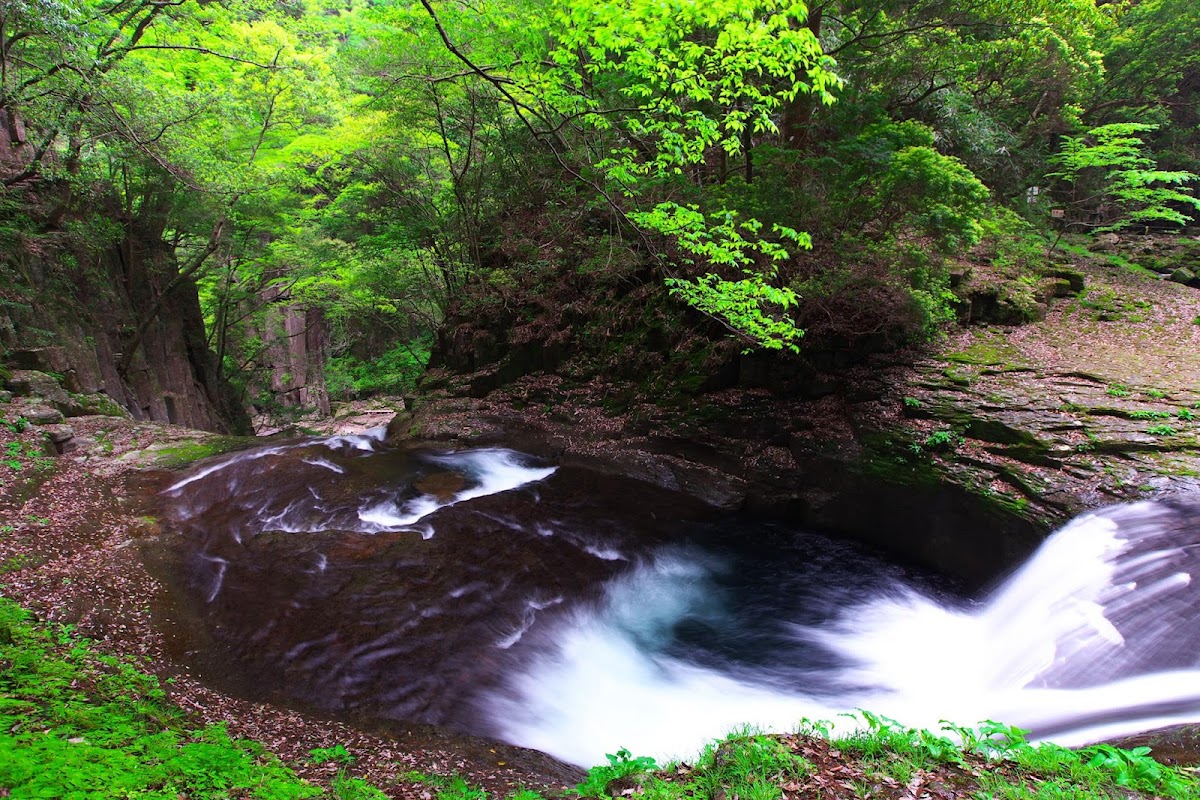
The clear waters of the Seirenjiji River can be considered the main character in forming Kaochi Valley’s landscape. Water with high transparency displays various colors from emerald green to deep blue depending on season and weather conditions.
Along the river are small waterfalls and pools here and there, and the sound created by water flow is one of Kaochi Valley’s charms. Particularly after rain, increased water volume allows for more powerful stream beauty.
Access Methods to Kaochi Valley
Access by Automobile
Automobile access is most convenient to Kaochi Valley. From the Hari Interchange on the Meihan National Highway via National Route 165 and Prefectural Route 81, it takes approximately 30 minutes, or about 40 minutes from the Ueno Interchange.
From the Osaka direction via the Meihan National Highway takes approximately 1 hour 30 minutes, and from the Nagoya direction via the Tomei-Meihan Expressway and Meihan National Highway takes approximately 1 hour 30 minutes. When using car navigation systems, search for “Kaochi Valley” or “Seireniji.”
Parking areas are set up at several locations along the gorge, but during foliage season expect congestion, so early arrival is recommended. Some road sections are narrow, so drive safely while watching for oncoming traffic.
Access by Public Transportation
When using public transportation, the nearest station is Kintetsu Nabari Station on the Kintetsu Osaka Line. From there, take a Mie Kotsu bus heading toward “Seireniji” and get off at the Seireniji bus stop at the terminus. The journey takes approximately 30 minutes.
However, bus frequency is limited, and even during weekends or foliage season the number of runs is small, making it essential to check the timetable in advance. From Seireniji bus stop to Kaochi Valley highlights involves walking along the gorge.
For more comfortable tourism, taking a taxi from Kintetsu Nabari Station is an option. The journey takes approximately 25 minutes with a fare of around 4,000 yen one-way.
Enjoying the Valley as a Driving Route
Kaochi Valley is developed as an approximately 8km gorge-side driving route where scenery can be enjoyed from the car. After passing through a tunnel from the Seireniji district, the spectacular scenery of Kaochi Valley begins.
The driving route has several viewing spots and parking spaces where cars can be stopped to enjoy photography and walking. However, the road is narrow with many curves, so drive at controlled speeds with safety in mind.
Particularly during foliage season, congestion may occur, so planning with plenty of time is necessary. Since the same route is traveled both ways, passing through at different times allows enjoying scenery with changed lighting.
Tourist Spots Around Kaochi Valley
Akame Forty-Eight Falls: Waterfalls Listed in Japan’s Top 100 Waterfalls
Located approximately 20 minutes by car from Kaochi Valley, Akame Forty-Eight Falls is one of Mie Prefecture’s representative tourist attractions. Located within the Muro-Akame-Aoyama Quasi-National Park, this gorge with waterfalls of various sizes is selected in “Japan’s Top 100 Waterfalls.”
An approximately 4km hiking trail is developed along the gorge, allowing visitors to tour the “Akame Five Waterfalls” including Fudo Falls, Senju Falls, Nunobiki Falls, Ninaai Falls, and Biwa Falls. Visiting both Kaochi Valley and this location allows enjoying different types of gorge beauty in one day.
Seireniji Lake Sightseeing Village: Base for Leisure and Fruit Picking
Located near the entrance to Kaochi Valley, Seireniji Lake Sightseeing Village is a tourism facility where grape picking and strawberry picking can be enjoyed. Spread along the shores of Seireniji Lake formed by the Seireniji Dam, various fruit harvesting experiences are available by season.
Grape picking in autumn is particularly popular, allowing tasting multiple varieties including Delaware and Kyoho grapes. Combining Kaochi Valley foliage viewing with autumn flavor experiences is recommended. The beautiful scenery of Seireniji Lake can be viewed from the lakeside, allowing a relaxed time.
Nabari City Center: Touching History and Culture
Approximately 30 minutes by car from Kaochi Valley, Nabari City center has historical points of interest scattered throughout. Historic sites including Nabari Toudou Family Mansion Ruins and Nabari Jinya Ruins retain Edo period characteristics and are recommended for history enthusiasts.
Additionally, Nabari City is known as the home of Iga-style ninja, with facilities offering ninja-related exhibitions and experiences. In gastronomy, restaurants serve local specialties including Iga beef and Nabari local sake.
Muroji Temple: Ancient Temple Known as the Women’s Koyasan
Located approximately 40 minutes by car from Kaochi Valley in Uda City, Nara Prefecture, Muroji Temple is a Shingon Buddhist ancient temple known as “Women’s Koyasan.” It received this name from accepting female visitors during the period when Koyasan prohibited women.
The National Treasure five-story pagoda is among Japan’s smallest outdoor five-story pagodas, and its graceful form captivates many pilgrims. Spring rhododendrons and autumn foliage are beautiful, making it worth visiting along with Kaochi Valley.
Practical Information for Kaochi Valley Tourism
Appropriate Clothing and Items to Bring
Kaochi Valley tourism is primarily centered on viewing from cars, but comfortable walking shoes are essential for more detailed exploration. The gorge-side terrain has unstable footing in places, so sneakers or trekking shoes are appropriate.
Seasonal clothing is also important. Spring and autumn have large temperature differences between morning and evening, so bring layers. Summer has strong sunlight, making hats and sunscreen useful. Winter requires thorough cold weather preparation and equipment for potential road freezing.
Bringing cameras and binoculars allows more deeply enjoying nature through detailed observation of columnar jointing and bird watching. Bringing drinking water and light snacks is also advisable. Few vending machines and shops exist in the surrounding gorge area, so advance preparation is important.
Estimated Sight-Seeing Duration
For driving tourism alone, plan 1 to 1.5 hours for the round trip. However, when stopping at various locations for photography and walking, allow 2 to 3 hours. During foliage season, account for crowds and congestion with even more time.
When combining with surrounding Seireniji Lake Sightseeing Village or Akame Forty-Eight Falls, plan for half to a full day.
Photography Spots and Best Timing
Kaochi Valley photography changes greatly with how light strikes. Morning provides light from the east, beautifully capturing rock surface texture. Afternoon has west sunlight illuminating the gorge, creating warm-toned photographs.
Foliage season photography is most vivid during clear days from 10am to 2pm. Overcast skies also provide soft light with atmospheric photos. Post-rain wet rock surfaces show darker colors and different expressions.
When using tripods, avoid obstructing other tourists and vehicle traffic. Drone photography may be restricted in the quasi-national park, so verify in advance.
Safety Precautions for Enjoyable Visits
The most important consideration for Kaochi Valley tourism is road conditions. The gorge-side road is narrow with many curves, requiring caution when meeting oncoming vehicles. Passing large vehicles is difficult in some places, so practice sharing the road.
Rainy conditions and post-rain periods carry rock fall risks. Avoid approaching the river during high water. Winter brings freezing and snow risks, making pre-visit weather confirmation and appropriate equipment essential.
Mobile phone signals are weak in some gorge areas. Note nearby medical institutions and police station contacts for emergencies. Avoid solo exploration; travel with companions.
History and Cultural Background of Kaochi Valley
Etymology and Local Traditions
The origin of the name Kaochi Valley has several theories, with the most credible being “fragrant falling valley.” One explanation suggests that fragrant plants naturally growing around the gorge historically dispersed their scent throughout the valley.
Local legend tells that ascetic monks once visited the gorge for training, and incense smoke they burned drifted through the valley. Regardless, the elegant name Kaochi Valley expresses this area’s mystical atmosphere.
As Part of Muro-Akame-Aoyama Quasi-National Park
Kaochi Valley is part of the Muro-Akame-Aoyama Quasi-National Park designated in 1970 (Showa 45). This quasi-national park spans Mie and Nara prefectures, protecting a vast area including Muroji Temple surroundings, Akame Forty-Eight Falls, and Aoyama Highland.
Designation as a quasi-national park legally protects Kaochi Valley’s natural environment with restricted development. This ensures that the 15-million-year-old geological heritage and rich ecosystem are passed to future generations. The environment enables enjoying gorge beauty sustainably while balancing tourism and nature protection.
Local Residents’ Relationship with Kaochi Valley
For residents of areas like the Seireniji district around Kaochi Valley, the gorge has long been part of life. The Seirenjiji River was used for agricultural water, and the gorge’s nature provided mountain vegetables and charcoal supplies.
Currently, tourism value is recognized, and local residents conduct cleaning activities and signage maintenance. Volunteer guides from the area sometimes conduct activities during foliage season, working to more deeply convey Kaochi Valley’s charm to visitors.
Experiences and Activities Enjoyable at Kaochi Valley
Gorge Driving: Enjoying Spectacular Views from Car Windows
The easiest way to enjoy Kaochi Valley is driving along the gorge. During the approximately 8km route, changing scenery continuously unfolds through car windows. The natural beauty created by columnar jointing rocks, clear streams, and seasonal vegetation provides satisfaction from driving alone.
When driving, temporarily stop in safe places to contemplate scenery carefully. Particularly at viewing spots, leaving the car and directly experiencing the gorge’s air creates a deeper sense of unity with nature.
Photography: Recording Seasonal Splendor
Kaochi Valley is an excellent photography spot for enthusiasts. Columnar jointing’s geometric beauty, seasonally changing vegetation, and numerous expressions created by clear streams provide abundant subjects.
Especially during foliage season, both professional and amateur photographers visit. Early morning mist-enveloped gorge, midday strong sunlight creating contrast, warm-light illuminated foliage at dusk—the scene differs entirely by time of day.
Bringing macro lenses allows photographing moss, small plants, and rock surface texture, discovering microcosmic beauty.
Nature Observation: Learning Geology and Ecosystems
Kaochi Valley is geologically and ecologically precious. Through columnar jointing observation, volcanic activity and erosion processes—Earth’s workings—become tangible. Detailed observation of fracture direction and form allows imagining the cooling process of past lava.
Ecologically, plants, insects, and birds adapted to stream environments can be observed. Spring azaleas, summer deep green, autumn foliage, winter deciduous leaves—seasonal vegetation changes can be enjoyed. Clear streams host birds like kingfishers, adding bird-watching enjoyment.
Combination Plans with Surrounding Facilities
Combining Kaochi Valley tourism with surrounding facilities creates more fulfilling experiences. Plans combining morning driving and walking at Kaochi Valley with afternoon fruit picking at Seireniji Lake Sightseeing Village are particularly popular with families.
Combining Kaochi Valley foliage viewing with Akame Forty-Eight Falls hiking allows experiencing two different gorge beauties in one day. For those with fitness confidence, a comprehensive plan touring both is recommended.
For hot spring enthusiasts, day-trip bathing at nearby Kaochi Valley Hot Spring or Akame Hot Spring area is good. Hot springs after nature walking are exceptional, providing physical and mental refreshment.
Best Season for Kaochi Valley Tourism and Crowding Conditions
Foliage Season (Early to Late November)
Kaochi Valley sees peak crowds during foliage season. Colors typically begin in early November, peak mid-November, and continue into late November. Weekends especially bring many tourists with parking lot congestion and road gridlock possible.
Avoiding crowds is best done via weekday visits. Early morning (before 8am) or late afternoon (after 4pm) are relatively empty, allowing calm enjoyment. Particularly early morning may produce morning mist creating mystical landscapes.
Fresh Greenery Season (Late April to May)
Fresh greenery season is a hidden gem period with manageable crowds allowing leisurely tourism. The vivid green of freshly sprouted leaves and columnar jointing contrast provide refreshingly different beauty from autumn foliage.
Golden Week periods bring some crowding, but other weekdays are extremely quiet, allowing appreciating natural sounds. Mild weather makes it ideal for hiking and photography.
Off-Season (Summer and Winter)
Summer and winter are off-season with fewer tourists. Summer attracts heat refugees seeking coolness without foliage season congestion. Winter has further reduced visitors due to snow and freezing risks.
These seasons suit those desiring quiet nature communion or avoiding crowds. Winter requires careful safety consideration with thorough weather verification before visiting.
Regional Information Worth Knowing for Kaochi Valley Tourism
Nabari City Specialties and Cuisine
During Kaochi Valley tourism, enjoying Nabari City specialties and cuisine is worthwhile. Nabari City, part of the Iga region, is known for quality agricultural and livestock products including Iga beef and Iga rice.
Iga beef features beautiful marbling, tender texture, and deep flavor. Multiple restaurants in Nabari City serve Iga beef as steak, sukiyaki, and yakiniku. Locally-produced sake from regional breweries receives high evaluation and is popular as souvenirs.
Seireniji Lake Sightseeing Village sells sweets and jams made from seasonal fruits and wine, ideal as Kaochi Valley tourism mementos.
Lodging Facilities and Hot Spring Information
The surrounding Kaochi Valley area has hot spring lodging facilities including Kaochi Valley Hot Spring and Akame Hot Spring area. Kaochi Valley Hot Spring is near the gorge with some inns allowing foliage viewing while bathing.
Akame Hot Spring area near Akame Forty-Eight Falls is approximately 20 minutes by car from Kaochi Valley with multiple inns and hotels to suit budgets and preferences. Many facilities accept day-trip bathing, ideal for soothing tourism fatigue.
For broader accommodation options, business hotels around Kintetsu Nabari Station and Iga Ueno area lodging are alternatives.
Event and Festival Information
Various events occur seasonally around Kaochi Valley. During foliage season, events like “Kaochi Valley Autumn Foliage Festival” may feature local specialty sales and folk performance presentations.
Seireniji Lake Sightseeing Village offers experience programs aligned with fruit harvest seasons. Nabari City hosts summer fireworks and autumn harvest festivals offering cultural touchstones.
Checking Nabari City Tourism Association websites or information offices before visiting reveals current events for more fulfilling tourism.
Conclusion: Fully Savor Kaochi Valley’s Natural Sculptural Beauty
Kaochi Valley in Nabari City, Mie Prefecture, is a rare scenic site where 15 million years of geological history created columnar jointing rock walls fused with four-season natural beauty. Known as the “Yabaoji of the Kansai Region,” this gorge captivates tourists especially during foliage season, yet spring’s fresh greenery, summer’s coolness, and winter’s silence each offer unique charm.
The approximately 8km gorge-side driving route provides easy spectacular viewing while detailed exploration enables geological discovery and ecosystem observation. Combining nearby Akame Forty-Eight Falls, Seireniji Lake Sightseeing Village, and Muroji Temple creates day-long fulfilling tourism plans.
Where natural sculptural beauty, geological value, seasonal change, and regional history intersect, Kaochi Valley, relatively accessible from the Kansai region while possessing depth revealing new discoveries with each visit, is recommended for not just nature enthusiasts but all seeking relief from daily stress.
Why not visit Kaochi Valley on your next day off to experience through five senses the masterpiece nature created over tens of millions of years?
-800x450.jpg)
-800x450.jpg)
-800x450.jpg)